
Abnormal Uterine Bleeding Douglas Brown M D GYNOSPEAK
Abnormal Uterine Bleeding Douglas Brown M. D.

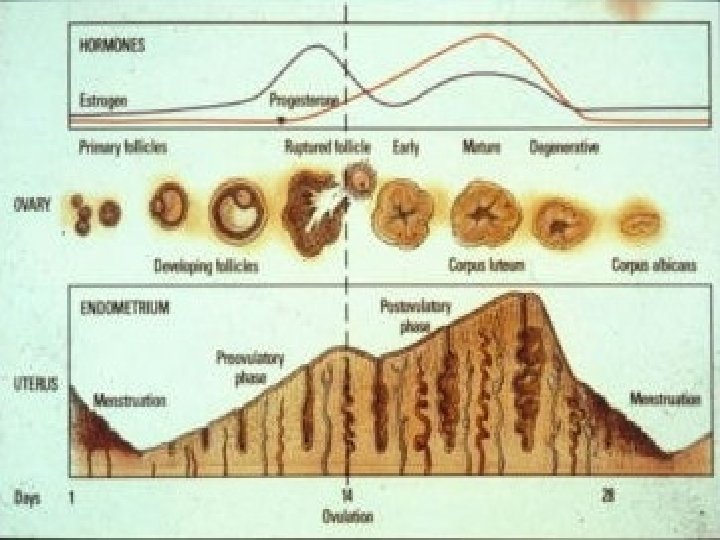
GYNOSPEAK n Dysfunctional Uterine Bleeding – nonmenstrual bleeding due to failure of ovulation n May be frequent e. g. every 2 weeks n May be infrequent e. g. every 6 months n Generally heavier than menses
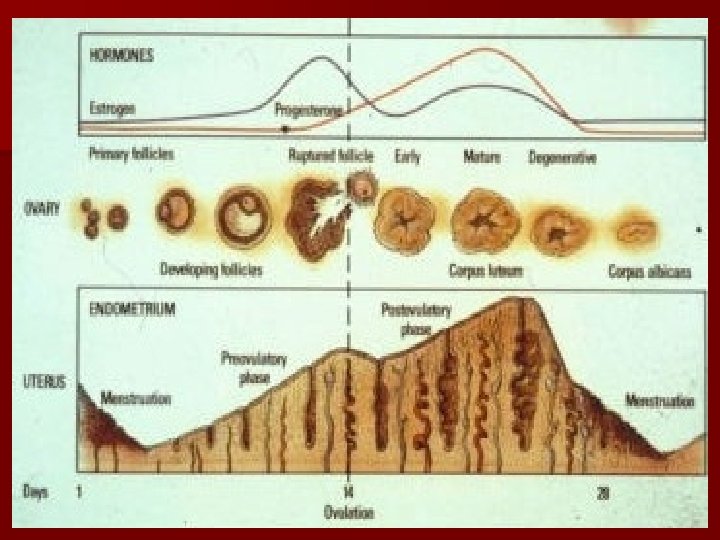
More Gynospeak n Menorrhagia – heavy menstrual bleeding n Menometrorrhagia – heavy irregular bleeding – may be DUB or organic n Midcycle bleeding – periovulatory bleeding, usually light, lasting 1 -5 days n Premenstrual bleeding – spotting or light bleeding 2 -7 days prior to menses, leading into menses
Even More Gynospeak n Breakthrough bleeding (BTB) – irregular bleeding associated with exogenous hormone use such as OCPs ot HRT n Oligomenorrhea – infrequent menses, generally less often than every 6 weeks n Postmenopausal bleeding – occurs afer 1 year following cessation of menses
Adolescent n Expect DUB with the first several “periods” as the hypothalamus matures n Regular menses may take a year to develop n DUB more likely to be chronic in obese teens (? genetic? ) Watch for PCO n Watch for amenorrhea in athletic teens n Consider OCPs, calcium supplement
Adolescent Menorrhagia n Distinguish menorrhagia from DUB n 15 -20% of teens requiring transfusion will have a coagulation disorder n Von Willebrand’s is most common n If VW test other women in family
Isolated Early or Late Menses n Most common etiology is stress n Change in environment n Short term corticosteroid use n Exclude pregnancy with home test or serum HCG n The Holiday Rule
Meds and Medical conditions n Hyper and hypo thyroidism n Chronic renal or endocrine disease n Endometriosis n Hyperprolactinemia due to CNS or pituitary disease n Phenothiazenes n Metoclopromide n Tricyclics

Postcoital Bleeding n Cervical lesion – polyp, cancer, ectropion n Vaginal atrophy n Endometritis n Unstable or atrophic endometrium due to OCs, HRT or Depoprovera n Endometrial polyp or myoma n Have a low threshold for endometrial biopsy
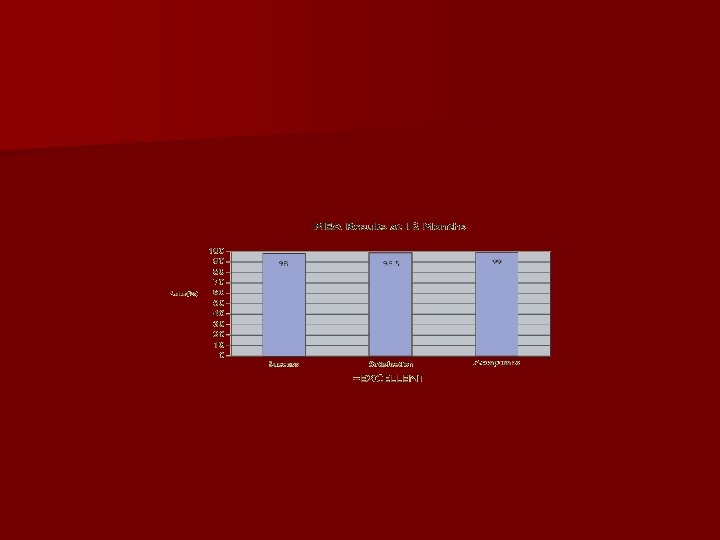
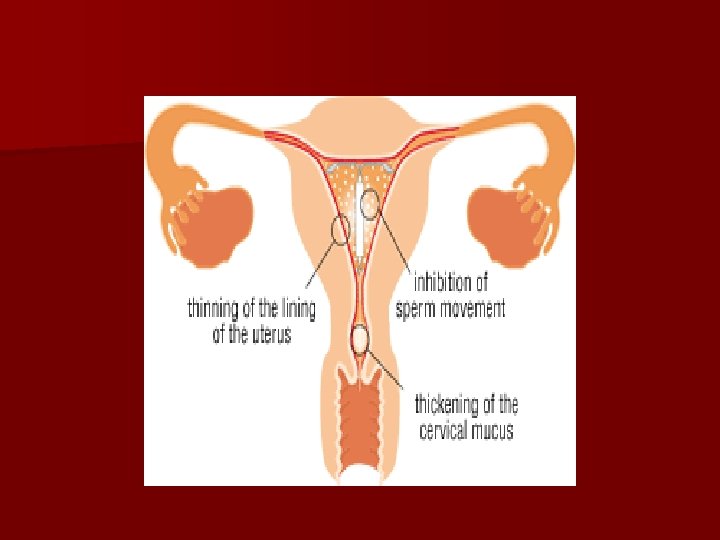
Bleeding with Contraception n BTB with OCs – change pills – increase estrogen, change progestin n Depoprovera or minipill – add estrogen until bleeding stops n Paraguard copper IUD –irregular bleeding, menorrhagia – may be endometritis n Mirena levonorgestrel IUD – may cause 24 months irregular bleeding, then hypomenorrhea or amenorrhea
DUB n Due to anovulation n Distinguish from oligomenorrhea n Risk is endometrial hyperplasia or Ca n Consider endometrial biopsy (later) n If chronic evaluate for PCO n Draw fasting glucose and insulin
DUB Acute therapy n IV premarin 25 mg q 4 -6 hrs – vasospasm n Monophasic OCs “OCP Taper” – qid for 4 days, tid for 3 days, bid for 2 days, daily for remainder of two packs n MPA (provera, cycrin) – 10 mg 2 -3 x/day for 2 weeks

DUB long term therapy n OCPs n Withdrawal with progestin for 10 -14 days every 6 -8 weeks n Use provera 10 mg, prometrium 100 mg, aygestin 2. 5 – 5 mg
Menorrhagia n Myoma n Polyp n Coagulation n “Humoral” n Idiopathic Disorder
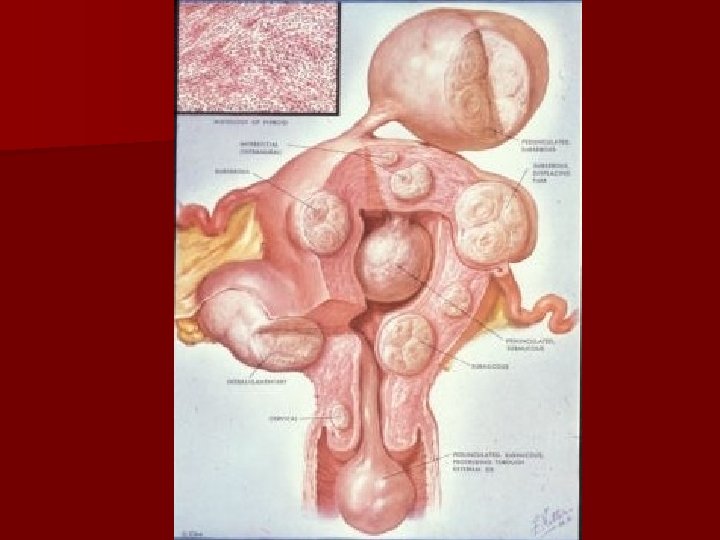
Uterine Myoma n Menorrhagia is most common symptom n Look for intramural or submucous myomas n Interruption of contractile hemostasis n Dx with ultrasound n Smell any fish?
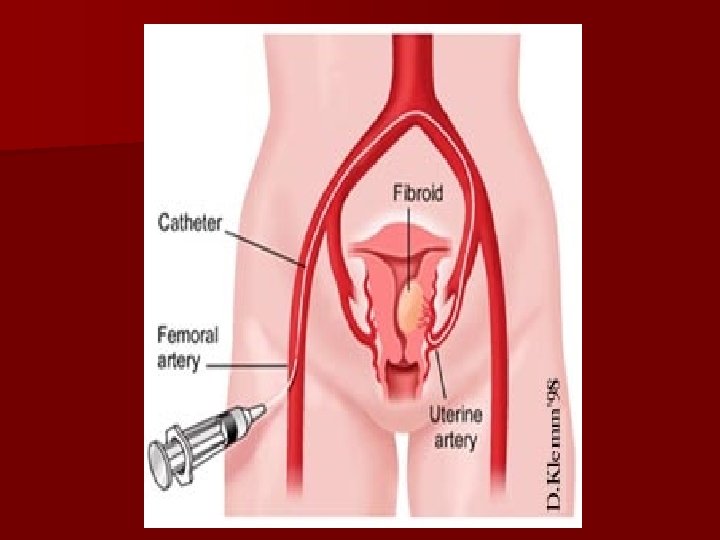
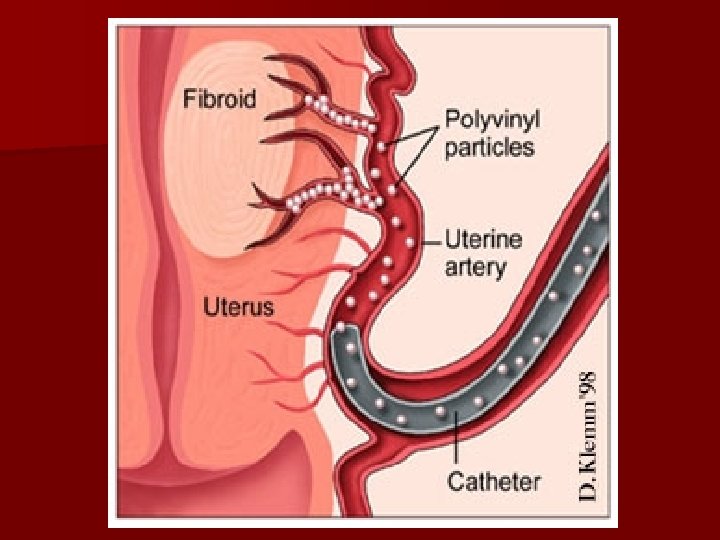
Therapy for Myomas n Continuous OCPs n Gn. RH agonists e. g Lupron n Myomectomy/Hysterectomy n Operative hysteroscopy n Uterine artery embolization n Post-DUBYA – Mifepristone 50 mg/day
Humoral Menorrhagia n Diagnosis of exclusion n Consider coagulopathy workup – 10% n Diff Dx: VWDz, thrombocytopenia, TTP, ITP, vasculitis, liver disease n Desmopressin nasal spray for VW Dz
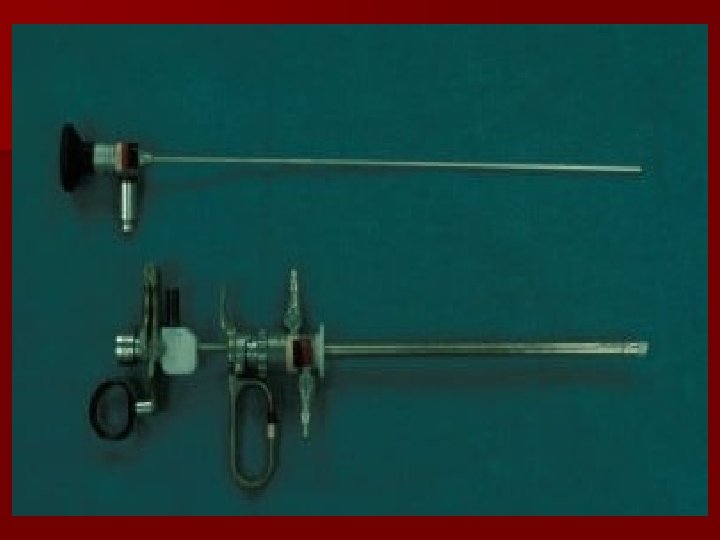
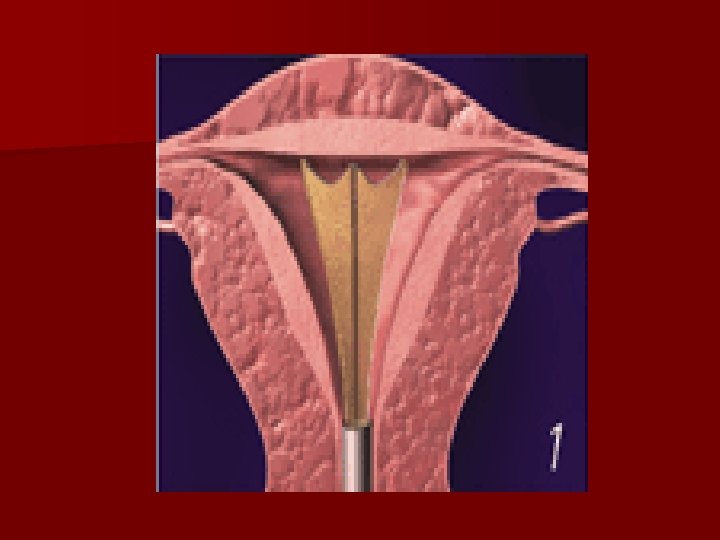
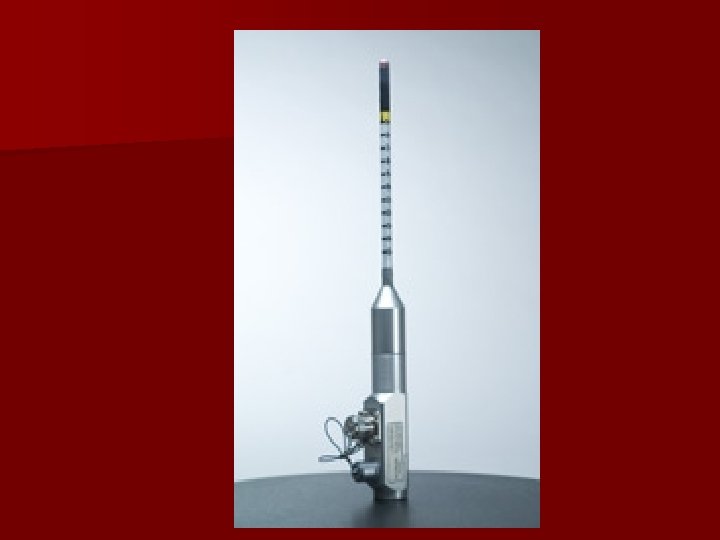
Medical Therapy n NSAIDs – Ibuprofen, Naproxen, Mefenamic acid (meclomen, ponstel) n OCPs – consider continuous regimen n Depoprovera n Iron replacement n Endometrial ablation – Rollerball, Novasure (mesh), Thermachoice (balloon), MEA (microwave)
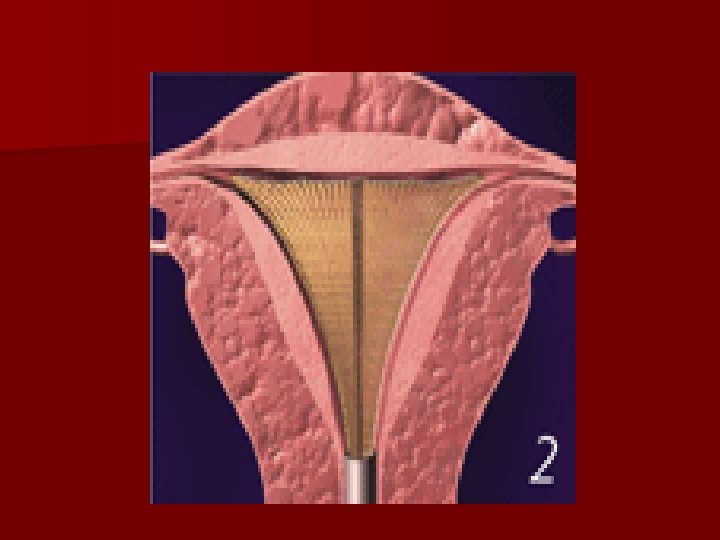
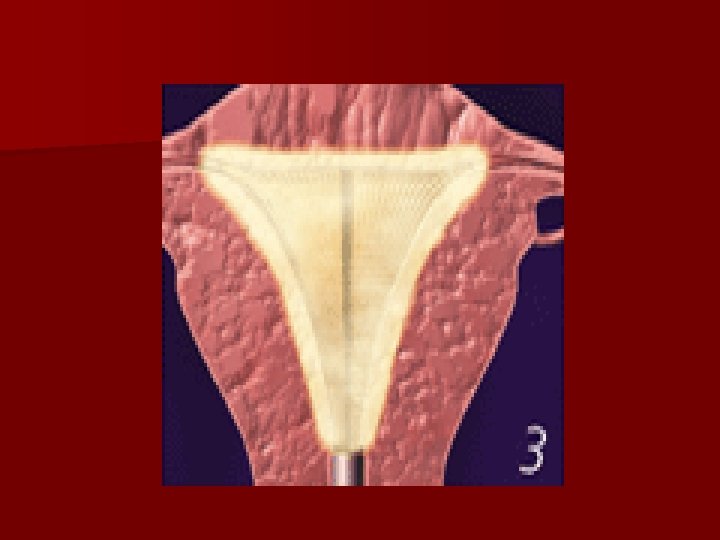
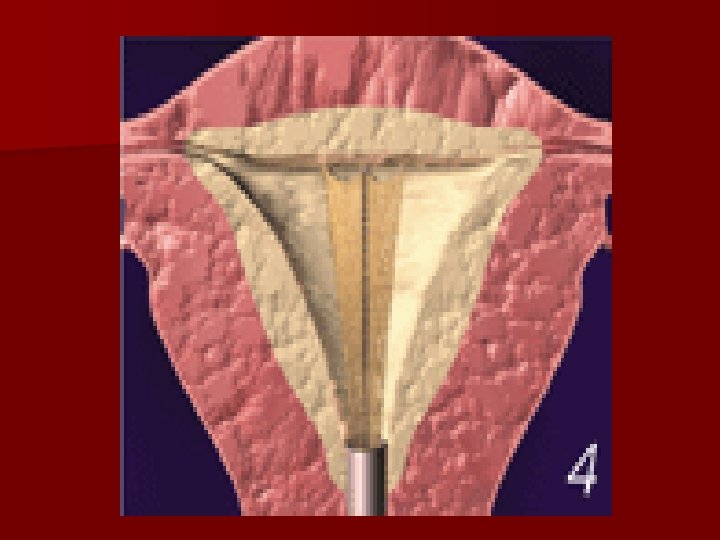
Perimenopause n Oligomenorrhea if you’re lucky n Anovulatory biweekly “menorrhagia” if you’re not n Therapy – low dose OCPs or higher dose HRT such as Activella or Fem. HRT n Don’t forget space-occupying disease
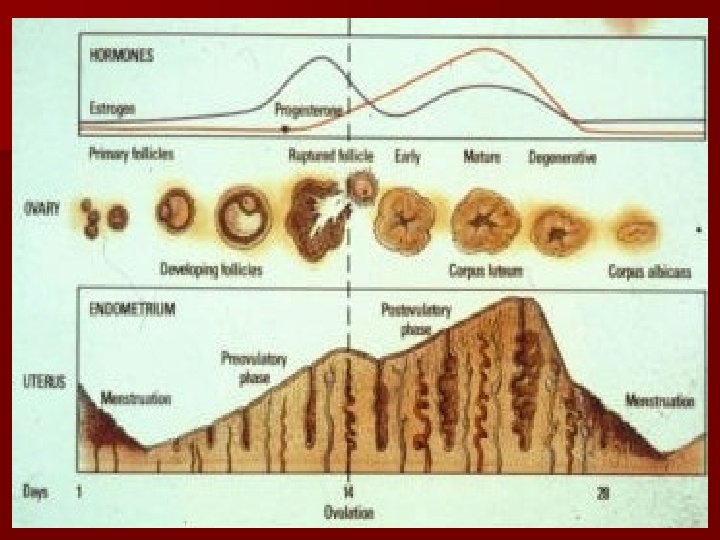
Postmenopause n All postmenopausal bleeding is cancer until proven otherwise n 90% of BTB due to atrophy n Prove it with endometrial Bx or TV U/S n On U/S endometrial “stripe” should be less than 5 mm n BTB common in new start HRT n Obese patients may require withdrawal
- Slides: 42