
Abnormal Psychology Inside the World of Childhood Schizophrenia
Abnormal Psychology "Inside the World of Childhood Schizophrenia”
Psychological Disorder • A “harmful dysfunction” in which behavior is judged to be all of the following… – Atypical – Disturbing – Maladaptive – Unjustifiable.
Psychological Disorder • What is abnormal, disturbing, maladaptive and unjustifiable depends on: – Culture – Time Period – Environmental Conditions – Individual Person

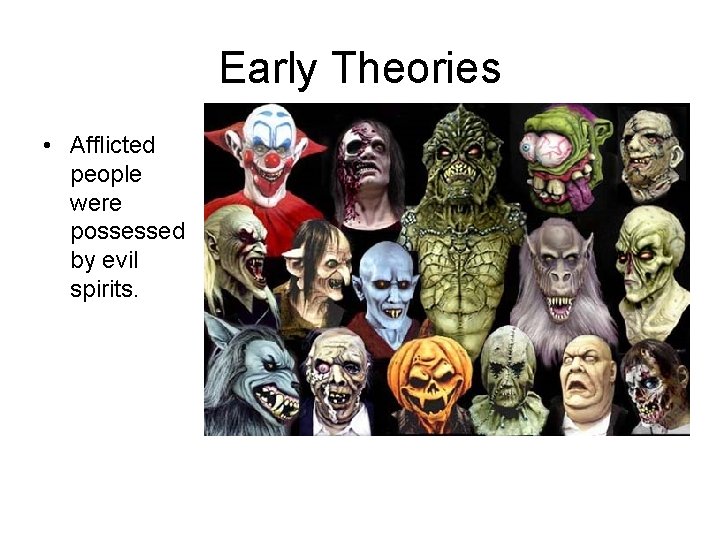
Early Theories • Afflicted people were possessed by evil spirits.
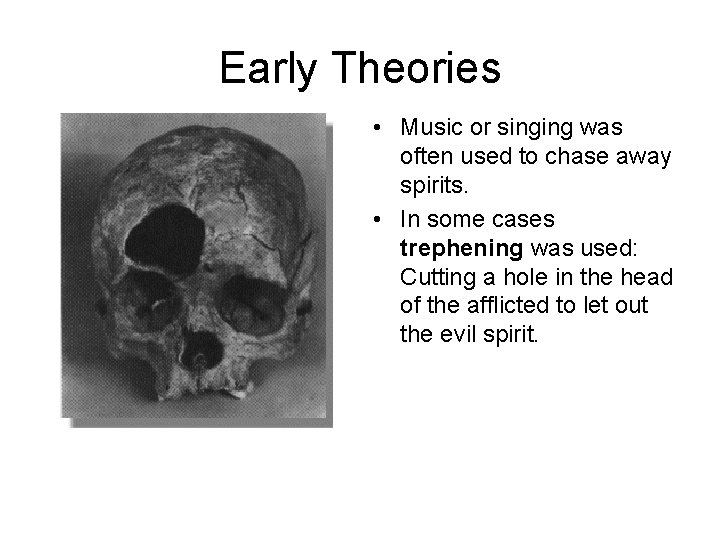
Early Theories • Music or singing was often used to chase away spirits. • In some cases trephening was used: Cutting a hole in the head of the afflicted to let out the evil spirit.
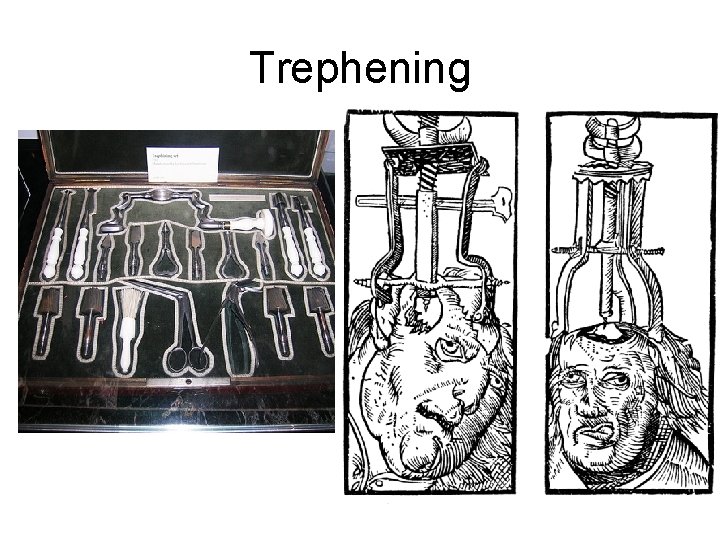
Trephening
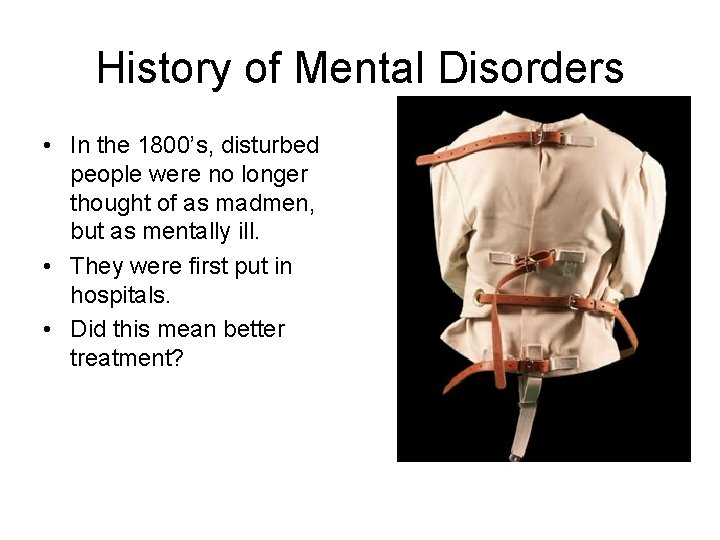
History of Mental Disorders • In the 1800’s, disturbed people were no longer thought of as madmen, but as mentally ill. • They were first put in hospitals. • Did this mean better treatment?
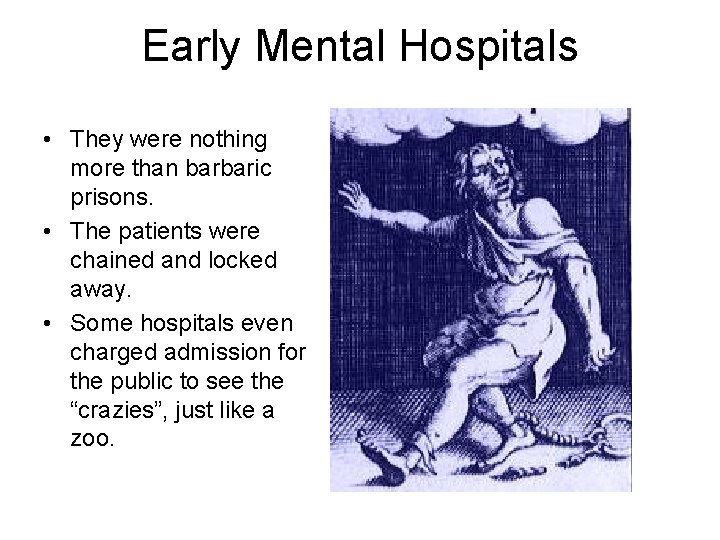
Early Mental Hospitals • They were nothing more than barbaric prisons. • The patients were chained and locked away. • Some hospitals even charged admission for the public to see the “crazies”, just like a zoo.
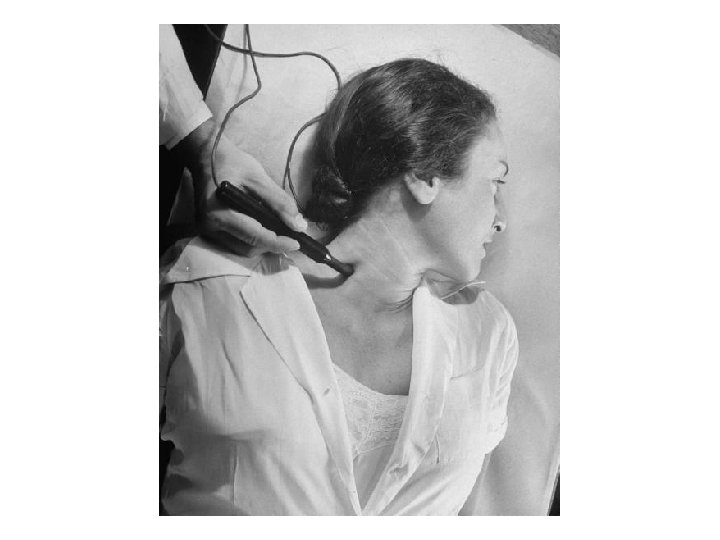
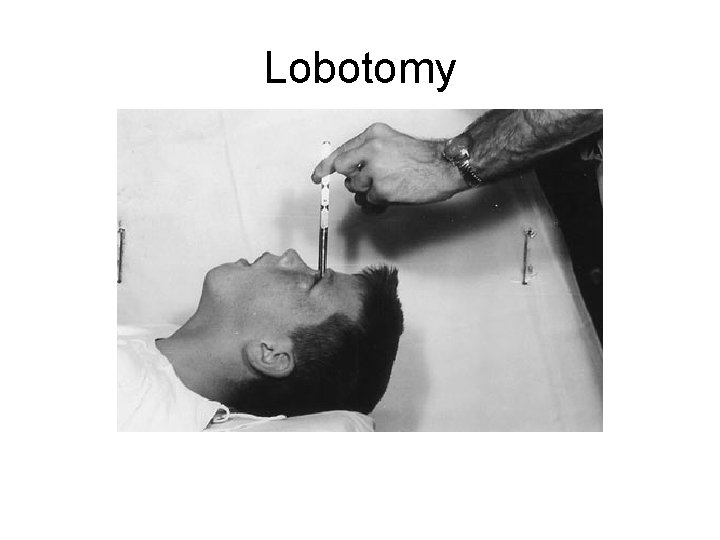
Lobotomy
Medical Perspective • Psychological disorders are sicknesses and can be diagnosed, treated and cured.
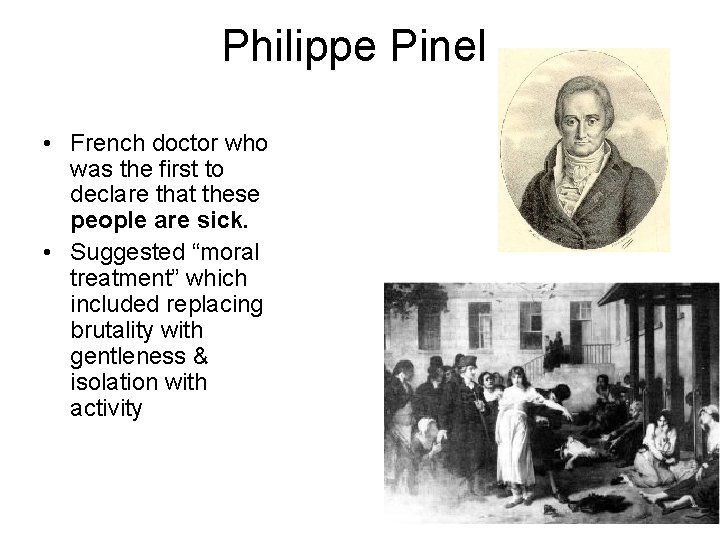
Philippe Pinel • French doctor who was the first to declare that these people are sick. • Suggested “moral treatment” which included replacing brutality with gentleness & isolation with activity
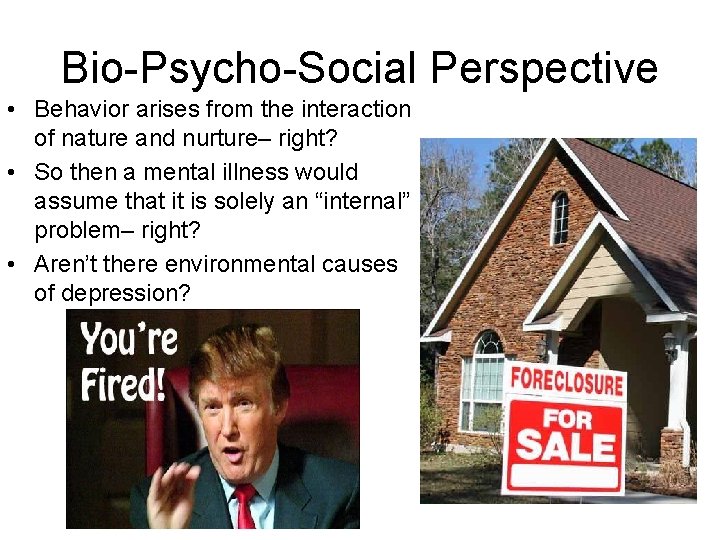
Bio-Psycho-Social Perspective • Behavior arises from the interaction of nature and nurture– right? • So then a mental illness would assume that it is solely an “internal” problem– right? • Aren’t there environmental causes of depression?
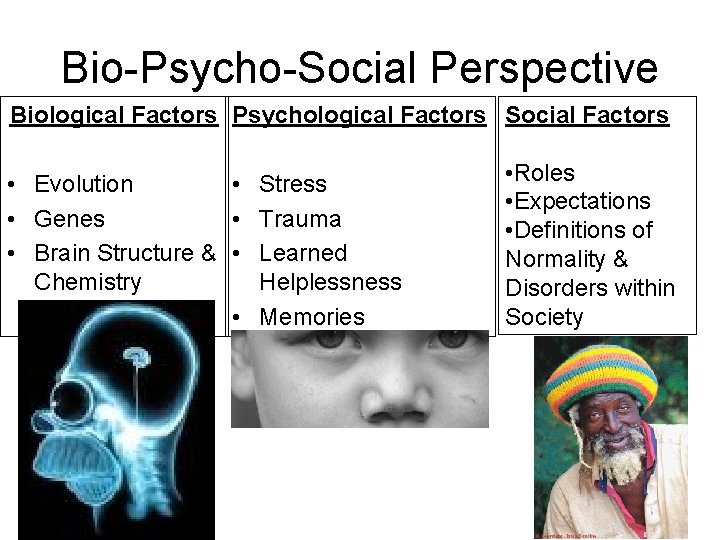
Bio-Psycho-Social Perspective Biological Factors Psychological Factors Social Factors • Evolution • Stress • Genes • Trauma • Brain Structure & • Learned Chemistry Helplessness • Memories • Roles • Expectations • Definitions of Normality & Disorders within Society
Behaviors-Worldwide Behaviors • Schizophrenia • Depression Culture-Bound Behaviors • Anorexia Nervosa (Western Cultures) • Susto- severe anxiety, restlessness, and fear of black magic (Latin America)
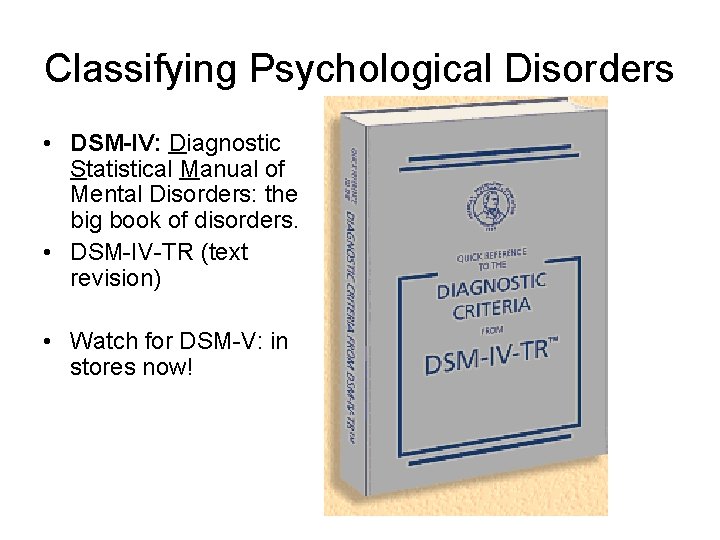
Classifying Psychological Disorders • DSM-IV: Diagnostic Statistical Manual of Mental Disorders: the big book of disorders. • DSM-IV-TR (text revision) • Watch for DSM-V: in stores now!
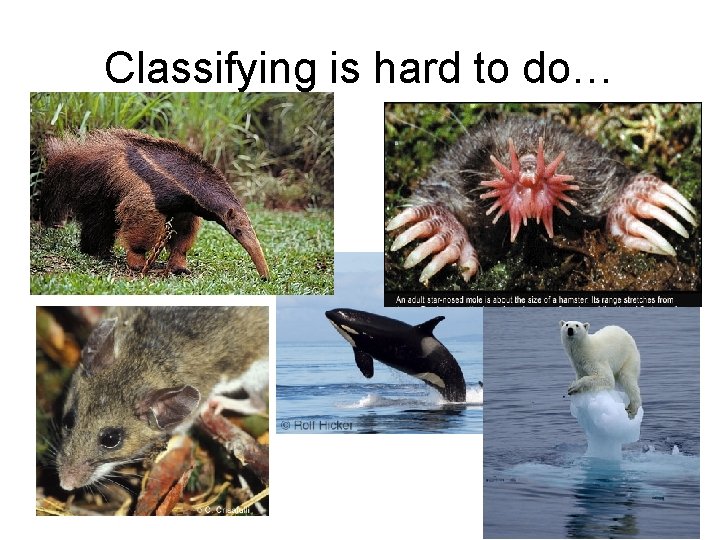
Classifying is hard to do…
Labeling is just as difficult • Labels can create preconceptions that unfairly stigmatize people and bias our perceptions of their past and present behavior
• David Rosenhan (1973) researchers were admitted into various mental hospitals after they falsely claimed to be “hearing voices” • Discharged with Schizophrenia “in remission”
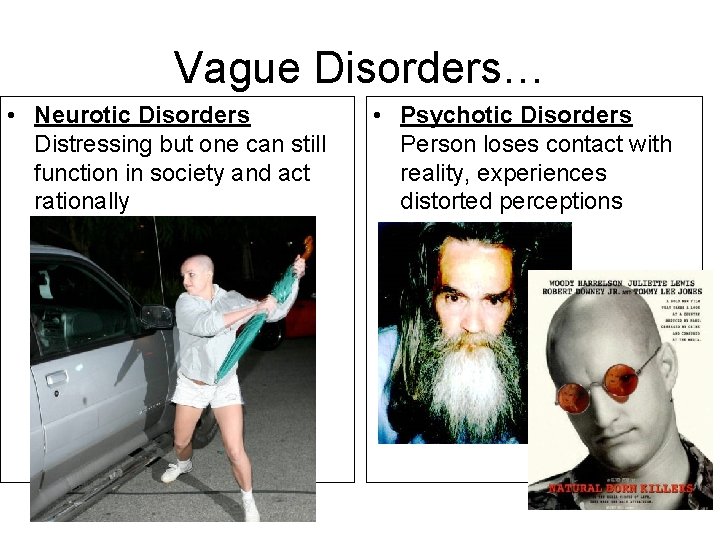
Vague Disorders… • Neurotic Disorders Distressing but one can still function in society and act rationally • Psychotic Disorders Person loses contact with reality, experiences distorted perceptions
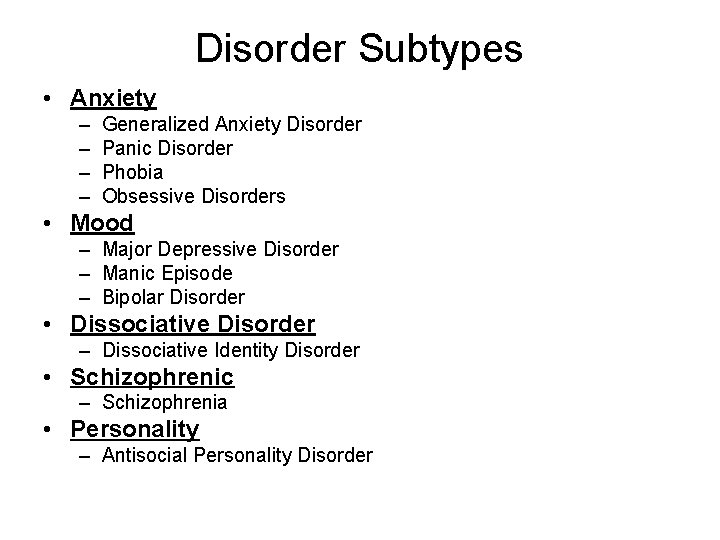
Disorder Subtypes • Anxiety – – Generalized Anxiety Disorder Panic Disorder Phobia Obsessive Disorders • Mood – Major Depressive Disorder – Manic Episode – Bipolar Disorder • Dissociative Disorder – Dissociative Identity Disorder • Schizophrenic – Schizophrenia • Personality – Antisocial Personality Disorder
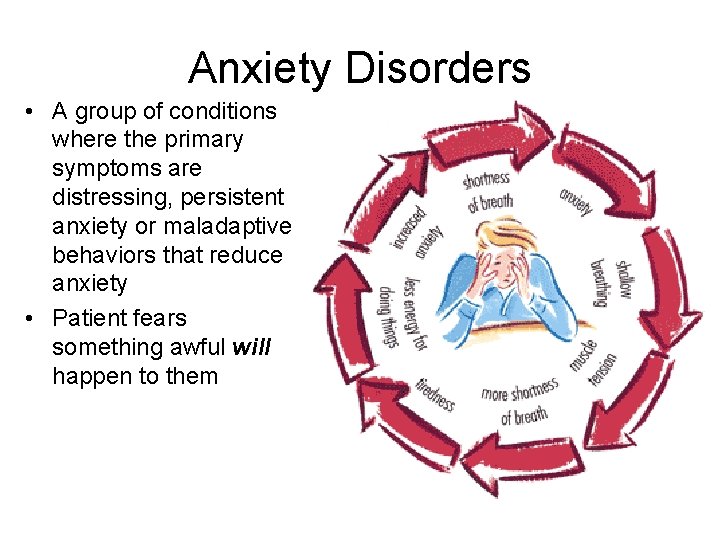
Anxiety Disorders • A group of conditions where the primary symptoms are distressing, persistent anxiety or maladaptive behaviors that reduce anxiety • Patient fears something awful will happen to them
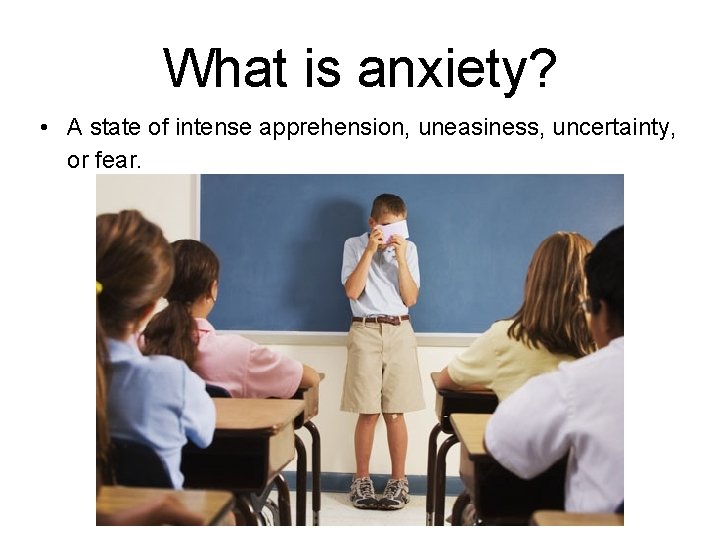
What is anxiety? • A state of intense apprehension, uneasiness, uncertainty, or fear.
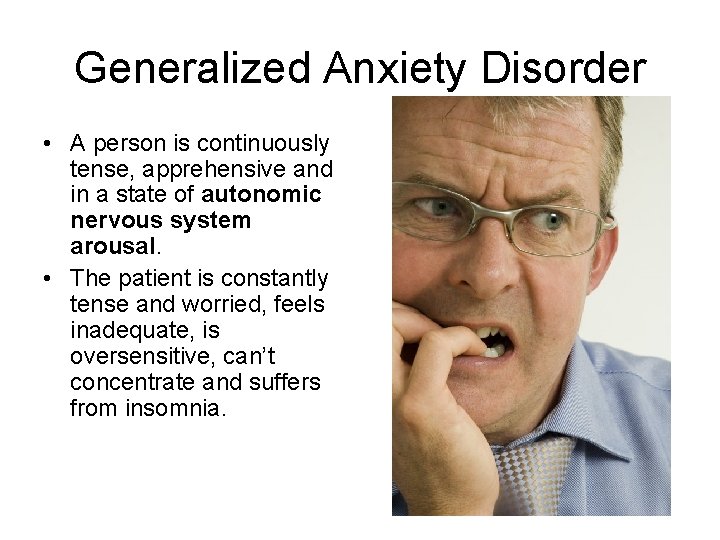
Generalized Anxiety Disorder • A person is continuously tense, apprehensive and in a state of autonomic nervous system arousal. • The patient is constantly tense and worried, feels inadequate, is oversensitive, can’t concentrate and suffers from insomnia.

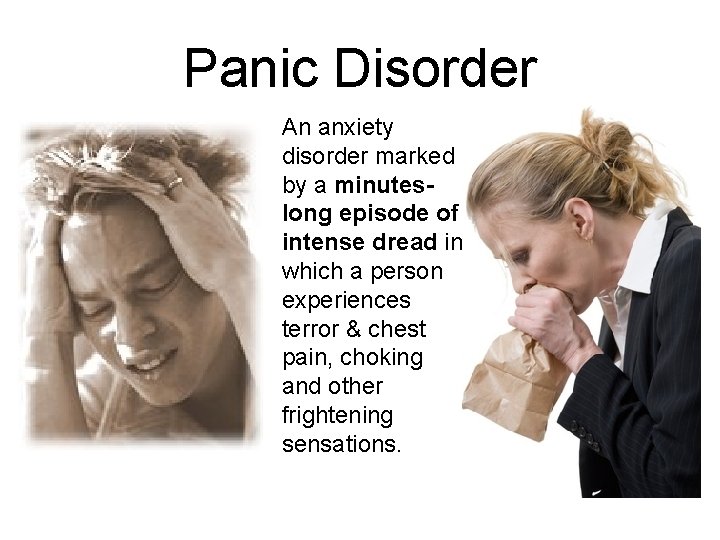
Panic Disorder • An anxiety disorder marked by a minuteslong episode of intense dread in which a person experiences terror & chest pain, choking and other frightening sensations.
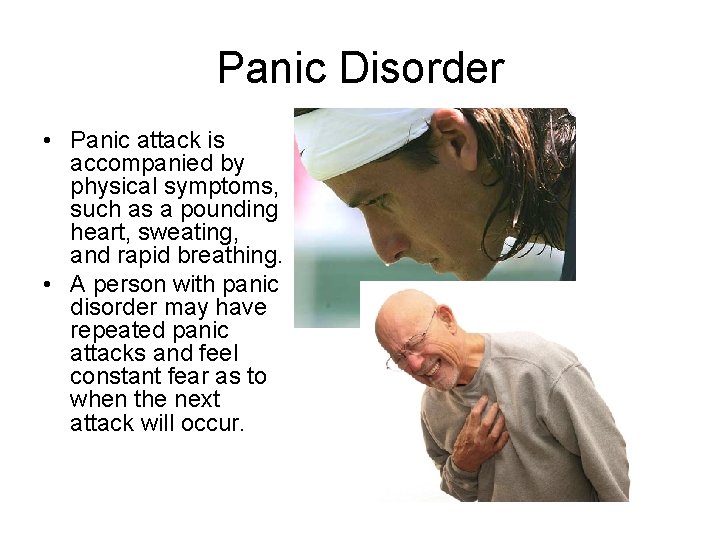
Panic Disorder • Panic attack is accompanied by physical symptoms, such as a pounding heart, sweating, and rapid breathing. • A person with panic disorder may have repeated panic attacks and feel constant fear as to when the next attack will occur.
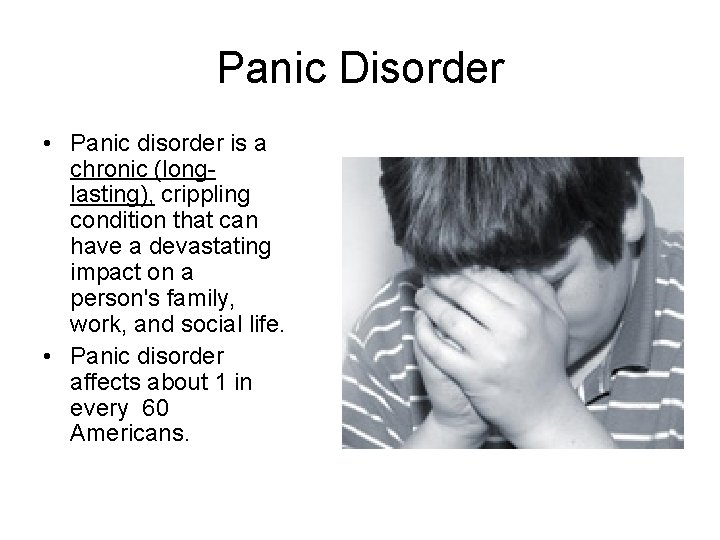
Panic Disorder • Panic disorder is a chronic (longlasting), crippling condition that can have a devastating impact on a person's family, work, and social life. • Panic disorder affects about 1 in every 60 Americans.
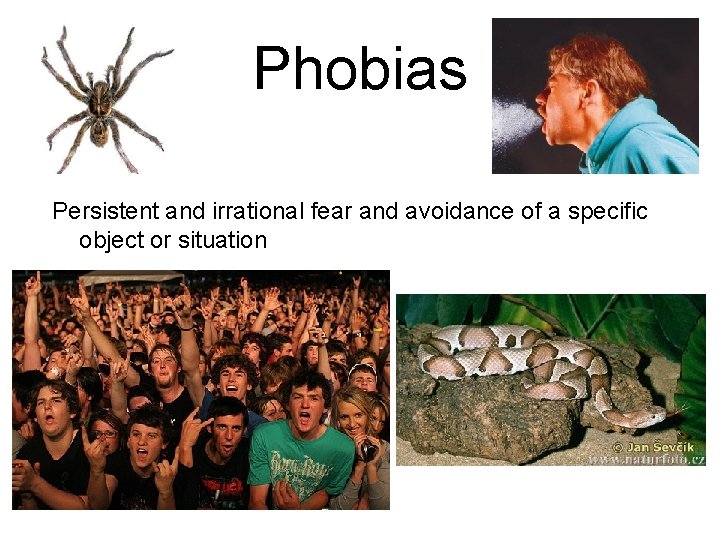
Phobias Persistent and irrational fear and avoidance of a specific object or situation

The Phobia List Link
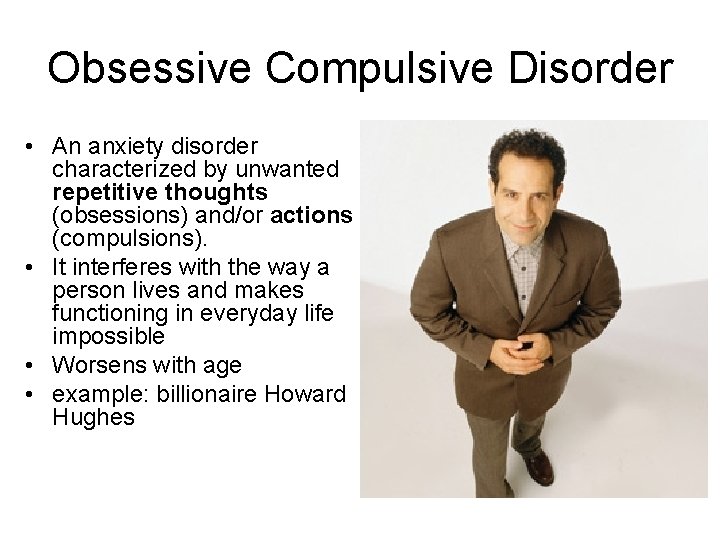
Obsessive Compulsive Disorder • An anxiety disorder characterized by unwanted repetitive thoughts (obsessions) and/or actions (compulsions). • It interferes with the way a person lives and makes functioning in everyday life impossible • Worsens with age • example: billionaire Howard Hughes
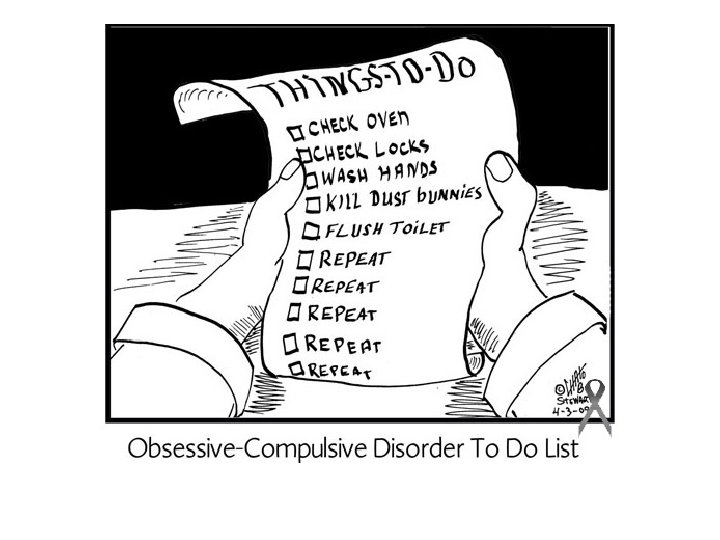
Common Examples of OCD Common Obsessions: • • Contamination fears of germs, dirt, disease Imagines harming self or others Imagines losing control of aggressive urges Intrusive sexual thoughts or urges Excessive religious or moral doubt Forbidden thoughts A need to have things "just so" A need to tell, ask, confess Common Compulsions: • • Washing Repeating Checking Touching Counting Ordering/arranging Hoarding or saving Praying
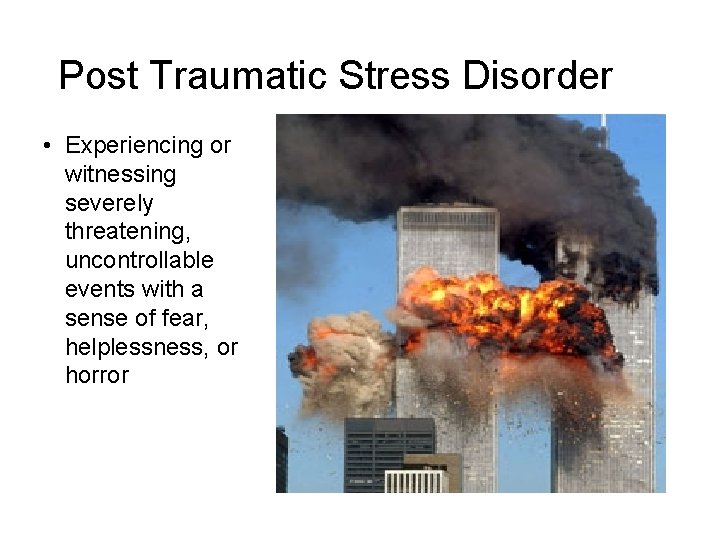
Post Traumatic Stress Disorder • Experiencing or witnessing severely threatening, uncontrollable events with a sense of fear, helplessness, or horror
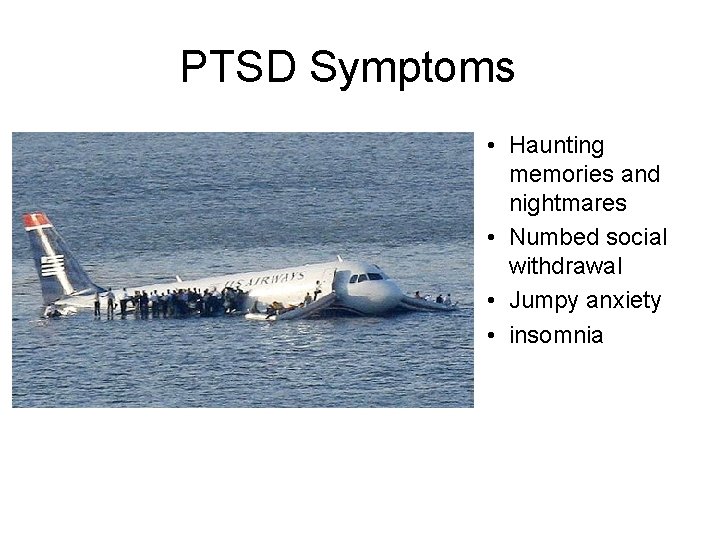
PTSD Symptoms • Haunting memories and nightmares • Numbed social withdrawal • Jumpy anxiety • insomnia
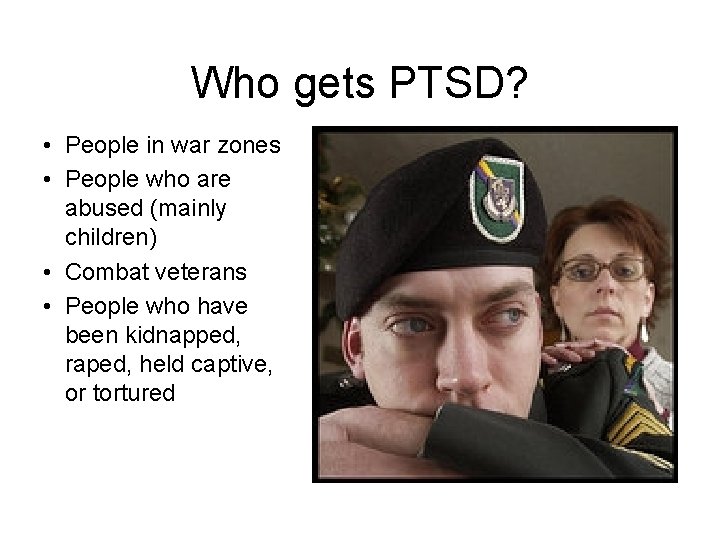
Who gets PTSD? • People in war zones • People who are abused (mainly children) • Combat veterans • People who have been kidnapped, raped, held captive, or tortured
OTHER INFO ABOUT PTSD: • The greater one’s emotional distress during a trauma, the higher the risk for post traumatic symptoms • Some psychologists believe that PTSD is over diagnosed • Most of the time PTSD symptoms will subside. ex: most combat-stressed veterans and rescuers cope well afterwards and go on to live productive lives
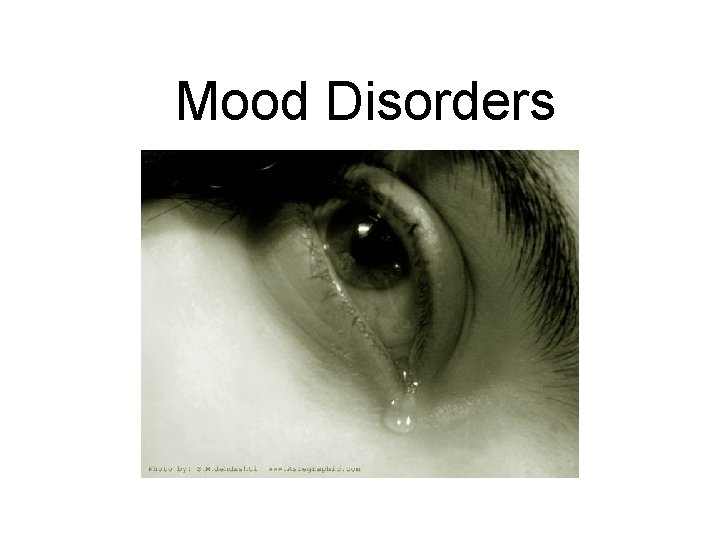
Mood Disorders
Mood Disorders • Psychological Disorders characterized by emotional extremes. – Dysthymic Disorder – Major Depressive Disorder – Seasonal Affective Disorder – Bipolar Disorder
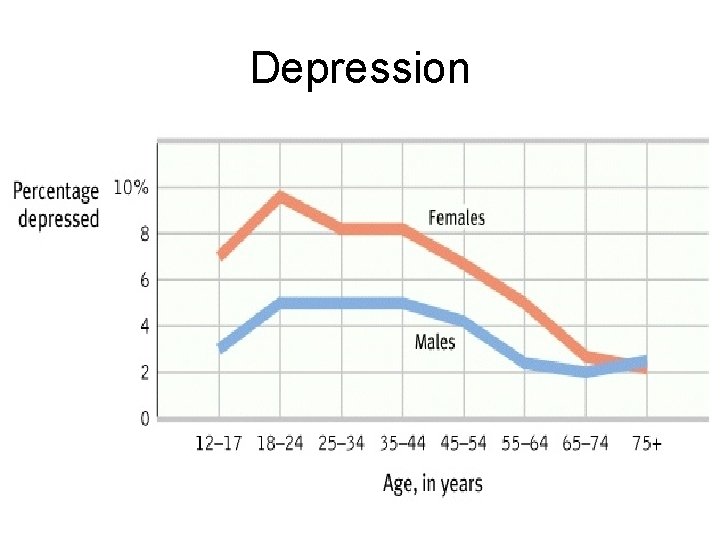
Depression • The common cold of psychological disorders. • It is like a warning that something is wrong
Depression
Depression
Depression
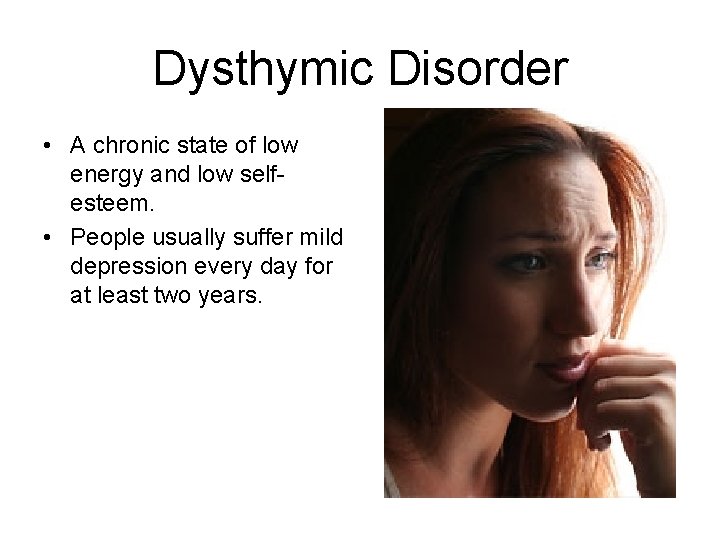
Dysthymic Disorder • A chronic state of low energy and low selfesteem. • People usually suffer mild depression every day for at least two years.
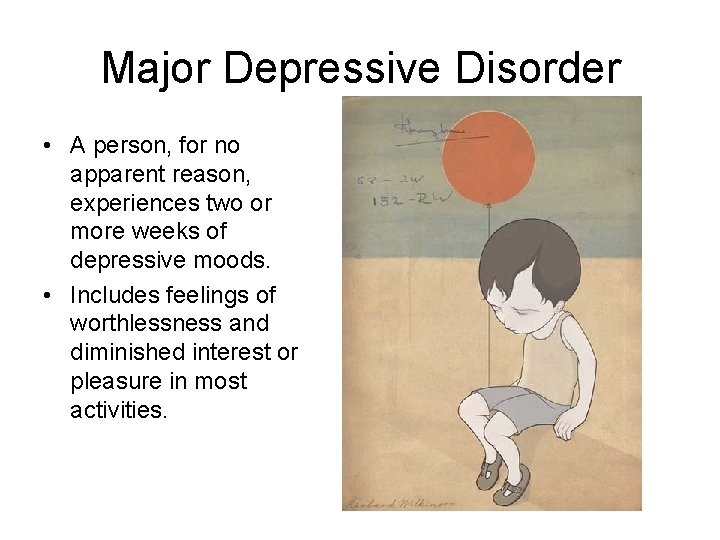
Major Depressive Disorder • A person, for no apparent reason, experiences two or more weeks of depressive moods. • Includes feelings of worthlessness and diminished interest or pleasure in most activities.
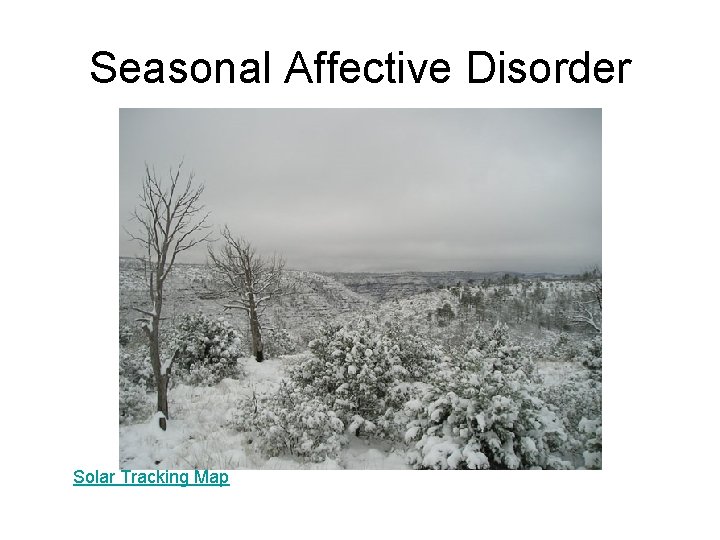
Seasonal Affective Disorder Solar Tracking Map
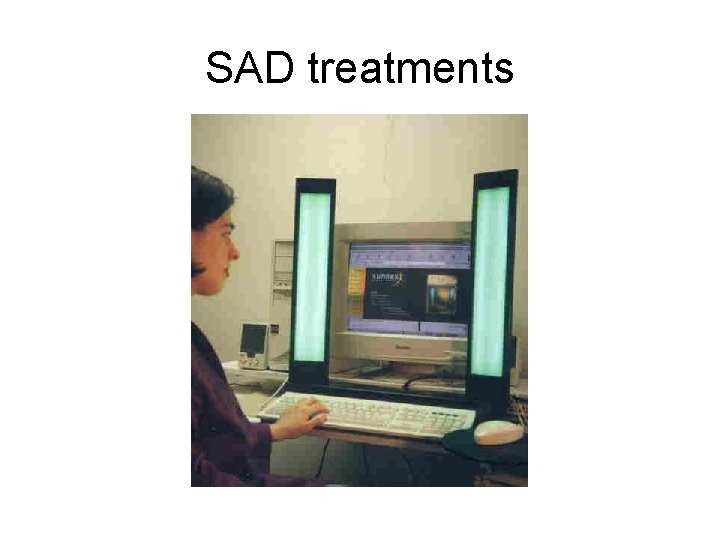
SAD treatments
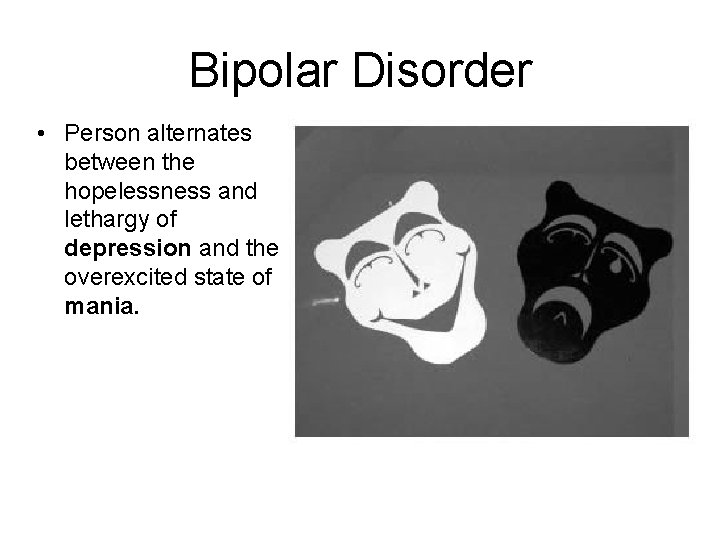
Bipolar Disorder • Person alternates between the hopelessness and lethargy of depression and the overexcited state of mania.
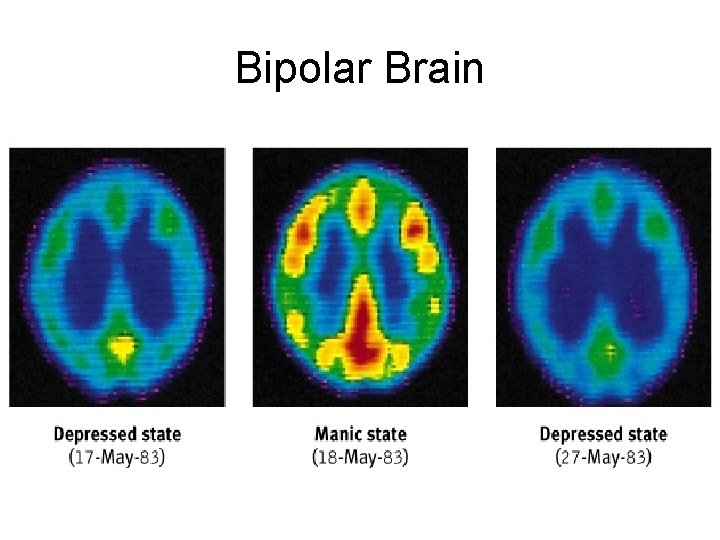
Bipolar Brain
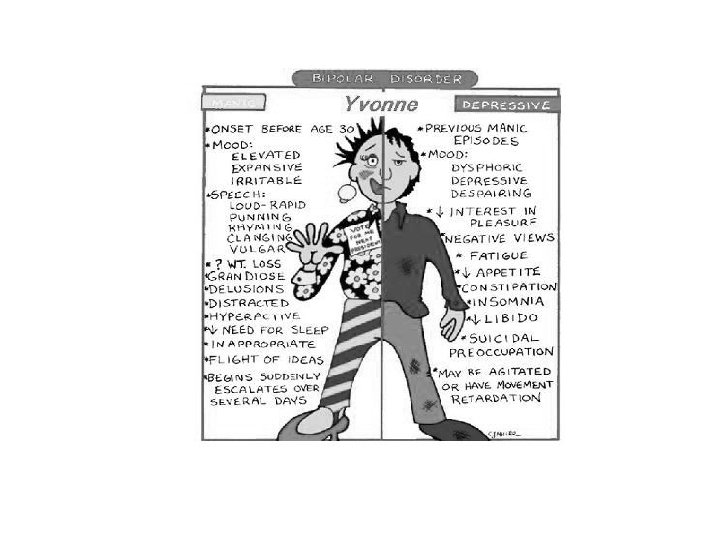
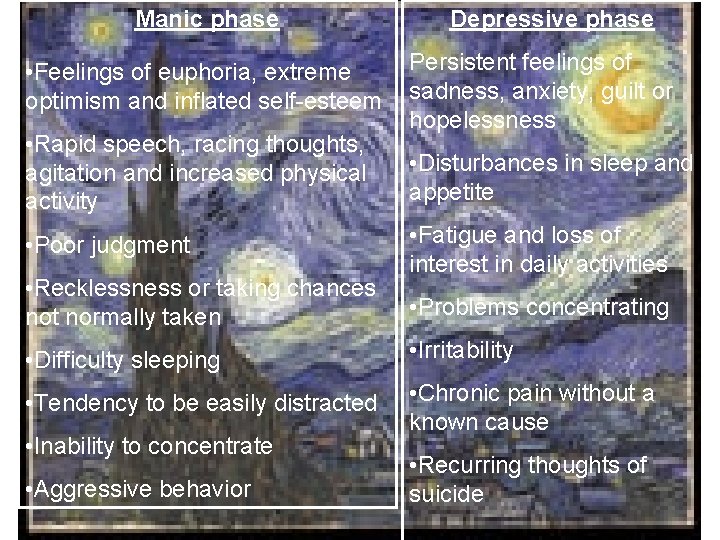
Manic phase • Feelings of euphoria, extreme optimism and inflated self-esteem • Rapid speech, racing thoughts, agitation and increased physical activity • Poor judgment • Recklessness or taking chances not normally taken Depressive phase Persistent feelings of sadness, anxiety, guilt or hopelessness • Disturbances in sleep and appetite • Fatigue and loss of interest in daily activities • Problems concentrating • Difficulty sleeping • Irritability • Tendency to be easily distracted • Chronic pain without a known cause • Inability to concentrate • Aggressive behavior • Recurring thoughts of suicide
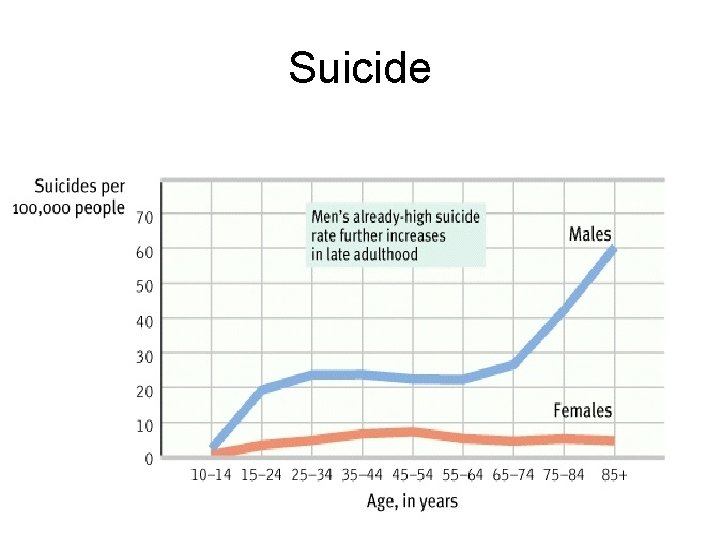
Suicide
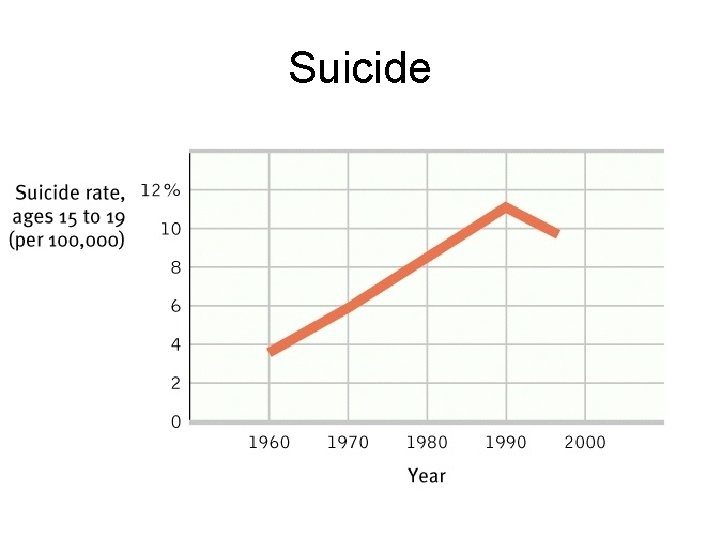
Suicide
Suicide
Explaining it all… 1. Many behavioral and cognitive changes accompany depression • We expect to fail • We feel unmotivated • We may even exhibit symptoms of another disorder like anxiety or drug and alcohol abuse
Explaining it all… 2. Depression in widespread– so, it’s causes must be common
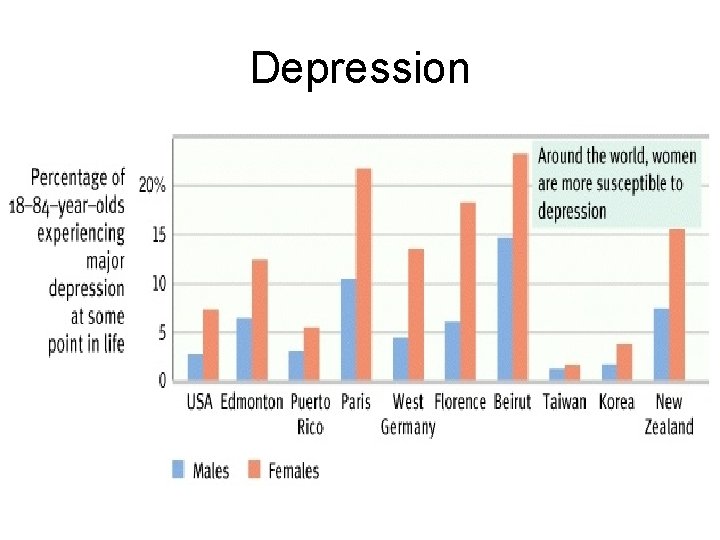
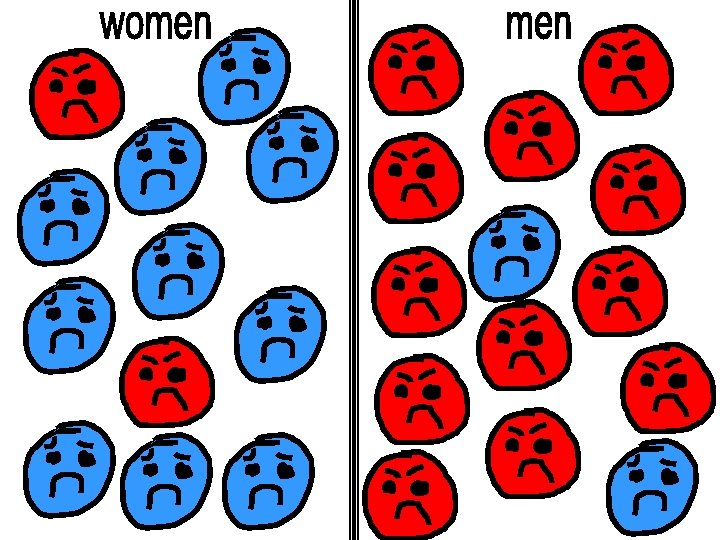
Explaining it all… 3. Women are twice as vulnerable to major depression, even more so if they have been depressed before • Women are vulnerable to more passive disorders– anxiety and depression • Men are vulnerable to more active disorders– alcohol abuse, antisocial contact, and impulse control • When women get sad– they get sadder than men • When men get mad– they get madder than women
Explaining it all… 4. Most major depressive episodes selfterminate • Therapy speeds recovery– but many people suffering from depression return to normal without professional help
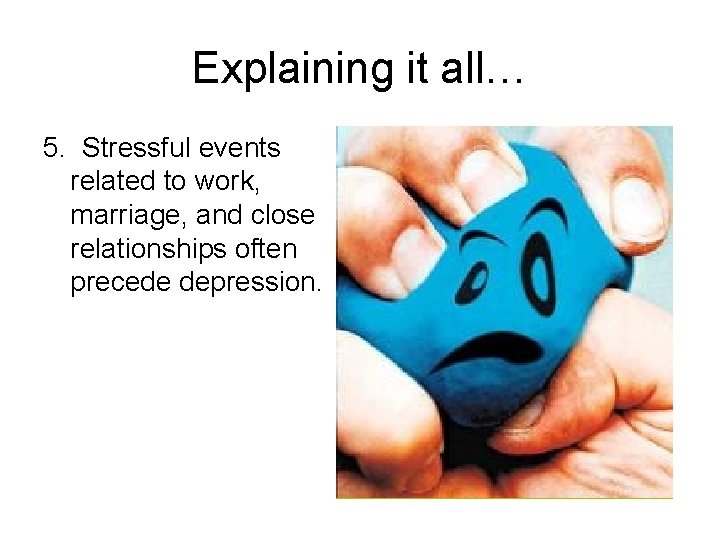
Explaining it all… 5. Stressful events related to work, marriage, and close relationships often precede depression.
WHY? • Genetic Influences– we inherit this stuff
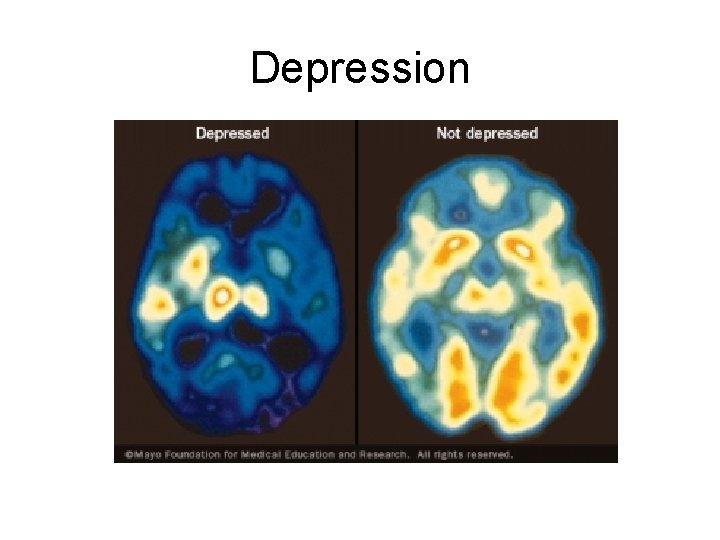
WHY? • Brain Chemistry— • Norepinephrine (boosts mood) is over abundant during mania and scarce during depression • Smoking temporarily increases norepinephrine and boosts mood (temporarily!!!) • Serotonin is also scarce during depression • Prozac, Zoloft, and Paxil block the reuptake of serotonin which allows for a “flood” of serotonin • Physical activity also increases serotonin– which helps combat depression
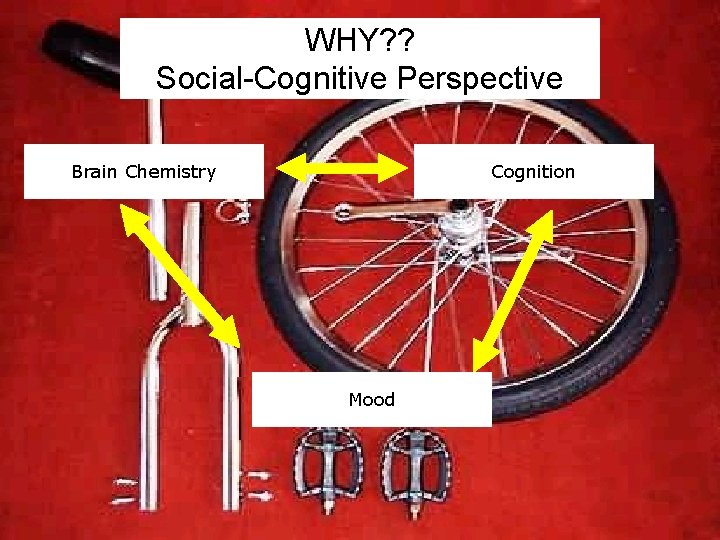
WHY? ? Social-Cognitive Perspective Brain Chemistry Cognition Mood
Attribution of Blame § Bad things happen… Self-Blame leads to depression § Learned Helplessness § Bad things are viewed as: § Stable (lasts forever) § Global (affects everything) § Internal (all my fault) § Pessimistic Attitude Depression
Women vs. Men • • Women twice as likely to be depressed Women more likely to be abused Women think, Men act Women react more strongly to stress § 34% Women vs. 16% Men felt “overwhelmed by all they had to do”
Young Americans • More likely to be depressed because – Individualism (more likely to take responsibility) – Decrease in family and religion
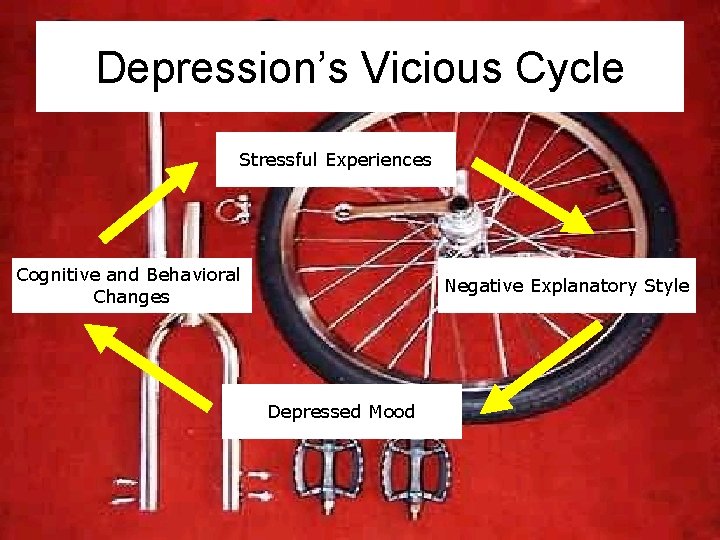
Depression’s Vicious Cycle Stressful Experiences Cognitive and Behavioral Changes Negative Explanatory Style Depressed Mood
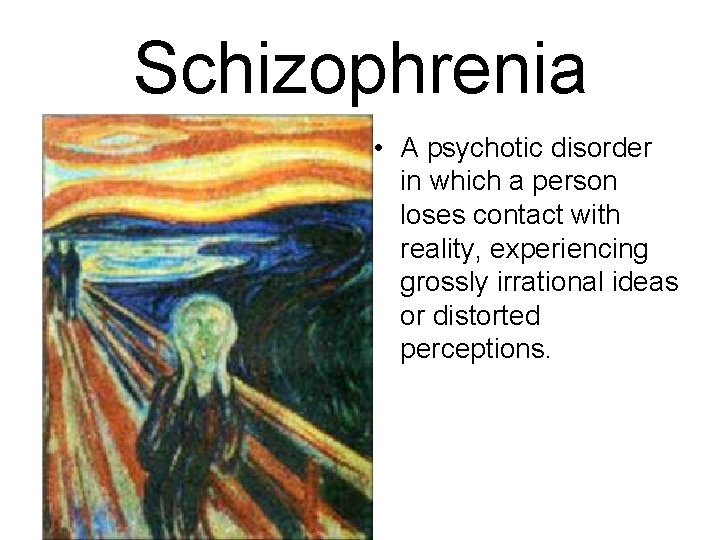
Schizophrenia • A psychotic disorder in which a person loses contact with reality, experiencing grossly irrational ideas or distorted perceptions.
How Prevalent? • According to your book, 1 in every 100 people will develop a form of schizophrenia.
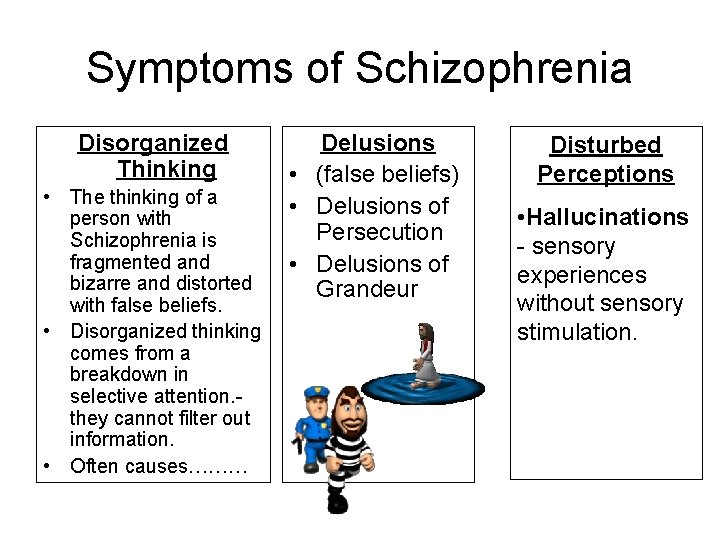
Symptoms of Schizophrenia Disorganized Thinking • The thinking of a person with Schizophrenia is fragmented and bizarre and distorted with false beliefs. • Disorganized thinking comes from a breakdown in selective attention. they cannot filter out information. • Often causes……… Delusions • (false beliefs) • Delusions of Persecution • Delusions of Grandeur Disturbed Perceptions • Hallucinations - sensory experiences without sensory stimulation.
Inappropriate Emotions & Actions • There is a breakdown of selective attention in those who suffer from schizophrenia– so they may… – – Laugh at inappropriate times. Appear Emotionless or Flat Do senseless, compulsive acts. Be catatonic- or motionless
Subtypes of Schizophrenia Chronic • Slow developing • Recovery is doubtful Acute • Develops rapidly • Triggered as a reaction to particular life stresses • Recovery is more likely than chronic
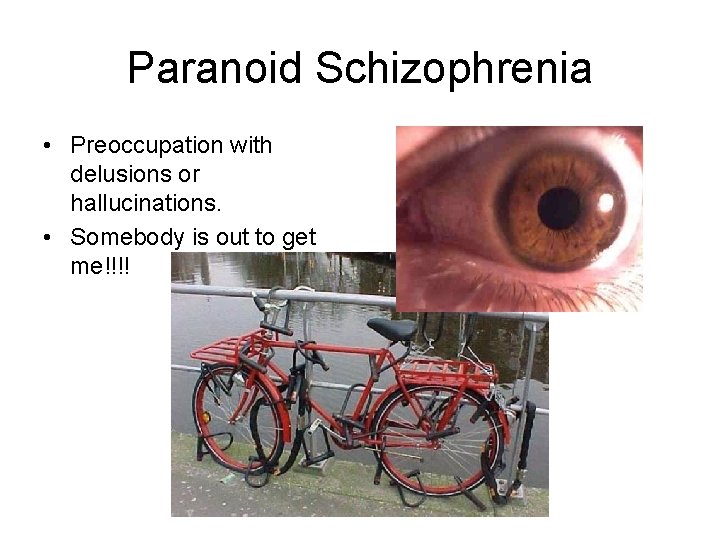
Paranoid Schizophrenia • Preoccupation with delusions or hallucinations. • Somebody is out to get me!!!!
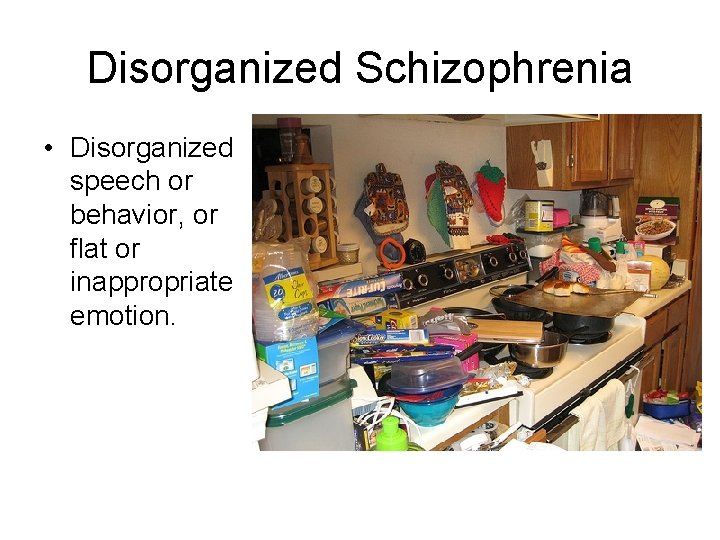
Disorganized Schizophrenia • Disorganized speech or behavior, or flat or inappropriate emotion.
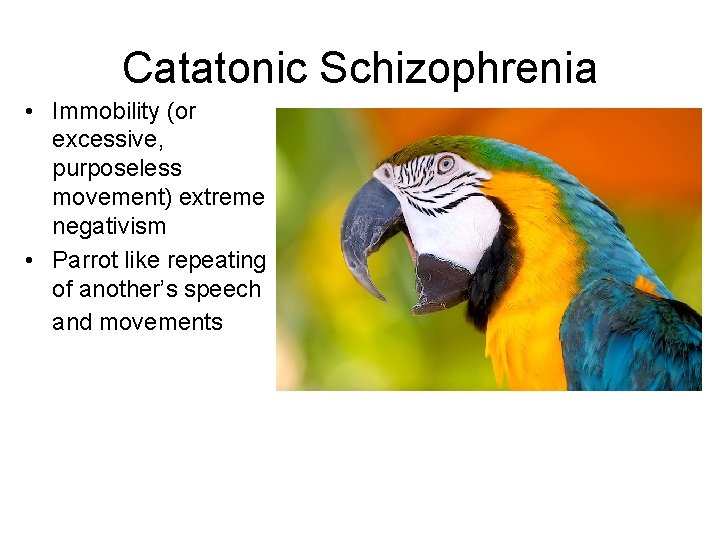
Catatonic Schizophrenia • Immobility (or excessive, purposeless movement) extreme negativism • Parrot like repeating of another’s speech and movements
Brian Abnormalities With Schizophrenia
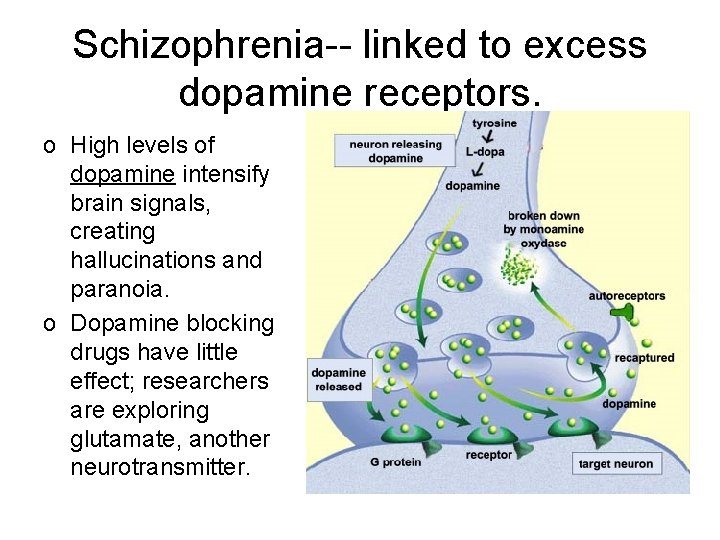
Schizophrenia-- linked to excess dopamine receptors. o High levels of dopamine intensify brain signals, creating hallucinations and paranoia. o Dopamine blocking drugs have little effect; researchers are exploring glutamate, another neurotransmitter.
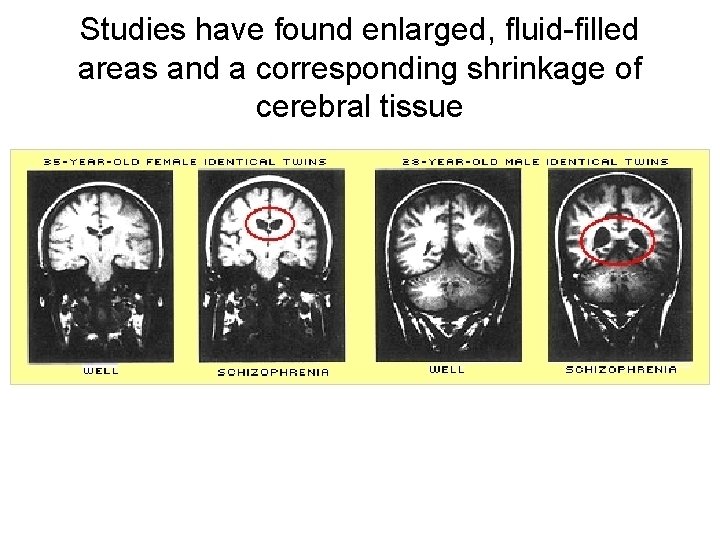
Studies have found enlarged, fluid-filled areas and a corresponding shrinkage of cerebral tissue
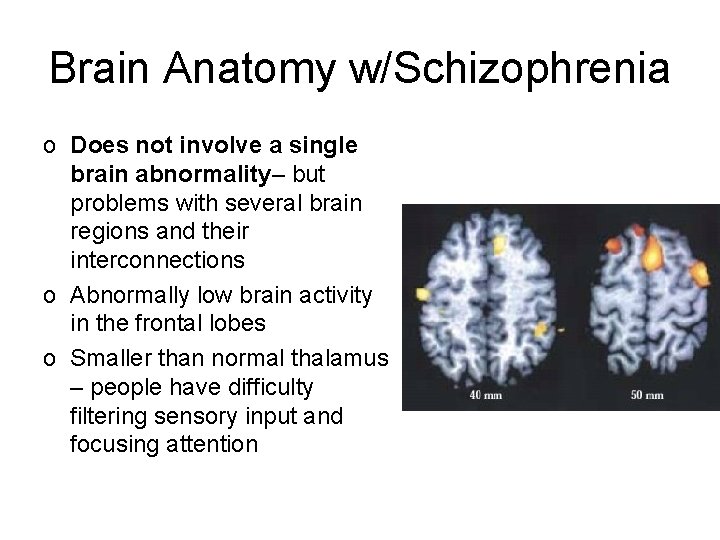
Brain Anatomy w/Schizophrenia o Does not involve a single brain abnormality– but problems with several brain regions and their interconnections o Abnormally low brain activity in the frontal lobes o Smaller than normal thalamus – people have difficulty filtering sensory input and focusing attention
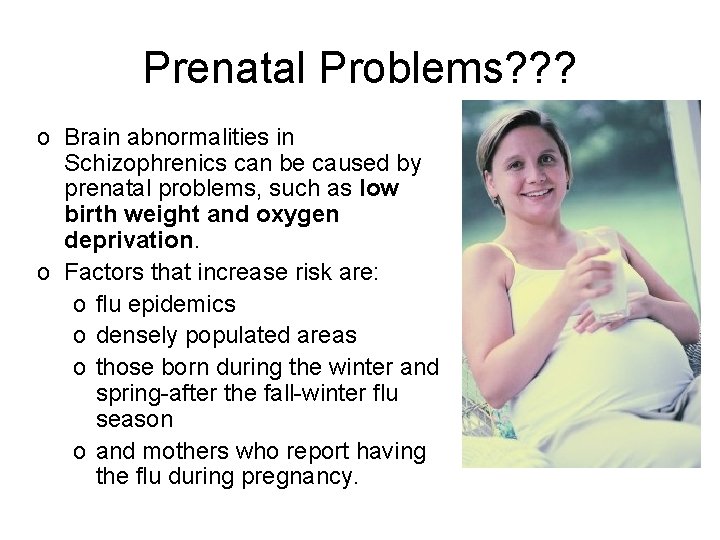
Prenatal Problems? ? ? o Brain abnormalities in Schizophrenics can be caused by prenatal problems, such as low birth weight and oxygen deprivation. o Factors that increase risk are: o flu epidemics o densely populated areas o those born during the winter and spring-after the fall-winter flu season o and mothers who report having the flu during pregnancy.
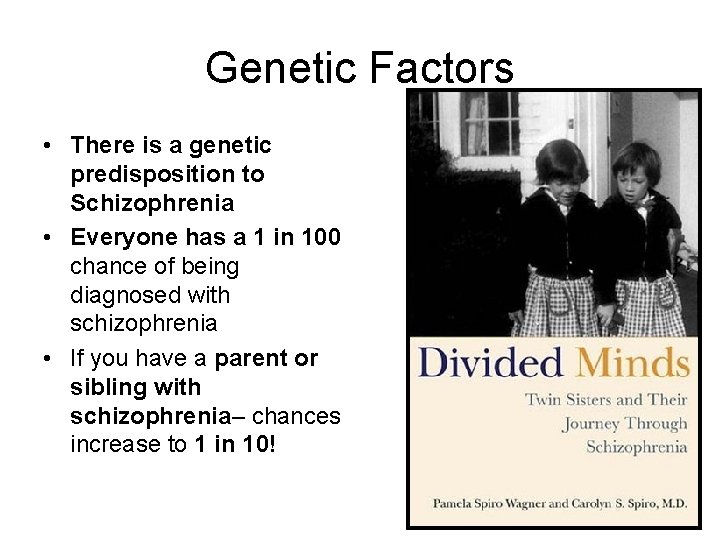
Genetic Factors • There is a genetic predisposition to Schizophrenia • Everyone has a 1 in 100 chance of being diagnosed with schizophrenia • If you have a parent or sibling with schizophrenia– chances increase to 1 in 10!
Psychological Factors • Can stress trigger schizophrenia? • Maybe… or is it that those who have schizophrenia report reaction to stress and have poor communication with their parents, • It is the cause or the result? • Bio-Psycho-Social perspective looks at the interplay of all factors
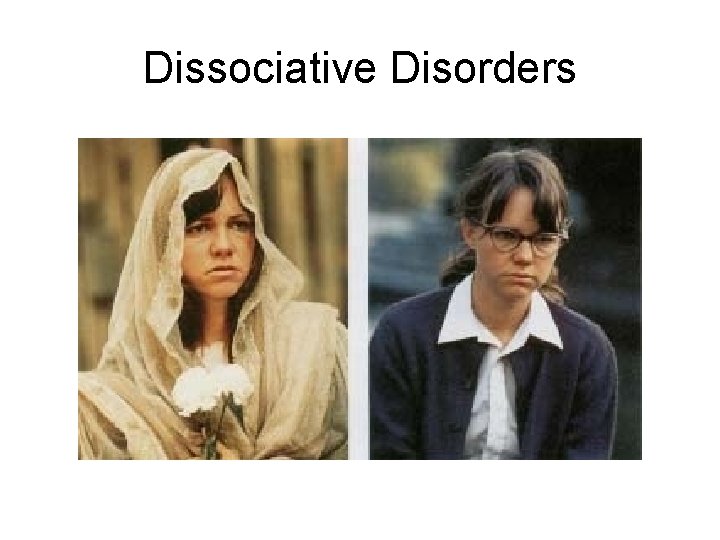
Dissociative Disorders
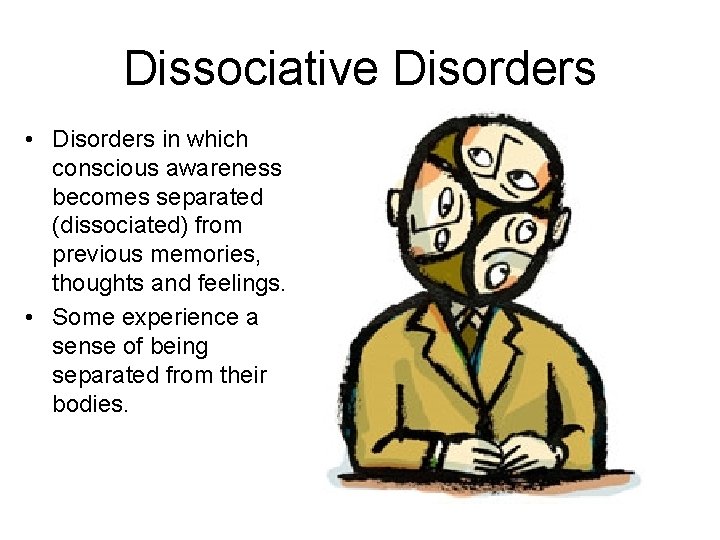
Dissociative Disorders • Disorders in which conscious awareness becomes separated (dissociated) from previous memories, thoughts and feelings. • Some experience a sense of being separated from their bodies.
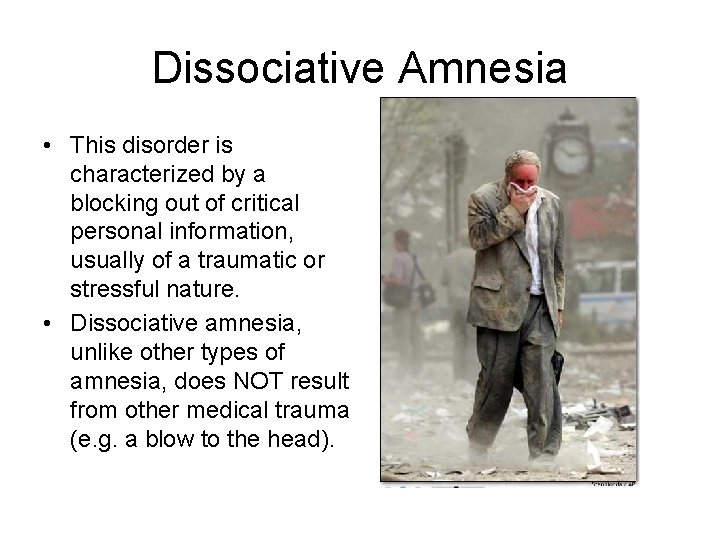
Dissociative Amnesia • This disorder is characterized by a blocking out of critical personal information, usually of a traumatic or stressful nature. • Dissociative amnesia, unlike other types of amnesia, does NOT result from other medical trauma (e. g. a blow to the head).
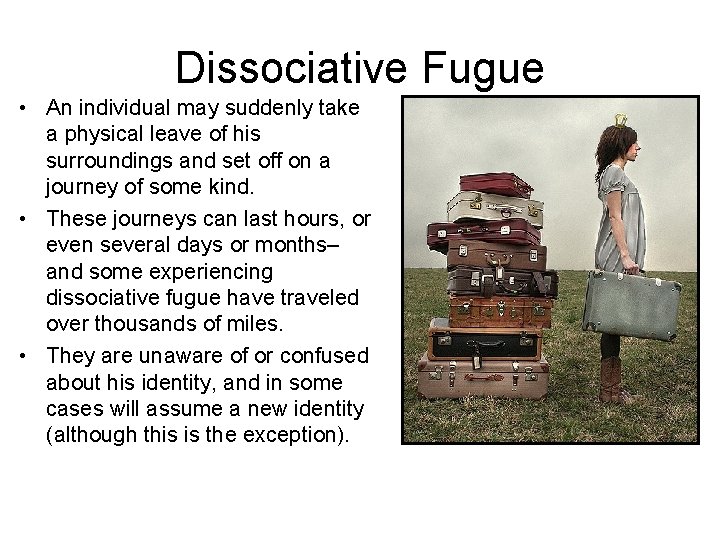
Dissociative Fugue • An individual may suddenly take a physical leave of his surroundings and set off on a journey of some kind. • These journeys can last hours, or even several days or months– and some experiencing dissociative fugue have traveled over thousands of miles. • They are unaware of or confused about his identity, and in some cases will assume a new identity (although this is the exception).
Dissociative Identity Disorder • A rare dissociative disorder in which a person exhibits two or more distinct and alternating personalities. • Also known as multiple personality disorder.
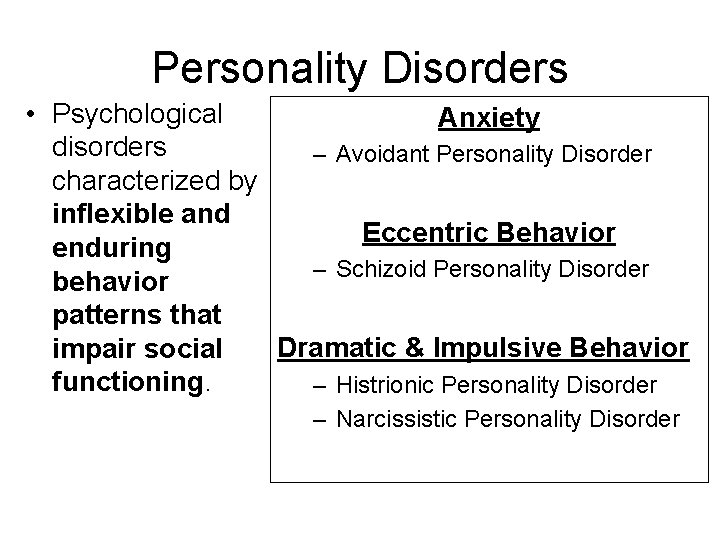
Personality Disorders • Psychological Anxiety disorders – Avoidant Personality Disorder characterized by inflexible and Eccentric Behavior enduring – Schizoid Personality Disorder behavior patterns that Dramatic & Impulsive Behavior impair social functioning. – Histrionic Personality Disorder – Narcissistic Personality Disorder
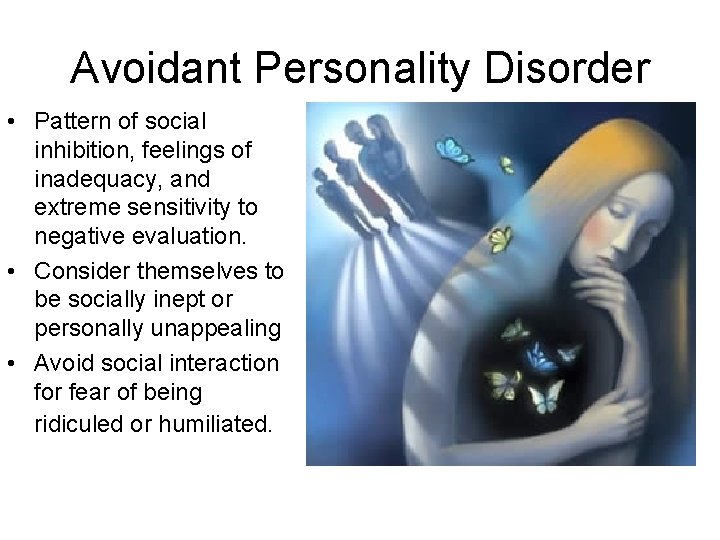
Avoidant Personality Disorder • Pattern of social inhibition, feelings of inadequacy, and extreme sensitivity to negative evaluation. • Consider themselves to be socially inept or personally unappealing • Avoid social interaction for fear of being ridiculed or humiliated.
Paranoid Personality Disorder • Characterized by a distrust of others and a constant suspicion that people around you have sinister motives. • They search for hidden meanings in everything and read hostile intentions into the actions of others. • They are quick to challenge the loyalties of friends and loved ones and often appear cold and distant to others.
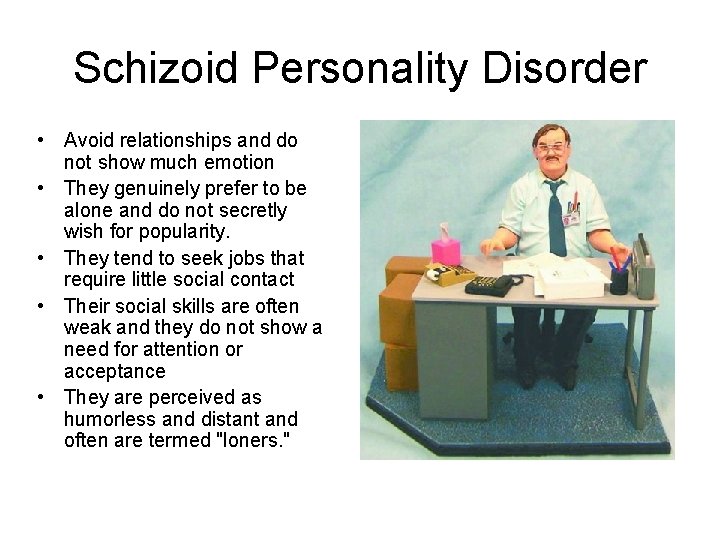
Schizoid Personality Disorder • Avoid relationships and do not show much emotion • They genuinely prefer to be alone and do not secretly wish for popularity. • They tend to seek jobs that require little social contact • Their social skills are often weak and they do not show a need for attention or acceptance • They are perceived as humorless and distant and often are termed "loners. "
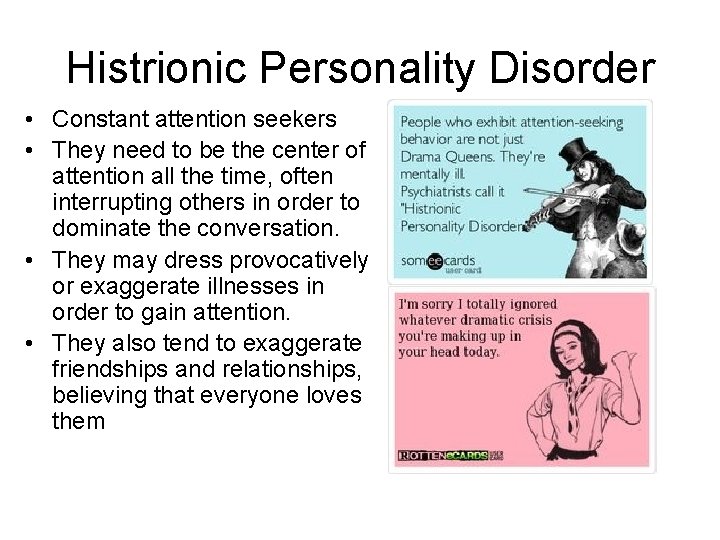
Histrionic Personality Disorder • Constant attention seekers • They need to be the center of attention all the time, often interrupting others in order to dominate the conversation. • They may dress provocatively or exaggerate illnesses in order to gain attention. • They also tend to exaggerate friendships and relationships, believing that everyone loves them
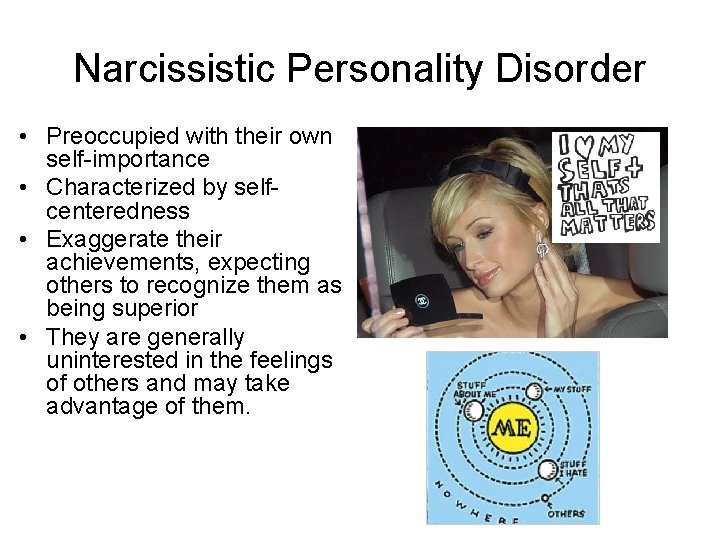
Narcissistic Personality Disorder • Preoccupied with their own self-importance • Characterized by selfcenteredness • Exaggerate their achievements, expecting others to recognize them as being superior • They are generally uninterested in the feelings of others and may take advantage of them.
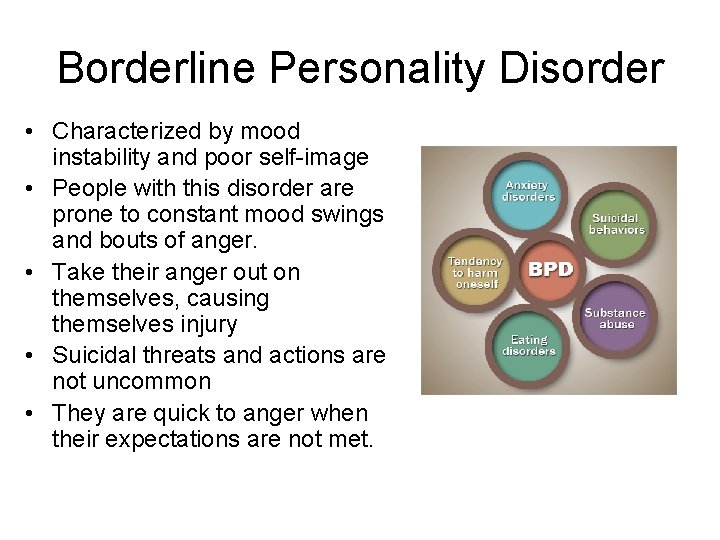
Borderline Personality Disorder • Characterized by mood instability and poor self-image • People with this disorder are prone to constant mood swings and bouts of anger. • Take their anger out on themselves, causing themselves injury • Suicidal threats and actions are not uncommon • They are quick to anger when their expectations are not met.
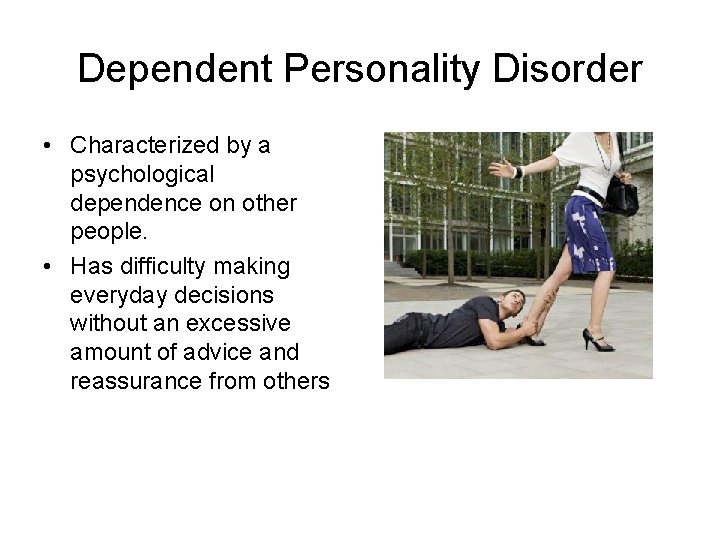
Dependent Personality Disorder • Characterized by a psychological dependence on other people. • Has difficulty making everyday decisions without an excessive amount of advice and reassurance from others
Antisocial Personality Disorder (formerly called sociopath or psychopath) • More common among men than women • Characterized by a lack of conscience • Prone to criminal behavior, believing that their victims are weak and deserving of being taken advantage of. • They are careless with money and take action without thinking about consequences • Are aggressive and more concerned with their own needs than the needs of others.
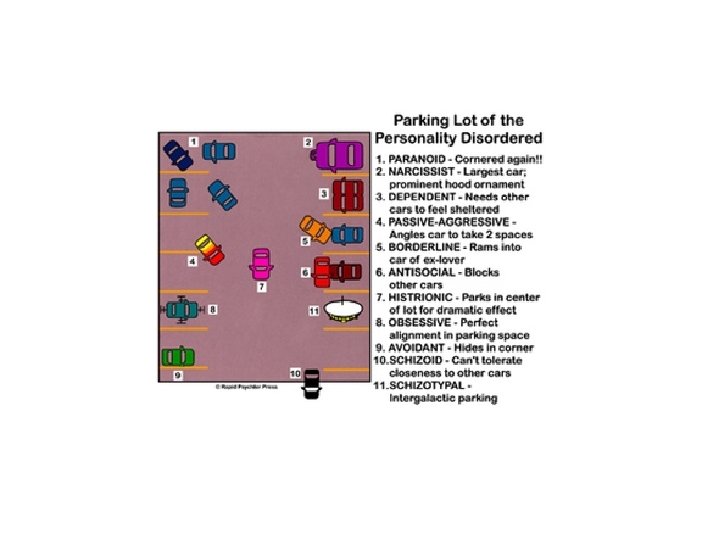
- Slides: 99