
ABNORMAL PSYCHOLOGY CAUSES OF ABNORMAL BEHAVIOR CAUSES OF
ABNORMAL PSYCHOLOGY

CAUSES OF ABNORMAL BEHAVIOR

CAUSES OF ABNORMAL BEHAVIOR �Biological/Genetic �View as mental disorder – similar to physical disorders �Diagnosis and treatment Nervous system and the brain

CAUSES OF ABNORMAL BEHAVIOR �Cognitive –Emotional Deficits in cognitive processes, thoughts and beliefs

CAUSES OF ABNORMAL BEHAVIOR �Environmental Unconscious conflicts Problems during Freudian psychosexual stages Childhood
DEFINITIONS OF ABNORMAL BEHAVIOR
DEFINITIONS OF ABNORMAL BEHAVIOR �Statistical Frequency Occurrence of behavior compared to the behavior of the general public What is abnormal compared to everyone else?

DEFINITIONS OF ABNORMAL BEHAVIOR �Deviation from Social Norms �Behavior deviates from acceptable standards, norms or values �What is deviant behavior?
DEFINITIONS OF ABNORMAL BEHAVIOR �Maladaptive Behavior �Behavior interferes with an individual’s ability to function in society �Best definition �When does behavior interfere with functioning?
ANXIETY DISORDERS
ANXIETY DISORDERS �Generalized Anxiety �Excessive or unrealistic worry about everything something bad will happen �Treatment usually antidepressants or tranquilizers
ANXIETY DISORDERS �Panic Disorder �Recurrent or unexpected panic attacks dying, losing control, choking, chest pains �Anticipatory panic can lead �Treatment Ativan, Xanax to agoraphobia
ANXIETY DISORDERS �Phobias �Intense and irrational fear Out of proportion to the danger �Intense anxiety and avoidant behavior �Treatment – cognitive behavioral therapy and exposure therapy
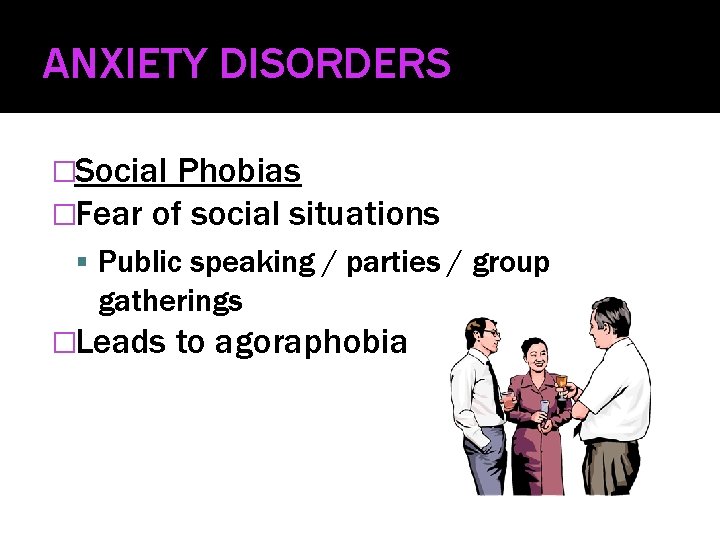
ANXIETY DISORDERS �Social Phobias �Fear of social situations Public speaking / parties / group gatherings �Leads to agoraphobia
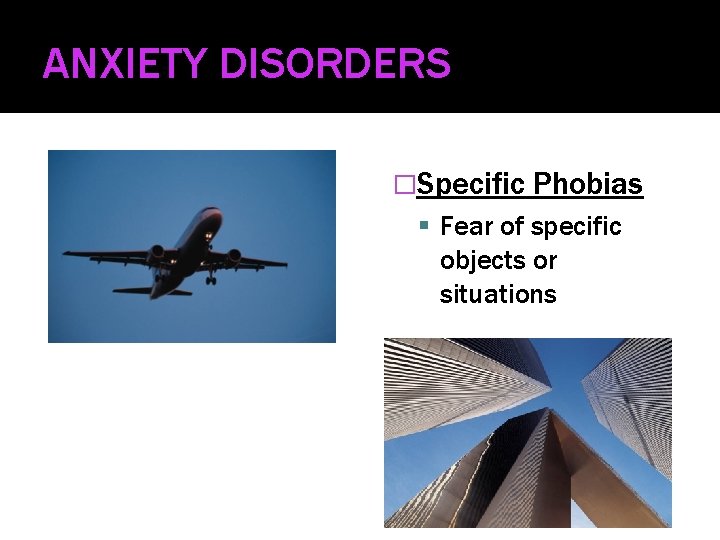
ANXIETY DISORDERS �Specific Phobias Fear of specific objects or situations
ANXIETY DISORDERS �Obsessive Compulsive Disorder �Obsessions, recurring irrational thoughts, impulses or images �Treatment Anti-anxiety medication (Clomipramine/Anafranil ) Cognitive behavioral /exposure therapy
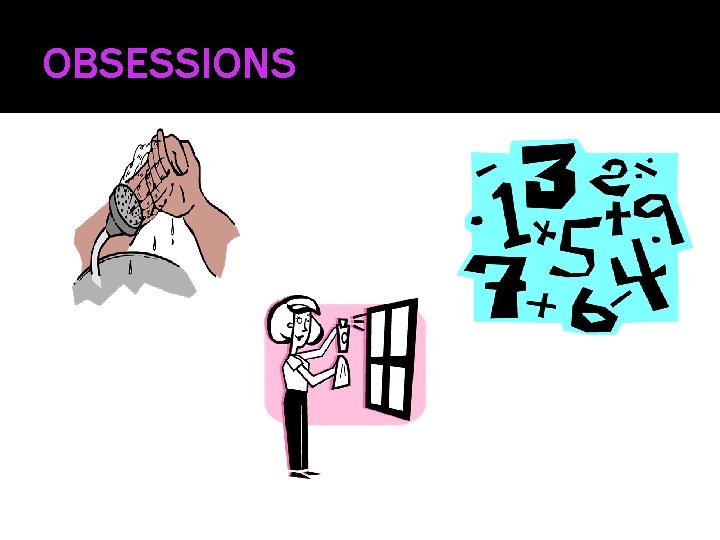
OBSESSIONS
SYMPTOMS OF OCD �Obsessions Thoughts �Aggressive harming self or others, horrific images, criminal impulses �Contamination body waste, germs, chemicals �Symmetry and Order exact or precise
SYMPTOMS OF OCD � Compulsions Actions � Somatic - preoccupied with body parts � Counting – certain numbers � Checking – doors, locks, appliances � Repeating rituals � Ordering and arranging � Hoarding and collecting – papers, garbage, animals
MOOD DISORDERS
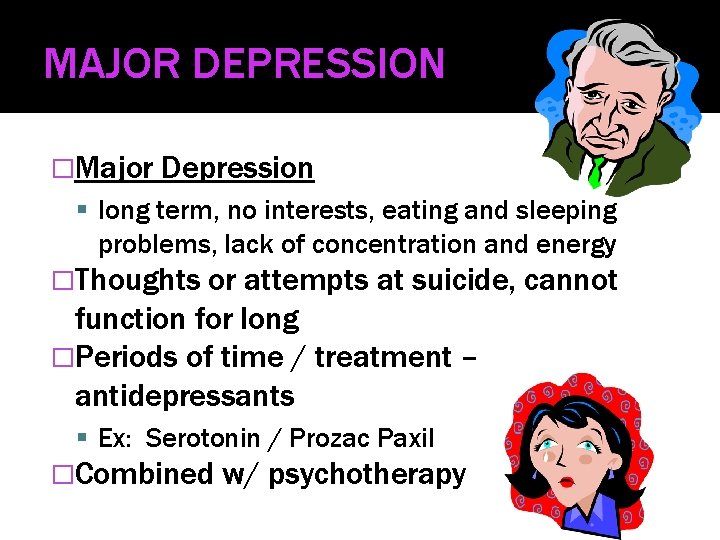
MAJOR DEPRESSION �Major Depression long term, no interests, eating and sleeping problems, lack of concentration and energy �Thoughts or attempts at suicide, cannot function for long �Periods of time / treatment – antidepressants Ex: Serotonin / Prozac Paxil �Combined w/ psychotherapy
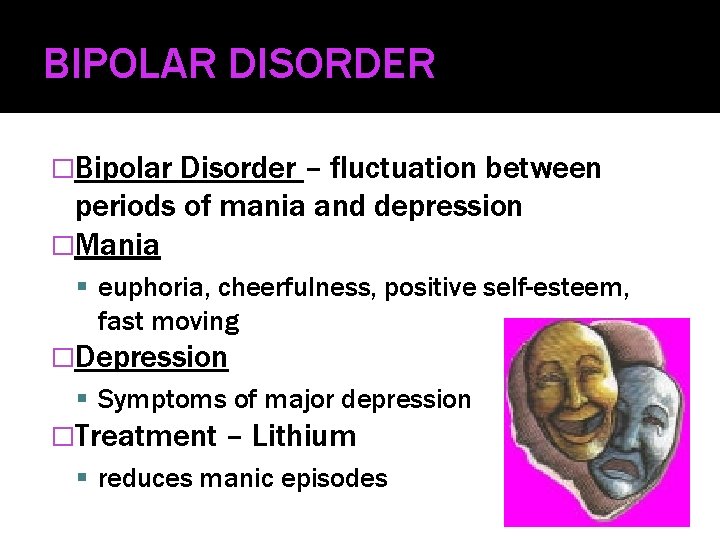
BIPOLAR DISORDER �Bipolar Disorder – fluctuation between periods of mania and depression �Mania euphoria, cheerfulness, positive self-esteem, fast moving �Depression Symptoms of major depression �Treatment – Lithium reduces manic episodes
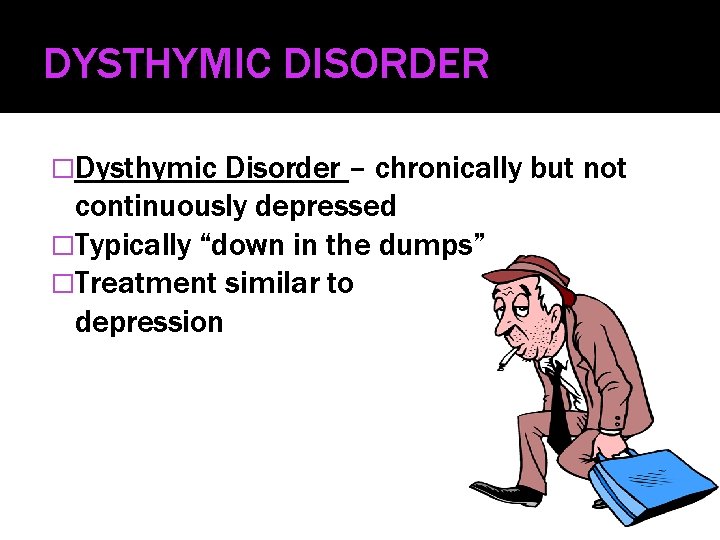
DYSTHYMIC DISORDER �Dysthymic Disorder – chronically but not continuously depressed �Typically “down in the dumps” �Treatment similar to depression
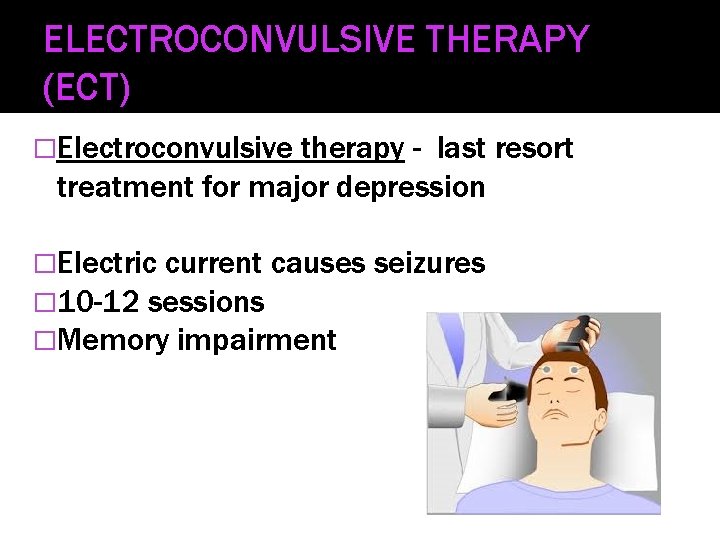
ELECTROCONVULSIVE THERAPY (ECT) �Electroconvulsive therapy - last resort treatment for major depression �Electric current causes � 10 -12 sessions �Memory impairment seizures
CAUSES OF MOOD DISORDERS �Biological – underlying genetic, neurological or physiological predisposed factors �Psychosocial – personality traits, amount of social support, ability to deal with stress combined with biological factors
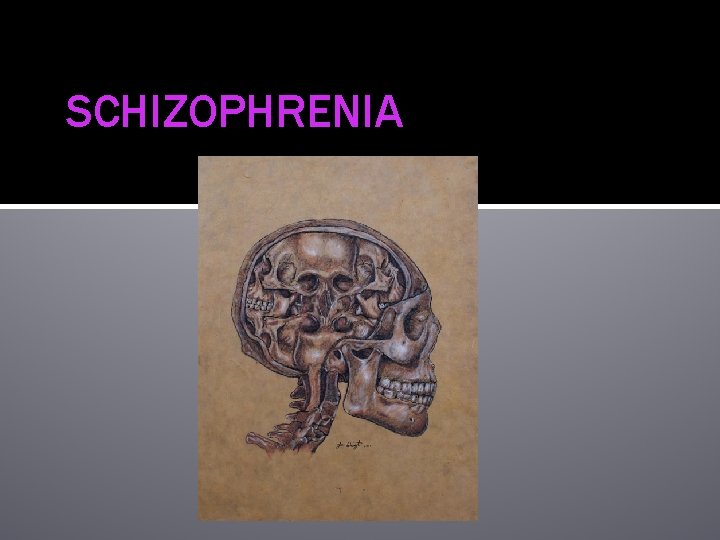
SCHIZOPHRENIA
SCHIZOPHRENIA �Type I - Positive symptoms Distorted thinking Delusions / no intellectual impairment Best chance of recovery �Type II – Negative symptoms Dulled emotions Little speaking / loss of normal function Least chance of recovery
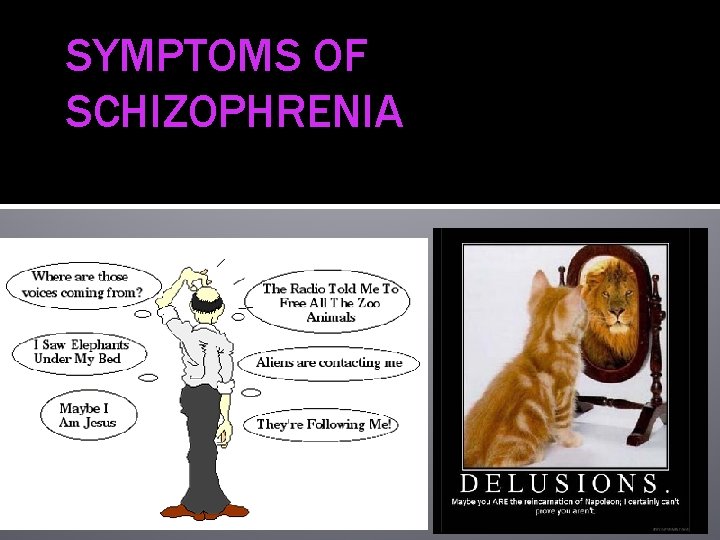
SYMPTOMS OF SCHIZOPHRENIA

DISORDERS OF THOUGHT �Incoherent thought patterns, new �Irrational beliefs or delusions �Paranoid Schizophrenics Delusions of grandeur language
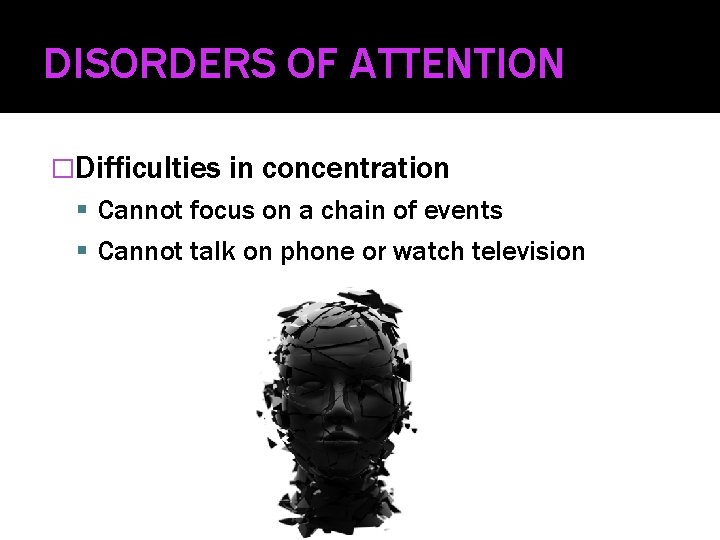
DISORDERS OF ATTENTION �Difficulties in concentration Cannot focus on a chain of events Cannot talk on phone or watch television

DISORDERS OF PERCEPTION �Hallucinations auditory are most common �Distortion or preoccupation with body parts

MOTOR DISORDERS �Strange facial expressions extremely active �Catatonic or immobile frozen position
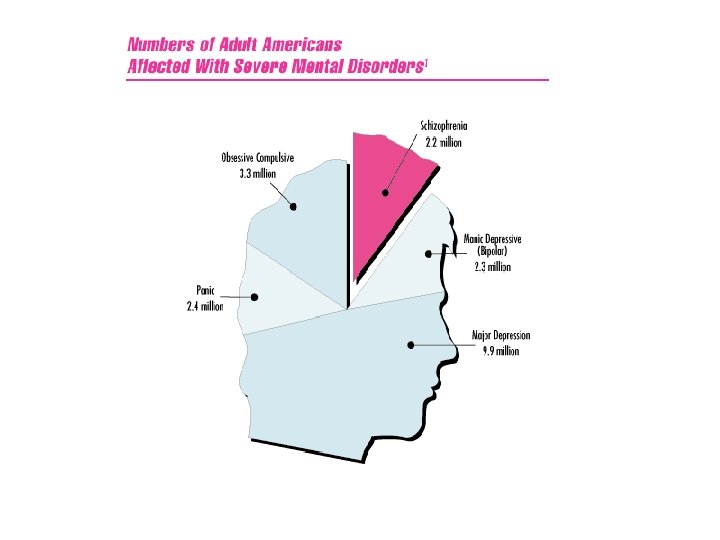

EMOTIONAL DISORDERS �Inappropriate emotional responses �Childish – emotional swings – hysteria �Disorganized and confused crying / laughing �Neglect of hygiene
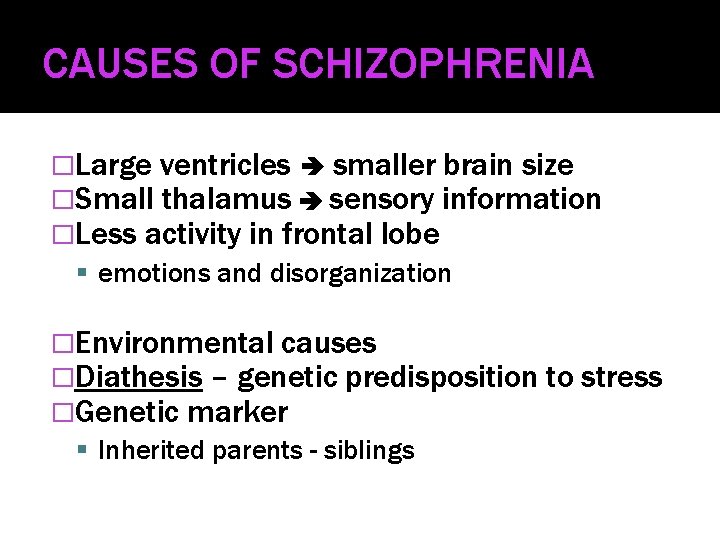
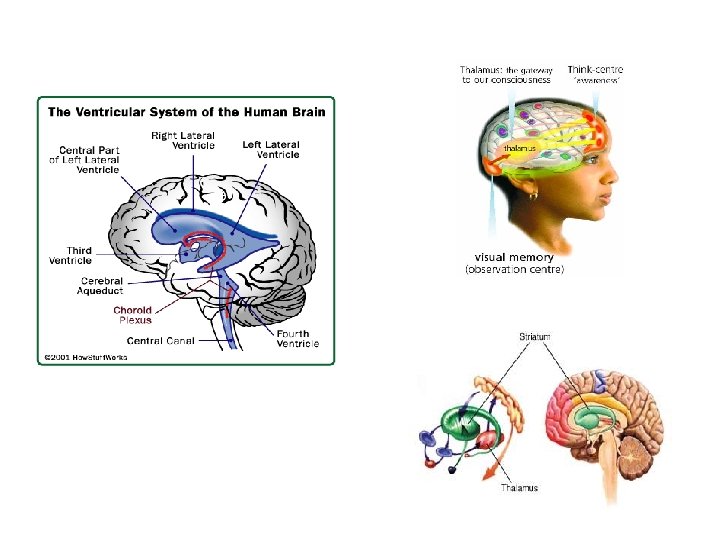
CAUSES OF SCHIZOPHRENIA �Large ventricles smaller brain size �Small thalamus sensory information �Less activity in frontal lobe emotions and disorganization �Environmental causes �Diathesis – genetic predisposition �Genetic marker Inherited parents - siblings to stress
TREATMENTS �Typical Neuroleptic drugs – Thorazine, Haloperidol Decrease of dopamine levels - Dopamine theory �Atypical Neuroleptic drugs – Seroquel, Zyprexa, Clozapine Decrease of serotonin levels

PERSONALITY DISORDERS
Personality Disorders � Paranoid – suspiciousness � Schizotypical – eccentric thinking /behavior � Histrionic – emotional /attention seeking � Obsessive Compulsive – perfectionist � Dependent – needy/submissive � Antisocial – sociopath/psychopath – disregard rights of others/no guilt � Conduct Disorder – behavior /violates social rules, Oppositional Defiance Disorder � https: //www. youtube. com/watch? v=PIl. XX 8 Oasy. U

DISSOCIATIVE IDENTITY DISORDER �Disruption, split, breakdown in normal integrated self Consciousness, memory or sense of identity �Presence of two or more distinct personality states �Controversy – childhood trauma vs. false diagnosis
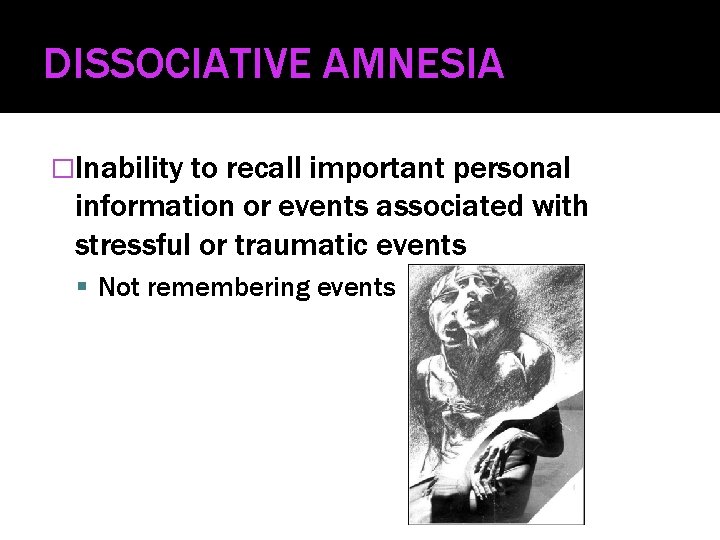
DISSOCIATIVE AMNESIA �Inability to recall important personal information or events associated with stressful or traumatic events Not remembering events
DISSOCIATIVE FUGUE �Unexpected traveling way from home or work �Not remembering identity �Assuming a new identity
- Slides: 42