
Abnormal Part 4 Schizophrenia Schizophrenia Schizophrenia If depression
Abnormal Part 4 Schizophrenia
Schizophrenia
Schizophrenia If depression is the common cold of psychological disorders schizophrenia is the cancer. Nearly 1 in a 100 suffer from schizophrenia and world over 24 million people suffer from this disease (WHO, 2002). Strikes young people as they mature into adults. Affects men and women equally, but men suffer from it more severely than women.
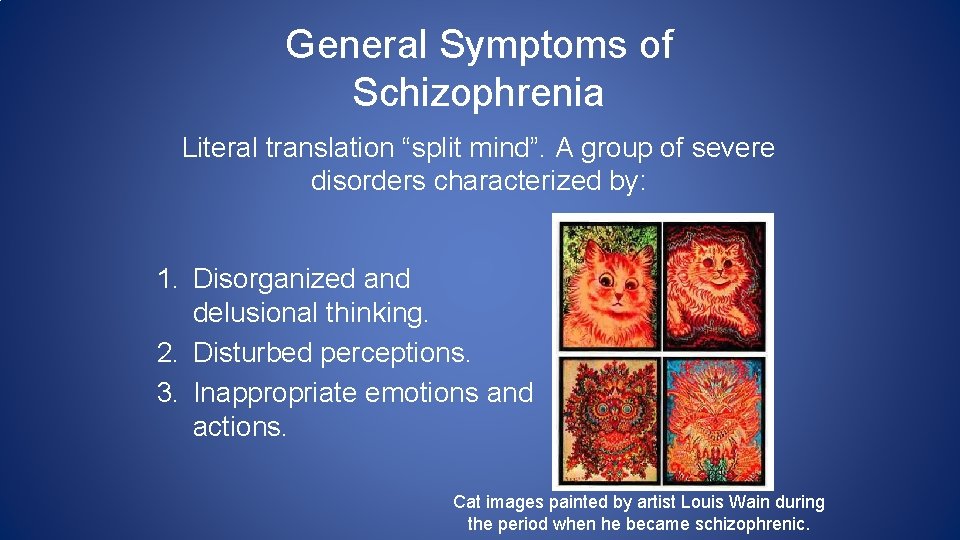
General Symptoms of Schizophrenia Literal translation “split mind”. A group of severe disorders characterized by: 1. Disorganized and delusional thinking. 2. Disturbed perceptions. 3. Inappropriate emotions and actions. Cat images painted by artist Louis Wain during the period when he became schizophrenic.
Daniel’s story Daniel is 21 years old. Six months ago, he was doing well in college and holding down a part-time job in the stockroom of a local electronics store. But then he began to change, becoming increasingly paranoid and acting out in bizarre ways. First, he became convinced that his professors were “out to get him” since they didn’t appreciate his confusing, off-topic classroom rants. Then he told his roommate that the other students were “in on the conspiracy. ” Soon after, he dropped out of school. From there, things just got worse. Daniel stopped bathing, shaving, and washing his clothes. At work, he became convinced that his boss watching him through surveillance bugs planted in the store’s television sets. Then he started hearing voices telling him to find the bugs and deactivate them. Things came to a head when he acted on the voices, smashing several TVs and screaming that he wasn’t going to put up with the “illegal spying” any more. His frightened boss called the police, and Daniel was hospitalized. 5
Disorganized & Delusional Thinking Many psychologists believe disorganized thoughts occur because of selective attention failure (fragmented and bizarre thoughts). Patient’s speech may be loosely connected and words thrown together causing nonsense (word salad) Often patients experience delusions of grandeur or persecution
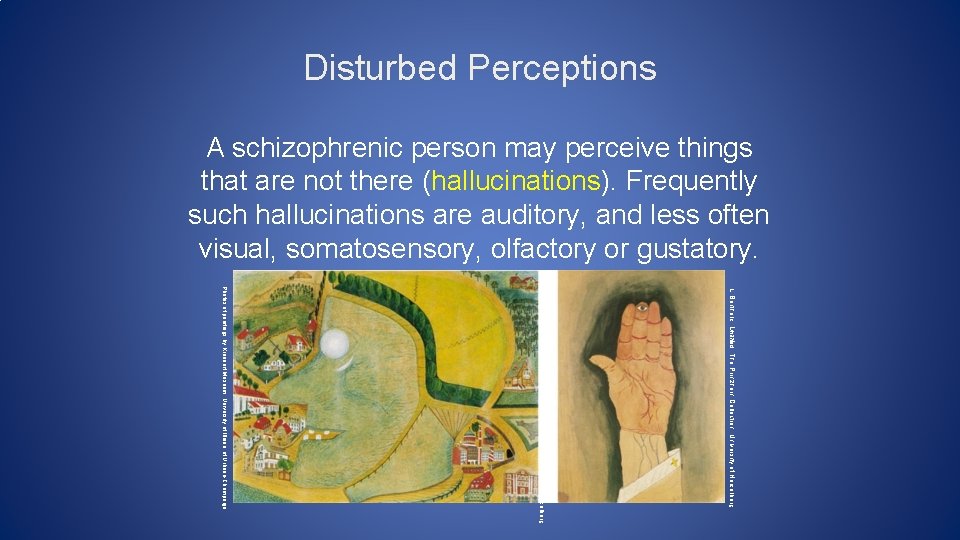
Disturbed Perceptions A schizophrenic person may perceive things that are not there (hallucinations). Frequently such hallucinations are auditory, and less often visual, somatosensory, olfactory or gustatory. L. Berthold, Untitled. The Prinzhorn Collection, University of Heidelberg August Natter, Witches Head. The Prinzhorn Collection, University of Heidelberg Photos of paintings by Krannert Museum, University of Illinois at Urbana-Champaign
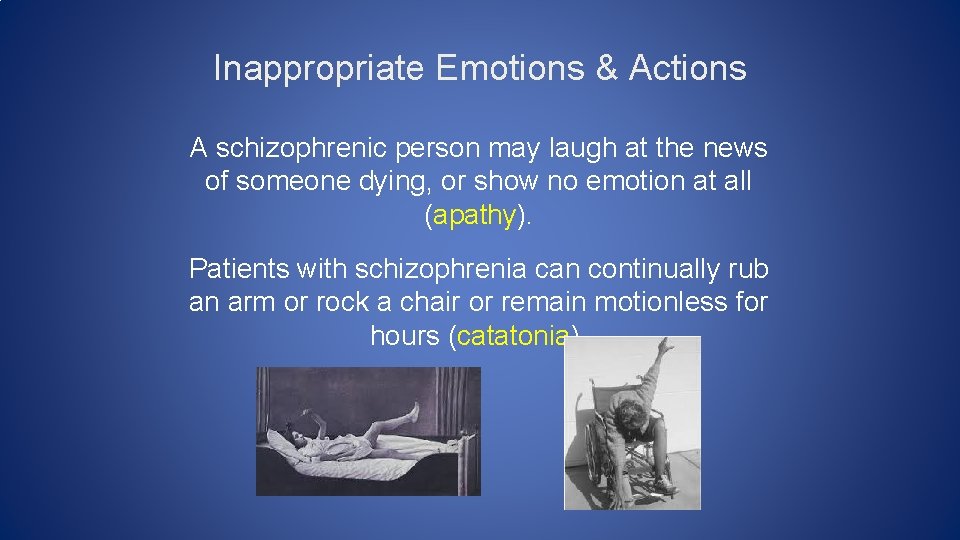
Inappropriate Emotions & Actions A schizophrenic person may laugh at the news of someone dying, or show no emotion at all (apathy). Patients with schizophrenia can continually rub an arm or rock a chair or remain motionless for hours (catatonia).
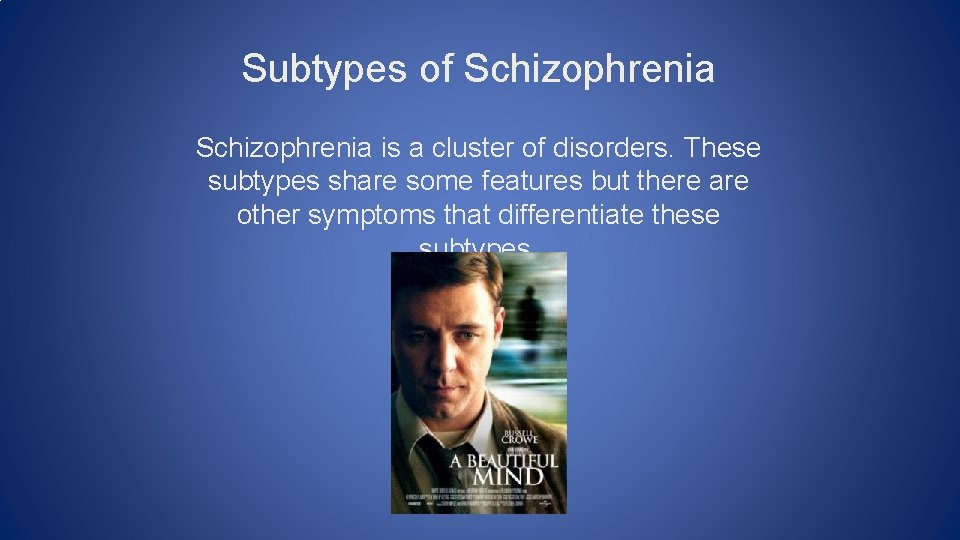
Subtypes of Schizophrenia is a cluster of disorders. These subtypes share some features but there are other symptoms that differentiate these subtypes.
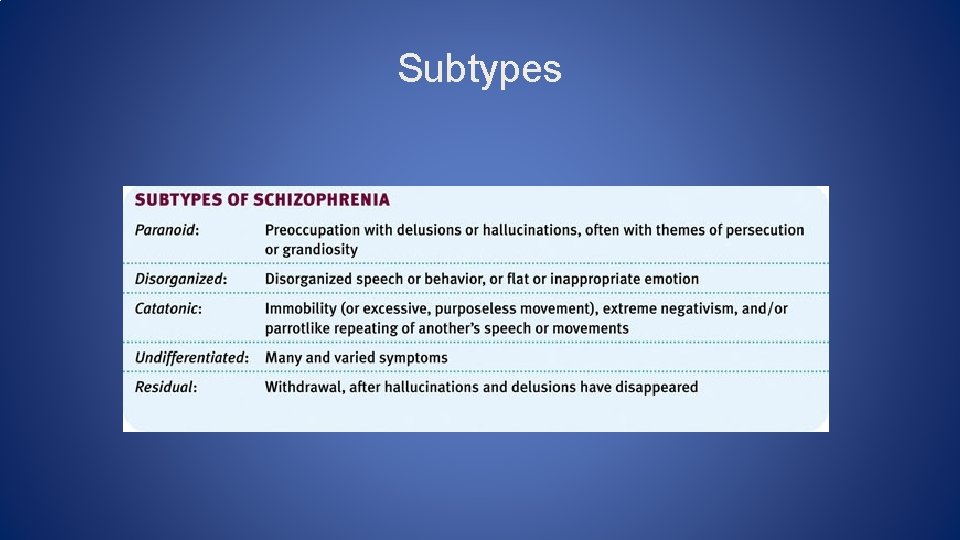
Subtypes
Positive and Negative Symptoms Schizophrenics have inappropriate symptoms (hallucinations, disorganized thinking, deluded ways) not present in normal individuals (positive symptoms). Schizophrenics also have absence of appropriate symptoms (apathy, expressionless faces, rigid bodies) present in normal individuals (negative symptoms).
Chronic and Acute Schizophrenia When schizophrenia is slow to develop (chronic/process) recovery is doubtful. Such schizophrenics usually displays negative symptoms. When schizophrenia rapidly develops (acute/reactive) recovery is better. Such schizophrenics usually shows positive symptoms.
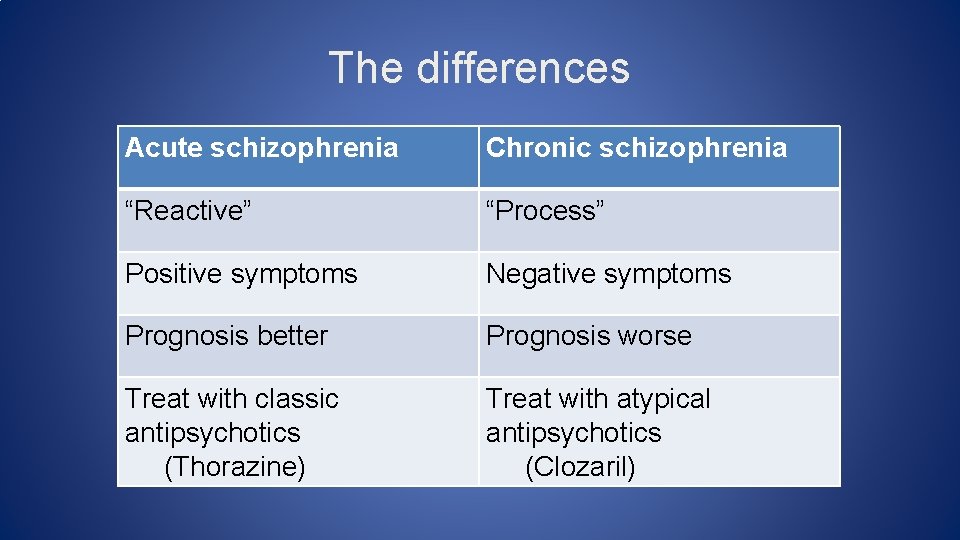
The differences Acute schizophrenia Chronic schizophrenia “Reactive” “Process” Positive symptoms Negative symptoms Prognosis better Prognosis worse Treat with classic antipsychotics (Thorazine) Treat with atypical antipsychotics (Clozaril)
Understanding Schizophrenia is a disease of the brain exhibited in the symptoms of the mind. Brain Abnormalities Dopamine Overactivity: Researchers have found that schizophrenic patients express higher levels of dopamine D 4 receptors in the brain.
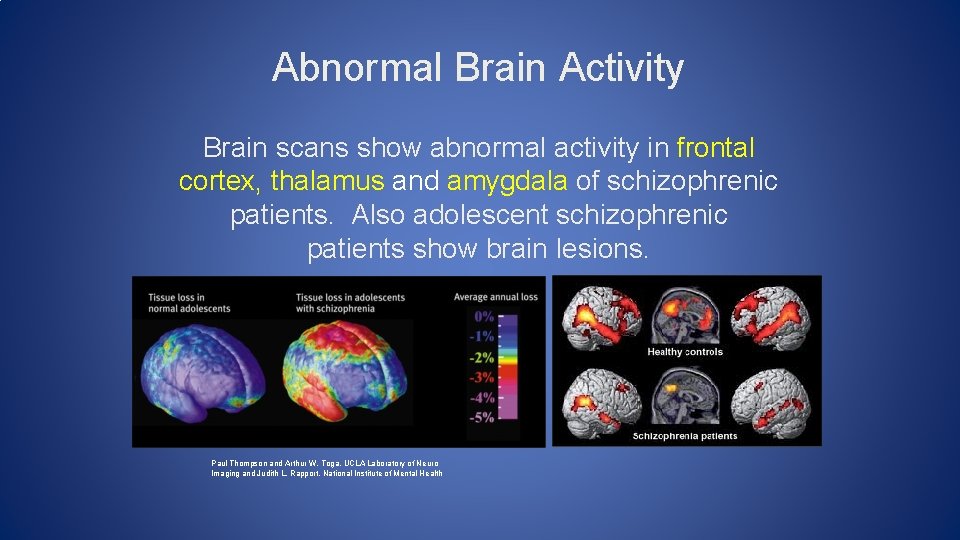
Abnormal Brain Activity Brain scans show abnormal activity in frontal cortex, thalamus and amygdala of schizophrenic patients. Also adolescent schizophrenic patients show brain lesions. Paul Thompson and Arthur W. Toga, UCLA Laboratory of Neuro Imaging and Judith L. Rapport, National Institute of Mental Health
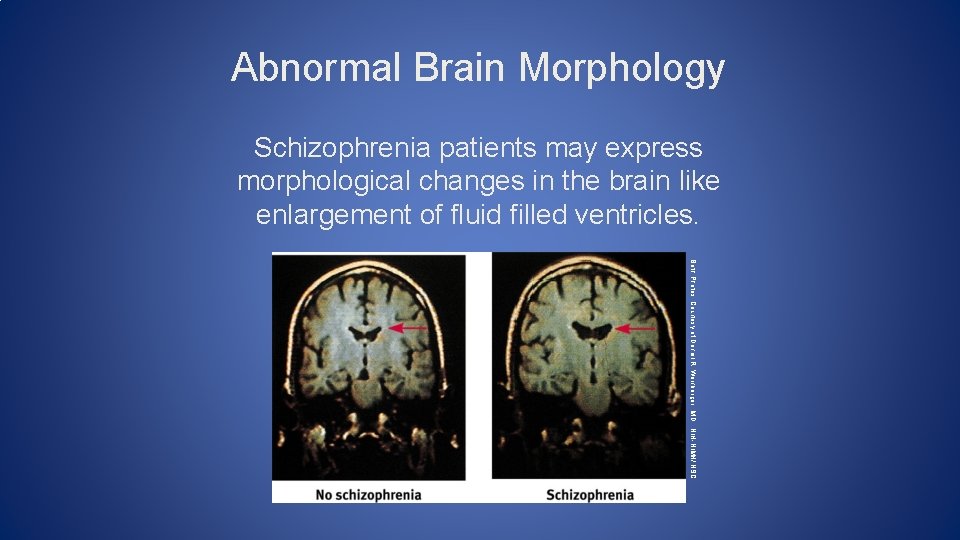
Abnormal Brain Morphology Schizophrenia patients may express morphological changes in the brain like enlargement of fluid filled ventricles. Both Photos: Courtesy of Daniel R. Weinberger, M. D. , NIH-NIMH/ NSC
Viral Infection Schizophrenia has also been observed in individuals who contracted a viral infection (flu) during the middle of their fetal development.
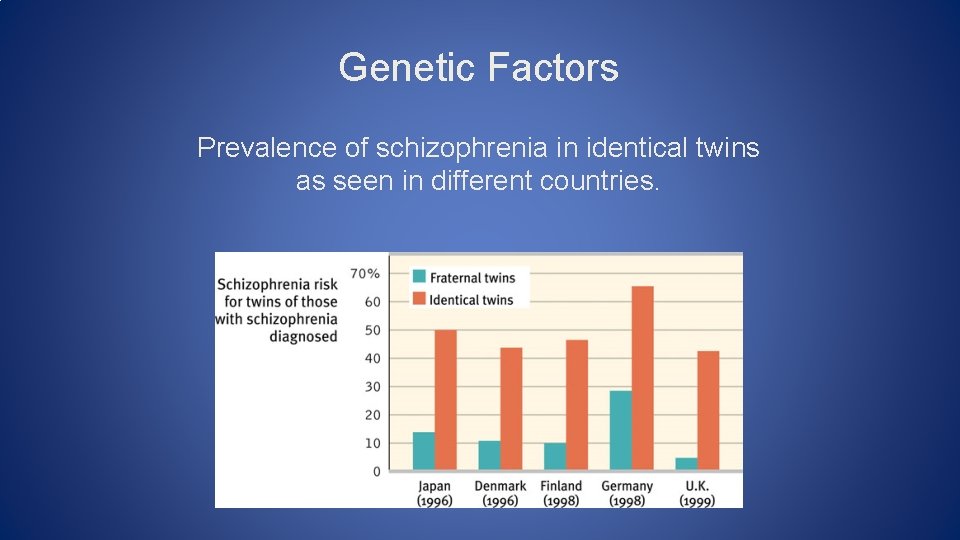
Genetic Factors Prevalence of schizophrenia in identical twins as seen in different countries.
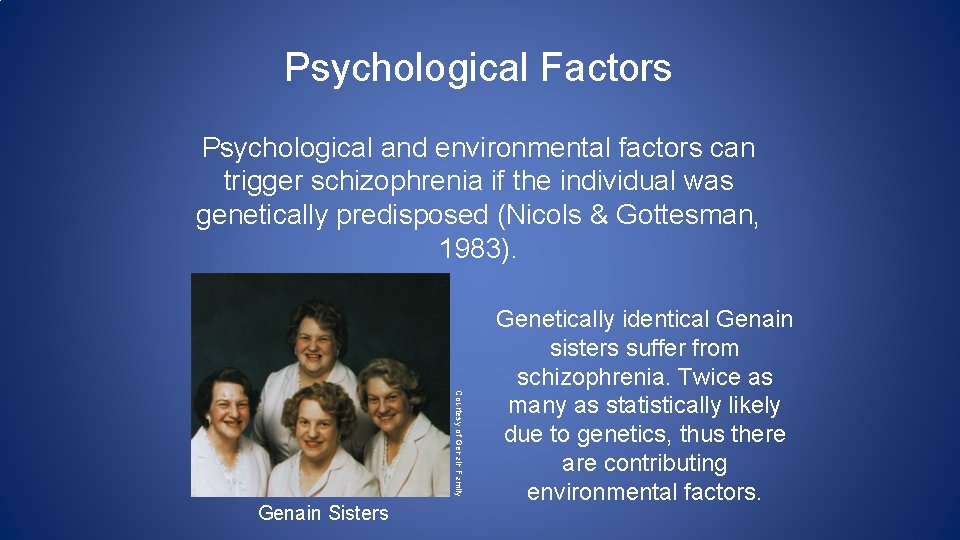
Psychological Factors Psychological and environmental factors can trigger schizophrenia if the individual was genetically predisposed (Nicols & Gottesman, 1983). Courtesy of Genain Family Genain Sisters Genetically identical Genain sisters suffer from schizophrenia. Twice as many as statistically likely due to genetics, thus there are contributing environmental factors.
- Slides: 19