
Ablative Absolute A noun or pronoun in the
Ablative Absolute • A noun (or pronoun) in the ablative • A perfect passive participle (ppp) or present active participle (pap) in the ablative • The noun in the ablative absolute is NOT referred to in the main sentence
• Literally translates: With noun having been verbed (ppp) With noun verbing (pap) • In smooth English: [When, since, although] noun had been verbed
Passive Periphrastic • The Future Passive Participle aka Gerundive + a form of sum – The participle part of the verb has to agree with the subject in case, #, and gender • Expresses necessity, obligation • The person who has to do it is put in the dative case (the dative of agent)
• Translates as: Subject must be verbed by dative of agent. With est- should be verbed With erit- will have to be verbed With erat- had to be verbed
Nunc id est bibendum. • Passive Periphrastic: noun must be verbed • Noun- id • Verb- bibo: to drink
Carthago delenda est. • Passive Periphrastic: Subject must be verbed. • Subject- Carthage • Verb- deleo: to destroy
Asia victa, dux servos in Italia misit. • • Ablative absolute: with noun having been verbed Noun- Asia Verb- vinco: to conquer Rest of sentence
Omnibus ferro militis perterritis • Ablative absolute: with noun having been verbed • Noun: omnibus militis or ferro? And what to do with second noun • Verb- perterreo: to really frighten
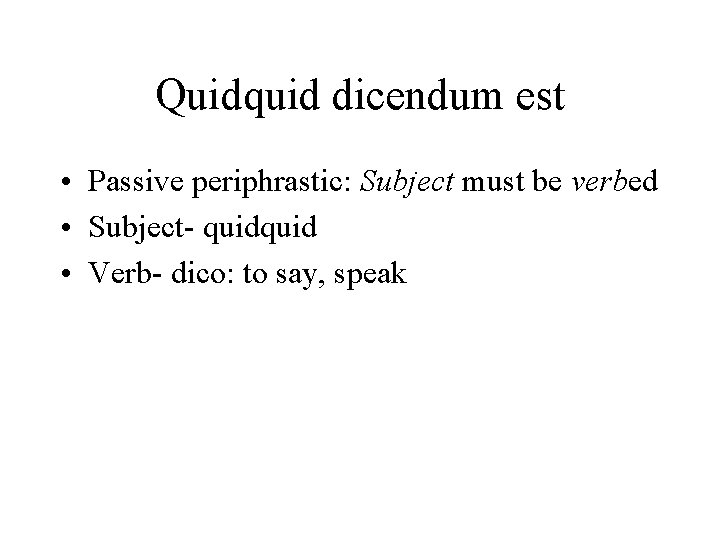
Quidquid dicendum est • Passive periphrastic: Subject must be verbed • Subject- quid • Verb- dico: to say, speak
- Slides: 9