
ABIOTIC STRESS IN PLANT Defining Plant Stress Ideal

ABIOTIC STRESS IN PLANT
Defining Plant Stress � Ideal conditions: allows the plant to achieve its maximum growth and reproductive potential as measured by plant weight, height, and seed number, which together comprise the total biomass of the plant. � Stress: any environmental condition that prevents the plant from achieving its full genetic potential. � For example, decrease in water availability would have deleterious effect on growth because of reduce in water potential is by closing their stomata, which reduce water loss by transpiration. It also reduces the CO 2 uptake which decrease the photosynthesis. � Physiological adjustment to abiotic stress involves trades offs between vegetative and reproductive development.
Acclimation and Adaption � Acclimation: nonpermanent change in physiology or morphology of the individual to improve response with exposure to environmental stress. � Epigenetic mechanism that alter expression of genes without changing the genetic code � Adaptation: Fixed genetic change over many generations environmental pressure by selective
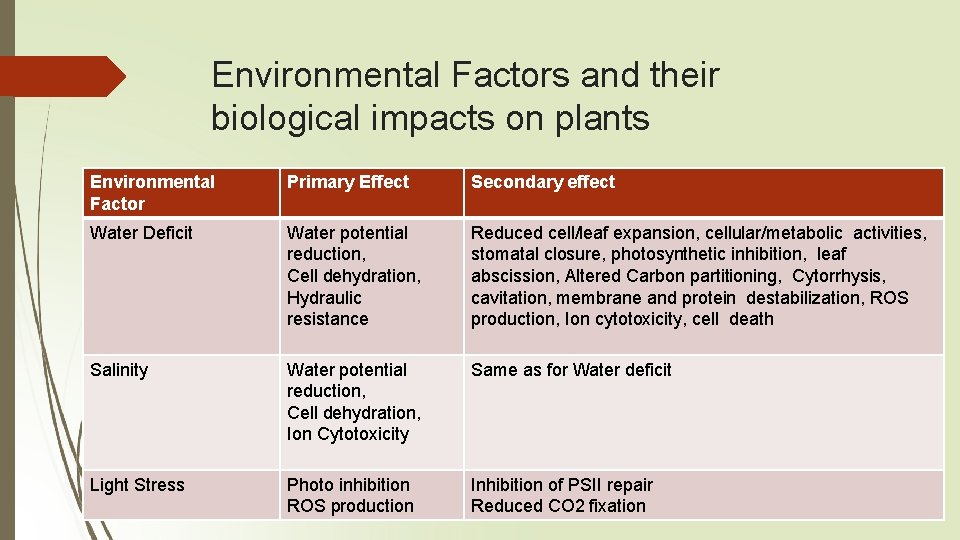
Environmental Factors and their biological impacts on plants Environmental Factor Primary Effect Secondary effect Water Deficit Water potential reduction, Cell dehydration, Hydraulic resistance Reduced cell/leaf expansion, cellular/metabolic activities, stomatal closure, photosynthetic inhibition, leaf abscission, Altered Carbon partitioning, Cytorrhysis, cavitation, membrane and protein destabilization, ROS production, Ion cytotoxicity, cell death Salinity Water potential reduction, Cell dehydration, Ion Cytotoxicity Same as for Water deficit Light Stress Photo inhibition ROS production Inhibition of PSII repair Reduced CO 2 fixation
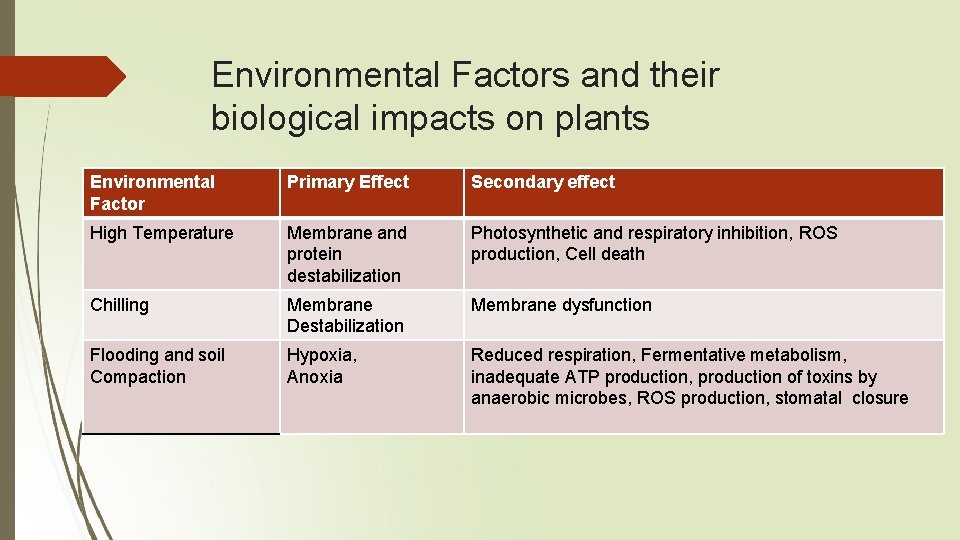
Environmental Factors and their biological impacts on plants Environmental Factor Primary Effect Secondary effect High Temperature Membrane and protein destabilization Photosynthetic and respiratory inhibition, ROS production, Cell death Chilling Membrane Destabilization Membrane dysfunction Flooding and soil Compaction Hypoxia, Anoxia Reduced respiration, Fermentative metabolism, inadequate ATP production, production of toxins by anaerobic microbes, ROS production, stomatal closure
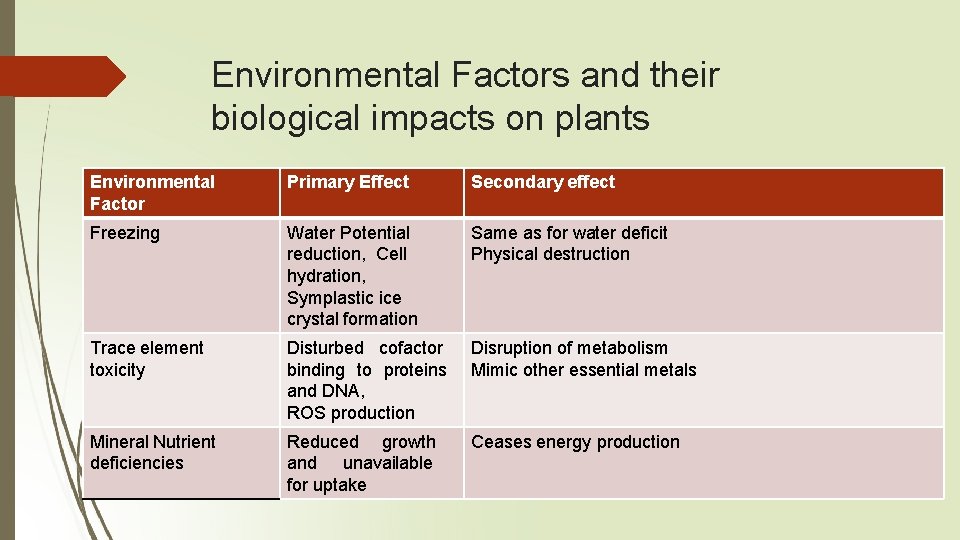
Environmental Factors and their biological impacts on plants Environmental Factor Primary Effect Secondary effect Freezing Water Potential reduction, Cell hydration, Symplastic ice crystal formation Same as for water deficit Physical destruction Trace element toxicity Disturbed cofactor binding to proteins and DNA, ROS production Disruption of metabolism Mimic other essential metals Mineral Nutrient deficiencies Reduced growth and unavailable for uptake Ceases energy production
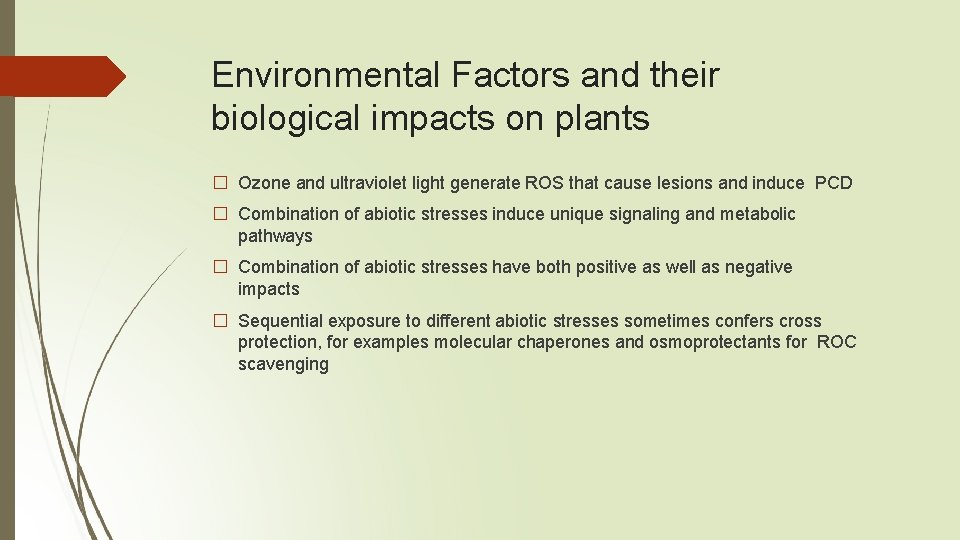
Environmental Factors and their biological impacts on plants � Ozone and ultraviolet light generate ROS that cause lesions and induce PCD � Combination of abiotic stresses induce unique signaling and metabolic pathways � Combination of abiotic stresses have both positive as well as negative impacts � Sequential exposure to different abiotic stresses sometimes confers cross protection, for examples molecular chaperones and osmoprotectants for ROC scavenging
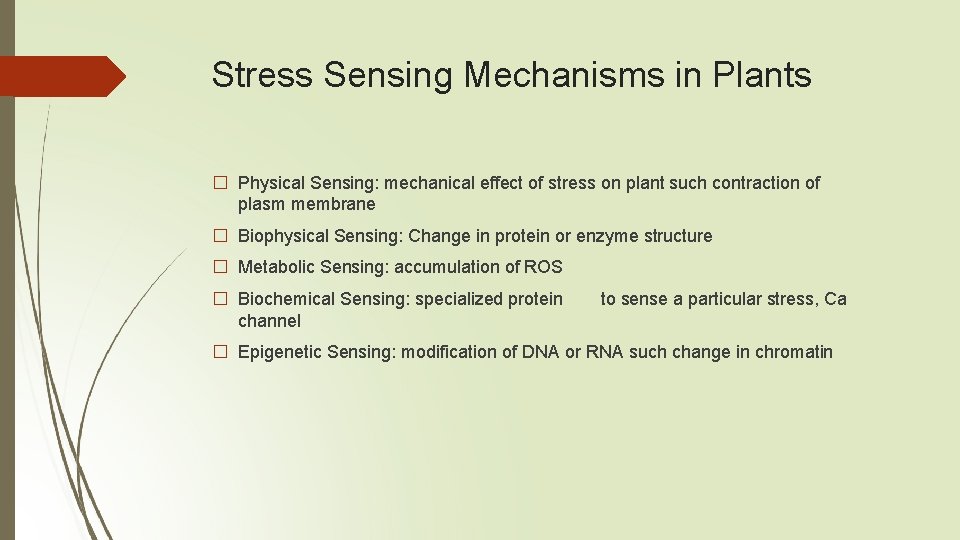
Stress Sensing Mechanisms in Plants � Physical Sensing: mechanical effect of stress on plant such contraction of plasm membrane � Biophysical Sensing: Change in protein or enzyme structure � Metabolic Sensing: accumulation of ROS � Biochemical Sensing: specialized protein channel to sense a particular stress, Ca � Epigenetic Sensing: modification of DNA or RNA such change in chromatin
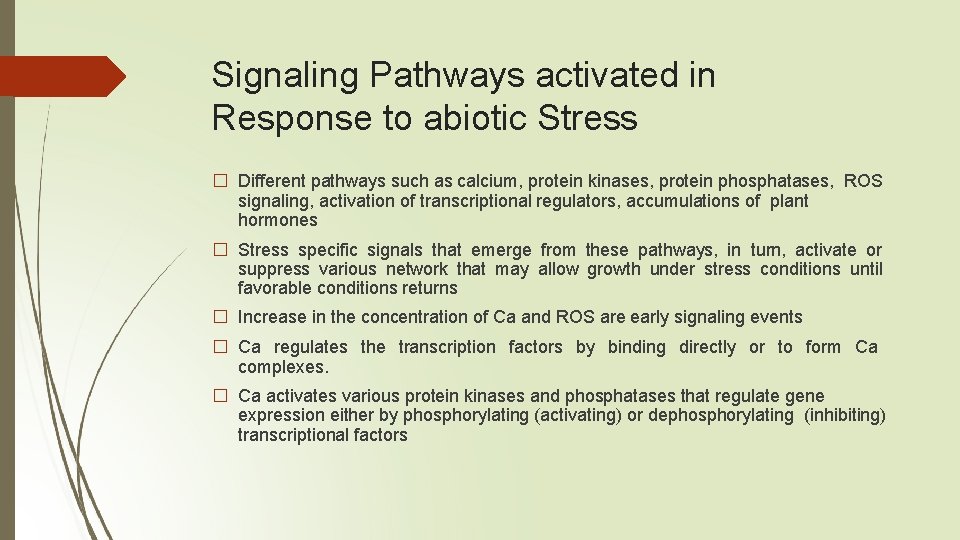
Signaling Pathways activated in Response to abiotic Stress � Different pathways such as calcium, protein kinases, protein phosphatases, ROS signaling, activation of transcriptional regulators, accumulations of plant hormones � Stress specific signals that emerge from these pathways, in turn, activate or suppress various network that may allow growth under stress conditions until favorable conditions returns � Increase in the concentration of Ca and ROS are early signaling events � Ca regulates the transcription factors by binding directly or to form Ca complexes. � Ca activates various protein kinases and phosphatases that regulate gene expression either by phosphorylating (activating) or dephosphorylating (inhibiting) transcriptional factors
Signaling Pathways activated in Response to abiotic Stress � Steady state level of ROS is governed by the balance of ROS generating and ROS scavenging reactions � ROS generation: Activities of Specialized oxidases � ROS Scavenging: Antioxidant molecules such as APX, CAT, SOD � ROS can trigger the opening of calcium channels which activate Ca dependent protein kinases � For example, mitogen activated protein kinases regulates stresses (MAPK)
Acclimation to stress involves transcriptional regulatory network called regulons � Transcriptional regulators or factors binds to specific DNA sequences and activate or suppress the expression of genes. � Chloroplast genes respond to high intensity light by sending stress signals to the nucleus � Epigenetic mechanisms and small RNAs provide additional protection against stress � Hormonal interactions regulate normal development and abiotic stress resonses
Developmental and Physiological Mechanisms that protect plants � Plants adjust osmotically to drying soil by accumulating solutes � Submerged organs develop aerenchym tissue in response to hypoxia � Antioxidant and ROS scavenging pathways protect cells from oxidative stress � Molecular chaperones and molecular shields protect proteins and membranes during abiotic stress (Heat shock Protein) � Plant can alter their membrane lipids in response to temperature and other biotic stresses � Exclusion (block entry) and internal tolerance mechanisms allow plants to cope with toxic ions: glycophytes and halophytes � Phytochelatins and other chelators contribute to internal tolerance of toxic metal ions: chelating molecule have ligation sites � Plants use cryoprotectant molecules and antifreeze proteins to prevent ice crystal formations
ABA signaling during water stress � During water stress, ABA increases in leaves, which leads to stomatal closure � Stomata closure is due to reduction in turgor pressure that follows the massive efflux of K and anions from guard cells � Activation of specialized ion efflux channels on the plasma membrane is required for such a large scale loss of K and anions � Plasma membrane K efflux channels are voltage gated, they open only if plasma membrane become depolarized. � ABA causes membrane depolarization by elevating the cytosolic Ca in two ways: transient influx of Ca ions and release of Ca from internal stores � Increase in Ca open the Ca activated anion channel on the plasma membrane � Opening of anion channels allow Cl and malate ions to escape, moving down their electrochemical gradients
ABA signaling during water stress � Outflow of negatively charged Cl and malate trigger the opening of voltage gated K efflux channels � Elevated level of Ca cause K influx channels to close � ABA cause alkalization that further stimulate the opening of K efflux channels � ABA also inhibit the activity of the plasma membrane H-ATPase � During stomatal closure, surface area of guard cell contract 50 %. Extra membrane taken up as small vesicles by endocytosis � Signal Transduction involves protein kinases and phosphatases

Plant can alter their morphology in response to abiotic stress � Phenotype plasticity: plant activate developmental program that alter the phenotype � Leaf area, leaf orientations, trichrome, cuticle, root: shoot ratio � Metabolic shifts enable plants to cope with variety of abiotic stresses � The process of recovery from the stress can be dangerous to the plant and require a coordinated adjustment of plant metabolism and physiology � High level of ROS could form and damage cells. � Plants needs to remove recycle all the unneeded m. RNAs and protein
Abiotic stress tolerance crop � Developing crops with enhanced tolerance to both biotic and abiotic stress conditions is a major goal � Such crops would decrease the yield penalty and prevent annual losses of billions of dollars
- Slides: 16