
Abiotic Factors Resources Factors Tolerance Range Homeostasis Optimal
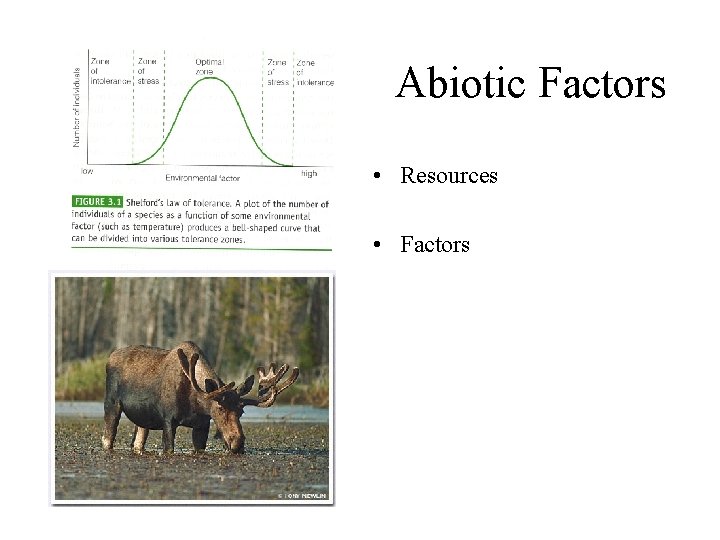
Abiotic Factors • Resources • Factors
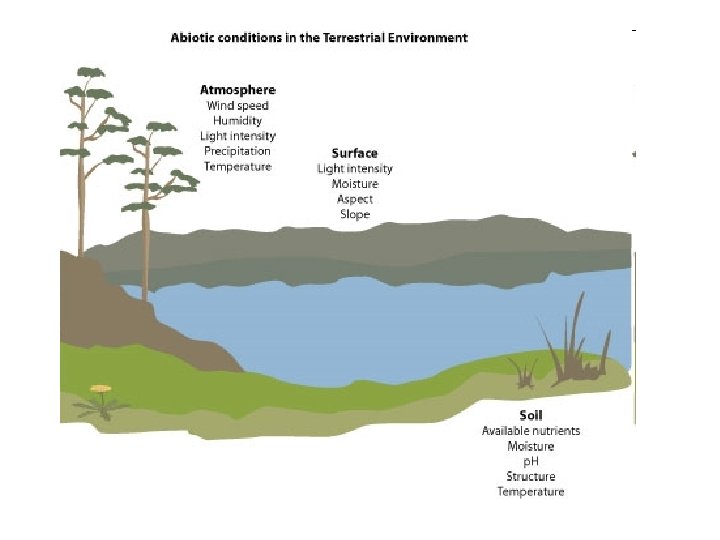
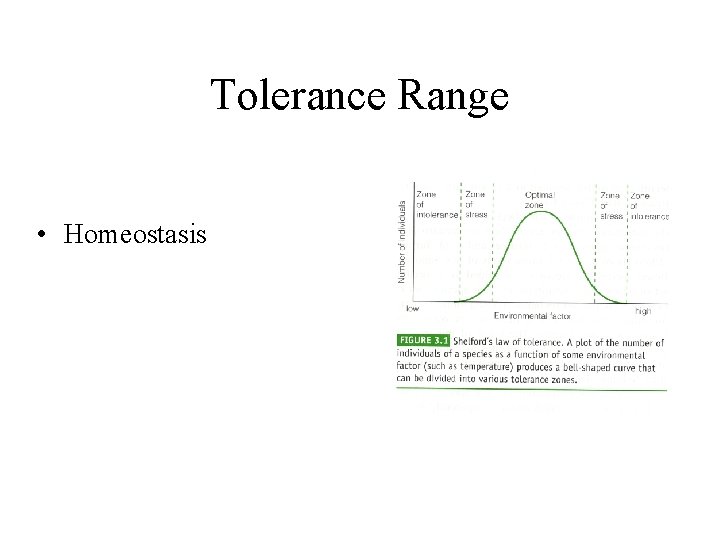
Tolerance Range • Homeostasis
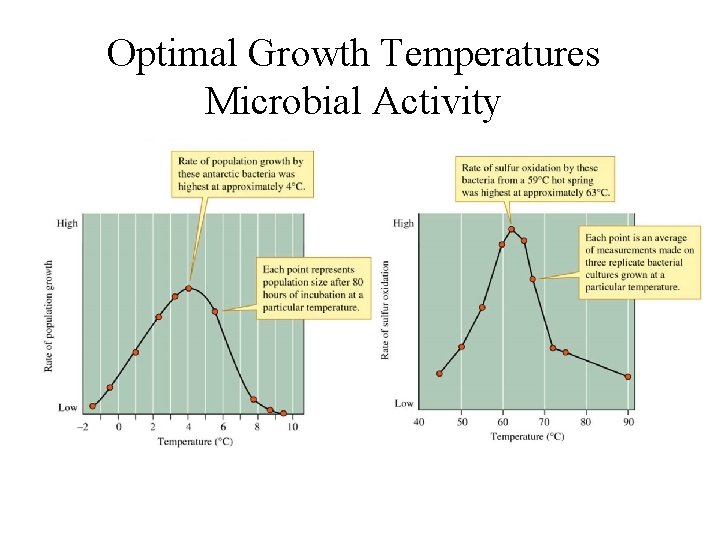
Optimal Growth Temperatures Microbial Activity
Temperature
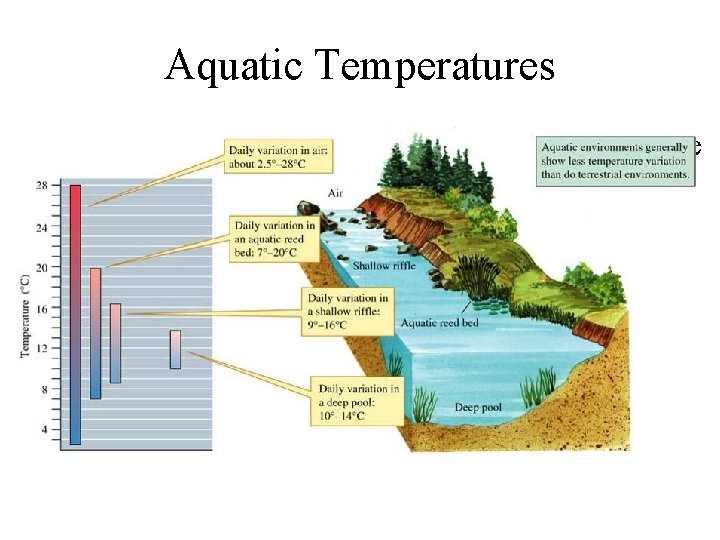
Aquatic Temperatures • Riparian vegetation influences stream temperature by providing shade.
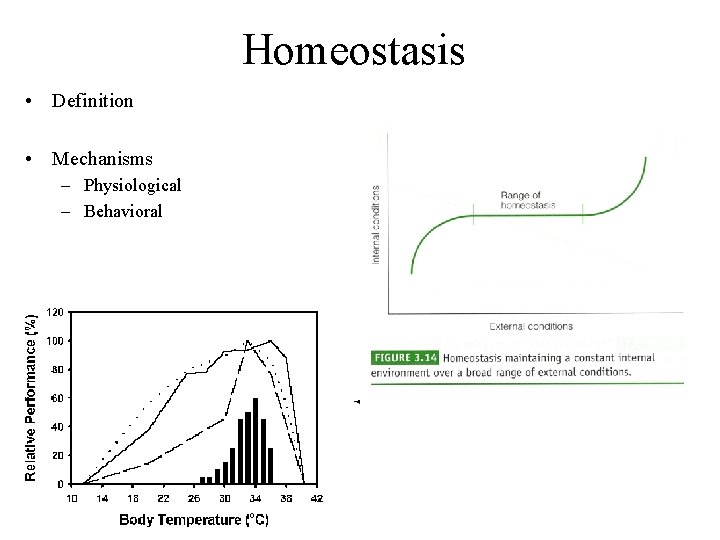
Homeostasis • Definition • Mechanisms – Physiological – Behavioral
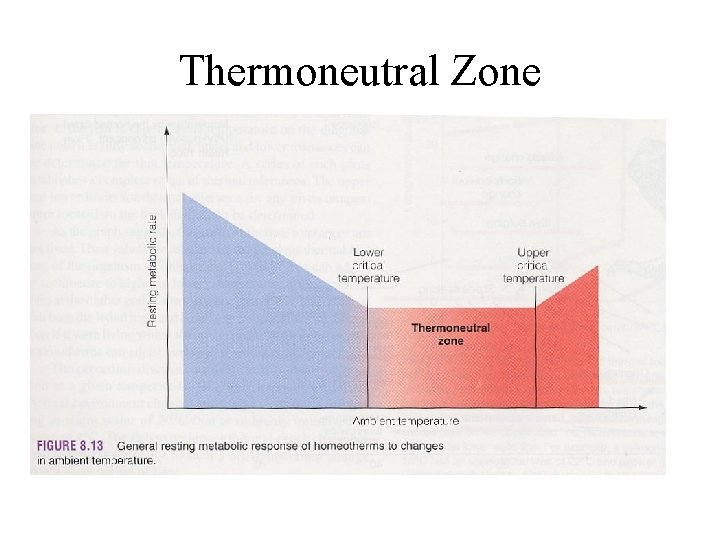
Thermoneutral Zone
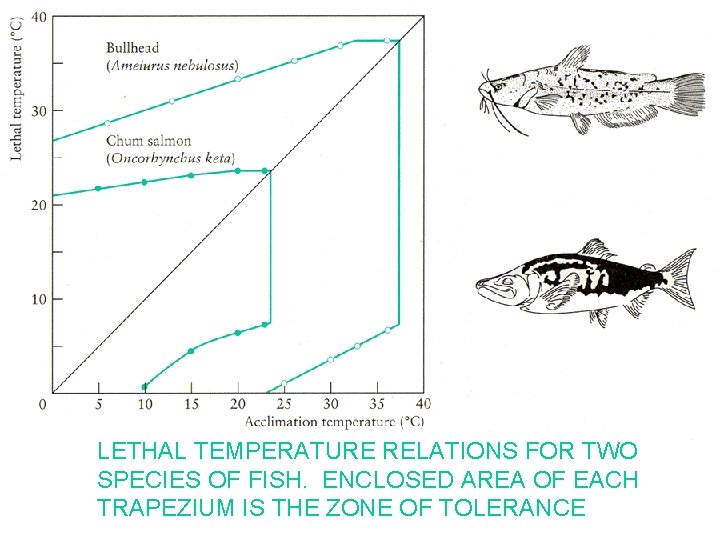
LETHAL TEMPERATURE RELATIONS FOR TWO SPECIES OF FISH. ENCLOSED AREA OF EACH TRAPEZIUM IS THE ZONE OF TOLERANCE
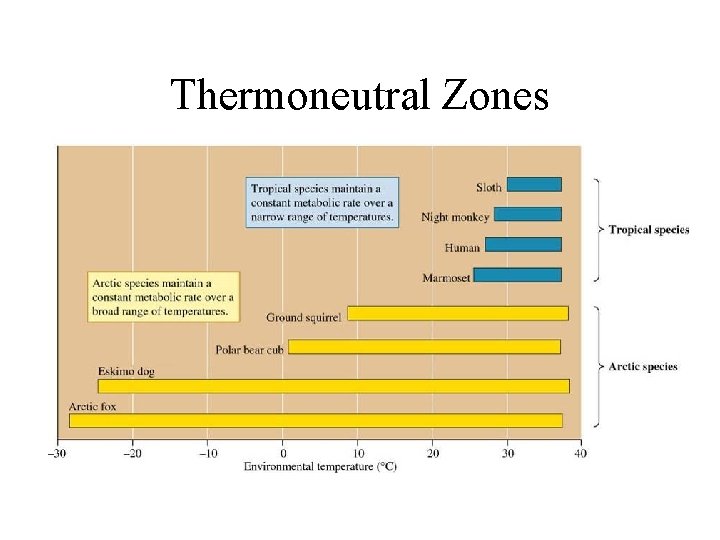
Thermoneutral Zones
Microclimates • Macroclimate: • Microclimate: • Altitude • Higher altitude - lower temperature. – Aspect • Offers contrasting environments. – Vegetation • Ecologically important microclimates.
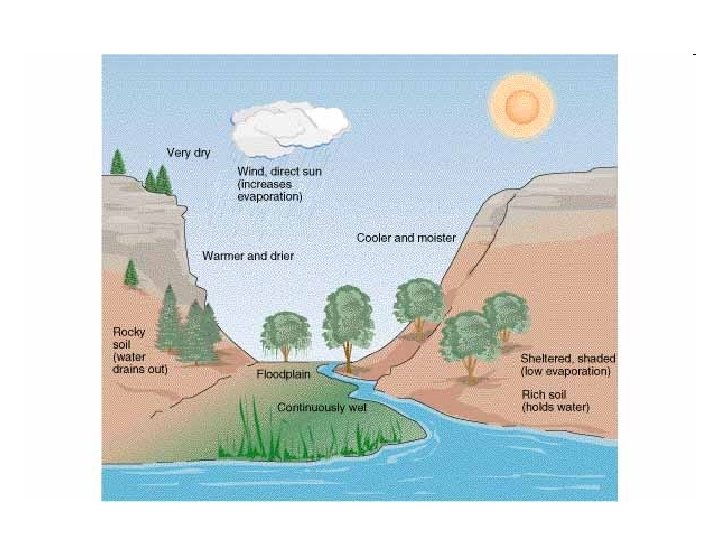
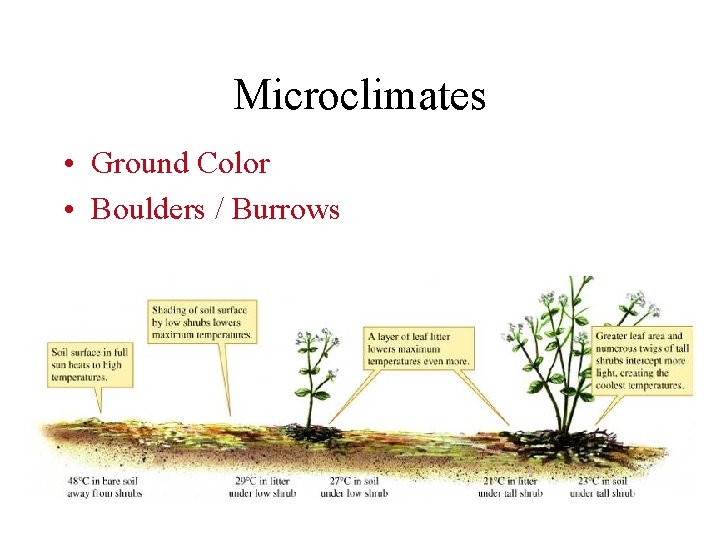
Microclimates • Ground Color • Boulders / Burrows
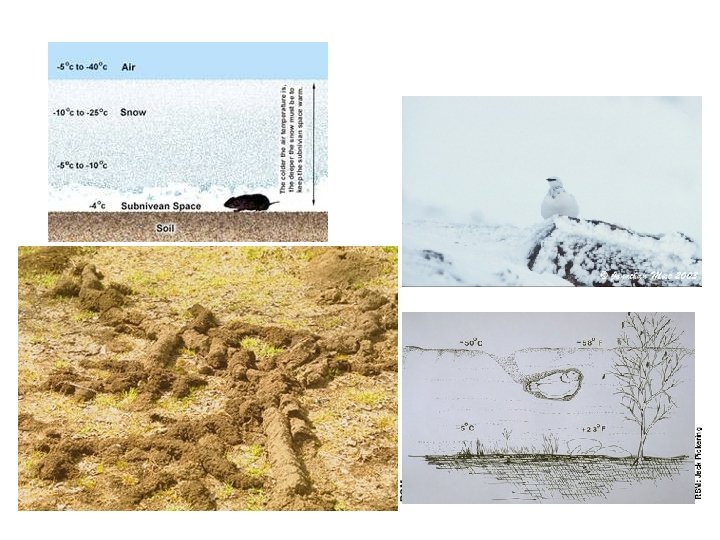
Microclimate • The distribution of species and temperature contour maps do not always coincide • This is because the temperatures organisms experience are greatly effected by numerous things. – Behavior of animals – North-facing & south-facing slopes
Plant Resources • • Solar radiation (energy source) Water CO 2 Minerals (nutrients)
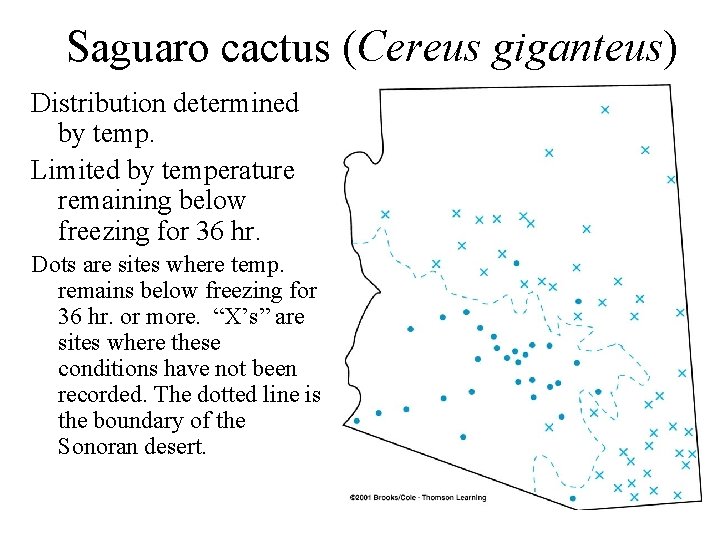
Saguaro cactus (Cereus giganteus) Distribution determined by temp. Limited by temperature remaining below freezing for 36 hr. Dots are sites where temp. remains below freezing for 36 hr. or more. “X’s” are sites where these conditions have not been recorded. The dotted line is the boundary of the Sonoran desert.
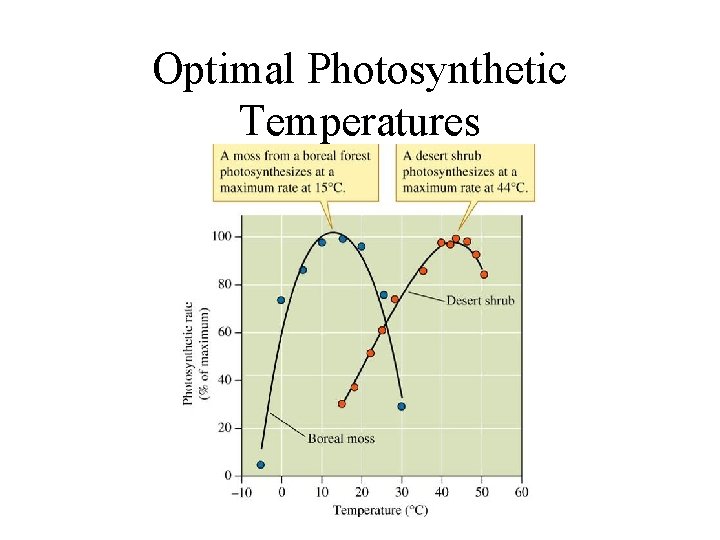
Optimal Photosynthetic Temperatures
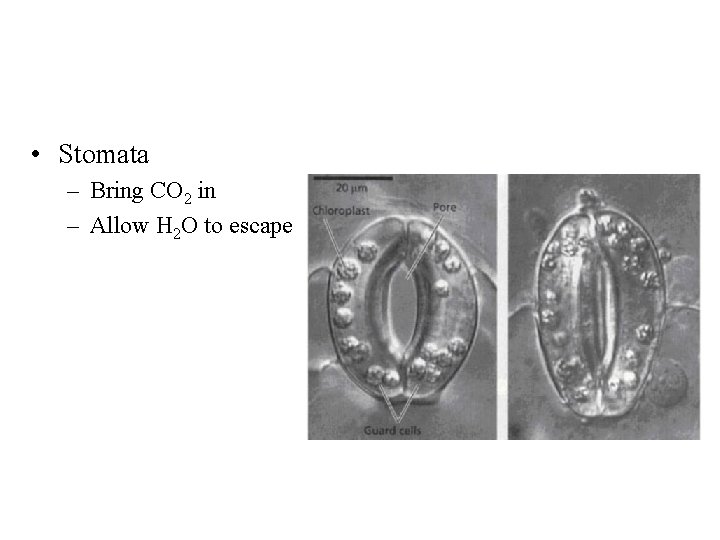
• Stomata – Bring CO 2 in – Allow H 2 O to escape
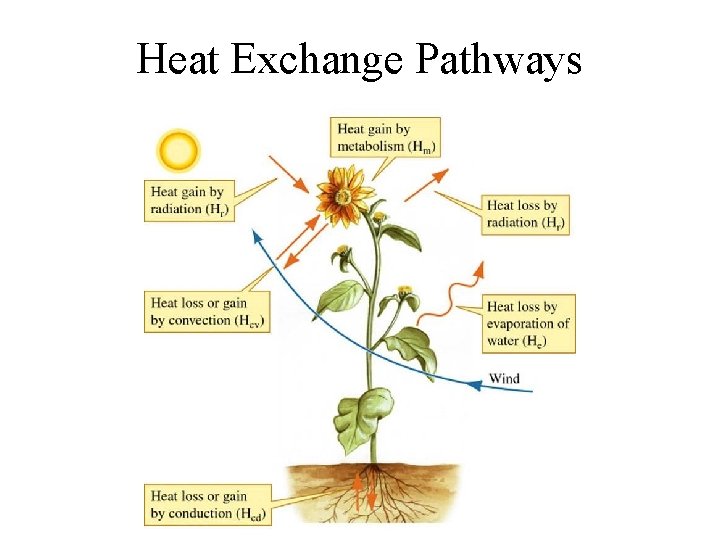
Heat Exchange Pathways
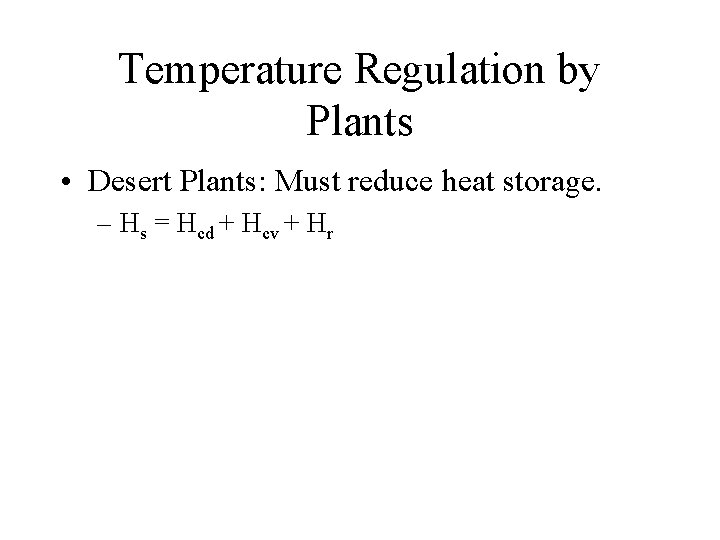
Temperature Regulation by Plants • Desert Plants: Must reduce heat storage. – Hs = Hcd + Hcv + Hr
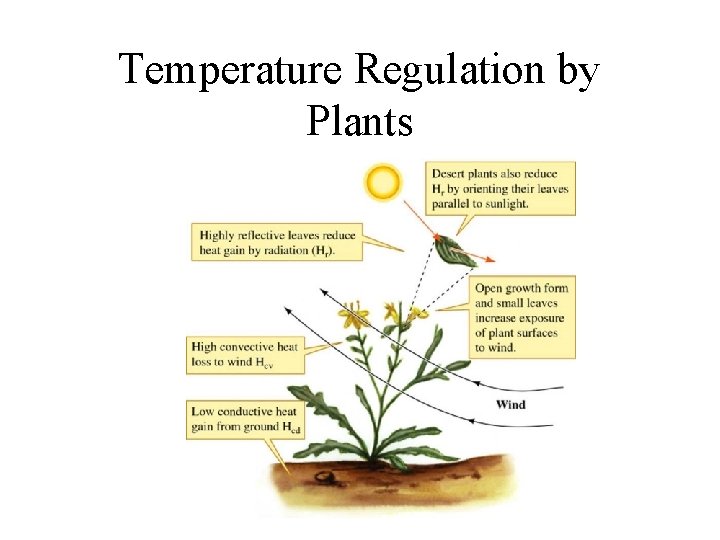
Temperature Regulation by Plants
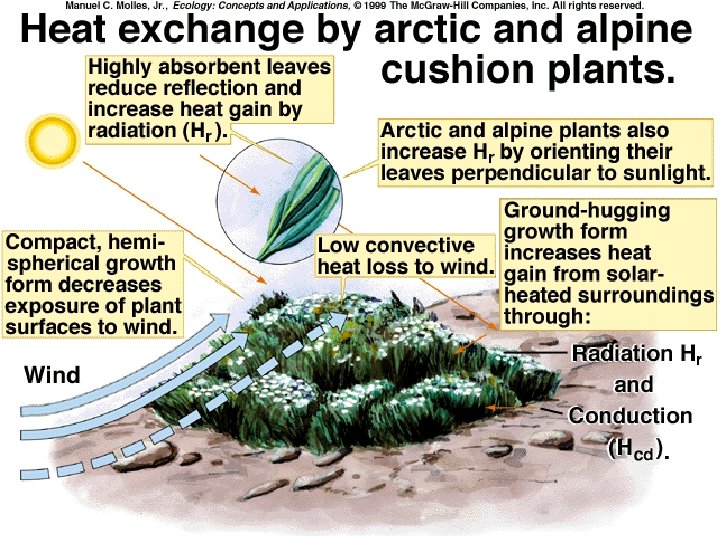
Temperature Regulation by Plants • Arctic and Alpine Plants – Two main options to stay warm: • Tropic Alpine Plants – Rosette plants generally retain dead leaves, which insulate and protect the stem from freezing.
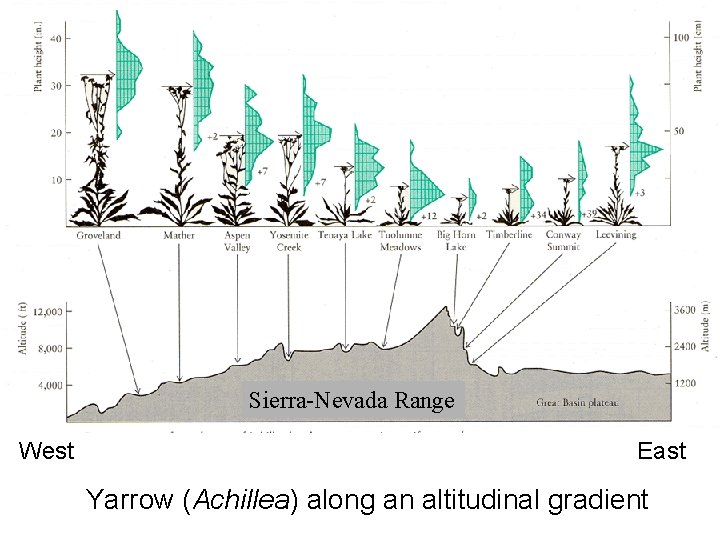
Sierra-Nevada Range West East Yarrow (Achillea) along an altitudinal gradient
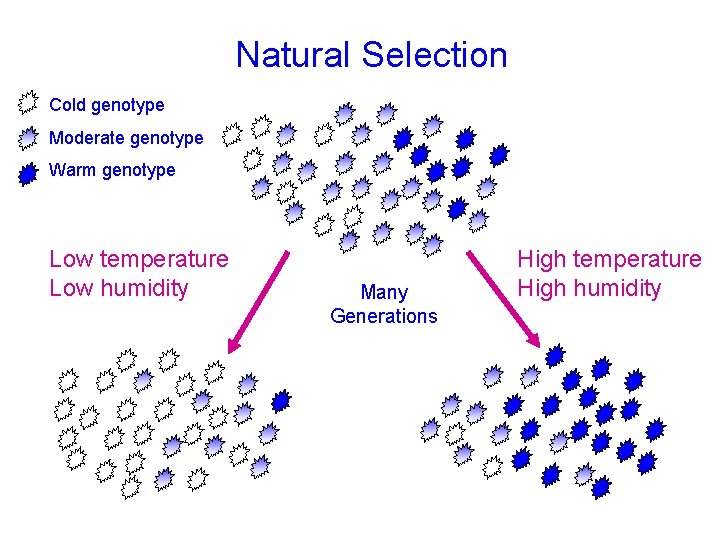
Natural Selection Cold genotype Moderate genotype Warm genotype Low temperature Low humidity Many Generations High temperature High humidity
Animal Resources & Factors • • • Temperature Oxygen, water Nutrition (energy source) Defense Intraspecific competition
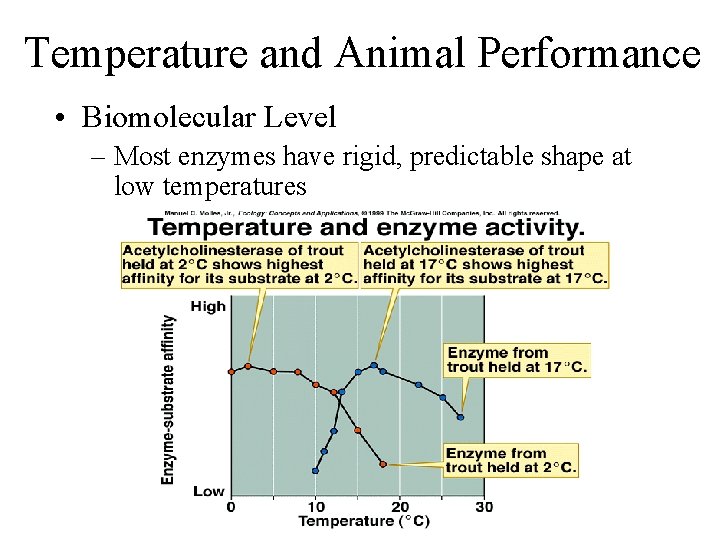
Temperature and Animal Performance • Biomolecular Level – Most enzymes have rigid, predictable shape at low temperatures
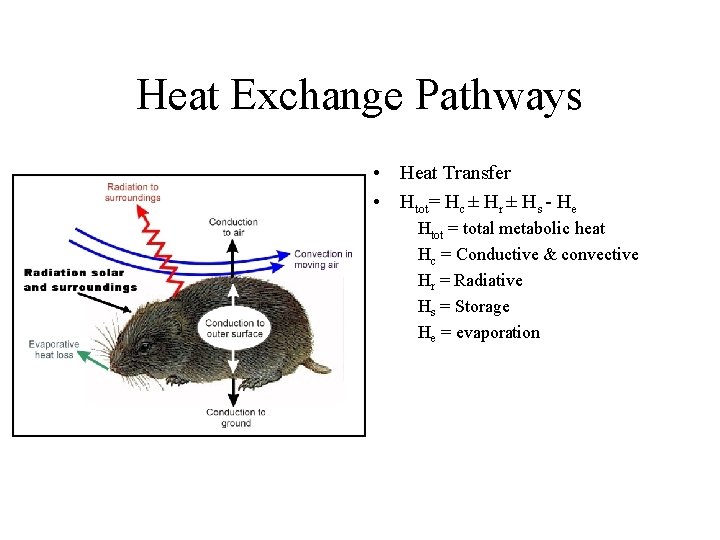
Heat Exchange Pathways • Heat Transfer • Htot= Hc ± Hr ± Hs - He Htot = total metabolic heat Hc = Conductive & convective Hr = Radiative Hs = Storage He = evaporation
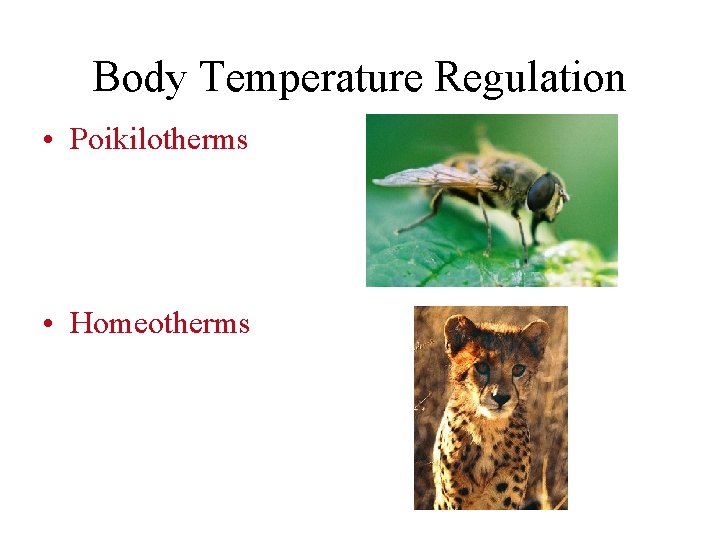
Body Temperature Regulation • Poikilotherms • Homeotherms
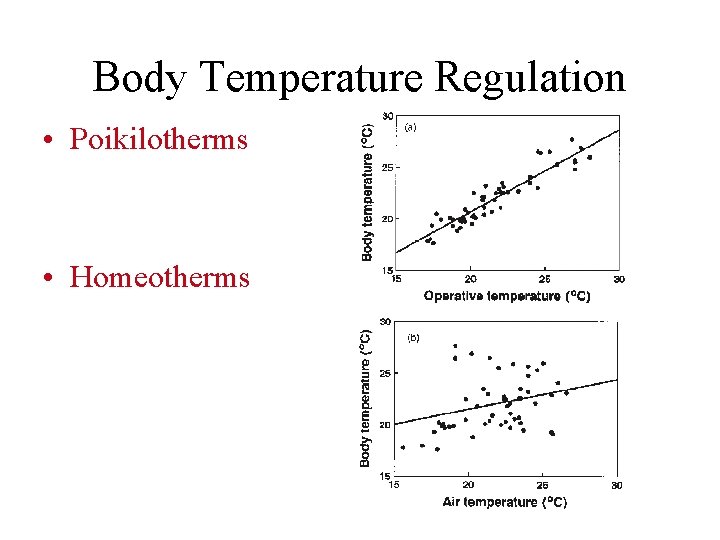
Body Temperature Regulation • Poikilotherms • Homeotherms
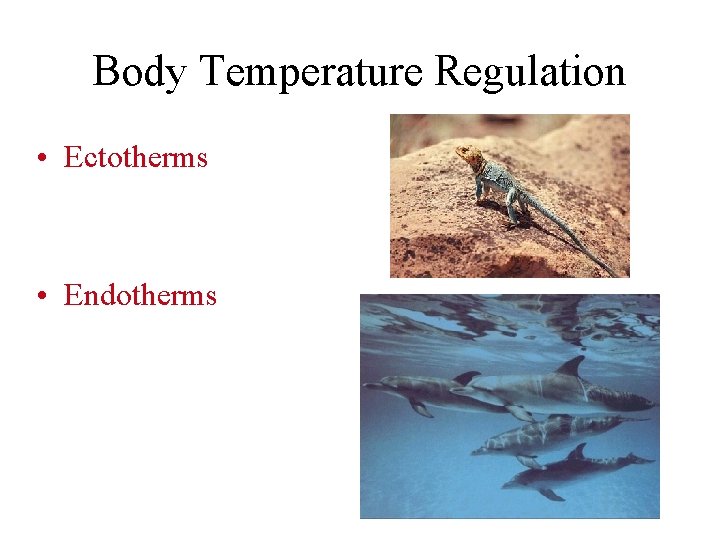
Body Temperature Regulation • Ectotherms • Endotherms
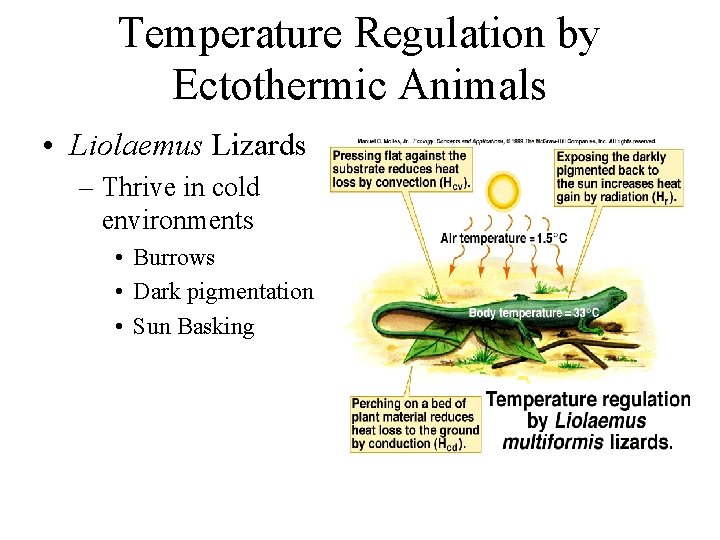
Temperature Regulation by Ectothermic Animals • Liolaemus Lizards – Thrive in cold environments • Burrows • Dark pigmentation • Sun Basking
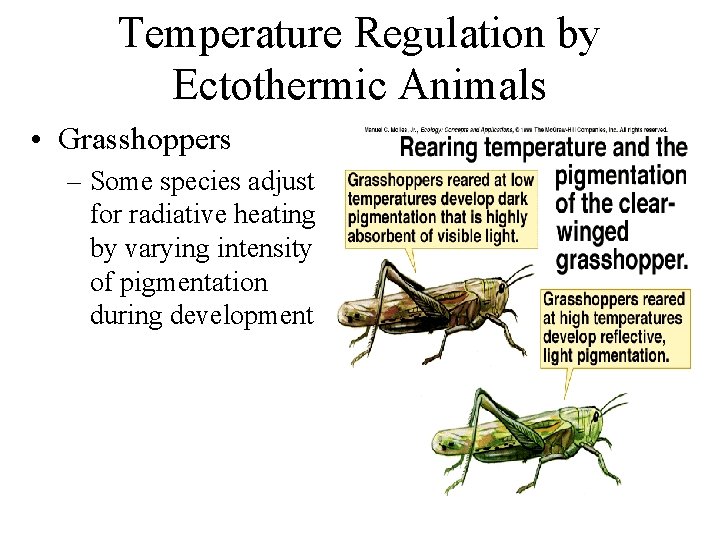
Temperature Regulation by Ectothermic Animals • Grasshoppers – Some species adjust for radiative heating by varying intensity of pigmentation during development
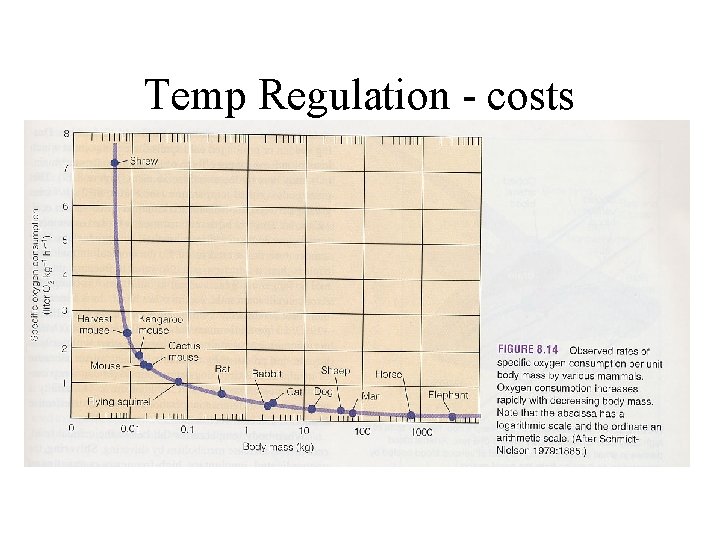
Temp Regulation - costs
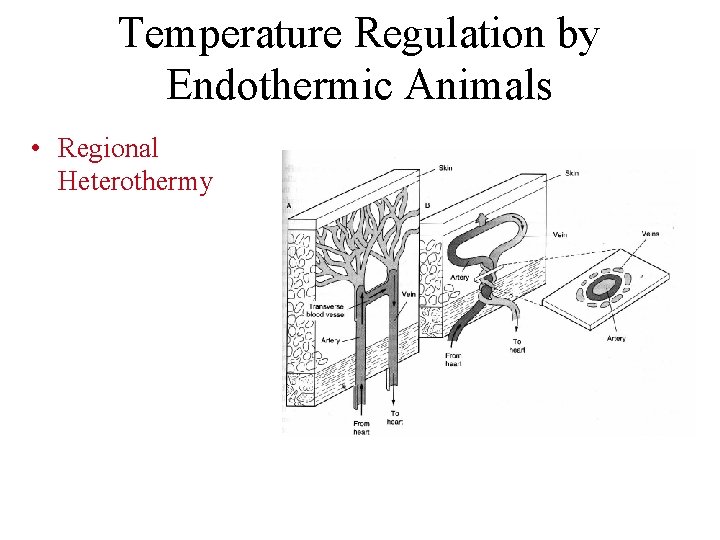
Temperature Regulation by Endothermic Animals • Regional Heterothermy
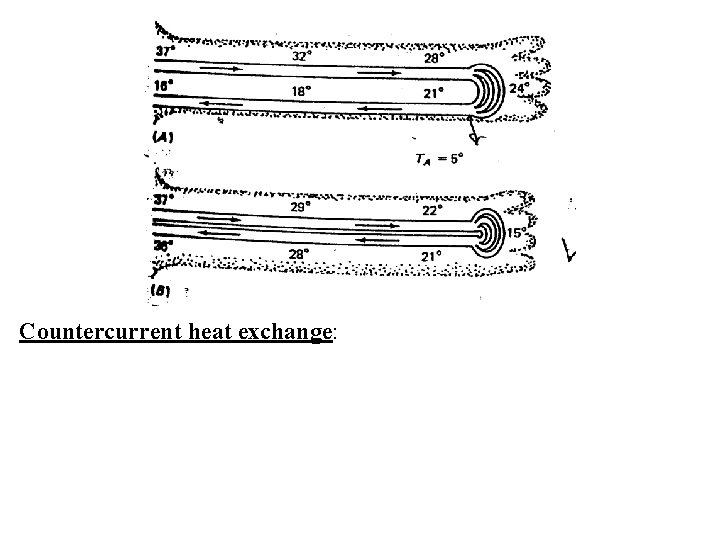
Countercurrent heat exchange:
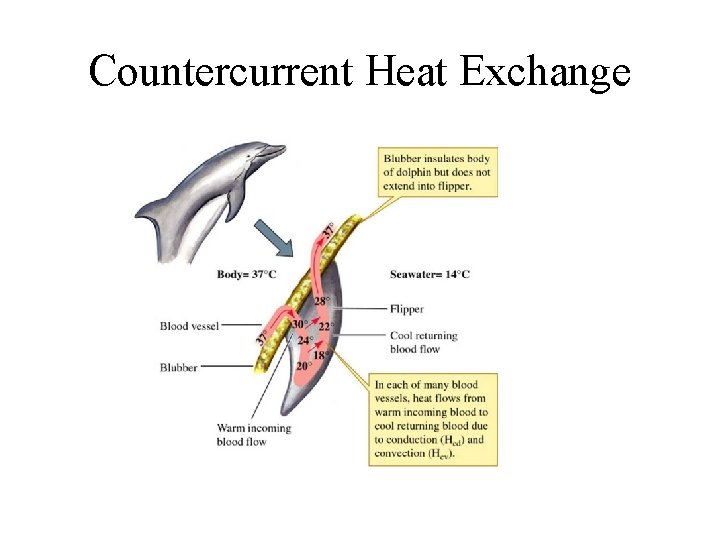
Countercurrent Heat Exchange
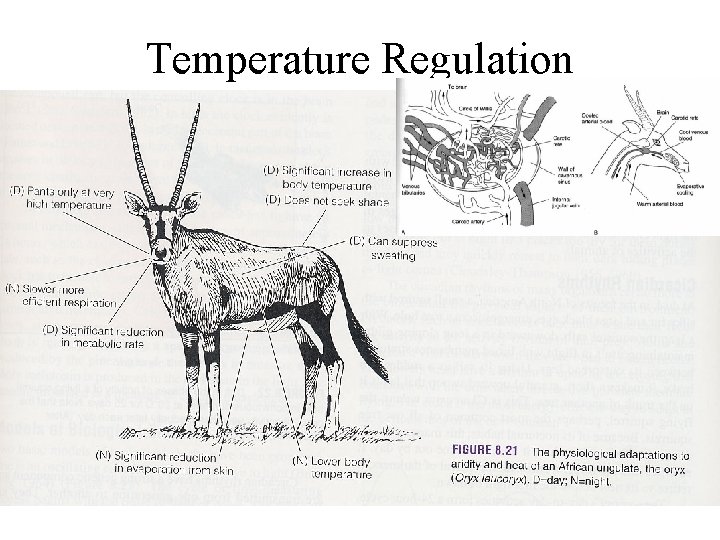
Temperature Regulation
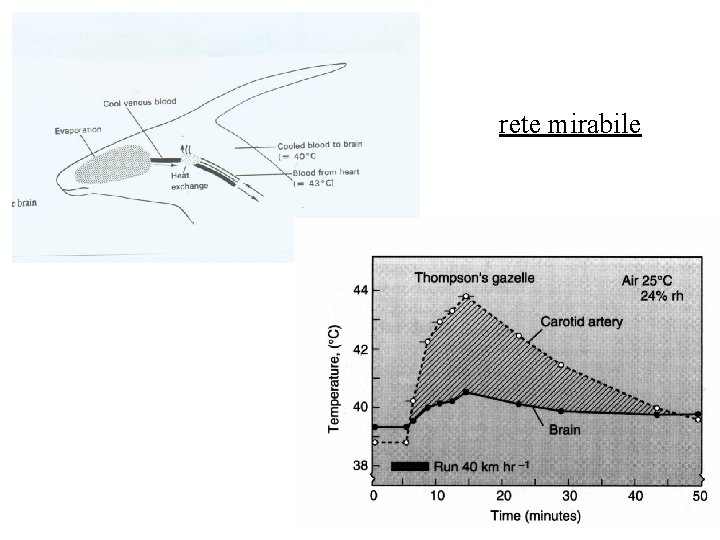
rete mirabile
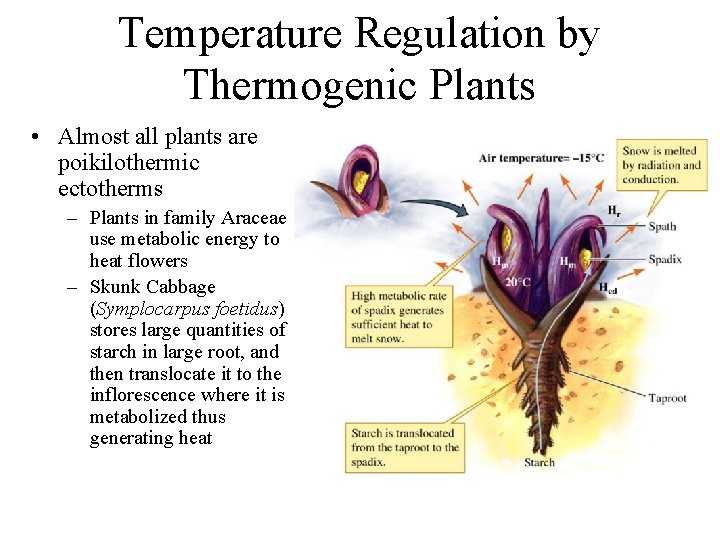
Temperature Regulation by Thermogenic Plants • Almost all plants are poikilothermic ectotherms – Plants in family Araceae use metabolic energy to heat flowers – Skunk Cabbage (Symplocarpus foetidus) stores large quantities of starch in large root, and then translocate it to the inflorescence where it is metabolized thus generating heat
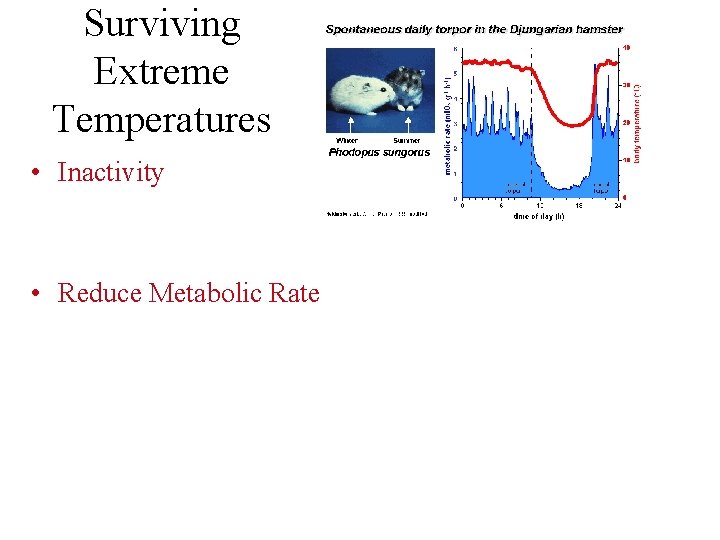
Surviving Extreme Temperatures • Inactivity • Reduce Metabolic Rate
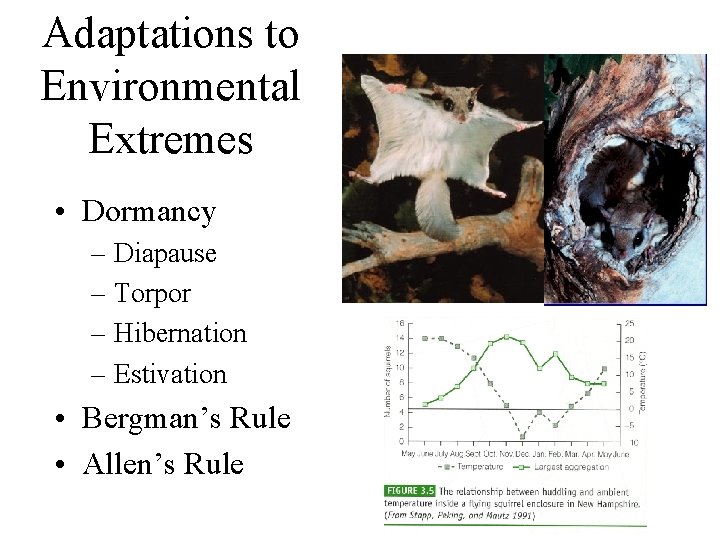
Adaptations to Environmental Extremes • Dormancy – Diapause – Torpor – Hibernation – Estivation • Bergman’s Rule • Allen’s Rule
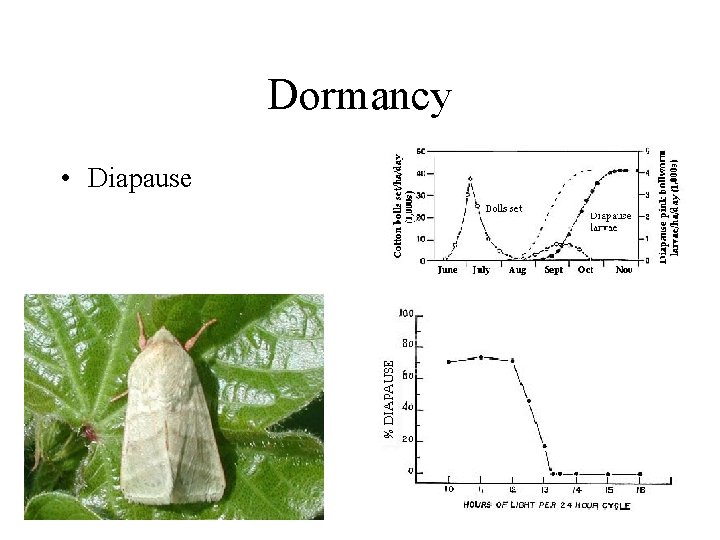
Dormancy • Diapause
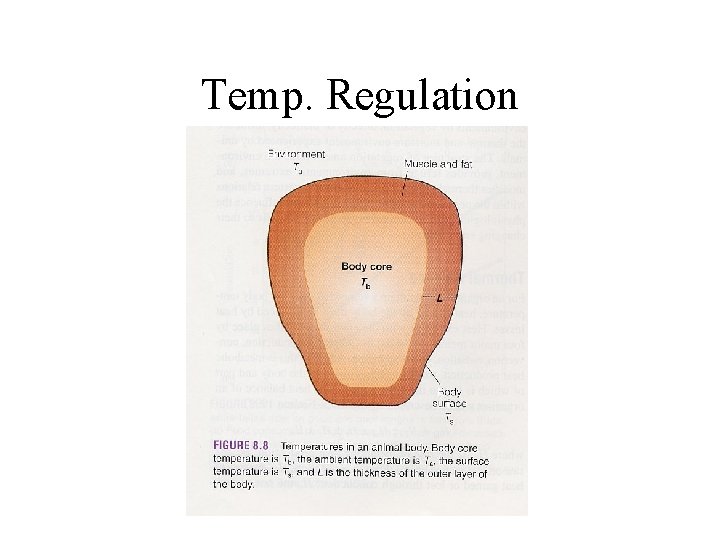
Temp. Regulation
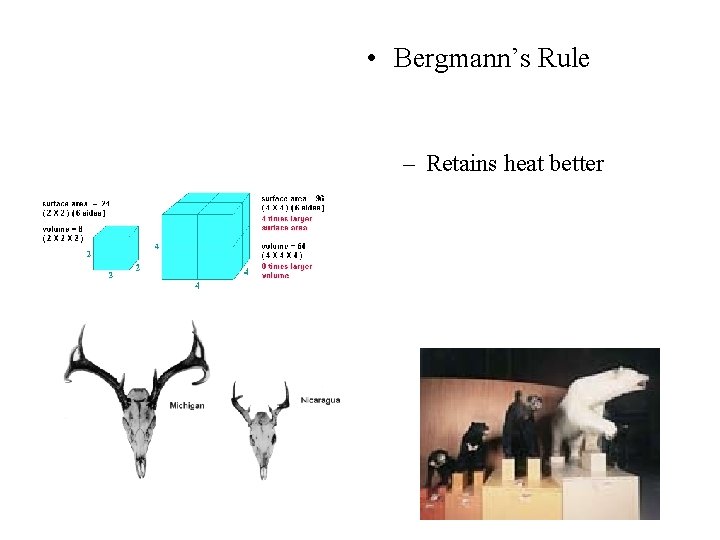
• Bergmann’s Rule – Retains heat better
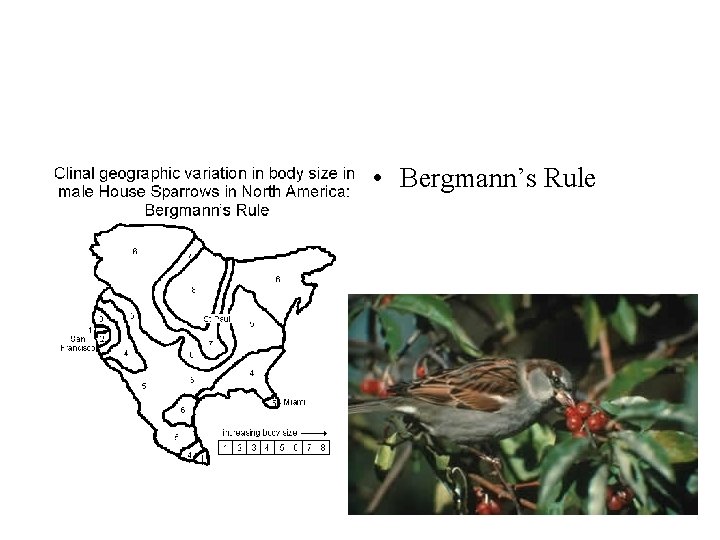
• Bergmann’s Rule
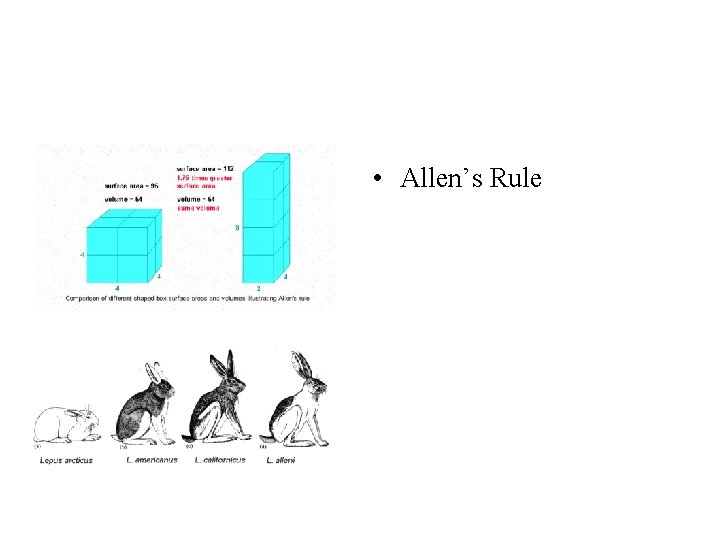
• Allen’s Rule
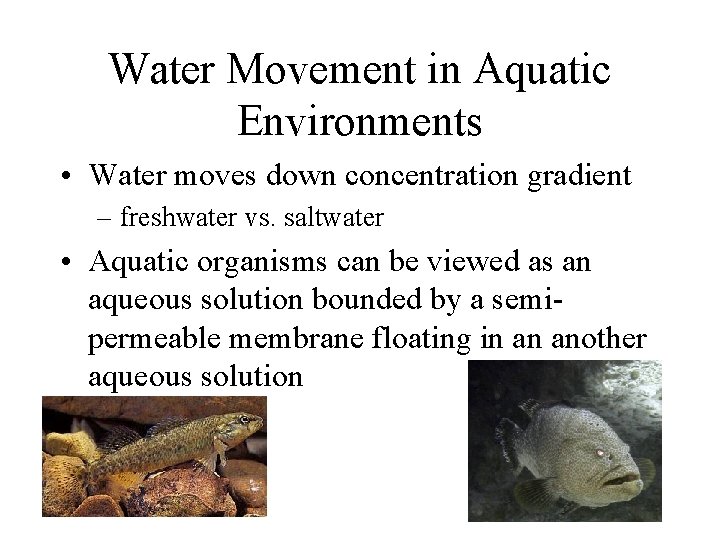
Water Movement in Aquatic Environments • Water moves down concentration gradient – freshwater vs. saltwater • Aquatic organisms can be viewed as an aqueous solution bounded by a semipermeable membrane floating in an another aqueous solution
Water Movement in Aquatic Environments • If 2 environments differ in water or salt concentrations, substances move down their concentration gradients – Diffusion • Osmosis:
![Water Movement in Aquatic Environment • Isomotic: – [Salt] – body fluids = external](http://slidetodoc.com/presentation_image_h2/65ca6190ad26c592523d7919d75b05f3/image-51.jpg "Water Movement in Aquatic Environment • Isomotic: – [Salt] – body fluids = external")
Water Movement in Aquatic Environment • Isomotic: – [Salt] – body fluids = external fluid • Hypoosmotic: – [Salt] < – body fluids > external fluid – Water moves out • Hyperosmotic: – [Salt] > – body fluids < external fluids – Water moves in
Water Regulation on Land • Terrestrial organisms face (2) major challenges: – Evaporative loss to environment. – Reduced access to replacement water.
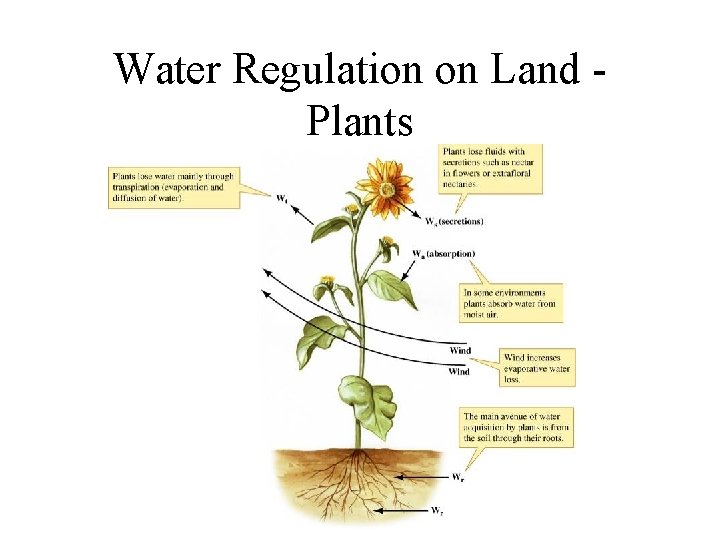
Water Regulation on Land Plants
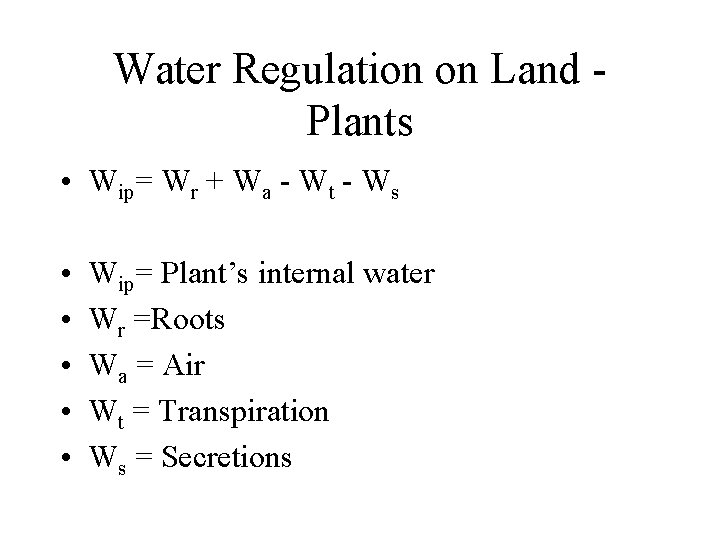
Water Regulation on Land Plants • Wip= Wr + Wa - Wt - Ws • • • Wip= Plant’s internal water Wr =Roots Wa = Air Wt = Transpiration Ws = Secretions
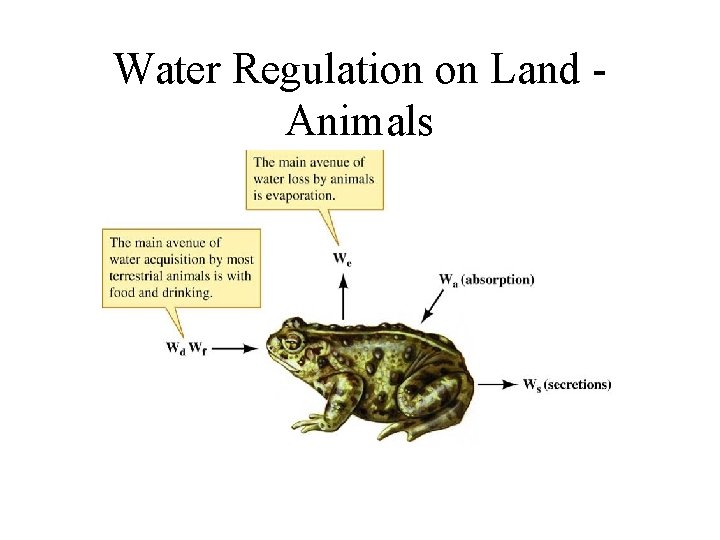
Water Regulation on Land Animals
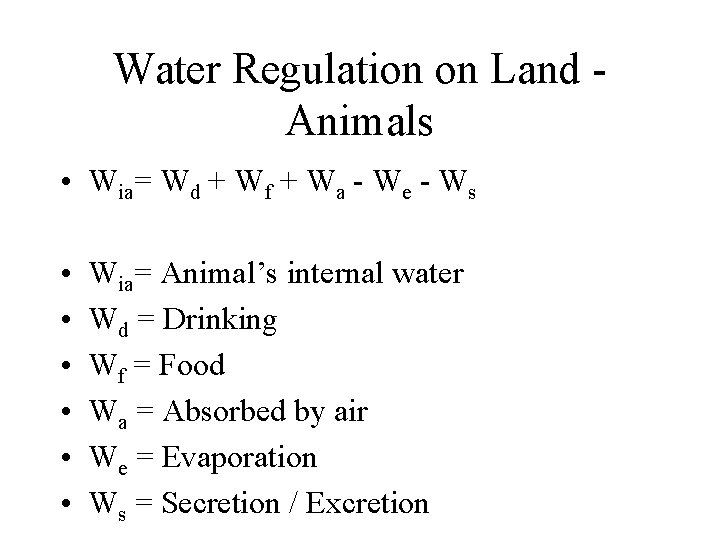
Water Regulation on Land Animals • Wia= Wd + Wf + Wa - We - Ws • • • Wia= Animal’s internal water Wd = Drinking Wf = Food Wa = Absorbed by air We = Evaporation Ws = Secretion / Excretion
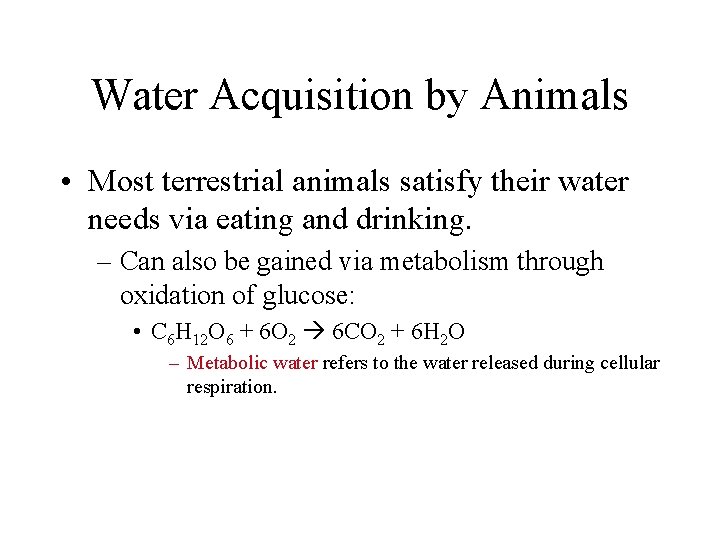
Water Acquisition by Animals • Most terrestrial animals satisfy their water needs via eating and drinking. – Can also be gained via metabolism through oxidation of glucose: • C 6 H 12 O 6 + 6 O 2 6 CO 2 + 6 H 2 O – Metabolic water refers to the water released during cellular respiration.
Water Conservation by Plants and Animals • Many terrestrial organisms equipped with waterproof outer covering. • Concentrated urine / feces. • Condensing water vapor in breath. • Behavioral modifications to avoid stress times. • Drop leaves in response to drought. • Thick leaves • Few stomata • Periodic dormancy
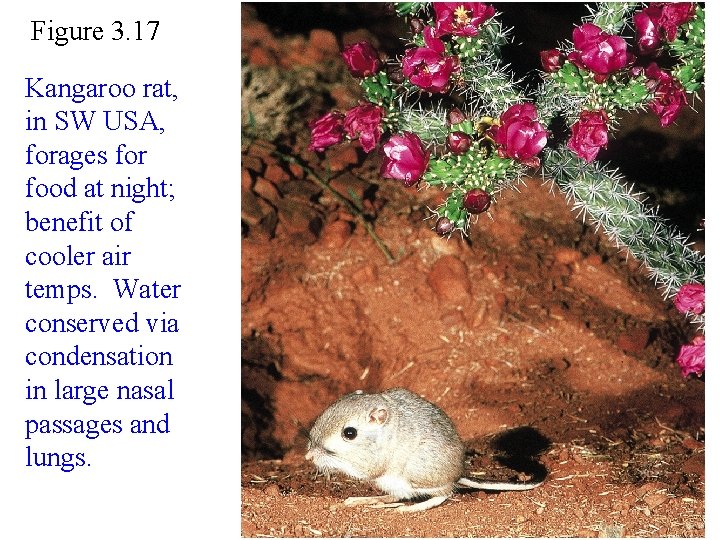
Figure 3. 17 Kangaroo rat, in SW USA, forages for food at night; benefit of cooler air temps. Water conserved via condensation in large nasal passages and lungs.
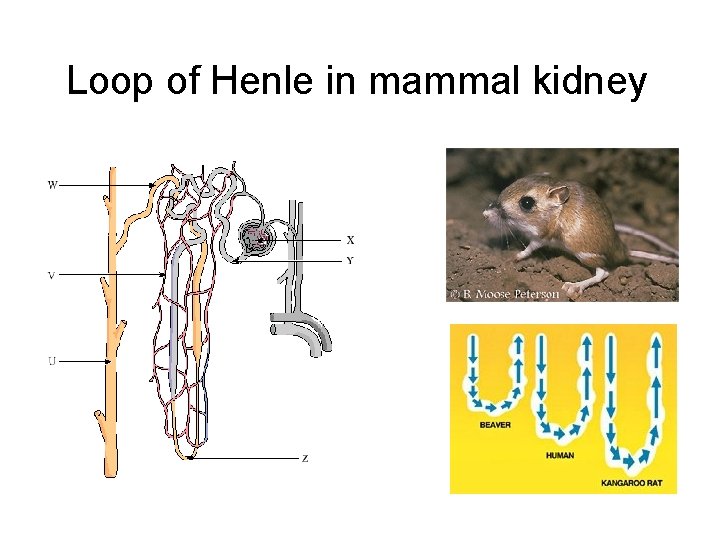
Loop of Henle in mammal kidney
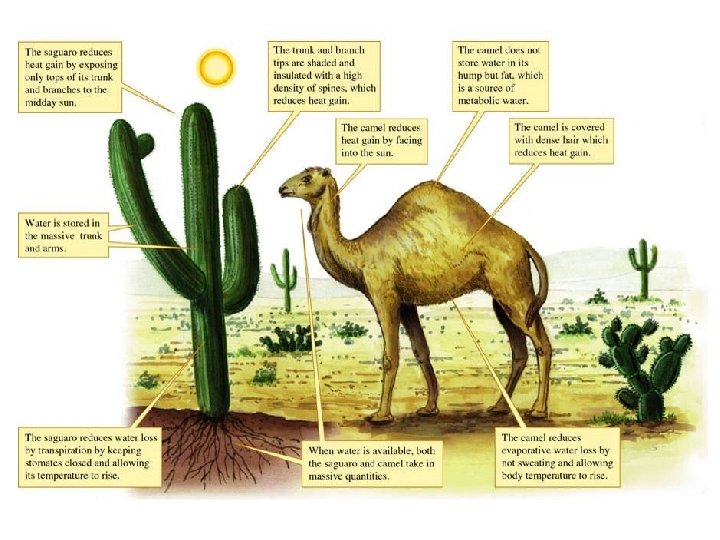
Dissimilar Organisms with Similar Approaches to Desert Life • Camels – Can withstand water loss up to 20%. • Face into sun to reduce exposure. • Thick hair: Increased body temperature lowers heat gradient. • Saguaro Cactus – Trunk / arms act as water storage organs. – Dense network of shallow roots. – Reduces evaporative loss.
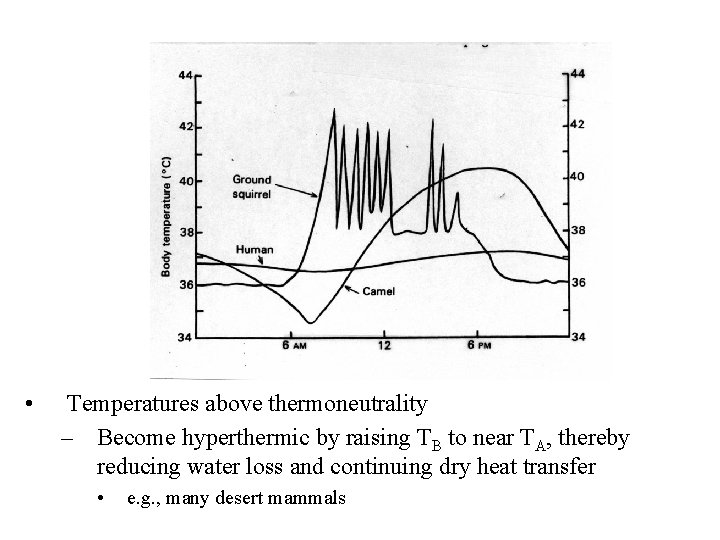
• Temperatures above thermoneutrality – Become hyperthermic by raising TB to near TA, thereby reducing water loss and continuing dry heat transfer • e. g. , many desert mammals
Readings • • • Ecological Issues (EI): Urban Microclimates, p. 34 EI – Groundwater Resources, p. 39 Quantifying Ecology 4. 1, pp. 59 -60 Field Studies – Kaoru Kitajima, pp. 112 -113 Quantifying Ecology 7. 1, pp. 140 -141
- Slides: 64