
Abenomics workshop Dr Mimoza Shabani Dr Ewa Karwowski

Abenomics workshop | Dr. Mimoza Shabani & Dr. Ewa Karwowski | 6 November 2017 THE JAPANESE BALANCE SHEET RECESSION 20 YEARS ON: ABENOMICS – SOLUTION OR CORPORATE FINANCIALISATION? DR. EWA KARWOWSKI (HERTFORDSHIRE BUSINESS SCHOOL) DR. MIMOZA SHABANI (UNIVERSITY OF EAST LONDON) KONSTANTIN BIKAS (METISECONOMICS)
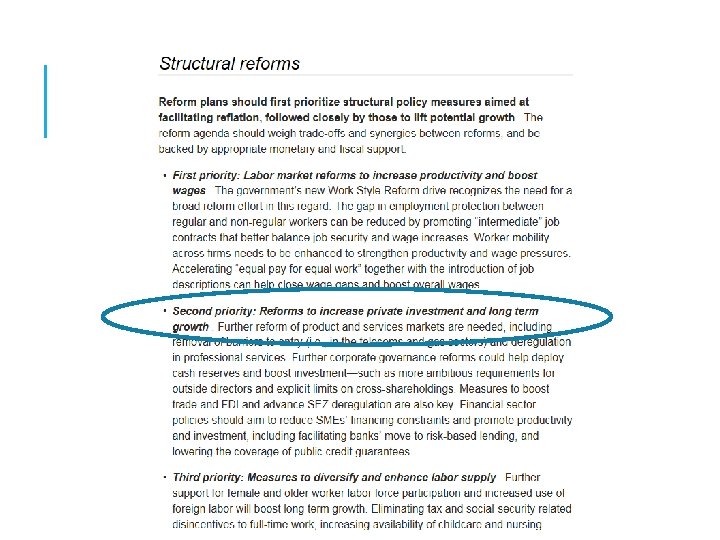
RESEARCH FOCUS & PURPOSE Due to a balance sheet recession Japanese non-financial companies (NFCs) were not investing. We assess whethere are signs of recovery due to recent Abenomics reforms or whether – as alleged – these measures have ushered in NFC financialisation.
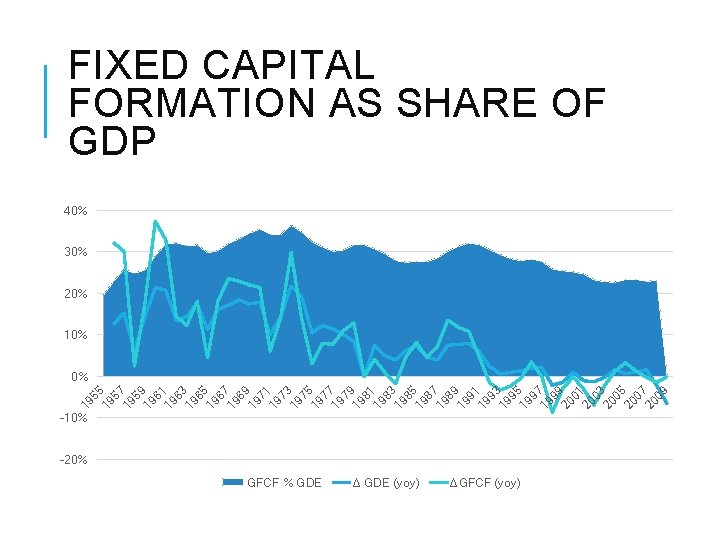
55 57 19 59 19 61 19 63 19 65 19 67 19 69 19 71 19 73 19 75 19 77 19 79 19 81 19 83 19 85 19 87 19 89 19 91 19 93 19 95 19 97 19 99 20 01 20 03 20 05 20 07 20 09 19 19 FIXED CAPITAL FORMATION AS SHARE OF GDP 40% 30% 20% 10% 0% -10% -20% GFCF % GDE Δ GDE (yoy) ΔGFCF (yoy)
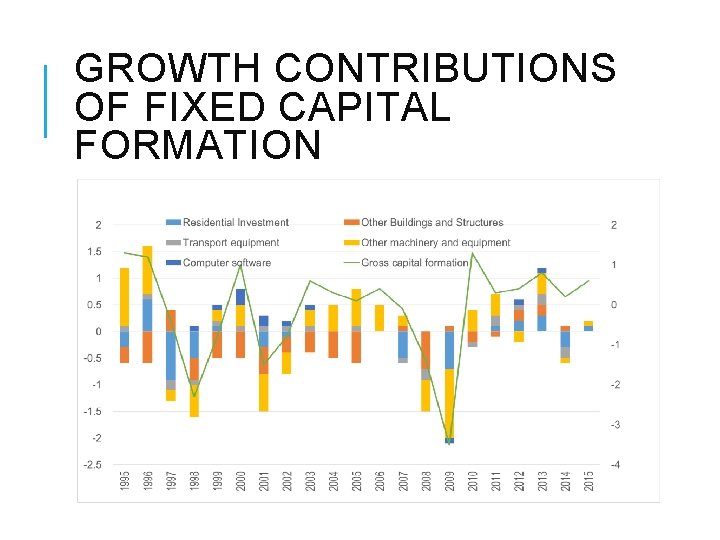
GROWTH CONTRIBUTIONS OF FIXED CAPITAL FORMATION
RICHARD KOO BALANCE SHEET RECESSION • Koo (2003) thesis maintains that due to unhealthy balance sheet in the aftermath of the late 1980 s crisis Japanese corporations started deleveraging. • As firms tried to bring down the level of debt the level of investment decreased significantly • The purpose of this presentation is to look at the behaviour of Japanese NFC in the most recent years.
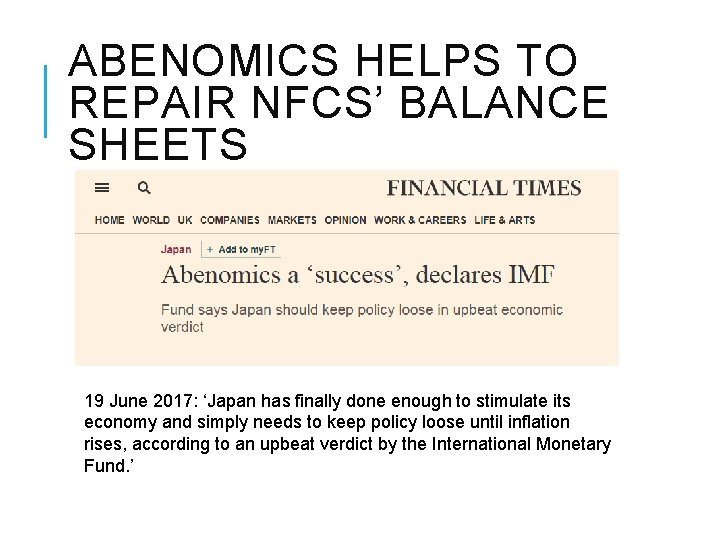
ABENOMICS HELPS TO REPAIR NFCS’ BALANCE SHEETS 19 June 2017: ‘Japan has finally done enough to stimulate its economy and simply needs to keep policy loose until inflation rises, according to an upbeat verdict by the International Monetary Fund. ’
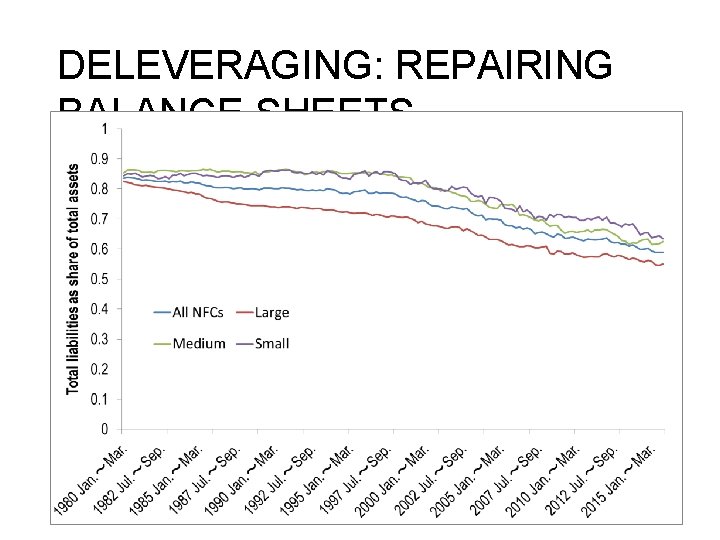
DELEVERAGING: REPAIRING BALANCE SHEETS
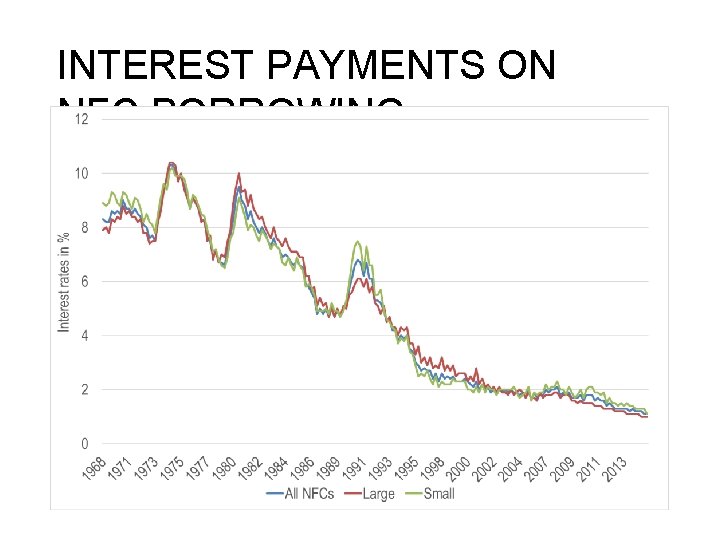
INTEREST PAYMENTS ON NFC BORROWING
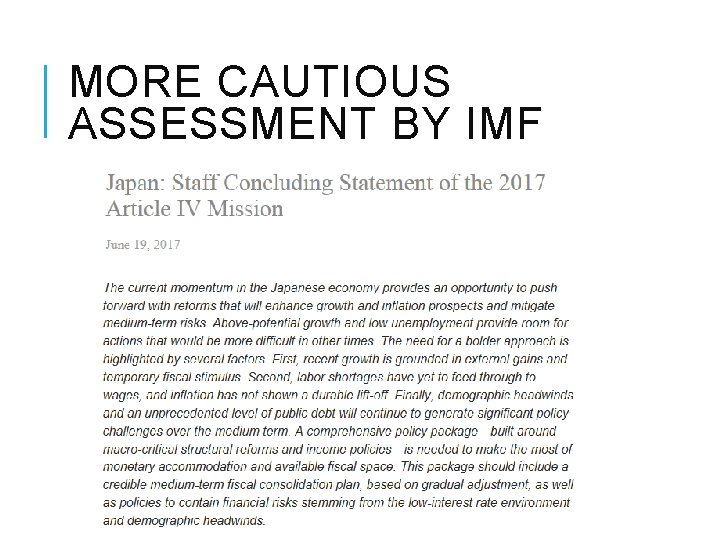
MORE CAUTIOUS ASSESSMENT BY IMF
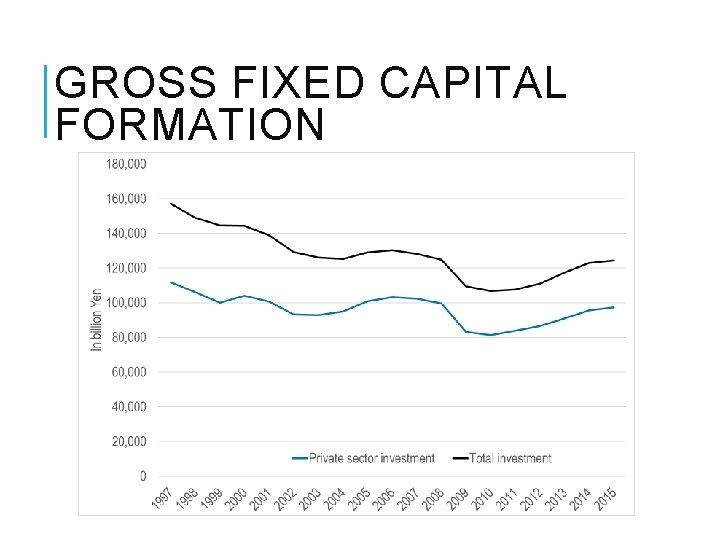
GROSS FIXED CAPITAL FORMATION
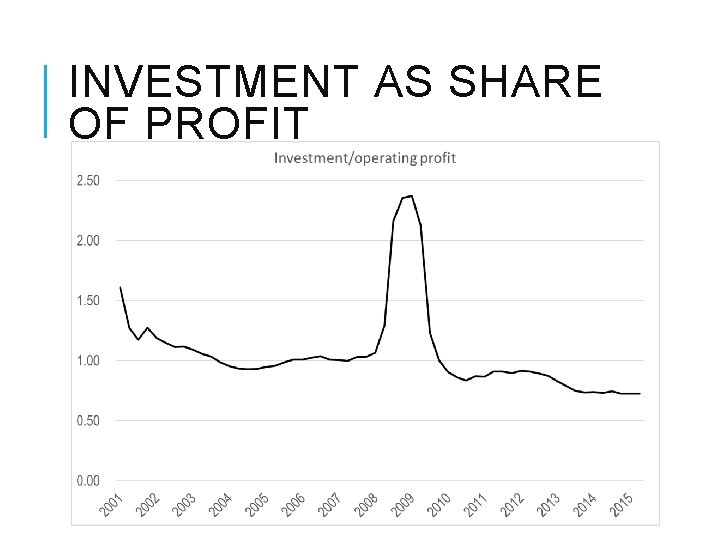
INVESTMENT AS SHARE OF PROFIT
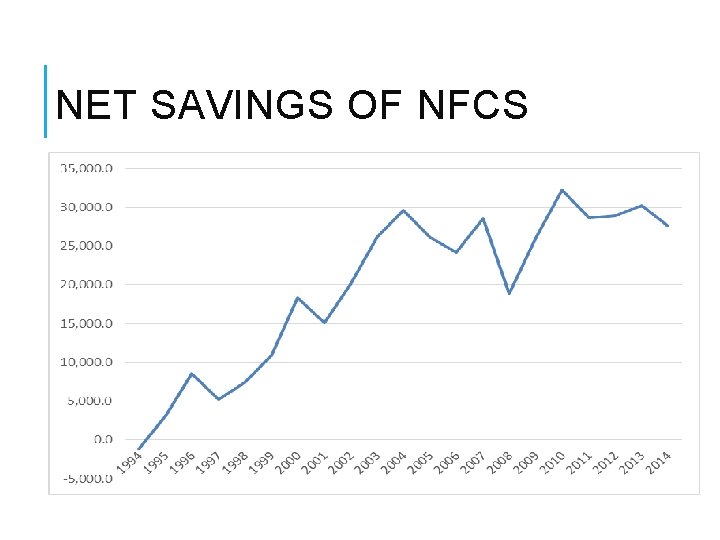
NET SAVINGS OF NFCS
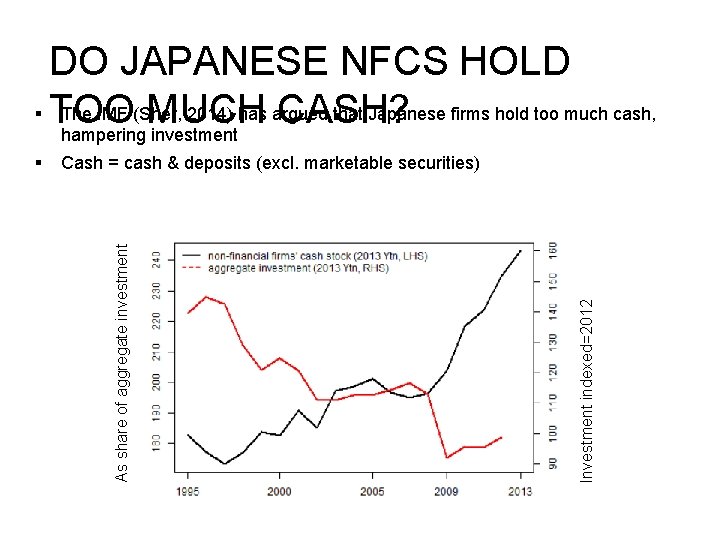
DO JAPANESE NFCS HOLD § TOO The IMF (Sher, 2014) has argued that Japanese firms hold too much cash, MUCH CASH? hampering investment Investment indexed=2012 Cash = cash & deposits (excl. marketable securities) As share of aggregate investment §
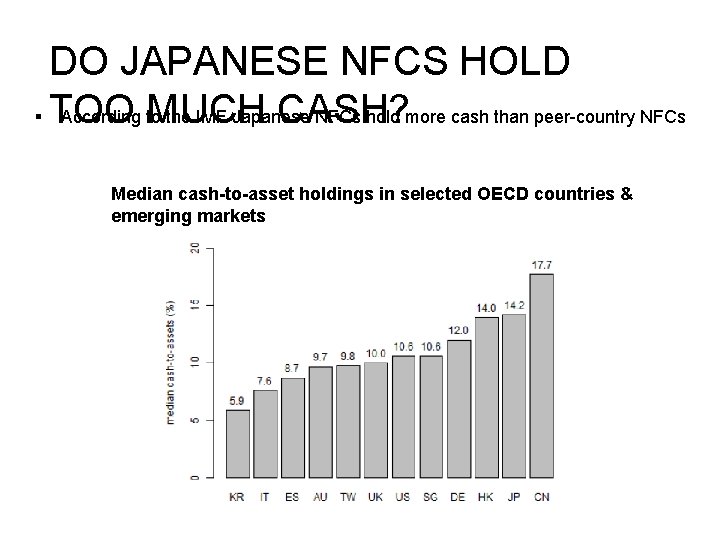
DO JAPANESE NFCS HOLD § TOO According to the IMF Japanese NFCs hold more cash than peer-country NFCs MUCH CASH? Median cash-to-asset holdings in selected OECD countries & emerging markets
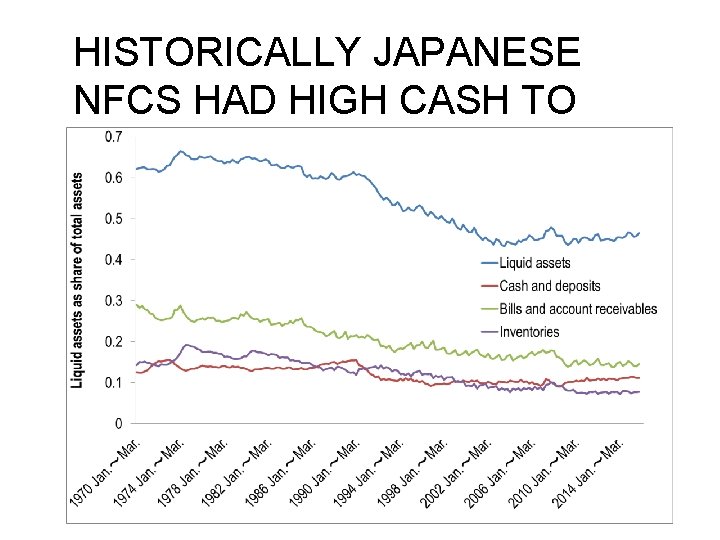
HISTORICALLY JAPANESE NFCS HAD HIGH CASH TO ASSET RATIOS
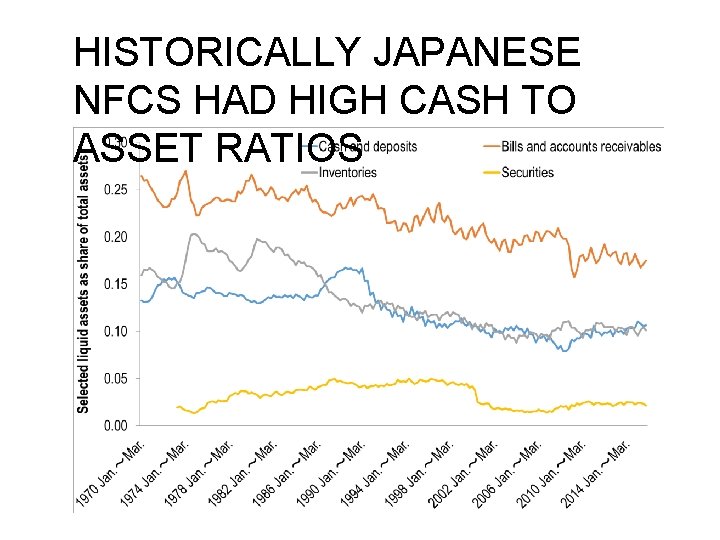
HISTORICALLY JAPANESE NFCS HAD HIGH CASH TO ASSET RATIOS
LIQUIDITY HOLDINGS NFCS §AMONG Historically, cash. JAPANESE holdings as share of total assets are low today § Cash holdings were high during the 1970 s (when investment rates were also high) § They peaked in the run-up to the stock exchange crash § Between early 1990 and 2008 cash holdings declined steadily § With a slight reversal since 2008 § BUT: analysing assets makes only sense as part of balance sheet analysis (i. e. in conjuncture with liabilities) § Overcapitalisation (Toporowski, 2008) § Overcapitalisation ratio = Liquid assets/ liquid liabilities
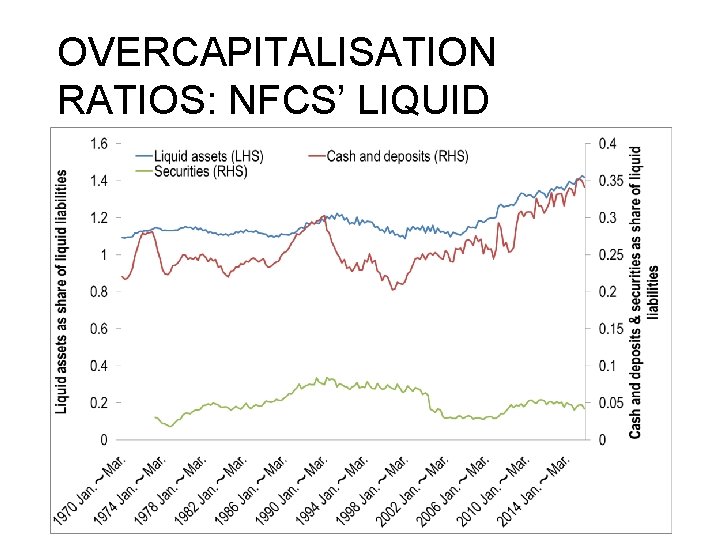
OVERCAPITALISATION RATIOS: NFCS’ LIQUID HOLDINGS HAVE INCREASED
ARE JAPANESE NFCS FINANCIALISED? Abenomics reforms have been described as ‘neoliberal’ reforms: § Especially policies in the ‘third arrow’ have been labelled as neoliberal § Abenomics aims at increasing private investment in public infrastructure: § Bidding for Sendai Airport opens in 2014 § Privatisation of Japanese Post Office starts in 2015 § Kensai and Osaka International Airport privatised in 2016 § Plans to privatise Fukuoka Airport by 2019 It has been argued that Japan is undergoing financialisation (Robinson 2017).
ARE JAPANESE NFCS FINANCIALISED? Financialisation theory predicts diverging symptoms among NFCs: § Increasing leverage due to shareholder value (i. e. debt/equity ratios) § Increased financial cost of investment (i. e. net interest payments increase) § Shift towards financial activity & rising financial profits (i. e. net financial income increases) § Speculation with financial assets (i. e. holding of financial investment)
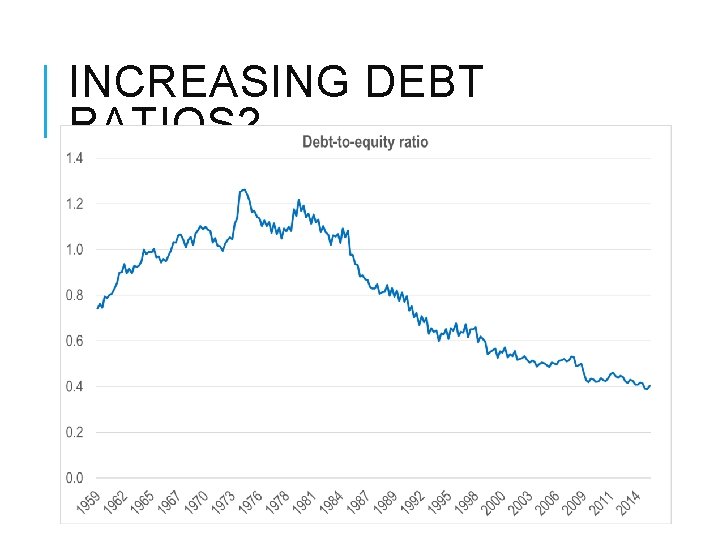
INCREASING DEBT RATIOS?
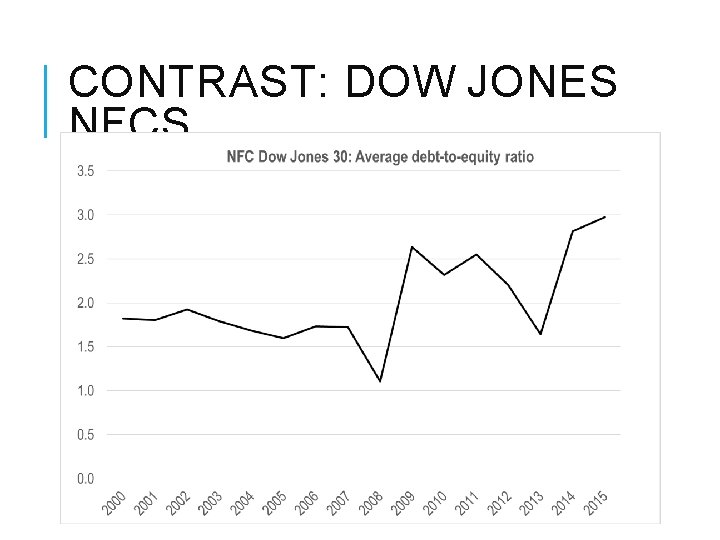
CONTRAST: DOW JONES NFCS
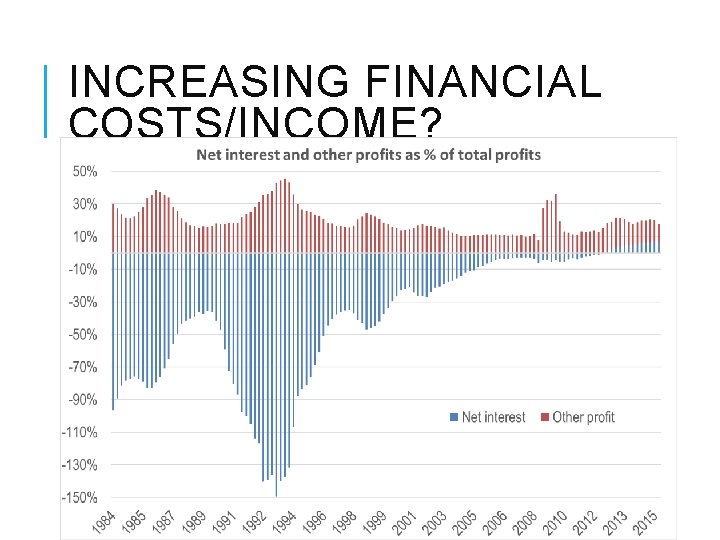
INCREASING FINANCIAL COSTS/INCOME?
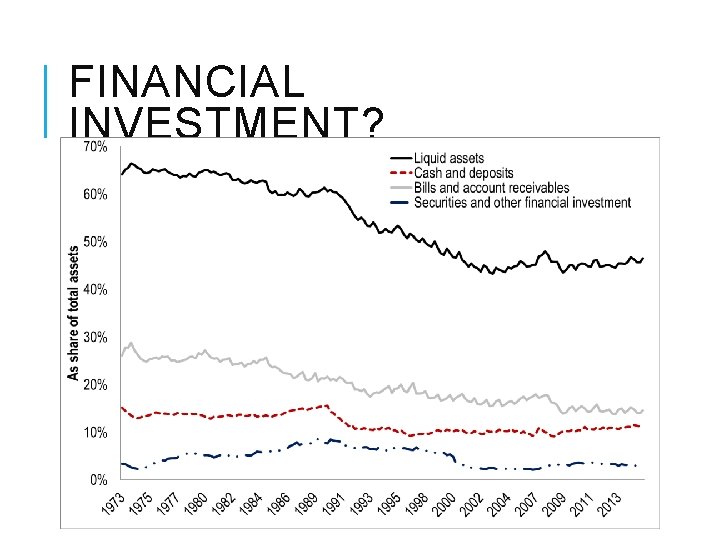
FINANCIAL INVESTMENT?
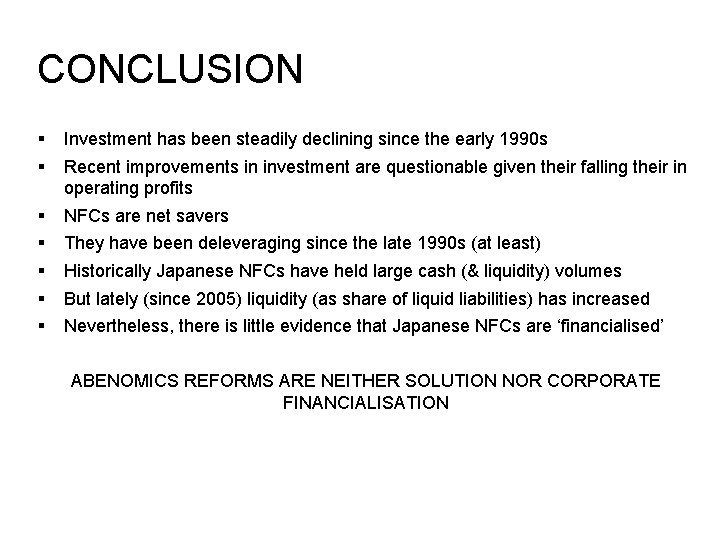
CONCLUSION § § Investment has been steadily declining since the early 1990 s § § § NFCs are net savers Recent improvements in investment are questionable given their falling their in operating profits They have been deleveraging since the late 1990 s (at least) Historically Japanese NFCs have held large cash (& liquidity) volumes But lately (since 2005) liquidity (as share of liquid liabilities) has increased Nevertheless, there is little evidence that Japanese NFCs are ‘financialised’ ABENOMICS REFORMS ARE NEITHER SOLUTION NOR CORPORATE FINANCIALISATION
- Slides: 26