
Abdominal pain Abdominal pain is a very common
Abdominal pain
Abdominal pain is a very common complaint in child hood. may be acute or recurrent I- Surgical Appendicitis Pancreatitis Intestinal obstruction Intussusception Urolithiasis peritonitis
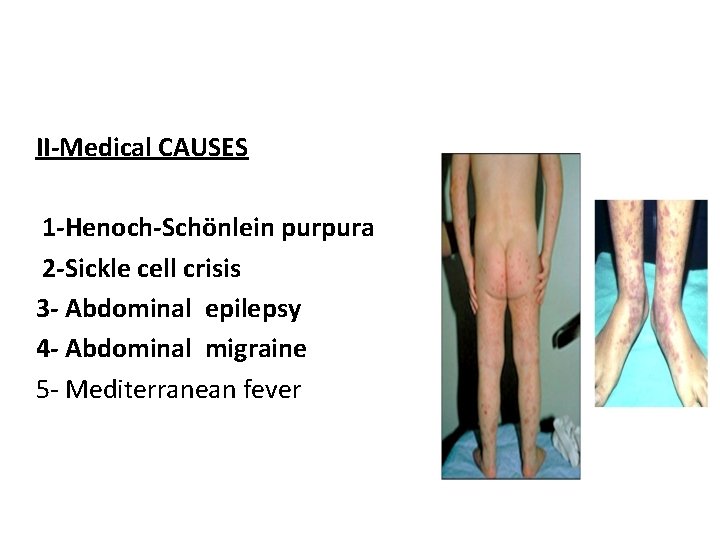
II-Medical CAUSES 1 -Henoch-Schönlein purpura 2 -Sickle cell crisis 3 - Abdominal epilepsy 4 - Abdominal migraine 5 - Mediterranean fever
Acute abdominal pain III- Refered abdominal pain 1 - Pneumonia 2 - Testicular torsion 3 - Hip lesions
Recurrent abdominal pain is classified into 1 - Non organic ( functional ) > 90 % 2 -Organic Depending on whether a specific cause of the pain is identified
Functional abdominal pain Represent > 90 % of cases It refers to pain that cannot be explained on a structural, physiologic, or biochemical basis. Etiology Unknown Possible relation to stress and emotional disturbances
Functional abdominal pain The characteristic features includes : 1 -Onset later than 6 yr of age 2 - The pain a-Paroxysmal episodes of pain occurring at least monthly for 3 consecutive months b- periumbilical. c- interrupts normal activity, d- has no relationship TO meals. 3 - Normal growth 4 - Absent constitutional manifestations
Recurrent abdominal pain(organic) 1 - Gastrointestinal A- Constipation b-GER c- peptic ulcer 2 - Renal a- UTI b- Stone 3 - Hepatitis 4 - pancreatitis
Recurrent abdominal pain(organic) Represent less than 10 % Should be suspected in 1 - young age 2 - persistent pain 3 - Pain away from the umbilicus 4 - Abdominal tenderness 5 - Growth failure 6 – Associated manifestations fever, Anorexia , vomiting , diarrhea , GIT bleeding , urinary manifestations
Infantile colic A very common problem In the first 6 months of life characterized by Paroxysmal episodes of crying The infant draws legs up Fisting Red face May be relieved by the passage of flatus
Evaluation of abdominal pain. I- History Symptoms suggestive of an organic etiology include : Vomiting, diarrhea, blood in the stool joint symptoms, Pain localized away from the umbilicus Pain awaken the patient from sleep. II- Signs Fever , weight loss & abnormal growth Abdominal tenderness
Evaluation of abdominal pain III-Laboratory studies may be unnecessary if the history and physical examination clearly lead to a diagnosis of functional abdominal pain. The following may be needed 1 - complete blood cell count 2 - Stool examination 3 - urinalysis
Evaluation of abdominal pain 4 - Sedimentation rate AND other acute phase reactant. 5 - ultrasound examination of the abdomen 3 - upper gastrointestinal tract x-ray series 4 -Esophagogastroduodenoscopy

Treatment of abdominal pain 1 - Organic treatment of the cause 2 - Functional a- Assurance b- Drugs Play a little role

Thank You
- Slides: 15