
Abdominal Examination Abdominal Examination Definition It is a

Abdominal Examination

Abdominal Examination

Definition: It is a visual, tactile and or audible examination of the woman's abdomen.
Objectives 1. To confirm pregnancy. 2. To assess fetal size and growth. 3. To identify the location of fetal parts. 4. To auscultate the fetal heart sounds. 5. To detect any deviation from normal.
Preparation of the mother: � 1 - Instruct the woman to empty her bladder. 2 - Instruct the woman to lie on “supine position”. 3 - exposes only that area of the abdomen she needs to palpate. 4 - Maintain privacy. shoulders should be raised slightly on a pillow and the knees drawn up a little
Equipment 1 - Pinard fetoscope. 2 - Client record.
Methods of abdominal examination � 1 - Inspection. � 2 - Palpation. � 3 - Auscultation.
Steps
� -Welcome the woman and Explain the procedure. � Ensure an empty bladder. � provide privacy. � Position her on the examination couch on her back with knees slightly flexed and seperated put pillow under head. � Expose the abdomen fully, leaving legs and pubic area covered.
Inspection Observe the abdomen for: � -shape and size in relation to the period of amenorrhea (gestational age). � -Fetal movements.
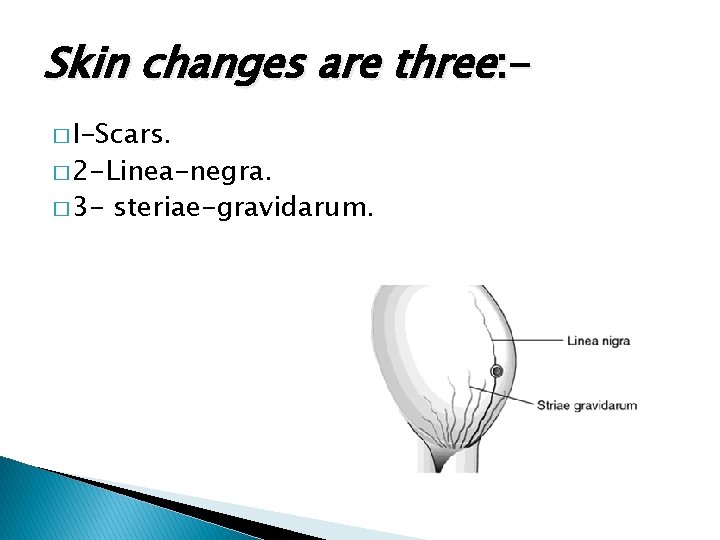
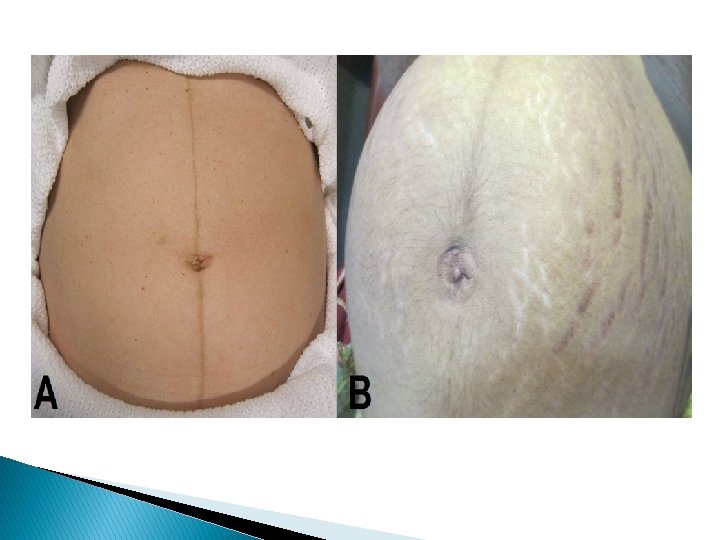
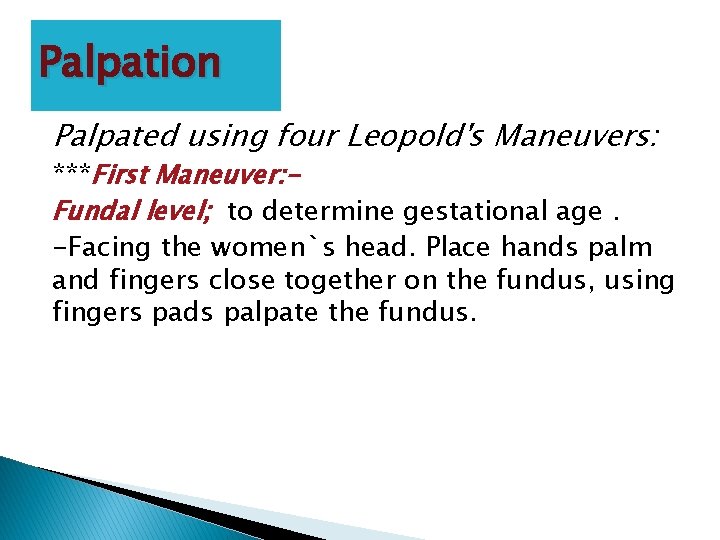
Skin changes are three: � I-Scars. � 2 -Linea-negra. � 3 - steriae-gravidarum.
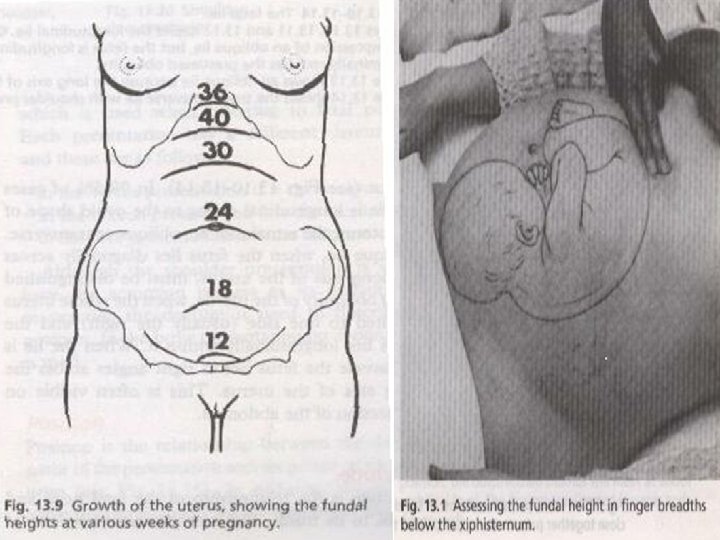
Palpation Palpated using four Leopold's Maneuvers: ***First Maneuver: Fundal level; to determine gestational age. -Facing the women`s head. Place hands palm and fingers close together on the fundus, using fingers pads palpate the fundus.
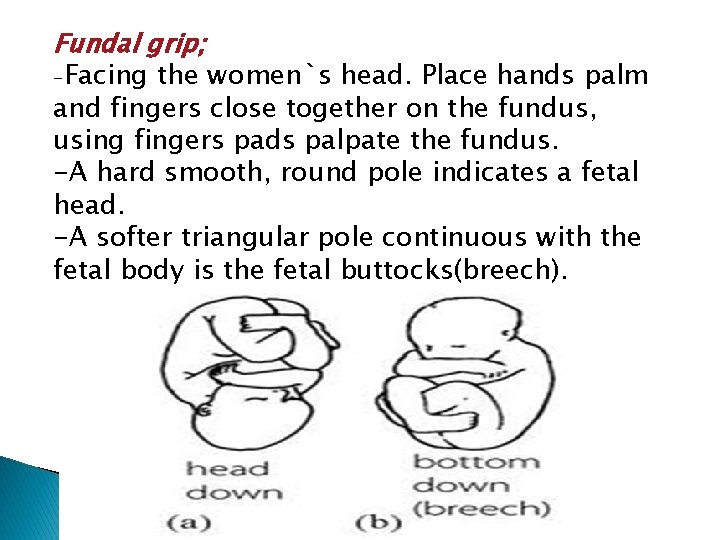
Fundal grip; -Facing the women`s head. Place hands palm and fingers close together on the fundus, using fingers pads palpate the fundus. -A hard smooth, round pole indicates a fetal head. -A softer triangular pole continuous with the fetal body is the fetal buttocks(breech).
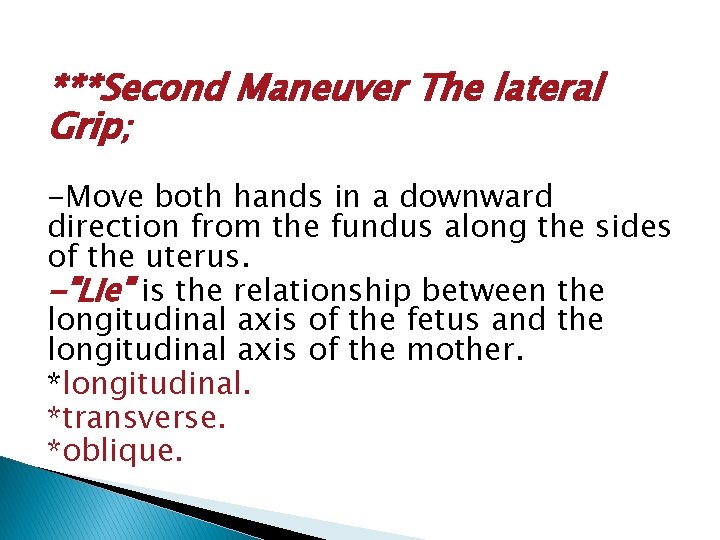
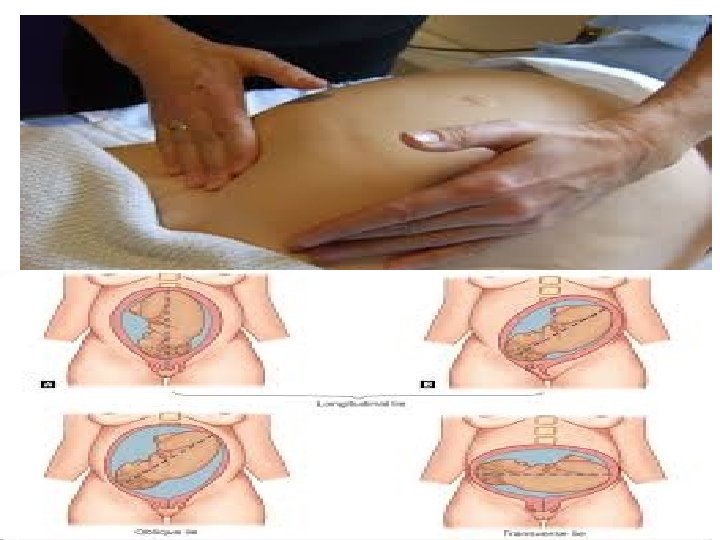
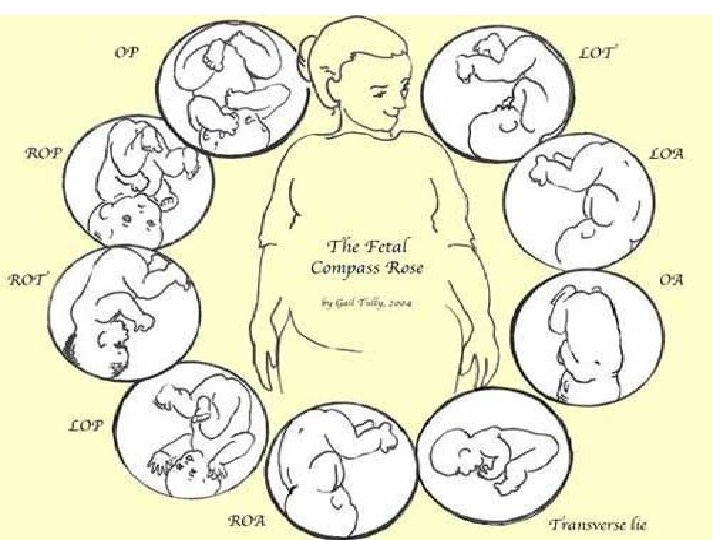
***Second Maneuver The lateral Grip; -Move both hands in a downward direction from the fundus along the sides of the uterus. -"Lie" is the relationship between the longitudinal axis of the fetus and the longitudinal axis of the mother. *longitudinal. *transverse. *oblique.
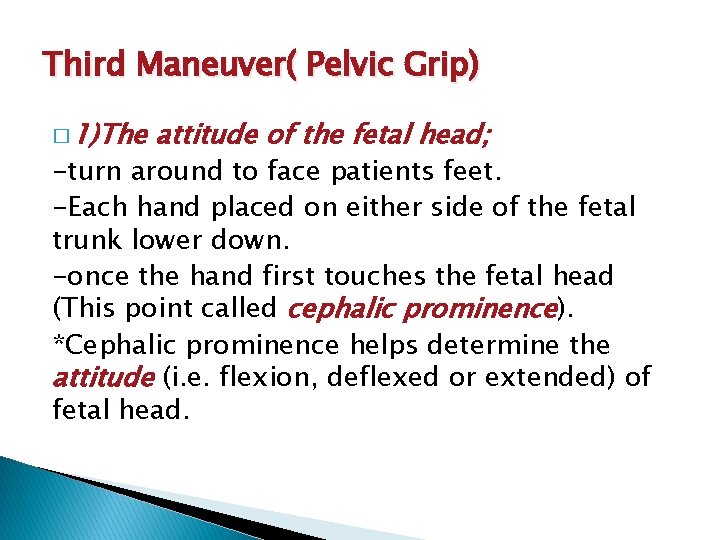
Third Maneuver( Pelvic Grip) � 1)The attitude of the fetal head; -turn around to face patients feet. -Each hand placed on either side of the fetal trunk lower down. -once the hand first touches the fetal head (This point called cephalic prominence). *Cephalic prominence helps determine the attitude (i. e. flexion, deflexed or extended) of fetal head.

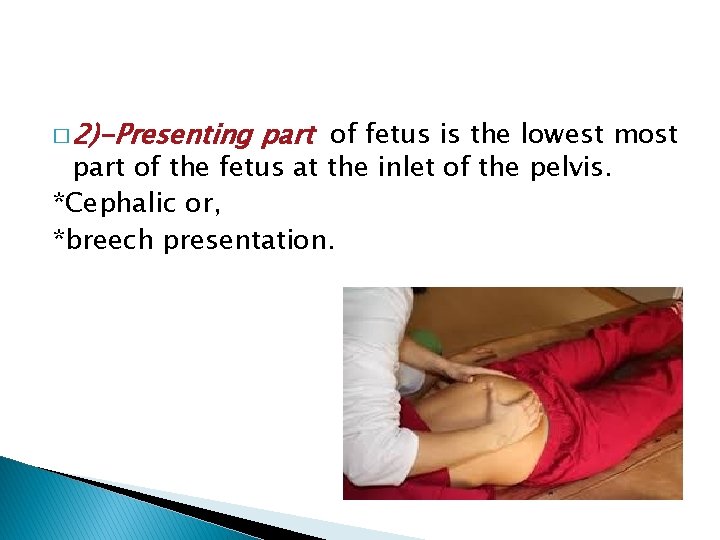
� 2)-Presenting part of fetus is the lowest most part of the fetus at the inlet of the pelvis. *Cephalic or, *breech presentation.
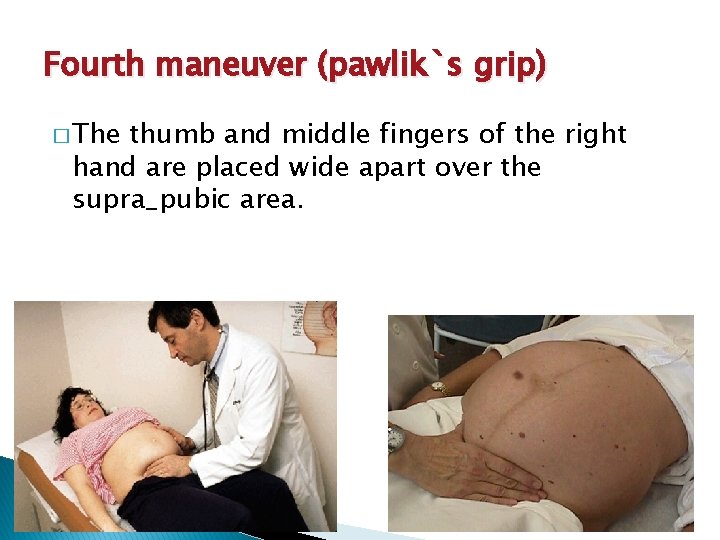
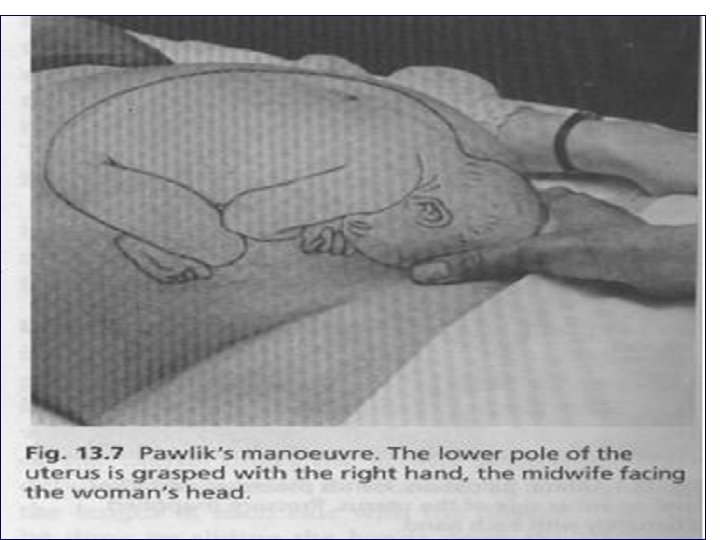
Fourth maneuver (pawlik`s grip) � The thumb and middle fingers of the right hand are placed wide apart over the supra_pubic area.
Engagement of the fetal head: � Engagement of the fetal head defined as having occurred once the widest transverse diameter of the fetal head has passed through the pelvic inlet into the true pelvis.
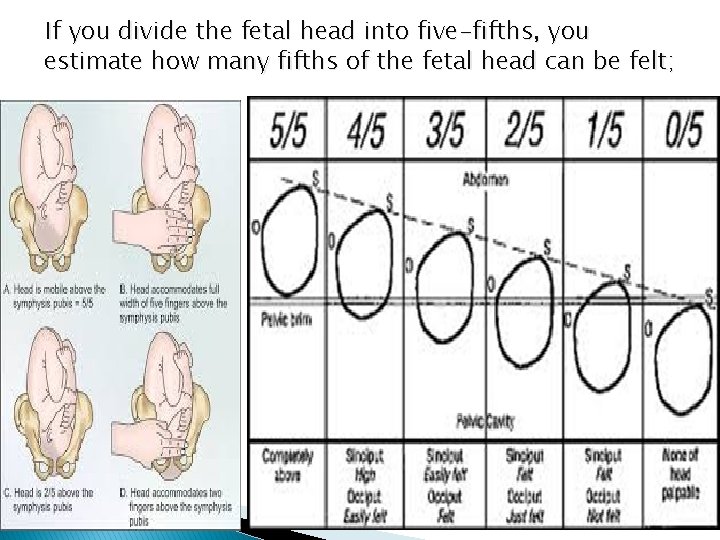
If you divide the fetal head into five-fifths, you estimate how many fifths of the fetal head can be felt;
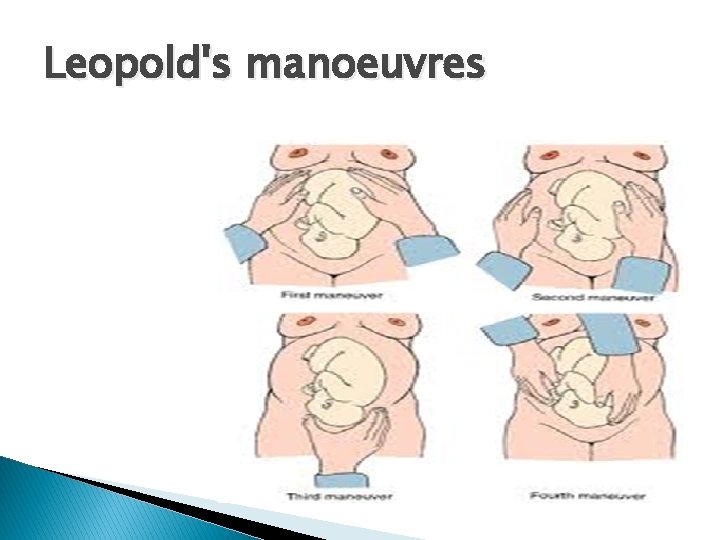
Leopold's manoeuvres
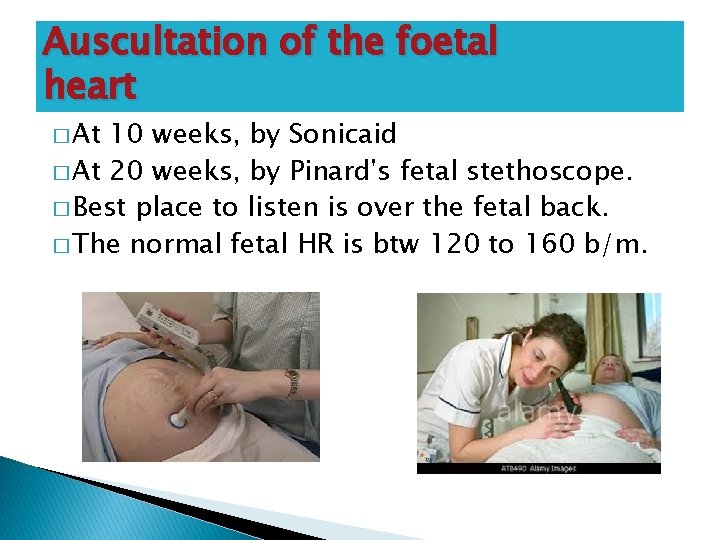
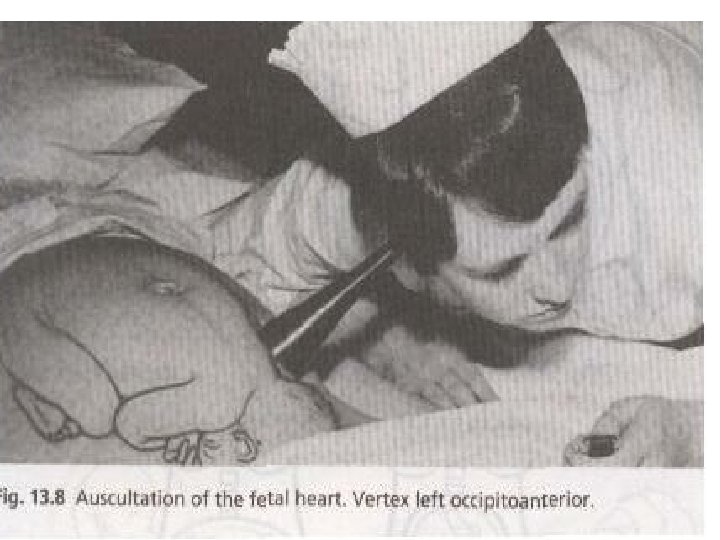
Auscultation of the foetal heart � At 10 weeks, by Sonicaid � At 20 weeks, by Pinard's fetal stethoscope. � Best place to listen is over the fetal back. � The normal fetal HR is btw 120 to 160 b/m.

Any Question?

� Thank � With My Best Wishes, Clinical Demonisterator Eman A. Magraby You
- Slides: 30