
Abdomen 1 Human Structure and Development ANHB 2212
Abdomen – 1 Human Structure and Development ANHB 2212 – 2008 Avinash Bharadwaj
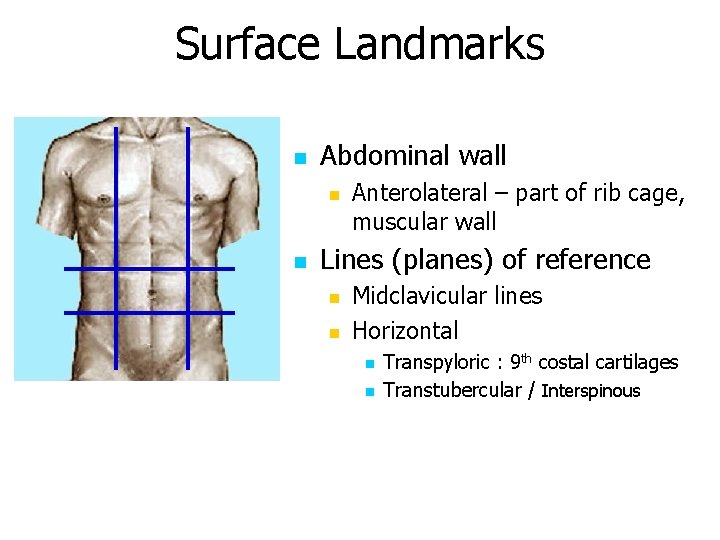
Surface Landmarks n Abdominal wall n n Anterolateral – part of rib cage, muscular wall Lines (planes) of reference n n Midclavicular lines Horizontal n n Transpyloric : 9 th costal cartilages Transtubercular / Interspinous

Abdominal Regions Hypochondrium Lumbar Iliac Epigastrium Umbilical Hypochondrium Lumbar Iliac Hypogastrium
General Disposition of Viscera n n Digestive system, peritoneum Paired glands and associated structures Blood vessels, lymphatics, lymph nodes Nerves General considerations in the study of viscera n n n Location** Peritoneal relations Special structural features / parts** Blood vessels and nerves – general principles** Lymphatics (Week 9)
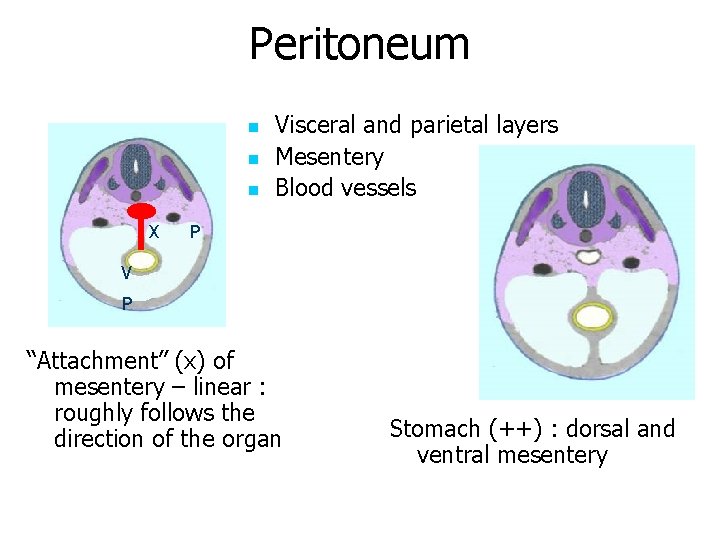
Peritoneum n n n X Visceral and parietal layers Mesentery Blood vessels P V P “Attachment” (x) of mesentery – linear : roughly follows the direction of the organ Stomach (++) : dorsal and ventral mesentery
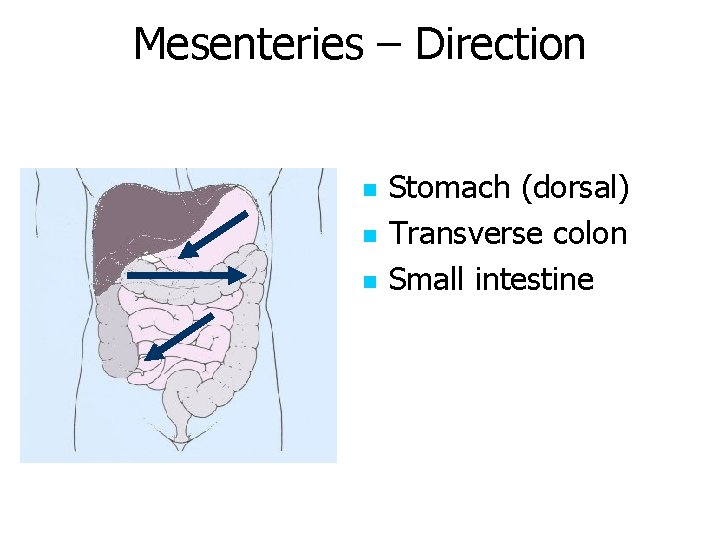
Mesenteries – Direction n Stomach (dorsal) Transverse colon Small intestine
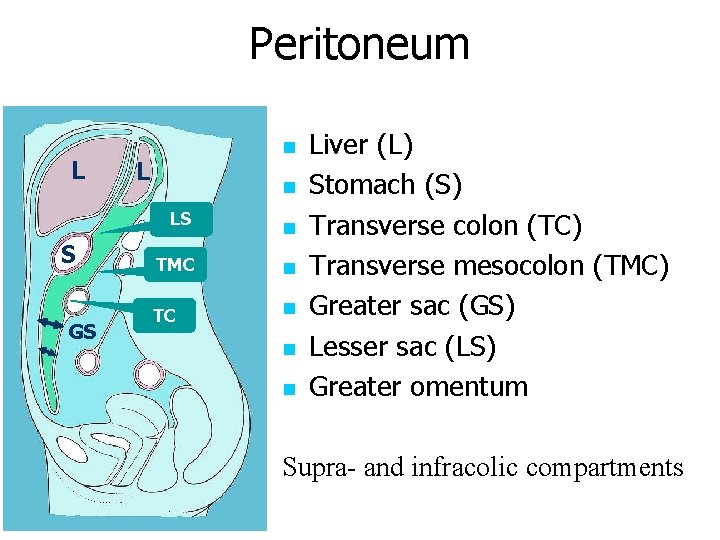
Peritoneum L n LS S GS n TMC n TC n n n Liver (L) Stomach (S) Transverse colon (TC) Transverse mesocolon (TMC) Greater sac (GS) Lesser sac (LS) Greater omentum Supra- and infracolic compartments
“Ligaments” n Peritoneal folds Not “true” ligaments No supporting function n Some special ligaments n n n Ligamentum teres hepatis Ligamentum venosum Round ligament of the uterus
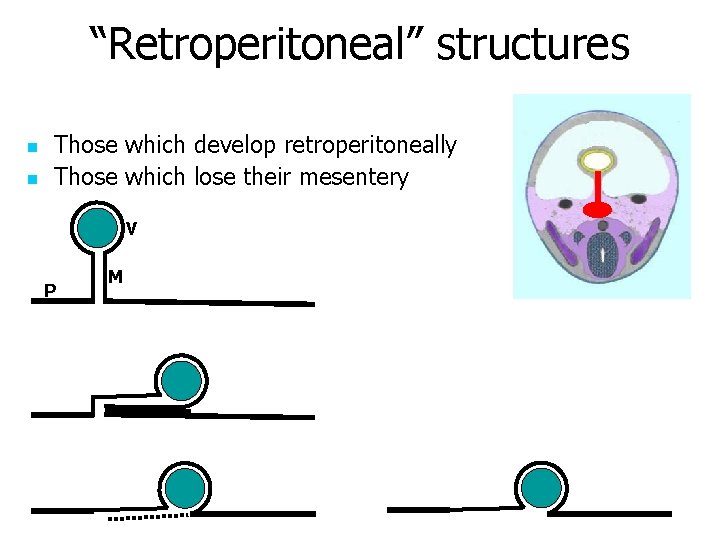
“Retroperitoneal” structures n n Those which develop retroperitoneally Those which lose their mesentery V P M
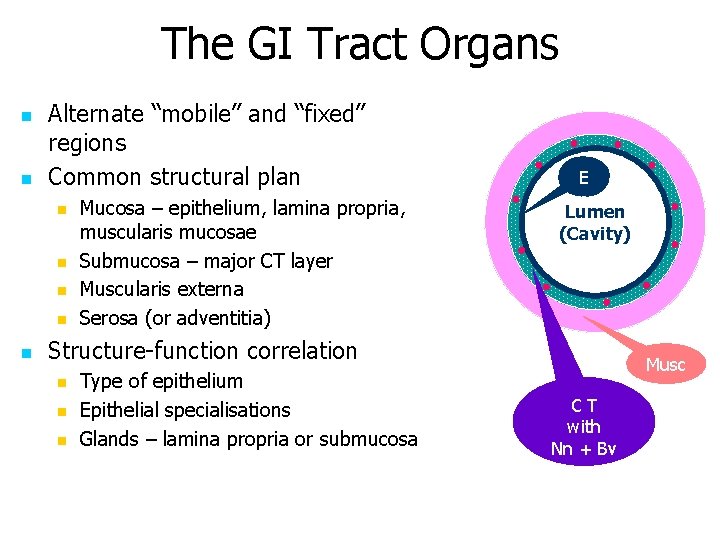
The GI Tract Organs n n Alternate “mobile” and “fixed” regions Common structural plan n n Mucosa – epithelium, lamina propria, muscularis mucosae Submucosa – major CT layer Muscularis externa Serosa (or adventitia) E p Lumen (Cavity) Structure-function correlation n Type of epithelium Epithelial specialisations Glands – lamina propria or submucosa Musc CT with Nn + Bv
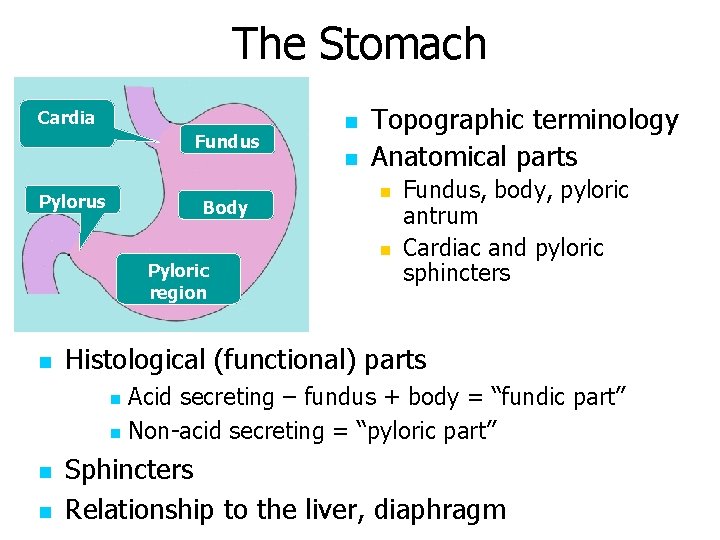
The Stomach Cardia Fundus Pylorus Body n n Topographic terminology Anatomical parts n n Pyloric region n Fundus, body, pyloric antrum Cardiac and pyloric sphincters Histological (functional) parts Acid secreting – fundus + body = “fundic part” n Non-acid secreting = “pyloric part” n n n Sphincters Relationship to the liver, diaphragm
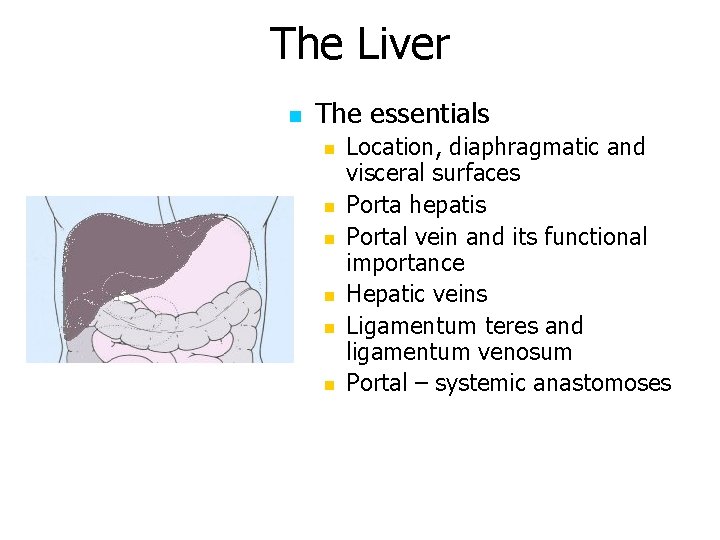
The Liver n The essentials n n n Location, diaphragmatic and visceral surfaces Porta hepatis Portal vein and its functional importance Hepatic veins Ligamentum teres and ligamentum venosum Portal – systemic anastomoses
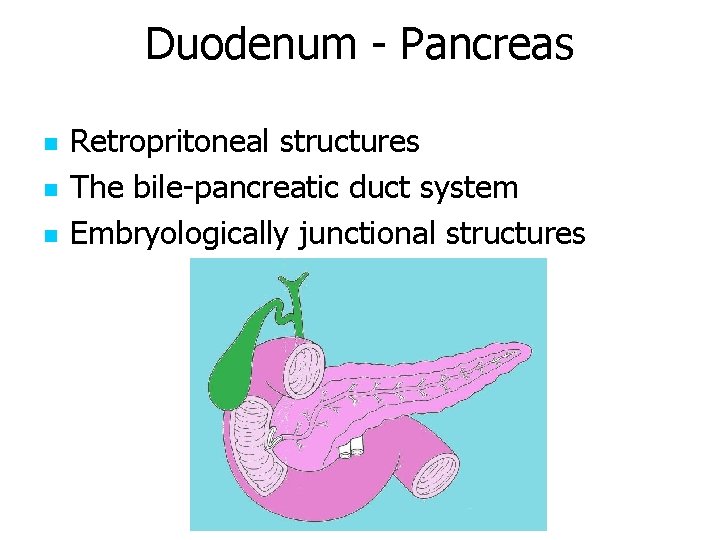
Duodenum - Pancreas n n n Retropritoneal structures The bile-pancreatic duct system Embryologically junctional structures
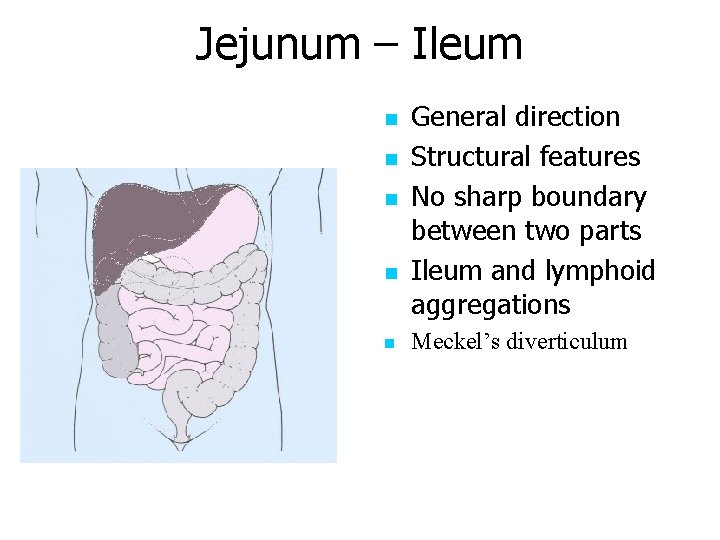
Jejunum – Ileum n n n General direction Structural features No sharp boundary between two parts Ileum and lymphoid aggregations Meckel’s diverticulum
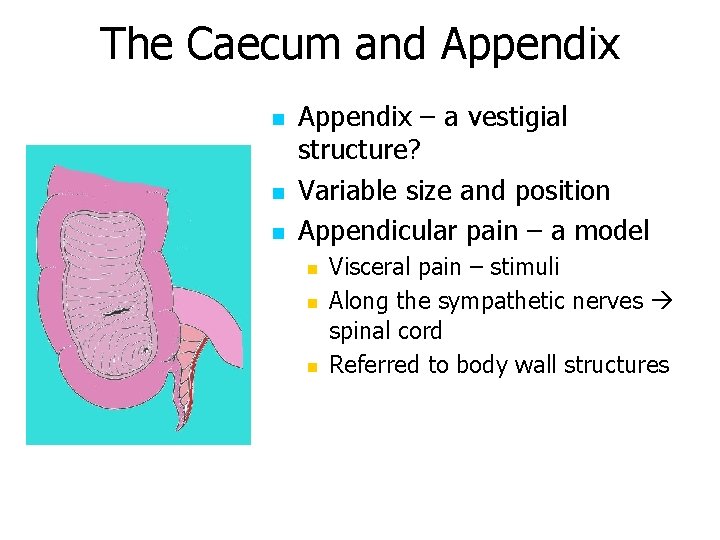
The Caecum and Appendix n n n Appendix – a vestigial structure? Variable size and position Appendicular pain – a model n n n Visceral pain – stimuli Along the sympathetic nerves spinal cord Referred to body wall structures
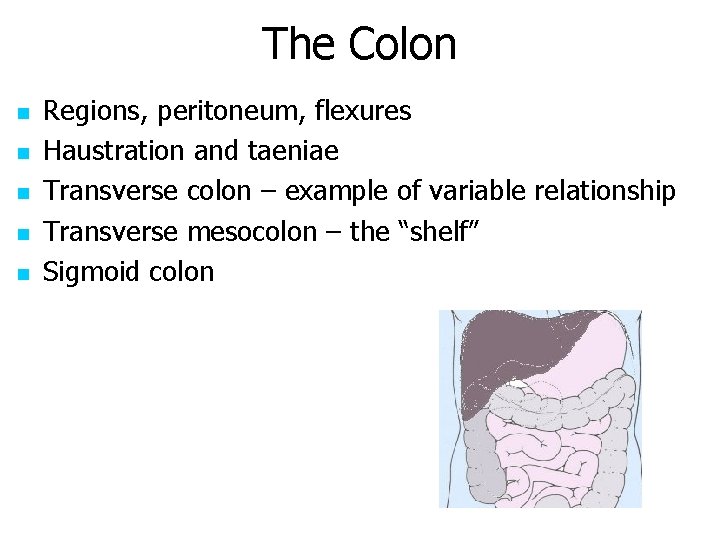
The Colon n n Regions, peritoneum, flexures Haustration and taeniae Transverse colon – example of variable relationship Transverse mesocolon – the “shelf” Sigmoid colon
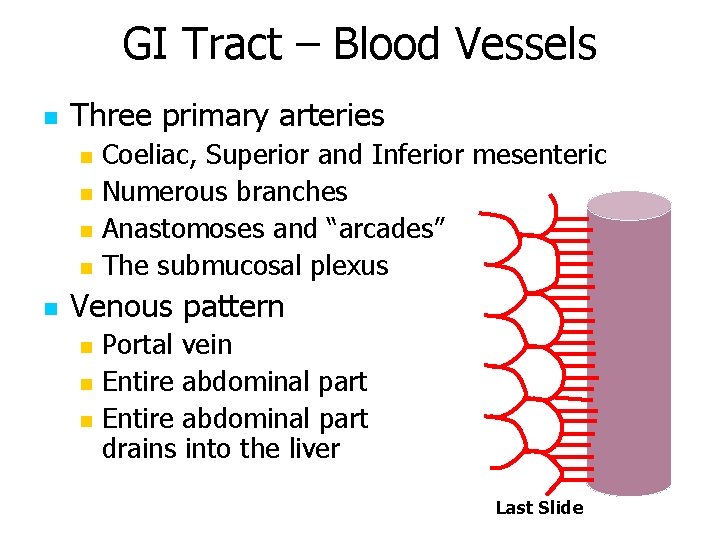
GI Tract – Blood Vessels n Three primary arteries n n n Coeliac, Superior and Inferior mesenteric Numerous branches Anastomoses and “arcades” The submucosal plexus Venous pattern n Portal vein Entire abdominal part drains into the liver Last Slide
- Slides: 17