
AATCC EP 1 2012 Gray Scale for Color
- Slides: 27
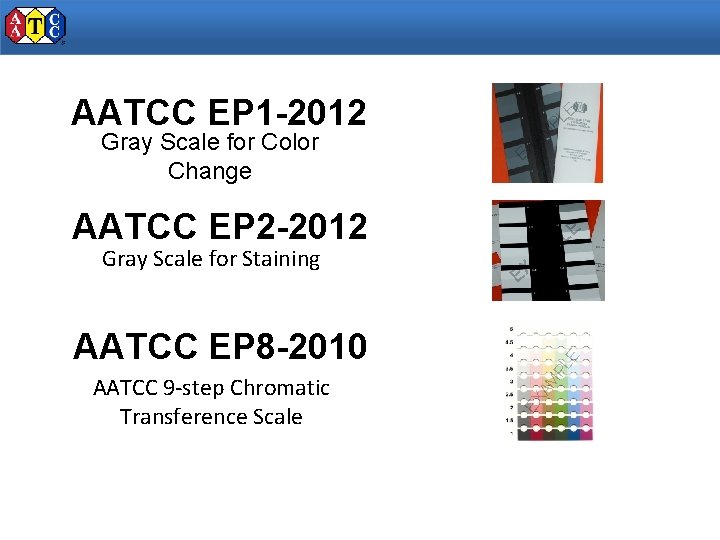
AATCC EP 1 -2012 Gray Scale for Color Change AATCC EP 2 -2012 Gray Scale for Staining E PL M A X E E PL M A EX PL AM EX AATCC 9 -step Chromatic Transference Scale E AATCC EP 8 -2010
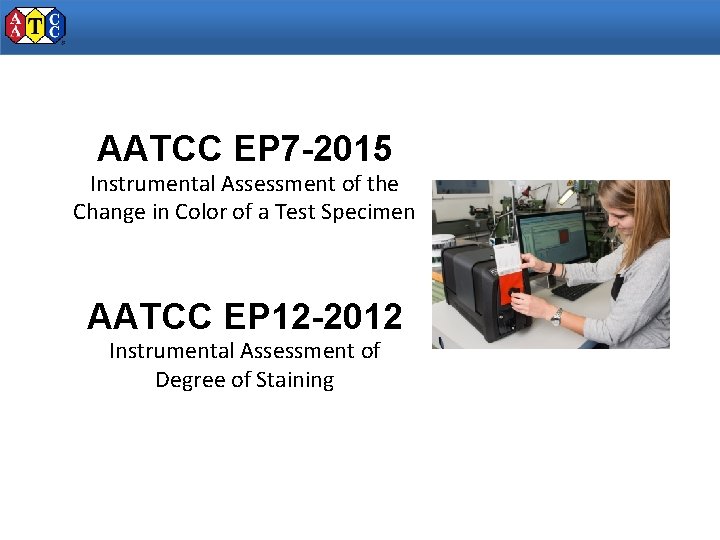
AATCC EP 7 -2015 Instrumental Assessment of the Change in Color of a Test Specimen AATCC EP 12 -2012 Instrumental Assessment of Degree of Staining
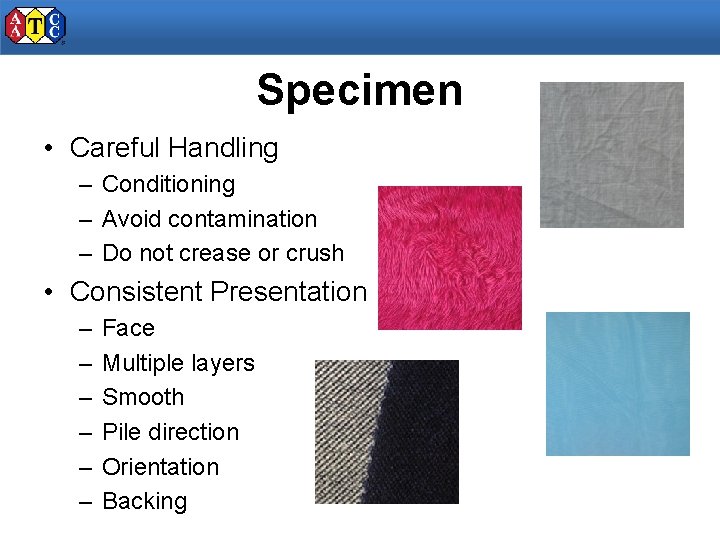
Specimen • Careful Handling – Conditioning – Avoid contamination – Do not crease or crush • Consistent Presentation – – – Face Multiple layers Smooth Pile direction Orientation Backing
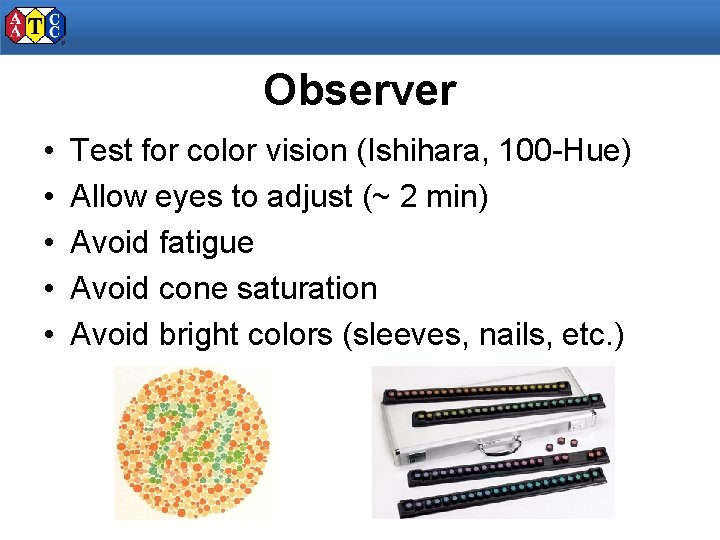
Observer • • • Test for color vision (Ishihara, 100 -Hue) Allow eyes to adjust (~ 2 min) Avoid fatigue Avoid cone saturation Avoid bright colors (sleeves, nails, etc. )
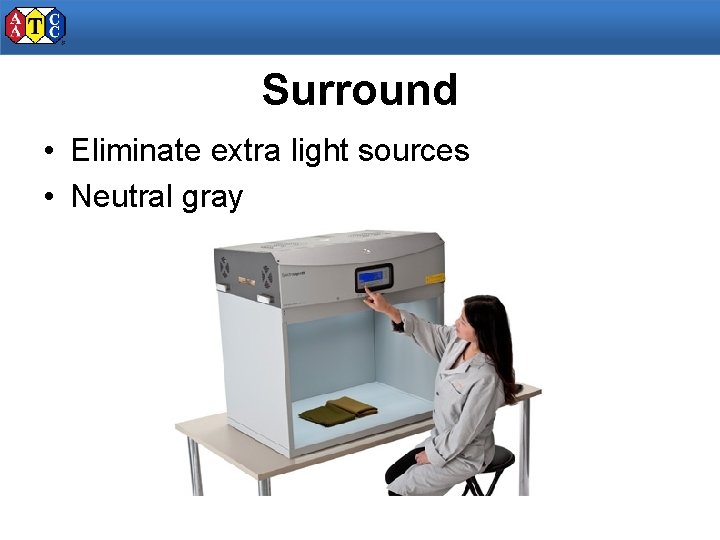
Surround • Eliminate extra light sources • Neutral gray
Illuminants • • Make appropriate and consistent selection Multiple selections Clean and calibrate light box Control lux
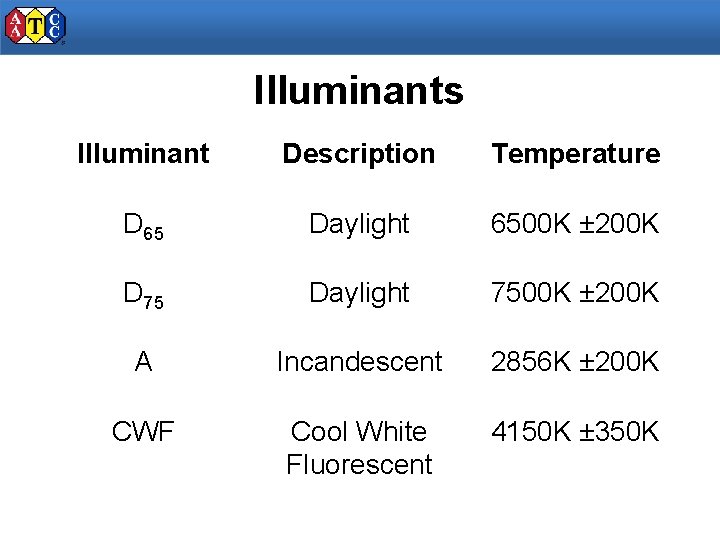
Illuminants Illuminant Description Temperature D 65 Daylight 6500 K ± 200 K D 75 Daylight 7500 K ± 200 K A Incandescent 2856 K ± 200 K CWF Cool White Fluorescent 4150 K ± 350 K
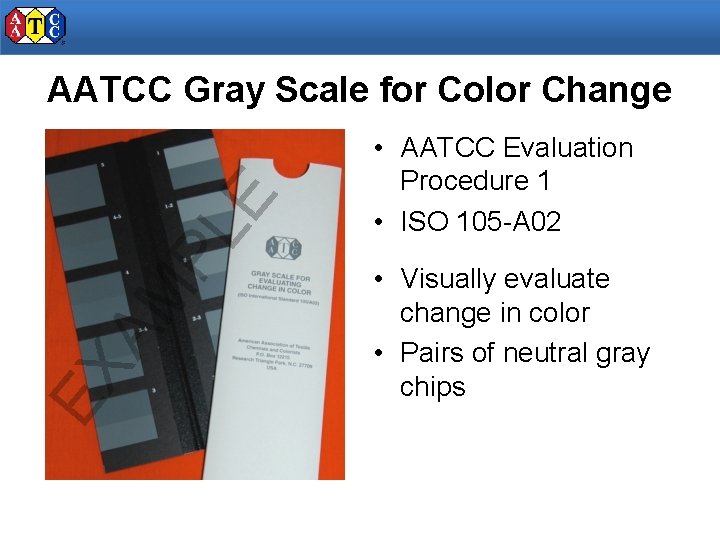
EX AM PL E AATCC Gray Scale for Color Change • AATCC Evaluation Procedure 1 • ISO 105 -A 02 • Visually evaluate change in color • Pairs of neutral gray chips
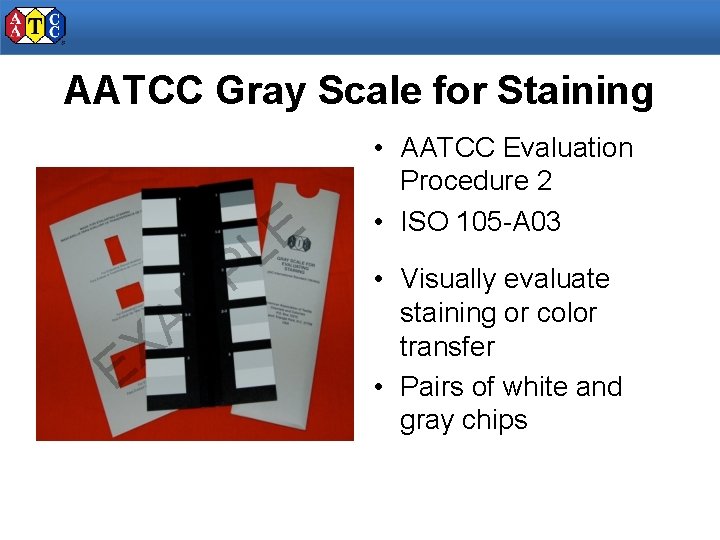
AATCC Gray Scale for Staining P E L X E M A • AATCC Evaluation Procedure 2 • ISO 105 -A 03 • Visually evaluate staining or color transfer • Pairs of white and gray chips
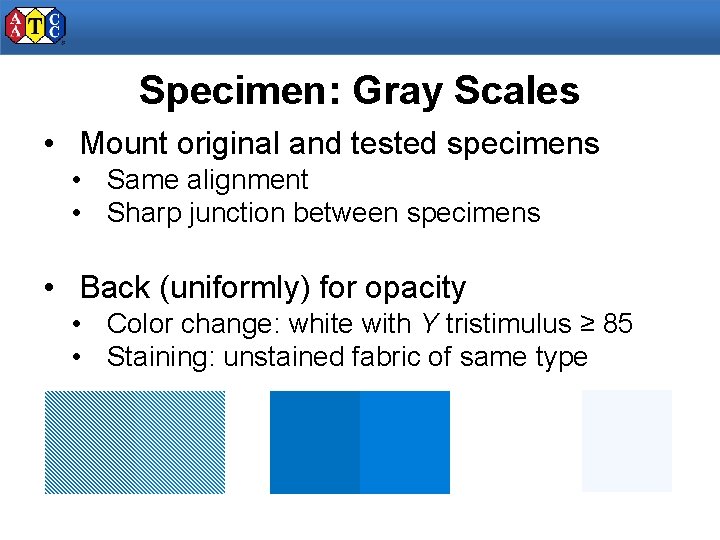
Specimen: Gray Scales • Mount original and tested specimens • Same alignment • Sharp junction between specimens • Back (uniformly) for opacity • Color change: white with Y tristimulus ≥ 85 • Staining: unstained fabric of same type
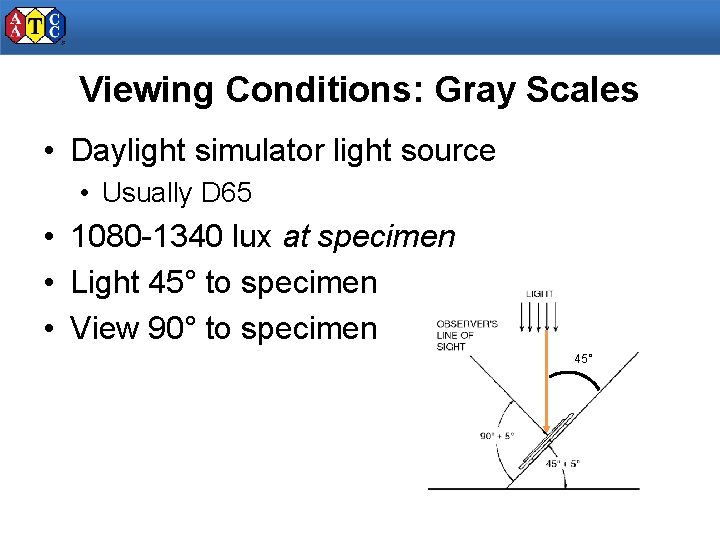
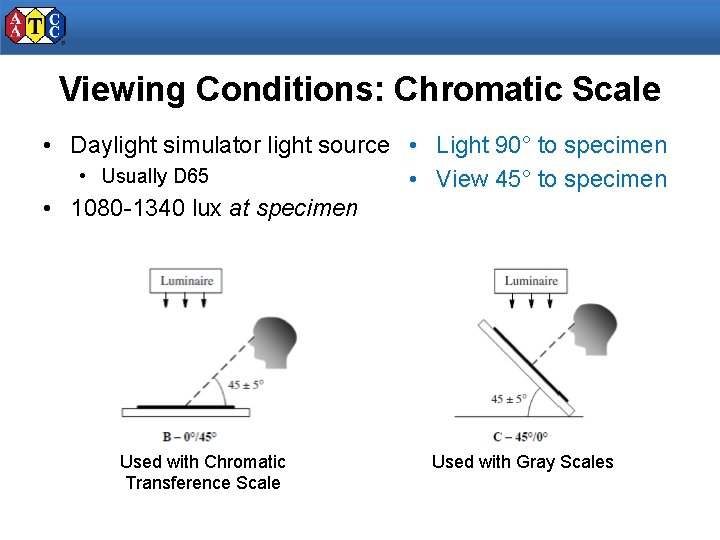
Viewing Conditions: Gray Scales • Daylight simulator light source • Usually D 65 • 1080 -1340 lux at specimen • Light 45° to specimen • View 90° to specimen 45°
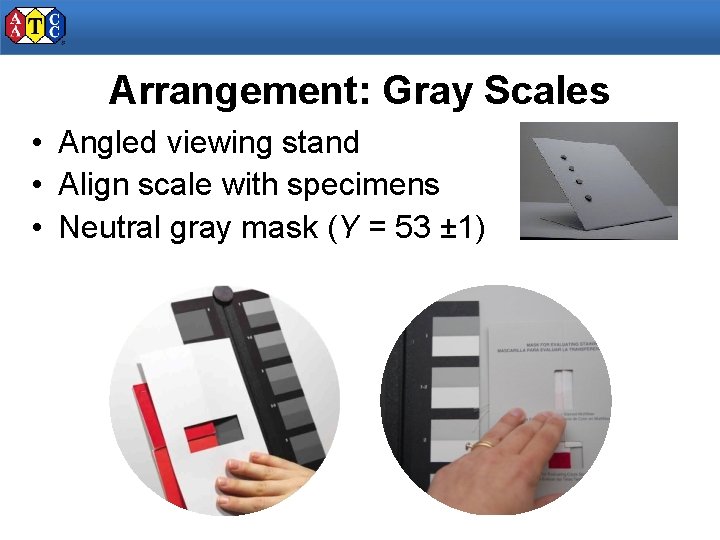
Arrangement: Gray Scales • Angled viewing stand • Align scale with specimens • Neutral gray mask (Y = 53 ± 1) Angle of incident light 45 ± 5° Angle of viewing 90 ± 5°
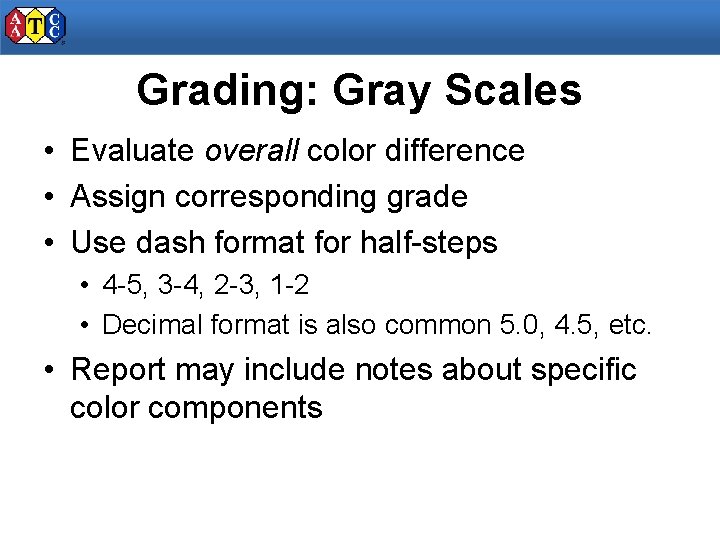
Grading: Gray Scales • Evaluate overall color difference • Assign corresponding grade • Use dash format for half-steps • 4 -5, 3 -4, 2 -3, 1 -2 • Decimal format is also common 5. 0, 4. 5, etc. • Report may include notes about specific color components
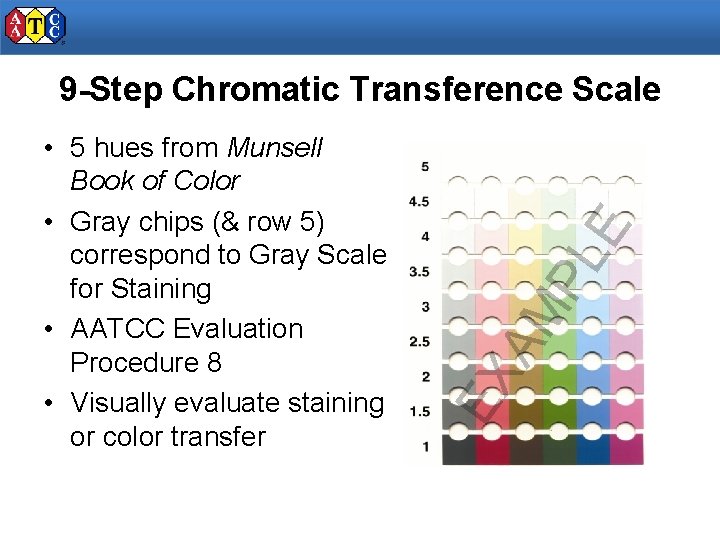
PL EX AM • 5 hues from Munsell Book of Color • Gray chips (& row 5) correspond to Gray Scale for Staining • AATCC Evaluation Procedure 8 • Visually evaluate staining or color transfer E 9 -Step Chromatic Transference Scale
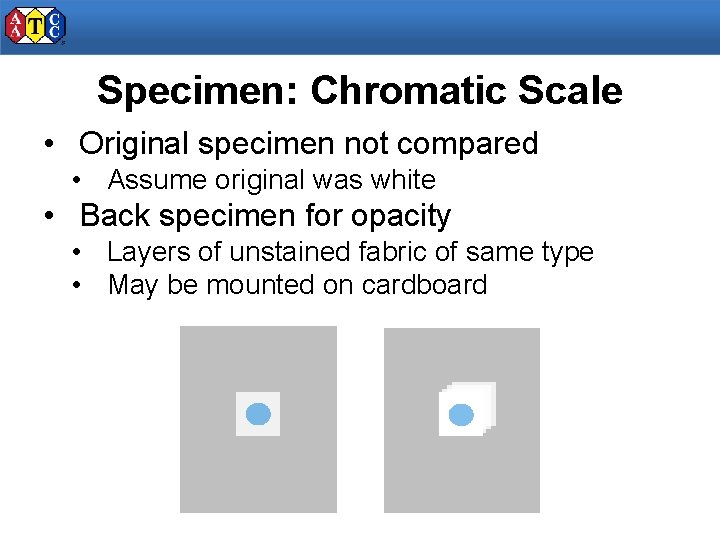
Specimen: Chromatic Scale • Original specimen not compared • Assume original was white • Back specimen for opacity • Layers of unstained fabric of same type • May be mounted on cardboard
Viewing Conditions: Chromatic Scale • Daylight simulator light source • Light 90° to specimen • Usually D 65 • View 45° to specimen • 1080 -1340 lux at specimen Used with Chromatic Transference Scale Used with Gray Scales
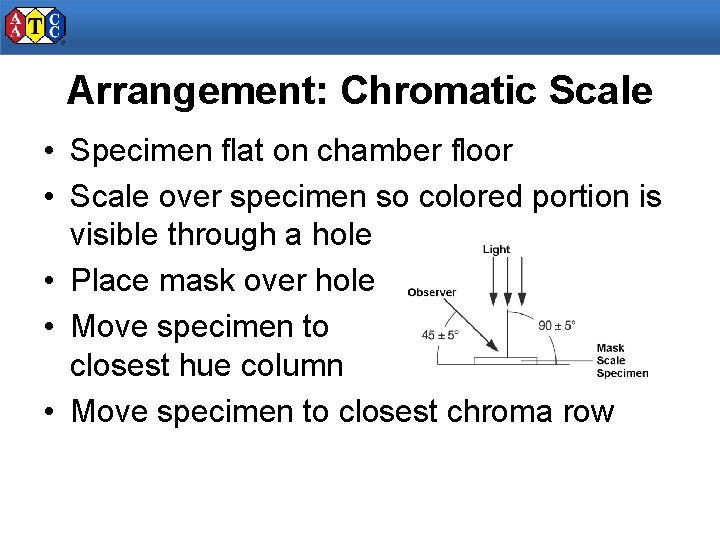
Arrangement: Chromatic Scale • Specimen flat on chamber floor • Scale over specimen so colored portion is visible through a hole • Place mask over hole • Move specimen to closest hue column • Move specimen to closest chroma row
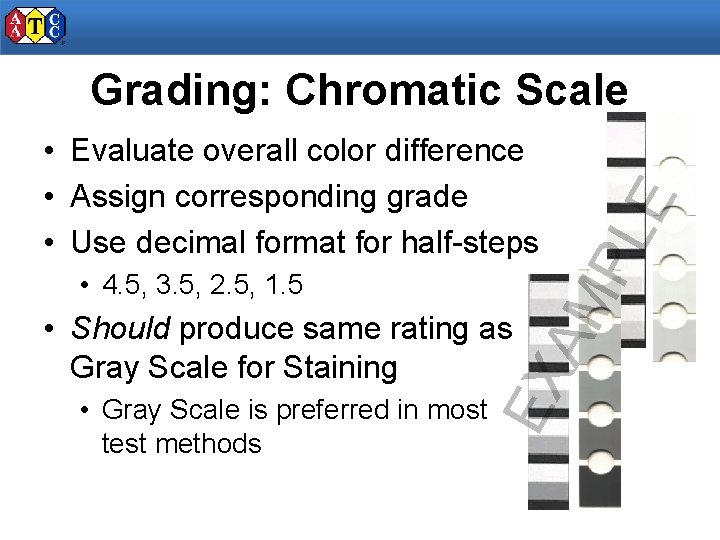
• 4. 5, 3. 5, 2. 5, 1. 5 EX • Should produce same rating as Gray Scale for Staining AM • Evaluate overall color difference • Assign corresponding grade • Use decimal format for half-steps PL E Grading: Chromatic Scale • Gray Scale is preferred in most test methods
Scale Care & Handling • • • Do not store mask inside the scale Store scale in sleeve, away from light Do not touch chips Replace if scratched, worn, or stained Replace at least annually • Do not measure spectrophotometrically
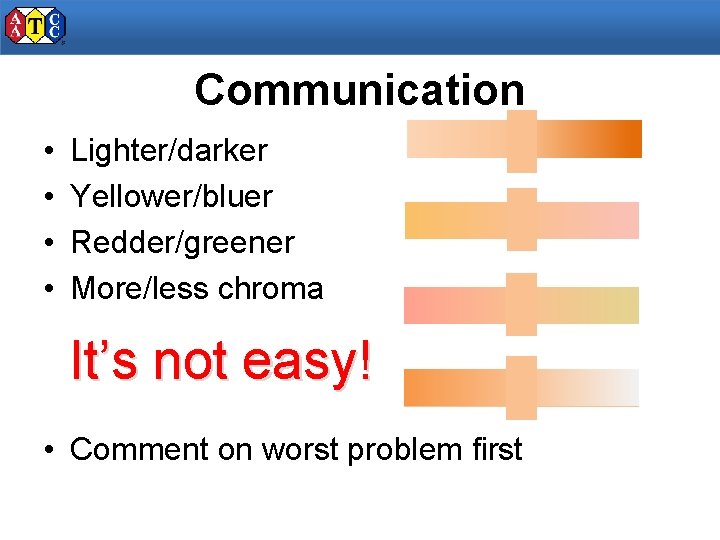
Communication • • Lighter/darker Yellower/bluer Redder/greener More/less chroma It’s not easy! • Comment on worst problem first
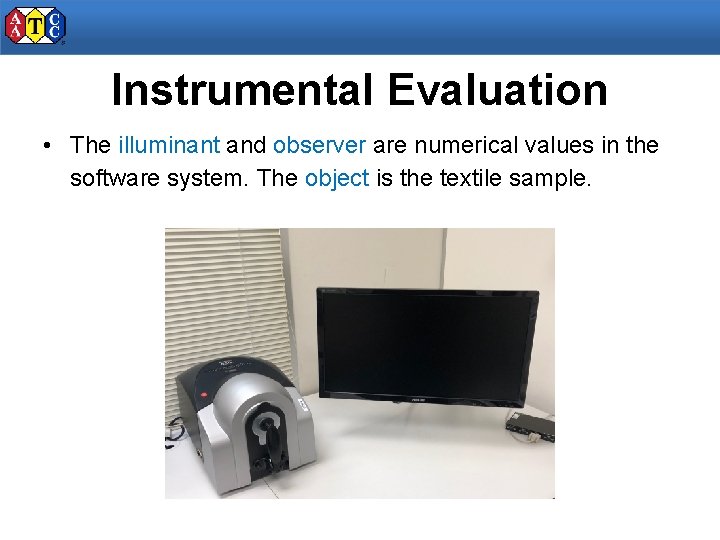
Instrumental Evaluation • The illuminant and observer are numerical values in the software system. The object is the textile sample.
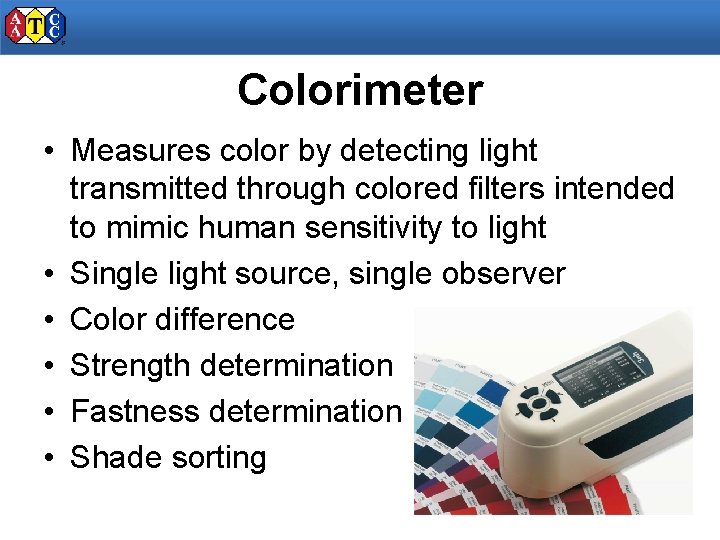
Colorimeter • Measures color by detecting light transmitted through colored filters intended to mimic human sensitivity to light • Single light source, single observer • Color difference • Strength determination • Fastness determination • Shade sorting
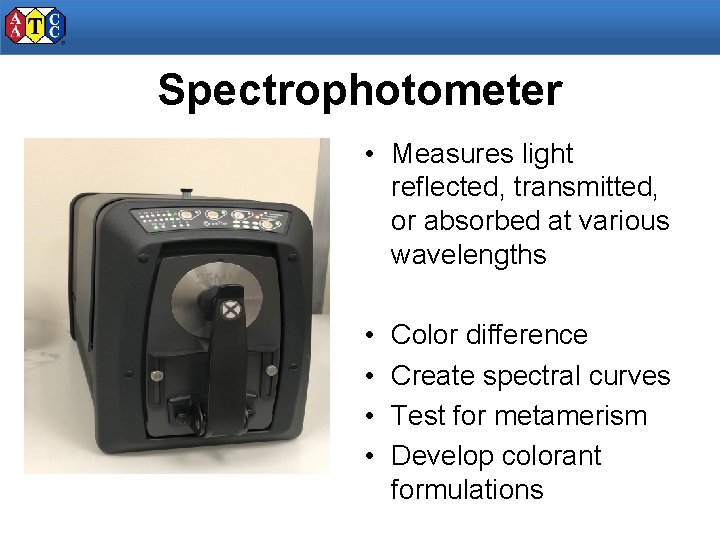
Spectrophotometer • Measures light reflected, transmitted, or absorbed at various wavelengths • • Color difference Create spectral curves Test for metamerism Develop colorant formulations
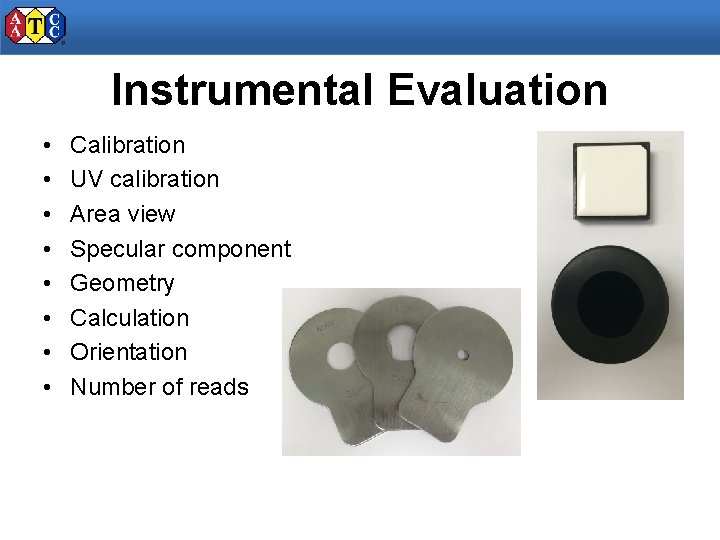
Instrumental Evaluation • • Calibration UV calibration Area view Specular component Geometry Calculation Orientation Number of reads
Specular Component • Specular Included (SPI) • Measures “true” color, including reflected light • Used formulating color recipes • Specular Excluded (SPE) • Measures appearance • Affected by surface texture, reflection • Used for QC
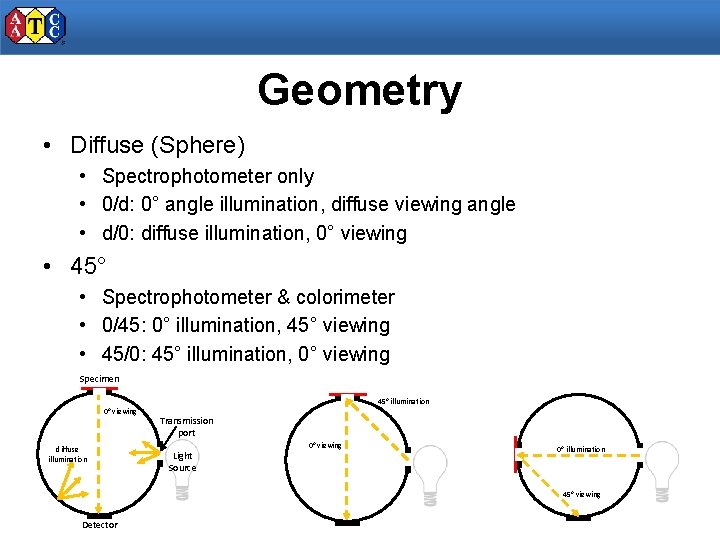
Geometry • Diffuse (Sphere) • Spectrophotometer only • 0/d: 0° angle illumination, diffuse viewing angle • d/0: diffuse illumination, 0° viewing • 45° • Spectrophotometer & colorimeter • 0/45: 0° illumination, 45° viewing • 45/0: 45° illumination, 0° viewing Specimen 45° illumination 0° viewing diffuse illumination Transmission port Light Source 0° viewing 0° illumination 45° viewing Detector
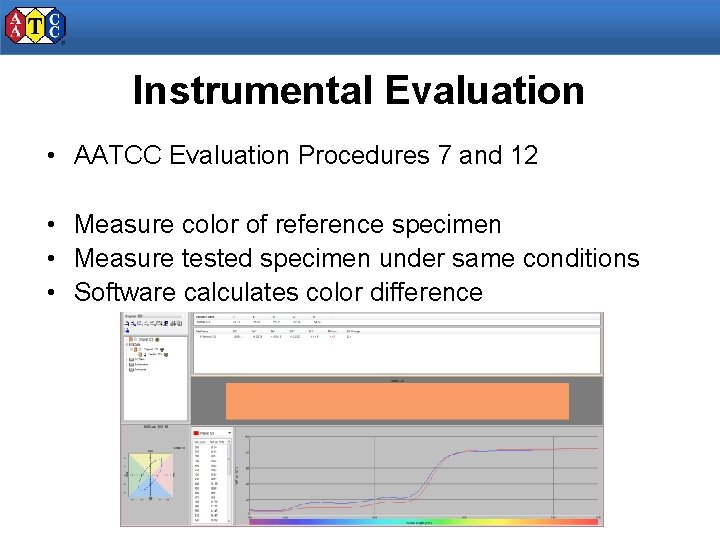
Instrumental Evaluation • AATCC Evaluation Procedures 7 and 12 • Measure color of reference specimen • Measure tested specimen under same conditions • Software calculates color difference