
AARTO Administrative Adjudication of Road Traffic Offences Act



- Slides: 28
AARTO Administrative Adjudication of Road Traffic Offences Act, 1998 (Act No. 46 of 1998, as amended) Presentation to Parliament’s Portfolio Committee on Transport Wednesday 14 November 2007
Contents • Brief Introduction • Objectives of the AARTO Act • The AARTO Process • Role-Players, Responsibilities, Procedures & Systems • Process to Operationalize the AARTO Act • Conclusion
Brief Introduction The AARTO Act • approved by Parliament in September 1998, followed by 3 amendments in 1999, 2000 and 2002 • Drafted in consultation with the Minister of Justice and will supplement the Criminal Procedure Act, 1977 Why AARTO Act? • To improve road safety • To alleviate the current unacceptable situation in courts where cases are remanded for more than a year or withdrawn without just cause, by creating a system parallel to the criminal procedure system through the provisions of various administrative processes to finalise road traffic related offences ; • To change the behaviour of offenders by introducing an effective method of collecting fines, and thereby creating a culture of compliance Implementation of AARTO • In February 2007 the Minister of Transport decided that the Act must be implemented as a 6 to 12 months pilot in the Tshwane Magisterial District, and thereafter to be rolled out nationally. • Delay in the implementation of AARTO has given sufficient time for the companies to adapt to the new system and to have administrative systems and labour issues sorted out.
Objectives of the Act Section 2: 1. 2. 3. 4. 5. 6. 7. 8. The objectives of this Act, despite the Criminal Procedures Act, are: To encourage law compliance; To encourage payment of penalties; To establish a procedure for effective and expeditious adjudication of infringements; To alleviate the burden on courts; To penalise infringers through allocation of demerit points and the suspension of licences, operator cards, etc; To reward good behaviour by reducing points; To strengthen co-operation between enforcement & prosecuting authorities; and Establish an Agency for the process.
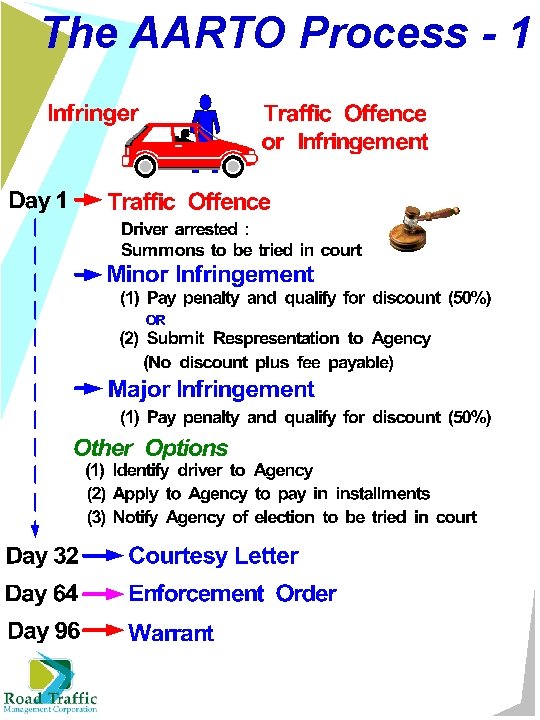
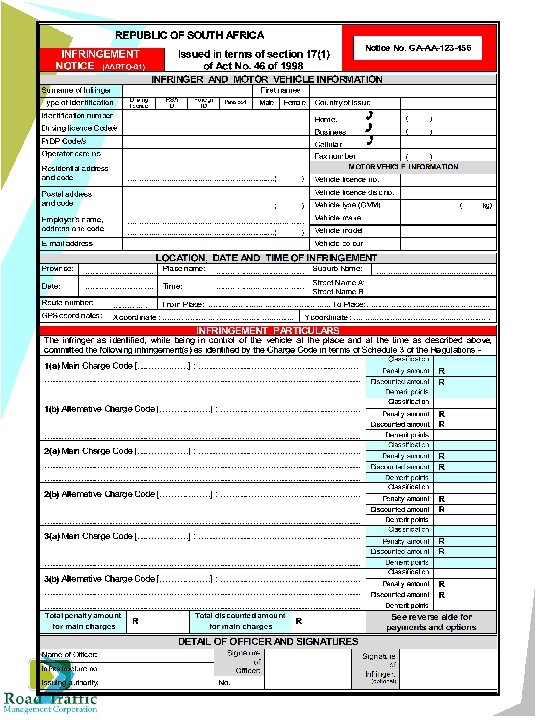
The AARTO Process - 1
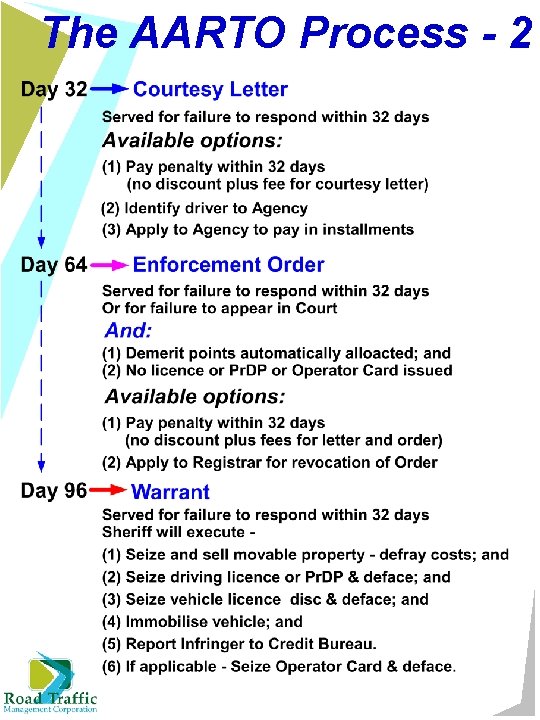
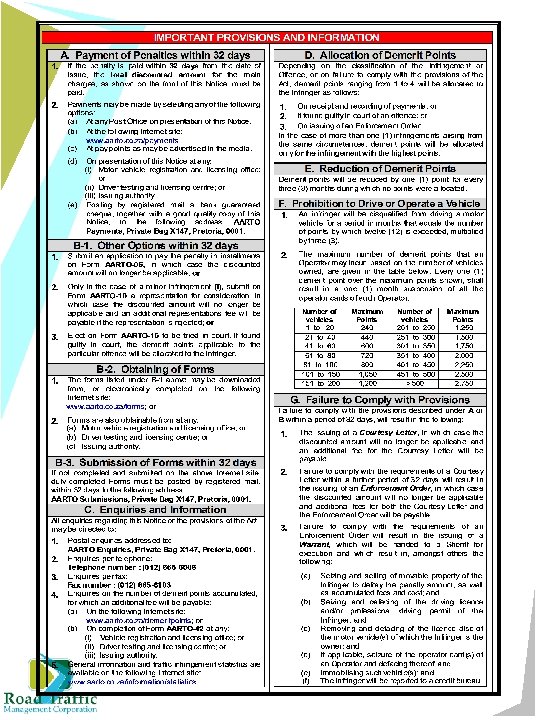
The AARTO Process - 2
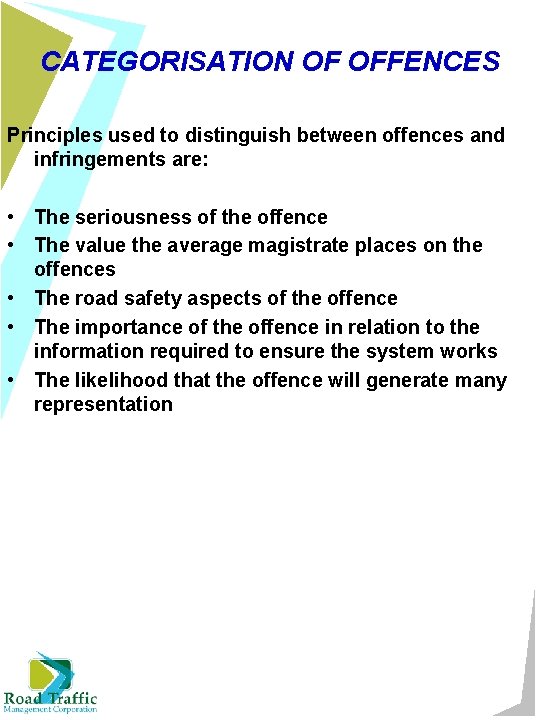
CATEGORISATION OF OFFENCES Principles used to distinguish between offences and infringements are: • The seriousness of the offence • The value the average magistrate places on the offences • The road safety aspects of the offence • The importance of the offence in relation to the information required to ensure the system works • The likelihood that the offence will generate many representation
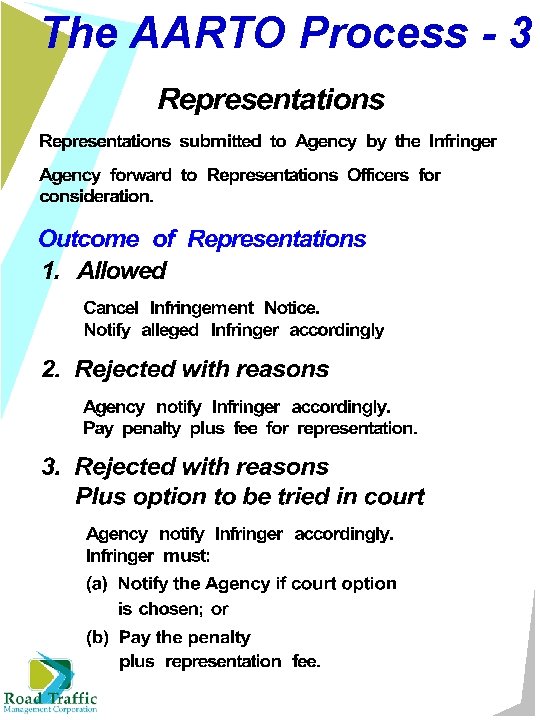
The AARTO Process - 3
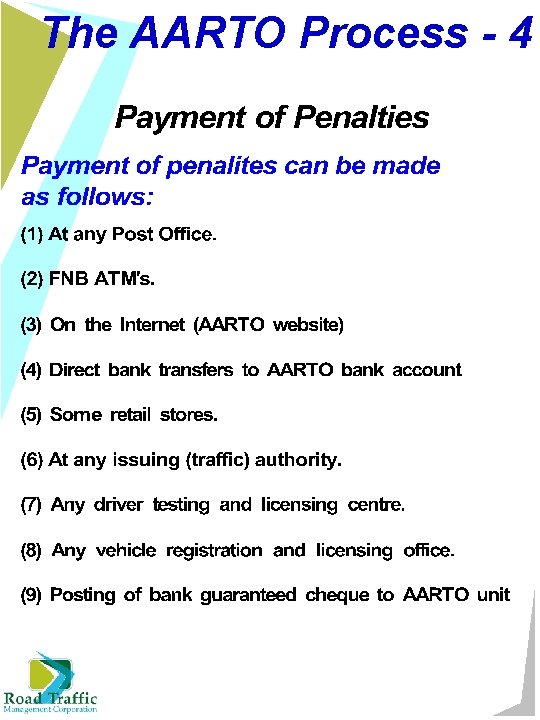
The AARTO Process - 4
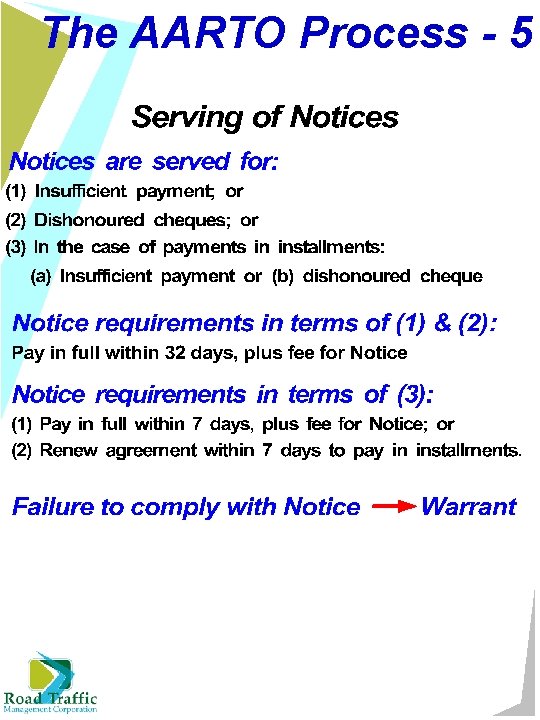
The AARTO Process - 5
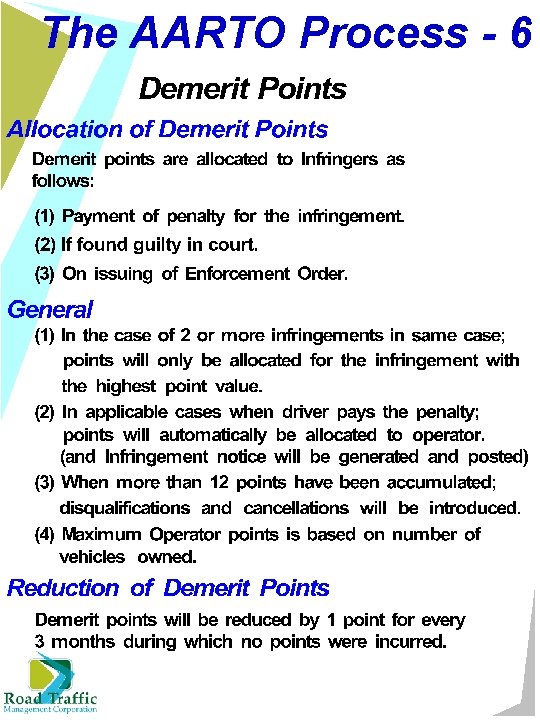
The AARTO Process - 6
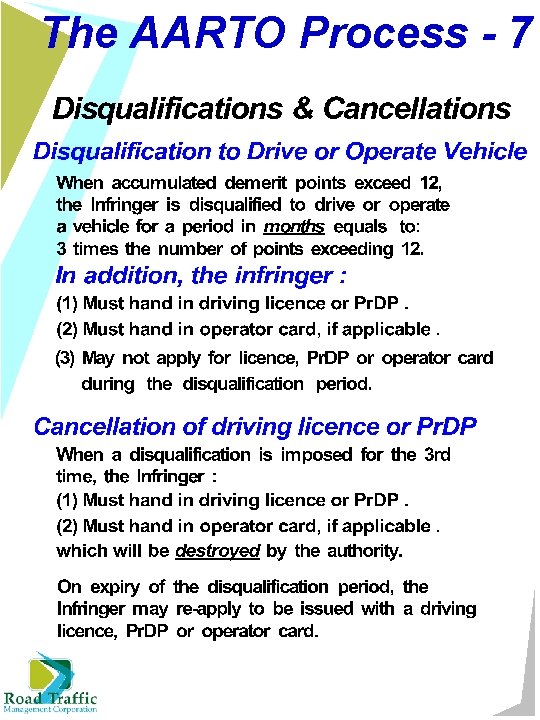
The AARTO Process - 7
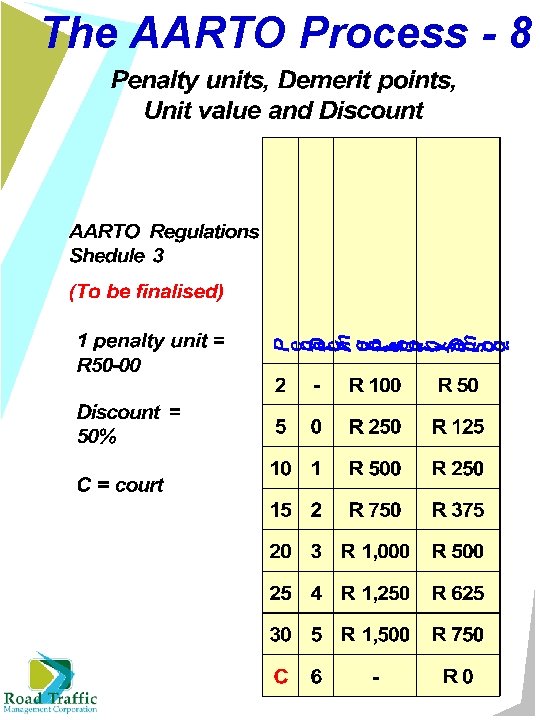
The AARTO Process - 8
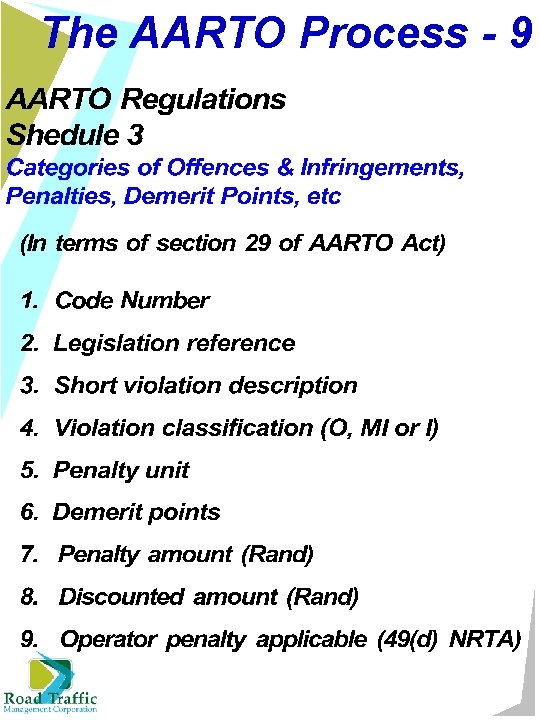
The AARTO Process - 9
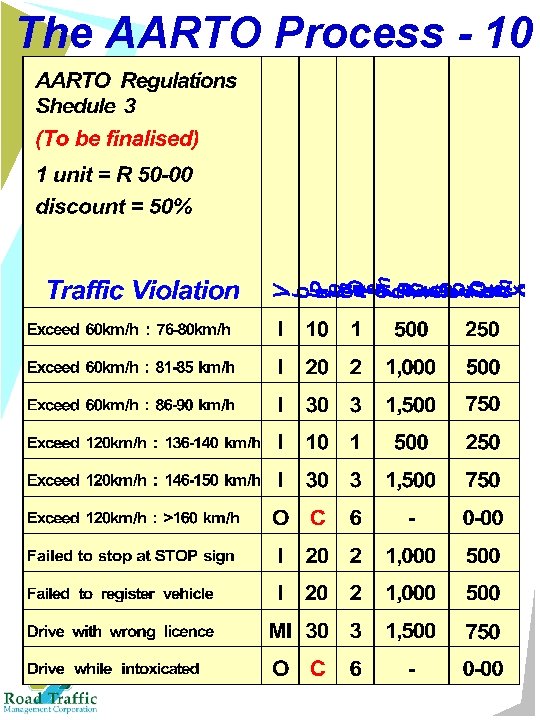
The AARTO Process - 10
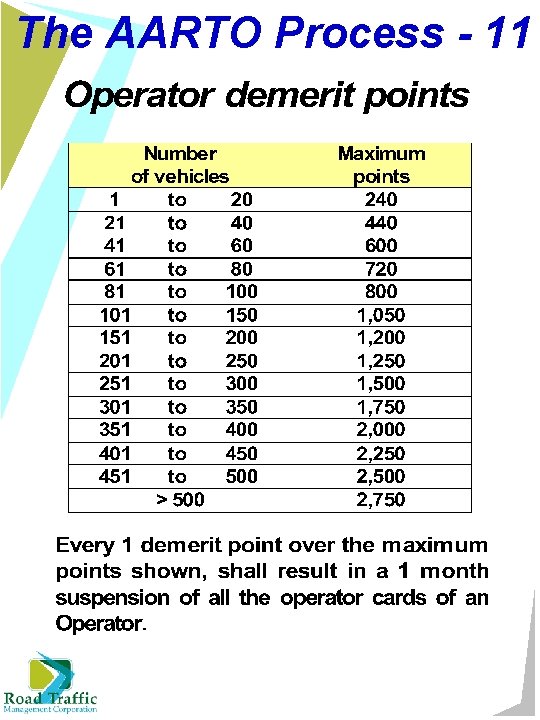
The AARTO Process - 11
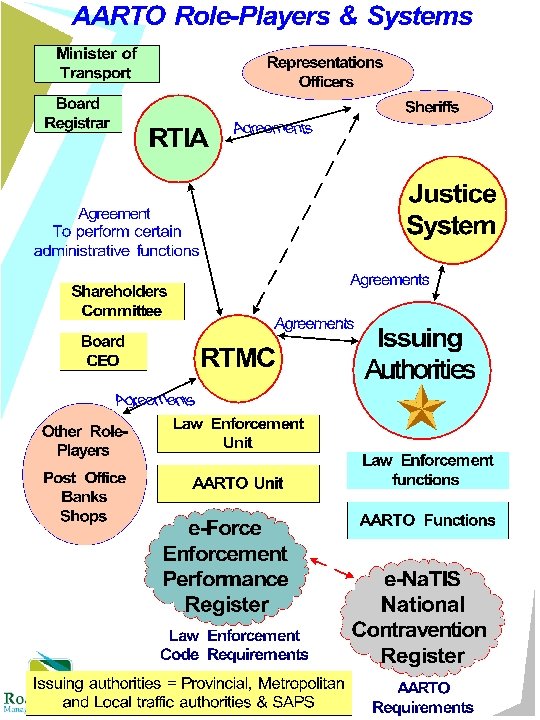
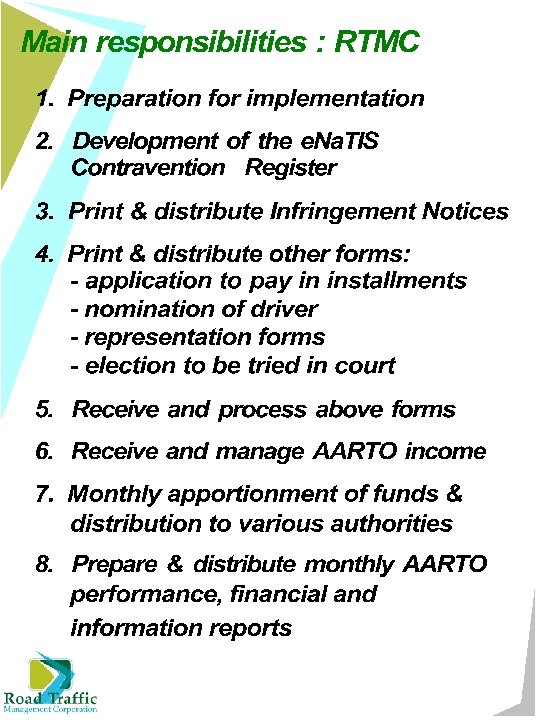
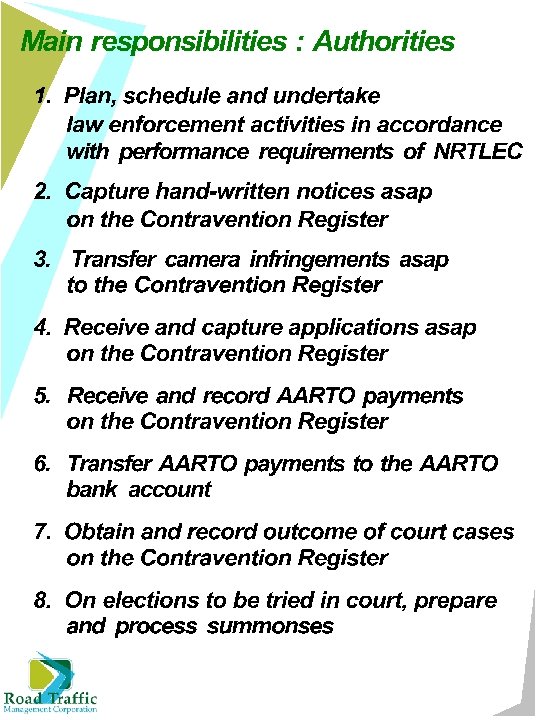
Role-players, Responsibilities, Procedures & Systems
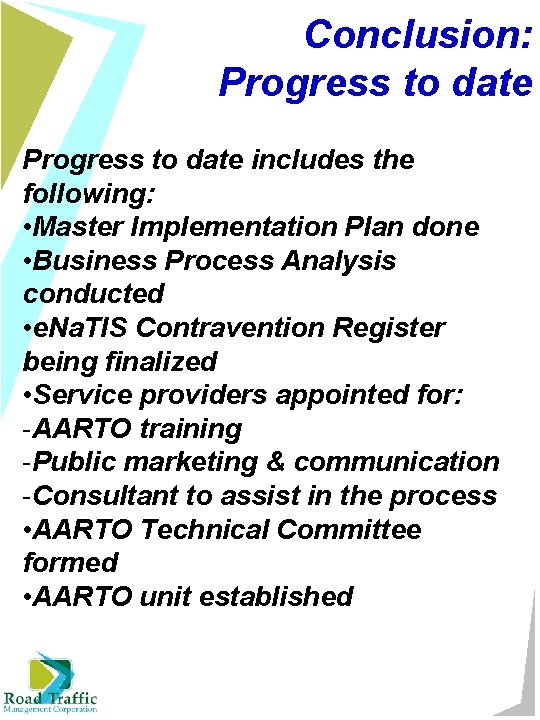
Conclusion: Progress to date includes the following: • Master Implementation Plan done • Business Process Analysis conducted • e. Na. TIS Contravention Register being finalized • Service providers appointed for: -AARTO training -Public marketing & communication -Consultant to assist in the process • AARTO Technical Committee formed • AARTO unit established
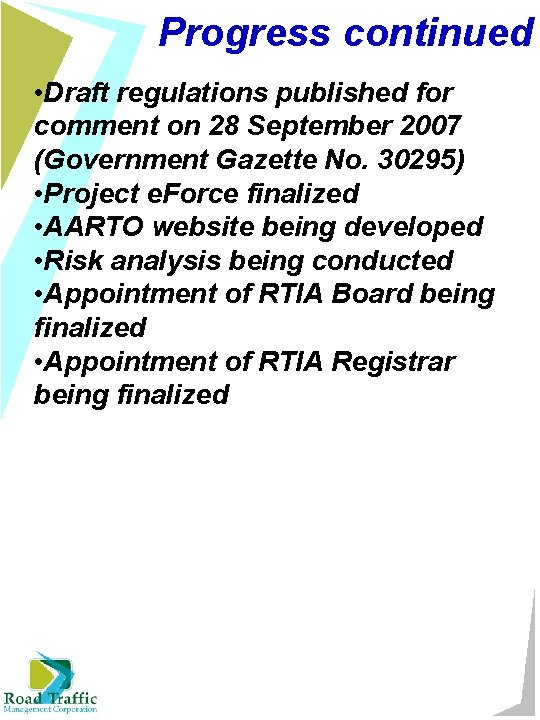
Progress continued • Draft regulations published for comment on 28 September 2007 (Government Gazette No. 30295) • Project e. Force finalized • AARTO website being developed • Risk analysis being conducted • Appointment of RTIA Board being finalized • Appointment of RTIA Registrar being finalized
Outstanding Issues • Appointment of Representation officers • Appointment of Sheriffs • SLA between RTIA & RTMC • RTIA strategic & business plans • SLA between RTMC & Issuing Authorities • SLA between RTMC & Post Office
Thank You