
AAE 556 Aeroelasticity Fluttera scary instability Purdue Aeroelasticity
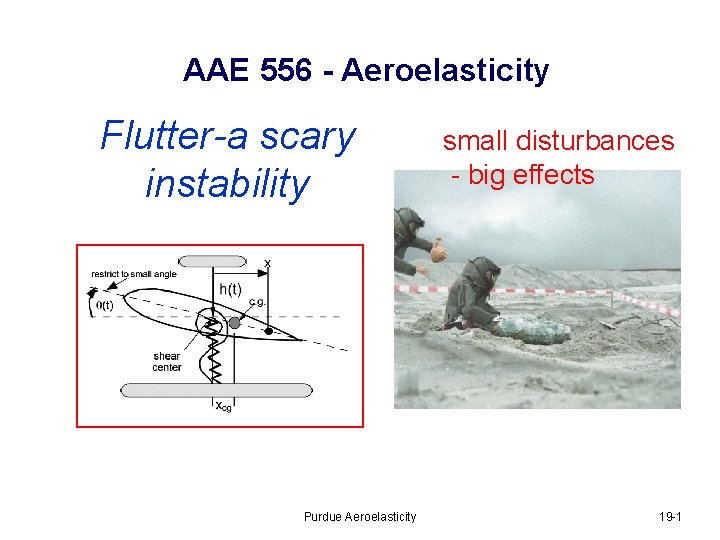
AAE 556 - Aeroelasticity Flutter-a scary instability Purdue Aeroelasticity small disturbances - big effects 19 -1
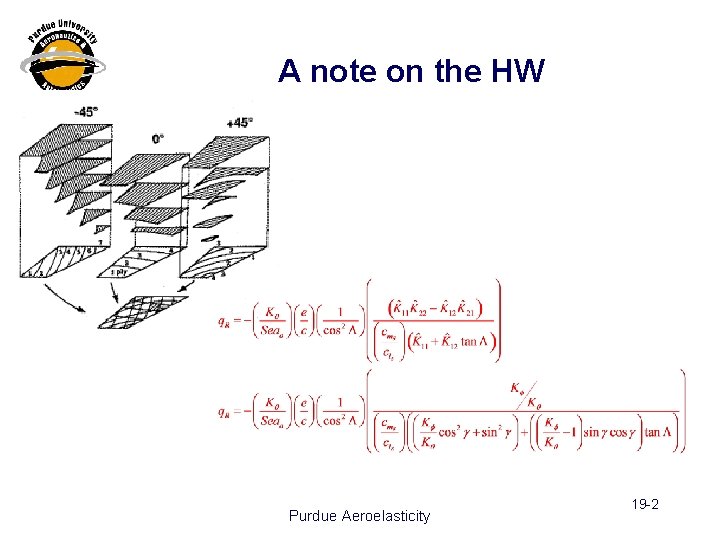
A note on the HW Purdue Aeroelasticity 19 -2
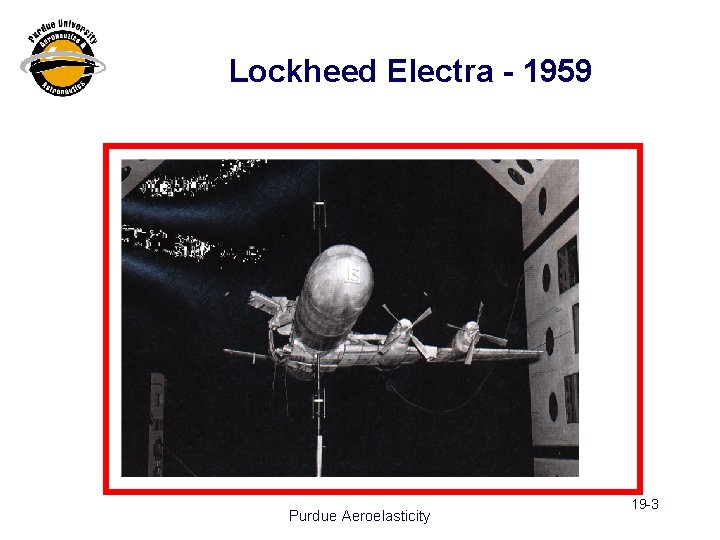
Lockheed Electra - 1959 Purdue Aeroelasticity 19 -3
Quasi-steady flutter • Flutter is a self-excited, dynamic, • oscillatory instability requiring the interaction between two different modes of motion and an external energy supply Quasi-steady aerodynamic loads ignore the unsteadiness of the flow created by lags between motion and developing forces and momemts Purdue Aeroelasticity 19 -4
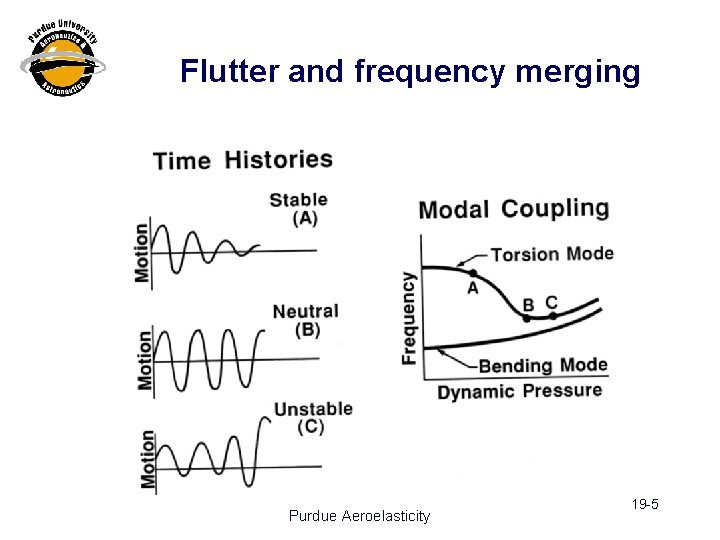
Flutter and frequency merging Purdue Aeroelasticity 19 -5
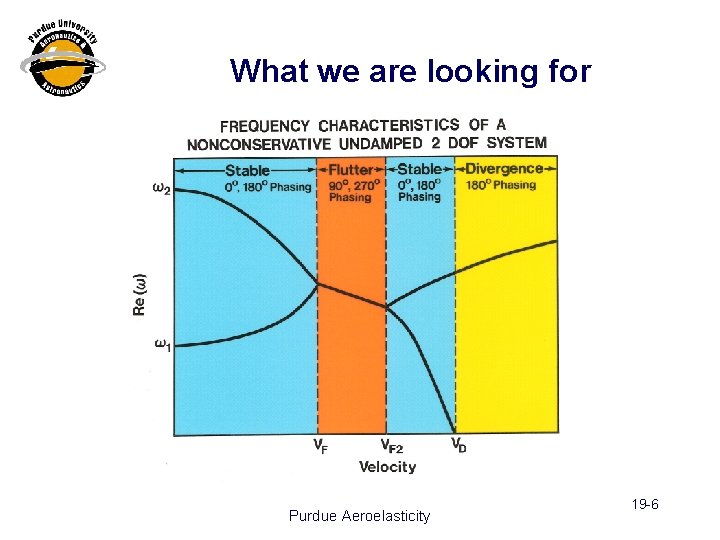
What we are looking for Purdue Aeroelasticity 19 -6
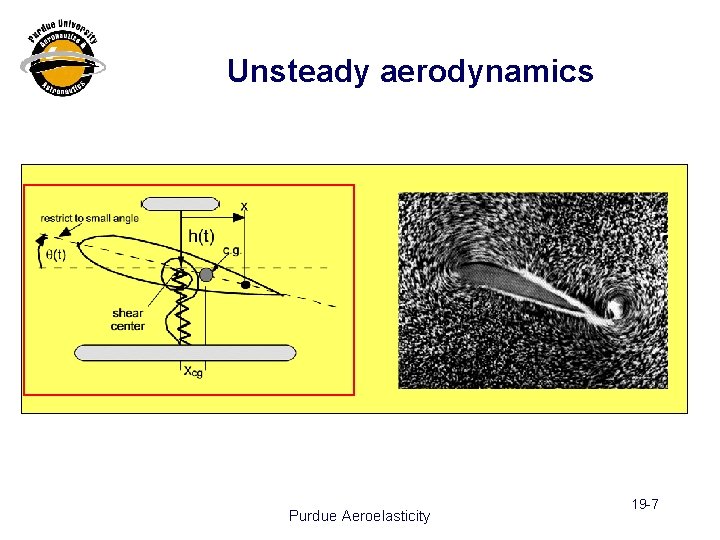
Unsteady aerodynamics Purdue Aeroelasticity 19 -7
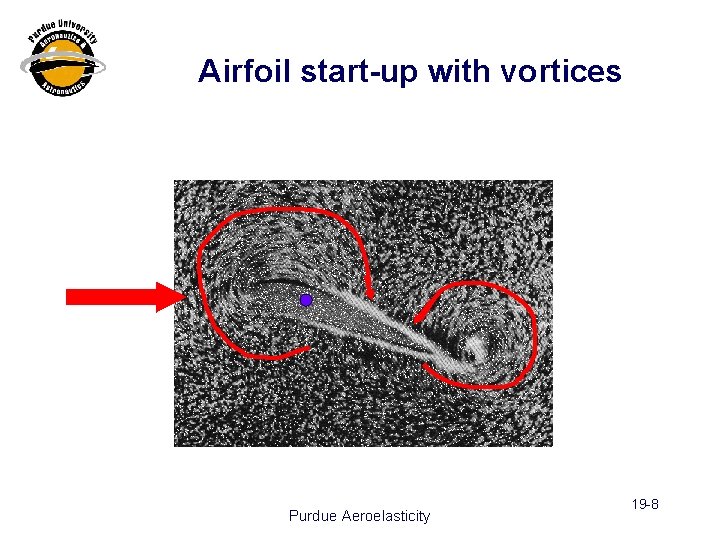
Airfoil start-up with vortices Purdue Aeroelasticity 19 -8
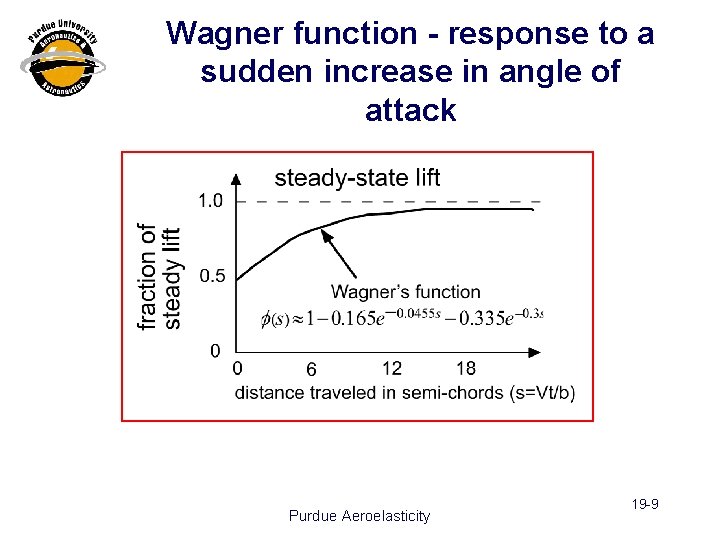
Wagner function - response to a sudden increase in angle of attack Purdue Aeroelasticity 19 -9
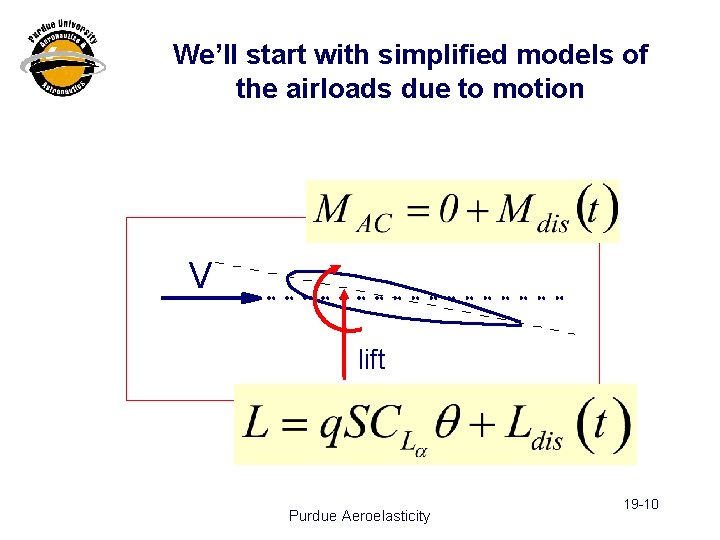
We’ll start with simplified models of the airloads due to motion V lift Purdue Aeroelasticity 19 -10
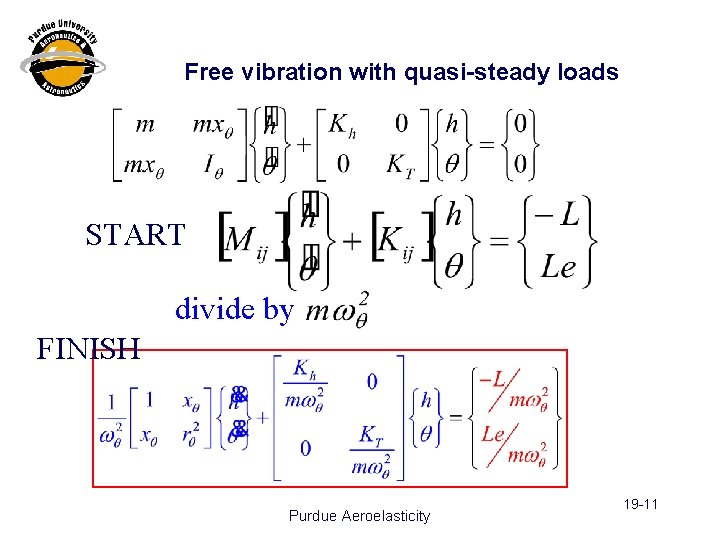
Free vibration with quasi-steady loads START divide by FINISH Purdue Aeroelasticity 19 -11
Warning – algebra!!!! Purdue Aeroelasticity 19 -12
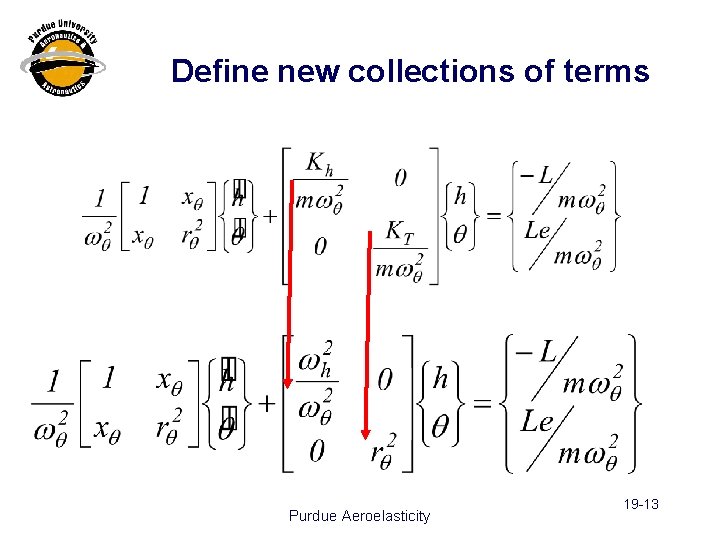
Define new collections of terms Purdue Aeroelasticity 19 -13
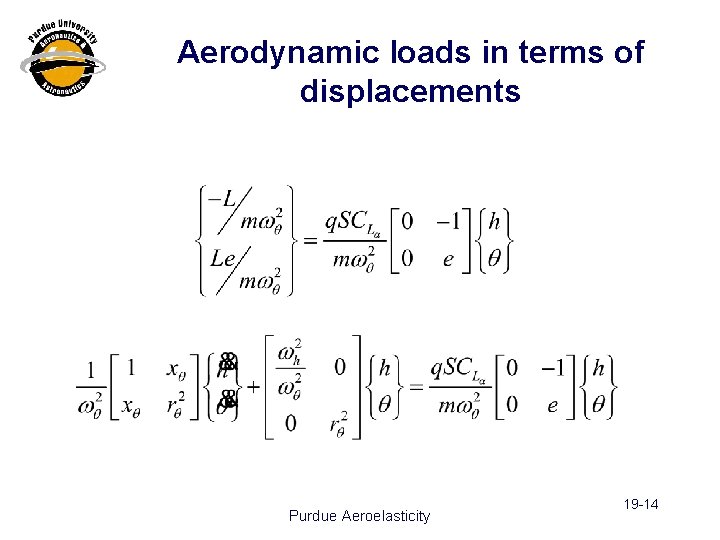
Aerodynamic loads in terms of displacements Purdue Aeroelasticity 19 -14
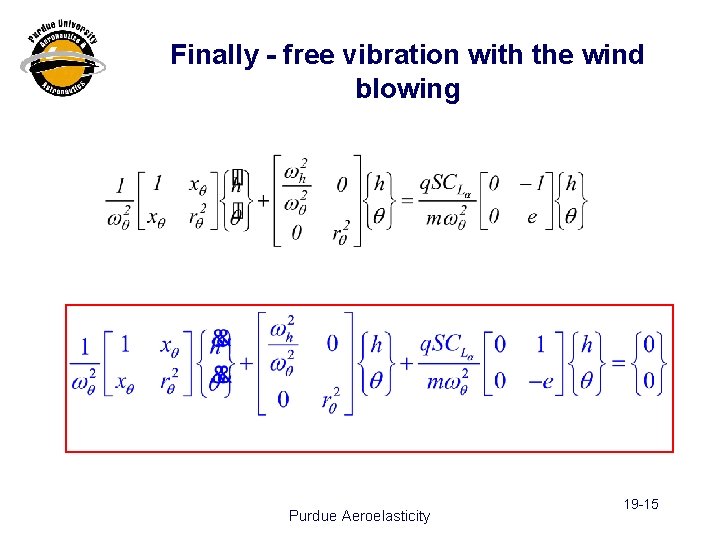
Finally - free vibration with the wind blowing Purdue Aeroelasticity 19 -15
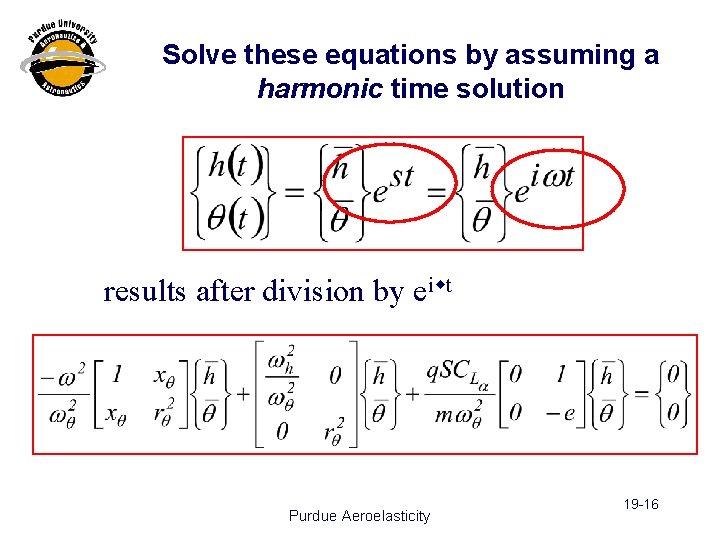
Solve these equations by assuming a harmonic time solution results after division by eiwt Purdue Aeroelasticity 19 -16
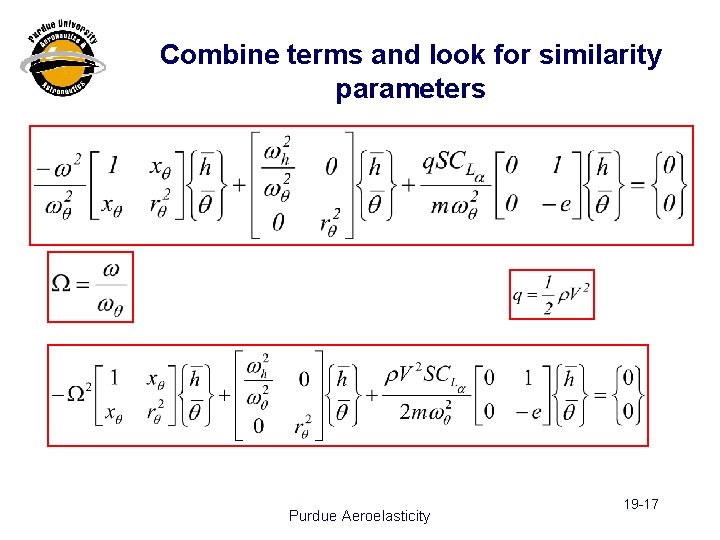
Combine terms and look for similarity parameters Purdue Aeroelasticity 19 -17
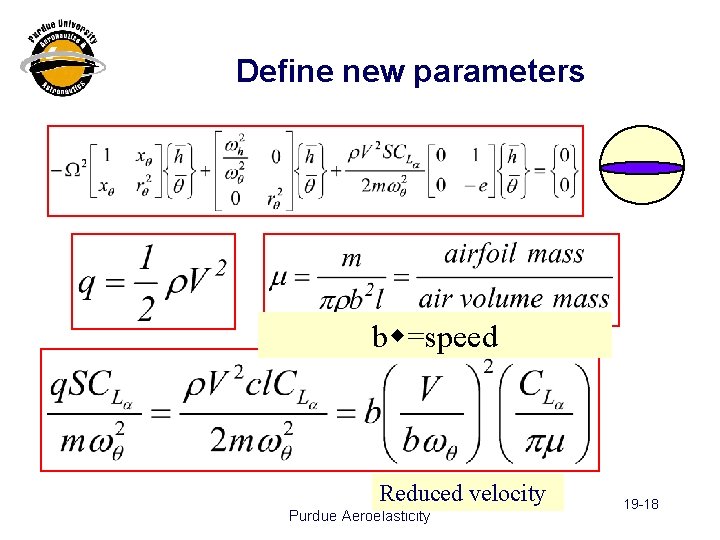
Define new parameters bw=speed Reduced velocity Purdue Aeroelasticity 19 -18
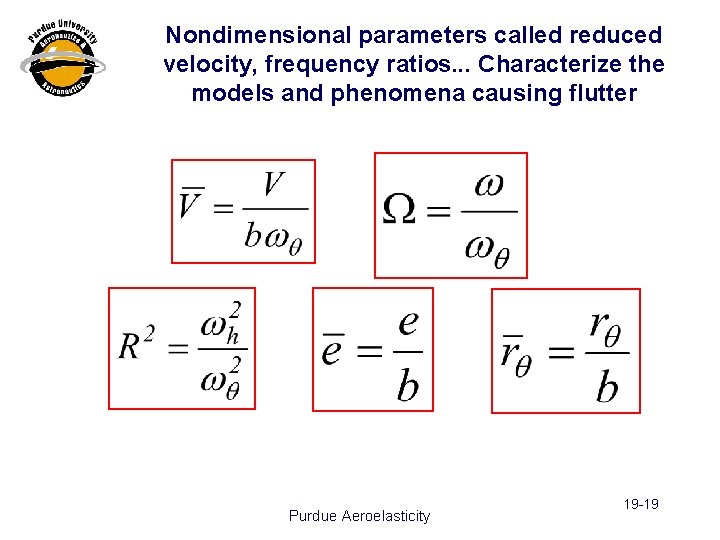
Nondimensional parameters called reduced velocity, frequency ratios. . . Characterize the models and phenomena causing flutter Purdue Aeroelasticity 19 -19
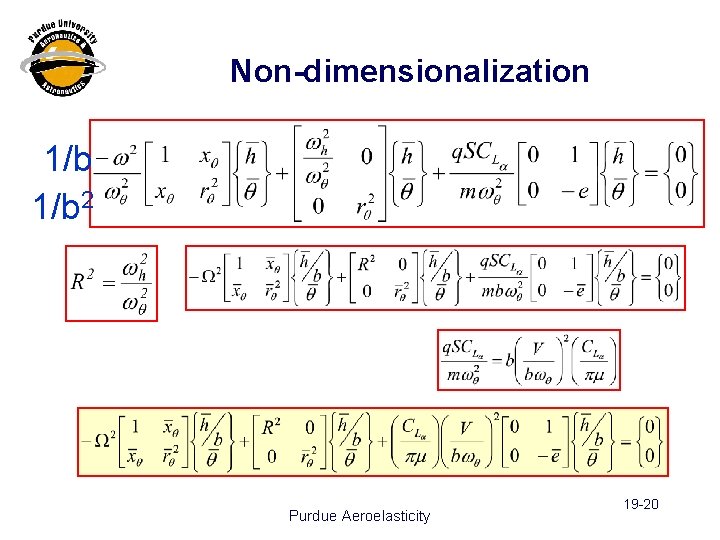
Non-dimensionalization 1/b 2 Purdue Aeroelasticity 19 -20
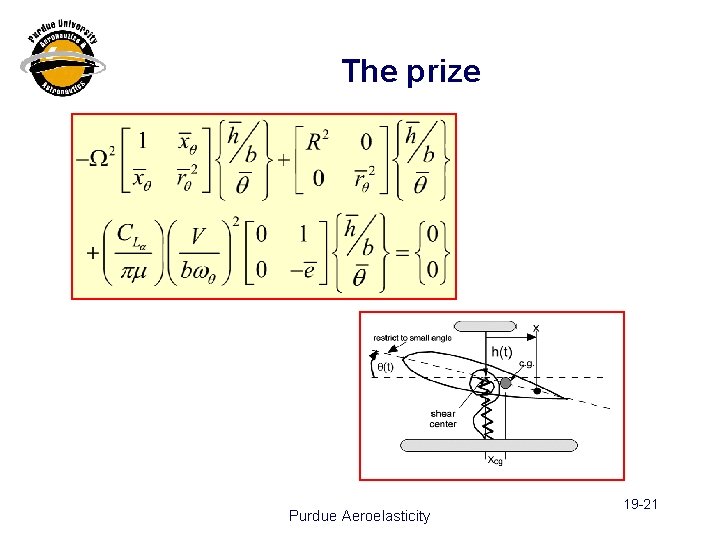
The prize Purdue Aeroelasticity 19 -21
- Slides: 21