
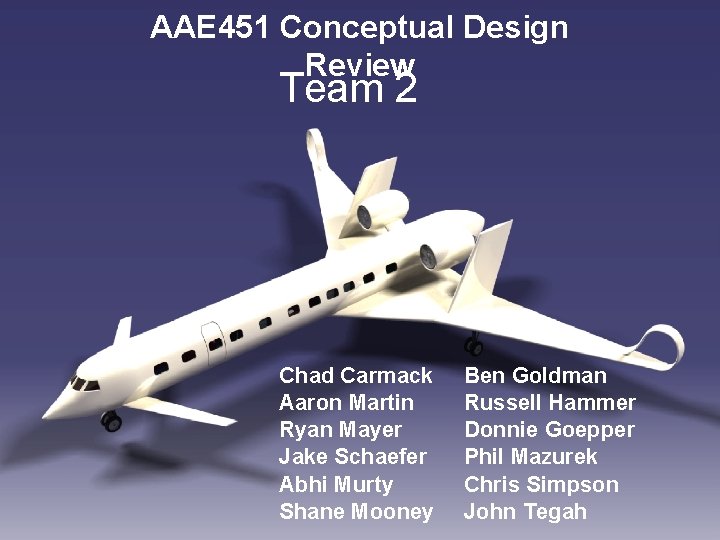
AAE 451 Conceptual Design Review Team 2 Chad
![Control Surface Sizes Control Surface Area [ft 2] Rudder 10 x 2 Aileron 15](https://slidetodoc.com/presentation_image/0d2aa04fa3c41938eb2b8f6d7bc174b3/image-46.jpg "Control Surface Sizes Control Surface Area [ft 2] Rudder 10 x 2 Aileron 15")

- Slides: 60
AAE 451 Conceptual Design Review Team 2 Chad Carmack Aaron Martin Ryan Mayer Jake Schaefer Abhi Murty Shane Mooney Ben Goldman Russell Hammer Donnie Goepper Phil Mazurek Chris Simpson John Tegah
Conceptual Design Outline � Mission Summary � Concept Summary � Best Design � Advanced Technologies Review � Sizing Code � Engine Modeling � Aerodynamics � Performance � Structures � Stability and Control � Noise � Cost � Summary 2
Mission Statement To be the primary systems integrator of a high speed, long range executive transport system with unprecedented efficiency and minimal environmental impact. 3
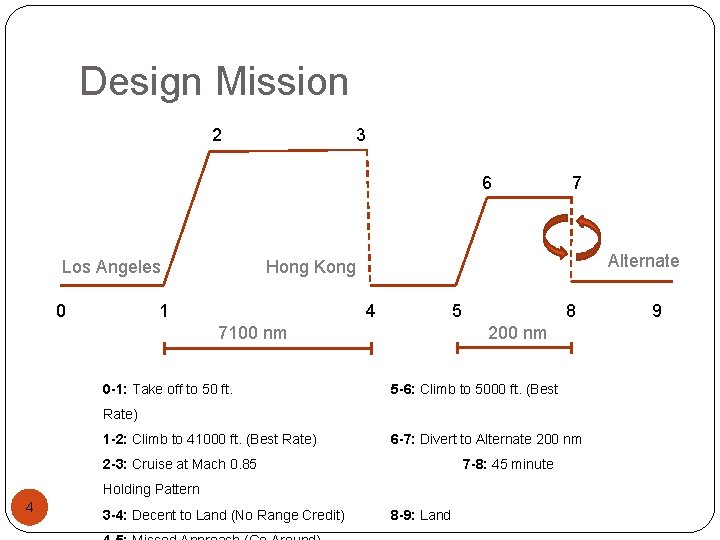
Design Mission 2 3 6 Los Angeles 0 7 Alternate Hong Kong 1 4 5 7100 nm 0 -1: Take off to 50 ft. 8 200 nm 5 -6: Climb to 5000 ft. (Best Rate) 1 -2: Climb to 41000 ft. (Best Rate) 6 -7: Divert to Alternate 200 nm 2 -3: Cruise at Mach 0. 85 7 -8: 45 minute Holding Pattern 4 3 -4: Decent to Land (No Range Credit) 8 -9: Land 9
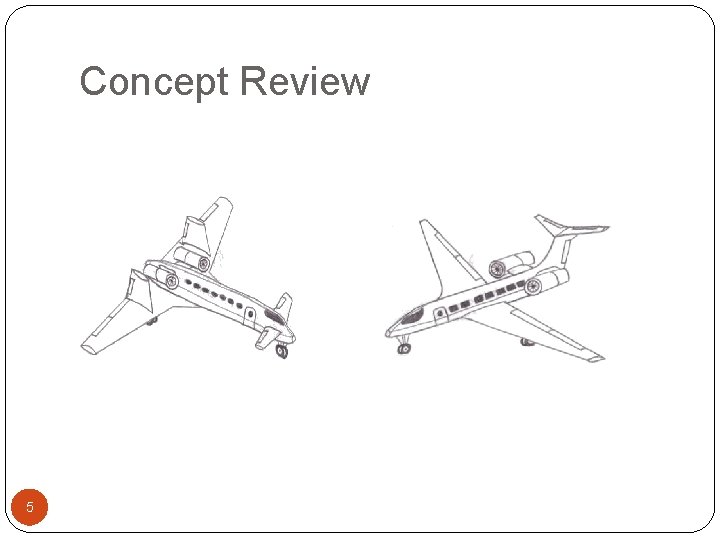
Concept Review 5
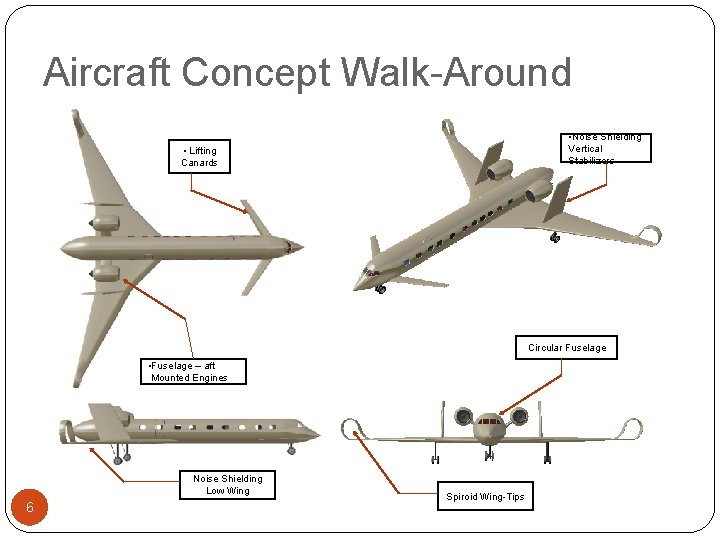
Aircraft Concept Walk-Around • Noise Shielding Vertical Stabilizers • Lifting Canards Circular Fuselage • Fuselage – aft Mounted Engines Noise Shielding Low Wing 6 Spiroid Wing-Tips
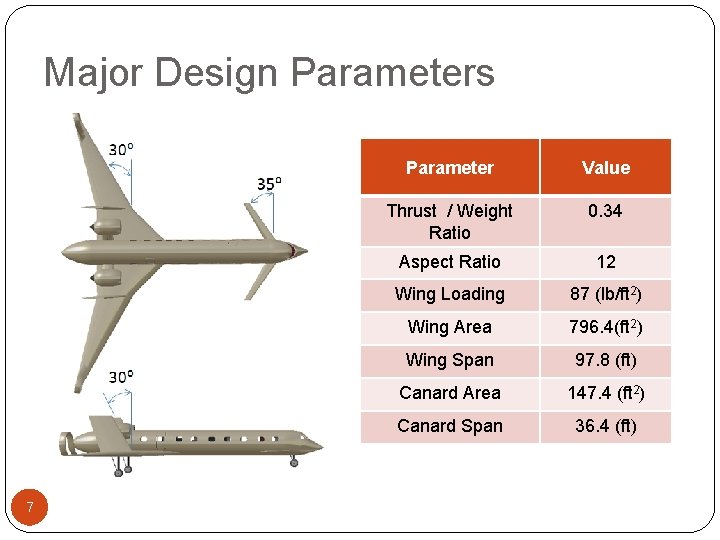
Major Design Parameters 7 Parameter Value Thrust / Weight Ratio 0. 34 Aspect Ratio 12 Wing Loading 87 (lb/ft 2) Wing Area 796. 4(ft 2) Wing Span 97. 8 (ft) Canard Area 147. 4 (ft 2) Canard Span 36. 4 (ft)
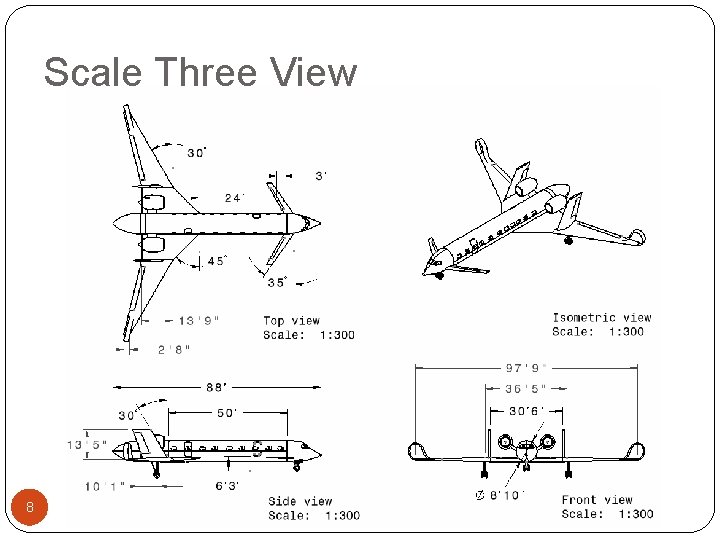
Scale Three View 8
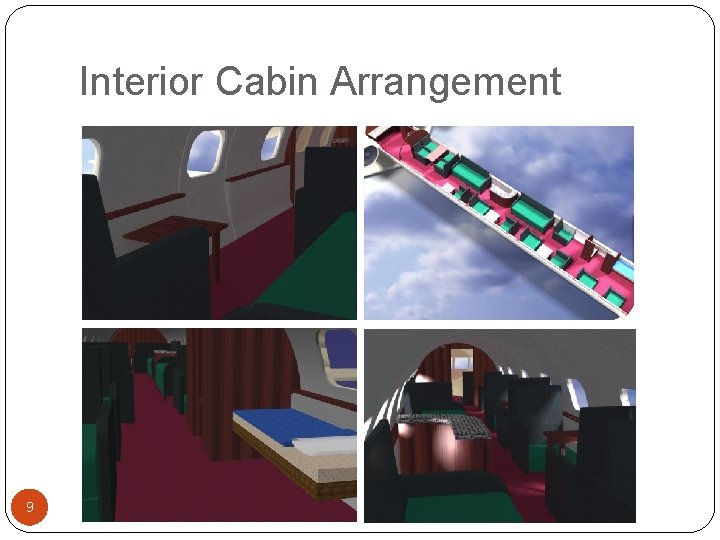
Interior Cabin Arrangement 9
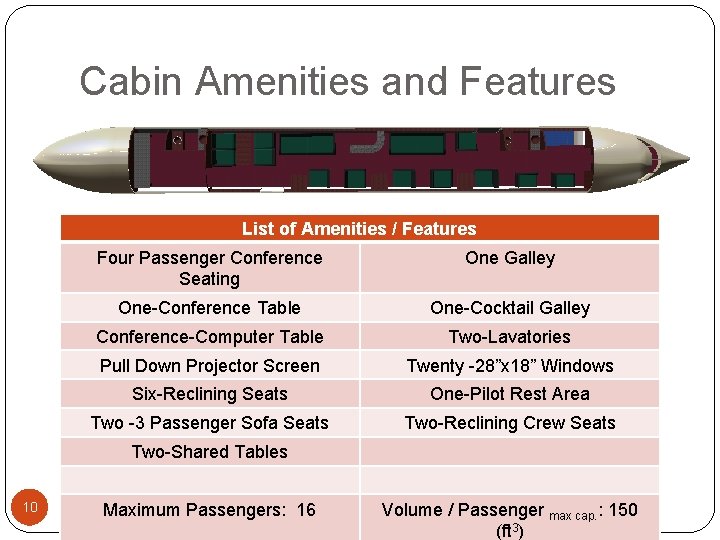
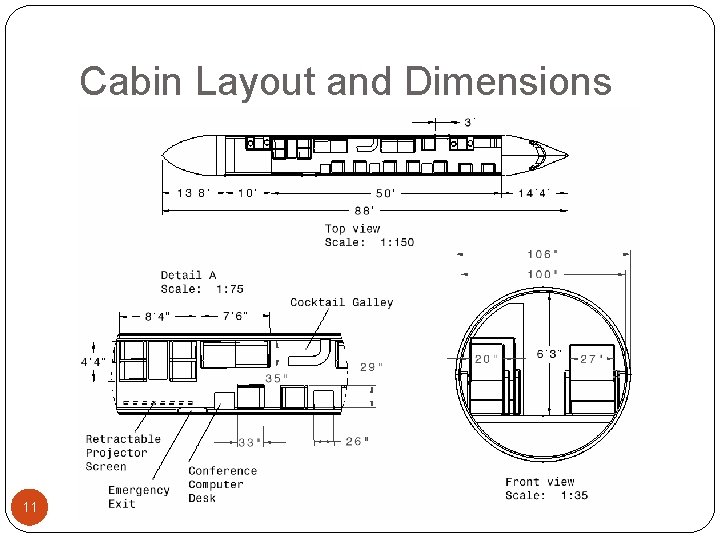
Cabin Amenities and Features List of Amenities / Features Four Passenger Conference Seating One Galley One-Conference Table One-Cocktail Galley Conference-Computer Table Two-Lavatories Pull Down Projector Screen Twenty -28”x 18” Windows Six-Reclining Seats One-Pilot Rest Area Two -3 Passenger Sofa Seats Two-Reclining Crew Seats Two-Shared Tables 10 Maximum Passengers: 16 Volume / Passenger max cap. : 150 (ft 3)
Cabin Layout and Dimensions 11
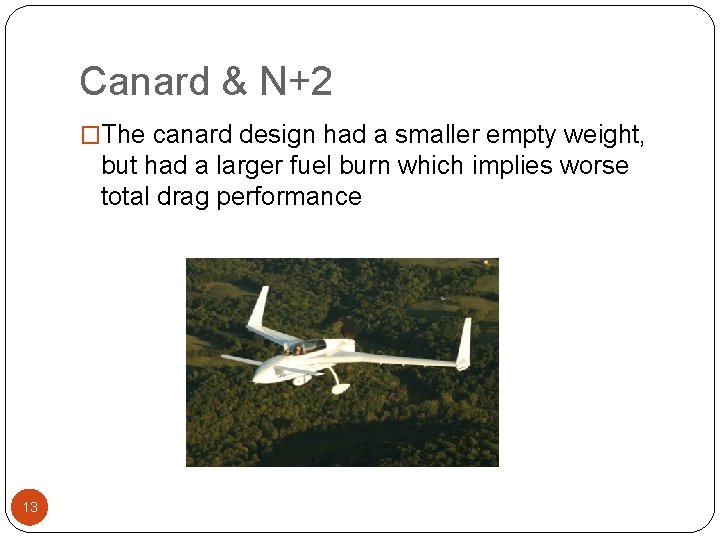
Lifting Canard 12 Pros Cons �Designed to provide �Downwash from more lift at high speeds �Reduces induced drag at cruise �May allow for smaller main wing canards has large effect on main wings �Stability demands that canard stall before main wing, therefore main wing never reaches full lift potential
Canard & N+2 �The canard design had a smaller empty weight, but had a larger fuel burn which implies worse total drag performance 13
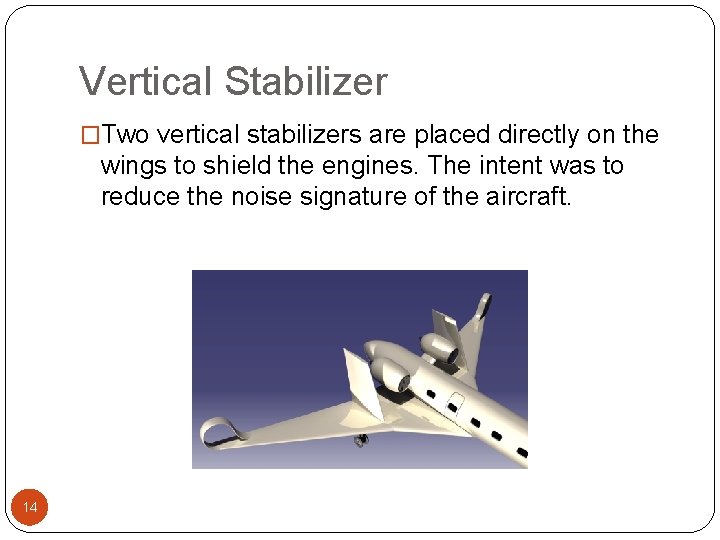
Vertical Stabilizer �Two vertical stabilizers are placed directly on the wings to shield the engines. The intent was to reduce the noise signature of the aircraft. 14
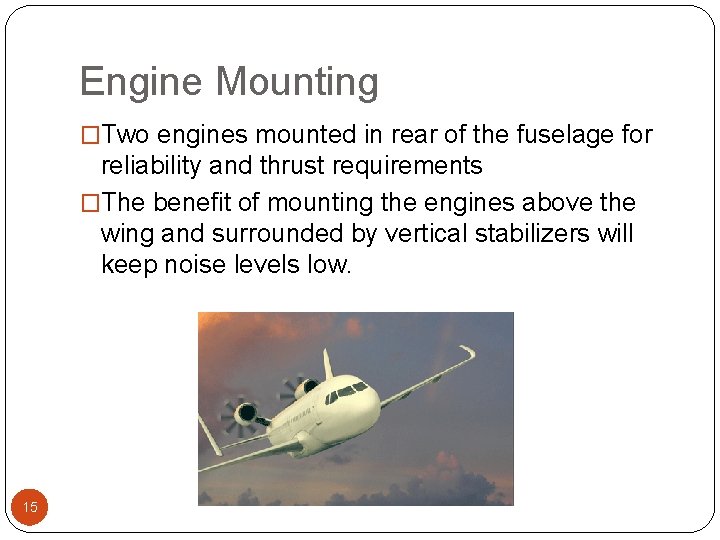
Engine Mounting �Two engines mounted in rear of the fuselage for reliability and thrust requirements �The benefit of mounting the engines above the wing and surrounded by vertical stabilizers will keep noise levels low. 15
Cabin Considerations �Stand up cabin in the aisle to accommodate the “plush” comfort level �Crew areas expanded to allow sleeping quarters for reserve pilot �Two lavatories and galley necessary for full passenger load 16
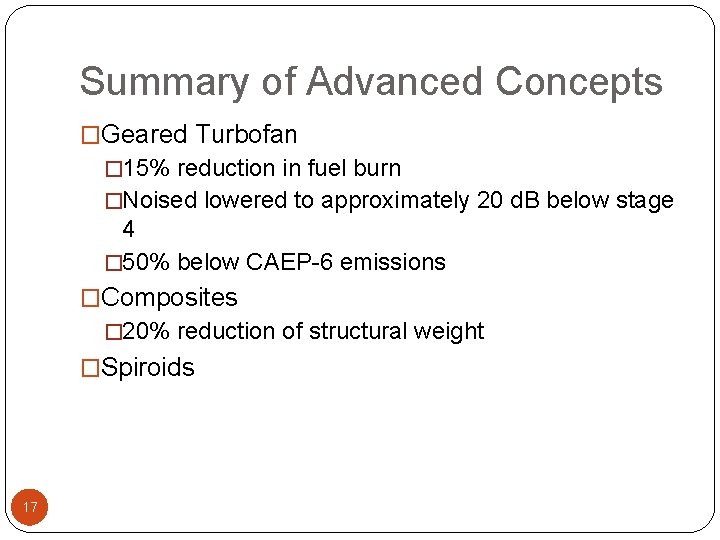
Summary of Advanced Concepts �Geared Turbofan � 15% reduction in fuel burn �Noised lowered to approximately 20 d. B below stage 4 � 50% below CAEP-6 emissions �Composites � 20% reduction of structural weight �Spiroids 17
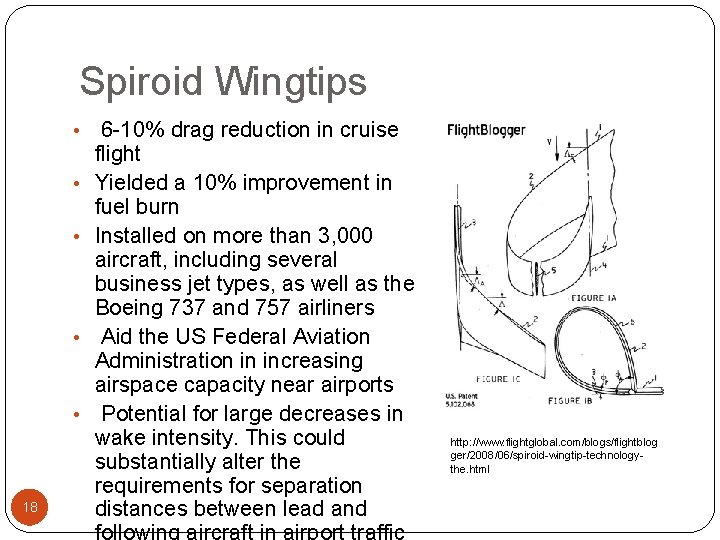
Spiroid Wingtips • 6 -10% drag reduction in cruise • • 18 flight Yielded a 10% improvement in fuel burn Installed on more than 3, 000 aircraft, including several business jet types, as well as the Boeing 737 and 757 airliners Aid the US Federal Aviation Administration in increasing airspace capacity near airports Potential for large decreases in wake intensity. This could substantially alter the requirements for separation distances between lead and http: //www. flightglobal. com/blogs/flightblog ger/2008/06/spiroid-wingtip-technologythe. html
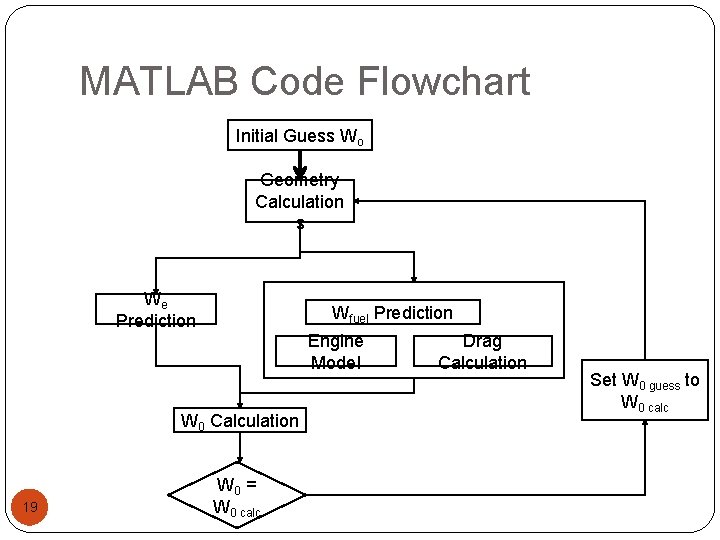
MATLAB Code Flowchart Initial Guess Wo Geometry Calculation s We Prediction Wfuel Prediction Engine Model W 0 Calculation 19 W 0 = W 0 calc Drag Calculation Set W 0 guess to W 0 calc
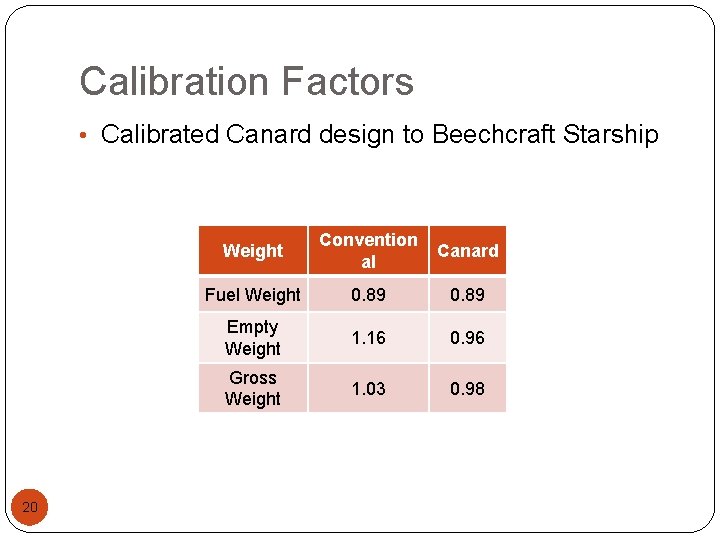
Calibration Factors • Calibrated Canard design to Beechcraft Starship 20 Weight Convention al Canard Fuel Weight 0. 89 Empty Weight 1. 16 0. 96 Gross Weight 1. 03 0. 98
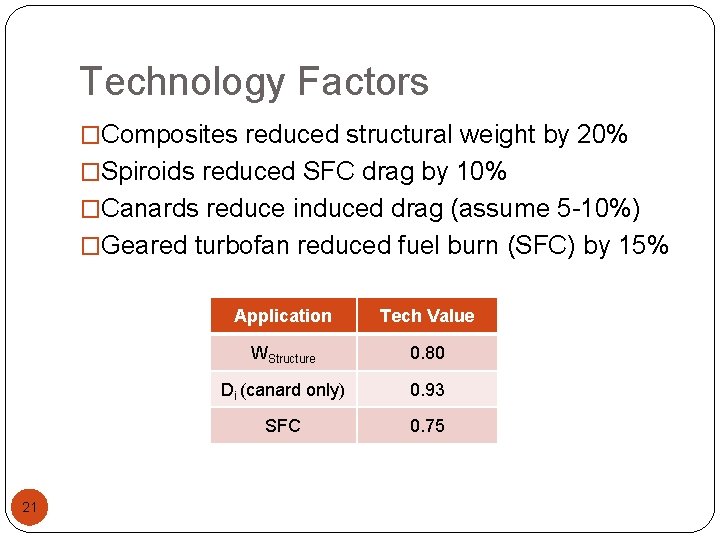
Technology Factors �Composites reduced structural weight by 20% �Spiroids reduced SFC drag by 10% �Canards reduce induced drag (assume 5 -10%) �Geared turbofan reduced fuel burn (SFC) by 15% 21 Application Tech Value WStructure 0. 80 Di (canard only) 0. 93 SFC 0. 75
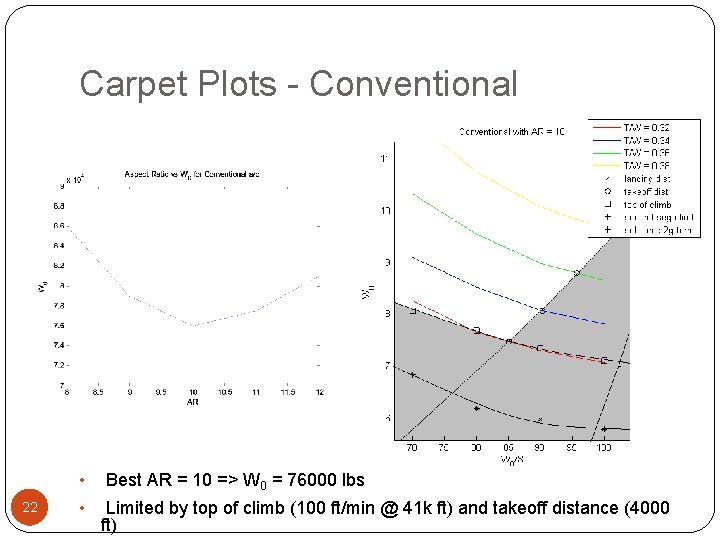
Carpet Plots - Conventional 22 • Best AR = 10 => W 0 = 76000 lbs • Limited by top of climb (100 ft/min @ 41 k ft) and takeoff distance (4000 ft)
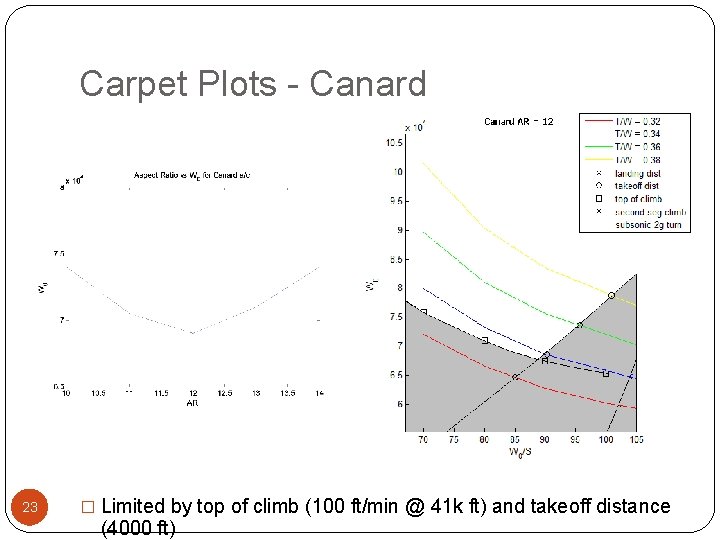
Carpet Plots - Canard 23 � Limited by top of climb (100 ft/min @ 41 k ft) and takeoff distance (4000 ft)
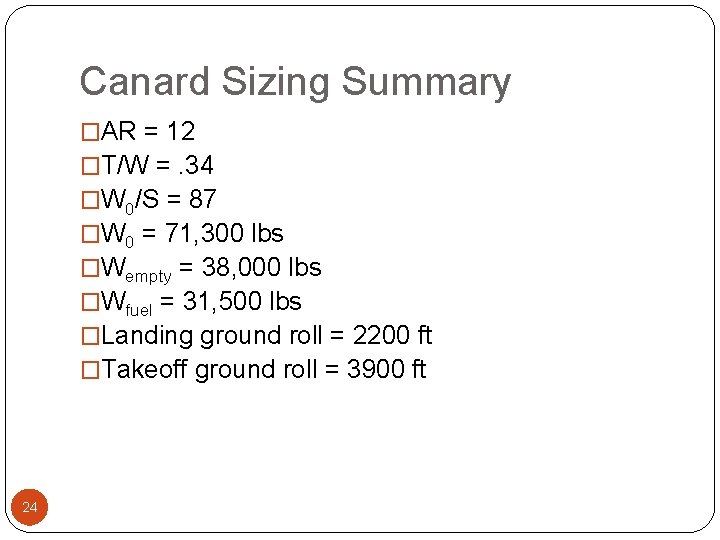
Canard Sizing Summary �AR = 12 �T/W =. 34 �W 0/S = 87 �W 0 = 71, 300 lbs �Wempty = 38, 000 lbs �Wfuel = 31, 500 lbs �Landing ground roll = 2200 ft �Takeoff ground roll = 3900 ft 24
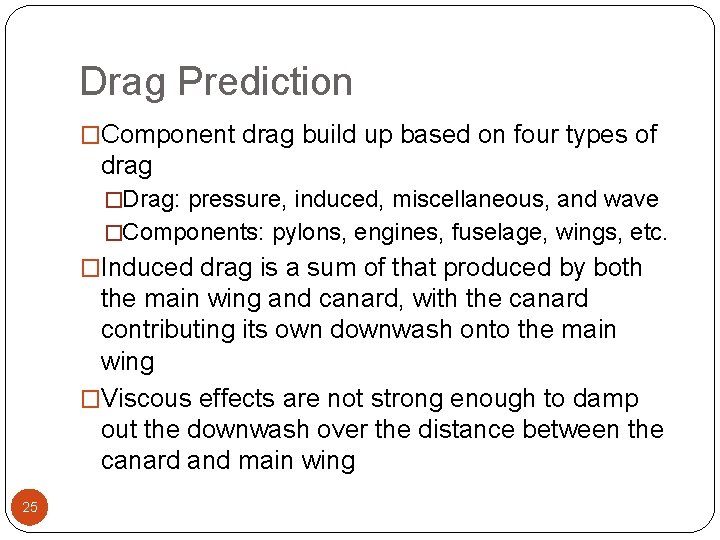
Drag Prediction �Component drag build up based on four types of drag �Drag: pressure, induced, miscellaneous, and wave �Components: pylons, engines, fuselage, wings, etc. �Induced drag is a sum of that produced by both the main wing and canard, with the canard contributing its own downwash onto the main wing �Viscous effects are not strong enough to damp out the downwash over the distance between the canard and main wing 25
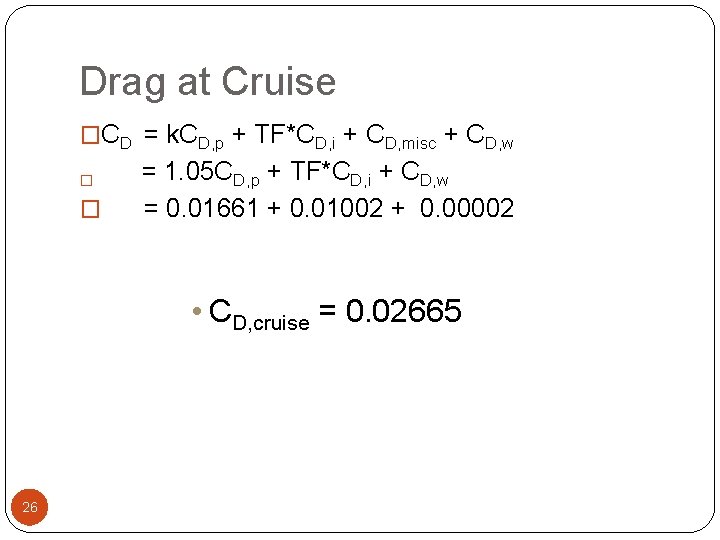
Drag at Cruise �CD = k. CD, p + TF*CD, i + CD, misc + CD, w = 1. 05 CD, p + TF*CD, i + CD, w � = 0. 01661 + 0. 01002 + 0. 00002 � • CD, cruise = 0. 02665 26
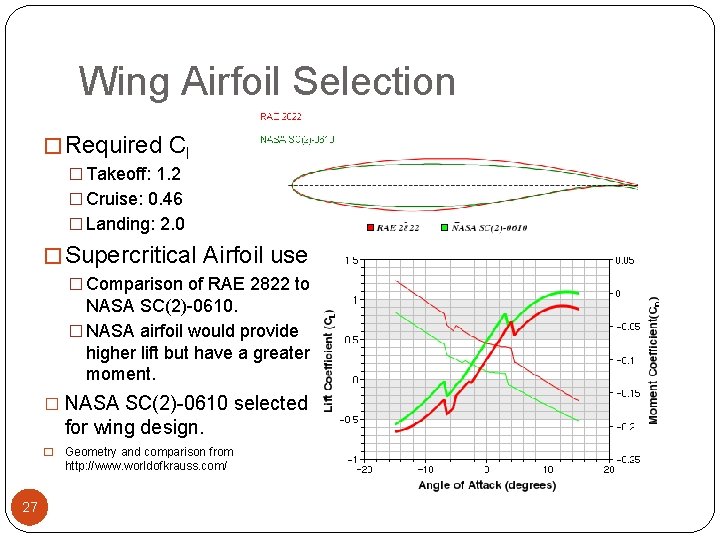
Wing Airfoil Selection � Required Cl � Takeoff: 1. 2 � Cruise: 0. 46 � Landing: 2. 0 � Supercritical Airfoil use � Comparison of RAE 2822 to NASA SC(2)-0610. � NASA airfoil would provide higher lift but have a greater moment. � NASA SC(2)-0610 selected for wing design. � 27 Geometry and comparison from http: //www. worldofkrauss. com/
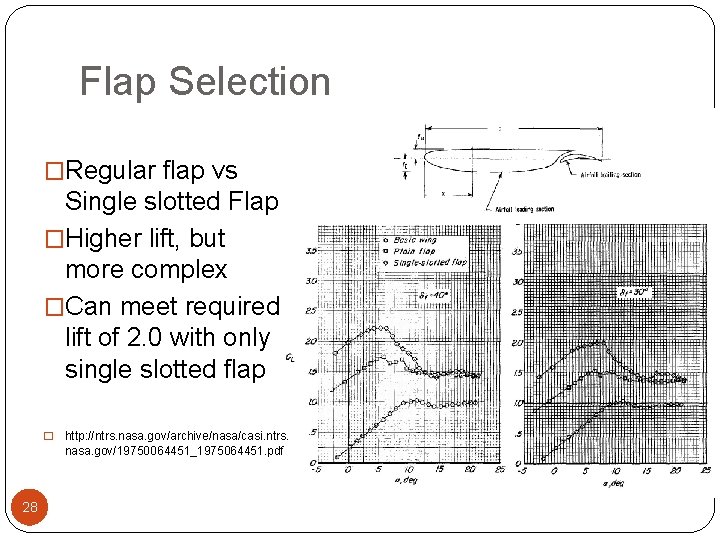
Flap Selection �Regular flap vs Single slotted Flap �Higher lift, but more complex �Can meet required lift of 2. 0 with only single slotted flap � 28 http: //ntrs. nasa. gov/archive/nasa/casi. ntrs. nasa. gov/19750064451_1975064451. pdf
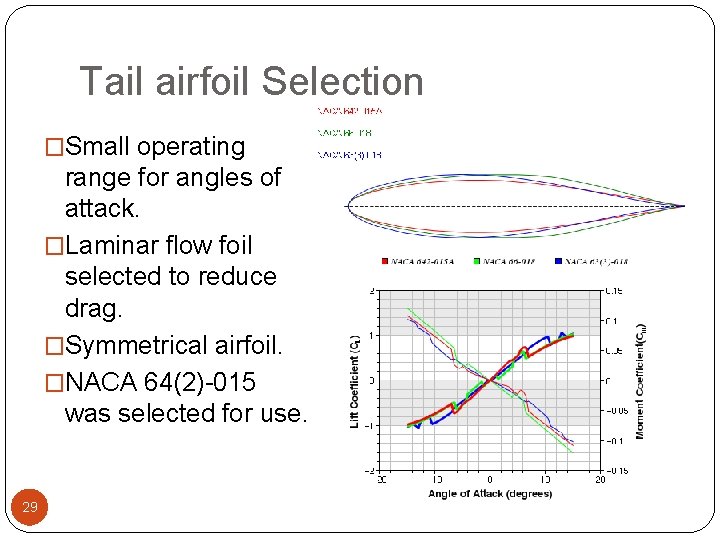
Tail airfoil Selection �Small operating range for angles of attack. �Laminar flow foil selected to reduce drag. �Symmetrical airfoil. �NACA 64(2)-015 was selected for use. 29
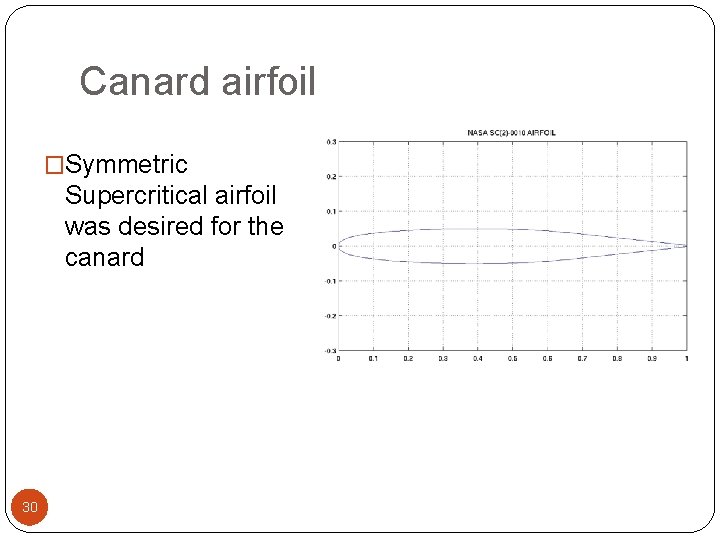
Canard airfoil �Symmetric Supercritical airfoil was desired for the canard 30
Engine Modeling �Engine Deck similar to CF-34 �Generated with ONX/OFFX �Scaled From Data Sheet �Based on required thrust 31
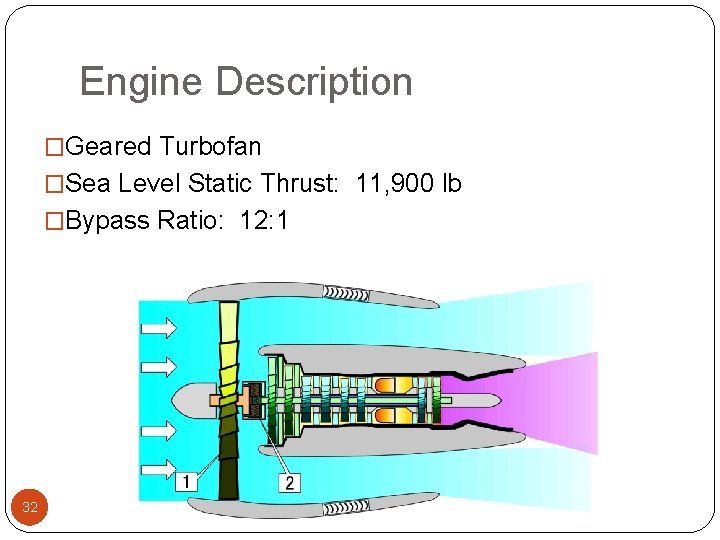
Engine Description �Geared Turbofan �Sea Level Static Thrust: 11, 900 lb �Bypass Ratio: 12: 1 32
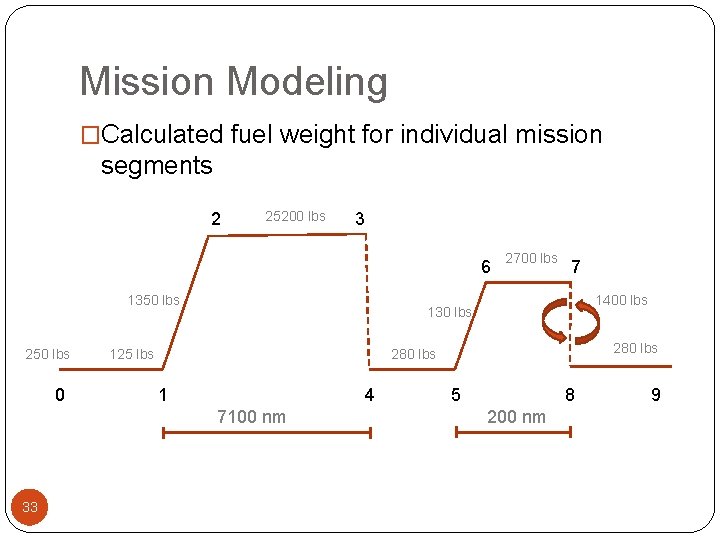
Mission Modeling �Calculated fuel weight for individual mission segments 2 25200 lbs 3 6 1350 lbs 250 lbs 0 7 1400 lbs 130 lbs 125 lbs 280 lbs 1 4 7100 nm 33 2700 lbs 5 8 200 nm 9
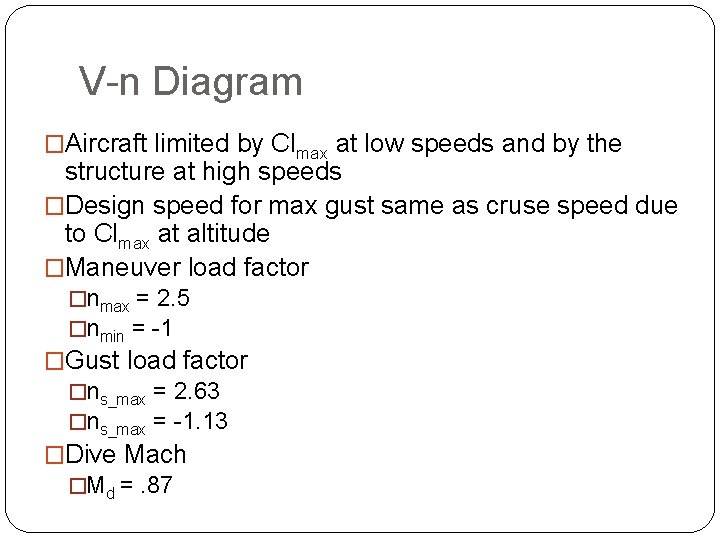
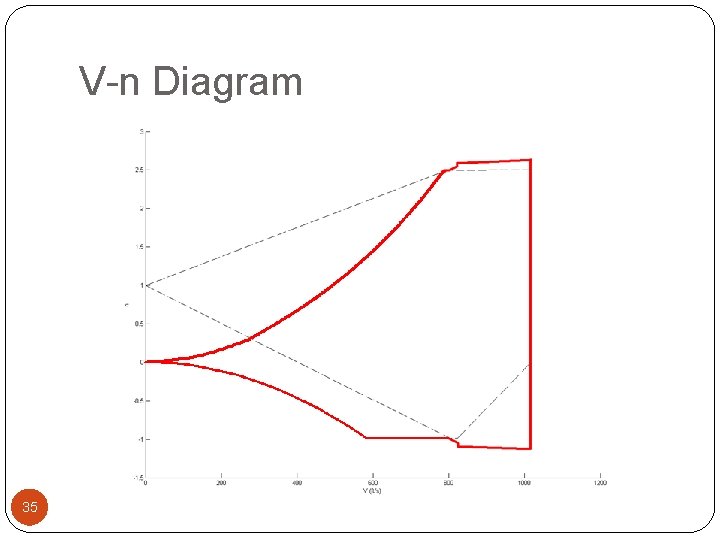
V-n Diagram �Aircraft limited by Clmax at low speeds and by the structure at high speeds �Design speed for max gust same as cruse speed due to Clmax at altitude �Maneuver load factor �nmax = 2. 5 �nmin = -1 �Gust load factor �ns_max = 2. 63 �ns_max = -1. 13 �Dive Mach �Md =. 87
V-n Diagram 35
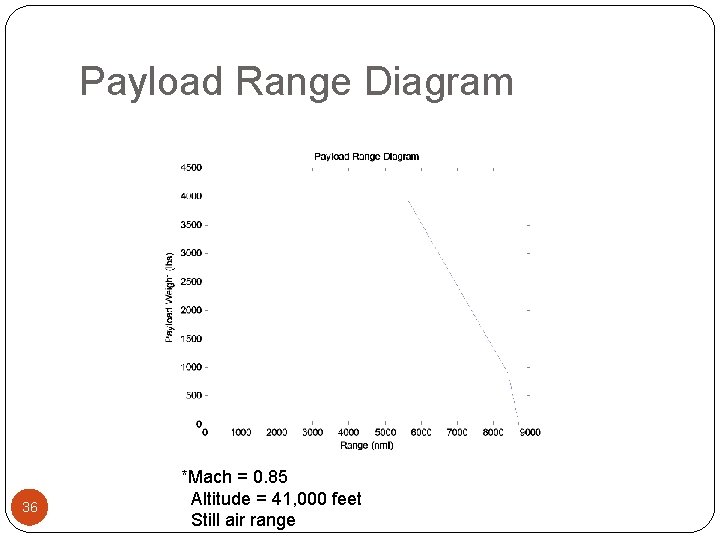
Payload Range Diagram 36 *Mach = 0. 85 Altitude = 41, 000 feet Still air range
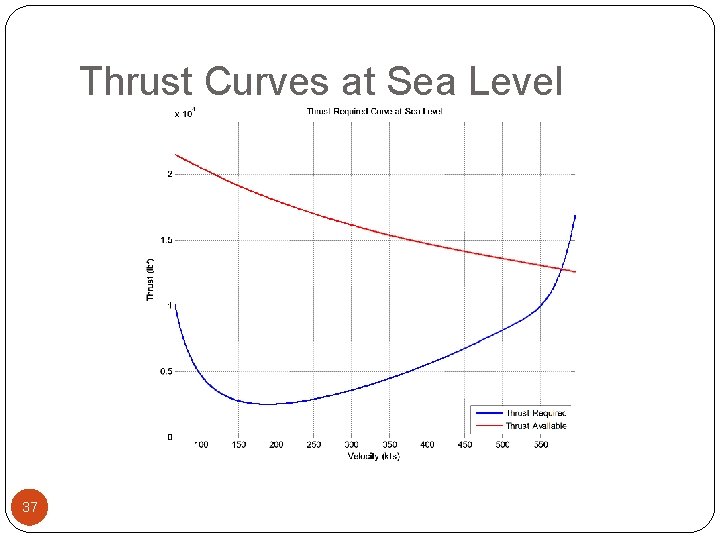
Thrust Curves at Sea Level 37
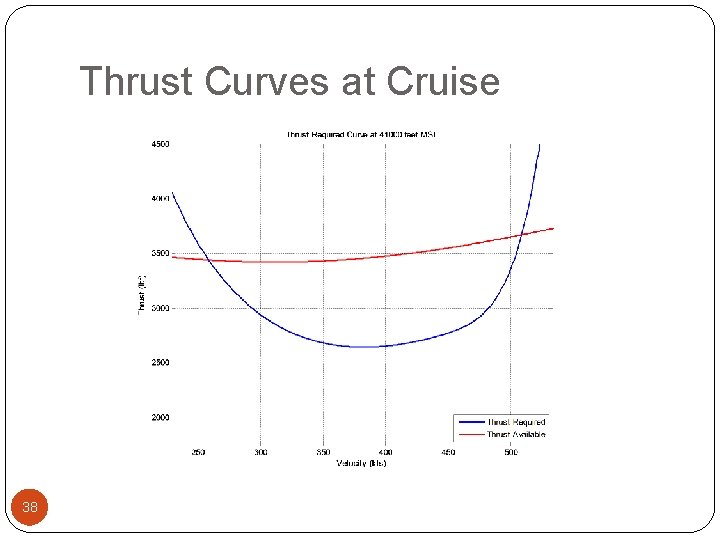
Thrust Curves at Cruise 38
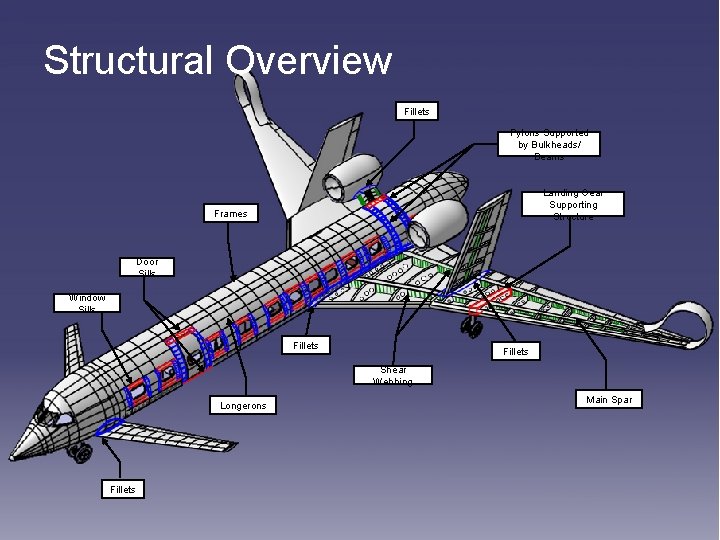
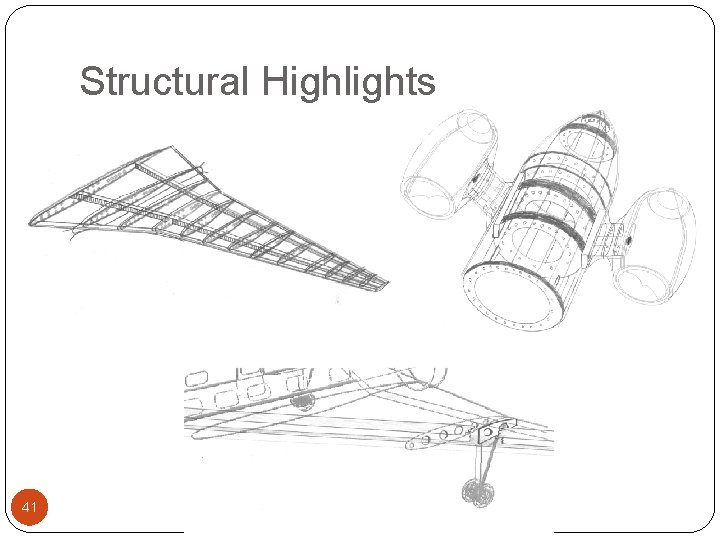
Structural Overview Fillets Pylons Supported by Bulkheads/ Beams Landing Gear Supporting Structure Frames Door Sills Window Sills Fillets Shear Webbing Longerons Fillets Main Spar
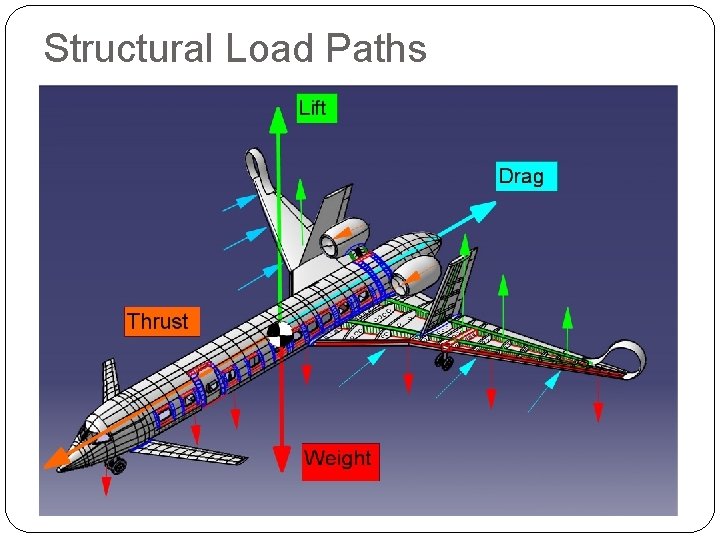
Structural Load Paths
Structural Highlights 41
Material Selection Process �Static Dissipation and Electrically Conductive �Icephobic Coatings �Maintenance �Cost �Density and Fatigue Resistance 42
Materials � Silicones v Ability to maintain its elasticity and low modulus over a broad temperature range provides excellent utility in extreme environments v Protection against static accumulation and discharge � Composites v Light and very strong but maintenance is an issue and is expensive v No Established data � Aluminum v Lower cost v Easier certification v Established maintenance � Steels v Used mainly in the landing gear � Advanced Alloys v Higher elastic modulus v Density savings 43
Aircraft Components � Fuselage skins and wing stringers - Aluminum Alloys v Better Fatigue Crack Growth (FCG) performance reduces structural weight. � Canard, Control surfaces and wing skin panels – Glare Composites v Resistant to damage at high temperatures � Landing gear – Steel Alloy v High strength, corrosion resistant � Nose, Leading and Trailing edges - Carbon fiber-reinforced polymer (CFRP) v Lighter than titanium v 44 Higher fracture toughness and yield strength
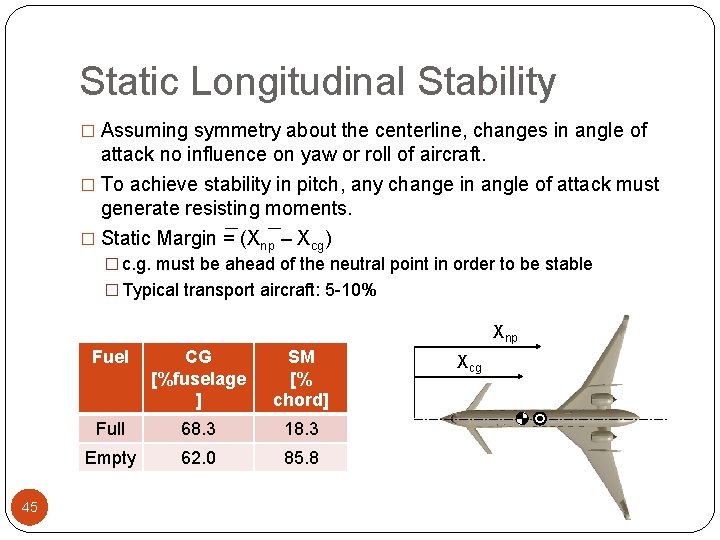
Static Longitudinal Stability � Assuming symmetry about the centerline, changes in angle of attack no influence on yaw or roll of aircraft. � To achieve stability in pitch, any change in angle of attack must generate resisting moments. � Static Margin = (Xnp – Xcg) � c. g. must be ahead of the neutral point in order to be stable � Typical transport aircraft: 5 -10% Xnp 45 Fuel CG [%fuselage ] SM [% chord] Full 68. 3 18. 3 Empty 62. 0 85. 8 Xcg
Control Surface Sizes Control Surface Area [ft 2] Rudder 10 x 2 Aileron 15 Elevator 35 Raymer Figure 6. 3 – Aileron Sizing 46 Raymer Table 6. 5 – Elevator Sizing
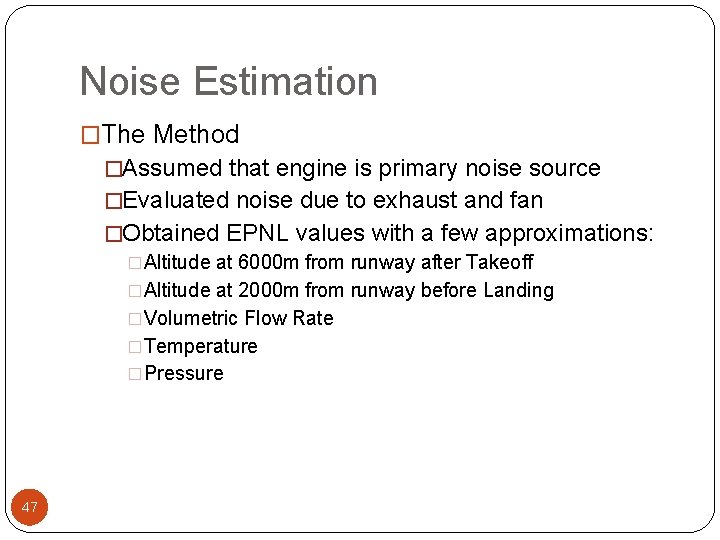
Noise Estimation �The Method �Assumed that engine is primary noise source �Evaluated noise due to exhaust and fan �Obtained EPNL values with a few approximations: �Altitude at 6000 m from runway after Takeoff �Altitude at 2000 m from runway before Landing �Volumetric Flow Rate �Temperature �Pressure 47
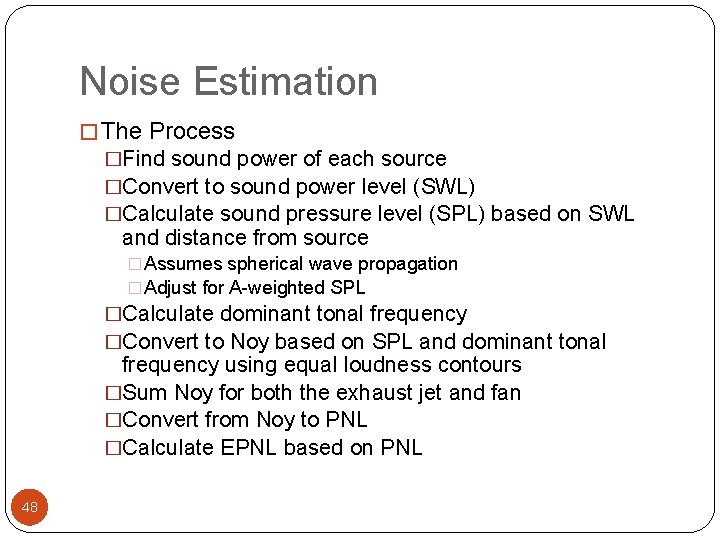
Noise Estimation � The Process �Find sound power of each source �Convert to sound power level (SWL) �Calculate sound pressure level (SPL) based on SWL and distance from source � Assumes spherical wave propagation � Adjust for A-weighted SPL �Calculate dominant tonal frequency �Convert to Noy based on SPL and dominant tonal frequency using equal loudness contours �Sum Noy for both the exhaust jet and fan �Convert from Noy to PNL �Calculate EPNL based on PNL 48
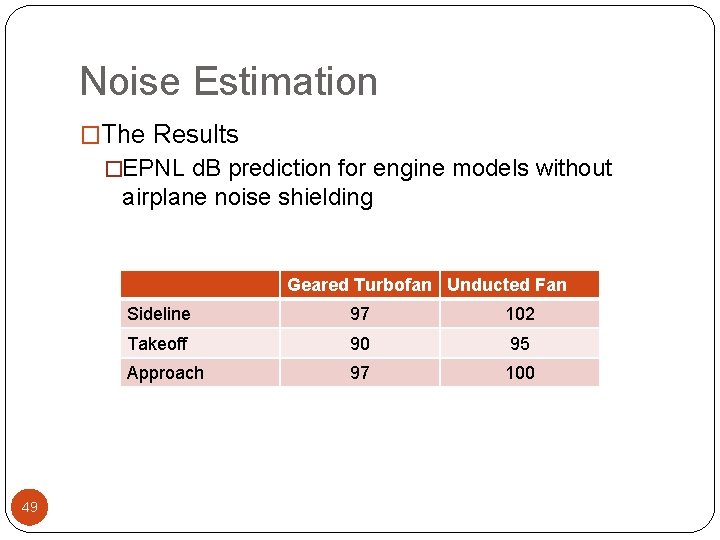
Noise Estimation �The Results �EPNL d. B prediction for engine models without airplane noise shielding Geared Turbofan Unducted Fan 49 Sideline 97 102 Takeoff 90 95 Approach 97 100
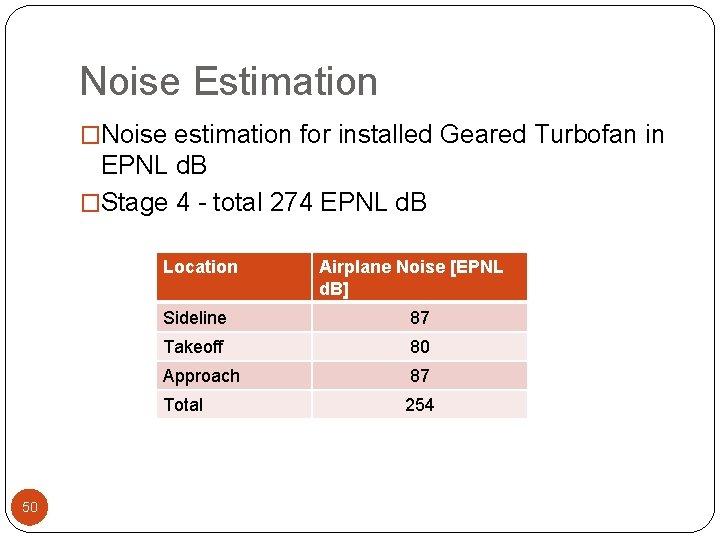
Noise Estimation �Noise estimation for installed Geared Turbofan in EPNL d. B �Stage 4 - total 274 EPNL d. B Location 50 Airplane Noise [EPNL d. B] Sideline 87 Takeoff 80 Approach 87 Total 254
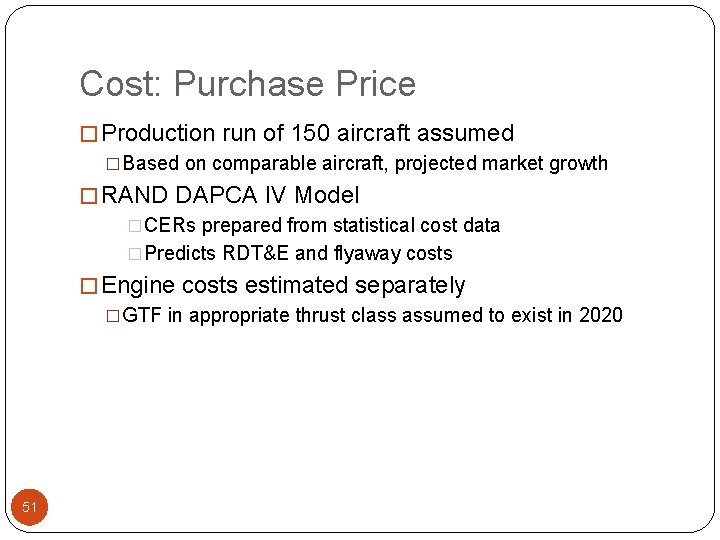
Cost: Purchase Price � Production run of 150 aircraft assumed �Based on comparable aircraft, projected market growth � RAND DAPCA IV Model �CERs prepared from statistical cost data �Predicts RDT&E and flyaway costs � Engine costs estimated separately �GTF in appropriate thrust class assumed to exist in 2020 51
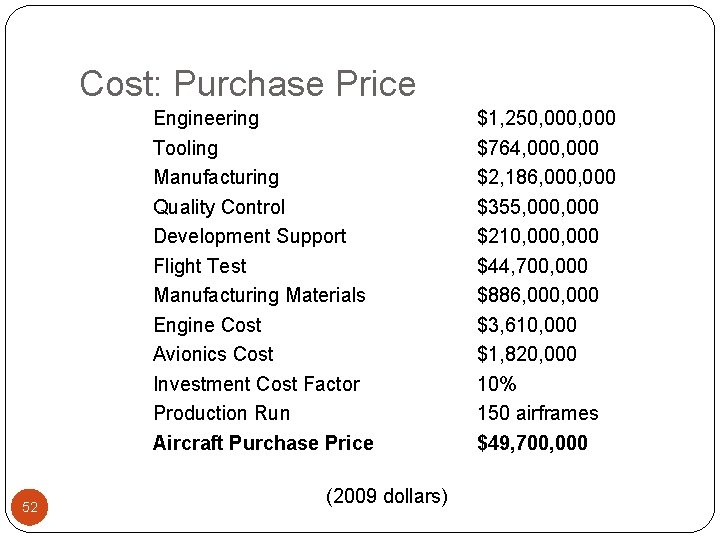
Cost: Purchase Price Engineering Tooling Manufacturing Quality Control Development Support Flight Test Manufacturing Materials Engine Cost Avionics Cost Investment Cost Factor Production Run Aircraft Purchase Price 52 (2009 dollars) $1, 250, 000 $764, 000 $2, 186, 000 $355, 000 $210, 000 $44, 700, 000 $886, 000 $3, 610, 000 $1, 820, 000 10% 150 airframes $49, 700, 000
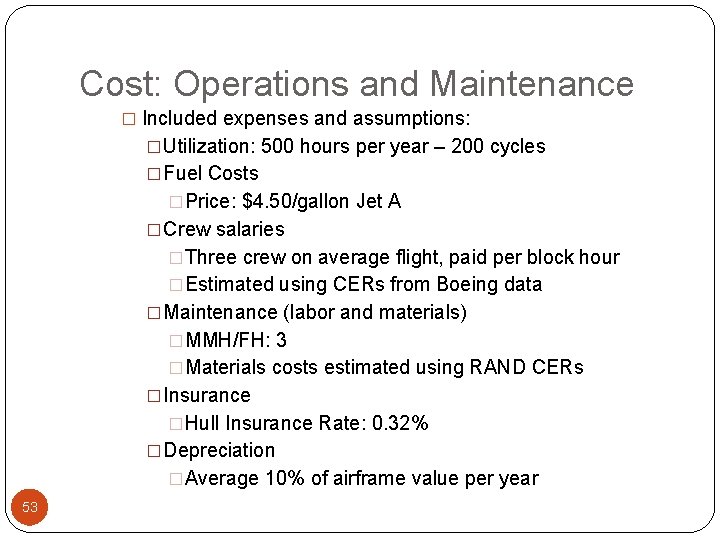
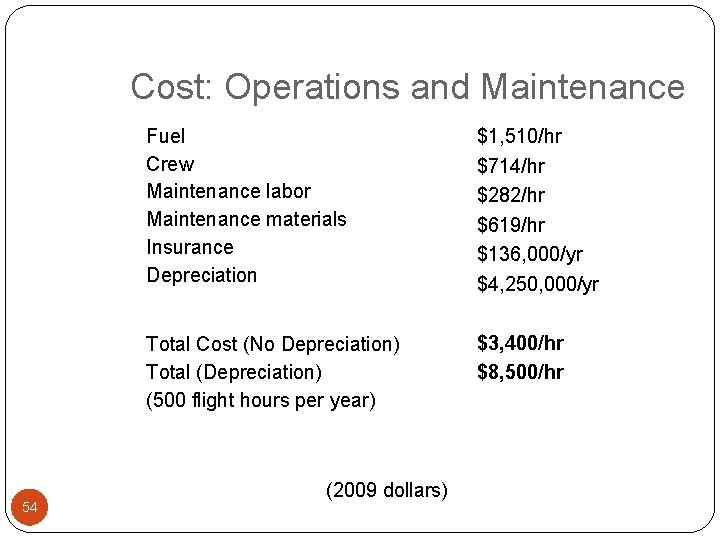
Cost: Operations and Maintenance � Included expenses and assumptions: �Utilization: 500 hours per year – 200 cycles �Fuel Costs �Price: $4. 50/gallon Jet A �Crew salaries �Three crew on average flight, paid per block hour �Estimated using CERs from Boeing data �Maintenance (labor and materials) �MMH/FH: 3 �Materials costs estimated using RAND CERs �Insurance �Hull Insurance Rate: 0. 32% �Depreciation �Average 10% of airframe value per year 53
Cost: Operations and Maintenance 54 Fuel Crew Maintenance labor Maintenance materials Insurance Depreciation $1, 510/hr $714/hr $282/hr $619/hr $136, 000/yr $4, 250, 000/yr Total Cost (No Depreciation) Total (Depreciation) (500 flight hours per year) $3, 400/hr $8, 500/hr (2009 dollars)
Summary
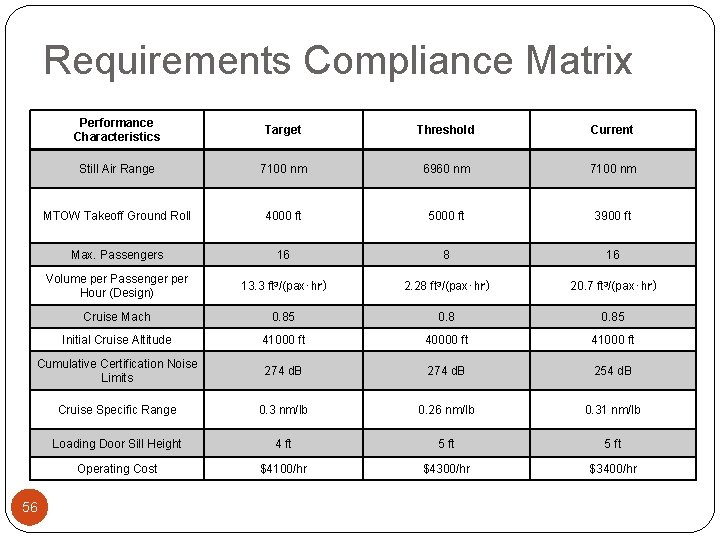
Requirements Compliance Matrix Performance Characteristics Target Threshold Current Still Air Range 7100 nm 6960 nm 7100 nm MTOW Takeoff Ground Roll 4000 ft 5000 ft 3900 ft Max. Passengers 16 8 16 Volume per Passenger per Hour (Design) 13. 3 ft 3/(pax⋅hr) 2. 28 ft 3/(pax⋅hr) 20. 7 ft 3/(pax⋅hr) Cruise Mach 0. 85 Initial Cruise Altitude 41000 ft 40000 ft 41000 ft Cumulative Certification Noise Limits 274 d. B 254 d. B Cruise Specific Range 0. 3 nm/lb 0. 26 nm/lb 0. 31 nm/lb Loading Door Sill Height 4 ft 5 ft Operating Cost $4100/hr $4300/hr $3400/hr 56
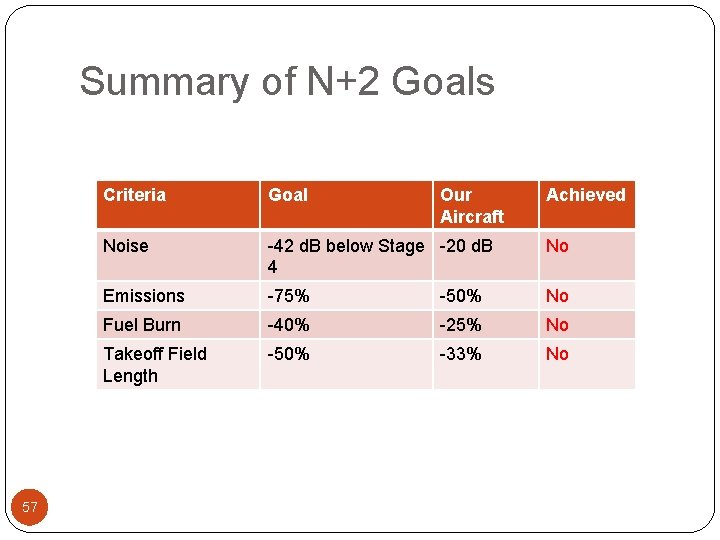
Summary of N+2 Goals 57 Criteria Goal Our Aircraft Achieved Noise -42 d. B below Stage -20 d. B 4 No Emissions -75% -50% No Fuel Burn -40% -25% No Takeoff Field Length -50% -33% No
Plausibility �Not Currently �N+2 goals are difficult to meet �Worth pursuing �Significant improvements over current performance possible 58
Additional Work • Structural Analysis • Fatigue and temperature analysis • Sizing of spars and ribs • Aerodynamic Analysis • CFD • Wind Tunnel Testing • Manufacturing process • Engine • Boundary layer ingestion 59
Questions?