
AA pgs 116 122 PART 3 Breathing System
A&A pgs 116 -122 PART 3: Breathing System Parts The system that brings the ________ from the vaporizer to the patient AND takes the exhaled gases away from the patient. Parts: Fresh gas outlet Fresh gas inlet Inspiratory and expiratory unidirectional valves Pop off valve CO 2 canister Negative pressure relief valve Pressure manometer
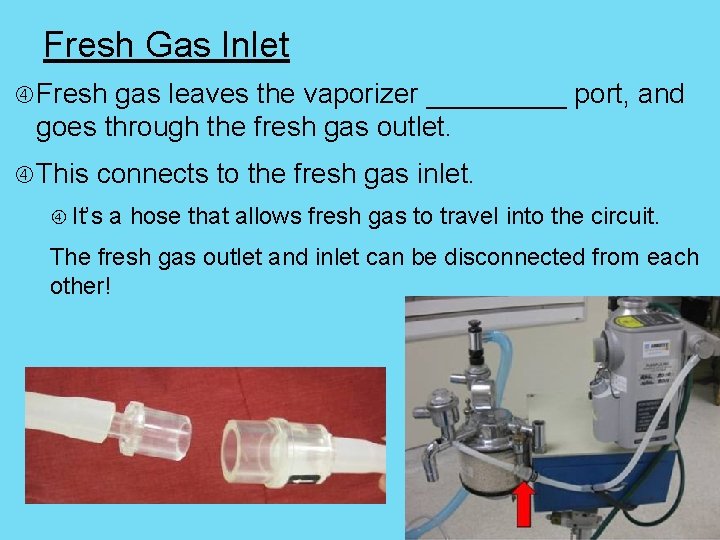
Fresh Gas Inlet Fresh gas leaves the vaporizer _____ port, and goes through the fresh gas outlet. This connects to the fresh gas inlet. It’s a hose that allows fresh gas to travel into the circuit. The fresh gas outlet and inlet can be disconnected from each other!

Unidirectional Valves One-way valves that allow the flow of fresh gas to only travel in one direction. The valve is a rigid disk that flutters as gas flows past it. 1. ______ unidirectional valve: opens as the patient inhales 2. ______ unidirectional valve: opens as the patient exhales This part prevents:
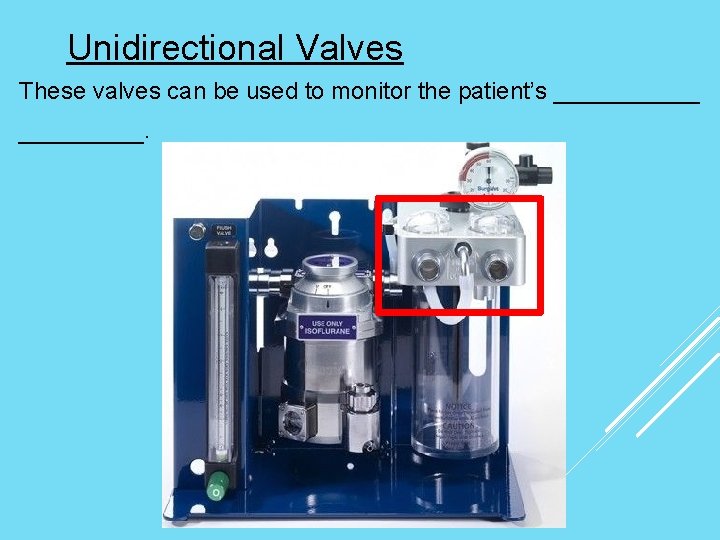
Unidirectional Valves These valves can be used to monitor the patient’s ______.
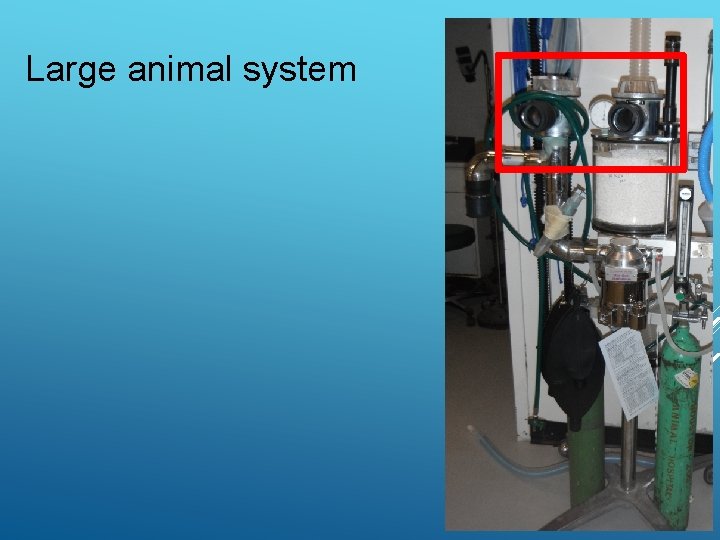
Large animal system
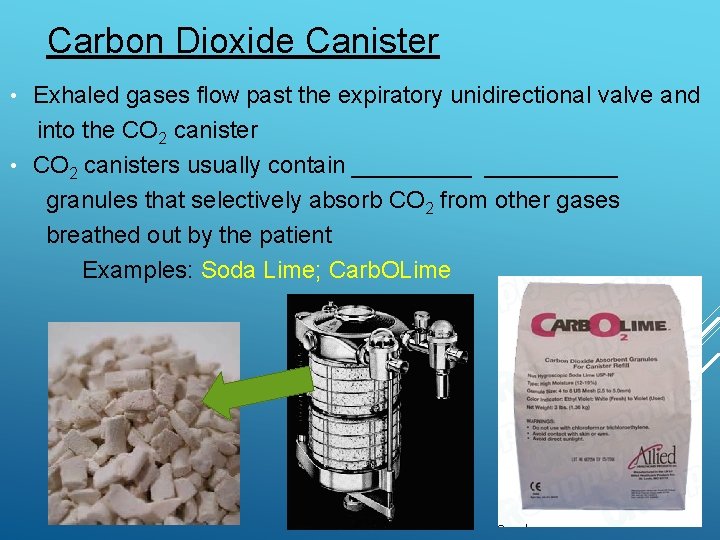
Carbon Dioxide Canister • Exhaled gases flow past the expiratory unidirectional valve and into the CO 2 canister • CO 2 canisters usually contain __________ granules that selectively absorb CO 2 from other gases breathed out by the patient Examples: Soda Lime; Carb. OLime
Carbon Dioxide Canister • If CO 2 absorption is occurring: The canister should feel warm and have moisture in it Capnometer measurements should be WNL § • The inspiratory carbon dioxide should read _______ Recommended to change out granules q 6 -10 hours of use VTI note: change _______ of use • Fill to the top of the canister • • Cover the hole! PPE is required
Carbon Dioxide Canister Granules may become ______ before ten hours! How can I tell? 1. Color change to violet or pink. *Most brands change _________. Replace granules mid-anesthesia if you have ______ color change. § Once color changes, it is possible to change back to white -ish within hours! § 2. CO 2 saturated granules are hard and brittle § New ones can be chipped and crumbled with your fingers
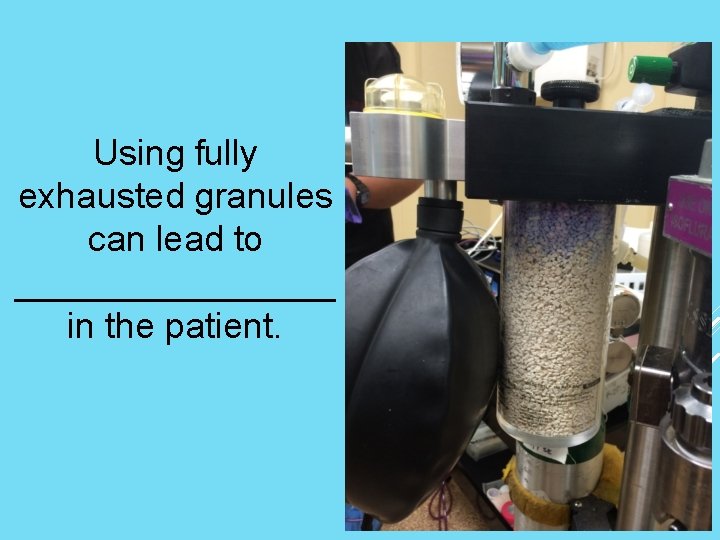
Using fully exhausted granules can lead to ________ in the patient.
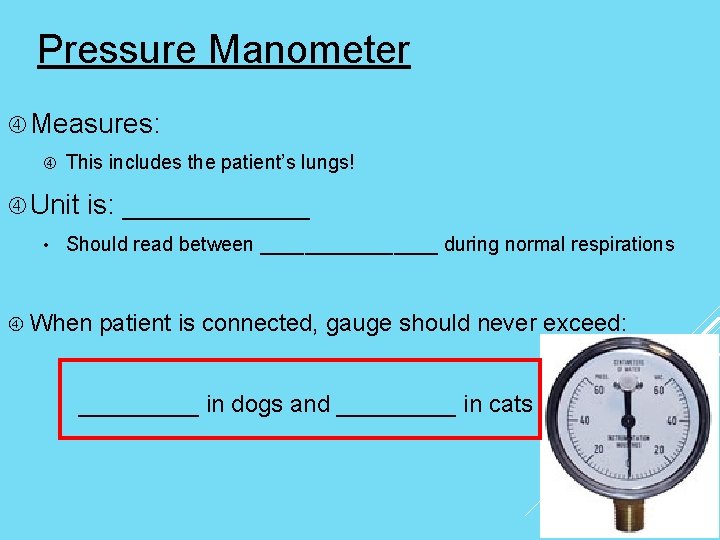
Pressure Manometer Measures: This includes the patient’s lungs! Unit • is: ______ Should read between ________ during normal respirations When patient is connected, gauge should never exceed: _____ in dogs and _____ in cats
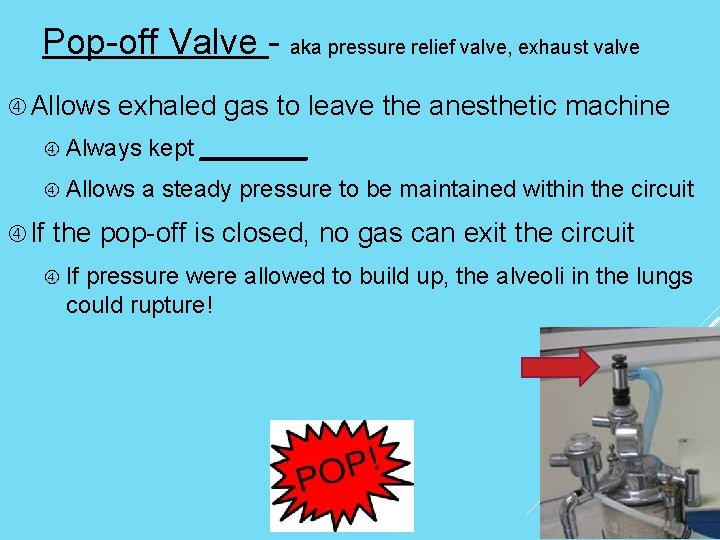
Pop-off Valve - aka pressure relief valve, exhaust valve Allows exhaled gas to leave the anesthetic machine Always Allows If kept ____ a steady pressure to be maintained within the circuit the pop-off is closed, no gas can exit the circuit If pressure were allowed to build up, the alveoli in the lungs could rupture!
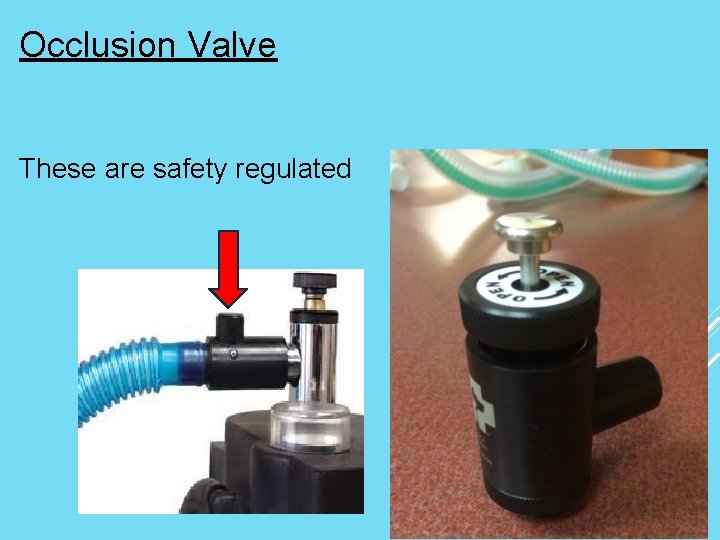
Occlusion Valve These are safety regulated
Negative Pressure Release Valve aka Air Intake Valve If negative pressure is detected in the circuit: ______________________ • Indicated by no gas flow or a completely empty reservoir bag When would this happen? 1. Instances when there is excessive _____ Ex: When an active scavenging system is utilized 2. O 2 flow rate is too low or tank runs out of O 2 • ALWAYS keep an eye on your:
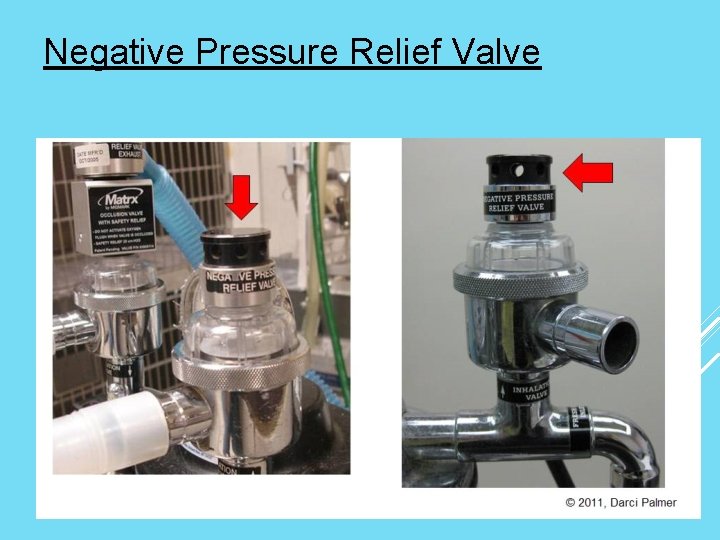
Negative Pressure Relief Valve
Part 4: Scavenging System Sold • SAFTEY A&A Pgs 140 -147 separately! Must be hooked up to the anesthetic machine _________ Function: Three to reduce exposure to ___________ major types of scavenging systems: 1. Active Scavenging System q Connected to a vacuum that sucks the waste gases out of the machine…concerns? q Runs through a drop down line, through pipes in the ceiling, and outside –must be turned on! q Expensive, maintenance required
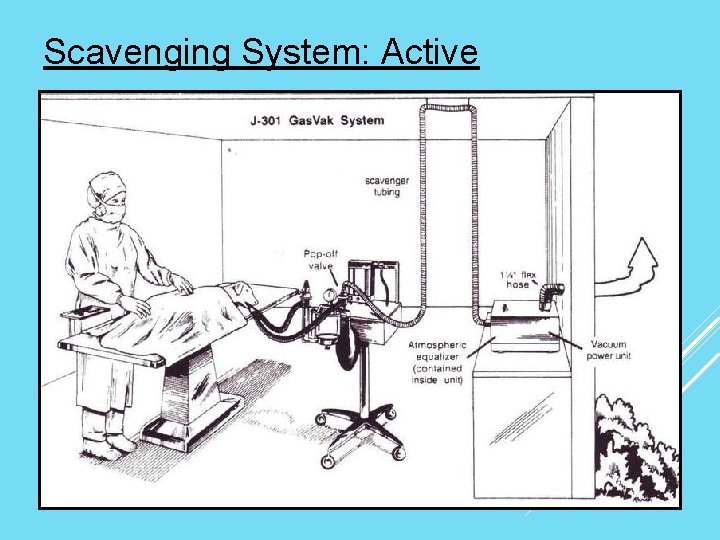
Scavenging System: Active
Scavenging System 2. Passive Scavenging System q Uses pressure in circuit to expel gases from the machine, out through a hole in the wall 3. Absorption Devices q Canister that contains ____________ q Connected to the pop-off valve via a ______.
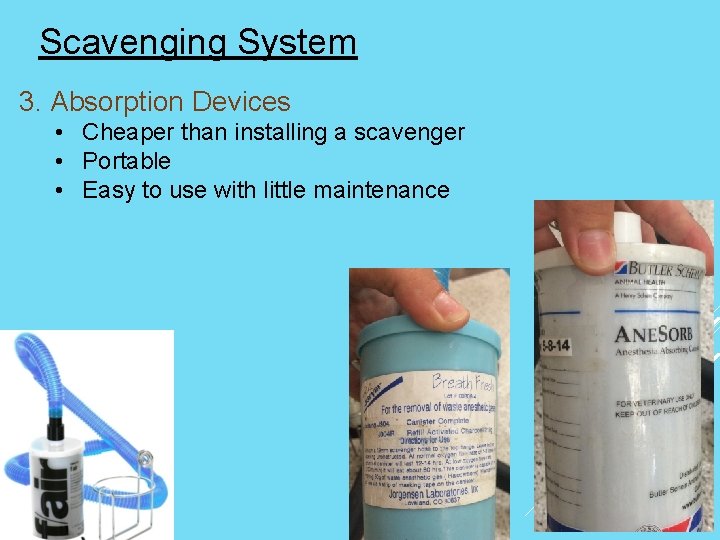
Scavenging System 3. Absorption Devices • Cheaper than installing a scavenger • Portable • Easy to use with little maintenance
F/air Canister o Must be discarded after _____ of use OR a gain of _____ in weight o Must weigh F/air canister ______ use Must record the time used _____ use Never occlude the bottom o Filter on the bottom must always have air flow *Note: do not absorb nitrous oxide vapor
- Slides: 19