
A Work in Progress Ideas from UC San

- Slides: 32
A Work in Progress: Ideas from UC San Diego on How to to Work With Your Development Office to Support Campus Sustainability James T. Shea Director of Development for Constituent Relations jtshea@ucsd. edu / 858 -534 -8431
The UC Project Management Institute is a Registered Provider with The American Institute of Architects Continuing Education Systems. Credit earned on completion of this program will be reported to CES Records for AIA members. Certificates of Completion for non-AIA members are available upon request (emily. montan@ucop. edu). This program is registered with the AIA-CES for continuing professional education. As such, it does not include content that may be deemed or construed to be an approval or endorsement by the AIA of any material of construction or any method or manner of handling, using, distributing, or dealing in any material or product. Questions related to specific materials, methods and services will be addressed at the conclusion of this presentation.
Definitions n. A Work in Progress… n Constituent Relations… – “What is it that you do? ” n How does Development work? – “It’s all just magic…” – “They get money for everyone but me…”
What are the opportunities? n Students … n Alumni, parents and individuals… n Corporations, foundations and government… – Getting money for student projects – Working within Facilities to identify new projects – The legend in our midst… – Intellectual capital. . . – The problem about all them rules… – Helping them in order to help you…
What are the obstacles?
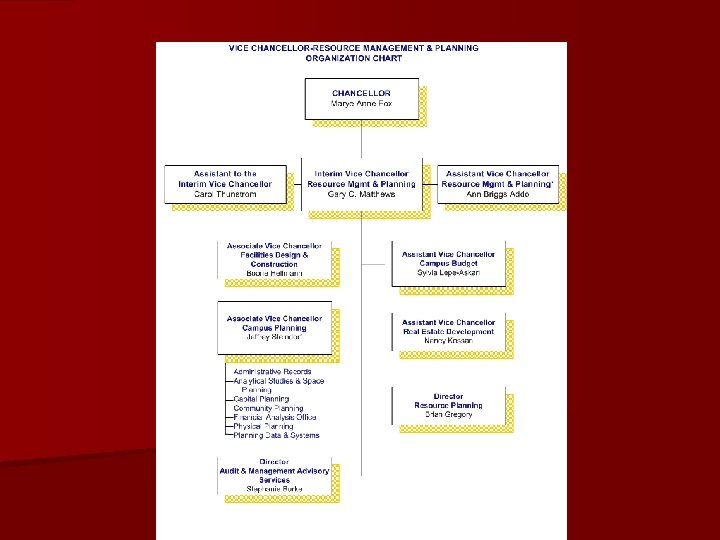
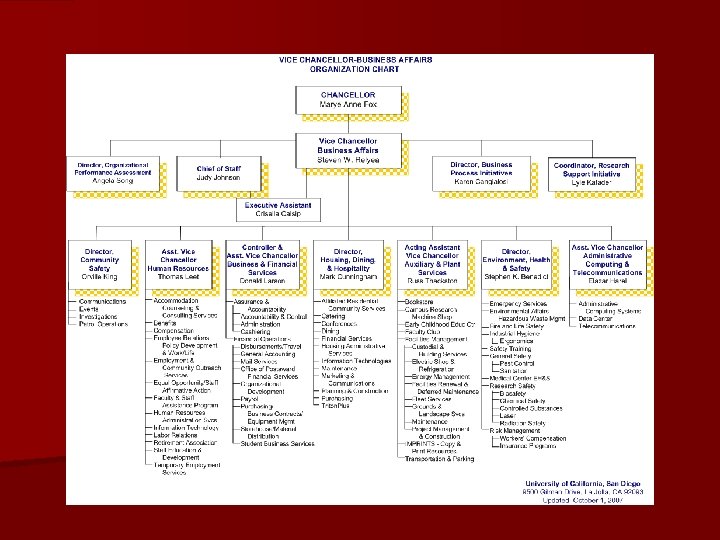
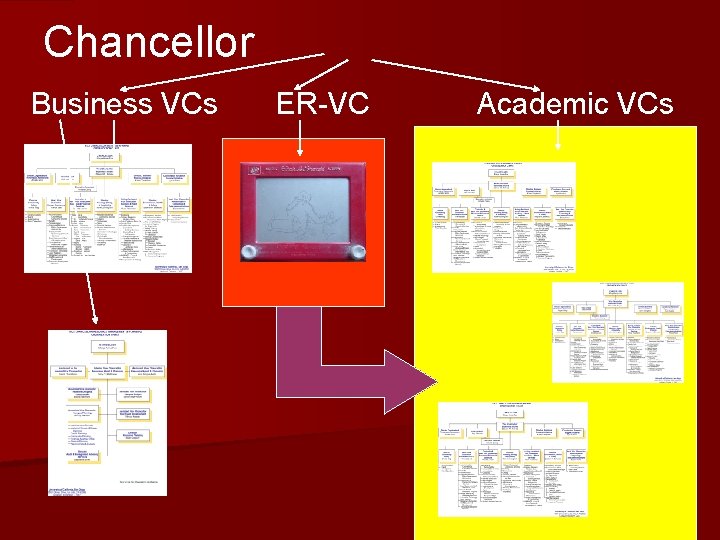
Chancellor Business VCs ER-VC Academic VCs
Obstacle 1: Development doesn’t do Infrastructure n There are historical reasons … – We’re a state university who has been funded in the past by the State… – BUT State funding continues to decline, at a time when energy prices are going through the roof… n There are structural reasons… – Funding from the State has always lagged, a particular problem when campuses are growing. . . – We’re just coming into a time when infrastructure is one of the most important elements of the university budget n No one has asked for the money… – It’s just not something we do
Possible Solution 1: Development should do Infrastructure n Stage 1: Recognize that sustainability is an incredibly high priority – For the donors, it’s about stewardship, the wise use of dollars – For students and faculty, it’s about being at a green university – For corporations, it’s everything from preparing the next generation of employees to identifying ways companies can be more effective n Stage 2: How to get there? – I believe that it takes a major meeting of the minds at the highest level of the campus – There’s some discussion at UC San Diego that we might benefit from a high-level charrette to build understanding of how you work and your constraints, and how we work and our constraints – It doesn’t matter how it happens – we all need buy-in
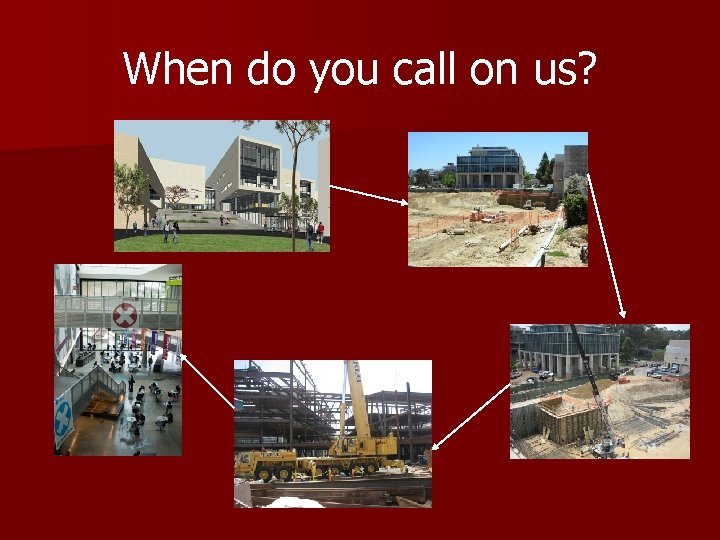
When do you call on us?
Obstacle 2: The train is always moving… n Traction is very tough while the train is in motion… n The process of cultivating donors is a long and slow one… – We have to find a way to bring the donor in early – We have to price the need in the planning stages, not the week before the building opens – You have to understand what “price” means in the context of Development
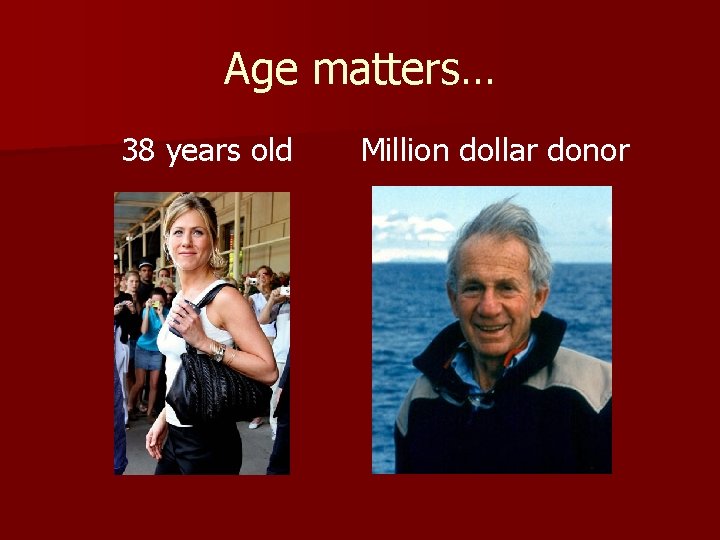
Possible Solution 2: Let Development ride the train n When I talk to a donor, I don’t seek funding for a program that starts next week … – Average time from first gift to $1 million? 13 years. – Average of multimillion donor – 70 s or 80 s; average of UCSD alumni is 38 years old. n The process of identifying opportunities has to begin at very early stages, probably not tied to specific buildings – We have to find a way to build a dialogue with the community of potential donors – And we have to think more creatively about what kind of money can have the biggest impact, and when
Age matters… 38 years old Million dollar donor
Some examples n The following are possible opportunities, not anything definitive – these are all ideas – That’s a problem in itself: I say, “What about…? ” – 1 st answer, “Where? When? Competitive bid? Grant or contract? ” – It’s a fundamental difference in approach – we in Development have to develop ideas, toss them out, bandy them around – We talk past one another rather than to one another. n The following examples come from actual companies or individuals – nothing final, just ideas
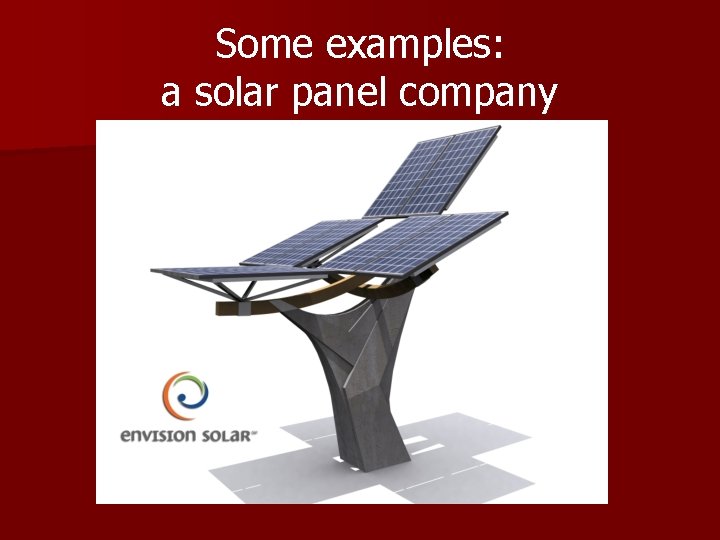
Some examples: a solar panel company
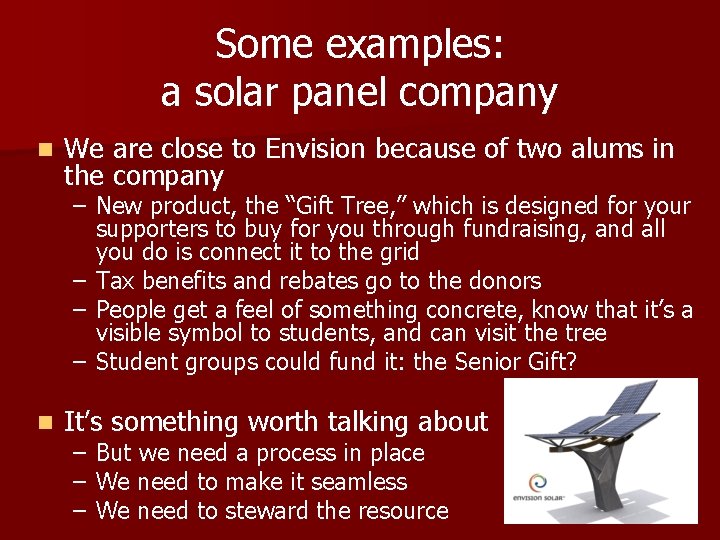
Some examples: a solar panel company n We are close to Envision because of two alums in the company – New product, the “Gift Tree, ” which is designed for your supporters to buy for you through fundraising, and all you do is connect it to the grid – Tax benefits and rebates go to the donors – People get a feel of something concrete, know that it’s a visible symbol to students, and can visit the tree – Student groups could fund it: the Senior Gift? n It’s something worth talking about – But we need a process in place – We need to make it seamless – We need to steward the resource
Some examples: a solar panel company (cont. ) n And that Senior Class Gift may be a bad idea n Cannibalizing someone else’s money is a bad idea n So we have to find new ideas… – We need to shoot for “new” money, not someone else’s money – that’s the biggest single issue we face – The Senior Class gift is an … annual … thing – So someone is already spending it. – The fastest route to failure – And then steward the resource
Some examples: a biomedical supplier n We are close to Invitrogen on the purchasing side and because it’s a major San Diego company – They asked our Purchasing people about how they could track packaging waste from arrival to disposal – At the same time, the Purchasing folks were rolling out an online system enabling smarter, greener shopping – What’s the next step? n Someone in Purchasing called me… Yay! – – We’ve connected with the local folks, and the lead Sustainability person, based out of Wisconsin Step 1 discussions have focused around the new Purchasing system so as to bundle packaging (less waste, less fuel, less cost)
Some examples: a biomedical supplier (cont. ) n Is there a way to think bigger? • • – n The company wants to track its shipments from arrival all the way to the waste stream. Invitrogen was founded by a UCSD Biology alum who is the ESI’s biggest donor – lives in Rancho Santa Fe Greenovation Forum Series: ESI’s universityindustry seminars around Sustainability It all started with Purchasing.
Some examples: a bank n Wells Fargo decided they wanted to support a twoday conference on biofuels – They provided $80, 000: $60, 000 for the conference, and another $20, 000 for discretionary uses – ESI allocated $10, 000 of the $20 K to a Sensor project – So we put Wells Fargo’s name on it, almost as an afterthought. n We made a new best friend. – Companies are looking for ways to be visible in their support for sustainability. – Wells Fargo’s money was ½ the project’s seed funding – This time, we did it on the spending side – but it’s very doable on the fundraising side, and a great strategy
Where should we go from here? Students… n Think Invitrogen: what did they want? n Information n Develop teams of students to quantify – – The waste stream from Invitrogen The waste stream from all biotechs and pharmas The waste stream from dorms – not dorm against dorm, but quantified research on how much waste is generated – Behavioral projects developing incentives to reduce waste, energy use and water use
Where should we go from here? Students… (cont. ) n Do you do just worry about your own campus? n Who’s going to set up Sustaina. Book? n Who’s going to pay? n Create value in a(n economically) sustainable way, and the money will not be a problem – – Go to campus administration for matching funds Go to local stores for matching funds Go to AS for matching funds Look to alumni – they love to do things directly supporting students, and many alumni are “green”
Where should we go from here? Campus leadership n We need to rethink our funding strategies for the campuses going forward – sustainability brings savings, but it costs money – It’s required by the State, but the State’s not giving us money – It’s not the kind of program that the Feds fund n Who’s going to pay? – It has to be a fundraising priority – Someone has to convince the Deans and academic VCs – It’s not cannibalizing – most money available for sustainability is not available for other purposes § And some sustainability is research: our Sensor network
Where should we go from here? Campus leadership (cont. ) n Our campuses are some of the largest facilities in each of our community: we should all be testbeds – Since we have significant need for benchmarking, and significant opportunities for incentive-based efforts to drive sustainability, we – Students can be tapped where they live – on campus – Students can be tapped where they study – in courses n Who’s going to pay? (2) – Not all money is perfect money. The money that funds replacement of HVAC, fume hoods and lighting, leaves some very ugly buildings on campus. – We have to find a way to balance that money with more traditional funding, to target projects earlier
Where should we go from here? Campus leadership (cont. ) n Seize the teachable moments n We don’t do that enough – Green roofs – an idea that students love – Generally a terrible idea in a campus environment: uses too much water, energy to move water, weight, etc. – But when it’s raised, it’s a great opportunity to challenge students: prove your point in the context of our built environment – Then load it up onto Sustaina. Book – We’re great inside the classroom, but student challenges should be opportunities for learning – You want a green roof? Prove it (and you’ll learn something in the process)
Where should we go from here? Development n We have three things to focus on 1. Leverage, leverage 2. Challenge, challenge 3. Seed, seed n ESI has received two major gifts, $250, 000 from a foundation, $500, 000 from an entrepreneur alum – – Almost all of the funding is being used as seed funding The Division of Biological Science’s Land-Sea Interface The Environmental Sensor Network Seed money may be the hardest to get – so seed
Where should we go from here? Development (cont. ) n Challenge money is simple – you have money and we need to use it for challenge campaigns – Don’t look at HVAC repair in an ugly building as a problem – it’s an opportunity § This is harder for the Deans: they need new buildings, too, which can only come from Development – But you can set up a challenge around anything n Leverage – Think of the Wells Fargo money: What’s the impact of what we did? More bang for their buck § Don’t just spend the money; think about it first – Think about Invitrogen: What’s the opportunity they’re creating? The opportunity to do the same for others § Every time a new opportunity arises, think: why not more?
Where should we go from here? Development (cont. ) 1. Leverage, leverage 2. Challenge, challenge 3. Seed, seed
QUESTIONS? This concludes the American Institute of Architects Continuing Education Systems Program. Office of Development, UC San Diego James T. Shea 858 -534 -8431 jtshea@ucsd. edu