
A Webbased Distributed Simulation System Christopher Taewan Ryu
A Web-based Distributed Simulation System Christopher Taewan Ryu Computer Science Department California State University, Fullerton
Overview Project background l HLA l A web-based distributed simulation l Implementation approach l Future work l

Project Background l Telecommunication Forecaster Predictor (TFP) – Performs analysis on communications between DSN sites and spacecrafts l Web-TFP (Web version of TFP) – No program installation or upgrade – No data updating and reconfiguration – No license – TFP anywhere and anytime with a browser

Architecture of Web-TFP Linux or Solaris Server Web Browser Client PHP/ JAVA Matlab CGI or DWR Apache Matlab Server TFP Matlab
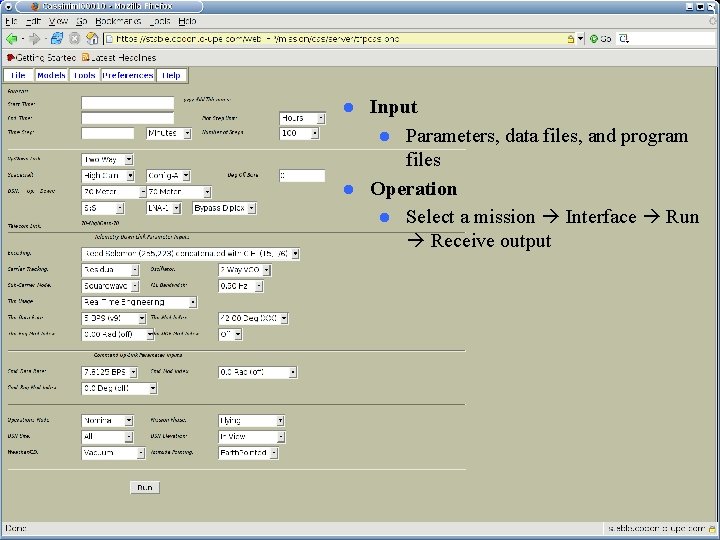
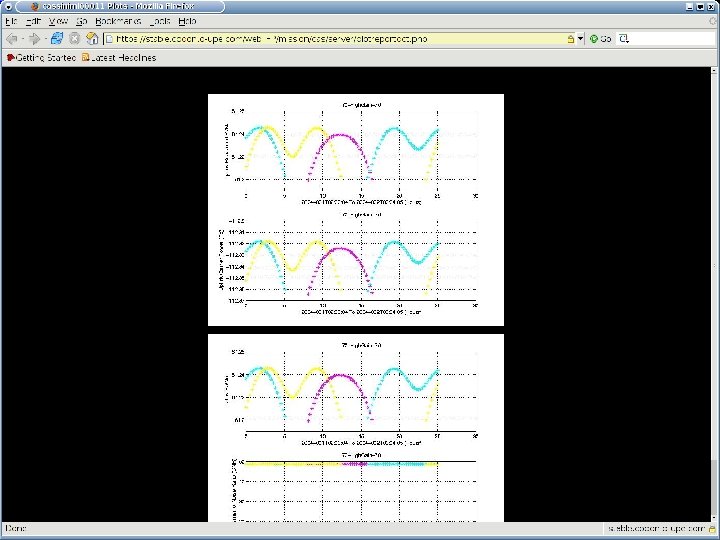
5 Input l Parameters, data files, and program files l Operation l Select a mission Interface Run Receive output l
6

7
Computer Simulation l Importance of Computer Simulation – For significant cost saving, better control and understanding of given objects and phenomenon l Defense, medical, entertainment, etc. – Important in building many mission-critical systems such as space mission and defense applications--high cost and reliability. l Challenges – Developing a realistic complex simulation system requires tremendous amount of time and effort – Many simulation systems in different organizations (e. g. , Do. D, NASA have developed various simulation systems in the past). – Interoperability among different systems – Reusability
High Level Architecture (HLA) l First developed by the Do. D – To support interoperability and reuse l HLA has been standardized for distributed computer simulations under IEEE Standard 1516. – Any system that conform to the standard can work with any HLA implementation based on the same standard l Several open-source implementations of HLA such as Open HLA (OHLA) and Portico are available (in Java, C++). – Portico fully conform to IEEE Standard 1516.
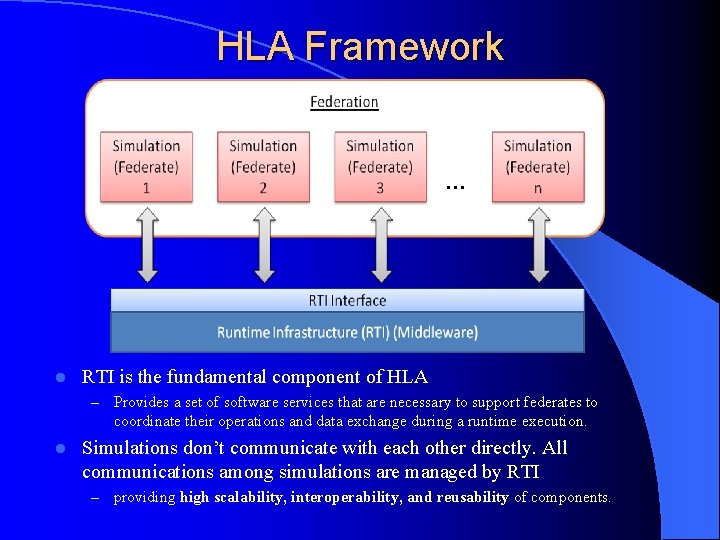
HLA Framework … l RTI is the fundamental component of HLA – l Provides a set of software services that are necessary to support federates to coordinate their operations and data exchange during a runtime execution. Simulations don’t communicate with each other directly. All communications among simulations are managed by RTI – providing high scalability, interoperability, and reusability of components.
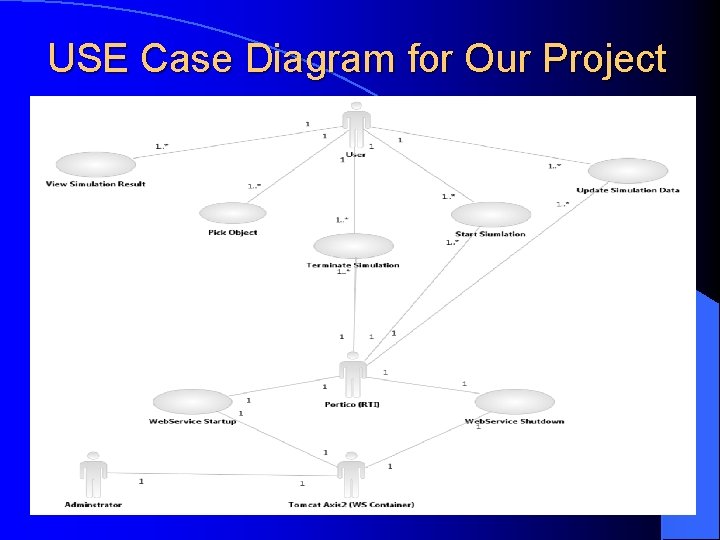
USE Case Diagram for Our Project
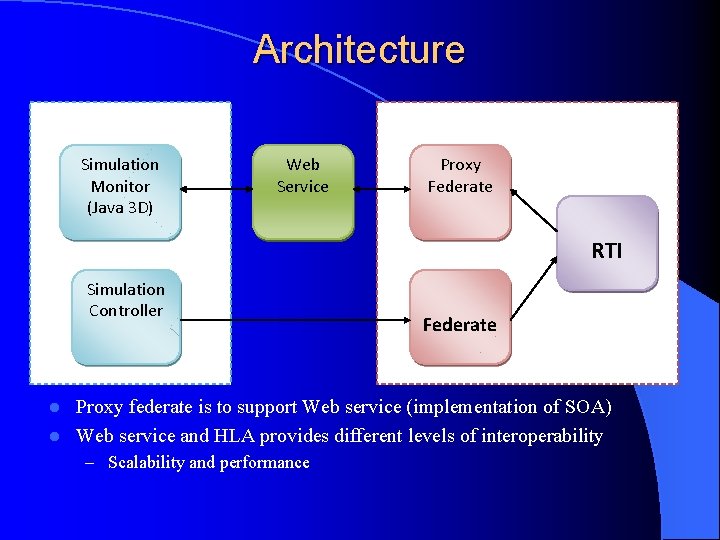
Architecture GUI (Java Web Start) Simulation Monitor (Java 3 D) HLA Web Service Proxy Federate RTI Simulation Controller Federate Proxy federate is to support Web service (implementation of SOA) l Web service and HLA provides different levels of interoperability l – Scalability and performance

Deployment Environment
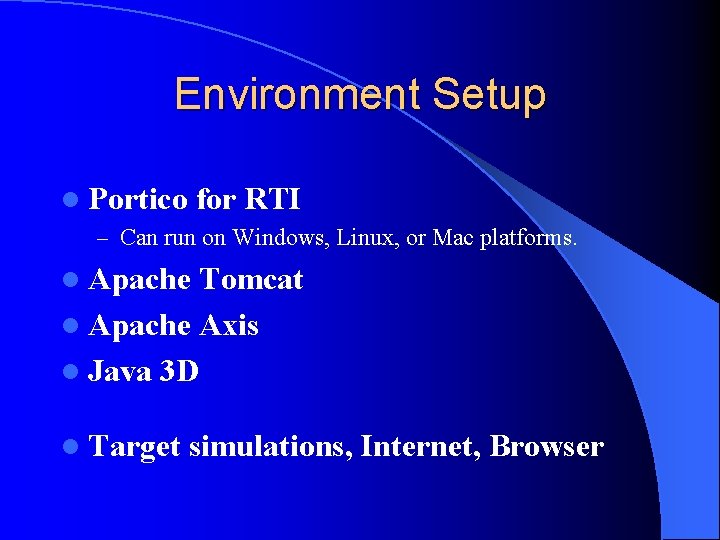
Environment Setup l Portico for RTI – Can run on Windows, Linux, or Mac platforms. l Apache Tomcat l Apache Axis l Java 3 D l Target simulations, Internet, Browser

Detailed Deployment
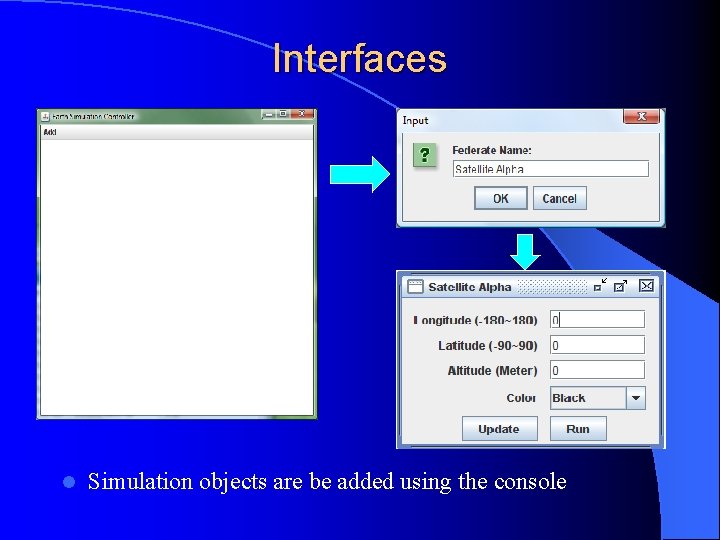
Interfaces l Simulation objects are be added using the console
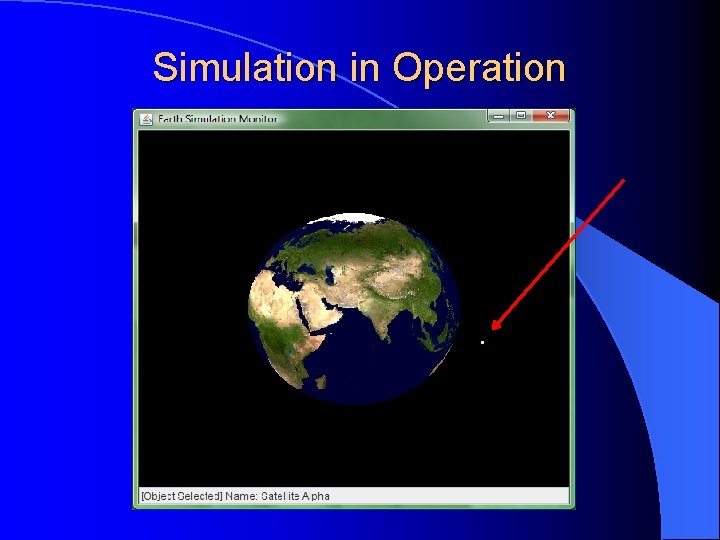
Simulation in Operation
Advantages and Disadvantages of Web Services in HLA l Advantages – Substantially larger set of development environment and languages (that can be supported by HLA) – Easier to deploy HLA federates in WAN environment using HTTP protocol (stateless) – Larger scale of interoperability – Can you web browser as interface (all advantages of web browser)—particularly important to our project l Disadvantages – Lower performance than C++ or Java API – May require additional knowledge on Web service and HTTP
Future Work l Migrate the Web-TFP or other related systems to the HLA-based platform l Provide 3 D interfaces for users for better interaction

Thank you.
- Slides: 20