
A Volunteer Name three functions of the skin
- Slides: 34
A Volunteer…
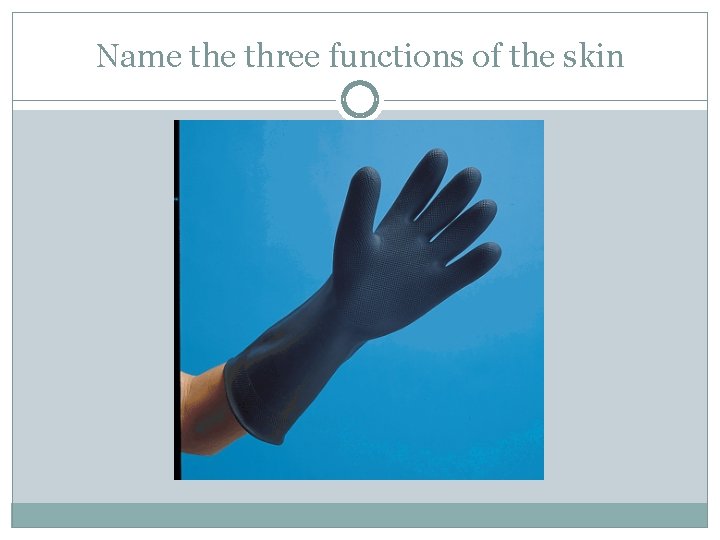
Name three functions of the skin
Name three functions of the skin Protection
Name three functions of the skin Protection Receptors perceive the environment
Name three functions of the skin Protection Receptors perceive the environment Temperature Regulation
Integumentary System Explain the function
Integumentary System Skin is a multilayered organ that covers and protects the body
The Structure of the Skin The epidermis
The Structure of the Skin The epidermis The dermis
The Structure of the Skin The epidermis The subcutaneous
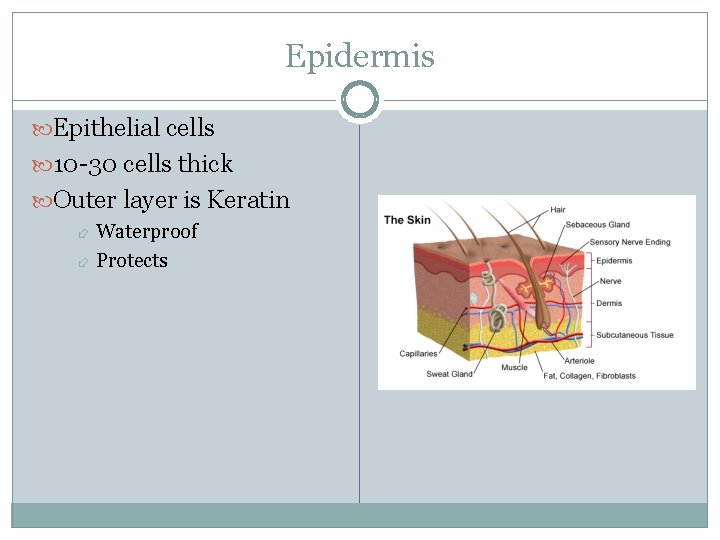
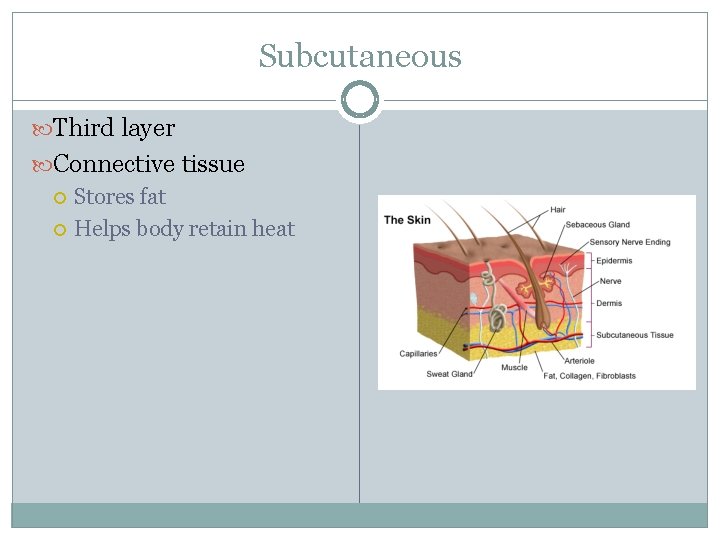
Epidermis Epithelial cells 10 -30 cells thick Outer layer is Keratin Waterproof Protects
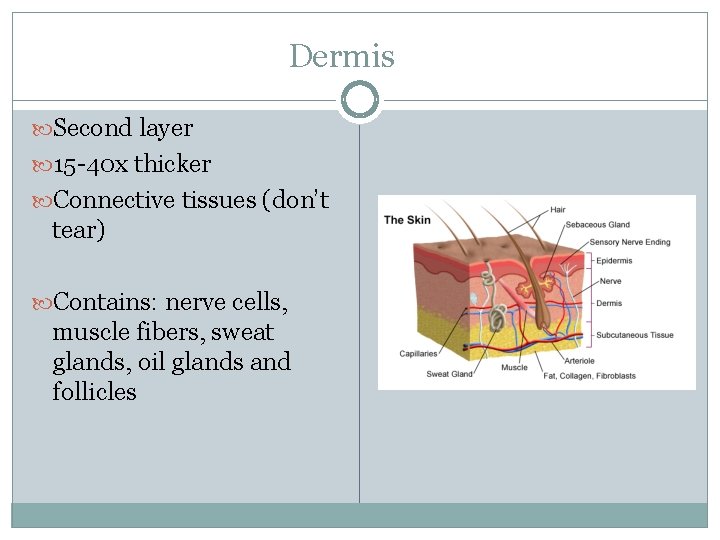
Dermis Second layer 15 -40 x thicker Connective tissues (don’t tear) Contains: nerve cells, muscle fibers, sweat glands, oil glands and follicles
Subcutaneous Third layer Connective tissue Stores fat Helps body retain heat
The Skeletal System Chapter 32. 2 The function of the skeletal system
The Skeleton System Provides a framework Protects internal organs
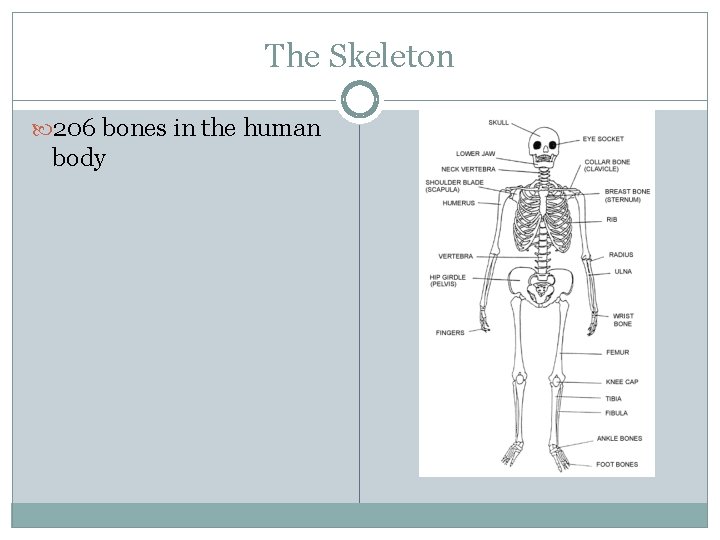
The Skeleton 206 bones in the human body
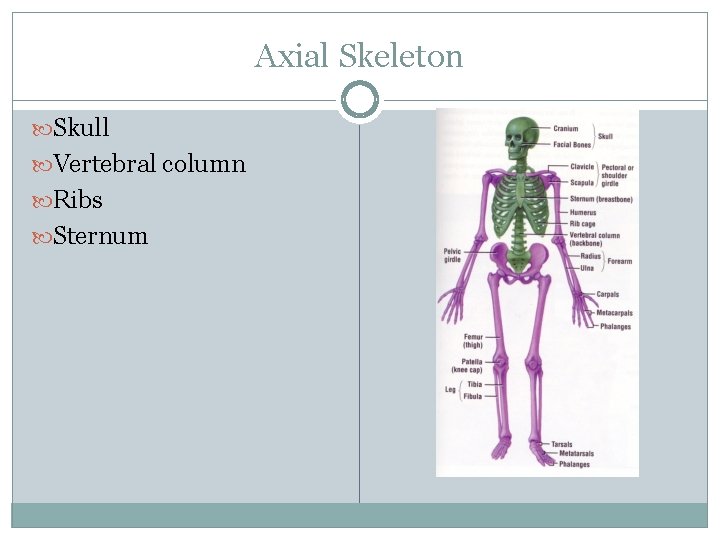
Axial Skeleton Skull Vertebral column Ribs Sternum
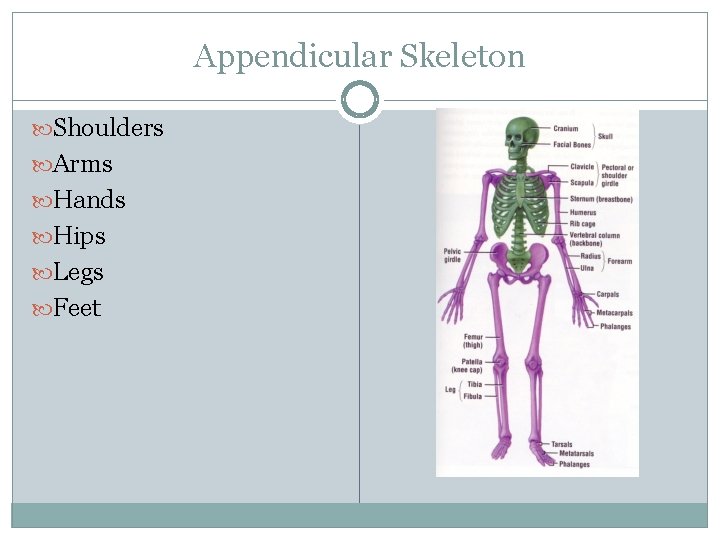
Appendicular Skeleton Shoulders Arms Hands Hips Legs Feet
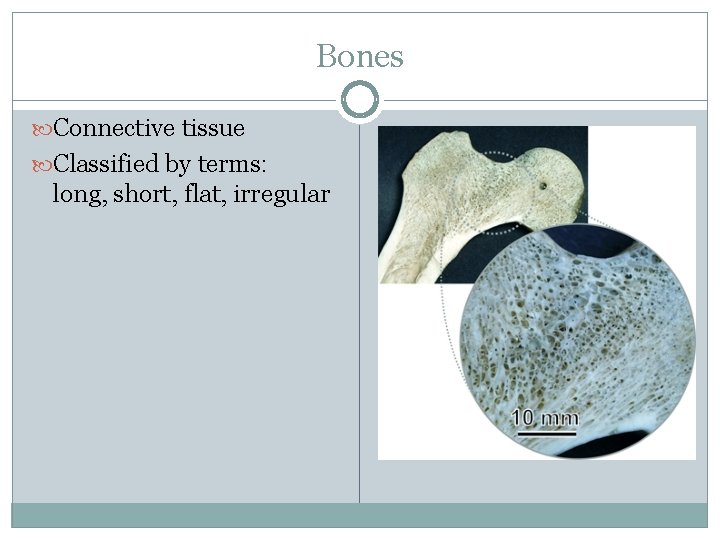
Bones Connective tissue Classified by terms: long, short, flat, irregular
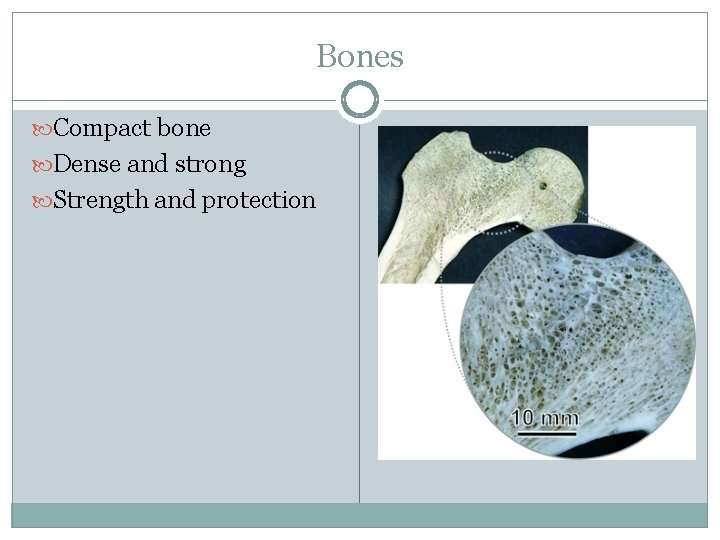
Bones Compact bone Dense and strong Strength and protection
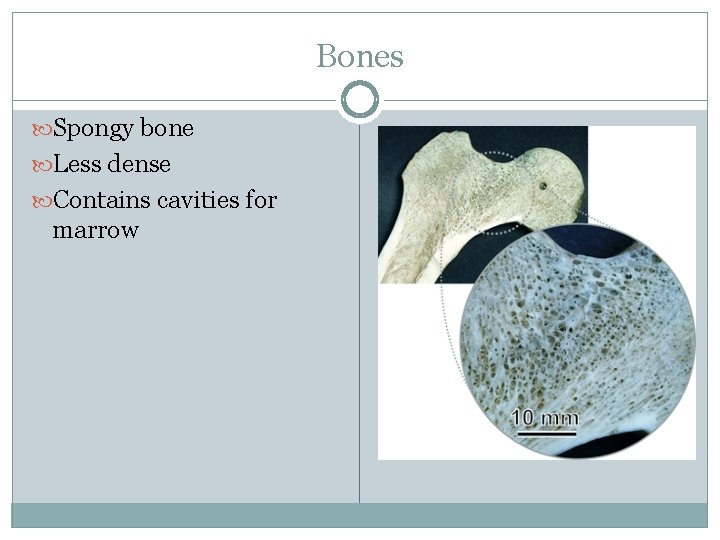
Bones Spongy bone Less dense Contains cavities for marrow
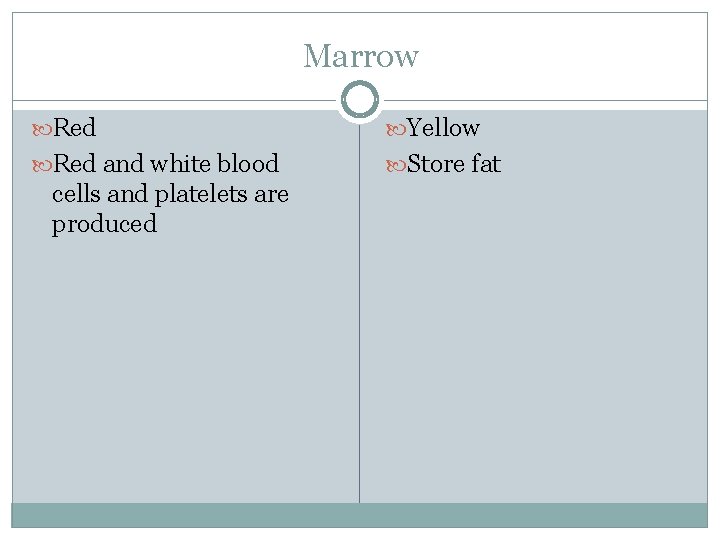
Marrow Red Yellow Red and white blood Store fat cells and platelets are produced
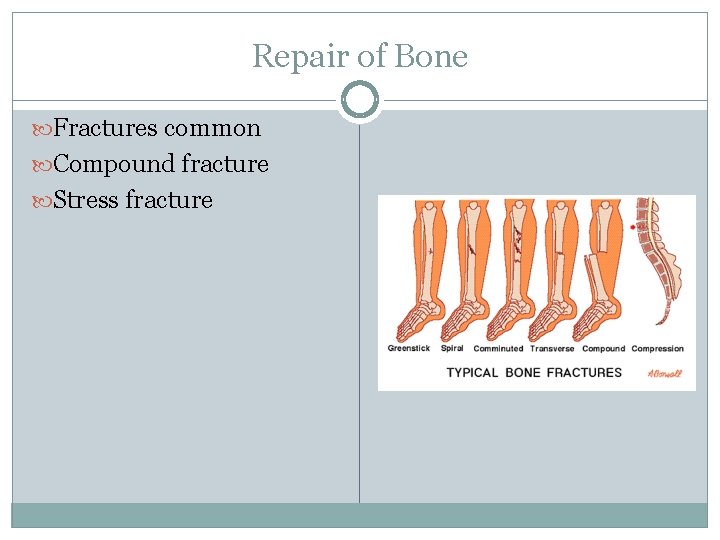
Repair of Bone Fractures common Compound fracture Stress fracture
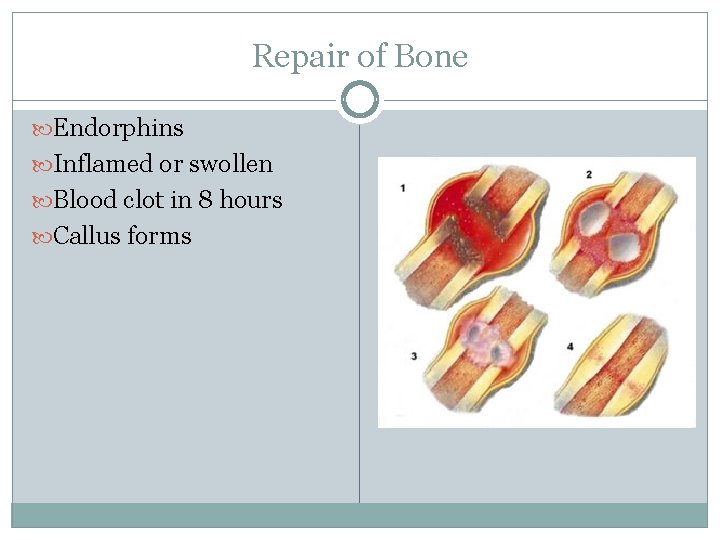
Repair of Bone Endorphins Inflamed or swollen Blood clot in 8 hours Callus forms
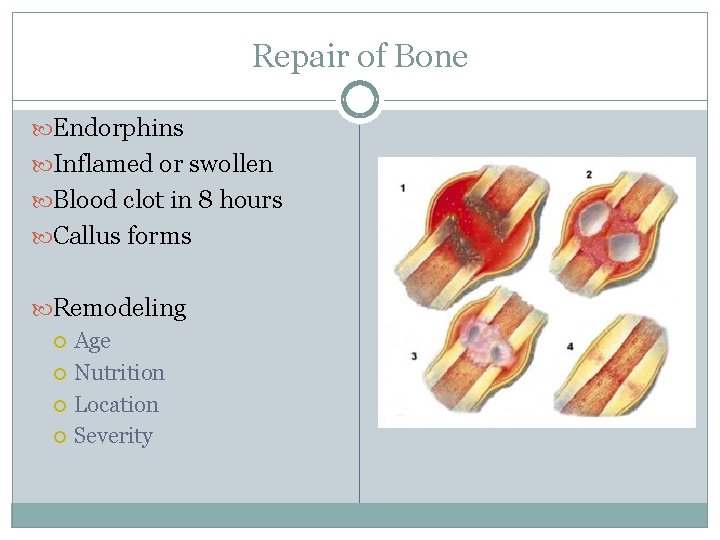
Repair of Bone Endorphins Inflamed or swollen Blood clot in 8 hours Callus forms Remodeling Age Nutrition Location Severity
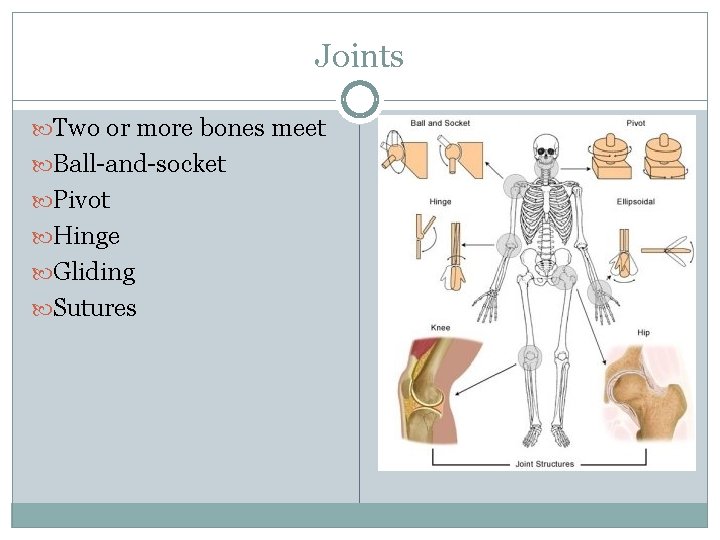
Joints Two or more bones meet Ball-and-socket Pivot Hinge Gliding Sutures
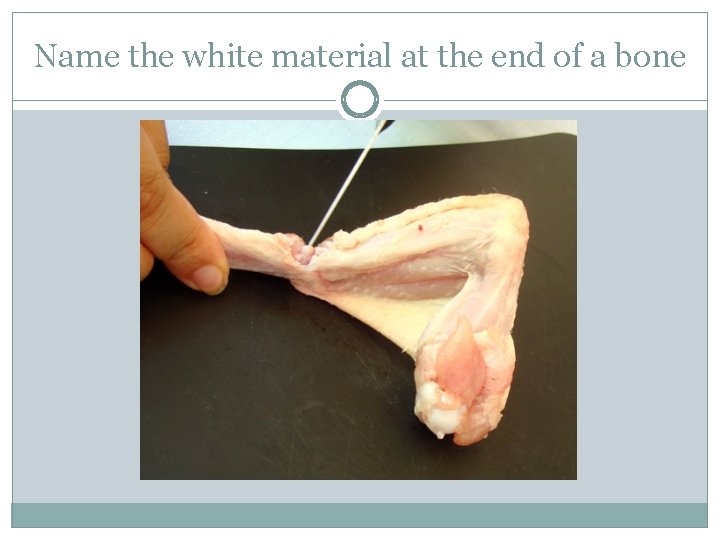
Name the white material at the end of a bone
The Muscular System Three types of muscles Smooth Cardiac Striated
Smooth muscle Involuntary Can’t be controlled Esophagus, stomach and intestines
Cardiac Muscle Heart muscle Involuntary Network or web
Striated Muscle Skeleton muscles Voluntary Tendons – tough bands of connective tissue Connects to bone
ATP Produced in mitochondria contraction of muscles relaxation of muscles
Fast-twitch muscles Rapid short movements Fatigue easily Short burst of energy