
A Unified Model for GammaRay Bursts UltraRelativistic Jets
A Unified Model for Gamma-Ray Bursts Ultra-Relativistic Jets in July 11 -15, 2005 at Astrophysics Banff Kenji Toma (Kyoto Univ. ) Ryo Yamazaki (Osaka Univ. ) Kunihito Ioka (Kyoto Univ. ) Takashi Nakamura (Kyoto Univ. )
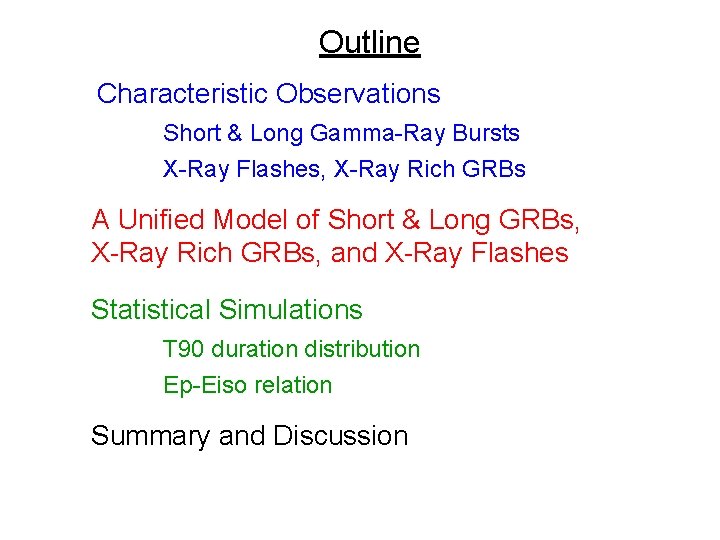
Outline Characteristic Observations Short & Long Gamma-Ray Bursts X-Ray Flashes, X-Ray Rich GRBs A Unified Model of Short & Long GRBs, X-Ray Rich GRBs, and X-Ray Flashes Statistical Simulations T 90 duration distribution Ep-Eiso relation Summary and Discussion
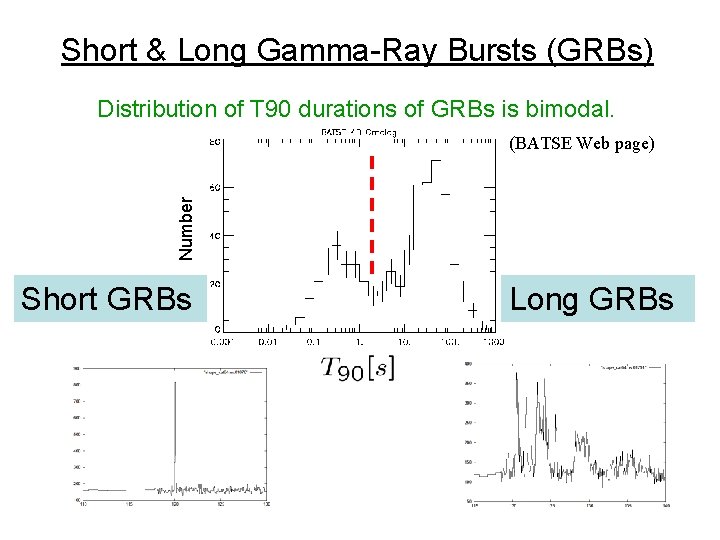
Short & Long Gamma-Ray Bursts (GRBs) Distribution of T 90 durations of GRBs is bimodal. Number (BATSE Web page) Short GRBs Long GRBs
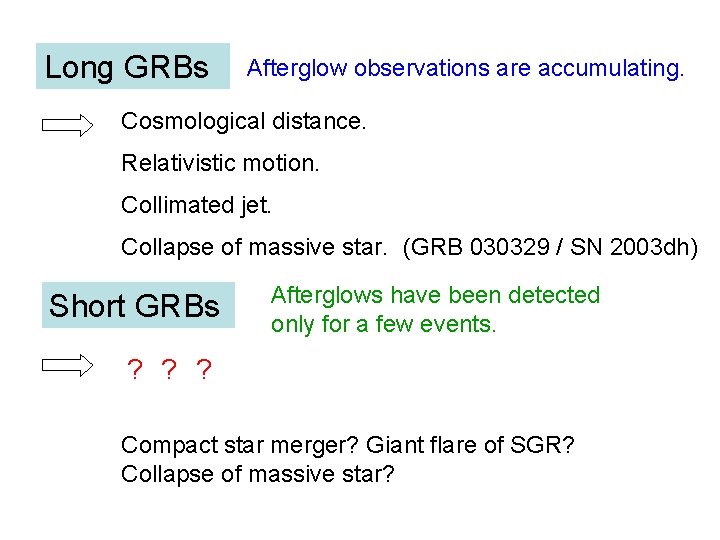
Long GRBs Afterglow observations are accumulating. Cosmological distance. Relativistic motion. Collimated jet. Collapse of massive star. (GRB 030329 / SN 2003 dh) Short GRBs Afterglows have been detected only for a few events. ? ? ? Compact star merger? Giant flare of SGR? Collapse of massive star?
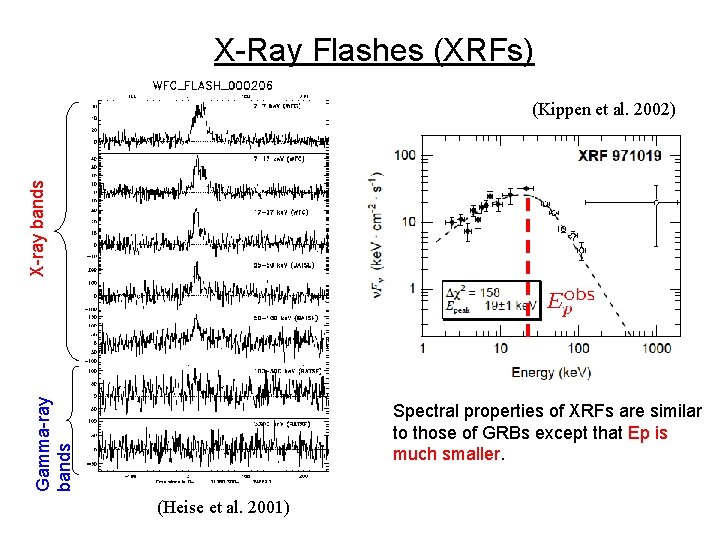
X-Ray Flashes (XRFs) Gamma-ray bands X-ray bands (Kippen et al. 2002) Spectral properties of XRFs are similar to those of GRBs except that Ep is much smaller. (Heise et al. 2001)
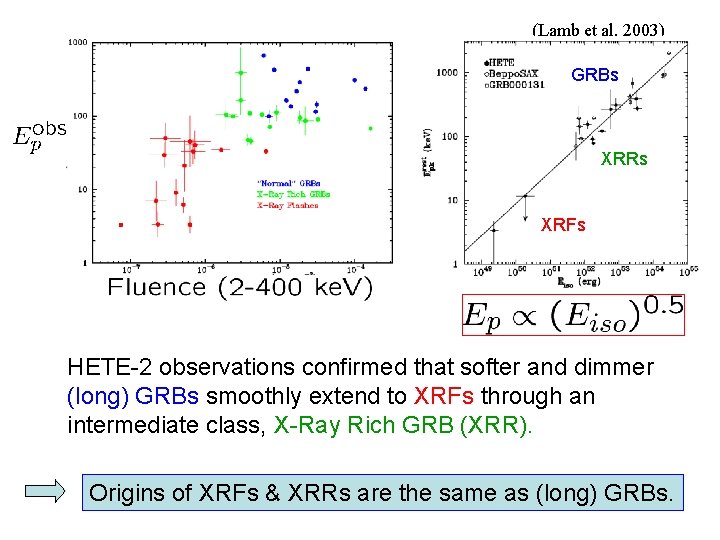
(Lamb et al. 2003) GRBs XRRs XRFs HETE-2 observations confirmed that softer and dimmer (long) GRBs smoothly extend to XRFs through an intermediate class, X-Ray Rich GRB (XRR). Origins of XRFs & XRRs are the same as (long) GRBs.
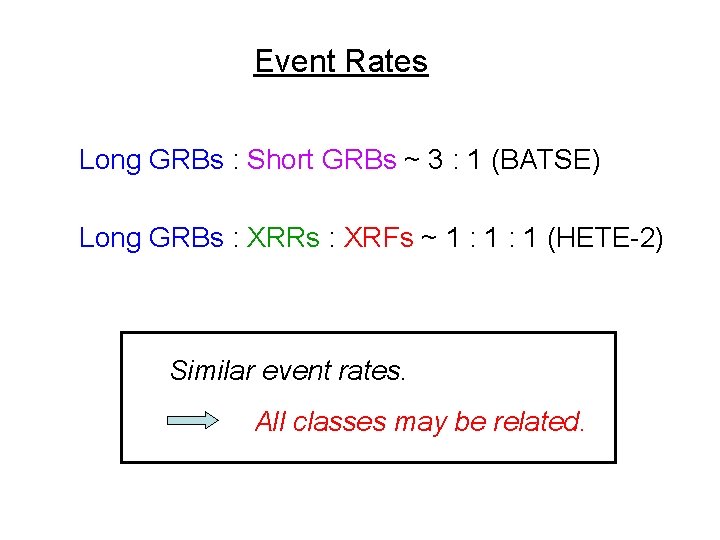
Event Rates Long GRBs : Short GRBs ~ 3 : 1 (BATSE) Long GRBs : XRRs : XRFs ~ 1 : 1 (HETE-2) Similar event rates. All classes may be related.
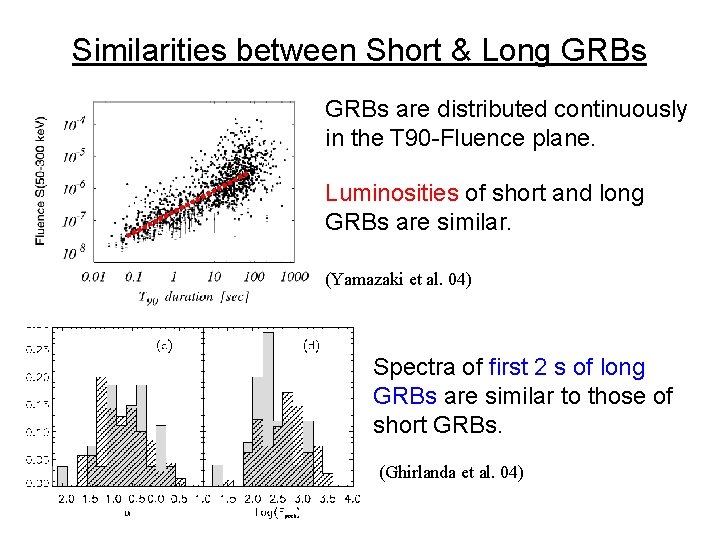
Similarities between Short & Long GRBs are distributed continuously in the T 90 -Fluence plane. Luminosities of short and long GRBs are similar. (Yamazaki et al. 04) Spectra of first 2 s of long GRBs are similar to those of short GRBs. (Ghirlanda et al. 04)
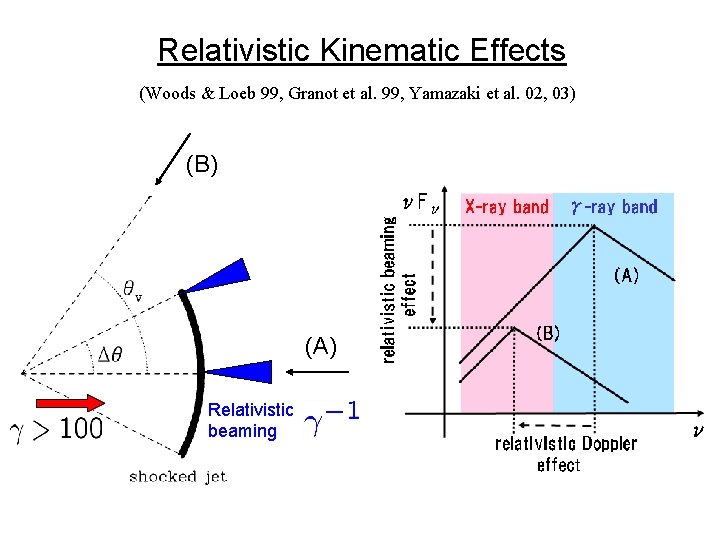
Relativistic Kinematic Effects (Woods & Loeb 99, Granot et al. 99, Yamazaki et al. 02, 03) (B) (A) Relativistic beaming
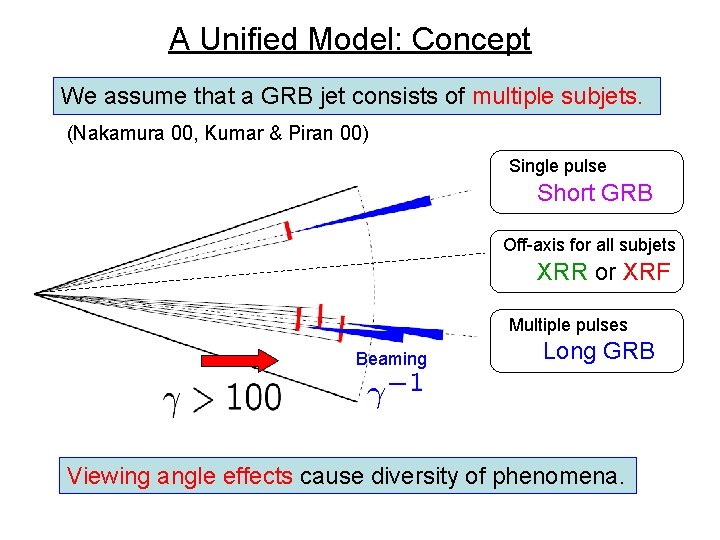
A Unified Model: Concept We assume that a GRB jet consists of multiple subjets. (Nakamura 00, Kumar & Piran 00) Single pulse Short GRB Off-axis for all subjets XRR or XRF Multiple pulses Beaming Long GRB Viewing angle effects cause diversity of phenomena.
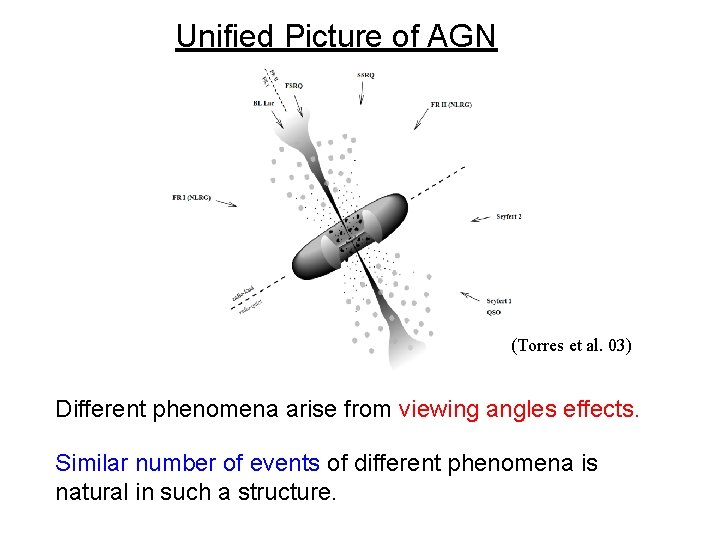
Unified Picture of AGN (Torres et al. 03) Different phenomena arise from viewing angles effects. Similar number of events of different phenomena is natural in such a structure.
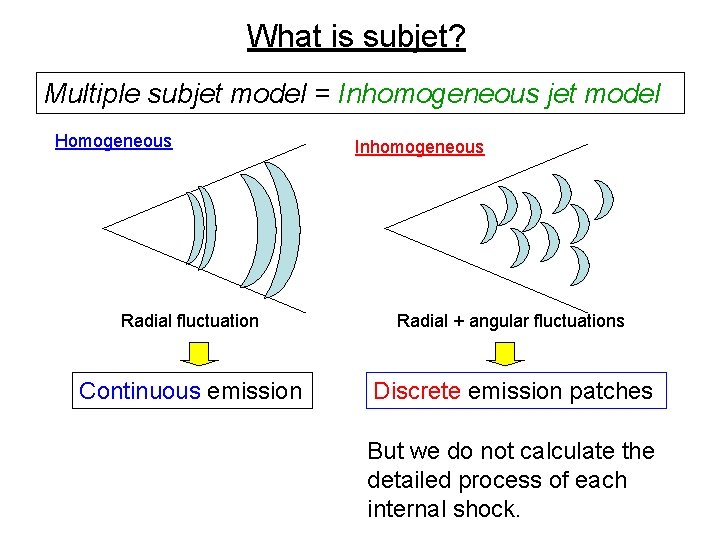
What is subjet? Multiple subjet model = Inhomogeneous jet model Homogeneous Inhomogeneous Radial fluctuation Radial + angular fluctuations Continuous emission Discrete emission patches But we do not calculate the detailed process of each internal shock.
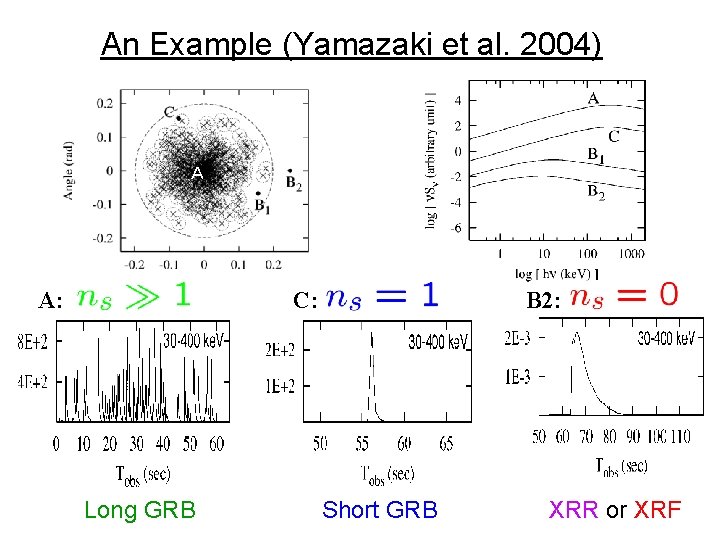
An Example (Yamazaki et al. 2004) A A: C: Long GRB B 2: Short GRB XRR or XRF
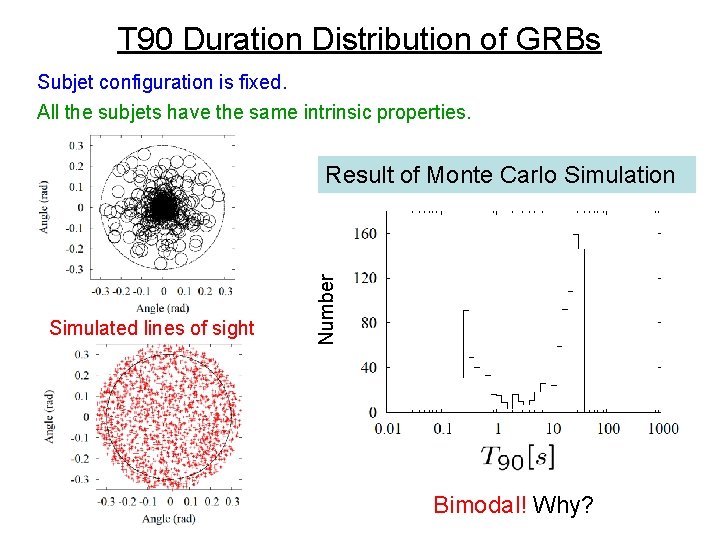
T 90 Duration Distribution of GRBs Subjet configuration is fixed. All the subjets have the same intrinsic properties. Simulated lines of sight Number Result of Monte Carlo Simulation Bimodal! Why?
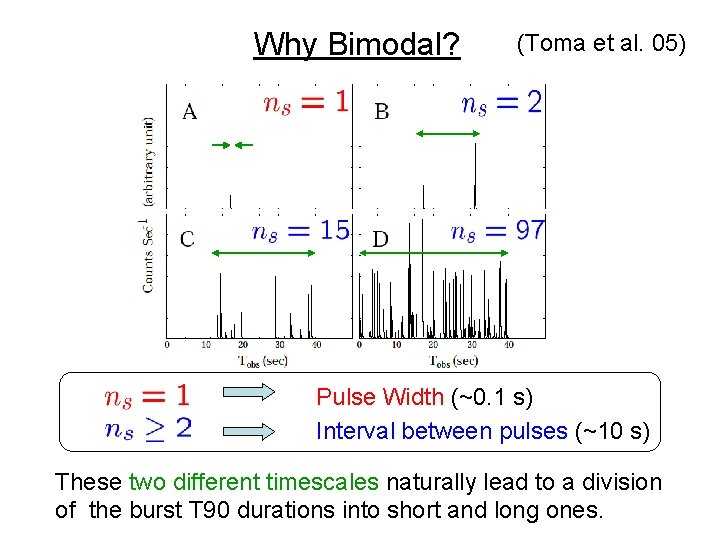
Why Bimodal? (Toma et al. 05) Pulse Width (~0. 1 s) Interval between pulses (~10 s) These two different timescales naturally lead to a division of the burst T 90 durations into short and long ones.
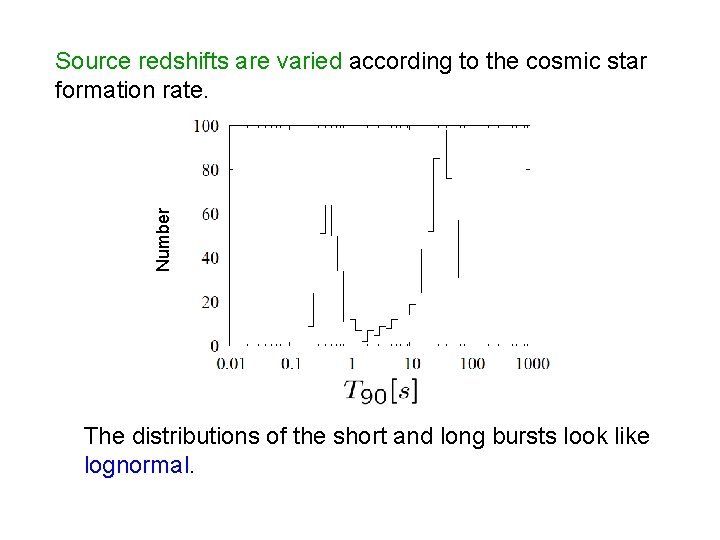
Number Source redshifts are varied according to the cosmic star formation rate. The distributions of the short and long bursts look like lognormal.
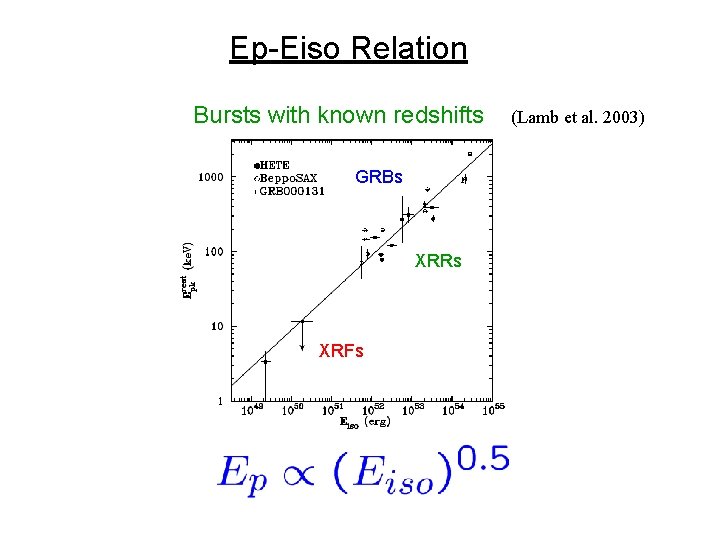
Ep-Eiso Relation Bursts with known redshifts GRBs XRRs XRFs (Lamb et al. 2003)
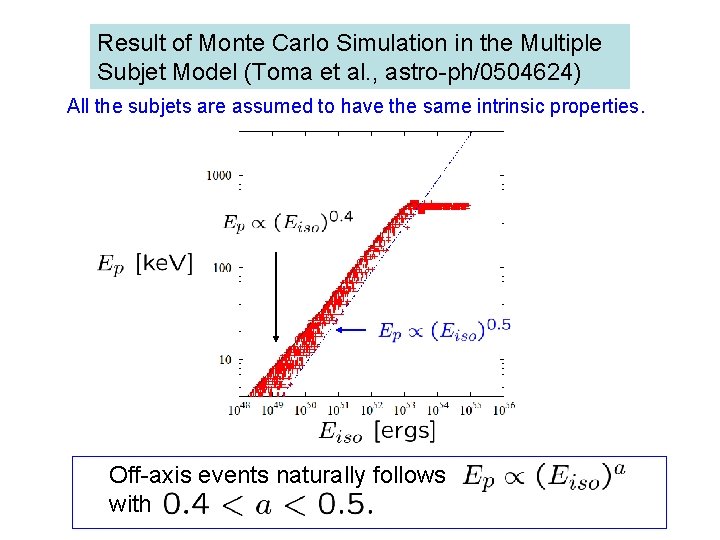
Result of Monte Carlo Simulation in the Multiple Subjet Model (Toma et al. , astro-ph/0504624) All the subjets are assumed to have the same intrinsic properties. Off-axis events naturally follows with
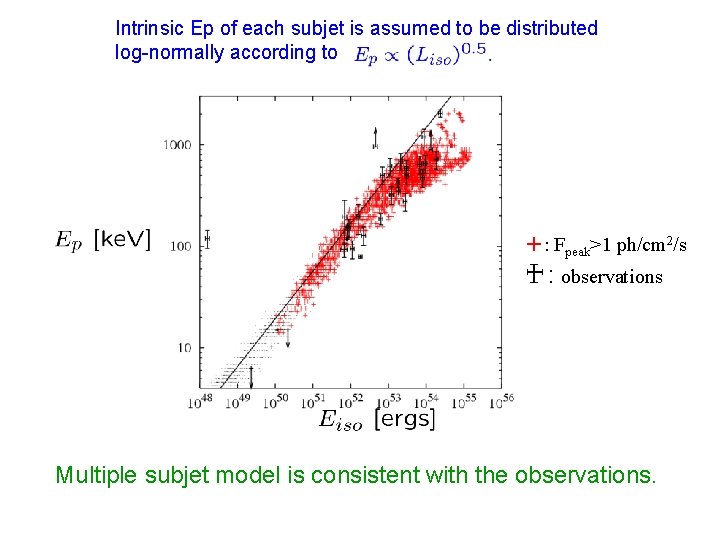
Intrinsic Ep of each subjet is assumed to be distributed log-normally according to +: Fpeak>1 ph/cm 2/s I I : observations Multiple subjet model is consistent with the observations.
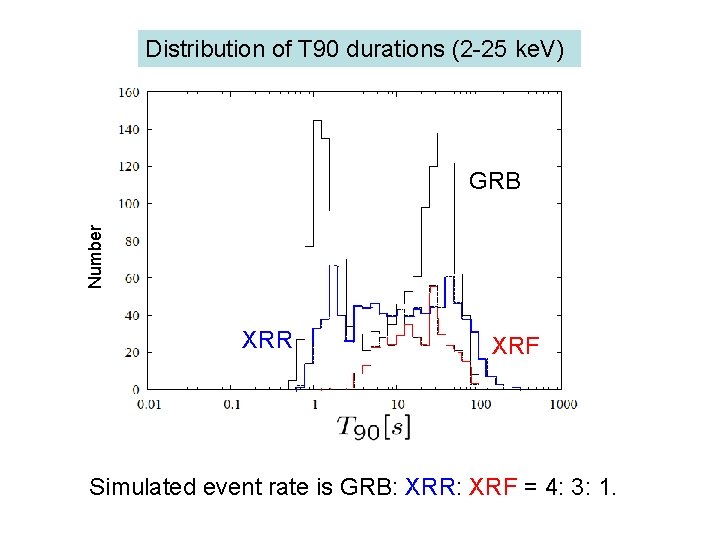
Distribution of T 90 durations (2 -25 ke. V) Number GRB XRR XRF Simulated event rate is GRB: XRR: XRF = 4: 3: 1.
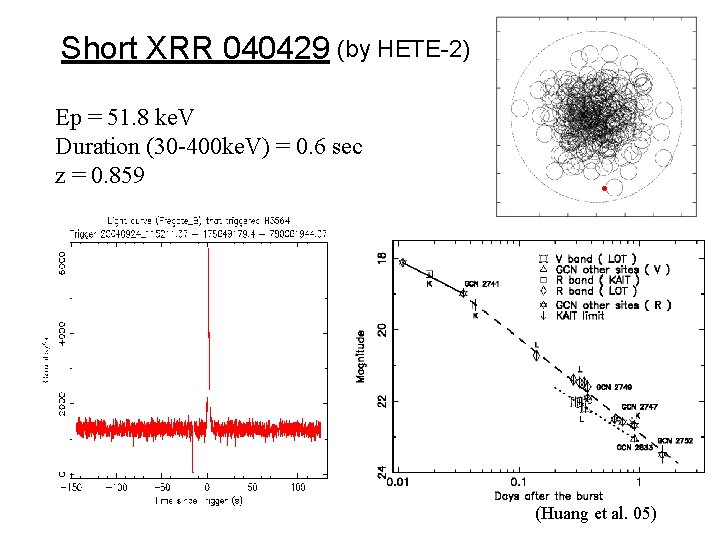
Short XRR 040429 (by HETE-2) Ep = 51. 8 ke. V Duration (30 -400 ke. V) = 0. 6 sec z = 0. 859 . (Huang et al. 05)
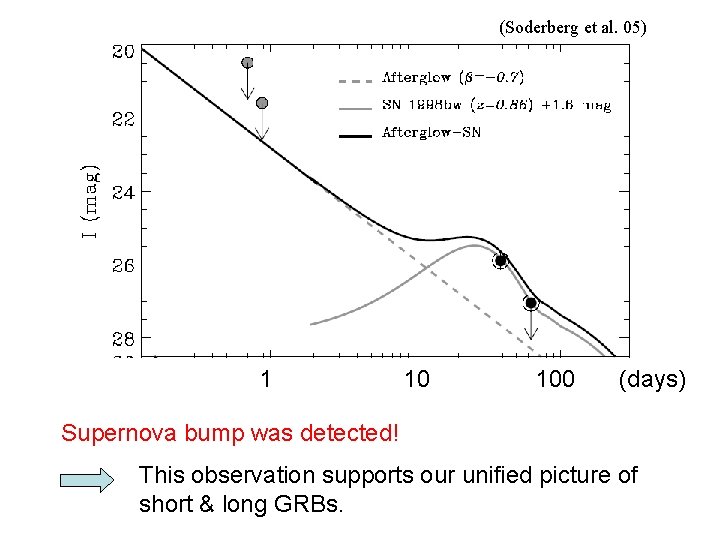
(Soderberg et al. 05) 1 10 100 (days) Supernova bump was detected! This observation supports our unified picture of short & long GRBs.
Summary and Discussion We propose a unified model of short and long GRBs, X-ray rich GRBs, and X-ray flashes. The results of statistical simulations of our unified model are consistent with the observations. We argue that the origin of the short GRBs is the same as that of long GRBs, and predict that supernova bumps appear from afterglows of short GRBs.
- Slides: 23