
A Unified Front Understanding Holistic Student Support from

- Slides: 35
“A Unified Front”: Understanding Holistic Student Support from Multiple Viewpoints Richard Woodfield, Zane State College, Provost & Chief Academic Officer Serena Klempin, CCRC, Research Associate II Lauren Pellegrino, CCRC, Senior Research Associate Tatiana Velasco, CCRC, Graduate Research Assistant
Purpose • Examine how technology-mediated advising can be used to provide holistic student support using multiple viewpoints: • Qualitative data: Factors that promote the successful adoption of technology-mediated advising redesign as well as challenges • Quantitative data: Trends in student outcomes before and after implementing technology-mediated advising redesign • Case study: Technology-mediated advising redesign at Zane State
Agenda • Welcome and introductions (5 minutes) • Technology-mediated advising for holistic student support (5 minutes) • Overview of CCRC fieldwork and research (5 minutes) • Qualitative research findings (5 minutes) • Quantitative analysis of key performance indicators (KPIs) (5 minutes) • Technology-mediated advising redesign at Zane State (20 minutes) • Discussion and Q & A (10 minutes)
About CCRC has been a leader in the field of community college research and reform for over 20 years. Our work provides a foundation for innovations in policy and practice that help give every community college student the best chance of success. Our areas of research include: • • College readiness and dual enrollment programs, and the transition from high school to college Developmental education and adult basic skills Non-academic support services, financial aid, and student engagement Online education and instructional technology Student persistence and completion, and transfer to four-year colleges Guided pathways, institutional reform, and performance funding Workforce education and training and the economic returns to higher education
Technology-Mediated Advising for Holistic Student Support
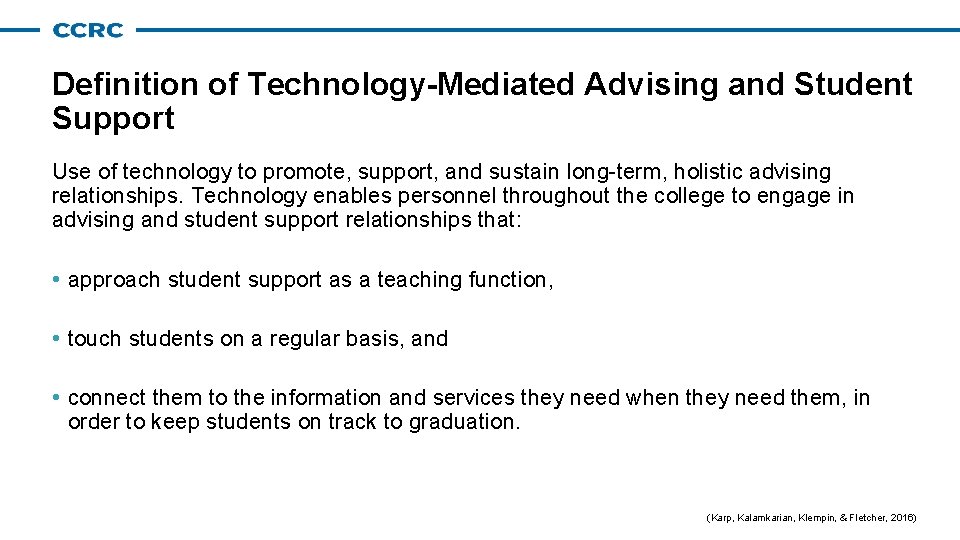
Definition of Technology-Mediated Advising and Student Support Use of technology to promote, support, and sustain long-term, holistic advising relationships. Technology enables personnel throughout the college to engage in advising and student support relationships that: • approach student support as a teaching function, • touch students on a regular basis, and • connect them to the information and services they need when they need them, in order to keep students on track to graduation. (Karp, Kalamkarian, Klempin, & Fletcher, 2016)
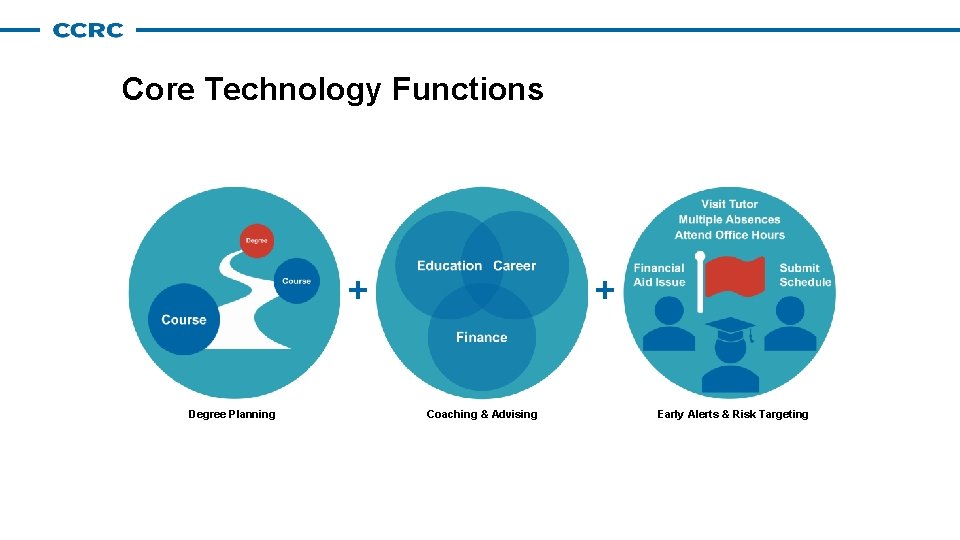
Core Technology Functions + Degree Planning + Coaching & Advising Early Alerts & Risk Targeting
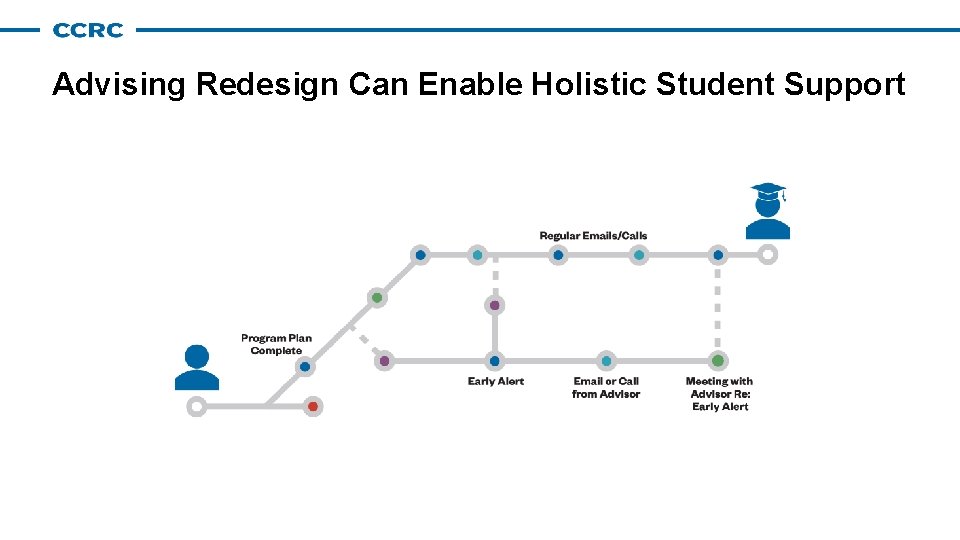
Advising Redesign Can Enable Holistic Student Support
Activity: Audience Survey
Which aspects of technology-mediated advising reforms most interest you? • Go to menti. com • Enter code 48 37 95
CCRC Fieldwork and Research
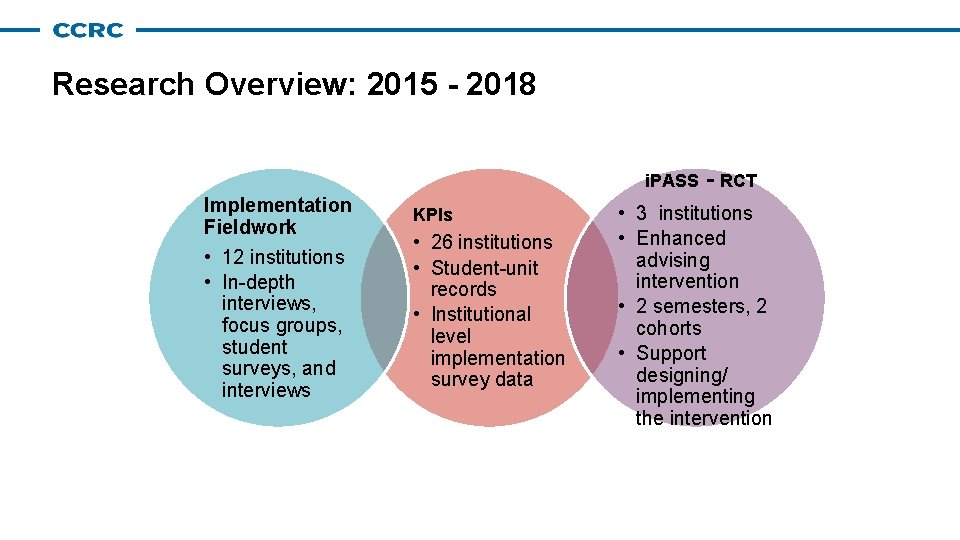
Research Overview: 2015 - 2018 i. PASS - RCT Implementation Fieldwork • 12 institutions • In-depth interviews, focus groups, student surveys, and interviews KPIs • 26 institutions • Student-unit records • Institutional level implementation survey data • 3 institutions • Enhanced advising intervention • 2 semesters, 2 cohorts • Support designing/ implementing the intervention
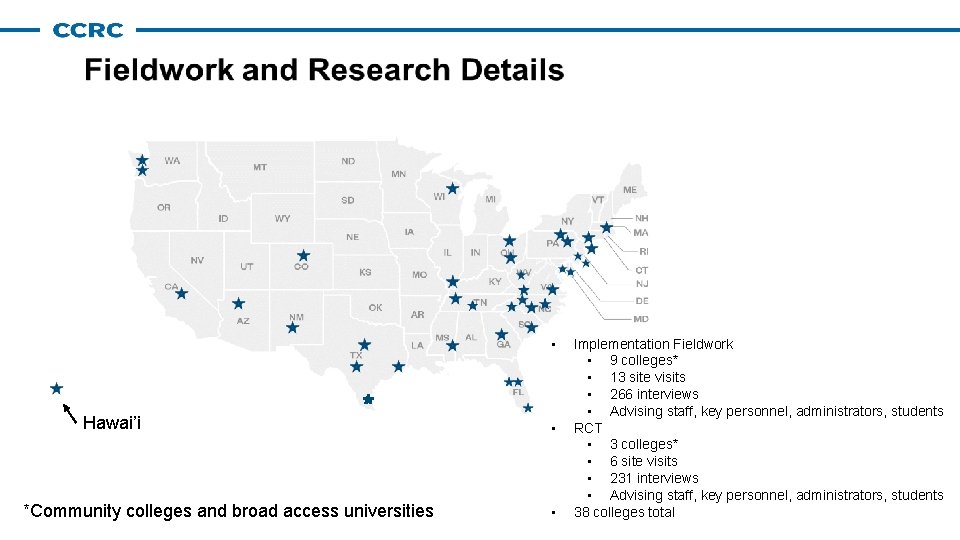
• Hawai’i *Community colleges and broad access universities • • Implementation Fieldwork • 9 colleges* • 13 site visits • 266 interviews • Advising staff, key personnel, administrators, students RCT • 3 colleges* • 6 site visits • 231 interviews • Advising staff, key personnel, administrators, students 38 colleges total
Qualitative Research Findings
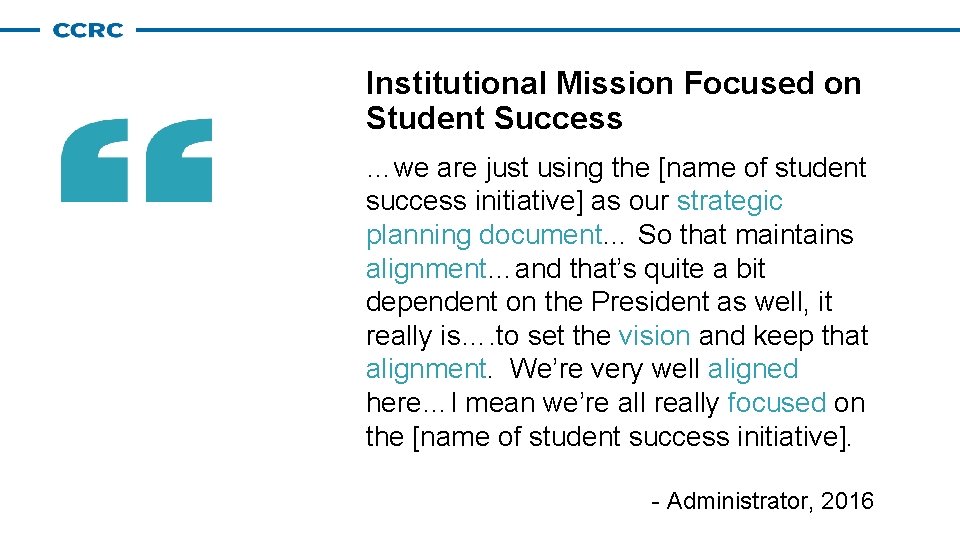
Institutional Mission Focused on Student Success …we are just using the [name of student success initiative] as our strategic planning document… So that maintains alignment…and that’s quite a bit dependent on the President as well, it really is…. to set the vision and keep that alignment. We’re very well aligned here…I mean we’re all really focused on the [name of student success initiative]. - Administrator, 2016
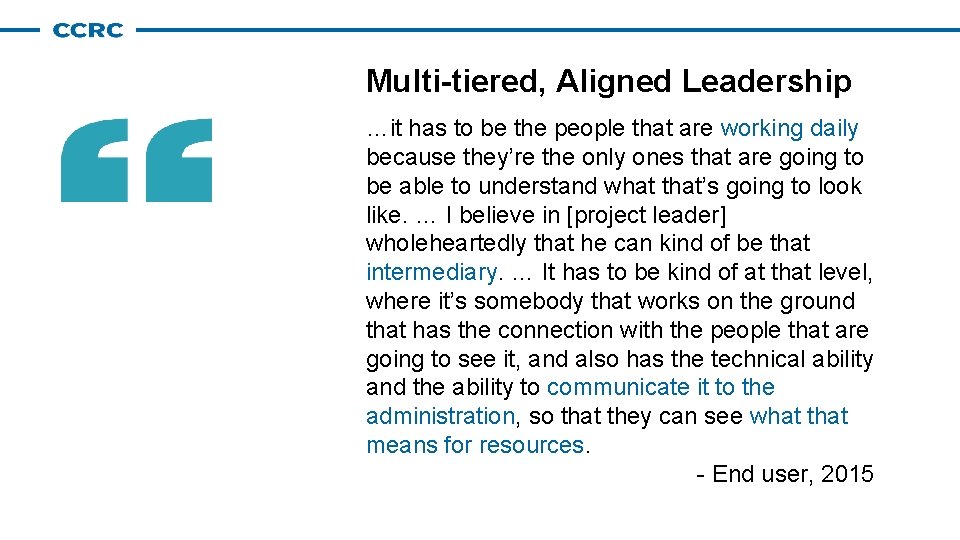
Multi-tiered, Aligned Leadership …it has to be the people that are working daily because they’re the only ones that are going to be able to understand what that’s going to look like. … I believe in [project leader] wholeheartedly that he can kind of be that intermediary. … It has to be kind of at that level, where it’s somebody that works on the ground that has the connection with the people that are going to see it, and also has the technical ability and the ability to communicate it to the administration, so that they can see what that means for resources. - End user, 2015
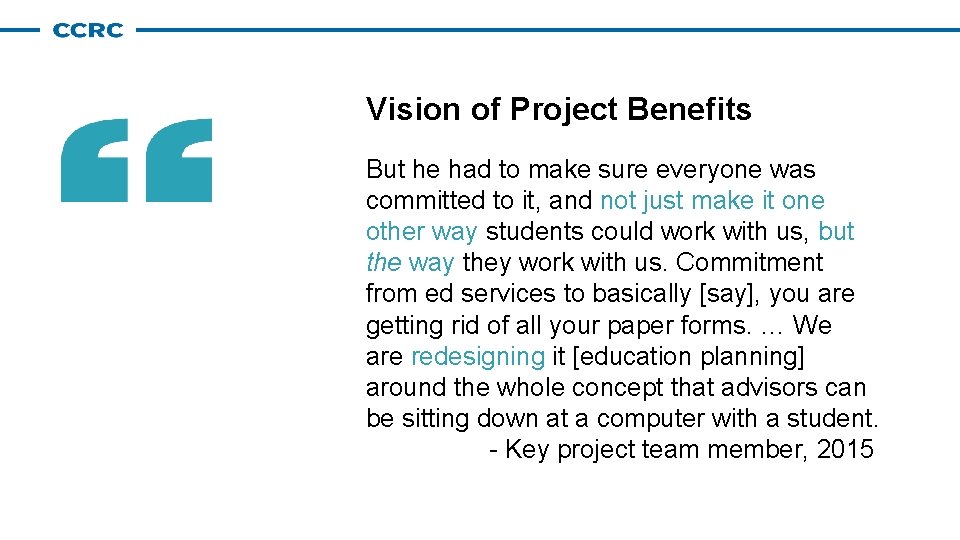
Vision of Project Benefits But he had to make sure everyone was committed to it, and not just make it one other way students could work with us, but the way they work with us. Commitment from ed services to basically [say], you are getting rid of all your paper forms. … We are redesigning it [education planning] around the whole concept that advisors can be sitting down at a computer with a student. - Key project team member, 2015
Compatibility of New and Existing Technologies Well I think that they need to see how it connects with their current computer system. Probably not all of them are like [name of] State where it is so antiquated that you can’t even speak the same language. . . But really figuring out how it meshes with your system and then doing some slow introductions I think. - End user, 2015
Need for Understanding of Product and Vendor We needed to know what the limitations of the system were. We were told, “Oh yeah, you know, it can do that. Oh yeah, it can do that. ” And then when it came time to doing it, it couldn’t do it. And whenever we would contact them and say, “We can’t get it to do this or that, ’ they would go, “Oh, yeah, well, that’s the way it is. ” - End user, 2015
Key Performance Indicators
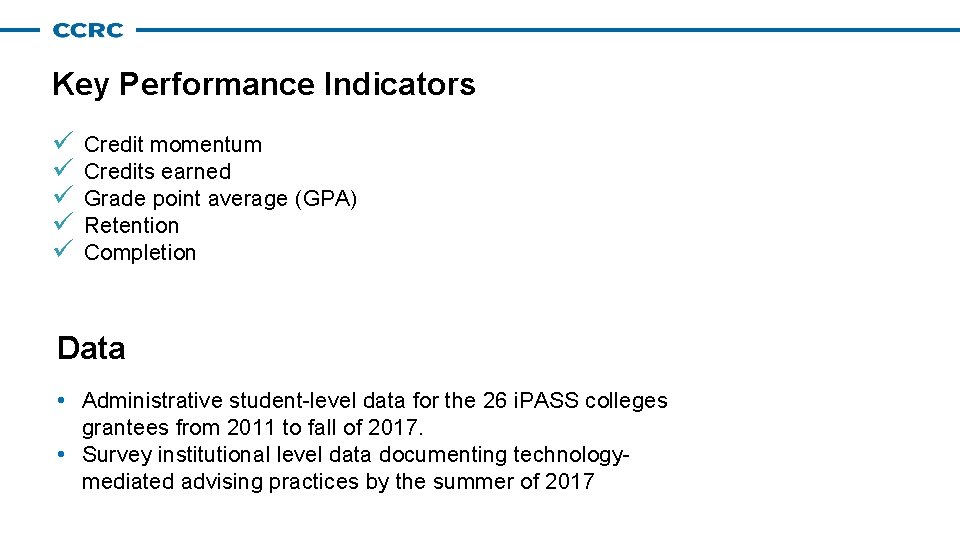
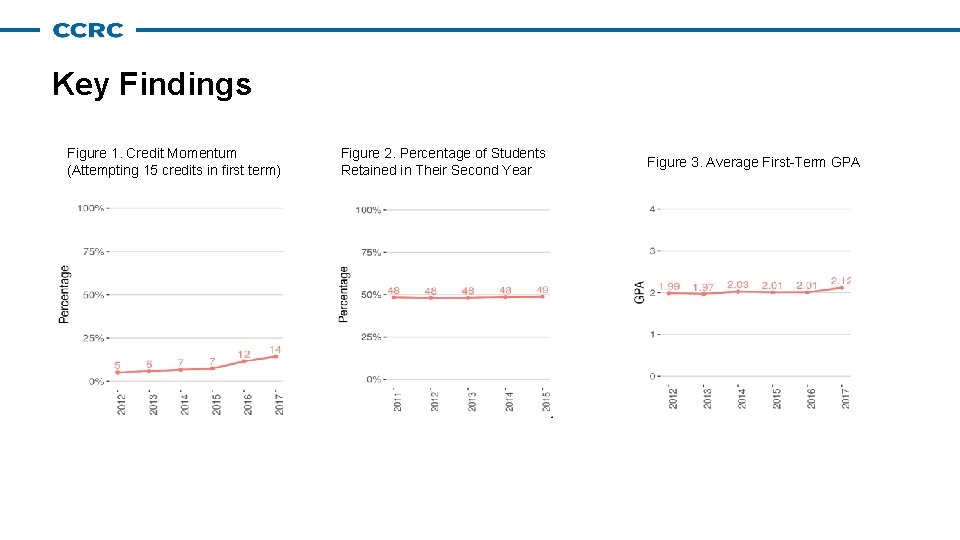
Key Performance Indicators ü ü ü Credit momentum Credits earned Grade point average (GPA) Retention Completion Data • Administrative student-level data for the 26 i. PASS colleges grantees from 2011 to fall of 2017. • Survey institutional level data documenting technologymediated advising practices by the summer of 2017
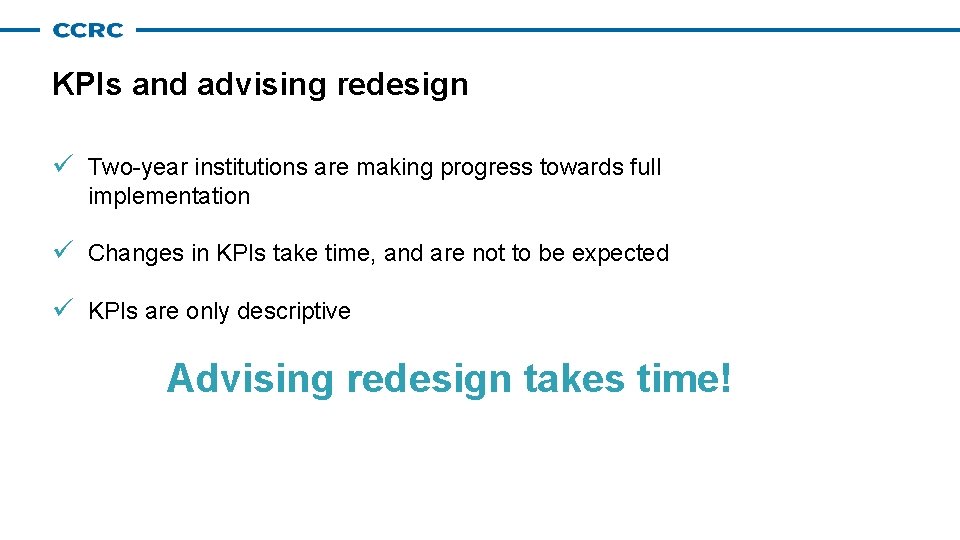
KPIs and advising redesign ü Two-year institutions are making progress towards full implementation ü Changes in KPIs take time, and are not to be expected ü KPIs are only descriptive Advising redesign takes time!
Key Findings Figure 1. Credit Momentum (Attempting 15 credits in first term) Figure 2. Percentage of Students Retained in Their Second Year Figure 3. Average First-Term GPA
Zane State College
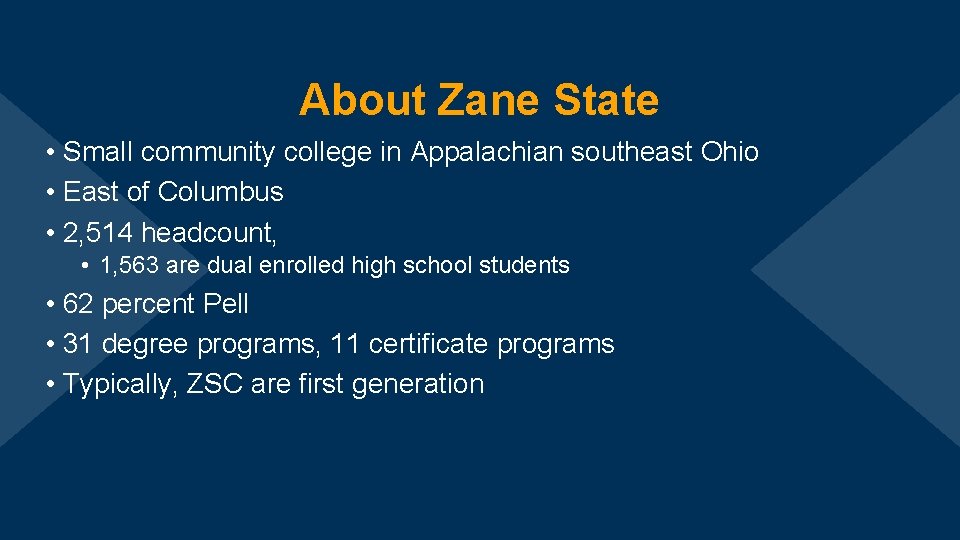
About Zane State • Small community college in Appalachian southeast Ohio • East of Columbus • 2, 514 headcount, • 1, 563 are dual enrolled high school students • 62 percent Pell • 31 degree programs, 11 certificate programs • Typically, ZSC are first generation
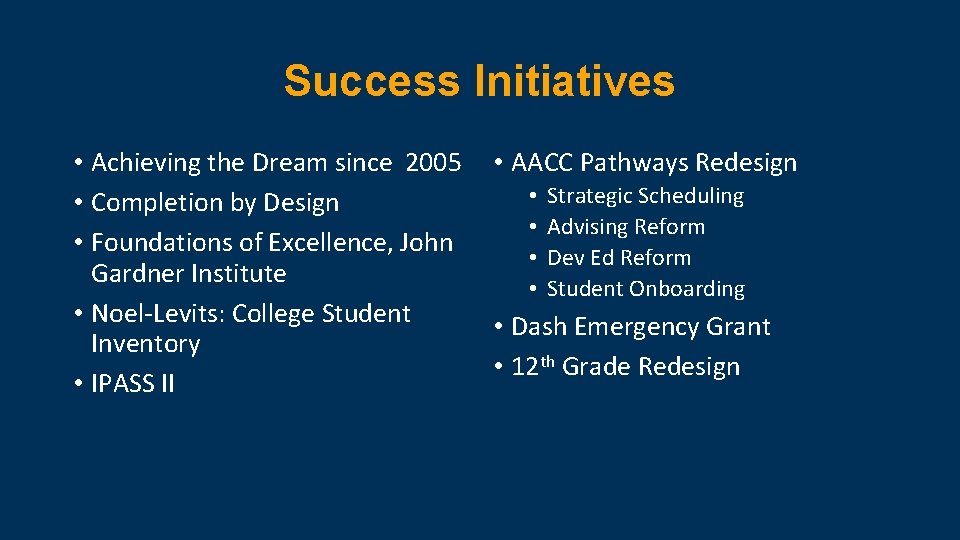
Success Initiatives • Achieving the Dream since 2005 • Completion by Design • Foundations of Excellence, John Gardner Institute • Noel-Levits: College Student Inventory • IPASS II • AACC Pathways Redesign • • Strategic Scheduling Advising Reform Dev Ed Reform Student Onboarding • Dash Emergency Grant • 12 th Grade Redesign
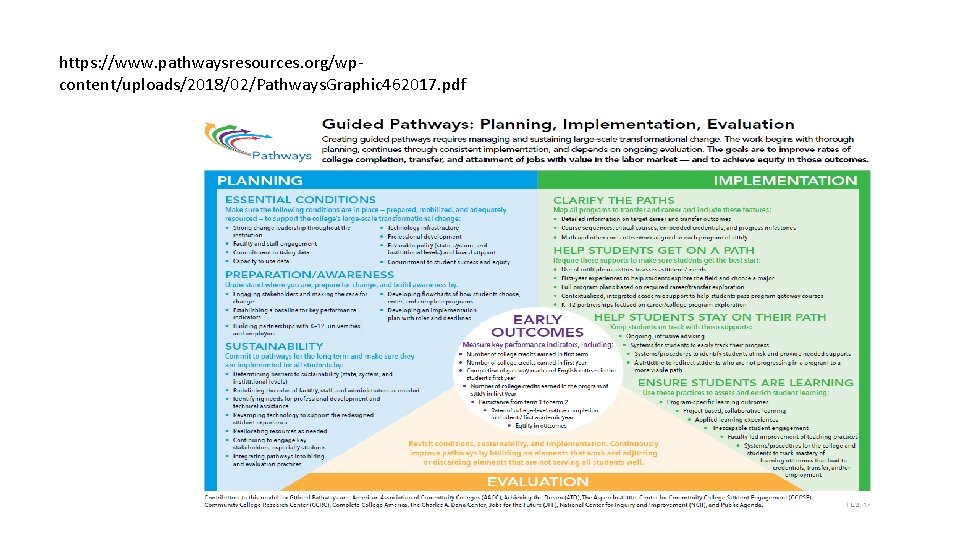
https: //www. pathwaysresources. org/wpcontent/uploads/2018/02/Pathways. Graphic 462017. pdf
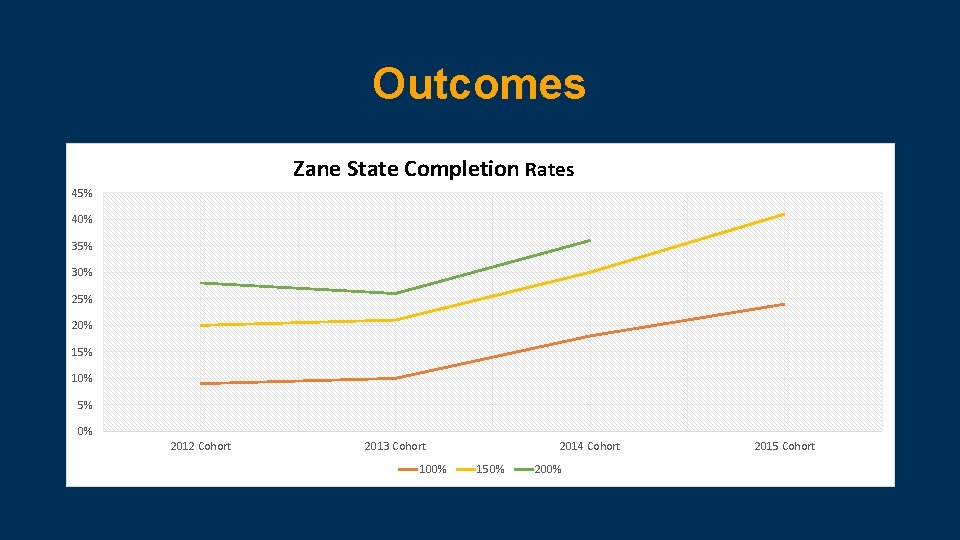
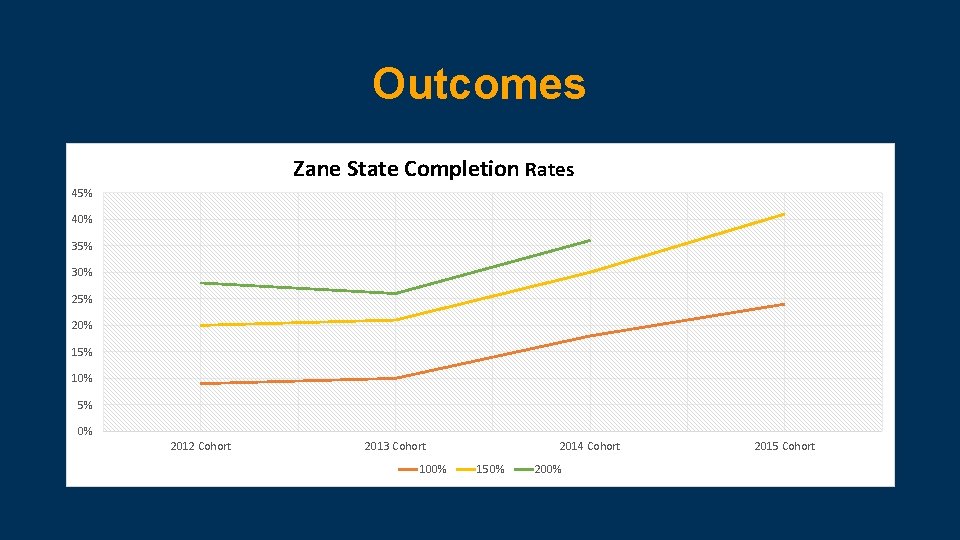
Outcomes Zane State Completion Rates 45% 40% 35% 30% 25% 20% 15% 10% 5% 0% 2012 Cohort 2013 Cohort 100% 2014 Cohort 150% 2015 Cohort
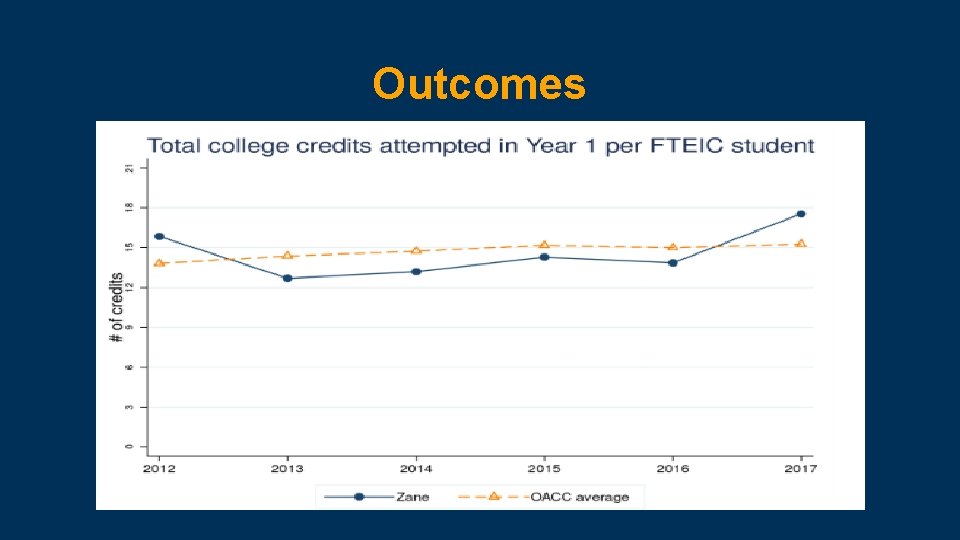
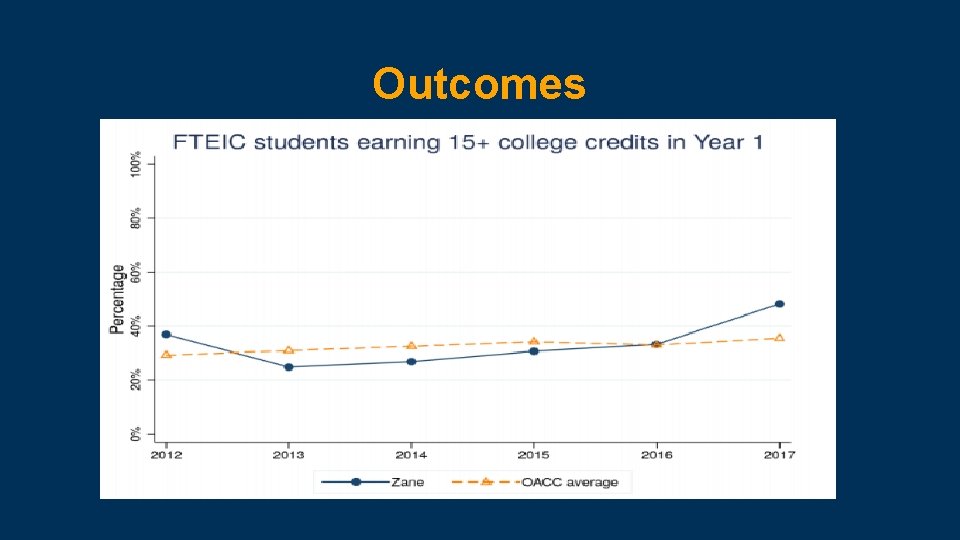
Outcomes
Outcomes
Outcomes Zane State Completion Rates 45% 40% 35% 30% 25% 20% 15% 10% 5% 0% 2012 Cohort 2013 Cohort 100% 2014 Cohort 150% 2015 Cohort
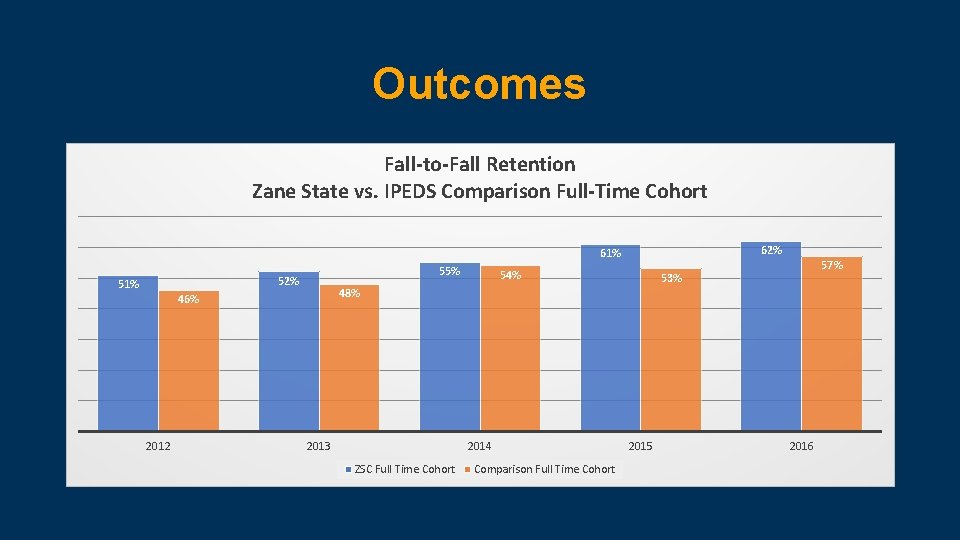
Outcomes Fall-to-Fall Retention Zane State vs. IPEDS Comparison Full-Time Cohort 62% 61% 55% 52% 51% 57% 53% 48% 46% 2012 54% 2013 2014 ZSC Full Time Cohort Comparison Full Time Cohort 2015 2016
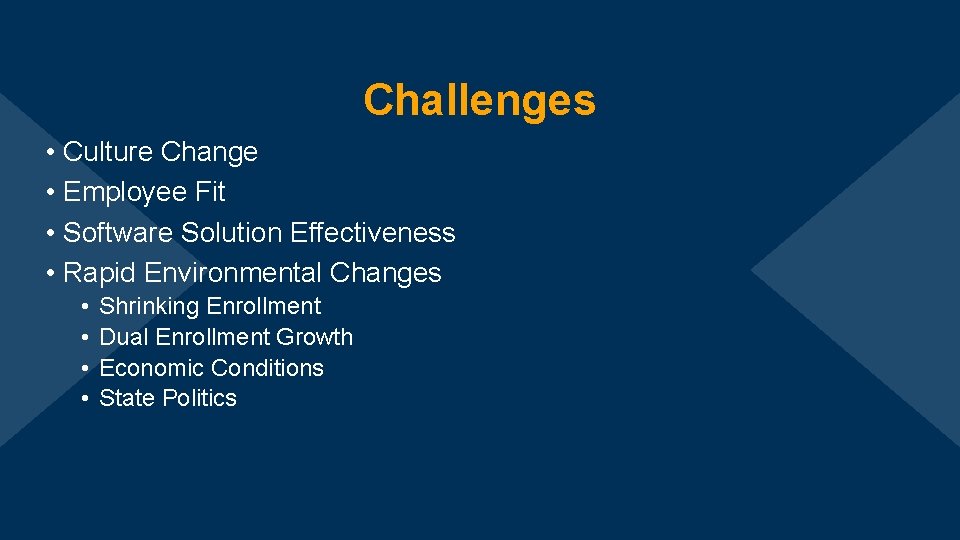
Challenges • Culture Change • Employee Fit • Software Solution Effectiveness • Rapid Environmental Changes • • Shrinking Enrollment Dual Enrollment Growth Economic Conditions State Politics
Q & A
Thank you!