
A Tragic Pattern How the Play is Built
A Tragic Pattern: How the Play is Built Tragedy: A narrative about serious and important actions that end unhappily. • Usually ends with the death of main characters • Sometimes innocent characters are affected • Sometimes the main characters are responsible for their downfall

Shakespeare’s Tragic Plays Five-Part Pattern ACT III Crisis / Turning Point ACT II Rising Action ACT I Exposition ACT IV Falling Action ACT V a Climax & Resolution
Exposition (ACT I) • Establishes the setting • Introduces the main characters • Explains background • Introduces the characters’ main conflict
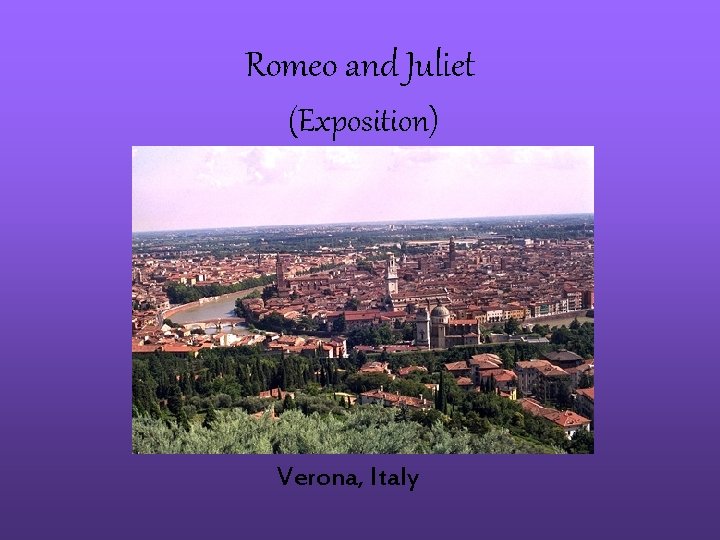
Romeo and Juliet (Exposition) Verona, Italy
Rising Action (ACT II) • Consists of a series of complications • Occurs when main characters take action to resolve their problems
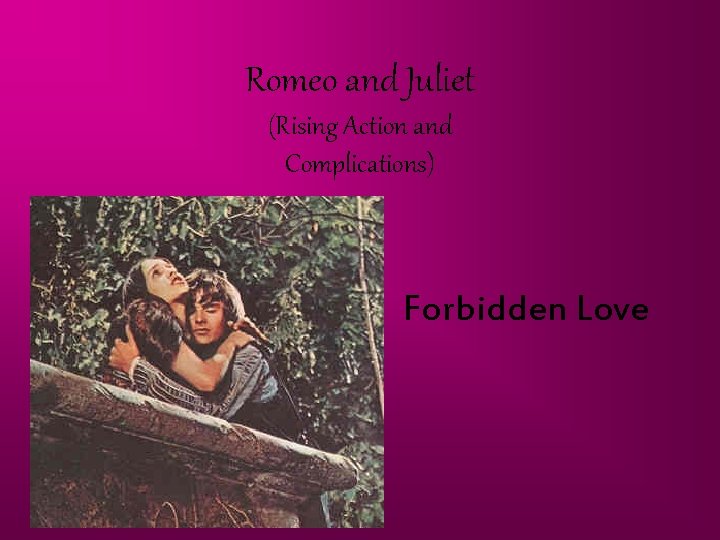
Romeo and Juliet (Rising Action and Complications) Forbidden Love
Crisis or Turning Point (ACT III) • Moment when a choice is made by one of the main characters that determines the direction of the action Upward = happy ending (comedy) Downward = sad ending (tragedy) • Dramatic and tense moment when the forces of conflict come together
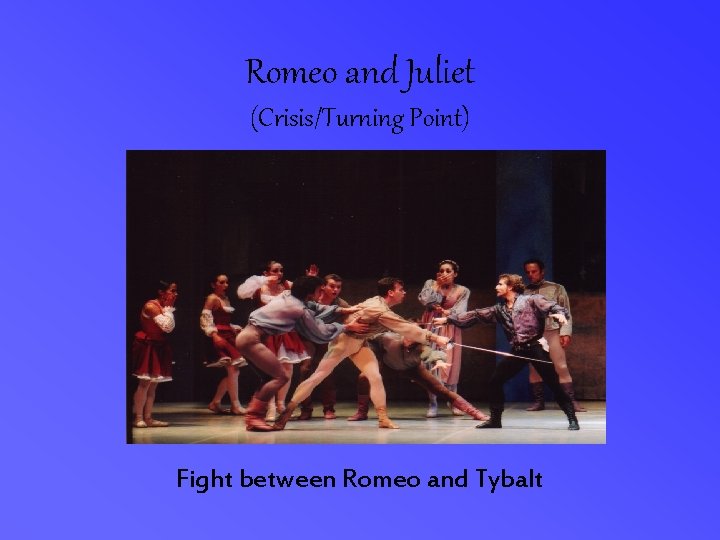
Romeo and Juliet (Crisis/Turning Point) Fight between Romeo and Tybalt
Falling Action (ACT IV) • Presents events that result from the action taken in the turning point • Events usually lock characters deeper into disaster • With each event we see each character falling into tragedy
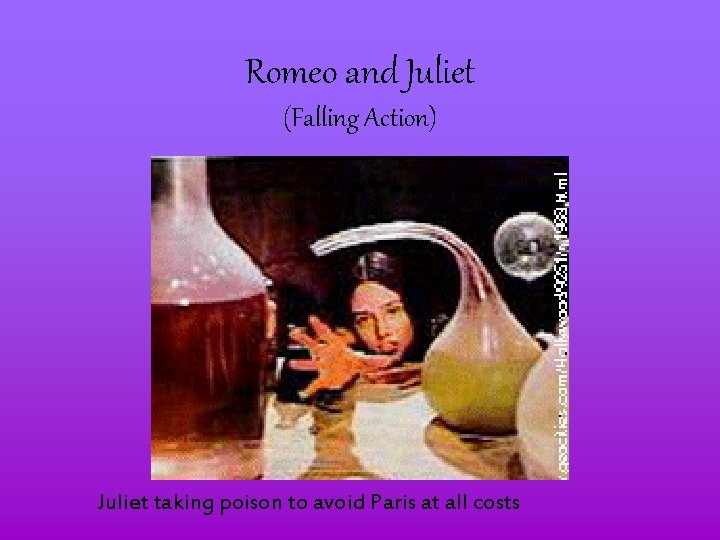
Romeo and Juliet (Falling Action) Juliet taking poison to avoid Paris at all costs
Climax & Resolution (ACT V) • CLIMAX: • Highest point of emotional intensity of the story • The greatest and final event that takes place (death) • RESOLUTION: • The loose parts of the plot are tied up and resolved • Any questions are answered • Signifies the end of the play
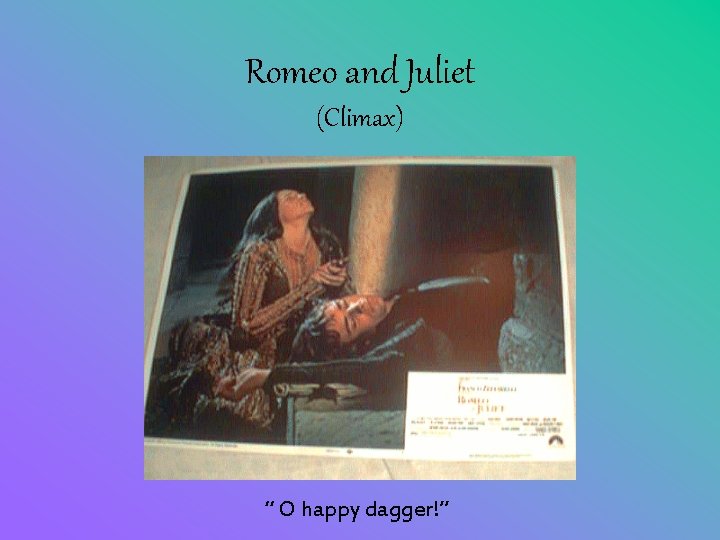
Romeo and Juliet (Climax) “ O happy dagger!”
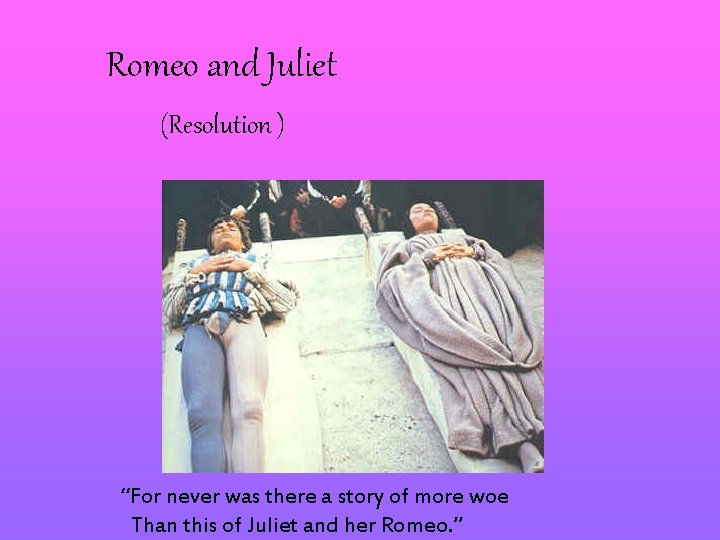
Romeo and Juliet (Resolution ) “For never was there a story of more woe Than this of Juliet and her Romeo. ”
- Slides: 14