
A Tour of the Cell Unit 2 Chapter
- Slides: 14
A Tour of the Cell Unit 2 Chapter 6
Introduction Videos Inner Life of The Cell High School Biology Inner Life of the Cell (Full Version Narrated)
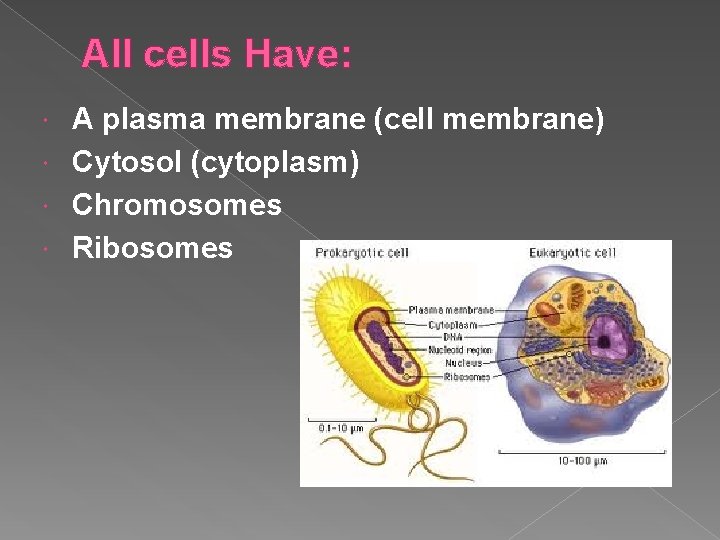
All cells Have: A plasma membrane (cell membrane) Cytosol (cytoplasm) Chromosomes Ribosomes
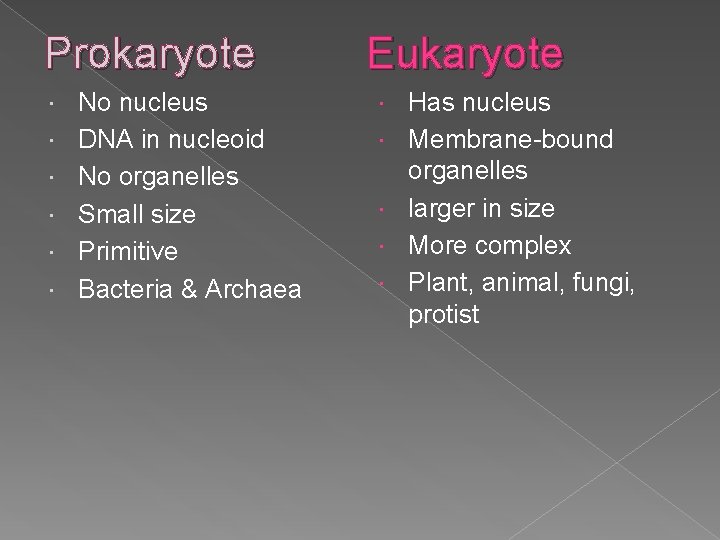
Prokaryote No nucleus DNA in nucleoid No organelles Small size Primitive Bacteria & Archaea Eukaryote Has nucleus Membrane-bound organelles larger in size More complex Plant, animal, fungi, protist
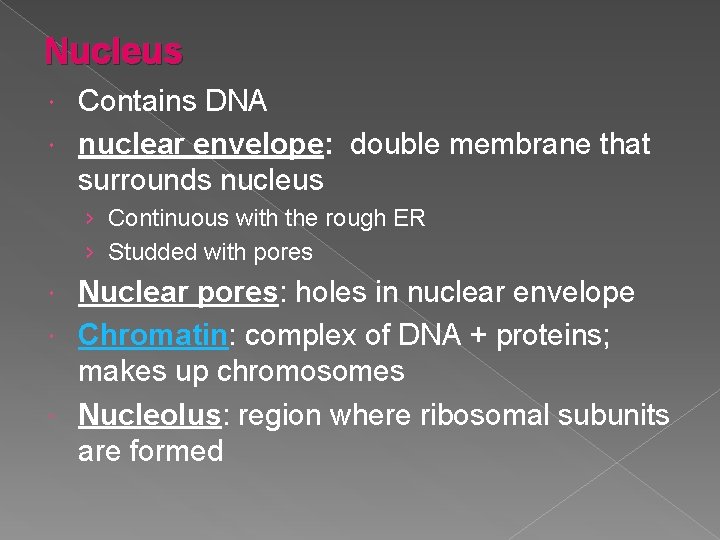
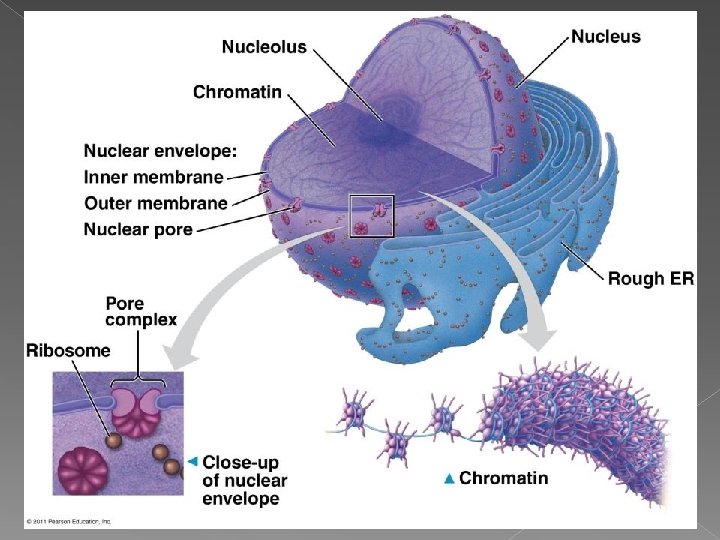
Nucleus Contains DNA nuclear envelope: double membrane that surrounds nucleus › Continuous with the rough ER › Studded with pores Nuclear pores: holes in nuclear envelope Chromatin: complex of DNA + proteins; makes up chromosomes Nucleolus: region where ribosomal subunits are formed
Nucleus Contains DNA Function: control center of cell Surrounded by double membrane (nuclear envelope) › Continuous with the rough ER Nuclear pores: control what enters/leaves nucleus Chromatin: complex of DNA + proteins; makes up chromosomes Nucleolus: region where ribosomal subunits are formed
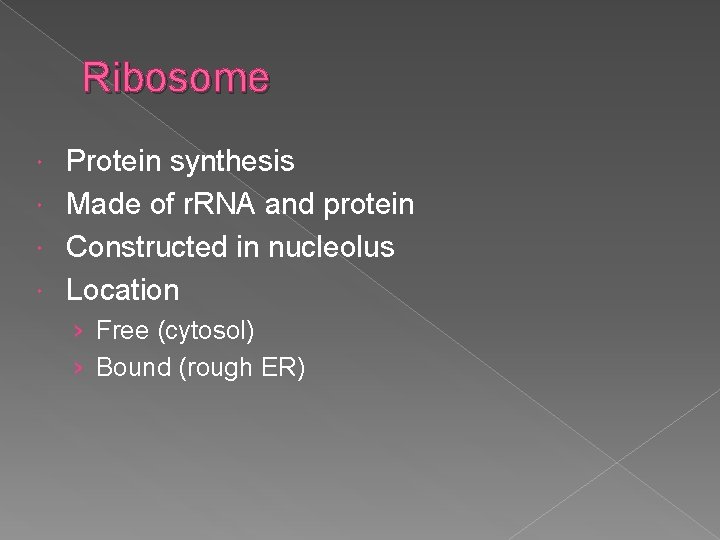
Ribosome Protein synthesis Made of r. RNA and protein Constructed in nucleolus Location › Free (cytosol) › Bound (rough ER)
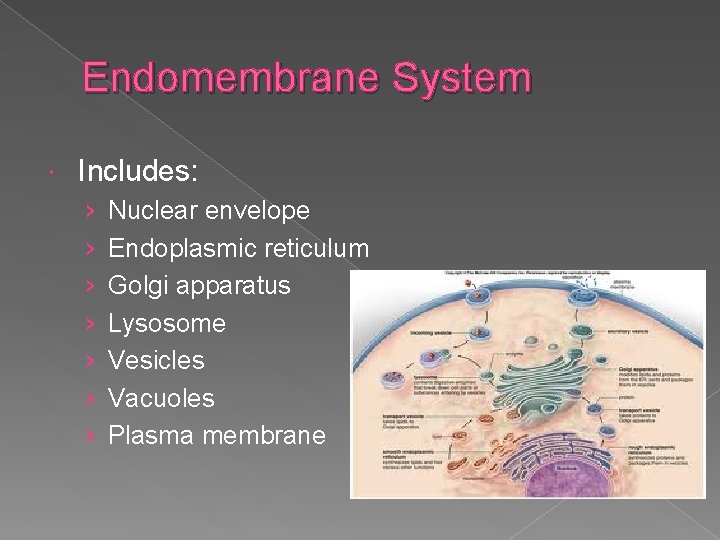
Endomembrane System Includes: › › › › Nuclear envelope Endoplasmic reticulum Golgi apparatus Lysosome Vesicles Vacuoles Plasma membrane
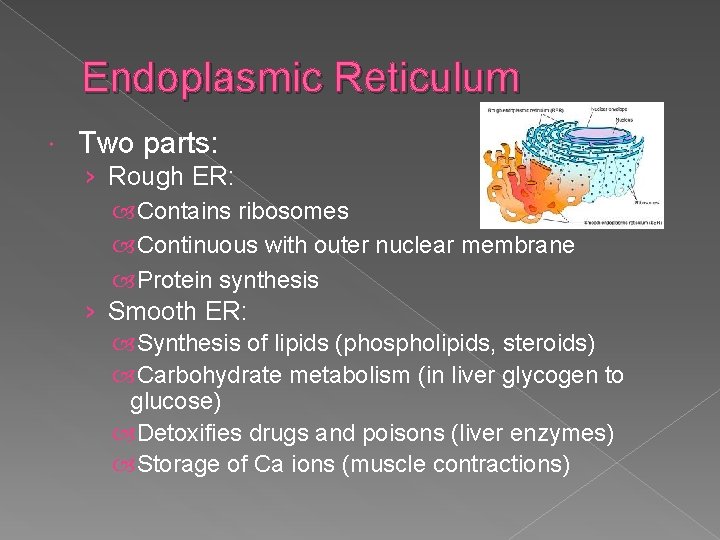
Endoplasmic Reticulum Two parts: › Rough ER: Contains ribosomes Continuous with outer nuclear membrane Protein synthesis › Smooth ER: Synthesis of lipids (phospholipids, steroids) Carbohydrate metabolism (in liver glycogen to glucose) Detoxifies drugs and poisons (liver enzymes) Storage of Ca ions (muscle contractions)
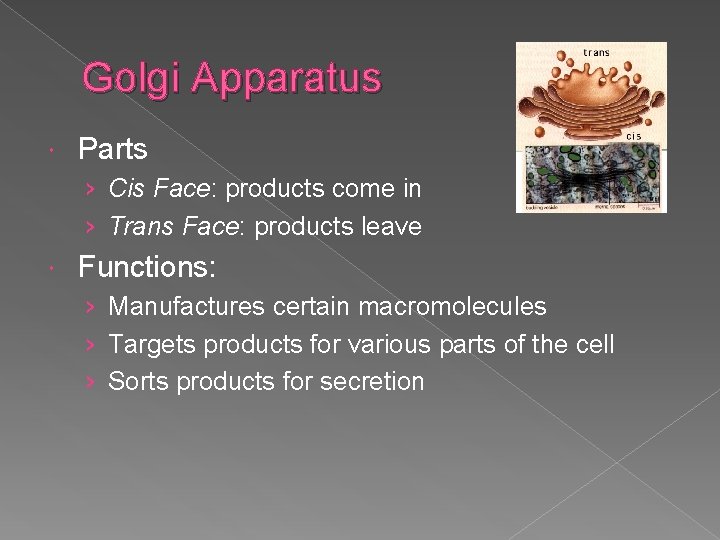
Golgi Apparatus Parts › Cis Face: products come in › Trans Face: products leave Functions: › Manufactures certain macromolecules › Targets products for various parts of the cell › Sorts products for secretion
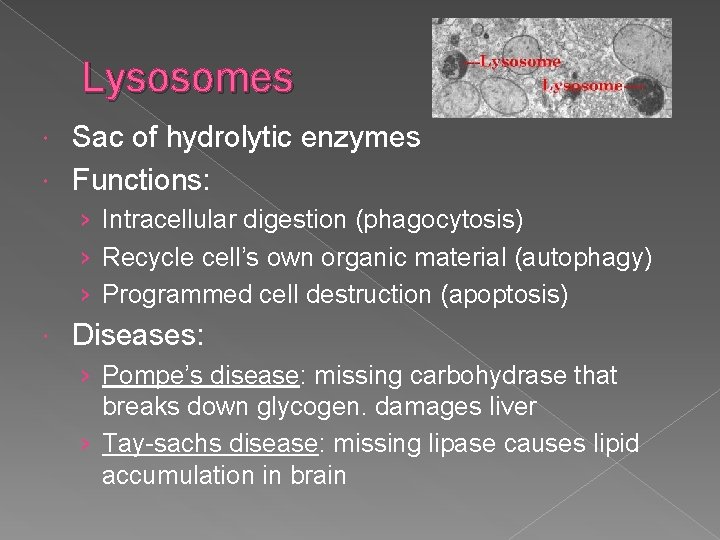
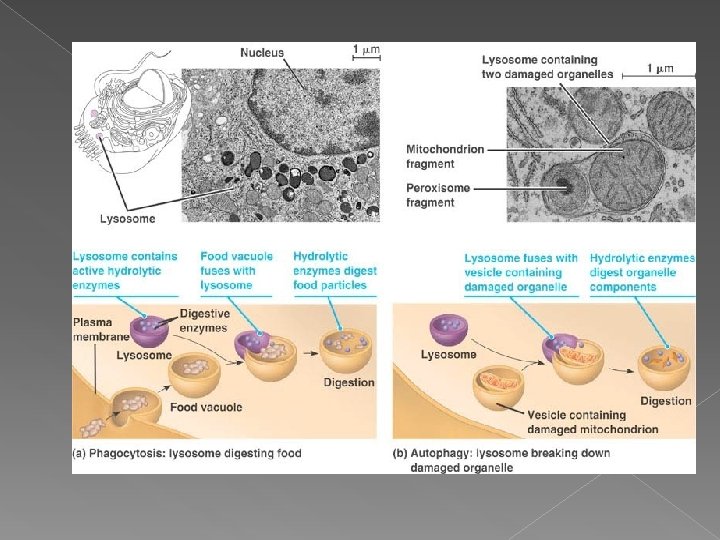
Lysosomes Sac of hydrolytic enzymes Functions: › Intracellular digestion (phagocytosis) › Recycle cell’s own organic material (autophagy) › Programmed cell destruction (apoptosis) Diseases: › Pompe’s disease: missing carbohydrase that breaks down glycogen. damages liver › Tay-sachs disease: missing lipase causes lipid accumulation in brain
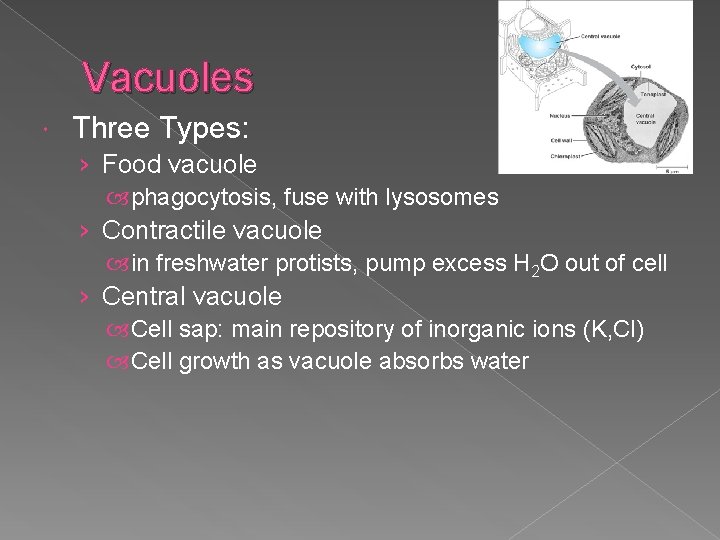
Vacuoles Three Types: › Food vacuole phagocytosis, fuse with lysosomes › Contractile vacuole in freshwater protists, pump excess H 2 O out of cell › Central vacuole Cell sap: main repository of inorganic ions (K, Cl) Cell growth as vacuole absorbs water
Peroxisomes digestive enzyme sacs in both animals & plants breakdown fatty acids to sugars detoxifies alcohol & other poisons produce peroxide (H 2 O 2) oxidases › H 2 + O 2 H 2 O 2 Breakdown of peroxide by catalase 2 H 2 O 2 2 H 2 O +O 2