
A Tour of the Cell How cells were


- Slides: 33
A Tour of the Cell
How cells were first discovered Cells were first observed using microscopes n Today there are many ways to view cells and the structures inside them n Types of Microscopes n n Light Microscope n Phase Contrast Microscopes n Electron Microscopes n n Transmission electron Microscopes (TEM) Scanning Electron Microscopes (SEM)
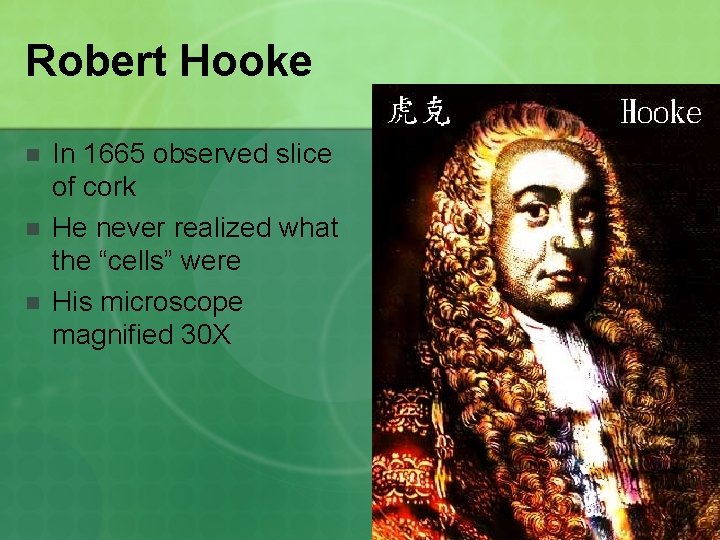
Robert Hooke n n n In 1665 observed slice of cork He never realized what the “cells” were His microscope magnified 30 X
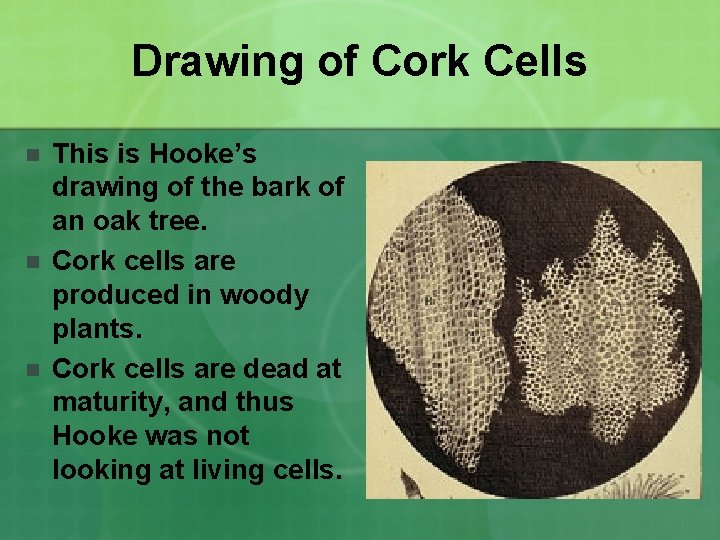
Drawing of Cork Cells n n n This is Hooke’s drawing of the bark of an oak tree. Cork cells are produced in woody plants. Cork cells are dead at maturity, and thus Hooke was not looking at living cells.
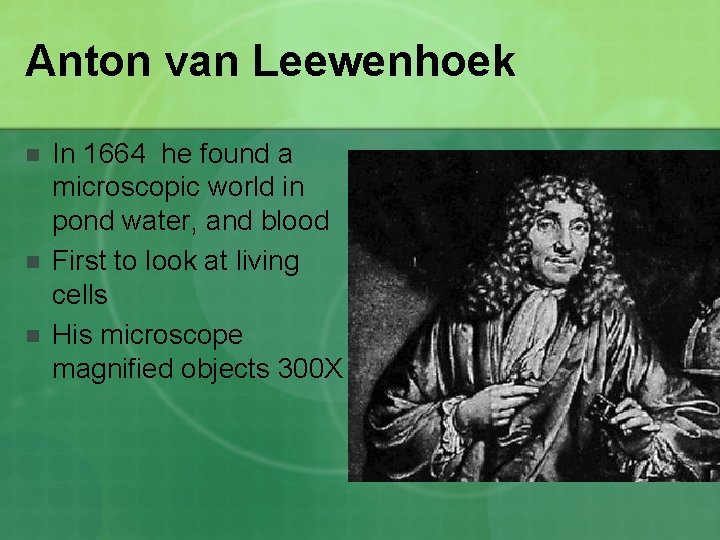
Anton van Leewenhoek n n n In 1664 he found a microscopic world in pond water, and blood First to look at living cells His microscope magnified objects 300 X
Who was the first scientist to see a cell with a microscope? Robert Hooke Who was the first scientist to see living cells under a microscope? Van Leewenhoek
The Cell Theory n When Schleiden and Schwann proposed the cell theory in 1838, cell biology research was forever changed. The cell theory states that: 1. All living things are made up of cells. 2. Cells are the basic unit of structure and function in living things 3. All Cells are produced from other cells.
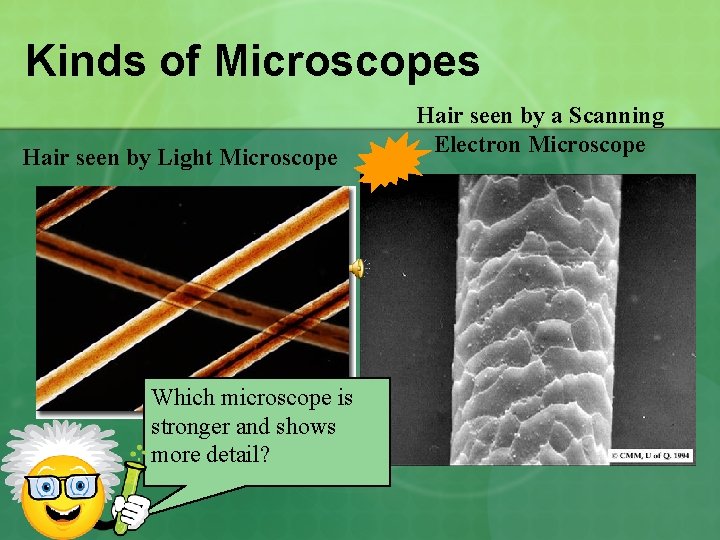
Kinds of Microscopes Hair seen by Light Microscope Which microscope is stronger and shows more detail? Hair seen by a Scanning Electron Microscope
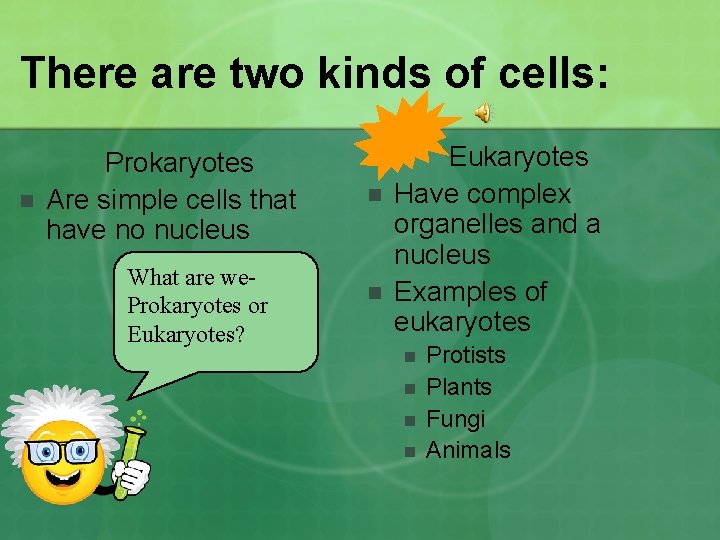
There are two kinds of cells: n Prokaryotes Are simple cells that have no nucleus What are we. Prokaryotes or Eukaryotes? n n Eukaryotes Have complex organelles and a nucleus Examples of eukaryotes n n Protists Plants Fungi Animals
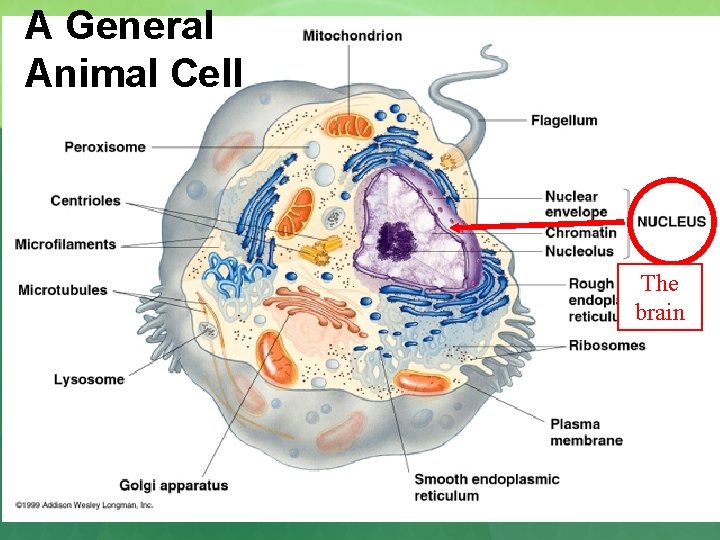
A General Animal Cell The brain
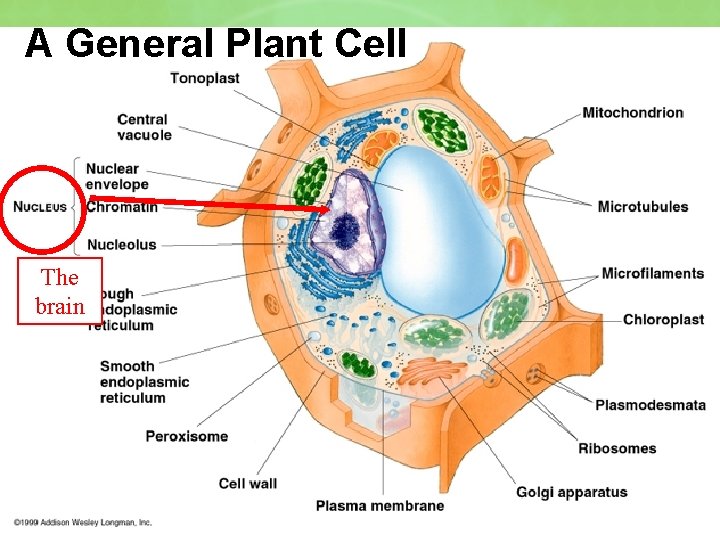
A General Plant Cell The brain
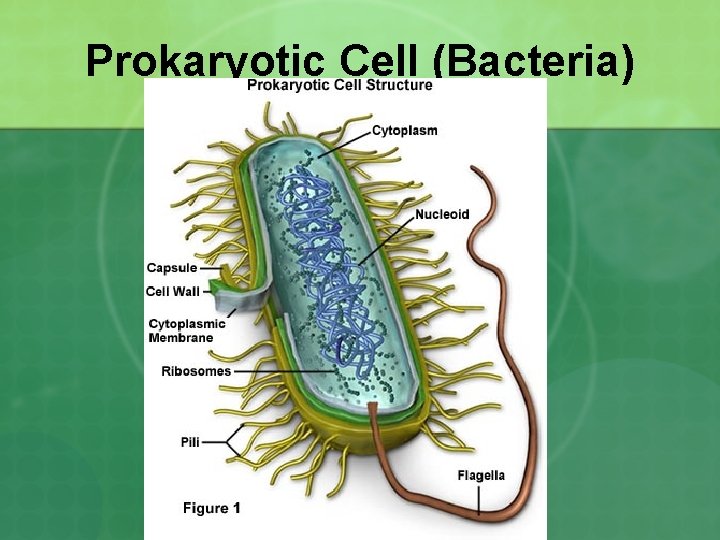
Prokaryotic Cell (Bacteria)
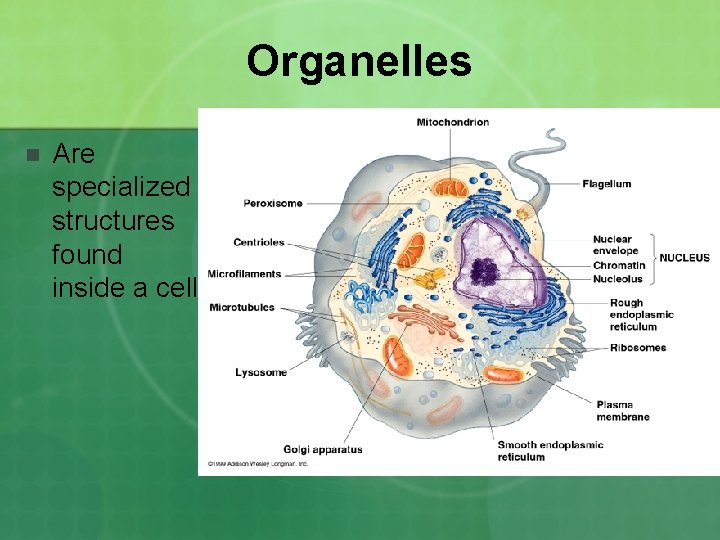
Organelles n Are specialized structures found inside a cell
Cell Organelles n Cell Membrane n n Controls the passage of materials into and out of cell Made of 2 layers of lipids with protein mixed in
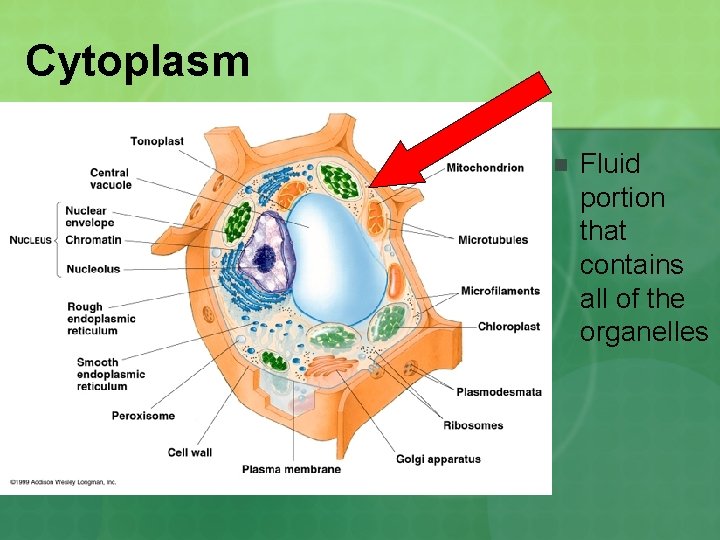
Cytoplasm n Fluid portion that contains all of the organelles
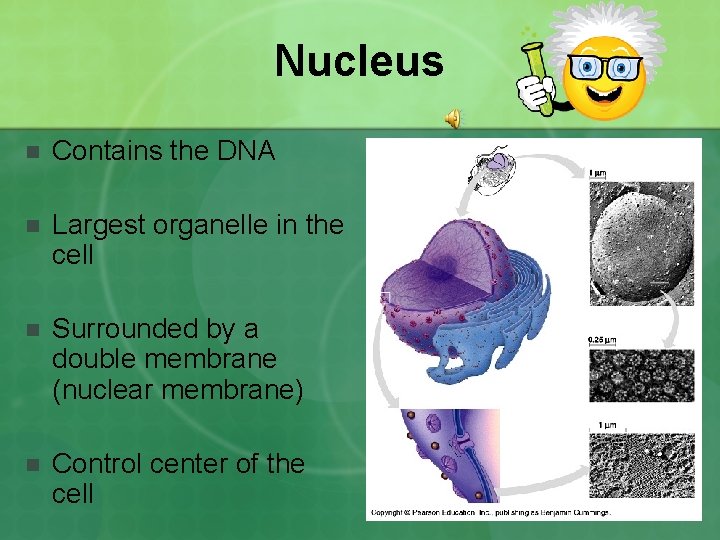
Nucleus n Contains the DNA n Largest organelle in the cell n Surrounded by a double membrane (nuclear membrane) n Control center of the cell
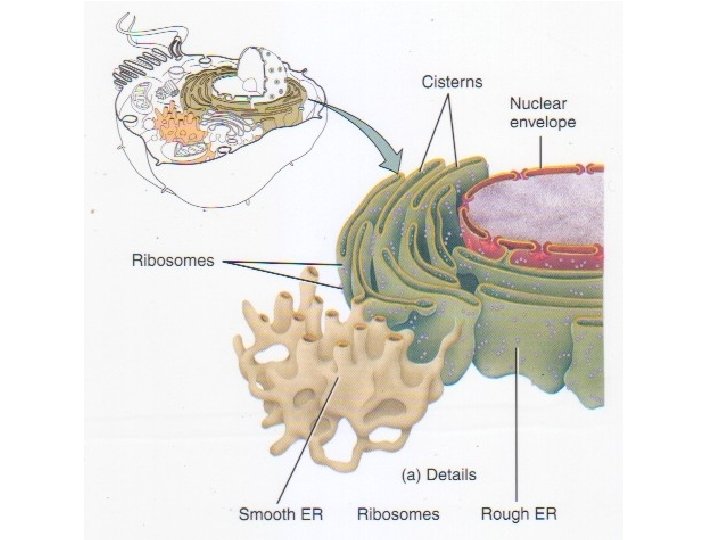
Ribosomes n Where proteins are made n They act like protein factories
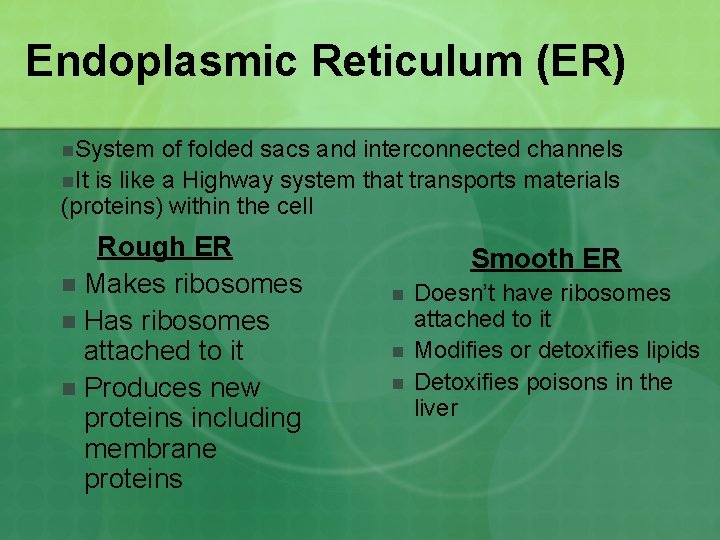
Endoplasmic Reticulum (ER) n. System of folded sacs and interconnected channels n. It is like a Highway system that transports materials (proteins) within the cell Rough ER n Makes ribosomes n Has ribosomes attached to it n Produces new proteins including membrane proteins Smooth ER n n n Doesn’t have ribosomes attached to it Modifies or detoxifies lipids Detoxifies poisons in the liver
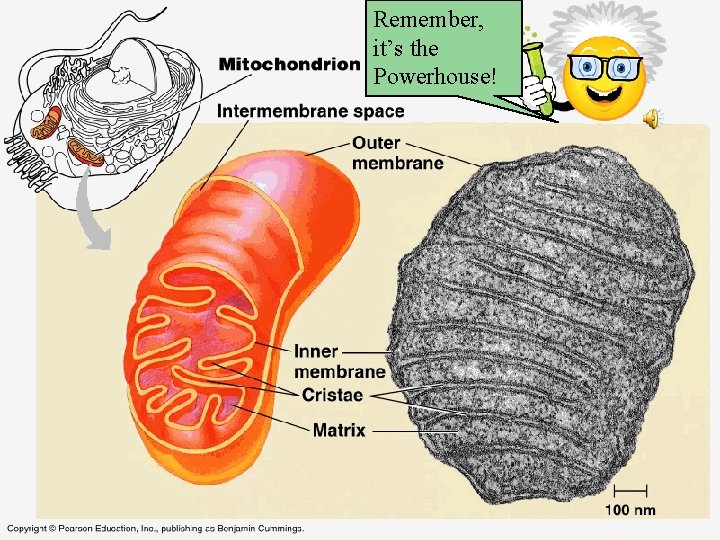
Remember, it’s the Powerhouse!
Mitochondria It is the site of Cellular Respiration n Provides energy to the cell n Works like the “powerhouse” of the cell n Have an outer membrane and an inner membrane that is folded into cristae n n The cristae is where some reactions of respiration occur
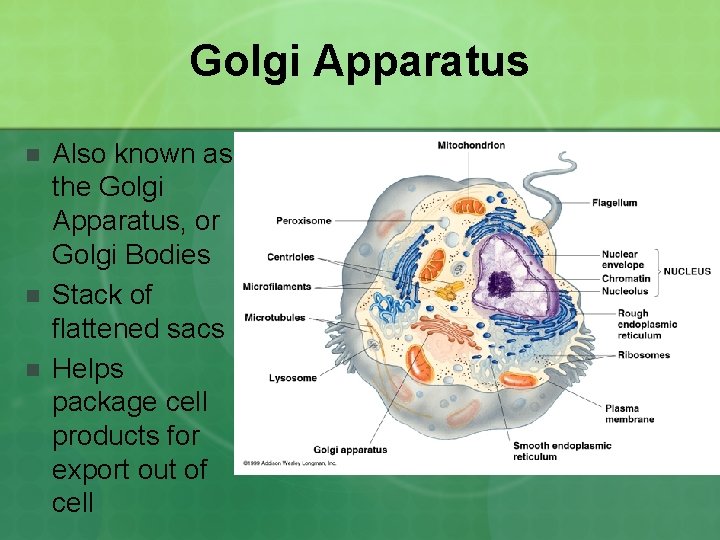
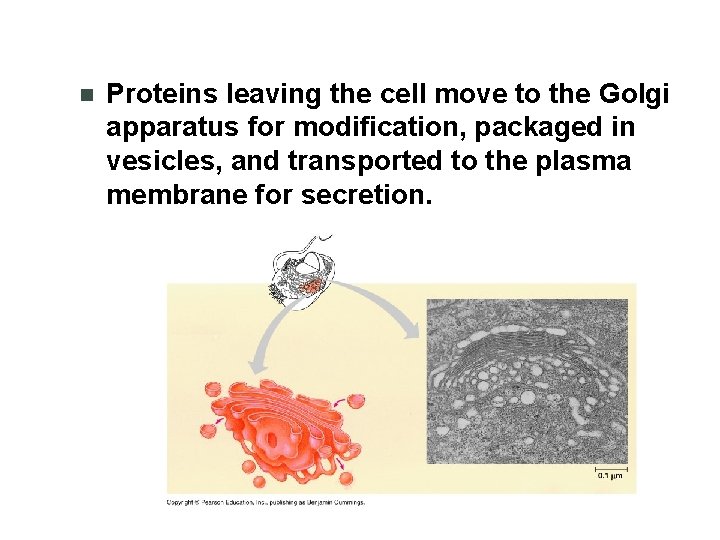
Golgi Apparatus n n n Also known as the Golgi Apparatus, or Golgi Bodies Stack of flattened sacs Helps package cell products for export out of cell
n Proteins leaving the cell move to the Golgi apparatus for modification, packaged in vesicles, and transported to the plasma membrane for secretion.
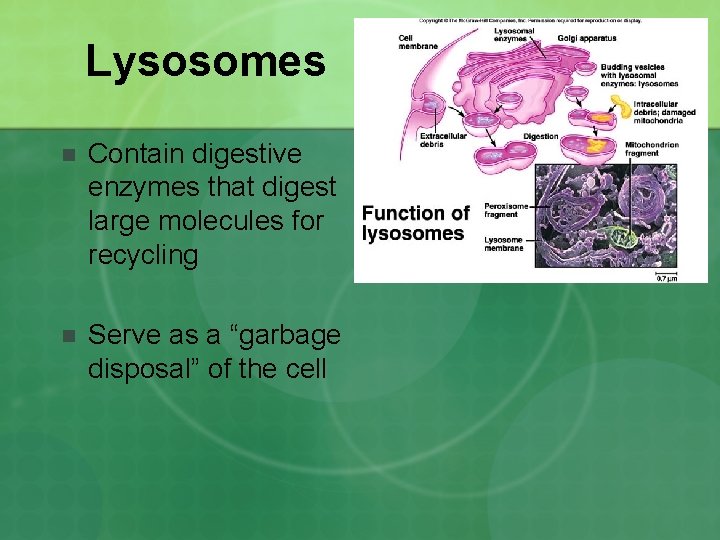
Lysosomes n Contain digestive enzymes that digest large molecules for recycling n Serve as a “garbage disposal” of the cell
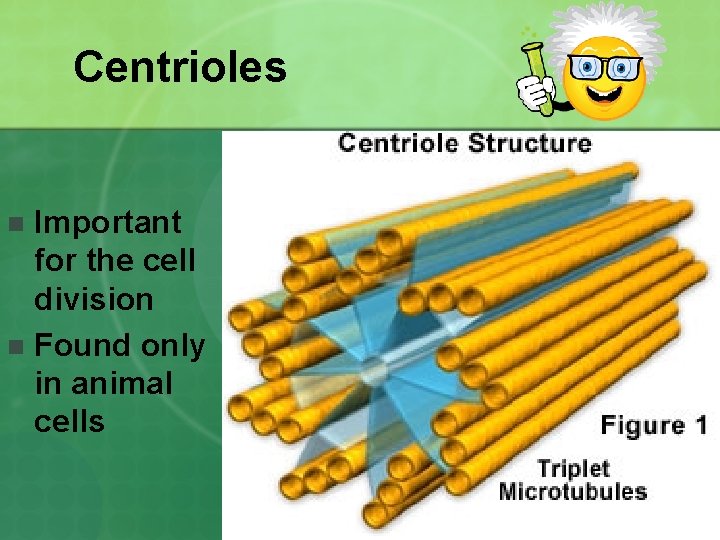
Centrioles Important for the cell division n Found only in animal cells n
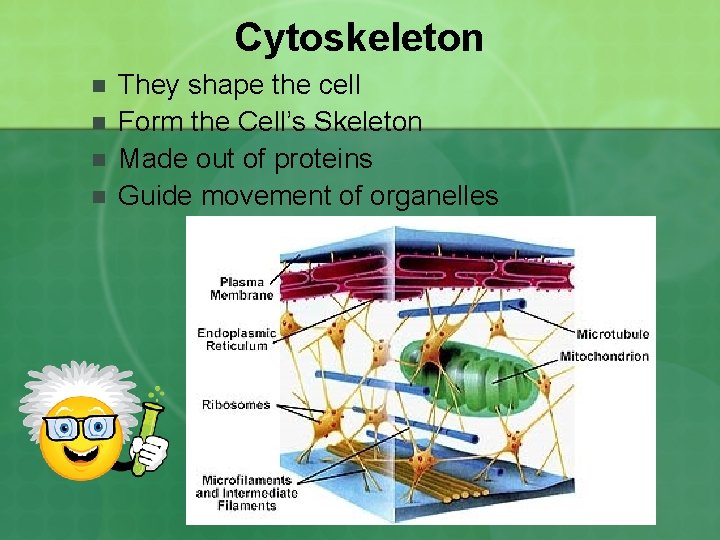
Cytoskeleton n n They shape the cell Form the Cell’s Skeleton Made out of proteins Guide movement of organelles
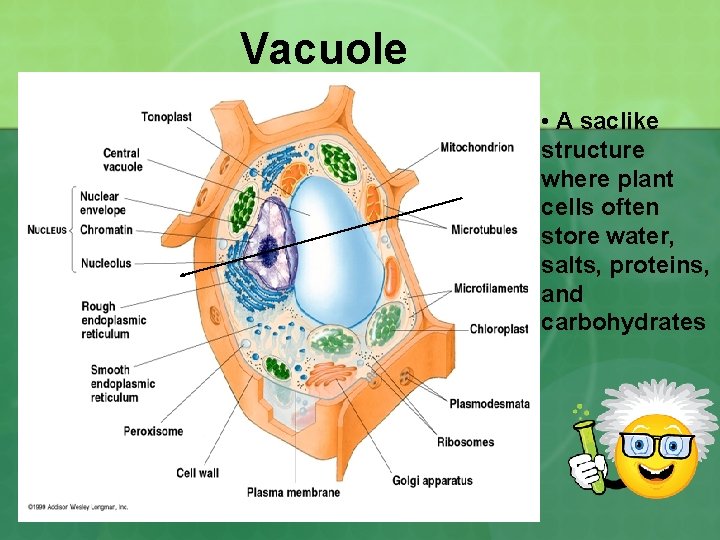
Vacuole • A saclike structure where plant cells often store water, salts, proteins, and carbohydrates
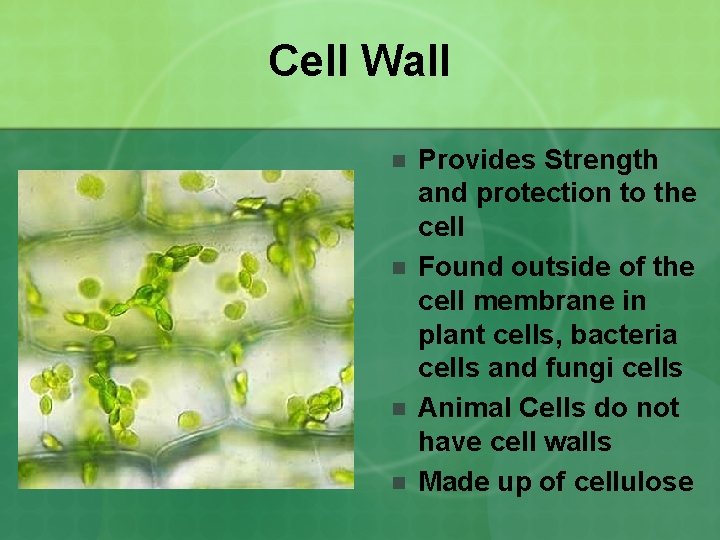
Cell Wall n n Provides Strength and protection to the cell Found outside of the cell membrane in plant cells, bacteria cells and fungi cells Animal Cells do not have cell walls Made up of cellulose
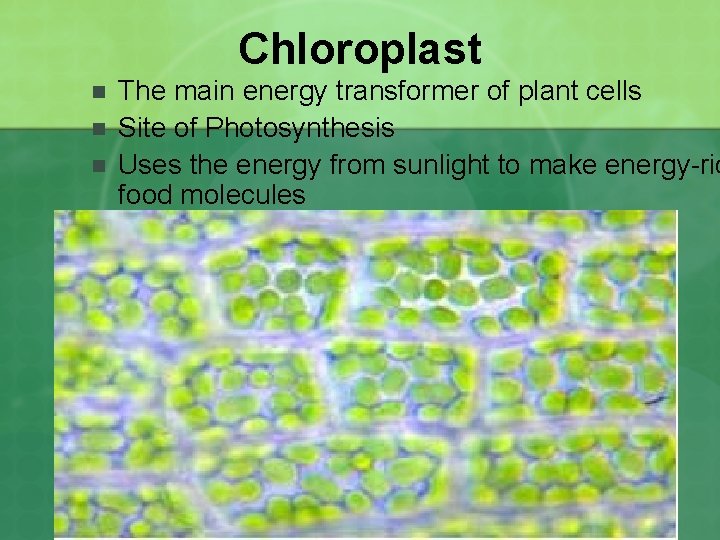
Chloroplast n n n The main energy transformer of plant cells Site of Photosynthesis Uses the energy from sunlight to make energy-ric food molecules
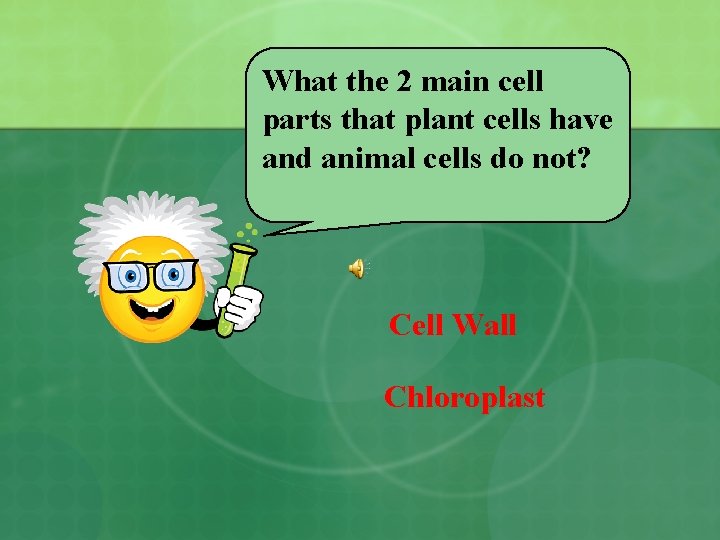
What the 2 main cell parts that plant cells have and animal cells do not? Cell Wall Chloroplast
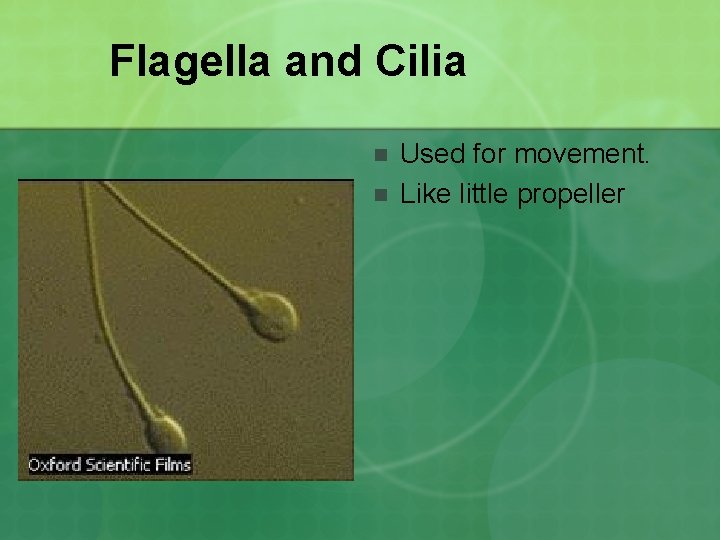
Flagella and Cilia n n Used for movement. Like little propeller
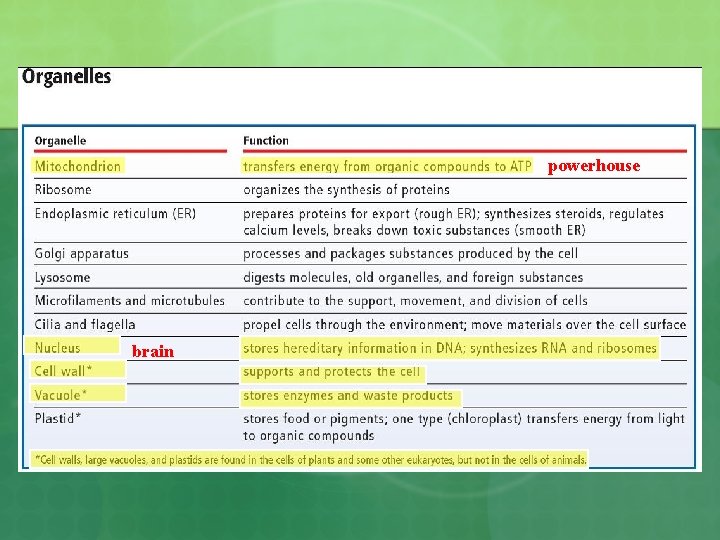
powerhouse brain
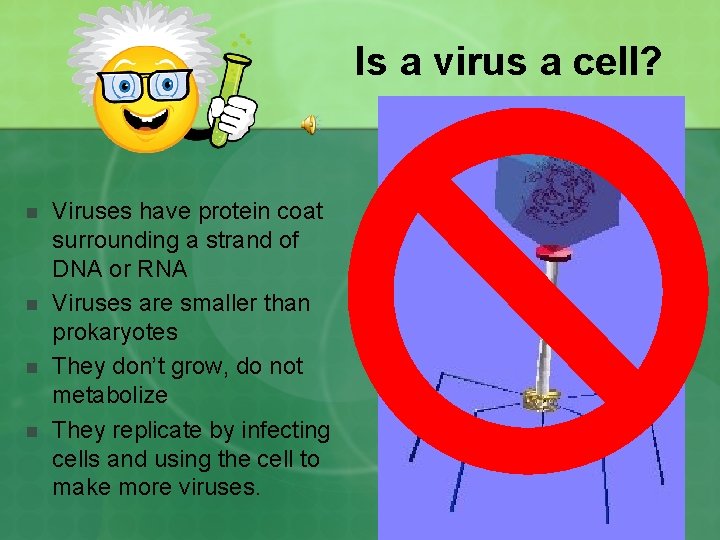
Is a virus a cell? n n Viruses have protein coat surrounding a strand of DNA or RNA Viruses are smaller than prokaryotes They don’t grow, do not metabolize They replicate by infecting cells and using the cell to make more viruses.