
A theoretical approach to powerpoints Information Processing Theory

- Slides: 10
A theoretical approach to powerpoints: Information Processing Theory EDU 241: Educational Technology Daniel Moos
Tall in the saddle
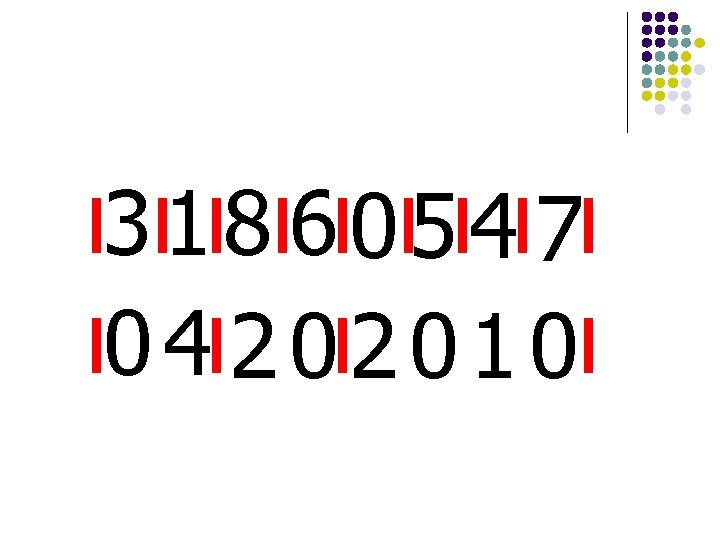
318 6054 7 04 202010
As quickly as you can… …state the months of the year, alphabetically
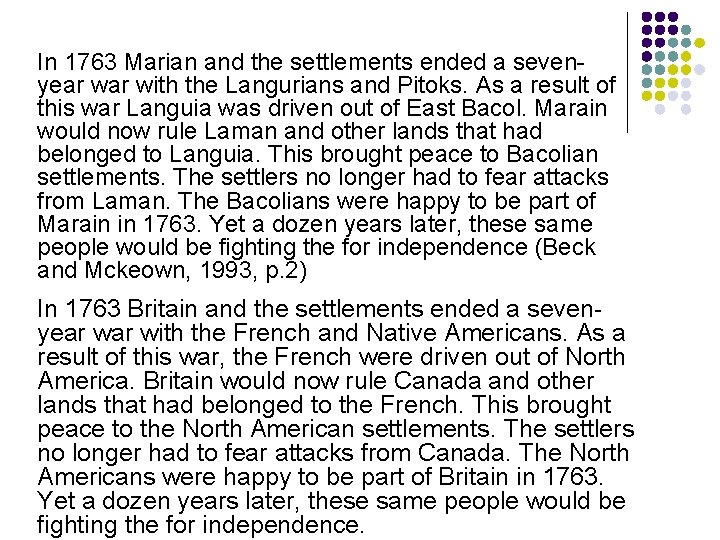
In 1763 Marian and the settlements ended a sevenyear with the Langurians and Pitoks. As a result of this war Languia was driven out of East Bacol. Marain would now rule Laman and other lands that had belonged to Languia. This brought peace to Bacolian settlements. The settlers no longer had to fear attacks from Laman. The Bacolians were happy to be part of Marain in 1763. Yet a dozen years later, these same people would be fighting the for independence (Beck and Mckeown, 1993, p. 2) In 1763 Britain and the settlements ended a sevenyear with the French and Native Americans. As a result of this war, the French were driven out of North America. Britain would now rule Canada and other lands that had belonged to the French. This brought peace to the North American settlements. The settlers no longer had to fear attacks from Canada. The North Americans were happy to be part of Britain in 1763. Yet a dozen years later, these same people would be fighting the for independence.
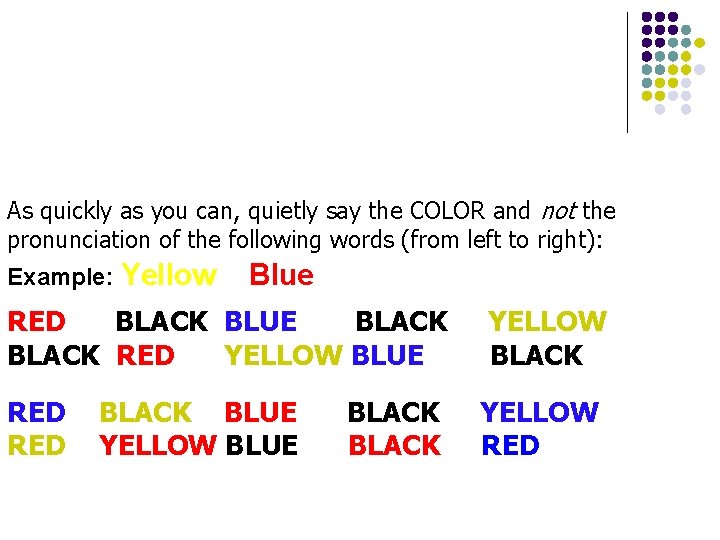
As quickly as you can, quietly say the COLOR and not the pronunciation of the following words (from left to right): Example: Yellow Blue RED BLACK BLUE BLACK RED YELLOW BLUE YELLOW BLACK RED YELLOW RED BLACK BLUE YELLOW BLUE BLACK
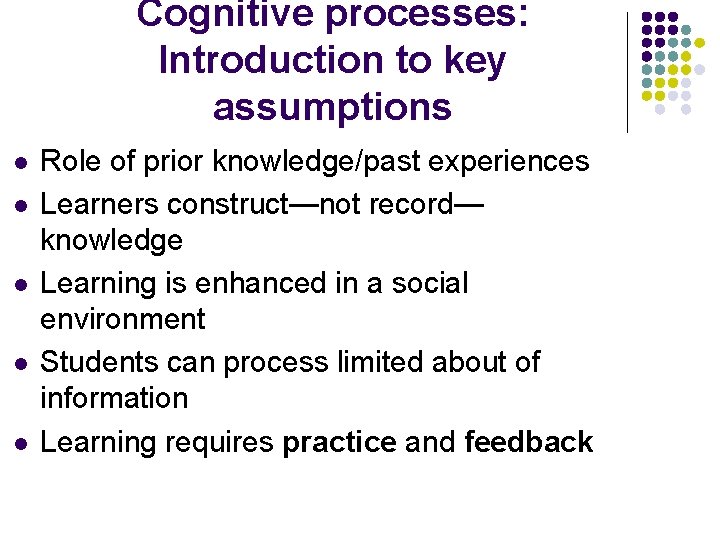
Cognitive processes: Introduction to key assumptions l l l Role of prior knowledge/past experiences Learners construct—not record— knowledge Learning is enhanced in a social environment Students can process limited about of information Learning requires practice and feedback
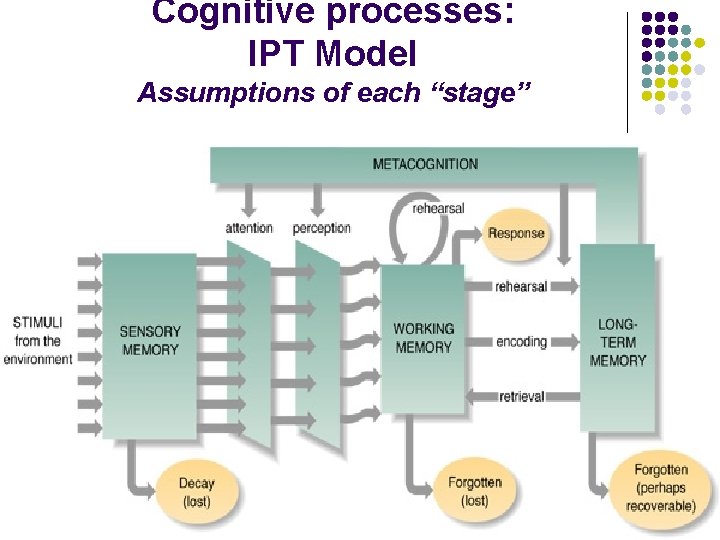
Cognitive processes: IPT Model Assumptions of each “stage”
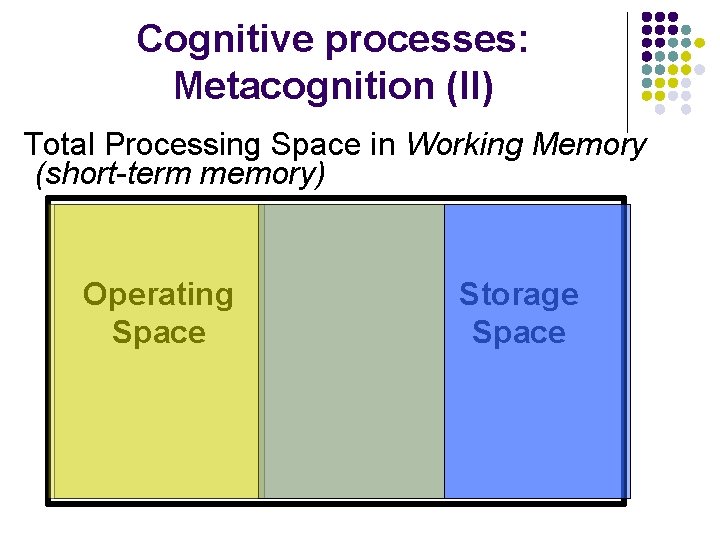
Cognitive processes: Metacognition (II) Total Processing Space in Working Memory (short-term memory) Operating Space Storage Space
Cognitive Processes: IPT application (I) l Reducing cognitive load: Overcoming limitations of working memory Chunking l Automaticity l Dual-Coding Theory l