
A Tale of Two Extremes Contrasting NH 3

![FREE AMMONIA, FA = TA – 2 * TS = [NH 4+] + [NH](https://slidetodoc.com/presentation_image_h2/87b1c67de7dbd8375e75ef9ad022f0d5/image-17.jpg "FREE AMMONIA, FA = TA – 2 * TS = [NH 4+] + [NH")
- Slides: 19
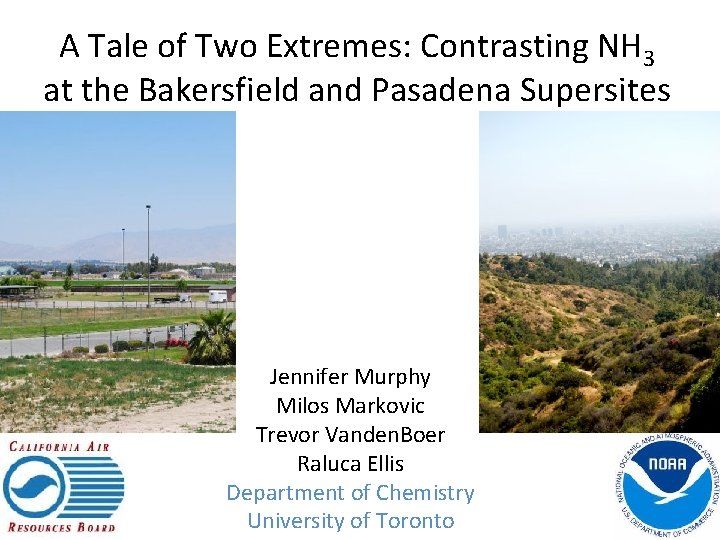
A Tale of Two Extremes: Contrasting NH 3 at the Bakersfield and Pasadena Supersites Jennifer Murphy Milos Markovic Trevor Vanden. Boer Raluca Ellis Department of Chemistry University of Toronto
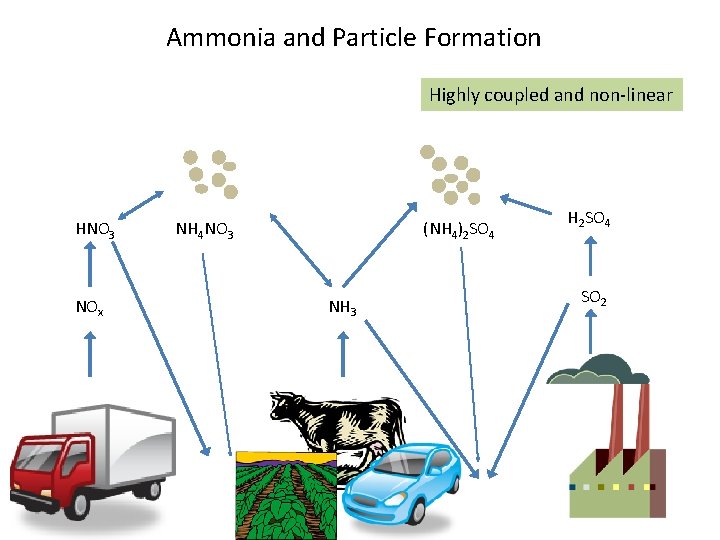
Ammonia and Particle Formation Highly coupled and non-linear HNO 3 NOx NH 4 NO 3 (NH 4)2 SO 4 NH 3 H 2 SO 4 SO 2
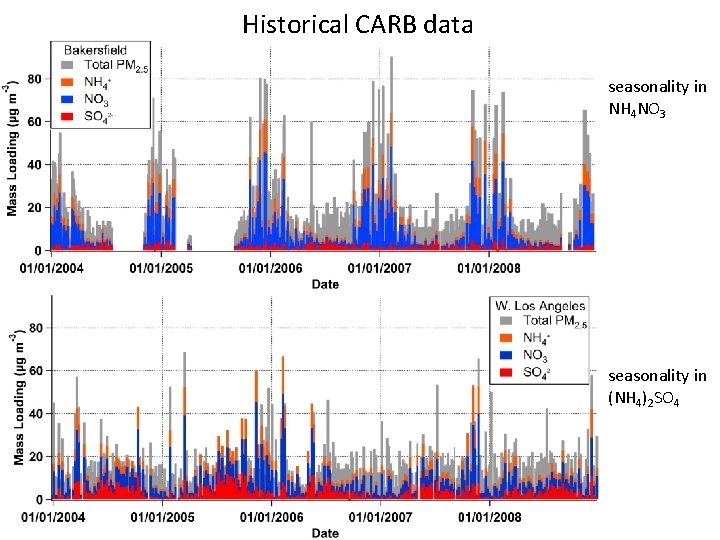
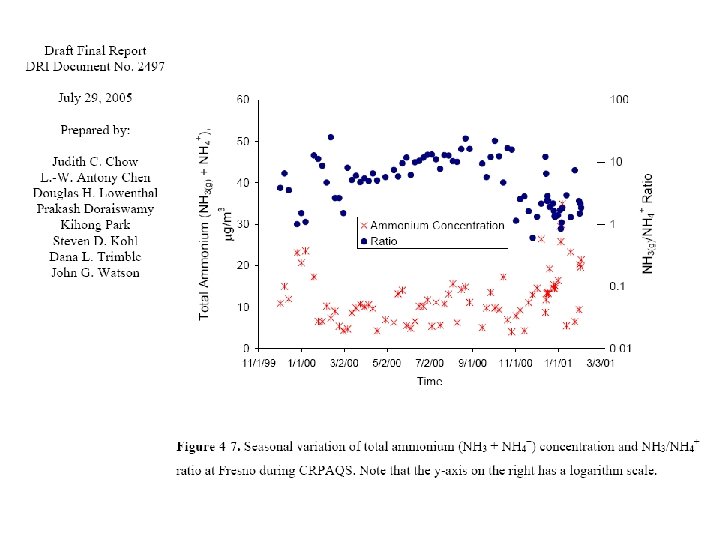
Historical CARB data seasonality in NH 4 NO 3 seasonality in (NH 4)2 SO 4
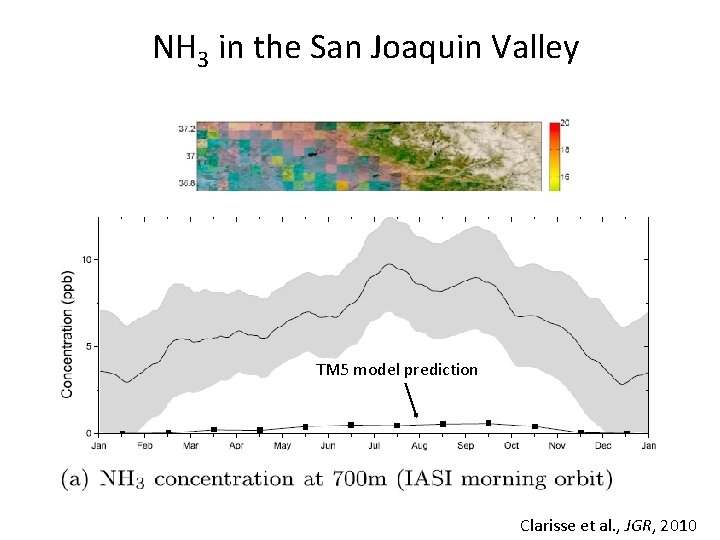
NH 3 in the San Joaquin Valley Fresno NH 3 (ppb) Visalia TM 5 model prediction Bakersfield IASI retrieval of atmospheric ammonia Mar – Oct average at 700 m during morning orbit (09: 30 local) Clarisse et al. , JGR, 2010
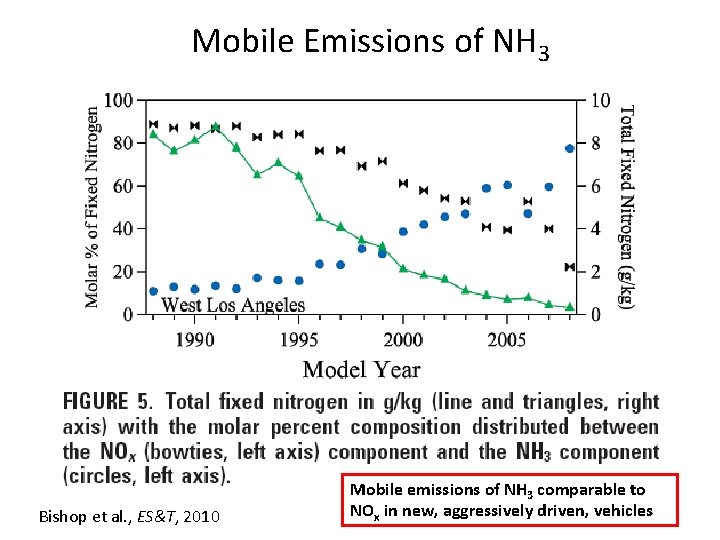
Mobile Emissions of NH 3 Bishop et al. , ES&T, 2010 Mobile emissions of NH 3 comparable to NOx in new, aggressively driven, vehicles
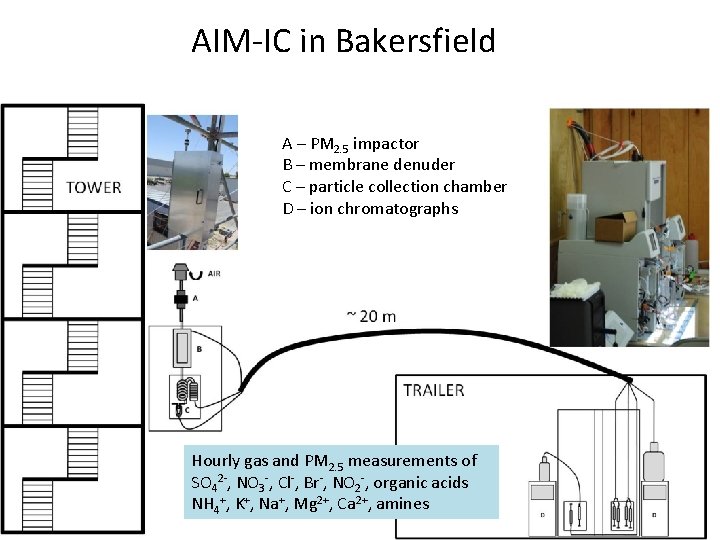
AIM-IC in Bakersfield A – PM 2. 5 impactor B – membrane denuder C – particle collection chamber D – ion chromatographs Hourly gas and PM 2. 5 measurements of SO 42 -, NO 3 -, Cl-, Br-, NO 2 -, organic acids NH 4+, K+, Na+, Mg 2+, Ca 2+, amines
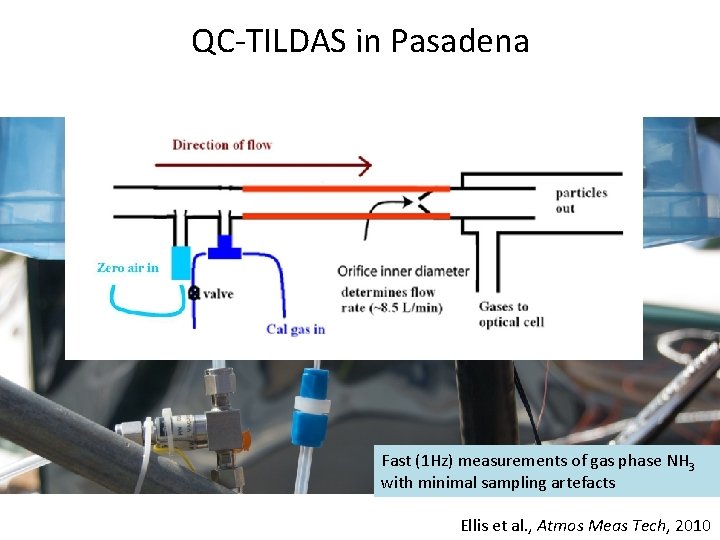
QC-TILDAS in Pasadena Fast (1 Hz) measurements of gas phase NH 3 with minimal sampling artefacts Ellis et al. , Atmos Meas Tech, 2010
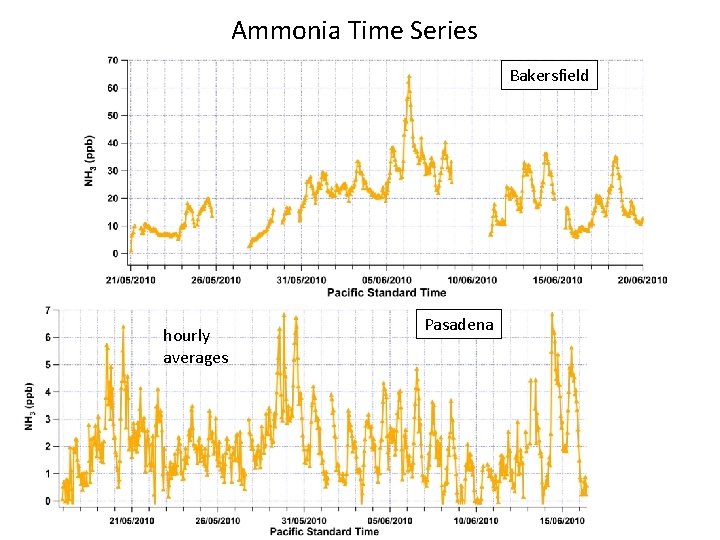
Ammonia Time Series Bakersfield hourly averages Pasadena
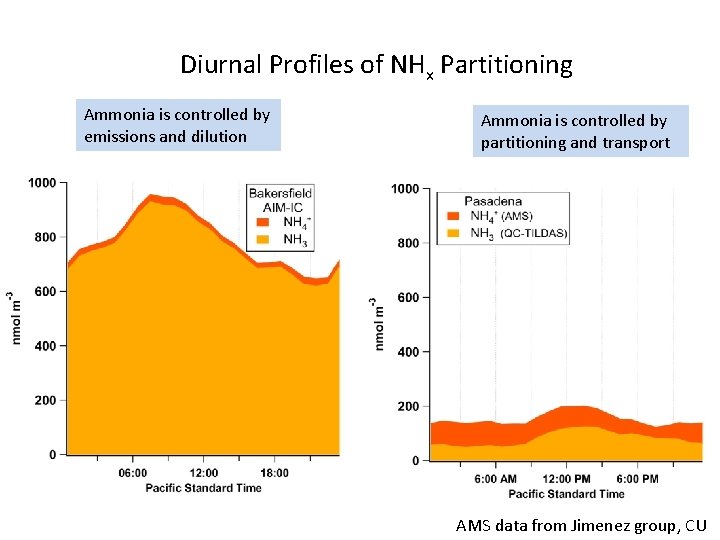
Diurnal Profiles of NHx Partitioning Ammonia is controlled by emissions and dilution Ammonia is controlled by partitioning and transport AMS data from Jimenez group, CU
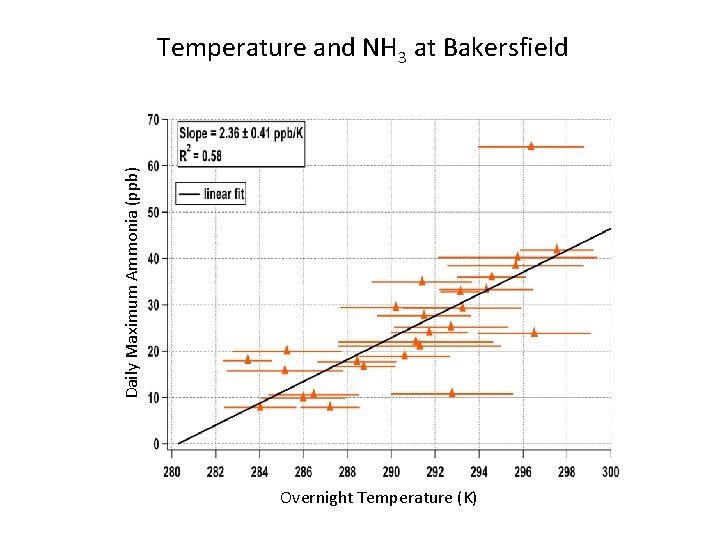
Daily Maximum Ammonia (ppb) Temperature and NH 3 at Bakersfield Overnight Temperature (K)
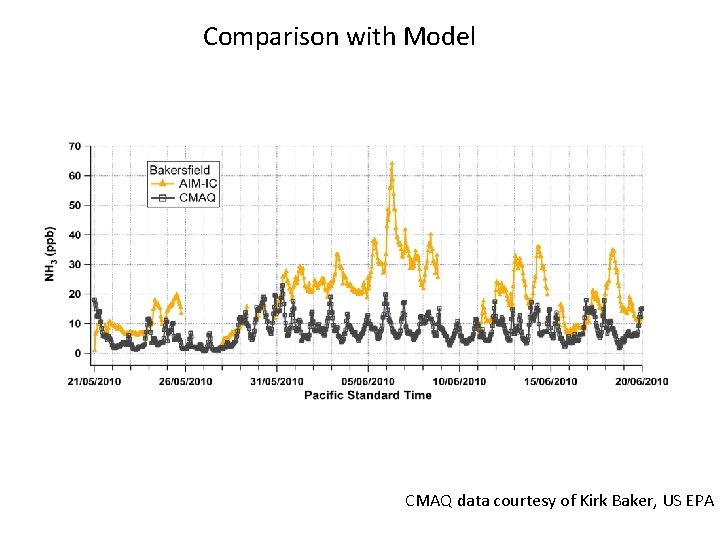
Comparison with Model CMAQ data courtesy of Kirk Baker, US EPA
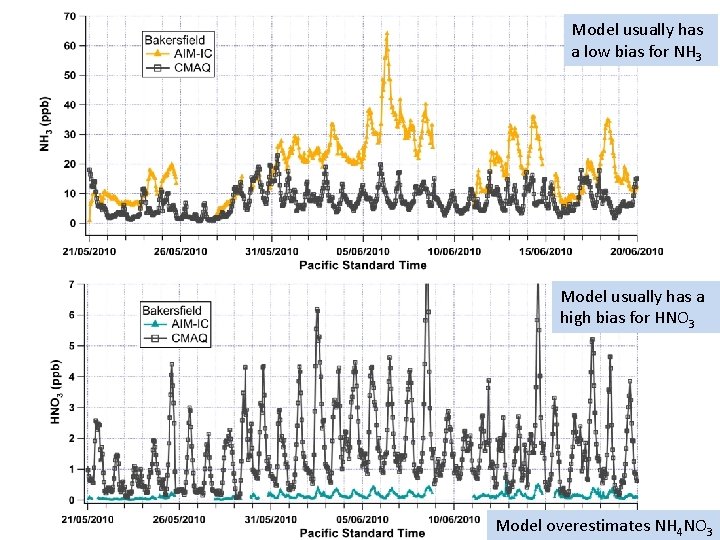
Model usually has a low bias for NH 3 Model usually has a high bias for HNO 3 Model overestimates NH 4 NO 3
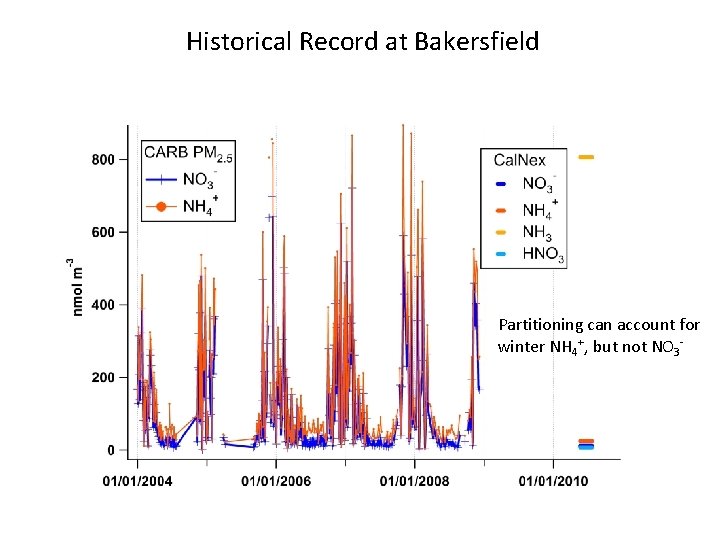
Historical Record at Bakersfield Partitioning can account for winter NH 4+, but not NO 3 -
Summary • NHx is ~4 times larger at Bakersfield than at Pasadena • different processes control NH 3 at the two ground sites • CMAQ does not represent Bakersfield NH 3 well (emissions or partitioning) Additional Questions • aerosol p. H • influence of/on organic acids • relative contributions of NH 3 emissions sources
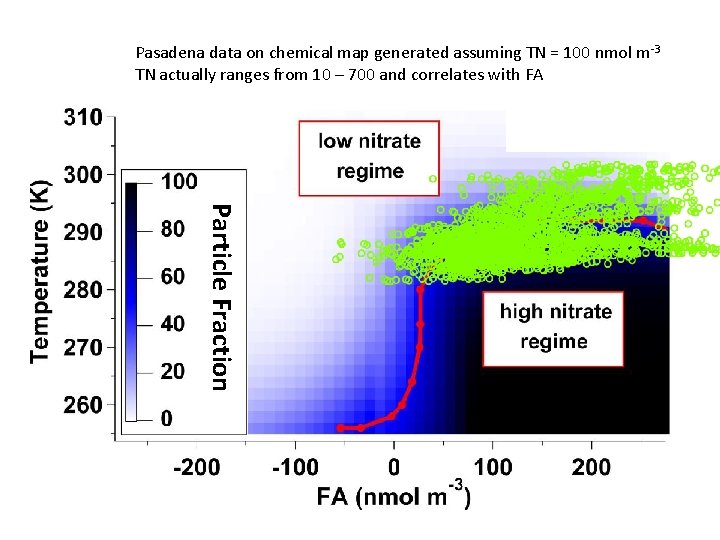
FREE AMMONIA, FA = TA – 2 * TS = [NH 4+] + [NH 3(g)] – 2 * [SO 42 -] Particle Fraction predict partitioning using ISORROPIA Ohio Valley Markovic et al. , Atmos. Chem. Phys. , 2011
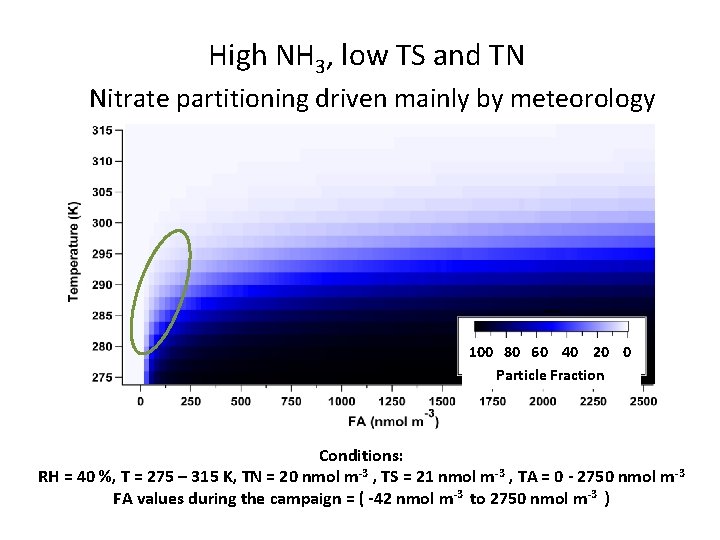
High NH 3, low TS and TN Nitrate partitioning driven mainly by meteorology 100 80 60 40 20 0 Particle Fraction Conditions: RH = 40 %, T = 275 – 315 K, TN = 20 nmol m-3 , TS = 21 nmol m-3 , TA = 0 - 2750 nmol m-3 FA values during the campaign = ( -42 nmol m-3 to 2750 nmol m-3 )
Pasadena data on chemical map generated assuming TN = 100 nmol m-3 TN actually ranges from 10 – 700 and correlates with FA Particle Fraction