
A systemsbased approach to young driver road safety
A systems-based approach to young driver road safety Highways England Road Safety Behaviour Symposium 2017 Dr Neale Kinnear © Copyright 2016 TRL Ltd
Overview Who? Who is at risk? Why do we need a systems-based approach? What is a systems-based approach? 2 © Copyright 2016 TRL Ltd
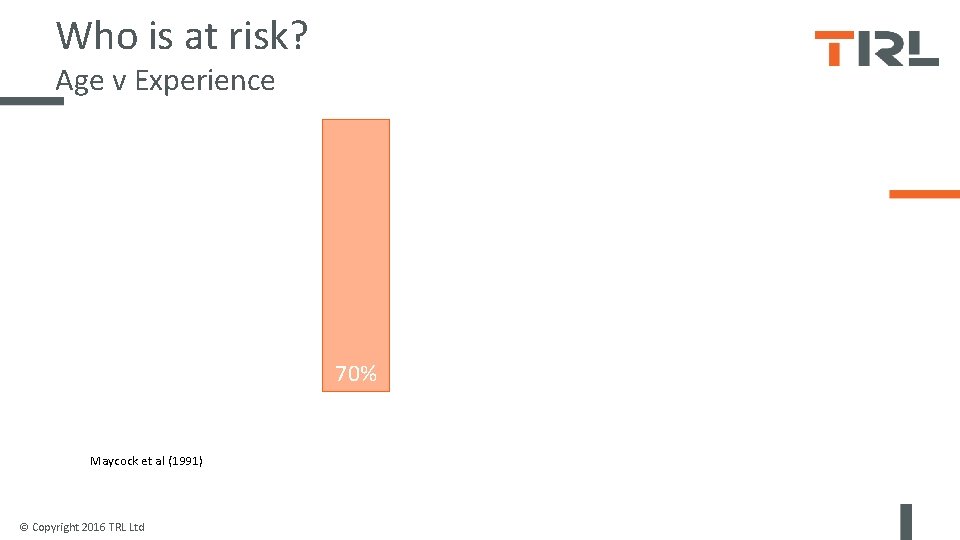
Who is at risk? Age v Experience 70% Maycock et al (1991) © Copyright 2016 TRL Ltd
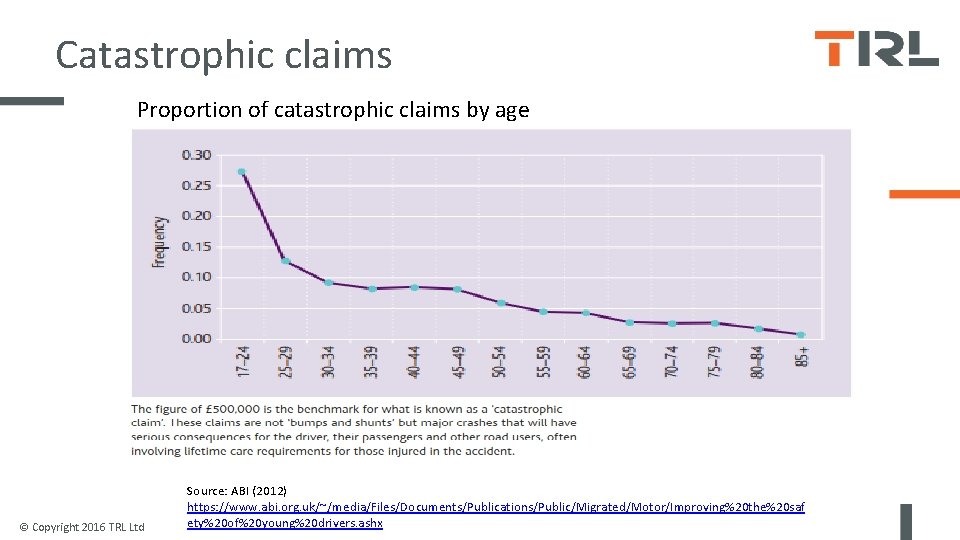
Catastrophic claims Proportion of catastrophic claims by age © Copyright 2016 TRL Ltd Source: ABI (2012) https: //www. abi. org. uk/~/media/Files/Documents/Publications/Public/Migrated/Motor/Improving%20 the%20 saf ety%20 of%20 young%20 drivers. ashx
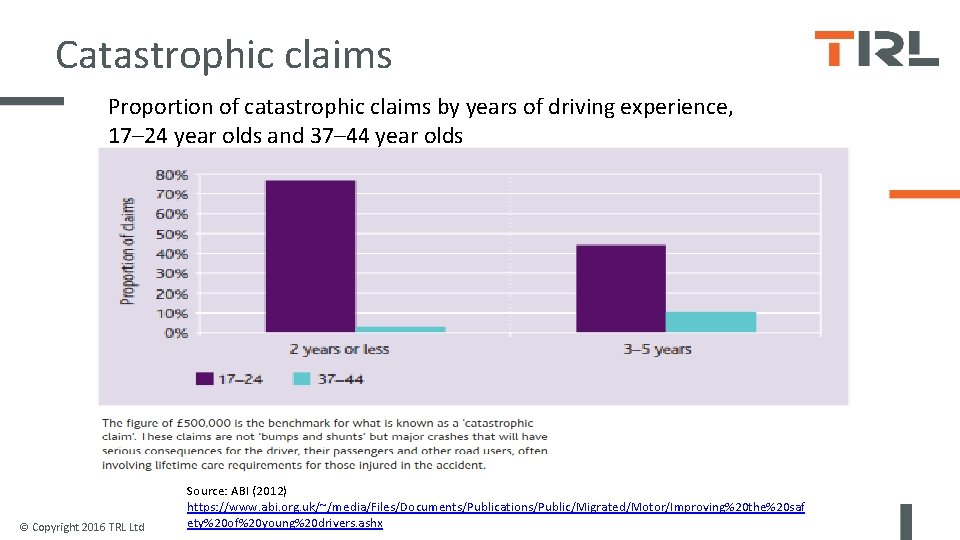
Catastrophic claims Proportion of catastrophic claims by years of driving experience, 17– 24 year olds and 37– 44 year olds © Copyright 2016 TRL Ltd Source: ABI (2012) https: //www. abi. org. uk/~/media/Files/Documents/Publications/Public/Migrated/Motor/Improving%20 the%20 saf ety%20 of%20 young%20 drivers. ashx

Influences on young and novice driver crash risk Lack of experience Poor Hazard Perception Gender NOVICE DRIVER CRASH RISK Age related factors Brain development Over-confidence in abilities Expression Thrill seeking Lifestyle and social attitudes Alcohol and Drugs Peer influences Parents © Copyright 2016 TRL Ltd YOUNG NOVICE DRIVER CRASH RISK
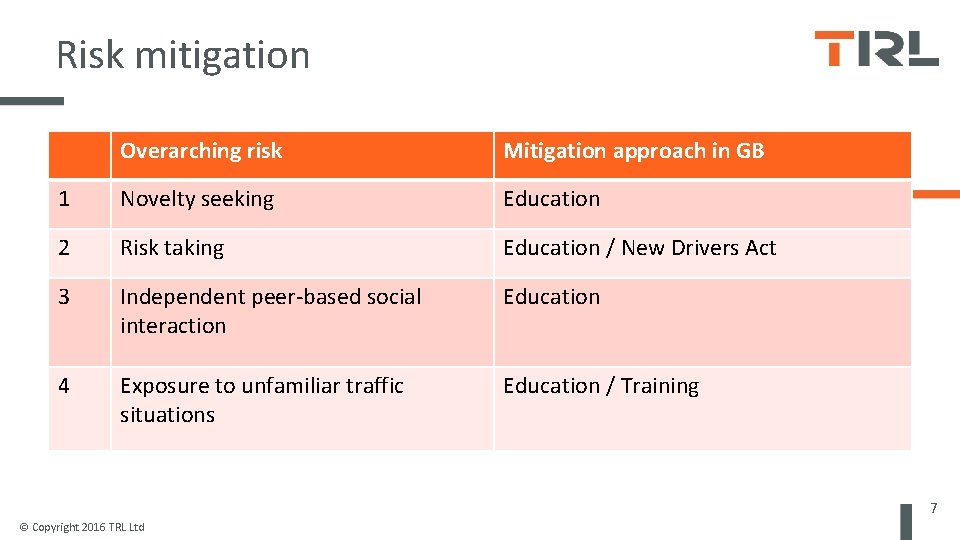
Risk mitigation Overarching risk Mitigation approach in GB 1 Novelty seeking Education 2 Risk taking Education / New Drivers Act 3 Independent peer-based social interaction Education 4 Exposure to unfamiliar traffic situations Education / Training 7 © Copyright 2016 TRL Ltd
![Evidence for effectiveness “According to the evidence it [education and training] has no measurable](http://slidetodoc.com/presentation_image_h2/8daac097225ed66b9bde084a7fbf3a43/image-8.jpg "Evidence for effectiveness “According to the evidence it [education and training] has no measurable")
Evidence for effectiveness “According to the evidence it [education and training] has no measurable direct effect on collision risk, and its continued use should therefore be set against much lower expectations in terms of what it can contribute directly to the safety of new drivers. ” (Helman, Grayson & Parkes. 2010, p 8) “The evidence base for education and training is weak at best, and effectively non-existent when collisions and injuries are used as the outcome of interest” (Kinnear et al. , 2013, p iv) Based on synthesis of numerous meta-analyses and systematic review papers (Brown et al. , 1987; Christie, 2001; Clinton & Lonero, 2006; Mayhew et al. , 1998, 2002; Roberts & Kwan, 2001; Vernick et al. , 1999) © Copyright 2016 TRL Ltd 8
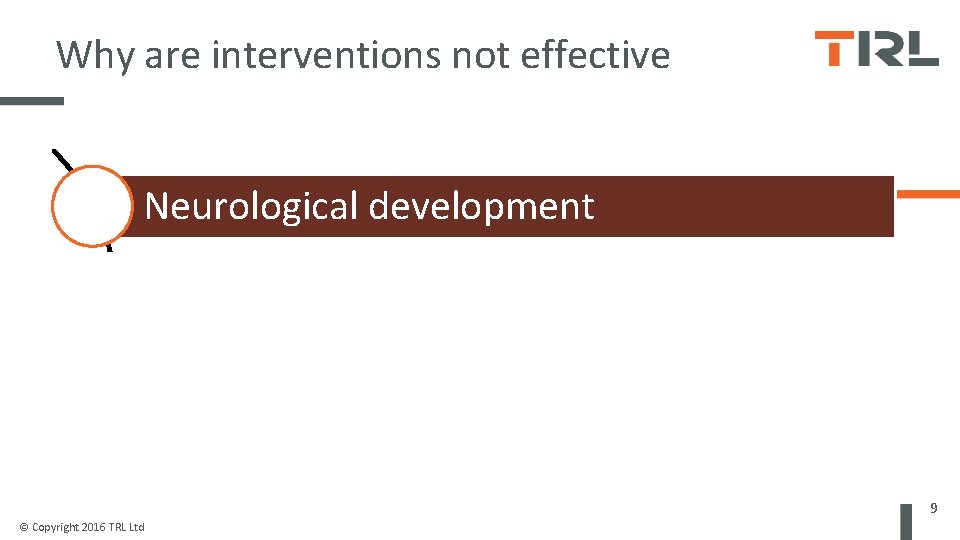
Why are interventions not effective Neurological development Poor design and evaluation Overall approach is ‘young-driver centric’ 9 © Copyright 2016 TRL Ltd
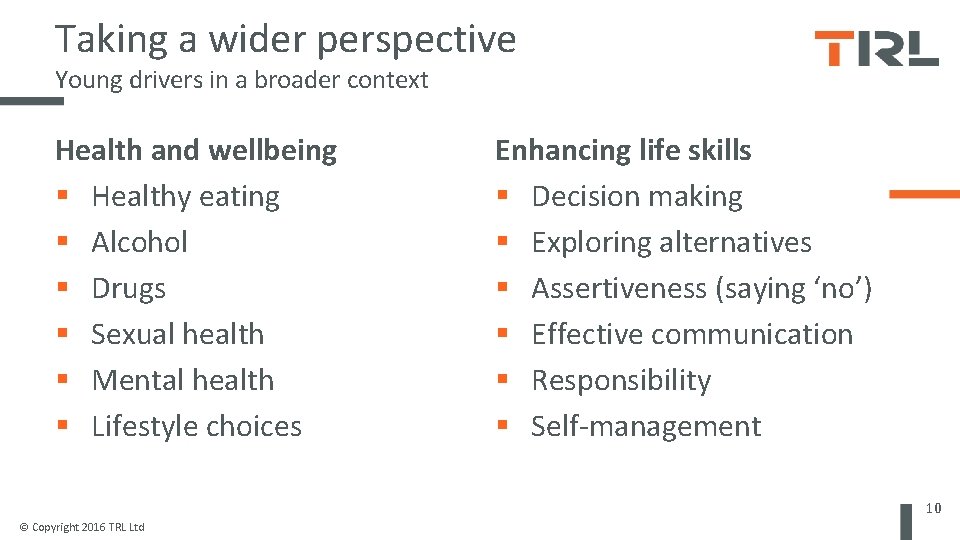
Taking a wider perspective Young drivers in a broader context Health and wellbeing Healthy eating Alcohol Drugs Sexual health Mental health Lifestyle choices Enhancing life skills Decision making Exploring alternatives Assertiveness (saying ‘no’) Effective communication Responsibility Self-management 10 © Copyright 2016 TRL Ltd
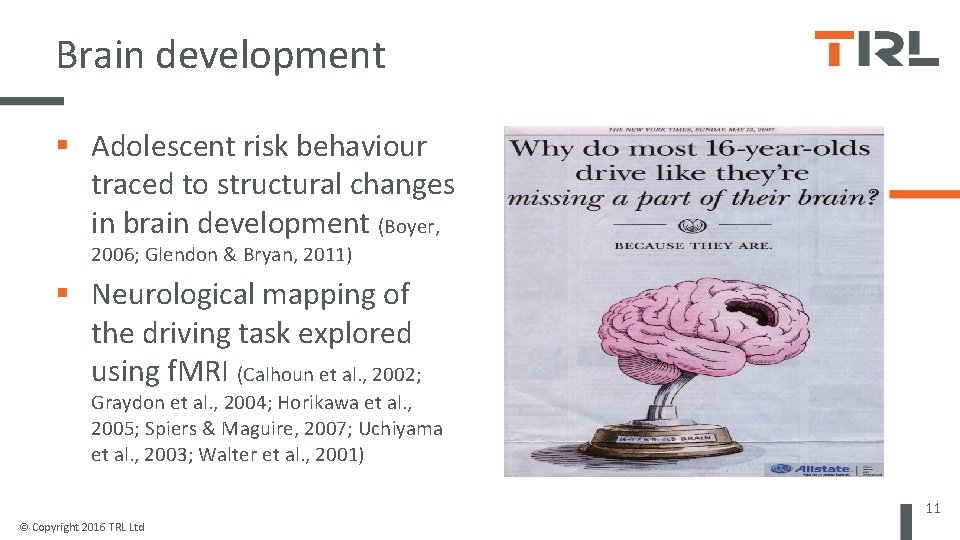
Brain development Adolescent risk behaviour traced to structural changes in brain development (Boyer, 2006; Glendon & Bryan, 2011) Neurological mapping of the driving task explored using f. MRI (Calhoun et al. , 2002; Graydon et al. , 2004; Horikawa et al. , 2005; Spiers & Maguire, 2007; Uchiyama et al. , 2003; Walter et al. , 2001) 11 © Copyright 2016 TRL Ltd
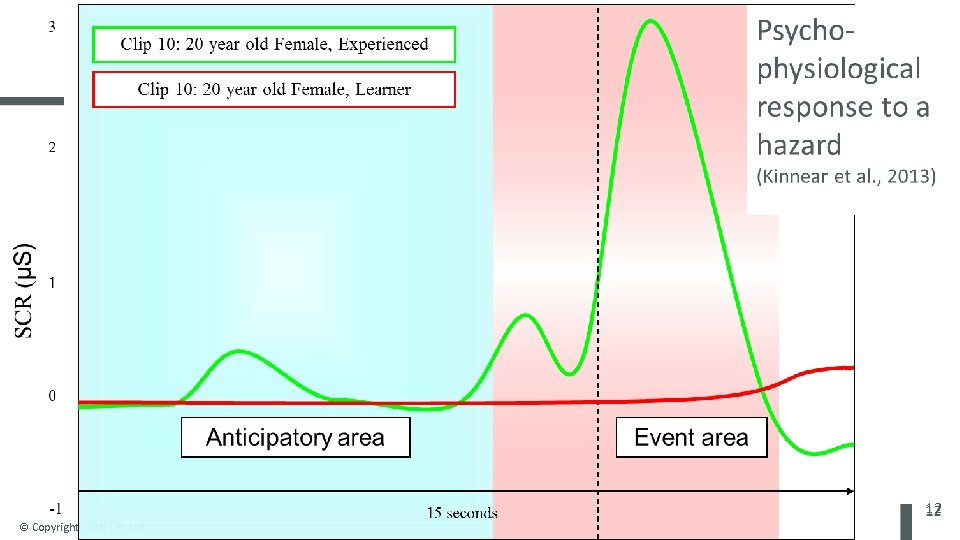
12 © Copyright 2016 TRL Ltd
Why are interventions not effective? Brain development Poor design and evaluation Overall approach is ‘young-driver centric’ 13 © Copyright 2016 TRL Ltd
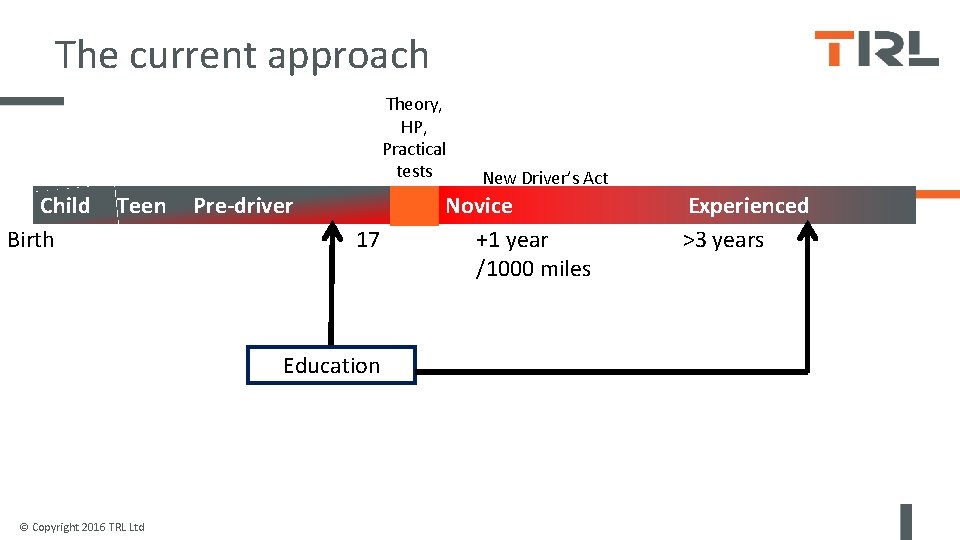
The current approach Theory, HP, Practical tests Child Birth Teen Pre-driver 17 Education © Copyright 2016 TRL Ltd New Driver’s Act Novice +1 year /1000 miles Experienced >3 years
What if… Interventions were not expected to improve safety directly They were designed appropriately with realistic aims They were evaluated against realistic aims and could be justified 15 © Copyright 2016 TRL Ltd
Why are interventions not effective? Brain development Poor design and evaluation Overall approach is ‘young-driver centric’ 16 © Copyright 2016 TRL Ltd
What a system-based approach is not It is not safe-systems or safety culture! Safe-systems philosophy: People will make mistakes and roads, vehicles and speeds should be designed to reduce the risk of a crash and protect people in the event of a crash Traffic Safety Culture: “The assembly of underlying assumptions, beliefs, values and attitudes shared by members of a community, which interact with the community’s structures and systems to influence road safety related behaviours. ” (Edwards et al. , 2014) 17 © Copyright 2016 TRL Ltd
What a system-based approach is Crashes are the outcome of interactions between multiple components in a complex sociotechnical system Systems thinking aims to understand how different components of complex systems interact It is argued that a ‘systems based approach’ rather than a driver-centric approach is required to improve the safety of young novice drivers (Scott-Parker et al. , 2015; Twisk et al. , 2015) 18 © Copyright 2016 TRL Ltd
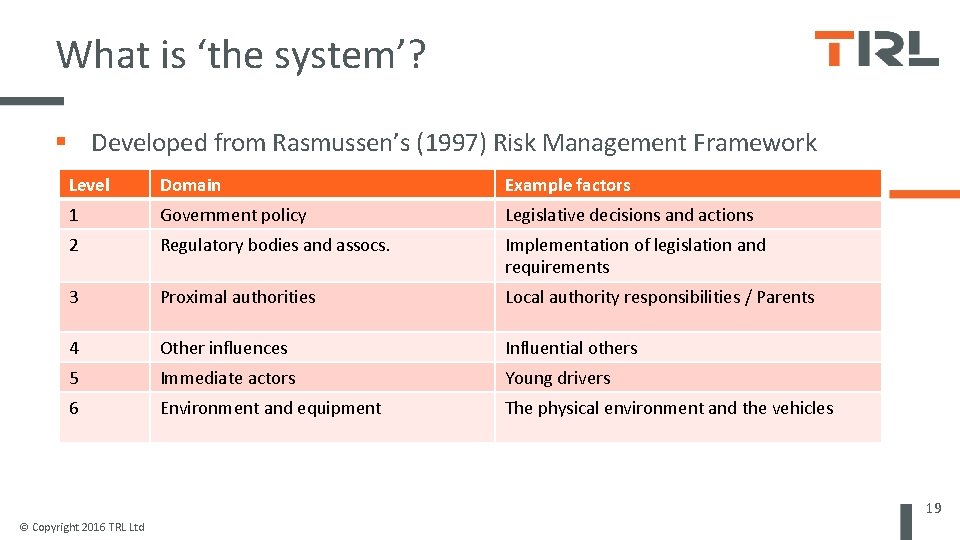
What is ‘the system’? Developed from Rasmussen’s (1997) Risk Management Framework Level Domain Example factors 1 Government policy Legislative decisions and actions 2 Regulatory bodies and assocs. Implementation of legislation and requirements 3 Proximal authorities Local authority responsibilities / Parents 4 Other influences Influential others 5 Immediate actors Young drivers 6 Environment and equipment The physical environment and the vehicles 19 © Copyright 2016 TRL Ltd
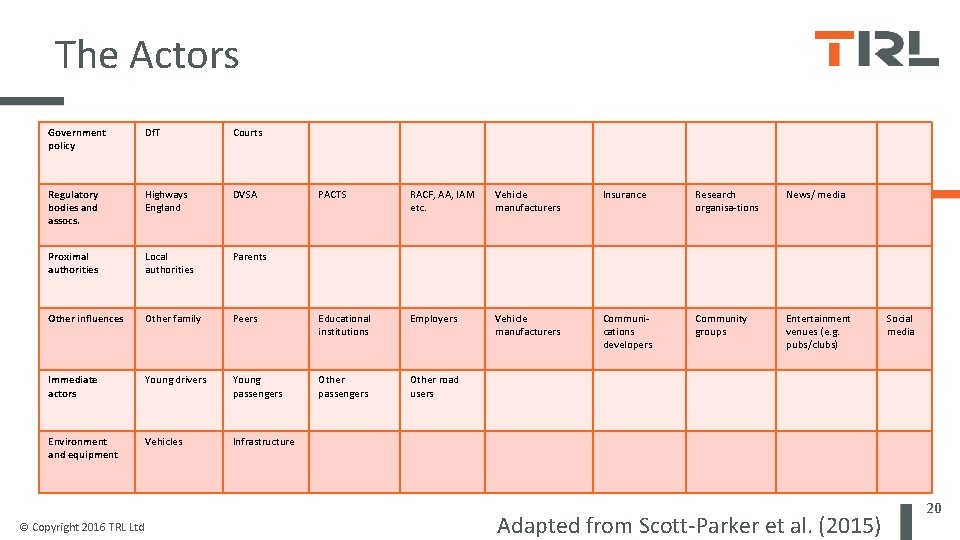
The Actors Government policy Df. T Courts Regulatory bodies and assocs. Highways England DVSA Proximal authorities Local authorities Parents Other influences Other family Immediate actors Environment and equipment © Copyright 2016 TRL Ltd PACTS RACF, AA, IAM etc. Vehicle manufacturers Insurance Research organisa-tions News/ media Peers Educational institutions Employers Vehicle manufacturers Communications developers Community groups Entertainment venues (e. g. pubs/clubs) Young drivers Young passengers Other road users Vehicles Infrastructure Adapted from Scott-Parker et al. (2015) Social media 20
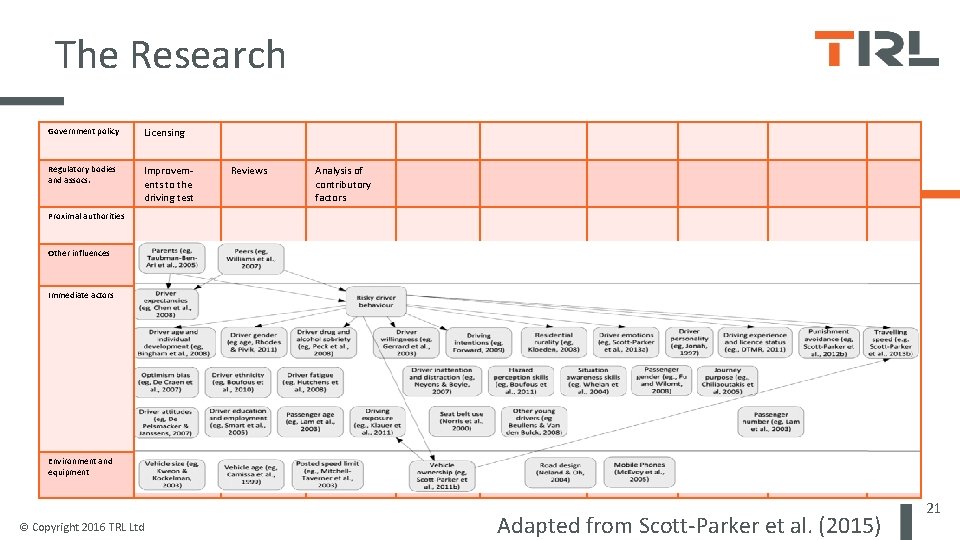
The Research Government policy Licensing Regulatory bodies and assocs. Improvements to the driving test Reviews Analysis of contributory factors Proximal authorities Other influences Immediate actors Environment and equipment © Copyright 2016 TRL Ltd Adapted from Scott-Parker et al. (2015) 21
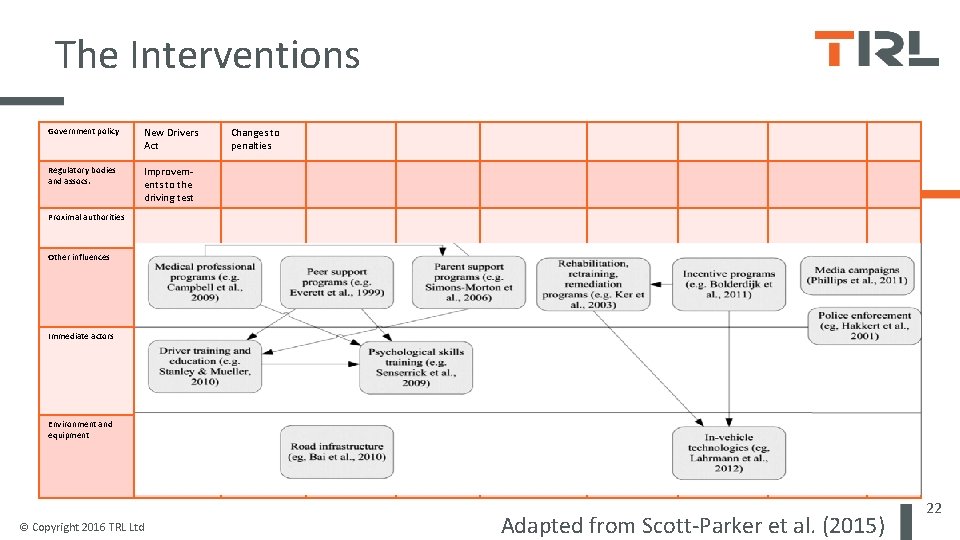
The Interventions Government policy New Drivers Act Regulatory bodies and assocs. Improvements to the driving test Changes to penalties Proximal authorities Other influences Immediate actors Environment and equipment © Copyright 2016 TRL Ltd Adapted from Scott-Parker et al. (2015) 22
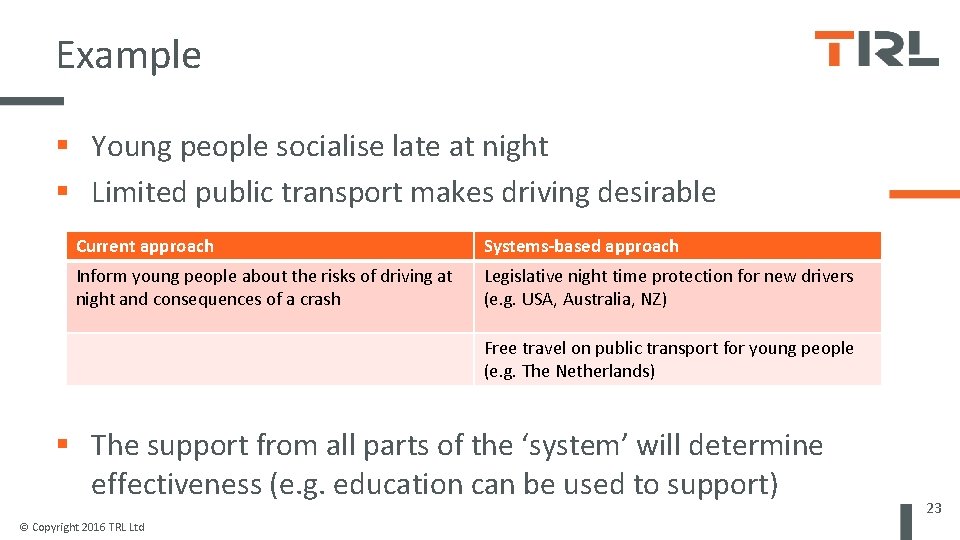
Example Young people socialise late at night Limited public transport makes driving desirable Current approach Systems-based approach Inform young people about the risks of driving at night and consequences of a crash Legislative night time protection for new drivers (e. g. USA, Australia, NZ) Free travel on public transport for young people (e. g. The Netherlands) The support from all parts of the ‘system’ will determine effectiveness (e. g. education can be used to support) © Copyright 2016 TRL Ltd 23
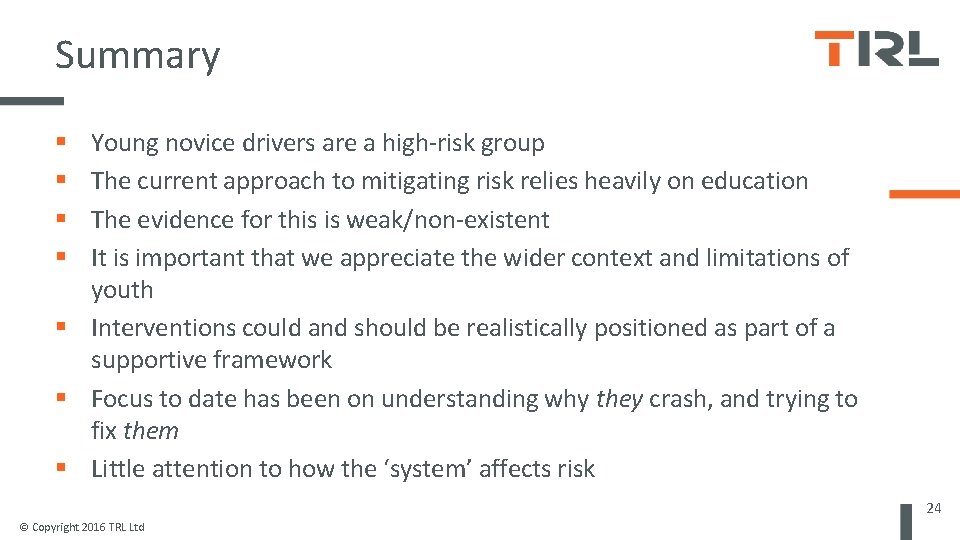
Summary Young novice drivers are a high-risk group The current approach to mitigating risk relies heavily on education The evidence for this is weak/non-existent It is important that we appreciate the wider context and limitations of youth Interventions could and should be realistically positioned as part of a supportive framework Focus to date has been on understanding why they crash, and trying to fix them Little attention to how the ‘system’ affects risk 24 © Copyright 2016 TRL Ltd
“every system is perfectly designed to achieve exactly the results it gets” (Berwick, 2003, p 449) 25 © Copyright 2016 TRL Ltd
So… Can we develop a systems-based framework to improve the safety of young novice drivers and provide a valued and realistic role for educational interventions? 26 © Copyright 2016 TRL Ltd
Thank you Presented by Dr Neale Kinnear Principal Psychologist March 2017 Tel: +44 1344 770101 Email: nkinnear@trl. co. uk © Copyright 2016 TRL Ltd
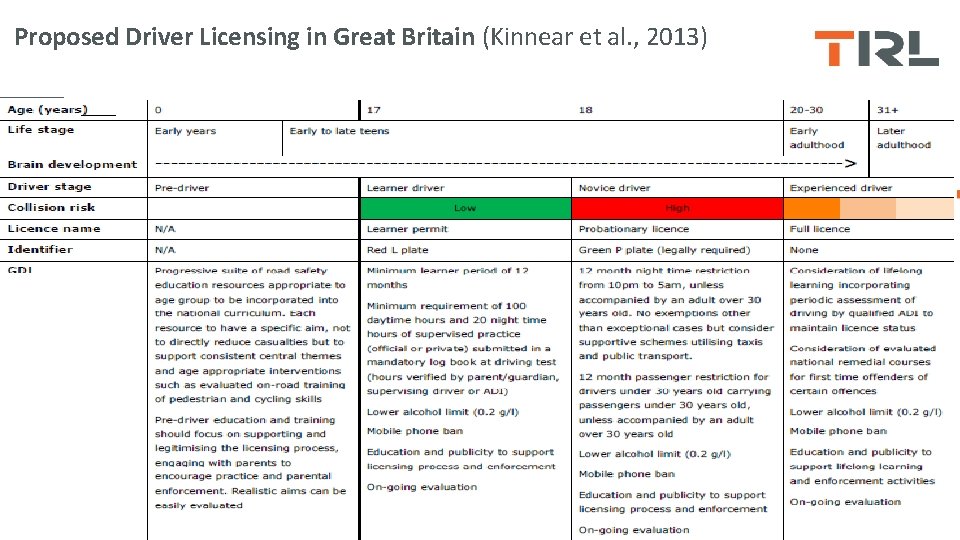
Proposed Driver Licensing in Great Britain (Kinnear et al. , 2013) Page 28 © Copyright 2016 TRL Ltd
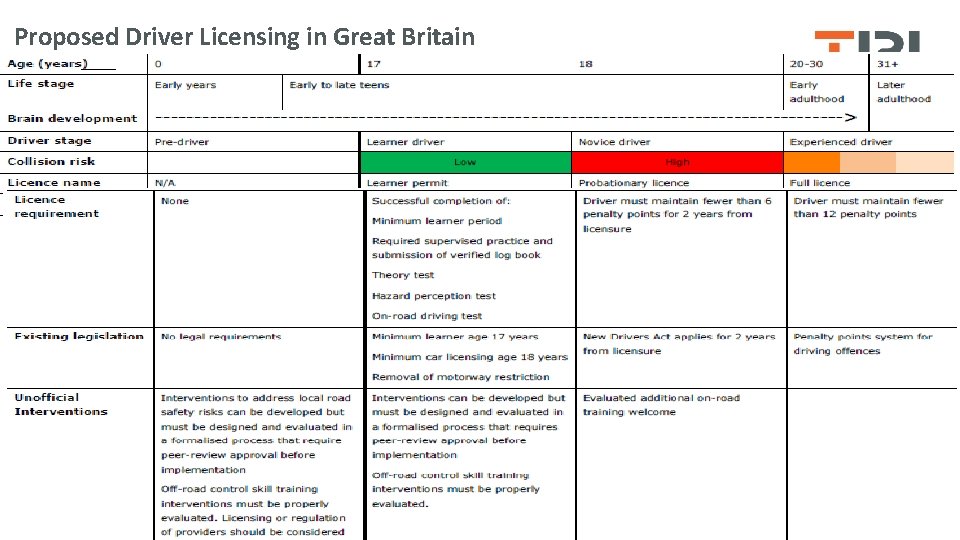
Proposed Driver Licensing in Great Britain Page 29 © Copyright 2016 TRL Ltd
- Slides: 29