
A Systems Approach to Exposure Modeling Expo Cast


- Slides: 23
A Systems Approach to Exposure Modeling (Expo. Cast) John Wambaugh National Center for Computational Toxicology Office of Research and Development U. S. Environmental Protection Agency Future. Tox III: Bridges for Translation Arlington, Virginia November 19 -20, 2015 The views expressed in this presentation are those of the author and do not necessarily reflect the views or policies of the U. S. EPA ORCID: 0000 -0002 -4024 -534 X
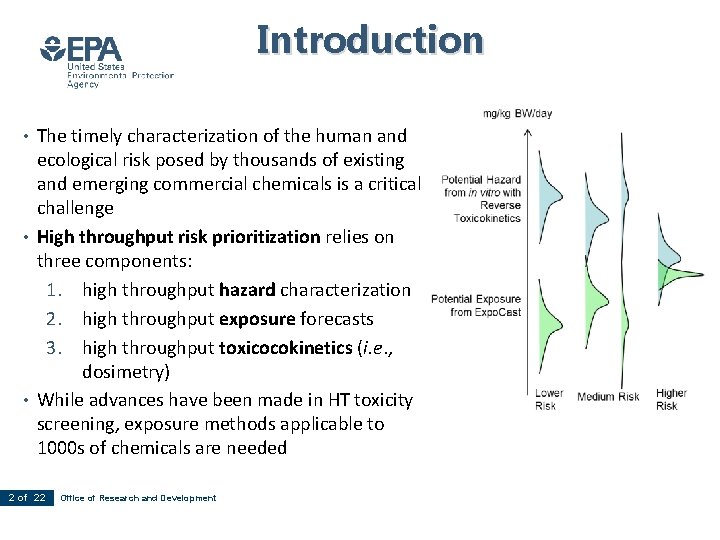
Introduction • The timely characterization of the human and ecological risk posed by thousands of existing and emerging commercial chemicals is a critical challenge • High throughput risk prioritization relies on three components: 1. high throughput hazard characterization 2. high throughput exposure forecasts 3. high throughput toxicocokinetics (i. e. , dosimetry) • While advances have been made in HT toxicity screening, exposure methods applicable to 1000 s of chemicals are needed 2 of 22 Office of Research and Development
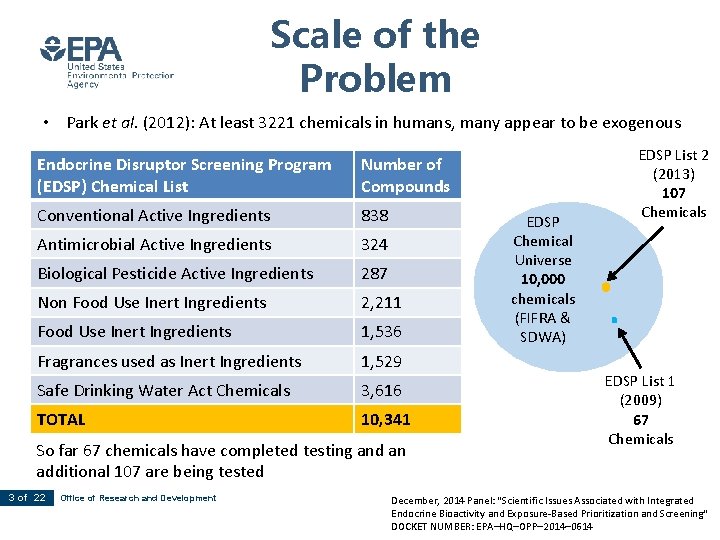
Scale of the Problem • Park et al. (2012): At least 3221 chemicals in humans, many appear to be exogenous Endocrine Disruptor Screening Program (EDSP) Chemical List Number of Compounds Conventional Active Ingredients 838 Antimicrobial Active Ingredients 324 Biological Pesticide Active Ingredients 287 Non Food Use Inert Ingredients 2, 211 Food Use Inert Ingredients 1, 536 Fragrances used as Inert Ingredients 1, 529 Safe Drinking Water Act Chemicals 3, 616 TOTAL 10, 341 So far 67 chemicals have completed testing and an additional 107 are being tested 3 of 22 Office of Research and Development EDSP Chemical Universe 10, 000 chemicals (FIFRA & SDWA) EDSP List 2 (2013) 107 Chemicals EDSP List 1 (2009) 67 Chemicals December, 2014 Panel: “Scientific Issues Associated with Integrated Endocrine Bioactivity and Exposure-Based Prioritization and Screening“ DOCKET NUMBER: EPA–HQ–OPP– 2014– 0614
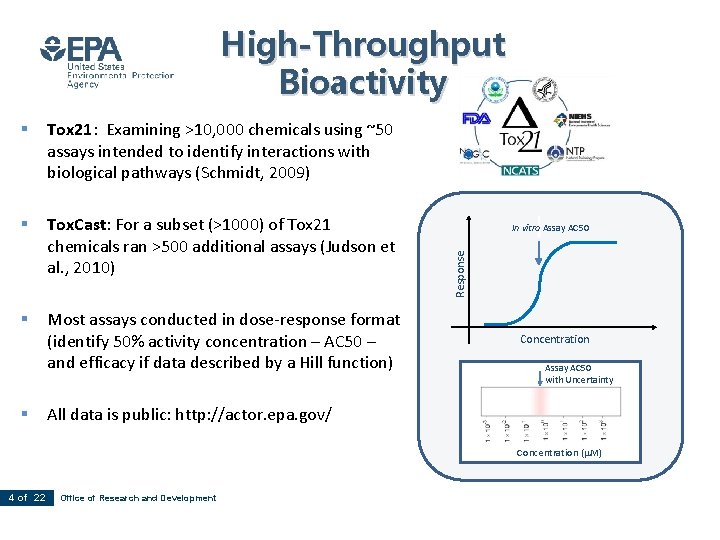
High-Throughput Bioactivity Tox 21: Examining >10, 000 chemicals using ~50 assays intended to identify interactions with biological pathways (Schmidt, 2009) § Tox. Cast: For a subset (>1000) of Tox 21 chemicals ran >500 additional assays (Judson et al. , 2010) § Most assays conducted in dose-response format (identify 50% activity concentration – AC 50 – and efficacy if data described by a Hill function) § In vitro Assay AC 50 Response § Concentration Assay AC 50 with Uncertainty All data is public: http: //actor. epa. gov/ Concentration (m. M) 4 of 22 Office of Research and Development
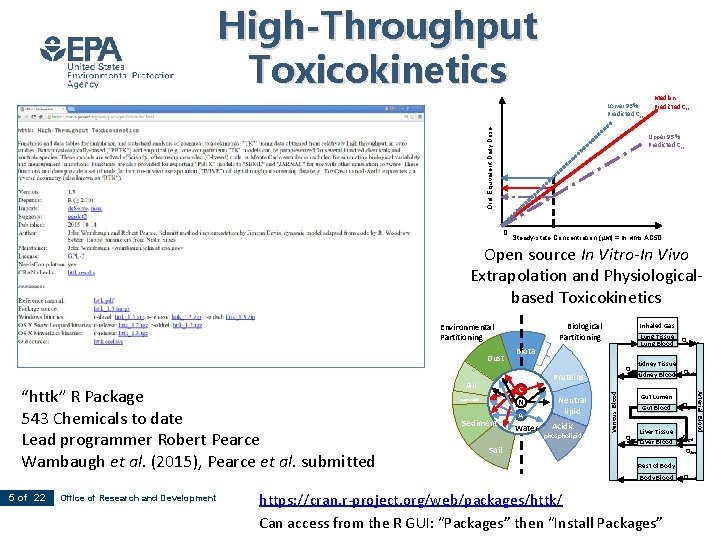
High-Throughput Toxicokinetics Oral Equivalent Daily Dose Lower 95% Predicted Css Median Predicted Css Upper 95% Predicted Css 0 Steady-state Concentration (m. M) = in vitro AC 50 Open source In Vitro-In Vivo Extrapolation and Physiologicalbased Toxicokinetics Biological Partitioning Environmental Partitioning Dust Lung Tissue Lung Blood Biota Kidney Tissue QGFR Kidney Blood water vapor Sediment Soil C N A Water Neutral lipid Acidic phospholipid Venous Blood Proteins Air Gut Lumen Gut Blood Liver Tissue Qmetab Liver Blood Office of Research and Development Qkidney Qgut Qliver Rest of Body Blood 5 of 22 Qcardiac Arterial Blood “httk” R Package 543 Chemicals to date Lead programmer Robert Pearce Wambaugh et al. (2015), Pearce et al. submitted Inhaled Gas https: //cran. r-project. org/web/packages/httk/ Can access from the R GUI: “Packages” then “Install Packages” Qrest
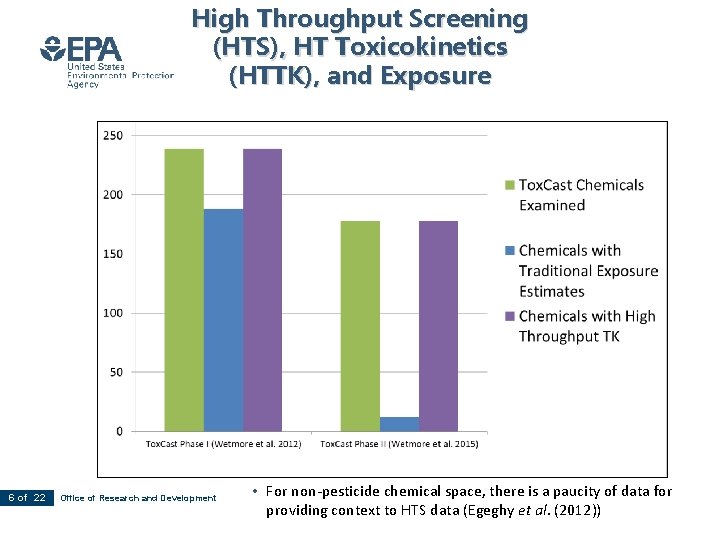
High Throughput Screening (HTS), HT Toxicokinetics (HTTK), and Exposure 6 of 22 Office of Research and Development • For non-pesticide chemical space, there is a paucity of data for providing context to HTS data (Egeghy et al. (2012))
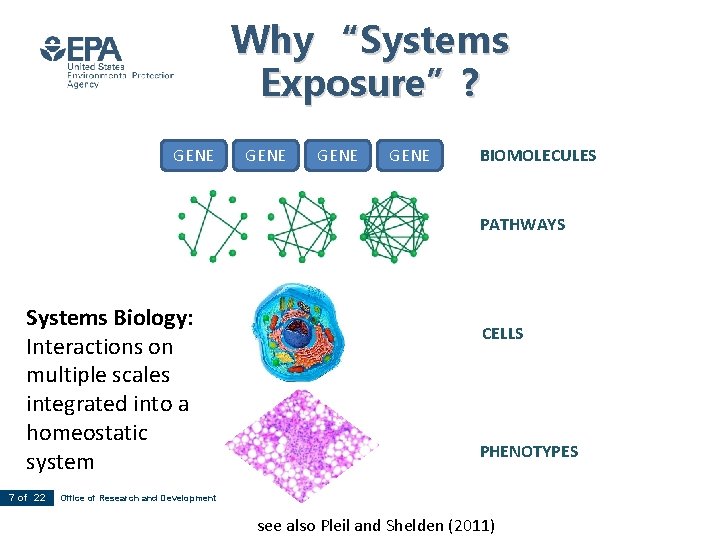
Why “Systems Exposure”? GENE BIOMOLECULES PATHWAYS Systems Biology: Interactions on multiple scales integrated into a homeostatic system 7 of 22 CELLS PHENOTYPES Office of Research and Development see also Pleil and Shelden (2011)
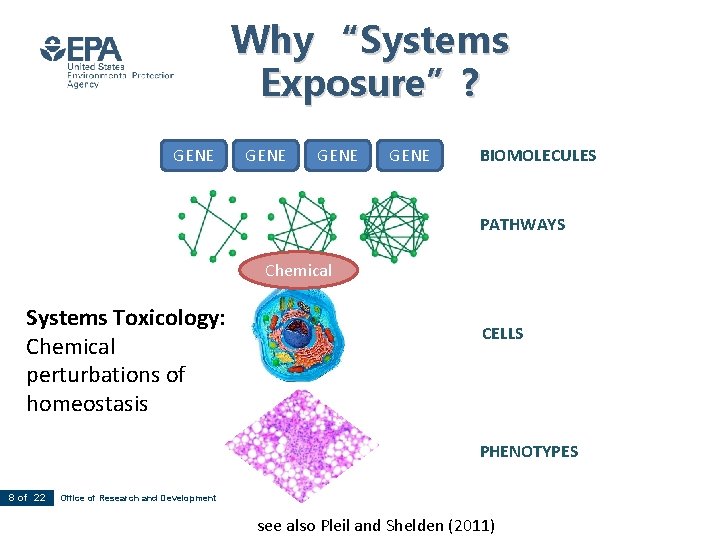
Why “Systems Exposure”? GENE BIOMOLECULES PATHWAYS Chemical Systems Toxicology: Chemical perturbations of homeostasis CELLS PHENOTYPES 8 of 22 Office of Research and Development see also Pleil and Shelden (2011)
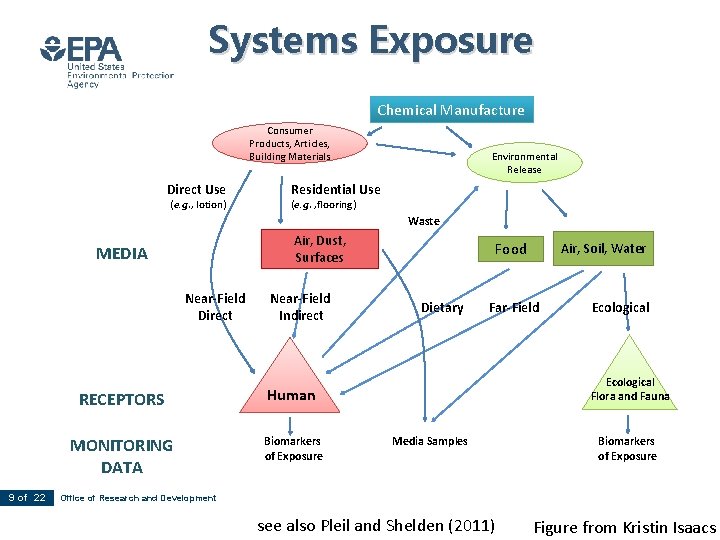
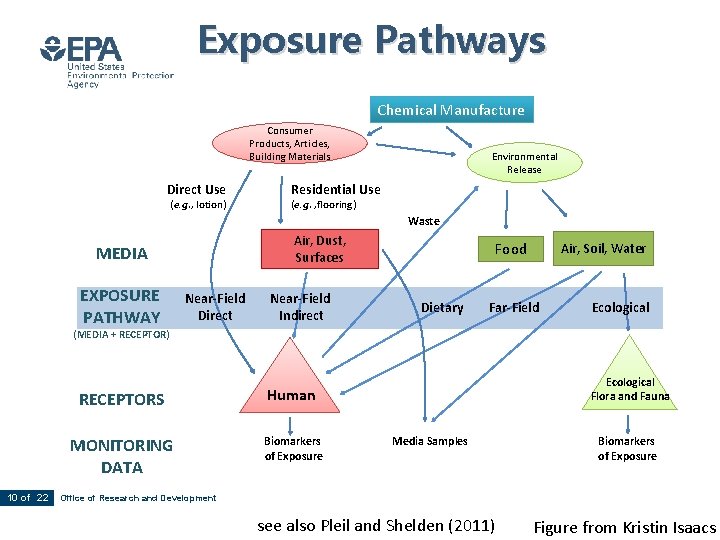
Systems Exposure Chemical Manufacture Consumer Products, Articles, Building Materials Direct Use (e. g. , lotion) Environmental Release Residential Use (e. g. , flooring) Waste Air, Dust, Surfaces MEDIA Near-Field Direct 9 of 22 Near-Field Indirect RECEPTORS Human MONITORING DATA Biomarkers of Exposure Food Dietary Air, Soil, Water Far-Field Ecological Flora and Fauna Media Samples Biomarkers of Exposure Office of Research and Development see also Pleil and Shelden (2011) Figure from Kristin Isaacs
Exposure Pathways Chemical Manufacture Consumer Products, Articles, Building Materials Direct Use (e. g. , lotion) Environmental Release Residential Use (e. g. , flooring) Waste Air, Dust, Surfaces MEDIA EXPOSURE PATHWAY Near-Field Direct Near-Field Indirect Food Dietary Air, Soil, Water Far-Field Ecological (MEDIA + RECEPTOR) 10 of 22 RECEPTORS Human MONITORING DATA Biomarkers of Exposure Ecological Flora and Fauna Media Samples Biomarkers of Exposure Office of Research and Development see also Pleil and Shelden (2011) Figure from Kristin Isaacs
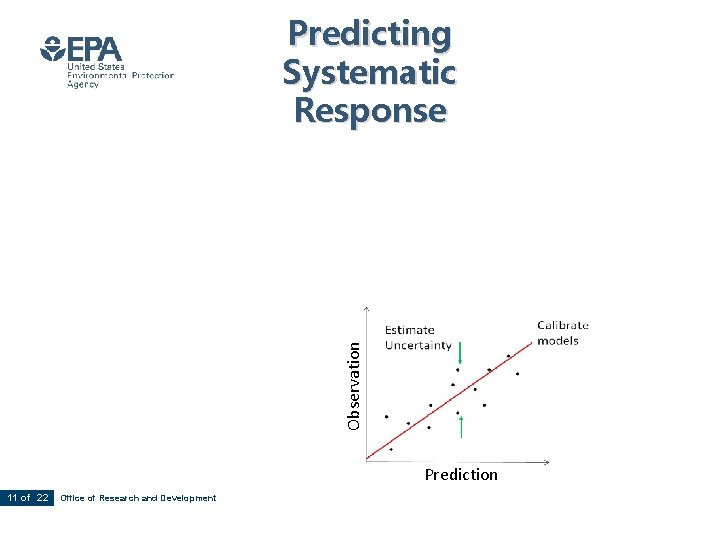
Observation Predicting Systematic Response Prediction 11 of 22 Office of Research and Development
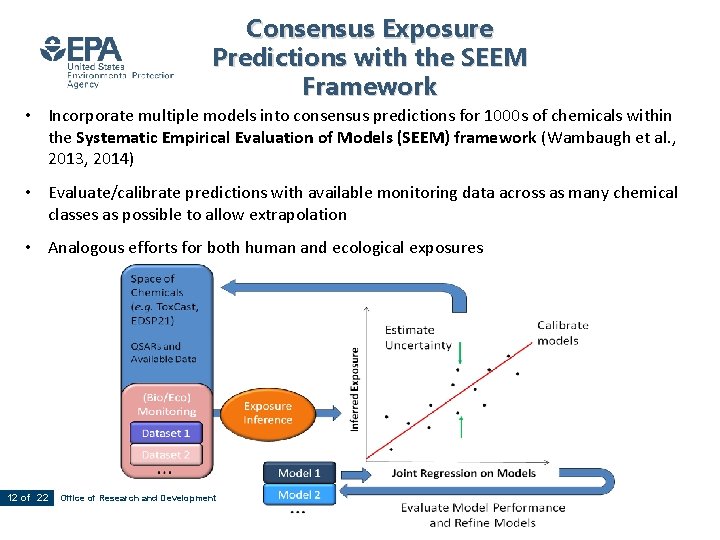
Consensus Exposure Predictions with the SEEM Framework • Incorporate multiple models into consensus predictions for 1000 s of chemicals within the Systematic Empirical Evaluation of Models (SEEM) framework (Wambaugh et al. , 2013, 2014) • Evaluate/calibrate predictions with available monitoring data across as many chemical classes as possible to allow extrapolation • Analogous efforts for both human and ecological exposures 12 of 22 Office of Research and Development
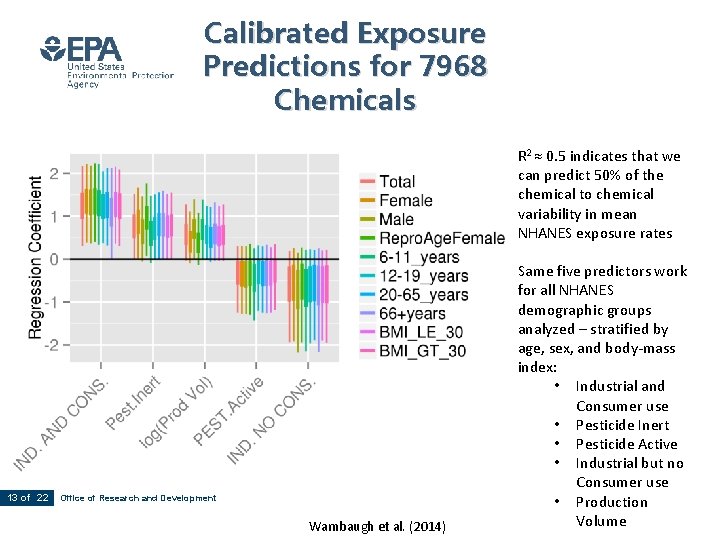
Calibrated Exposure Predictions for 7968 Chemicals R 2 ≈ 0. 5 indicates that we can predict 50% of the chemical to chemical variability in mean NHANES exposure rates 13 of 22 Office of Research and Development Wambaugh et al. (2014) Same five predictors work for all NHANES demographic groups analyzed – stratified by age, sex, and body-mass index: • Industrial and Consumer use • Pesticide Inert • Pesticide Active • Industrial but no Consumer use • Production Volume
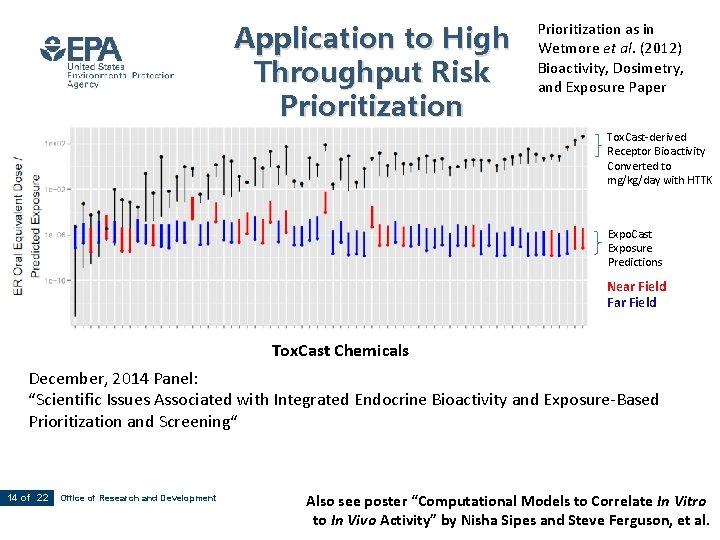
Application to High Throughput Risk Prioritization as in Wetmore et al. (2012) Bioactivity, Dosimetry, and Exposure Paper Tox. Cast-derived Receptor Bioactivity Converted to mg/kg/day with HTTK Expo. Cast Exposure Predictions Near Field Far Field Tox. Cast Chemicals December, 2014 Panel: “Scientific Issues Associated with Integrated Endocrine Bioactivity and Exposure-Based Prioritization and Screening“ 14 of 22 Office of Research and Development Also see poster “Computational Models to Correlate In Vitro to In Vivo Activity” by Nisha Sipes and Steve Ferguson, et al.
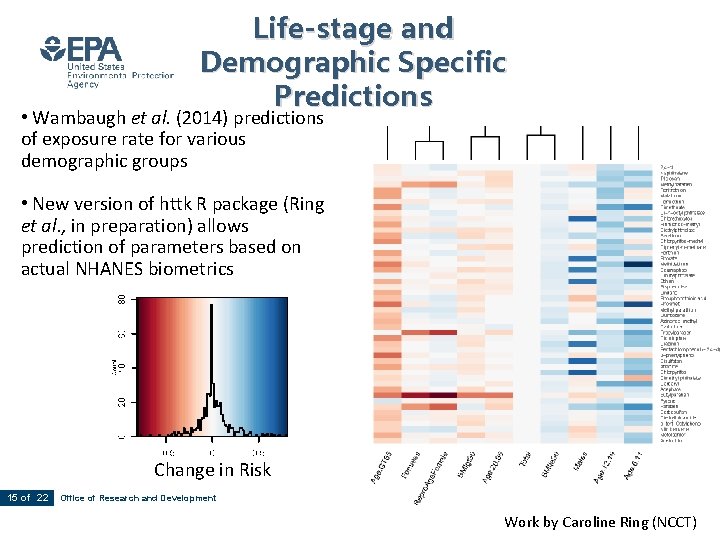
Life-stage and Demographic Specific Predictions • Wambaugh et al. (2014) predictions of exposure rate for various demographic groups • New version of httk R package (Ring et al. , in preparation) allows prediction of parameters based on actual NHANES biometrics Change in Risk 15 of 22 Office of Research and Development Work by Caroline Ring (NCCT)
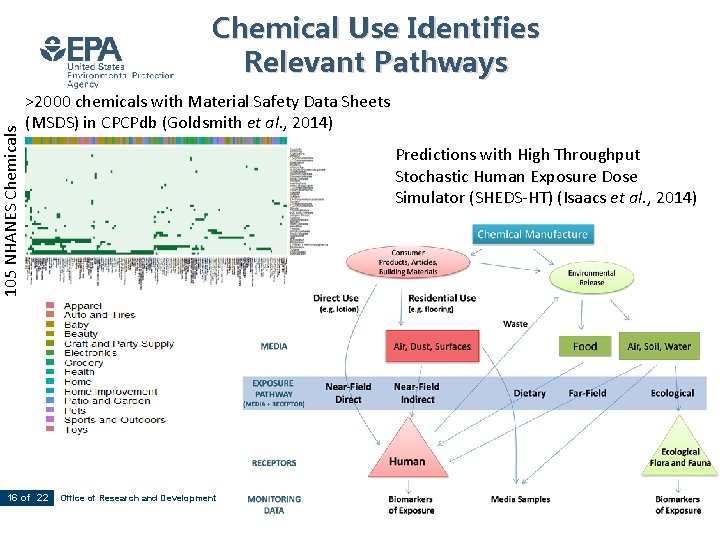
105 NHANES Chemicals Chemical Use Identifies Relevant Pathways >2000 chemicals with Material Safety Data Sheets (MSDS) in CPCPdb (Goldsmith et al. , 2014) 16 of 22 Predictions with High Throughput Stochastic Human Exposure Dose Simulator (SHEDS-HT) (Isaacs et al. , 2014) Office of Research and Development
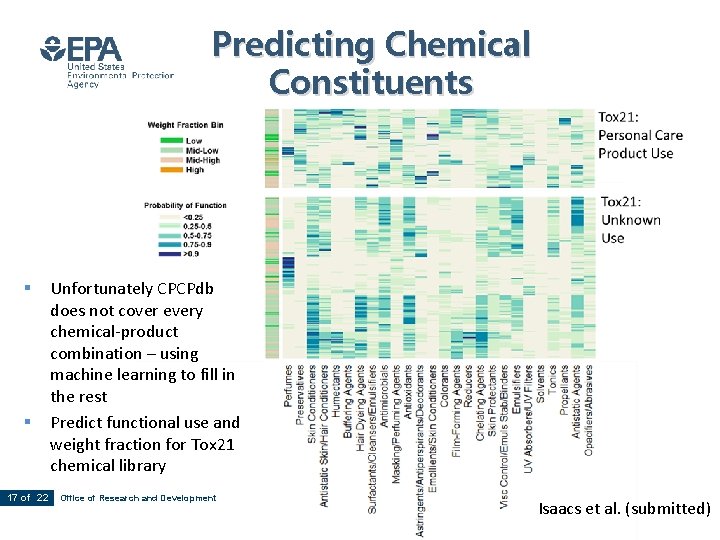
Predicting Chemical Constituents § § 17 of 22 Unfortunately CPCPdb does not cover every chemical-product combination – using machine learning to fill in the rest Predict functional use and weight fraction for Tox 21 chemical library Office of Research and Development Isaacs et al. (submitted)
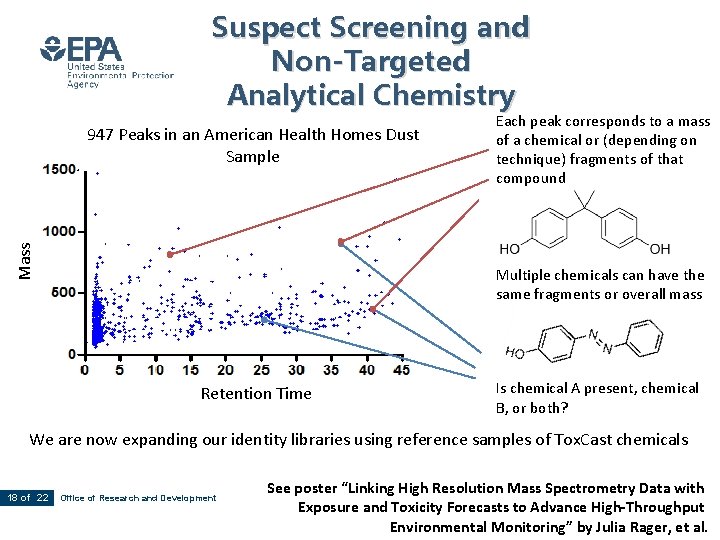
Suspect Screening and Non-Targeted Analytical Chemistry Mass 947 Peaks in an American Health Homes Dust Sample Each peak corresponds to a mass of a chemical or (depending on technique) fragments of that compound Multiple chemicals can have the same fragments or overall mass Retention Time Is chemical A present, chemical B, or both? We are now expanding our identity libraries using reference samples of Tox. Cast chemicals 18 of 22 Office of Research and Development See poster “Linking High Resolution Mass Spectrometry Data with Exposure and Toxicity Forecasts to Advance High-Throughput Environmental Monitoring” by Julia Rager, et al.
Exposure Screening Tools for Accelerated Chemical Prioritization (Expo. Cast) § Contracts were awarded (December, 2014) to Southwest Research Institute and Battelle § Phase I (Pilot) Examining capabilities and feasibility Assay Unit Pilot Order Contractor Lead Researcher Lead EPA Post-Docs High Throughput Screeningcompound Level Physico-Chemical Properties Measurement (VP, p. Ka, Henry's Law, Kow) 200 Alice Yau (SWRI) Chantel Nicolas and Kamel Mansouri Determine Chemical Constituents of products, materials, articles (screening level) test object 20 classes of Alice Yau (SWRI) product, 5 samples each Katherine Phillips Determine chemical emission rate from specific products, materials, articles test object 100 Anne Louise Sumner and Tom Kelly (Battelle) Chantel Nicolas 500 blood samples (likely from Indianapolis) Anne Gregg (Battelle) Caroline Ring Screening for occurrence of sample large numbers of chemicals in sample acquired by contractor (biological media) 19 of 22 Office of Research and Development
Expo. Cast Biomonitoring § Screening for occurrence of large numbers of chemicals in sample acquired by contractor (biological media) § Research Conducted by Battelle Memorial Institute (Anne Gregg) § Cohort is a mixed gender and race group of adults from Indianapolis § Sample Screening • One extraction method resulting in two aliquots for analysis • Two analysis methods GCx. GC TOFMS and LC-TOFMS § In addition to 200 priority Tox. Cast chemicals, we will look for NHANES chemicals as reference 20 of 22 Office of Research and Development
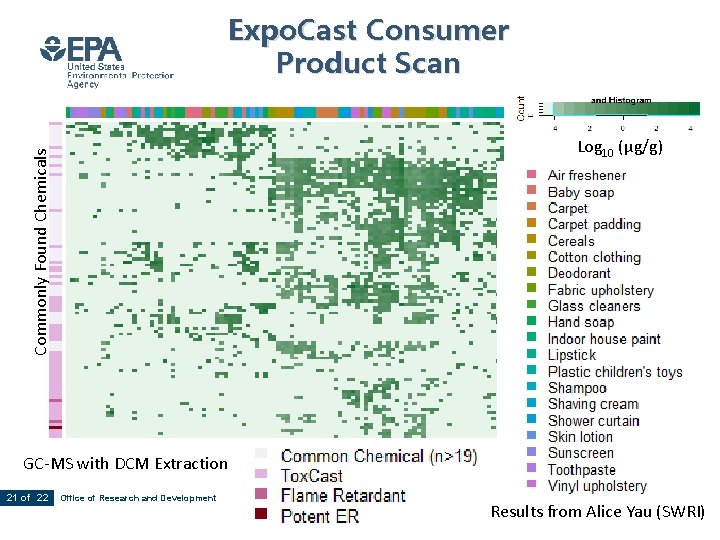
Expo. Cast Consumer Product Scan Commonly Found Chemicals Log 10 (µg/g) GC-MS with DCM Extraction 21 of 22 Office of Research and Development Results from Alice Yau (SWRI)
High Throughput Exposure (HTE) • There are low levels of thousands of xenobiotic chemicals present in the metabolome, relating these to exposures and health effects is an important unsolved problem • Can use a combination of forward modeling and reverse inference from biomarkers to predict exposure • Broader monitoring data informs evaluation of those predictions • Better chemical use data informs models predicting exposure • Toxicokinetics (TK) provides a bridge between HTS and HTE by predicting tissue concentrations due to exposure • New R package “httk” freely available on CRAN allows statistical and other analyses of 543 chemicals (Tox. Cast + pharmaceuticals) 22 of 22 Office of Research and Development The views expressed in this presentation are those of the author and do not necessarily reflect the views or policies of the U. S. EPA
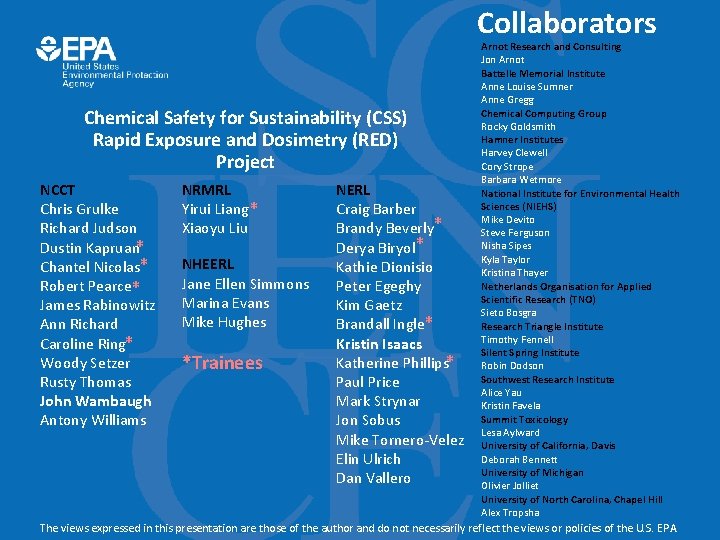
Collaborators Chemical Safety for Sustainability (CSS) Rapid Exposure and Dosimetry (RED) Project NCCT Chris Grulke Richard Judson Dustin Kapruan* Chantel Nicolas* Robert Pearce* James Rabinowitz Ann Richard Caroline Ring* Woody Setzer Rusty Thomas John Wambaugh Antony Williams NRMRL Yirui Liang* Xiaoyu Liu NHEERL Jane Ellen Simmons Marina Evans Mike Hughes *Trainees NERL Craig Barber Brandy Beverly* Derya Biryol* Kathie Dionisio Peter Egeghy Kim Gaetz Brandall Ingle* Kristin Isaacs Katherine Phillips* Paul Price Mark Strynar Jon Sobus Mike Tornero-Velez Elin Ulrich Dan Vallero Arnot Research and Consulting Jon Arnot Battelle Memorial Institute Anne Louise Sumner Anne Gregg Chemical Computing Group Rocky Goldsmith Hamner Institutes Harvey Clewell Cory Strope Barbara Wetmore National Institute for Environmental Health Sciences (NIEHS) Mike Devito Steve Ferguson Nisha Sipes Kyla Taylor Kristina Thayer Netherlands Organisation for Applied Scientific Research (TNO) Sieto Bosgra Research Triangle Institute Timothy Fennell Silent Spring Institute Robin Dodson Southwest Research Institute Alice Yau Kristin Favela Summit Toxicology Lesa Aylward University of California, Davis Deborah Bennett University of Michigan Olivier Jolliet University of North Carolina, Chapel Hill Alex Tropsha The views expressed in this presentation are those of the author and do not necessarily reflect the views or policies of the U. S. EPA