
A Systematic Approach to EMS Cardiac Arrest Management





- Slides: 29
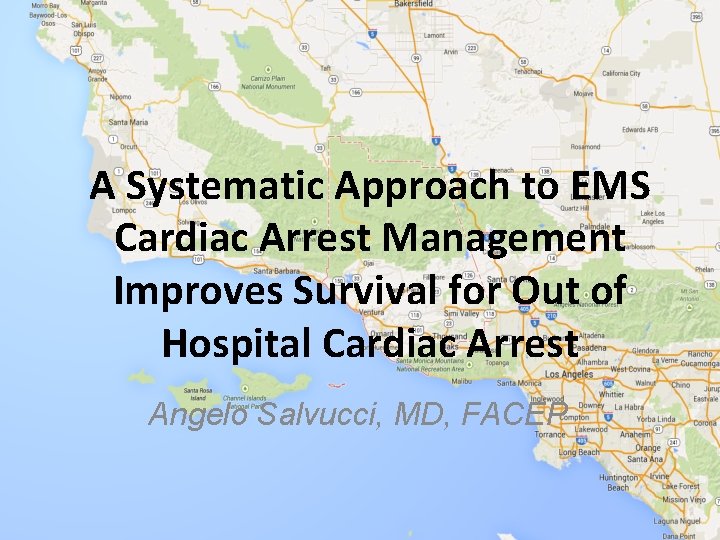
A Systematic Approach to EMS Cardiac Arrest Management Improves Survival for Out of Hospital Cardiac Arrest Angelo Salvucci, MD, FACEP
Contributing Authors AMR Medicine: • Lynn White, MS Ventura County EMS: • Chad Panke, EMT-P • Katy Hadduck, RN • David Chase, MD Santa Barbara County EMS: • Jennie Simon, RN • Les Hugie, EMT-P • Alexia Armenta, BS • Gregory Shinn, BS
Presenter Disclosure Information FINANCIAL DISCLOSURE: § None UNLABELED/UNAPPROVED USES DISCLOSURE: § None
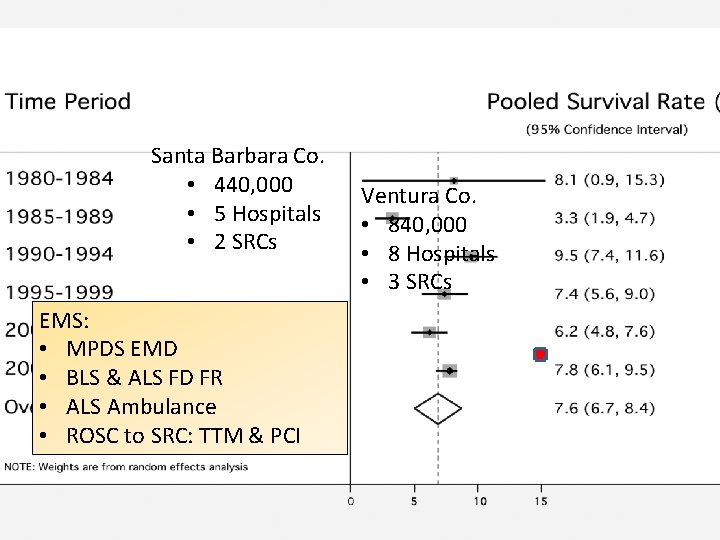
Santa Barbara Co. • 440, 000 • 5 Hospitals • 2 SRCs EMS: • MPDS EMD • BLS & ALS FD FR • ALS Ambulance • ROSC to SRC: TTM & PCI Ventura Co. • 840, 000 • 8 Hospitals • 3 SRCs
Presentation Slide Title
New York Times; December 7, 2015 “My fear is that they won’t make much of a difference. You have this information in the ether, but there’s no point if people aren’t doing it to patients. ” Sam Parnia, MD Director, Resuscitation Research Stony Brook Hospital
“WHAT” VS “HOW”
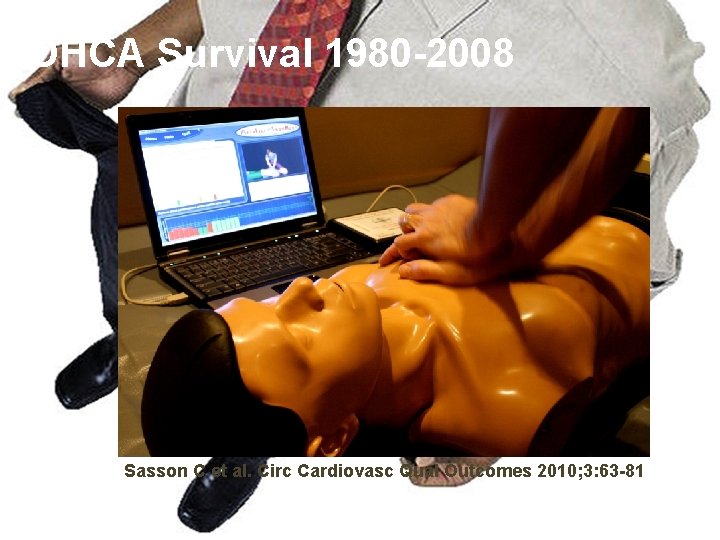
OHCA Survival 1980 -2008 Sasson C et al. Circ Cardiovasc Qual Outcomes 2010; 3: 63 -81
Disparities • • ROC: 12, 000, OHCAs 10 systems Overall survival 3. 0% - 16. 3%, median 8. 4% VF survival 7. 7% - 39. 9%, median 22. 0% Increase from median to max would prevent 15, 000 deaths Nichol: JAMA. 2008; 300(12): 1423 -1431. Sanders: JAMA. 2008; 300(12): 1462 -1463.
Objective To determine if a comprehensive system of education, training, treatment protocols and quality improvement would affect survival of patients in sudden cardiac arrest.
Cardiac Arrest Management (CAM) System of care: • Commitment of all participants • Evidence-based treatment protocols – 10: 1 compression/ventilation w/o pause – BLS airway preferred • Targeted, goal-directed education – 60 minutes didactic – Teamwork, Positioning, CPR (CC, BMV), ALS, ROSC • Individual and team training: 120 minutes – Mandatory minimum proficiency thresholds – Organized explicit system of rescuer roles • QI program with process and outcome measures
Process • Multidisciplinary Development Committee • All EMTs and Paramedics in the EMS system were trained – Santa Barbara: December 2012 – Ventura County: December 2013 • Cardiac Arrest Registry to Enhance Survival (CARES) utilized for data management and comparison. • Patient populations studied: – All cardiac arrests of presumed cardiac etiology – Bystander-witnessed cardiac arrest with shockable first rhythm
Goal To maximize the number of cardiac arrest patients that return home to their families neurologically intact
Strategies HOW TO ACHIEVE THE GOAL: 1. 2. 3. 4. 5. 6. 7. 8. 9. Assigned roles Rapid and accurate assessment Adequate work space Continuous high quality chest compressions Airway with synchronized ventilations Prompt defibrillation ALS: Vascular access with medications Resuscitation Management & Teamwork Recognition of ROSC
Back to Basics Cornerstones of treatment: ◦ Assessment ◦ Patient Positioning ◦ CPR Continuous Chest Compressions Airway/Ventilation/Oxygenation ◦ Defibrillation Possible, but unproven value: ◦ ◦ Intubation Vascular access (IV/IO) Pressors (epinephrine) Antiarrhythmics (lidocaine, amiodarone)
Strategy #4 Continuous High Quality Chest Compressions • • • Rate 112/Minute (metronome) Depth 2 -2. 5 Inches Full Chest Recoil o Increases likelihood of successful defibrillation o Maintains brain viability
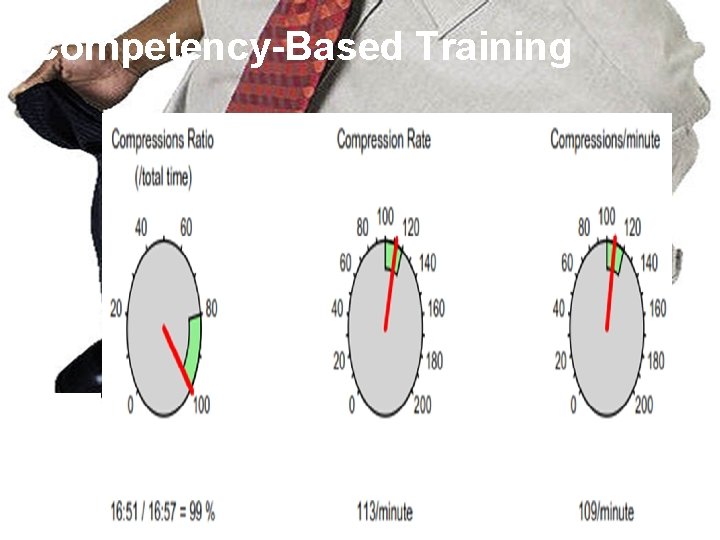
Competency-Based Training
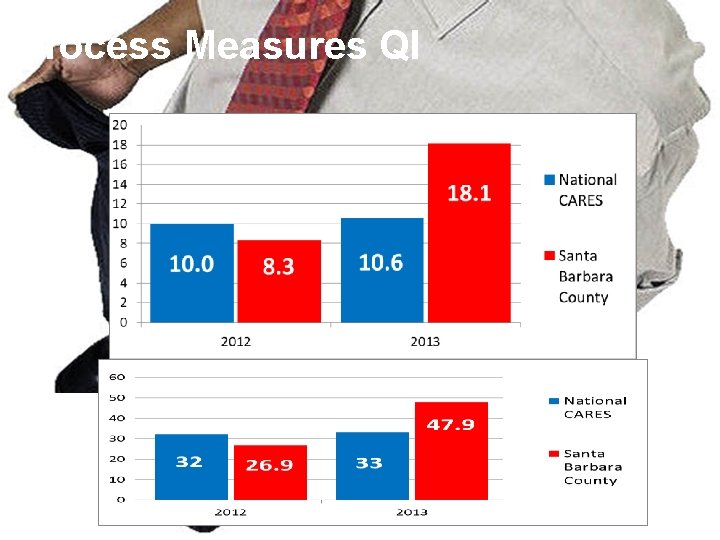
Process Measures QI
RESULTS
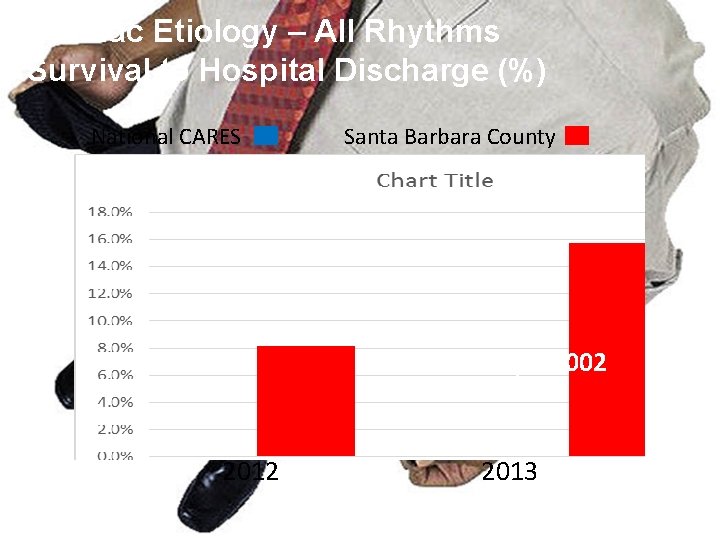
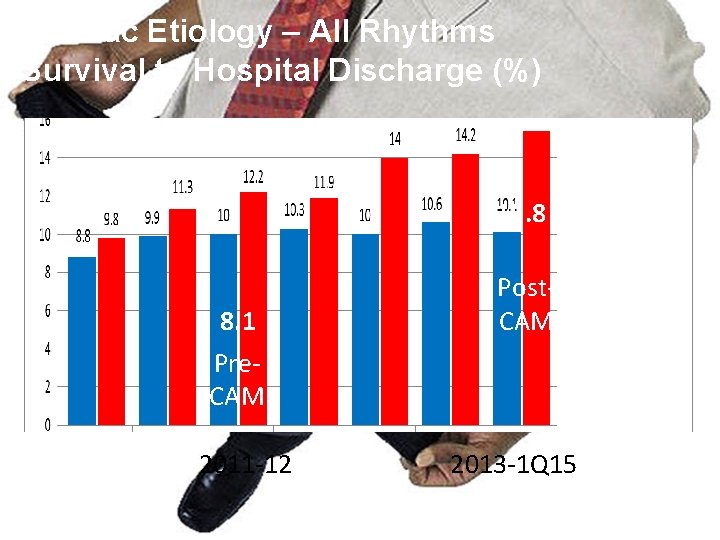
Cardiac Etiology – All Rhythms Survival to Hospital Discharge (%) National CARES Santa Barbara County p=0. 002 2013
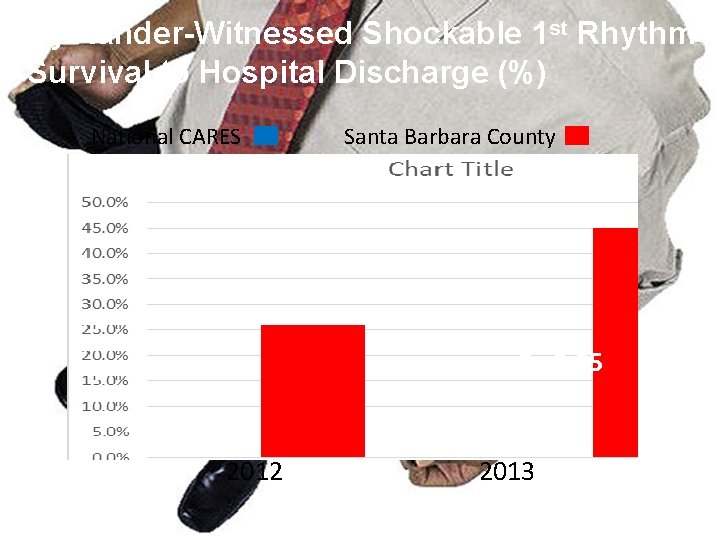
Bystander-Witnessed Shockable 1 st Rhythm Survival to Hospital Discharge (%) National CARES Santa Barbara County P> 0. 05 2012 2013
Cardiac Etiology – All Rhythms Survival to Hospital Discharge (%) 15. 8 8. 1 Pre. CAM 2011 -12 Post. CAM 2013 -1 Q 15
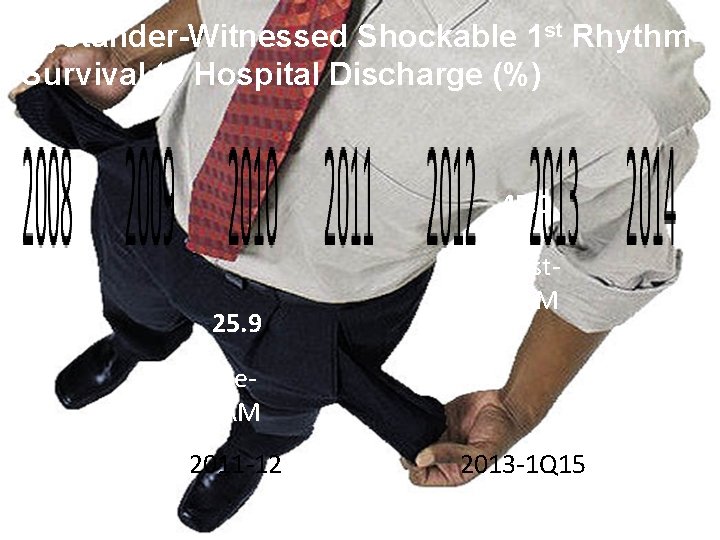
Bystander-Witnessed Shockable 1 st Rhythm Survival to Hospital Discharge (%) 45. 0 25. 9 Post. CAM Pre. CAM 2011 -12 2013 -1 Q 15
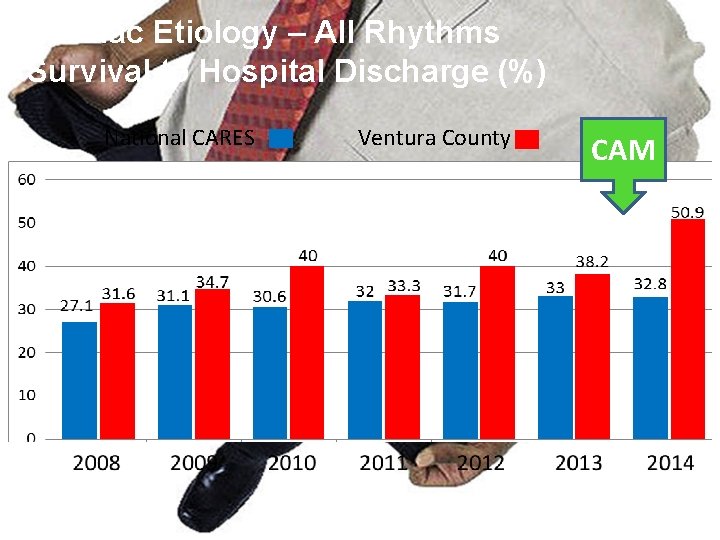
Cardiac Etiology – All Rhythms Survival to Hospital Discharge (%) National CARES Ventura County CAM
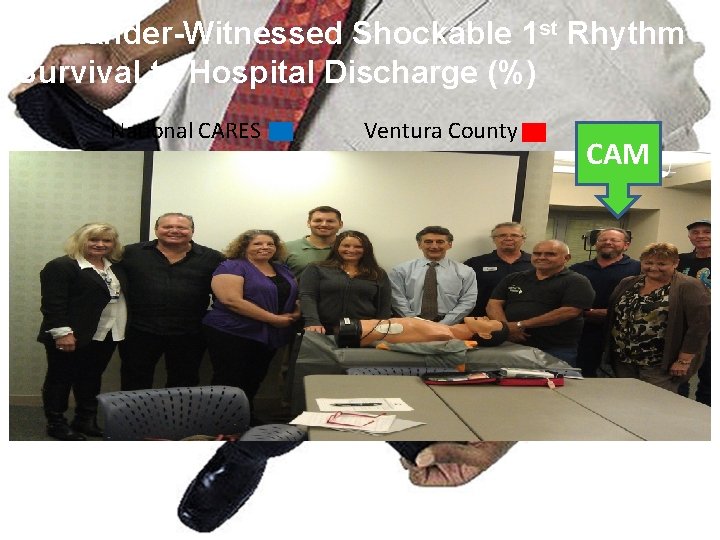
Bystander-Witnessed Shockable 1 st Rhythm Survival to Hospital Discharge (%) National CARES Ventura County CAM
Lessons Learned • • Engage entire system. Build interest. Insist on consistency. Will sell itself. – Process improvements (organization, CPR) precede outcome benefits. • Costs are modest.
Conclusions • Introduction of an organized Cardiac Arrest Management (CAM) program resulted in a significant improvement in survival. • Simultaneous introduction of entire bundle of care resulted in more convincing singlestep improvement.
Conclusions • Emphasis on early, continuous, high-quality chest compressions with infrequent lowvolume ventilations. • System to enable that: – Clear and detailed protocols – Assigned roles – EMTs responsible for BLS – Competency-based individual and team training – Ongoing active data-driven QI
Survivor Group