
A synthetic genemetabolic oscillator Fung et al 2005

A synthetic genemetabolic oscillator Fung et al. 2005
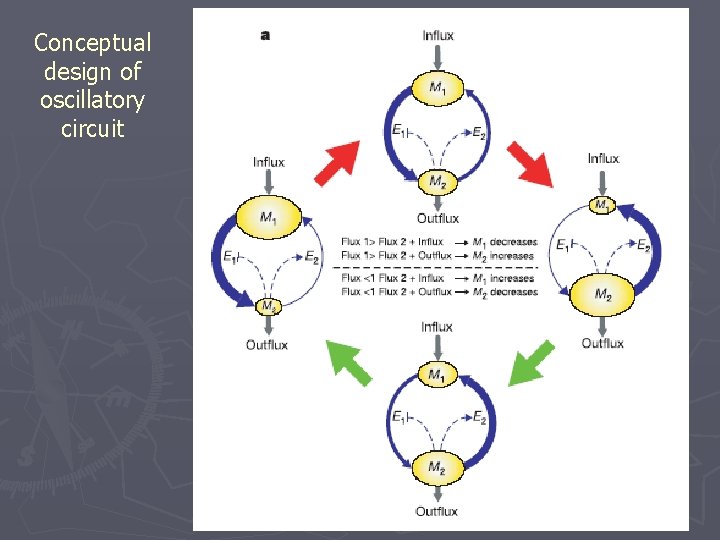
Conceptual design of oscillatory circuit
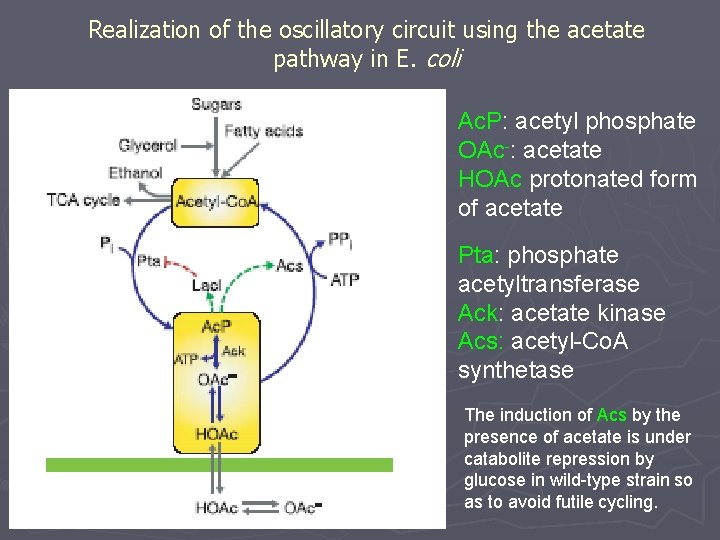
Realization of the oscillatory circuit using the acetate pathway in E. coli Ac. P: acetyl phosphate OAc-: acetate HOAc protonated form of acetate Pta: phosphate acetyltransferase Ack: acetate kinase Acs: acetyl-Co. A synthetase The induction of Acs by the presence of acetate is under catabolite repression by glucose in wild-type strain so as to avoid futile cycling.
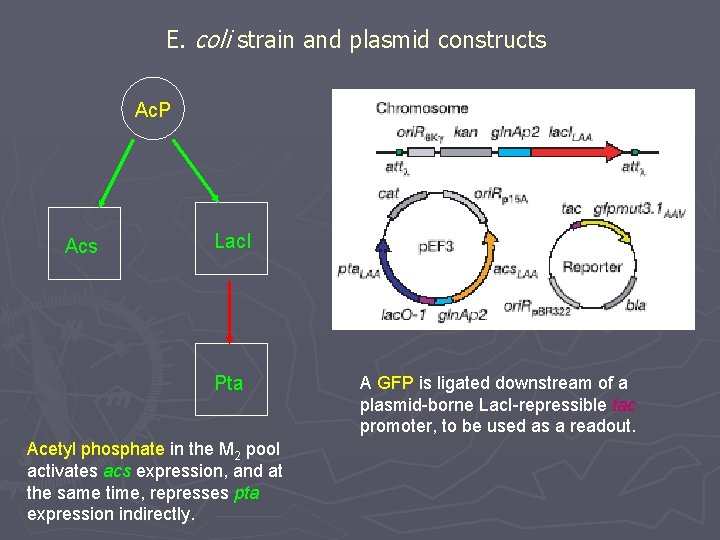
E. coli strain and plasmid constructs Ac. P Acs Lac. I Pta Acetyl phosphate in the M 2 pool activates acs expression, and at the same time, represses pta expression indirectly. A GFP is ligated downstream of a plasmid-borne Lac. I-repressible tac promoter, to be used as a readout.
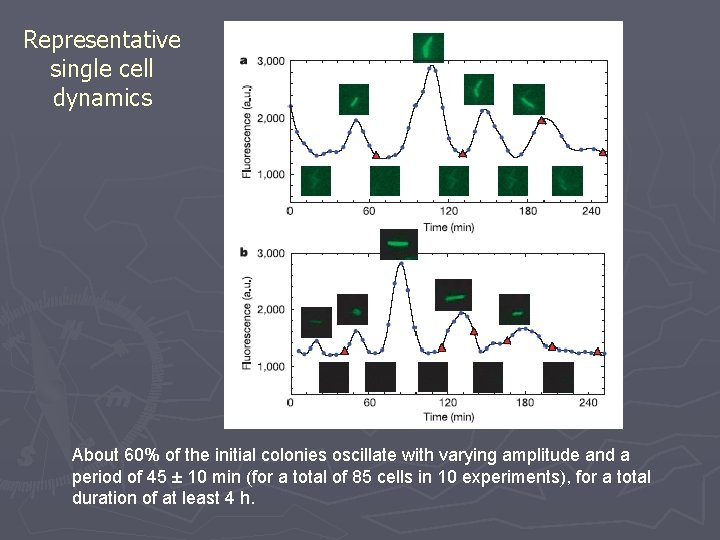
Representative single cell dynamics About 60% of the initial colonies oscillate with varying amplitude and a period of 45 ± 10 min (for a total of 85 cells in 10 experiments), for a total duration of at least 4 h.
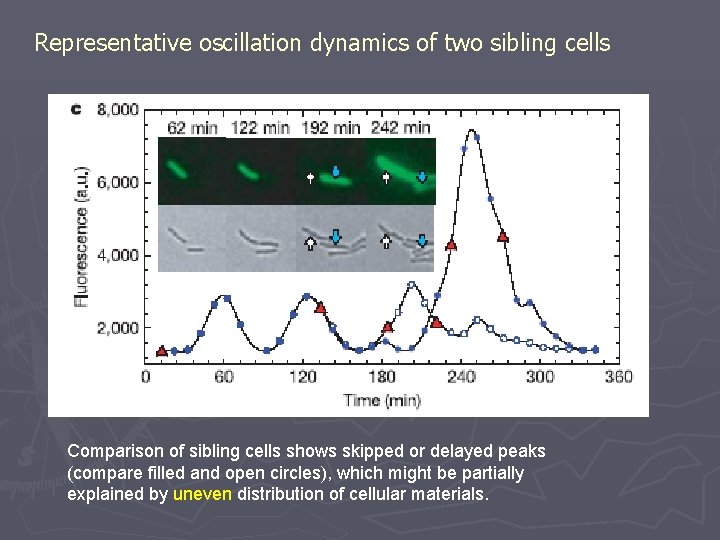
Representative oscillation dynamics of two sibling cells Comparison of sibling cells shows skipped or delayed peaks (compare filled and open circles), which might be partially explained by uneven distribution of cellular materials.
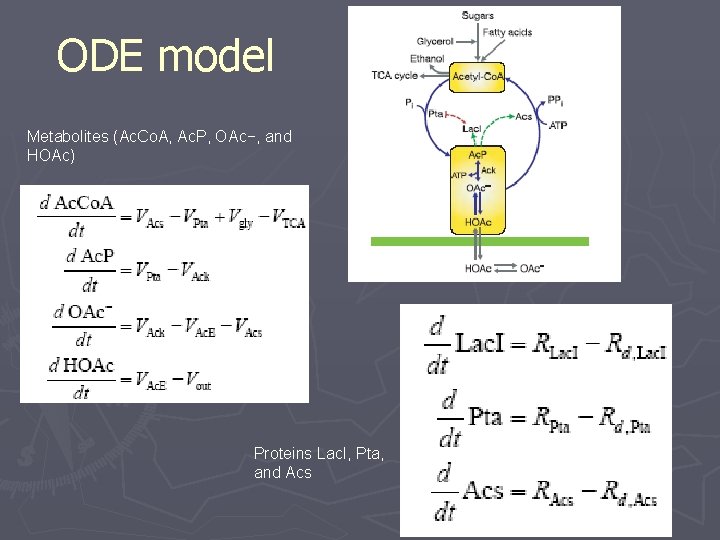
ODE model Metabolites (Ac. Co. A, Ac. P, OAc−, and HOAc) Proteins Lac. I, Pta, and Acs
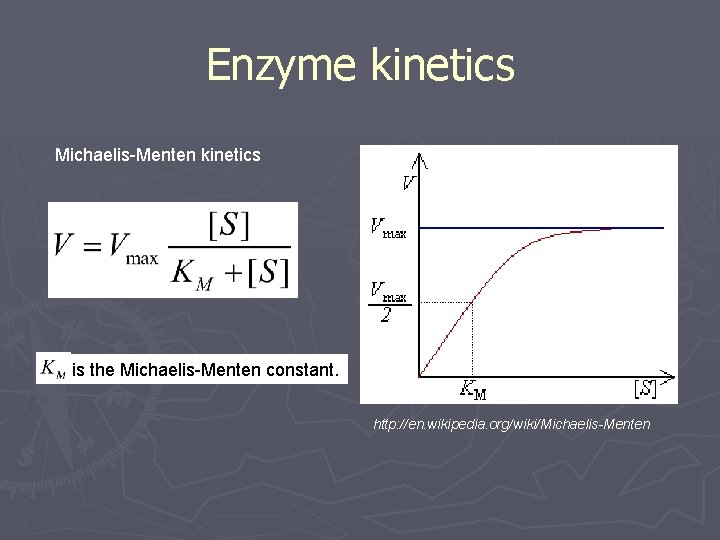
Enzyme kinetics Michaelis-Menten kinetics is the Michaelis-Menten constant. http: //en. wikipedia. org/wiki/Michaelis-Menten
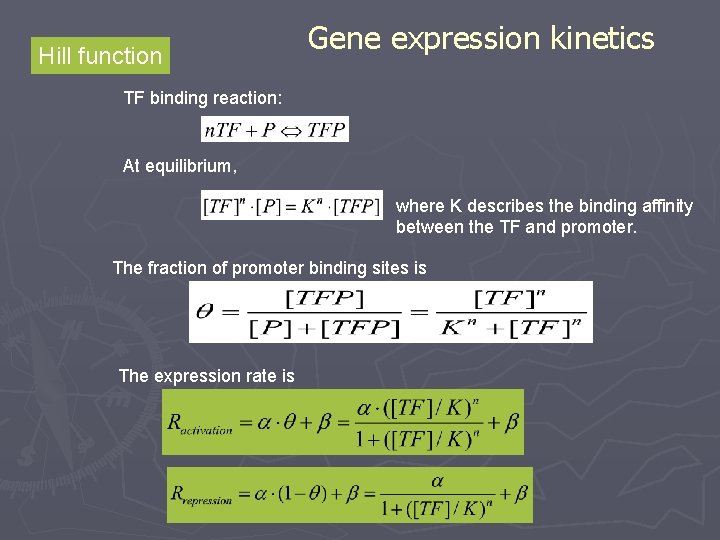
Hill function Gene expression kinetics TF binding reaction: At equilibrium, where K describes the binding affinity between the TF and promoter. The fraction of promoter binding sites is The expression rate is
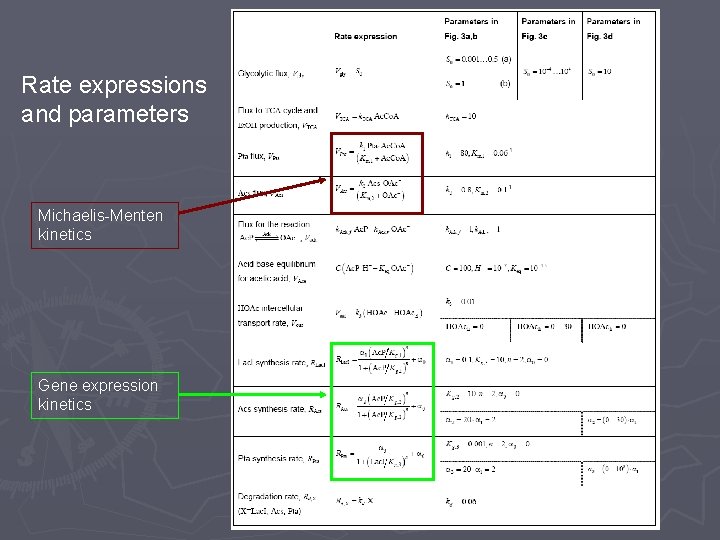
Rate expressions and parameters Michaelis-Menten kinetics Gene expression kinetics
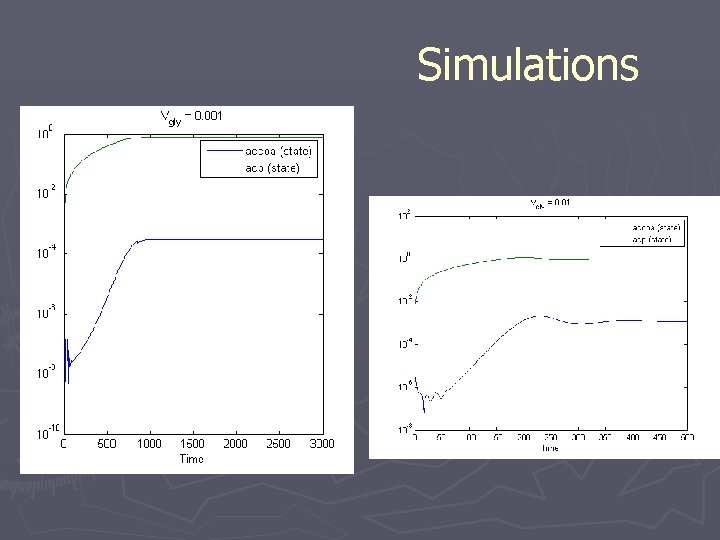
Simulations
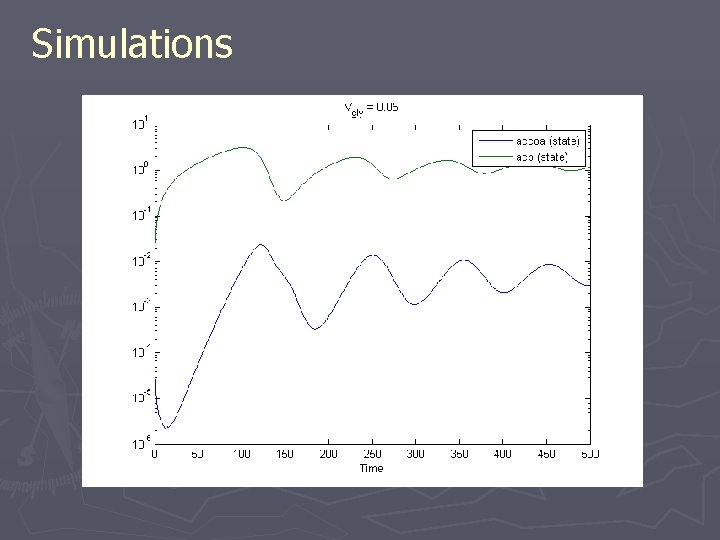
Simulations
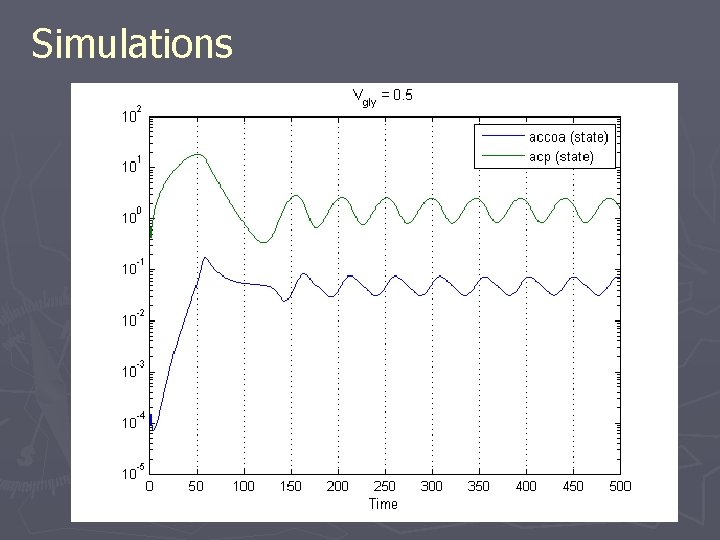
Simulations
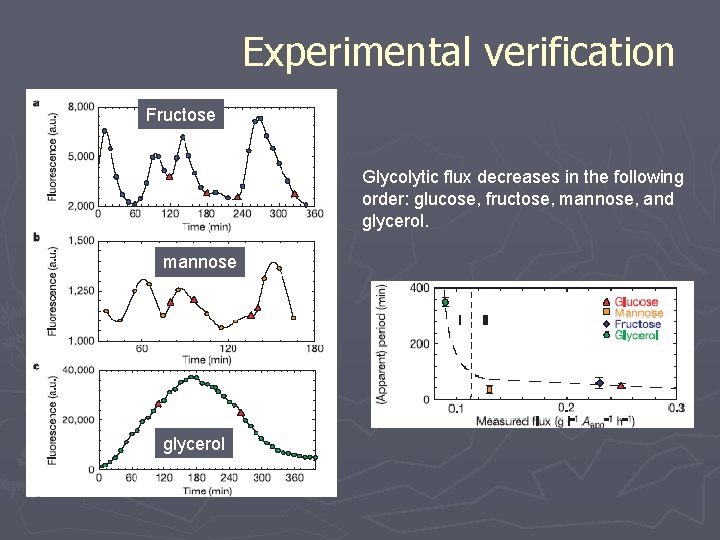
Experimental verification Fructose Glycolytic flux decreases in the following order: glucose, fructose, mannose, and glycerol. mannose glycerol
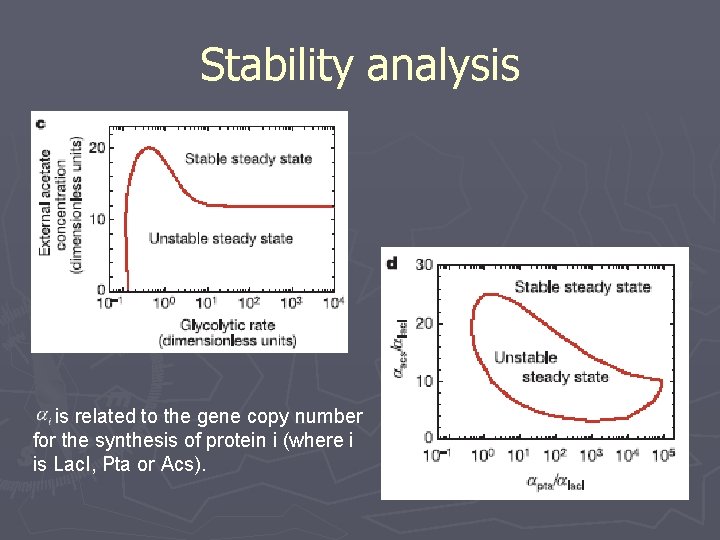
Stability analysis is related to the gene copy number for the synthesis of protein i (where i is Lac. I, Pta or Acs).
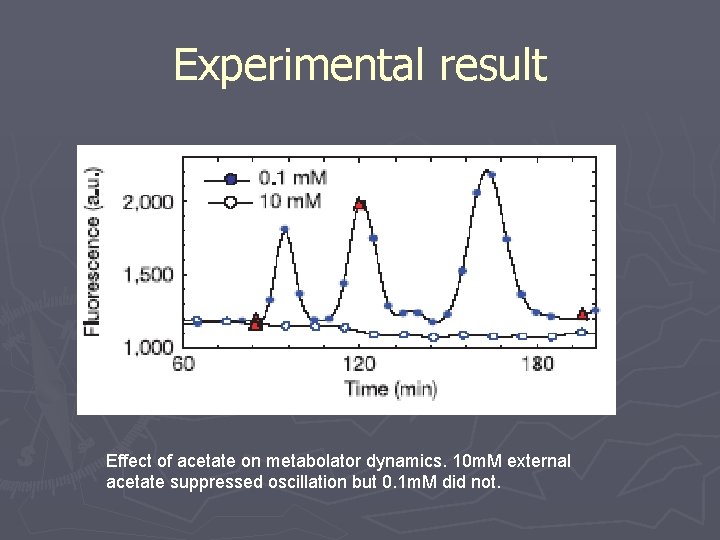
Experimental result Effect of acetate on metabolator dynamics. 10 m. M external acetate suppressed oscillation but 0. 1 m. M did not.

Discussions ► The unique design of the metabolator represents a fusion of metabolic and transcriptional oscillation. ► The metabolator illustrates the use of metabolic fluxes to control biological oscillation. ► Negative feedback is typically used to stabilize a system, however, it tends to be unstable if the time lag in feedback increases.
- Slides: 17