
A strategic opportunity Health and Justice Collaboration in
A strategic opportunity: Health and Justice Collaboration in Scotland Orlando. Heijmer-Mason@gov. scot
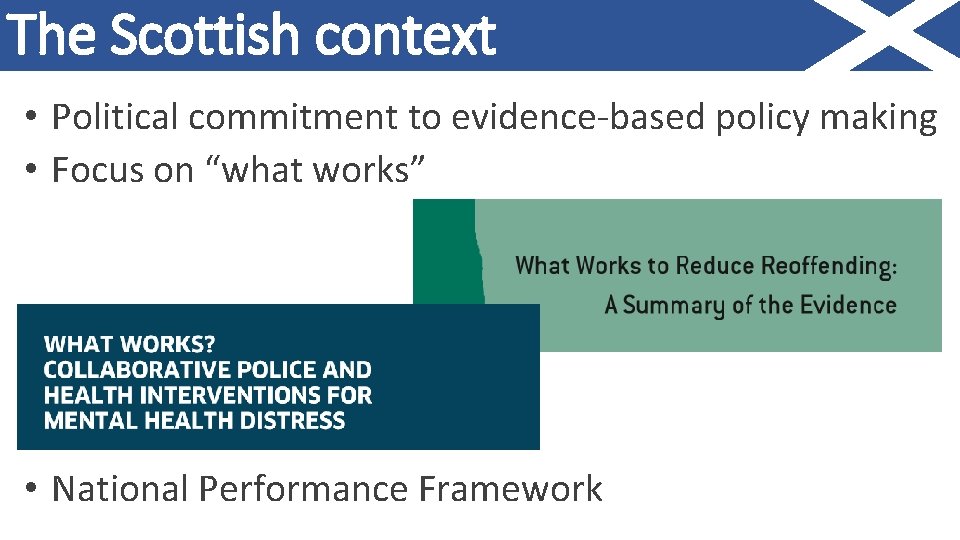
The Scottish context • Political commitment to evidence-based policy making • Focus on “what works” • National Performance Framework
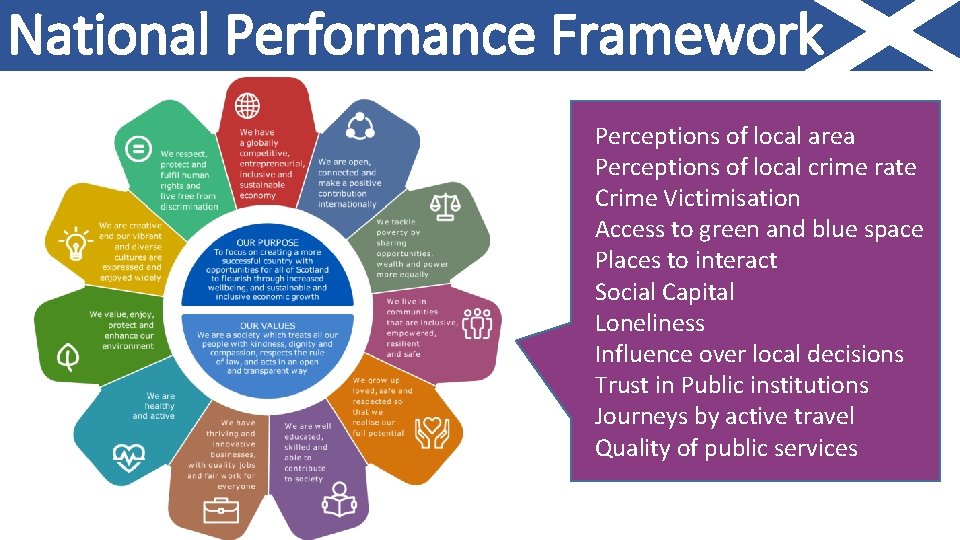
National Performance Framework Perceptions of local area Perceptions of local crime rate Crime Victimisation Access to green and blue space Places to interact Social Capital Loneliness Influence over local decisions Trust in Public institutions Journeys by active travel Quality of public services
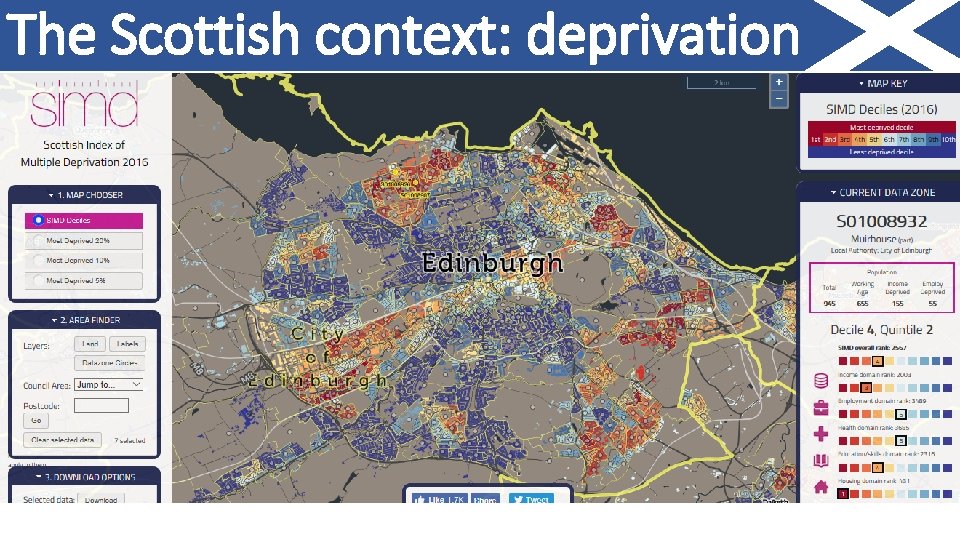
The Scottish context: deprivation
The Scottish context Public policy focus on deprivation and inequality: • Economy: Inclusive growth • Education: Closing the attainment gap • Education: Early learning and childcare Ø Recent re-emphasis on population health • Increasing % of investment in primary care, community services, mental health and MUP *Missing levers*
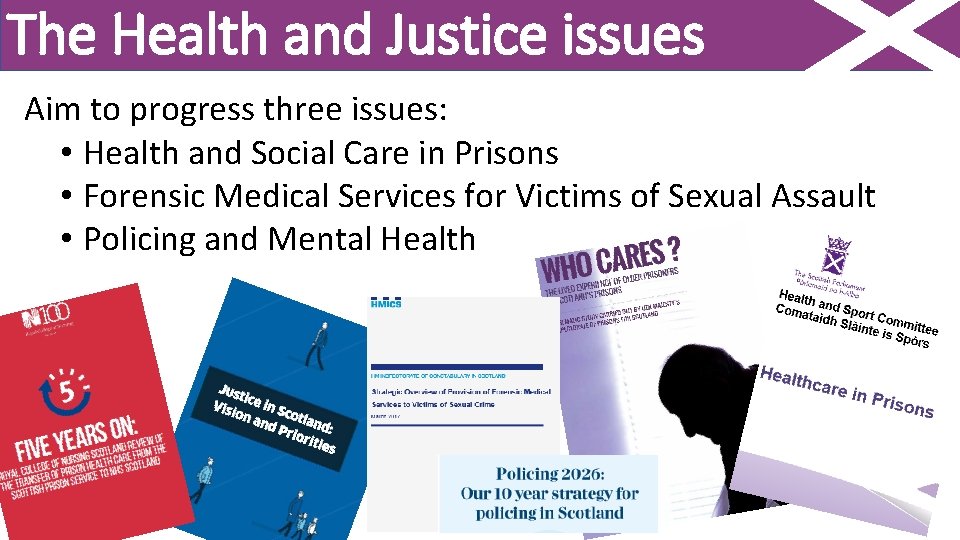
The Health and Justice issues Aim to progress three issues: • Health and Social Care in Prisons • Forensic Medical Services for Victims of Sexual Assault • Policing and Mental Health
The issues “Wicked” problems: • • You can’t solve complex problems individually You can’t just tell people to do it It’s not always clear what to do Transforming systems is about transforming relationships
Authorising environment The Health and Justice Board • Quarterly meetings of Chief Executives: Ø Heads of NHS Scotland SG Justice Ø Crown Agent, Community Justice, Prison Service Ø Police Scotland, NHS 24, Ambulance and Fire Services Ø Territorial Health Boards and Integration Boards Ø Heads of Local Government Ø Support from Ministers
Policing and Mental Health • 39% of those detained in police custody have a mental health disorder. • Up to 34% of those in police custody have hazardous alcohol intake or alcohol dependency. • Police Scotland highlight mental health as the most common marker on their Vulnerable Persons Database, last year recording 57, 000 entries.
Policing and Mental Health Range of pilots and approaches: • Mandatory training packages for Police Officers • Distress Brief Interventions: Ø 53 month pilot in 4 areas Ø 2 stage approach (first response & within 24 hours) • Community Triage: Ø Gives Police access to OOH CPNs by phone • New Pathway for Call Handling Ø Diversion of callers into community services
Policing and Mental Health Issues: • Little strategic overview – fragmentation in government • Operational models, not legislative context • Gaps – along pathway • Challenge to upscale successful pilots Ø Exercise to identify national priorities Ø Develop recommendations for Board
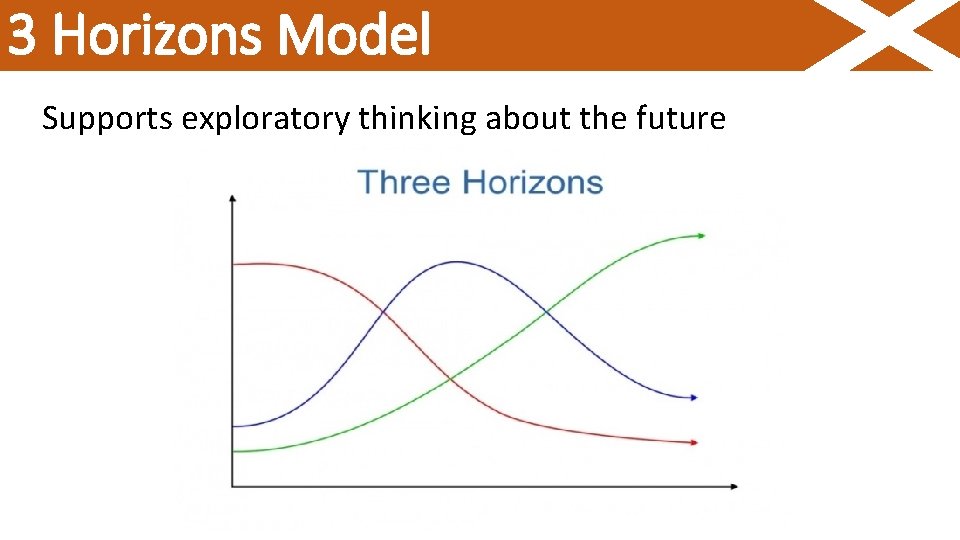
3 Horizons Model Supports exploratory thinking about the future
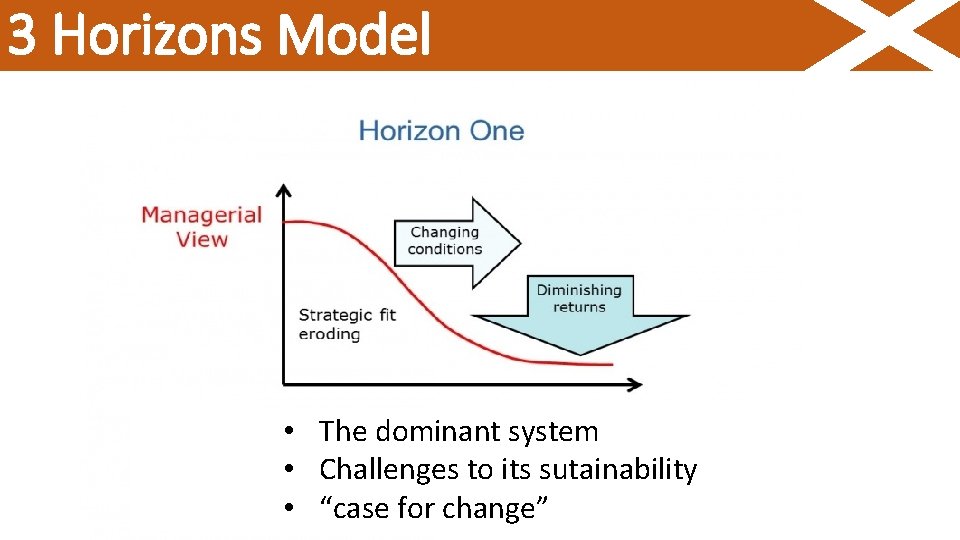
3 Horizons Model • The dominant system • Challenges to its sutainability • “case for change”
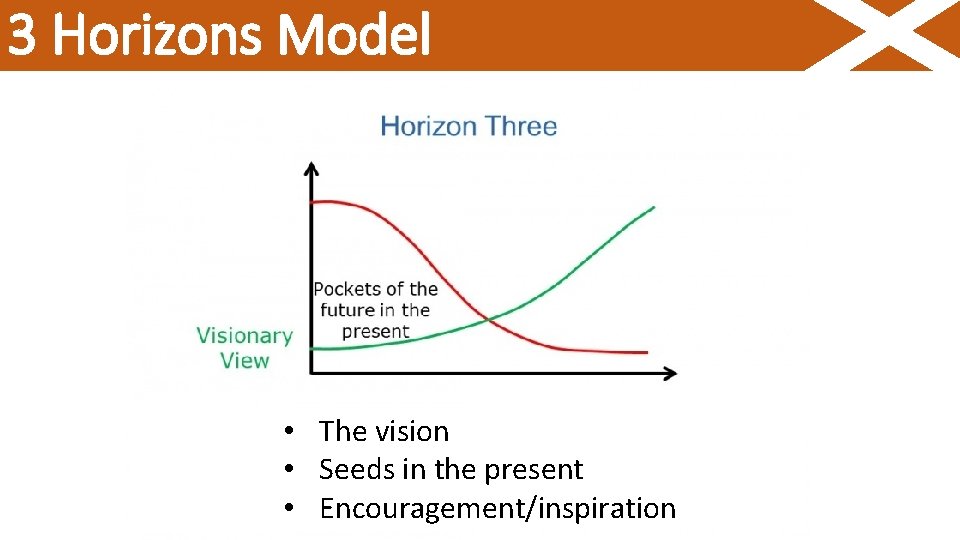
3 Horizons Model • The vision • Seeds in the present • Encouragement/inspiration
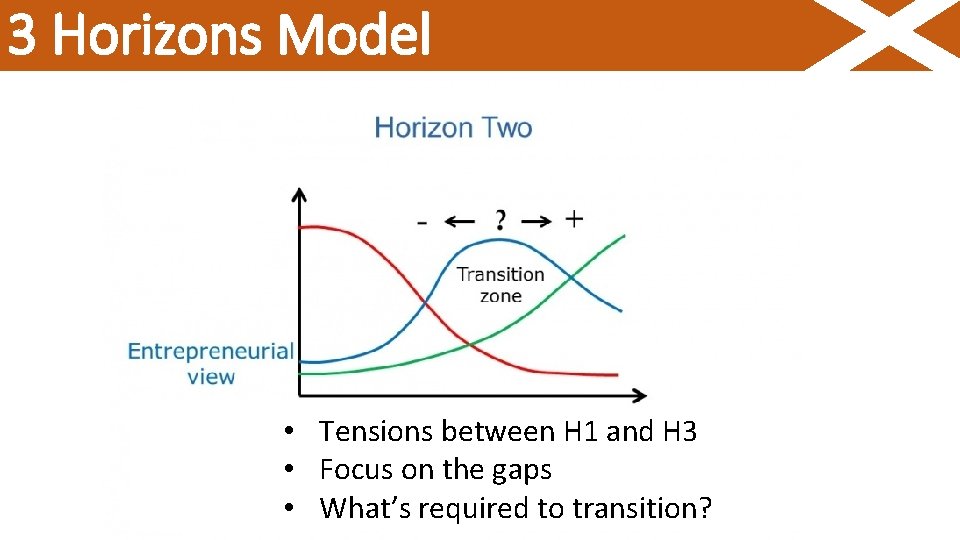
3 Horizons Model • Tensions between H 1 and H 3 • Focus on the gaps • What’s required to transition?
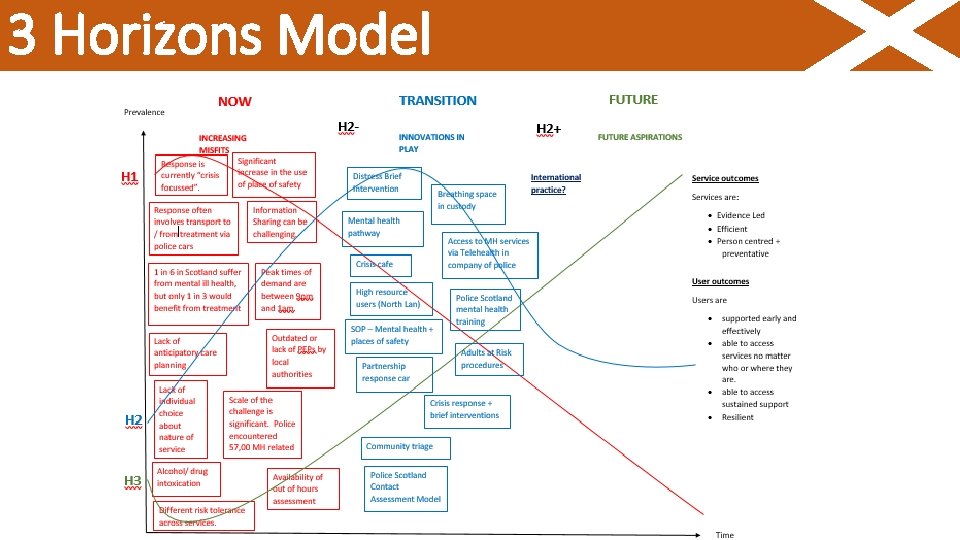
3 Horizons Model
Define the problem and the vision Ø Command & Control policing culture drives solution focus. Is this a Policing issue? Ø Where should the solution sit? Ø Which solutions will reduce demand or direct demand to the services that can best respond? Ø Do we just send people back into the environments that made them ill?
Summary: the opportunity • • • Embedded evidence based approach in government Entrenched deprivation and health inequalities Missing levers New, operational approaches piloted Influential authorising environment • How can we make Scotland a world leader in P&MH?
- Slides: 18