
A Statistical and Synoptic Investigation of Tropical Cyclone
![[INT (MWS) – WEAK (MWS)] composite height difference (m) / 0. 10 (0. 05)](https://slidetodoc.com/presentation_image_h2/776bbe738006ae23f8e380db86a70fbb/image-19.jpg "[INT (MWS) – WEAK (MWS)] composite height difference (m) / 0. 10 (0. 05)")
- Slides: 26
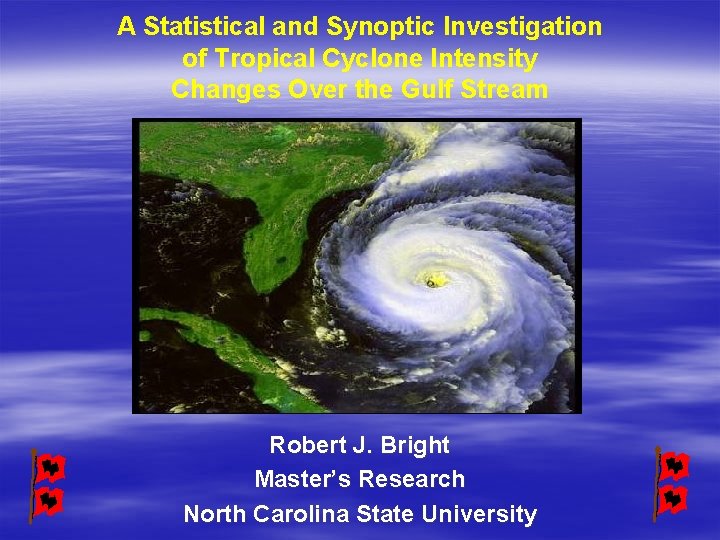
A Statistical and Synoptic Investigation of Tropical Cyclone Intensity Changes Over the Gulf Stream Robert J. Bright Master’s Research North Carolina State University
Overview l l l Significance Main Results Background Methodology/Results – Climatological Study l Part 1: Statistical Analysis l Part 2: Composite Analysis l Part 3: Gulf Stream vs. Non-Gulf Stream Tropical Cyclone Comparison Future Work Points to Remember
So what’s the big deal? l tropical cyclones (TCs) must cross the Gulf Stream (GS) as they approach the Southeast U. S. coast l warm oceanic features provide additional heat energy to TCs (e. g. , Hong et al. 2000; Shay et al. 2000) l coastal population has grown almost exponentially during the last few decades (Pielke and Landsea 1998) l coastal evacuations depend heavily on TC intensity l TC intensity forecasting much less skillful than track prediction
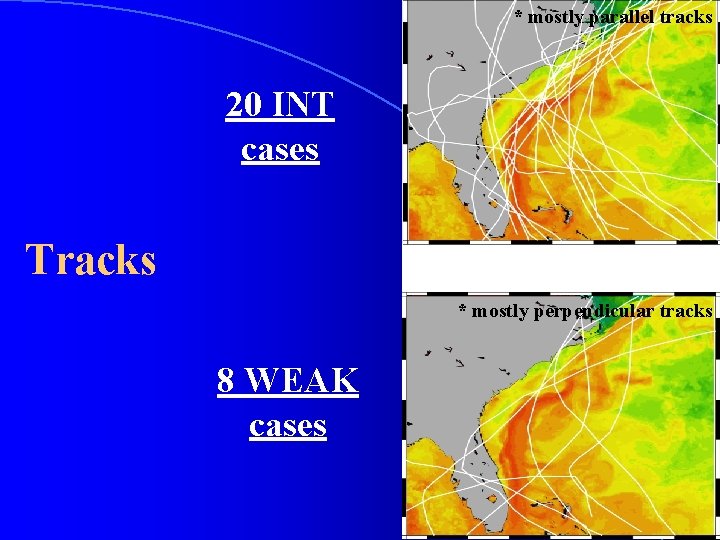
Main Results (implications for operational forecasting) l TC intensification over the GS appears more likely for: – weaker TCs – TCs that spend more time over the GS (i. e. , those with parallel tracks) – TCs that are already intensifying or maintaining their intensity prior to the GS l However, if intensification of a stronger TC occurs over the GS it may be rapid
Main Results (cont. ) (implications for operational forecasting) l TC weakening over the GS appears most likely for: – stronger TCs – TCs that spend less time over the GS (i. e. , those with perpendicular tracks) – storms that are already weakening or maintaining their intensity prior to the GS
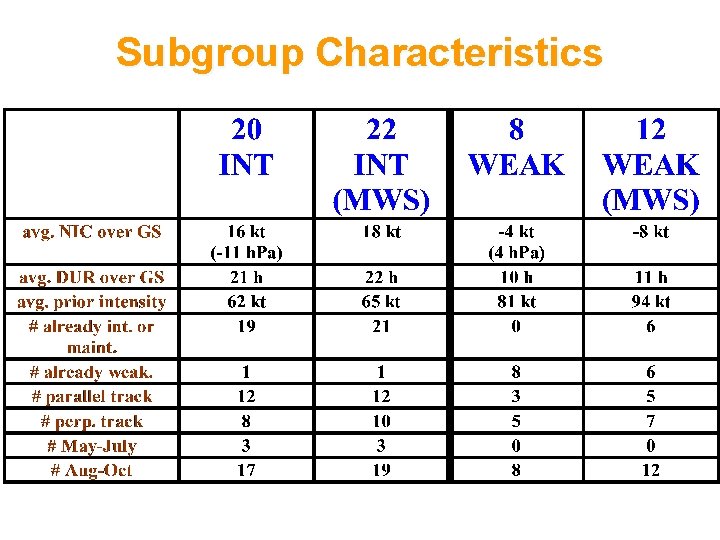
Main Results (cont. ) (implications for operational forecasting) l Average net intensity change over the GS for TCs that intensified (weakened) over the GS according to both maximum wind speed (MWS) and minimum central pressure (MCP) was 16 (-4) kt l An upstream trough was present in composites of intensifying and weakening TCs suggesting that the GS is important in determining intensity changes of TCs approaching the coast
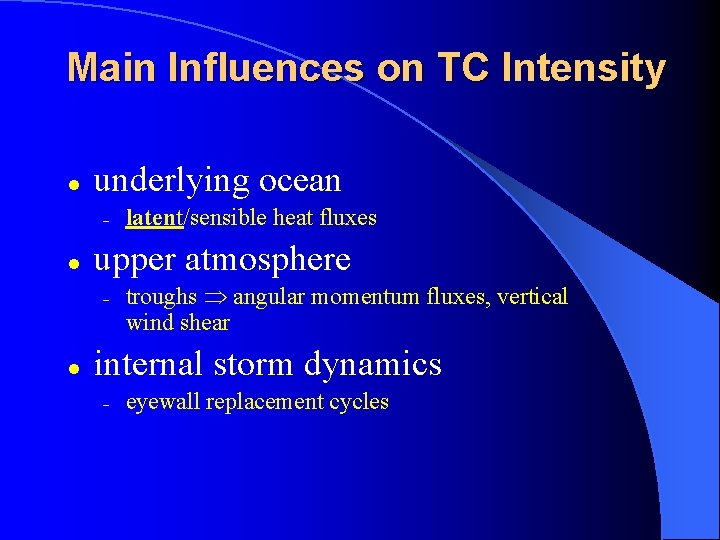
Main Influences on TC Intensity l underlying ocean – l upper atmosphere – l latent/sensible heat fluxes troughs angular momentum fluxes, vertical wind shear internal storm dynamics – eyewall replacement cycles
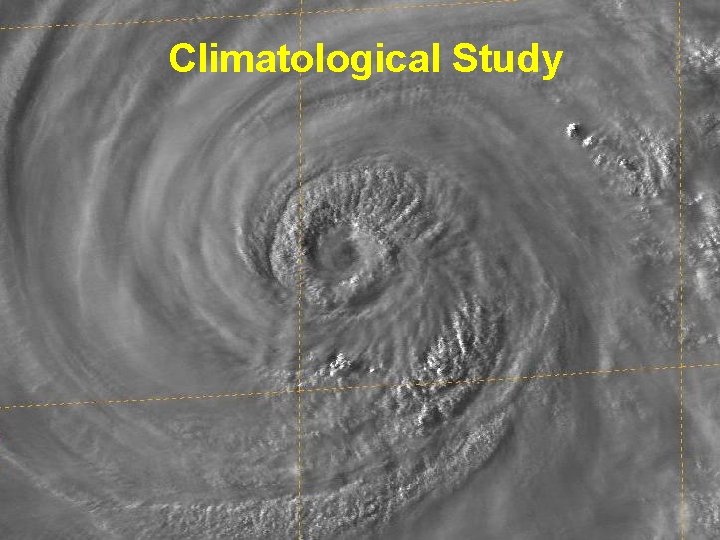
Climatological Study
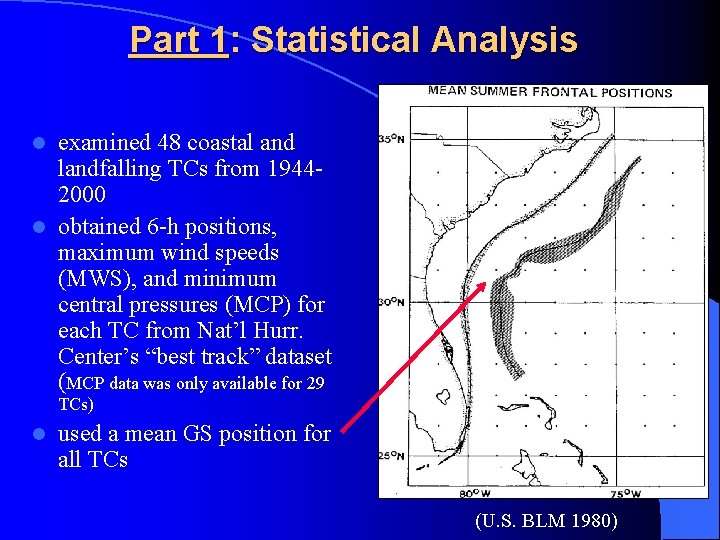
Part 1: Statistical Analysis examined 48 coastal and landfalling TCs from 19442000 l obtained 6 -h positions, maximum wind speeds (MWS), and minimum central pressures (MCP) for each TC from Nat’l Hurr. Center’s “best track” dataset (MCP data was only available for 29 l TCs) l used a mean GS position for all TCs (U. S. BLM 1980)
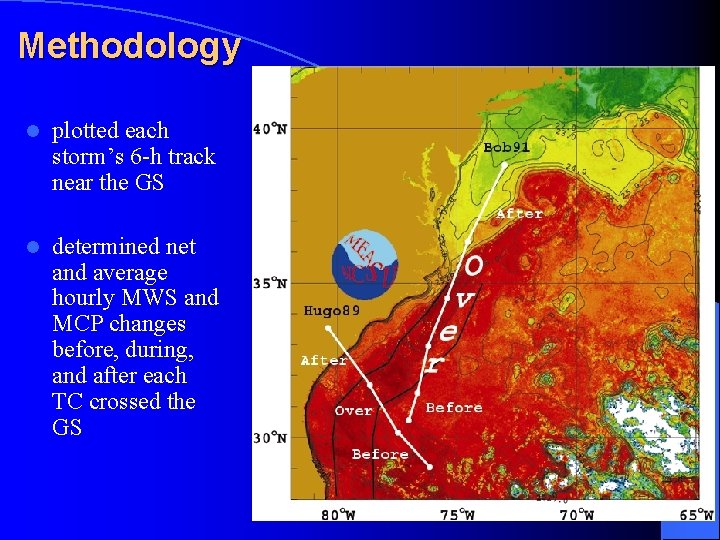
Methodology l plotted each storm’s 6 -h track near the GS l determined net and average hourly MWS and MCP changes before, during, and after each TC crossed the GS
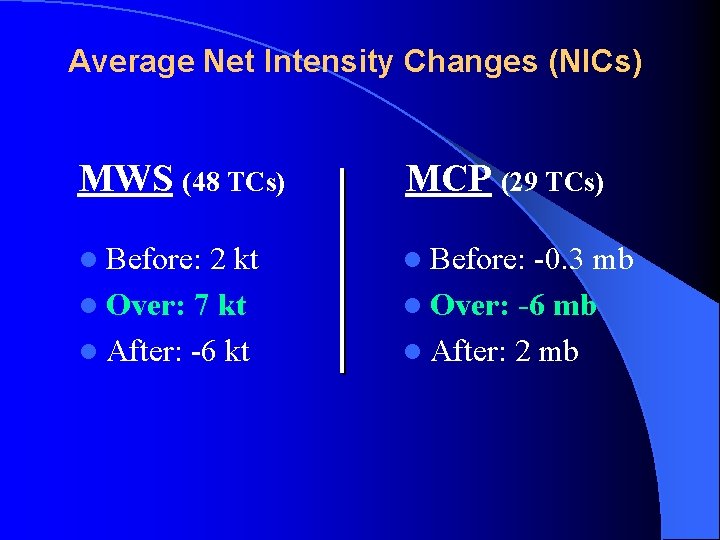
Average Net Intensity Changes (NICs) MWS (48 TCs) MCP (29 TCs) l Before: 2 kt l Over: 7 kt l After: -6 kt -0. 3 mb l Over: -6 mb l After: 2 mb
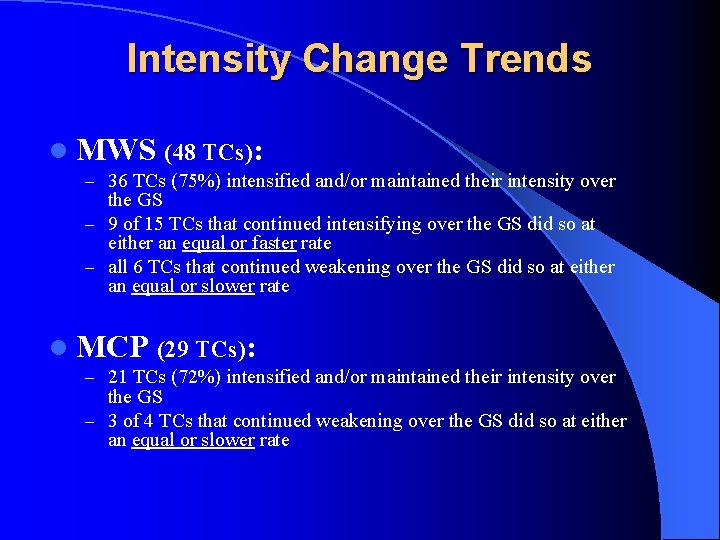
Intensity Change Trends l MWS (48 TCs): – 36 TCs (75%) intensified and/or maintained their intensity over the GS – 9 of 15 TCs that continued intensifying over the GS did so at either an equal or faster rate – all 6 TCs that continued weakening over the GS did so at either an equal or slower rate l MCP (29 TCs): – 21 TCs (72%) intensified and/or maintained their intensity over the GS – 3 of 4 TCs that continued weakening over the GS did so at either an equal or slower rate
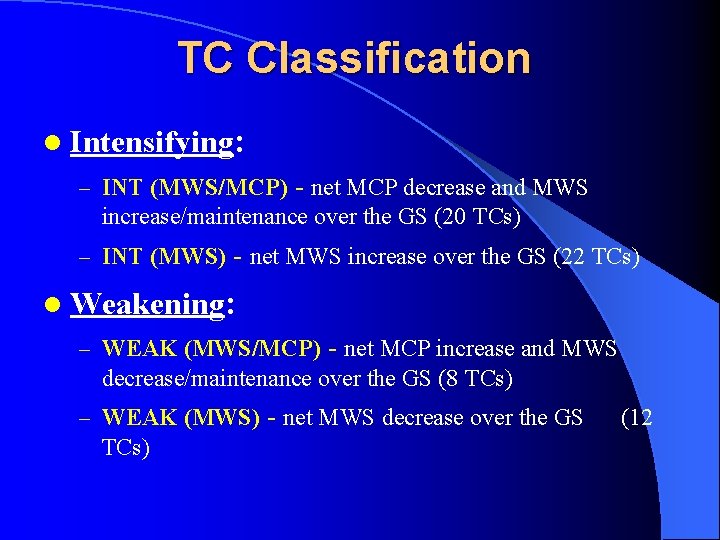
TC Classification l Intensifying: – INT (MWS/MCP) - net MCP decrease and MWS increase/maintenance over the GS (20 TCs) – INT (MWS) - net MWS increase over the GS (22 TCs) l Weakening: – WEAK (MWS/MCP) - net MCP increase and MWS decrease/maintenance over the GS (8 TCs) – WEAK (MWS) TCs) - net MWS decrease over the GS (12
Subgroup Characteristics
* mostly parallel tracks 20 INT cases Tracks * mostly perpendicular tracks 8 WEAK cases
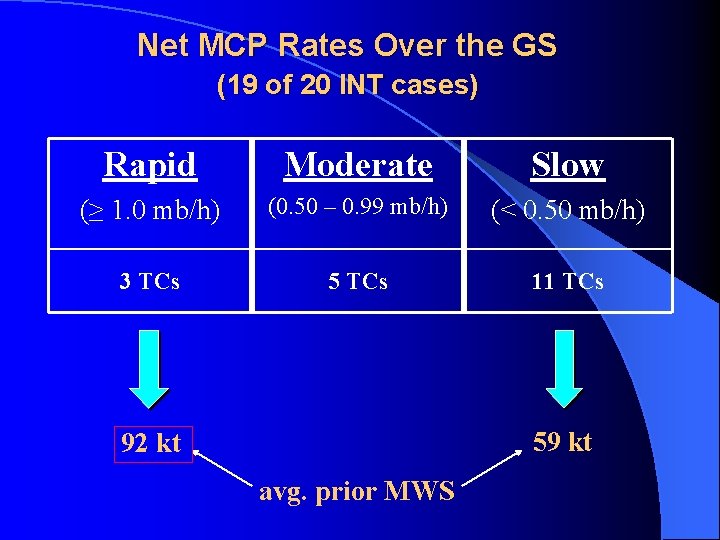
Net MCP Rates Over the GS (19 of 20 INT cases) Rapid Moderate Slow (≥ 1. 0 mb/h) (0. 50 – 0. 99 mb/h) (< 0. 50 mb/h) 3 TCs 5 TCs 11 TCs 59 kt 92 kt avg. prior MWS
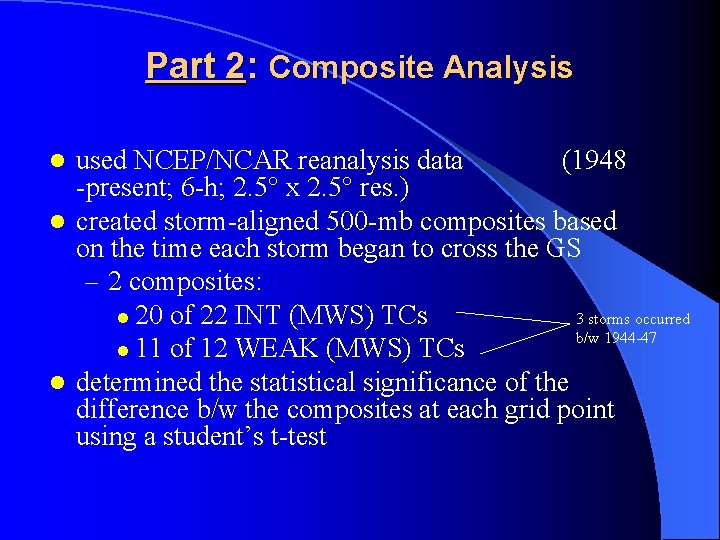
Part 2: Composite Analysis used NCEP/NCAR reanalysis data (1948 -present; 6 -h; 2. 5° x 2. 5° res. ) l created storm-aligned 500 -mb composites based on the time each storm began to cross the GS – 2 composites: l 20 of 22 INT (MWS) TCs 3 storms occurred b/w 1944 -47 l 11 of 12 WEAK (MWS) TCs l determined the statistical significance of the difference b/w the composites at each grid point using a student’s t-test l
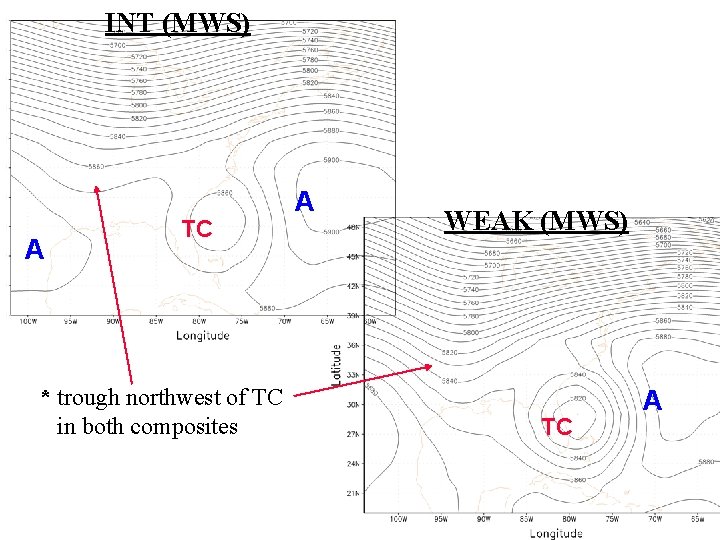
INT (MWS) A TC * trough northwest of TC in both composites A WEAK (MWS) TC A
[INT (MWS) – WEAK (MWS)] composite height difference (m) / 0. 10 (0. 05) sig. level • thus, another factor (possibly the GS) may explain the difference b/w INT (MWS) and WEAK (MWS) cases latitude • most significant height differences associated with the TC, NOT the trough! longitude
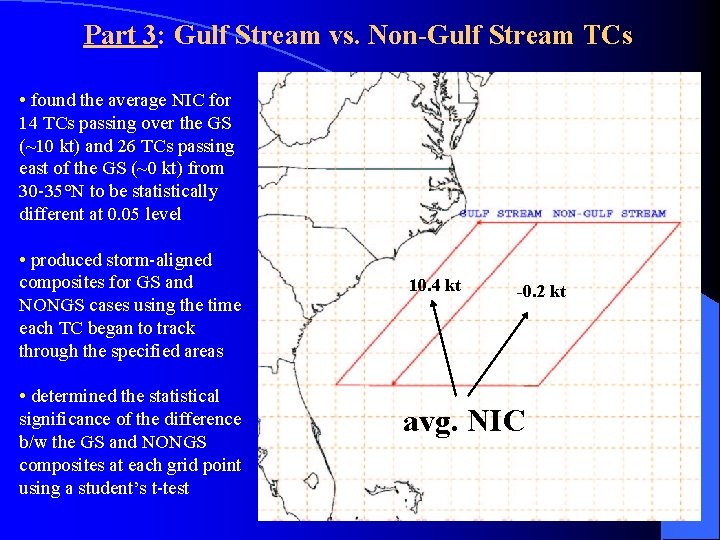
Part 3: Gulf Stream vs. Non-Gulf Stream TCs • found the average NIC for 14 TCs passing over the GS (~10 kt) and 26 TCs passing east of the GS (~0 kt) from 30 -35°N to be statistically different at 0. 05 level • produced storm-aligned composites for GS and NONGS cases using the time each TC began to track through the specified areas • determined the statistical significance of the difference b/w the GS and NONGS composites at each grid point using a student’s t-test 10. 4 kt -0. 2 kt avg. NIC
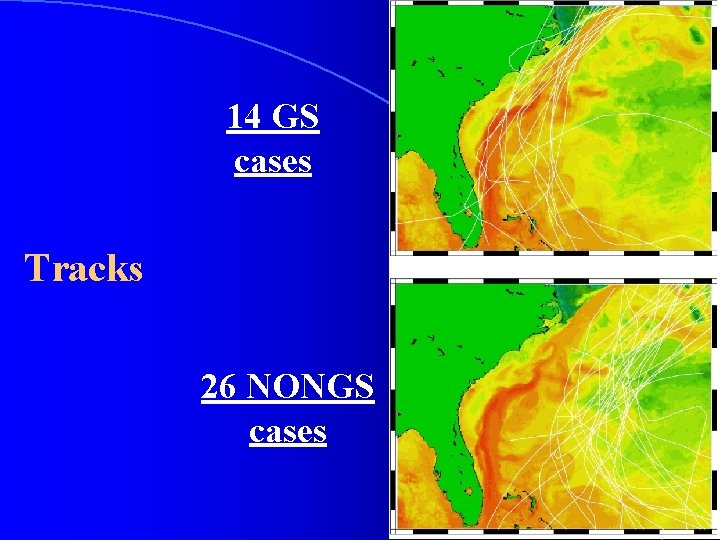
14 GS cases Tracks 26 NONGS cases
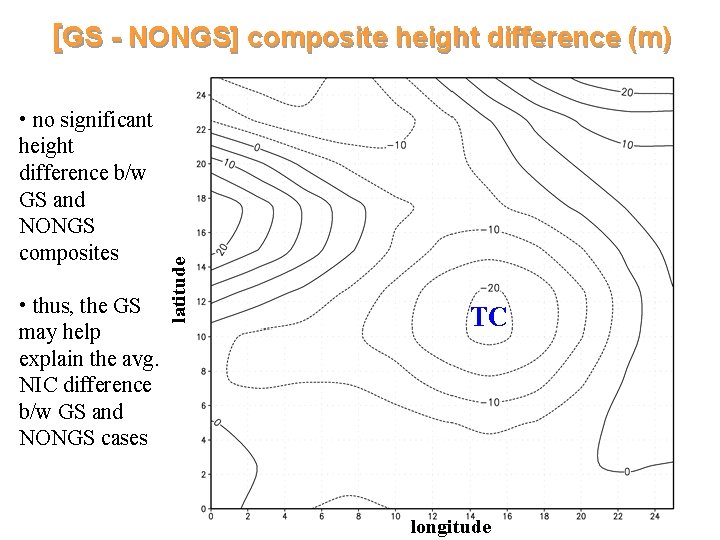
• no significant height difference b/w GS and NONGS composites • thus, the GS may help explain the avg. NIC difference b/w GS and NONGS cases latitude [GS - NONGS] composite height difference (m) TC longitude
Possible Future Work l improve the climatological study by producing composites of other parameters that are available in the NCEP-NCAR reanalysis dataset as well as in real-time l develop an empirical-statistical prediction scheme to help predict TC intensity changes over the GS
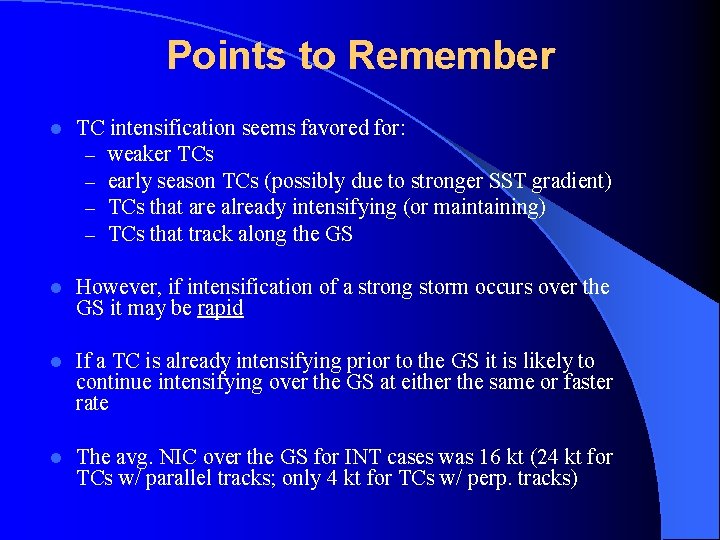
Points to Remember l TC intensification seems favored for: – weaker TCs – early season TCs (possibly due to stronger SST gradient) – TCs that are already intensifying (or maintaining) – TCs that track along the GS l However, if intensification of a strong storm occurs over the GS it may be rapid l If a TC is already intensifying prior to the GS it is likely to continue intensifying over the GS at either the same or faster rate l The avg. NIC over the GS for INT cases was 16 kt (24 kt for TCs w/ parallel tracks; only 4 kt for TCs w/ perp. tracks)
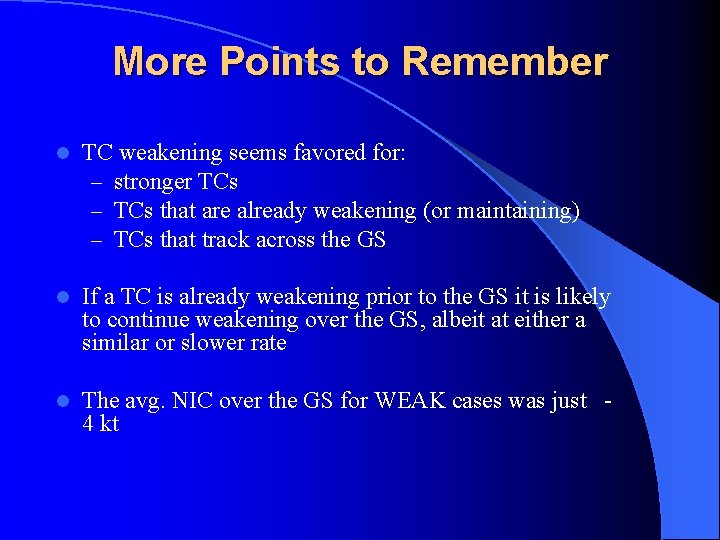
More Points to Remember l TC weakening seems favored for: – stronger TCs – TCs that are already weakening (or maintaining) – TCs that track across the GS l If a TC is already weakening prior to the GS it is likely to continue weakening over the GS, albeit at either a similar or slower rate l The avg. NIC over the GS for WEAK cases was just 4 kt
Additional Reading l Bright, R. J. , 2003: A statistical and synoptic investigation of tropical cyclone intensity changes over the Gulf Stream, M. S. Thesis, North Carolina State University, Raleigh, NC, 134 pp. [available at http: //www. lib. ncsu. edu/theses/available/etd-07022003181958/unrestricted/etd. pdf] l Bright, R. J. , L. Xie, and L. J. Pietrafesa, 2002: Evidence of the Gulf Stream’s influence on tropical cyclone intensity. Geophys. Res. Lett. , 29, 1801 -1804.