
A State Targeted Response to the Opioid Crisis
- Slides: 18
A State Targeted Response to the Opioid Crisis: Tim Rudder, MSW The Missouri Department of Mental Health, Division of Behavioral Health
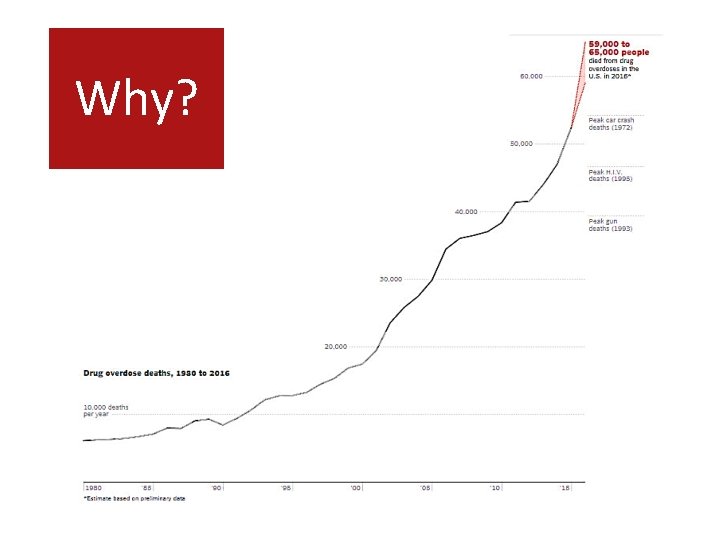
Why?
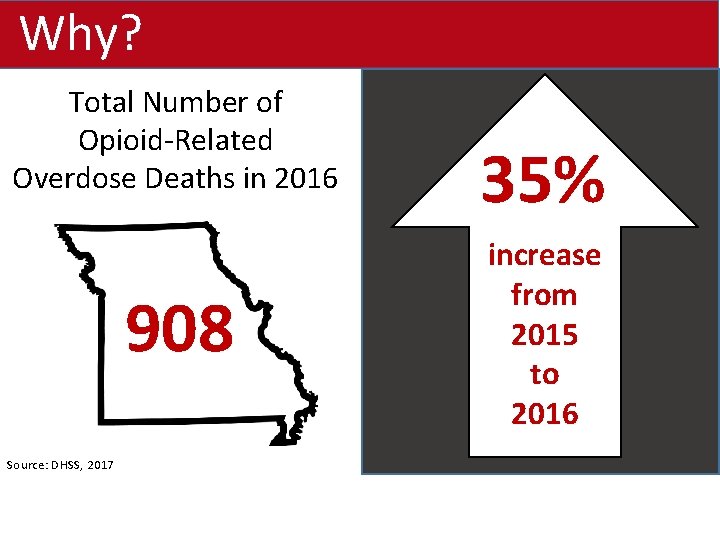
Why? Total Number of Opioid-Related Overdose Deaths in 2016 908 Source: DHSS, 2017 35% increase from 2015 to 2016
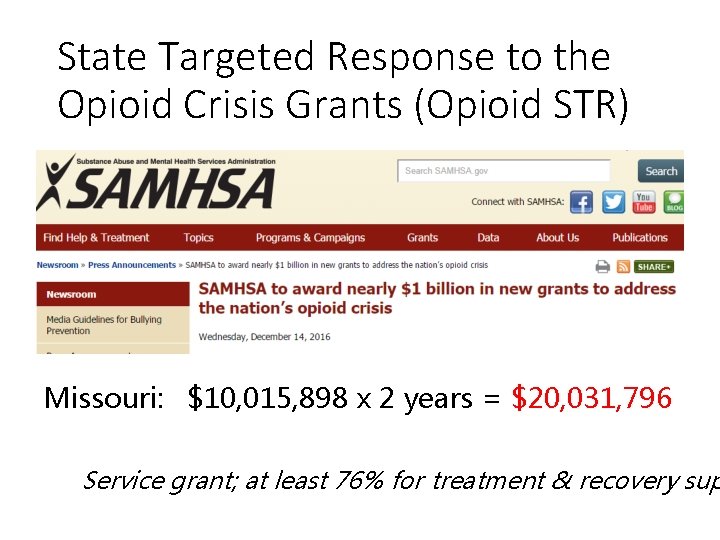
State Targeted Response to the Opioid Crisis Grants (Opioid STR) Missouri: $10, 015, 898 x 2 years = $20, 031, 796 Service grant; at least 76% for treatment & recovery sup
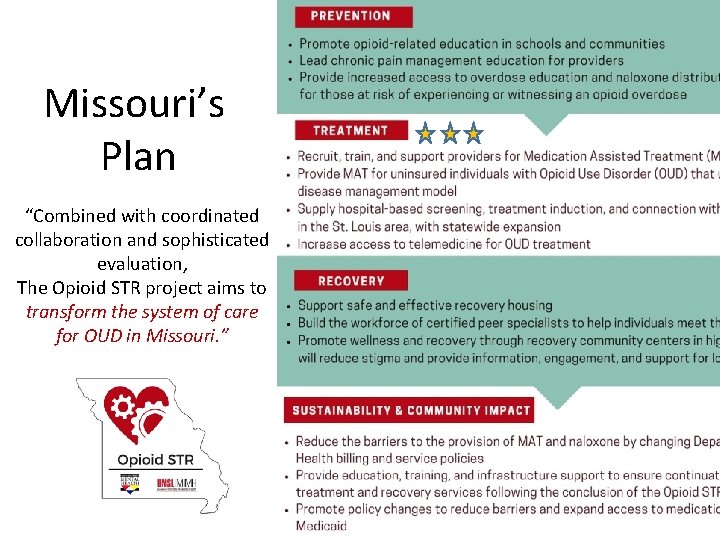
Missouri’s Plan “Combined with coordinated collaboration and sophisticated evaluation, The Opioid STR project aims to transform the system of care for OUD in Missouri. ”
Prevention • Implement evidence-based primary prevention school programming Generation. Rx in two high need areas in the state • Provide professional telehealth education through Project ECHO and case consultation on chronic pain management in primary care settings • Expand implementation of Overdose Education and Naloxone Distribution (OEND) – Mo’ Heroes & Community Pharmacy Naloxone Expansion
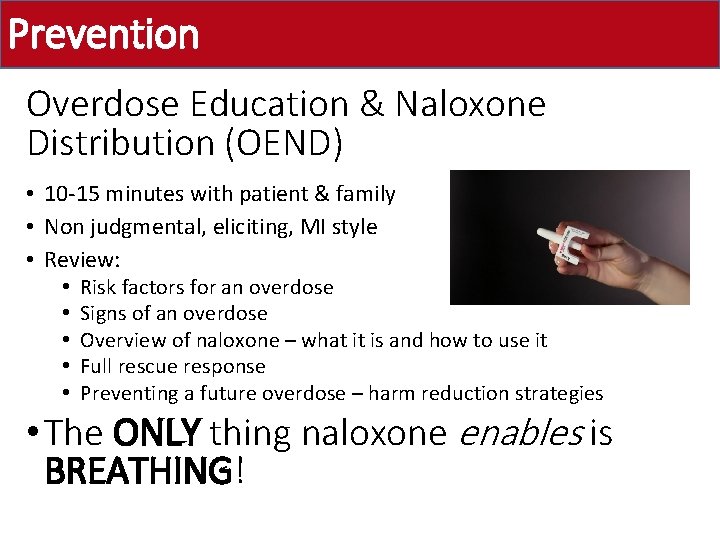
Prevention Overdose Education & Naloxone Distribution (OEND) • 10 -15 minutes with patient & family • Non judgmental, eliciting, MI style • Review: • • • Risk factors for an overdose Signs of an overdose Overview of naloxone – what it is and how to use it Full rescue response Preventing a future overdose – harm reduction strategies • The ONLY thing naloxone enables is BREATHING!
Treatment • Primary goal: Increase access to medical treatment for uninsured individuals with opioid use disorder (OUD) through provider training, direct service delivery, healthcare integration, and improved transitions of care. • Recruit, train, and support providers for medication delivery • Supply hospital-based screening, treatment induction, and connection with community care in the St. Louis area, with statewide expansion • Increase access to telemedicine for OUD treatment
Treatment Prior Approach to OUD Treatment • Detoxification model of treatment for Opioid Use Disorders (OUD) • Overreliance on residential and group therapy as treatment • Approached OUD as acute care rather than chronic care • Use of agonist/partial-agonist medication such as Buprenorphine and Methadone as last resort
Treatment Medication First Model • Fairly immediate relief from distress caused by withdrawal symptoms • Stabilizes the client • Decreases craving • Creates mental ability for patient to engage and benefit from psychosocial treatments • Increased retention in treatment • Decreased deaths from overdose
Treatment The medical management of OUD should be ongoing, not subject to arbitrary time limits or tapering requirements. Evidence suggests the longer patients receive medical treatment, the better their functional outcomes.
Sustainability & Community Impact • Reduce the barriers to the provision of medications and naloxone by changing DMH billing and service policies • Provide education, training, and infrastructure support to ensure continuation of effective treatment and recovery services following the conclusion of the Opioid STR grant period • Promote policy changes to reduce barriers and expand access to medication for individuals on Medicaid
Recovery
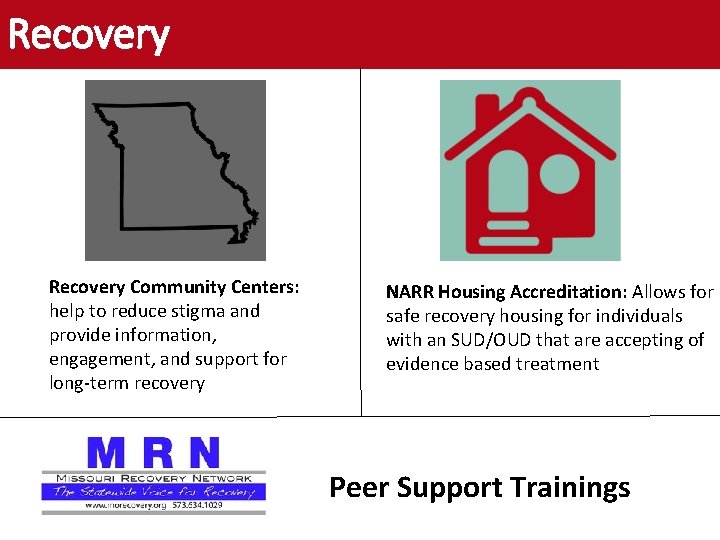
Recovery Community Centers: help to reduce stigma and provide information, engagement, and support for long-term recovery NARR Housing Accreditation: Allows for safe recovery housing for individuals with an SUD/OUD that are accepting of evidence based treatment Peer Support Trainings
Recovery • Support safe and effective recovery housing • Build the workforce of certified peer specialists to help individuals meet their recovery goals • Promote wellness and recovery through recovery community centers in high-need areas. • Recovery Community Centers help to reduce stigma and provide information, engagement, and support for long-term recovery
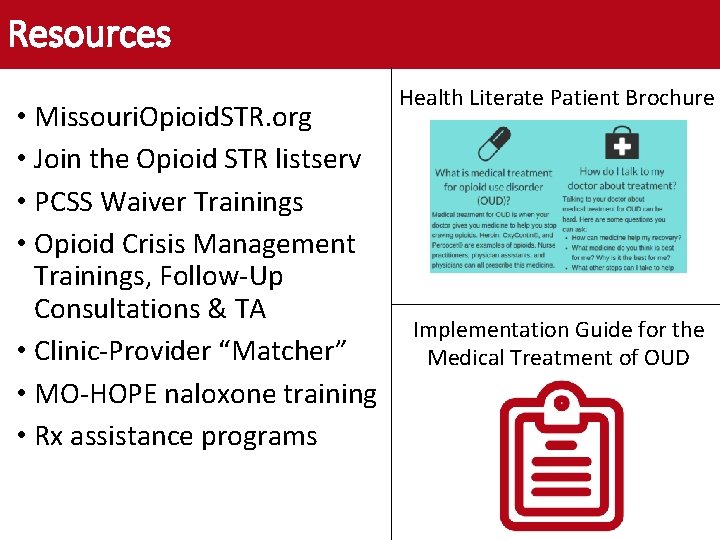
Resources • Missouri. Opioid. STR. org • Join the Opioid STR listserv • PCSS Waiver Trainings • Opioid Crisis Management Trainings, Follow-Up Consultations & TA • Clinic-Provider “Matcher” • MO-HOPE naloxone training • Rx assistance programs Health Literate Patient Brochure Implementation Guide for the Medical Treatment of OUD
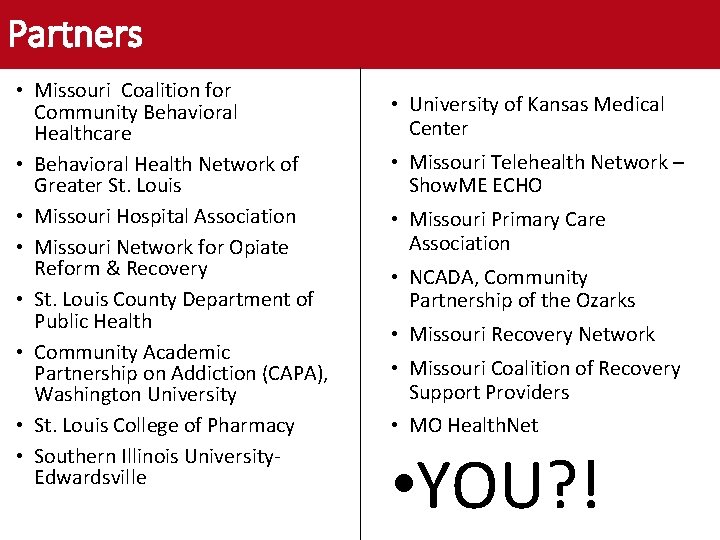
Partners • Missouri Coalition for Community Behavioral Healthcare • Behavioral Health Network of Greater St. Louis • Missouri Hospital Association • Missouri Network for Opiate Reform & Recovery • St. Louis County Department of Public Health • Community Academic Partnership on Addiction (CAPA), Washington University • St. Louis College of Pharmacy • Southern Illinois University. Edwardsville • University of Kansas Medical Center • Missouri Telehealth Network – Show. ME ECHO • Missouri Primary Care Association • NCADA, Community Partnership of the Ozarks • Missouri Recovery Network • Missouri Coalition of Recovery Support Providers • MO Health. Net • YOU? !
Questions and Discussion Visit www. missouriopioidstr. org to learn more and sign up for our statewide listserv!