
A Special Presentation on the Birth of the
A Special Presentation on the Birth of the Graphical User Interface (mainly on Personal Computers) At the VCF 5. 0 Brought to you by Digi. Barn Curator Bruce Damer
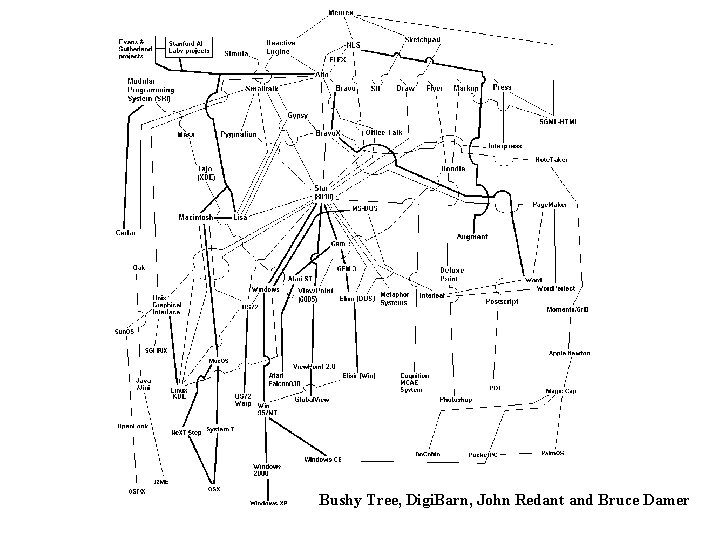
Bushy Tree, Digi. Barn, John Redant and Bruce Damer
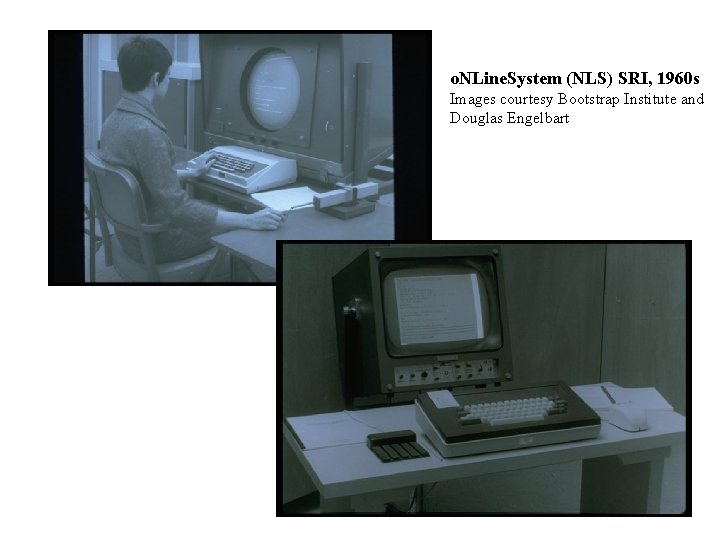
o. NLine. System (NLS) SRI, 1960 s Images courtesy Bootstrap Institute and Douglas Engelbart
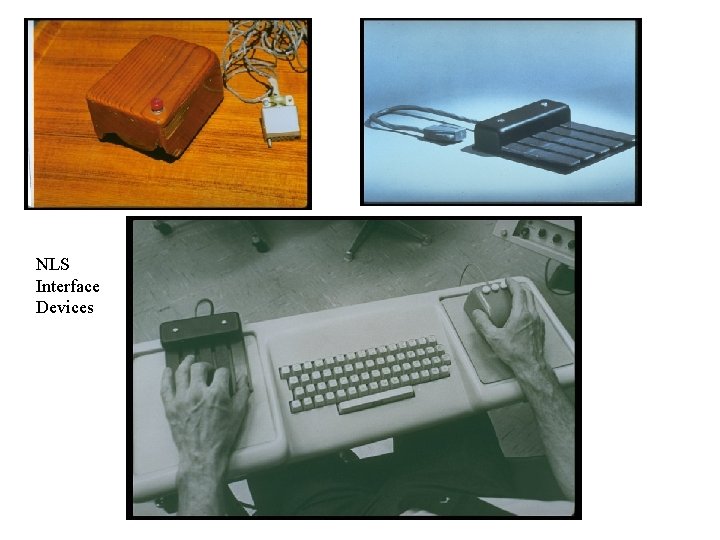
NLS Interface Devices
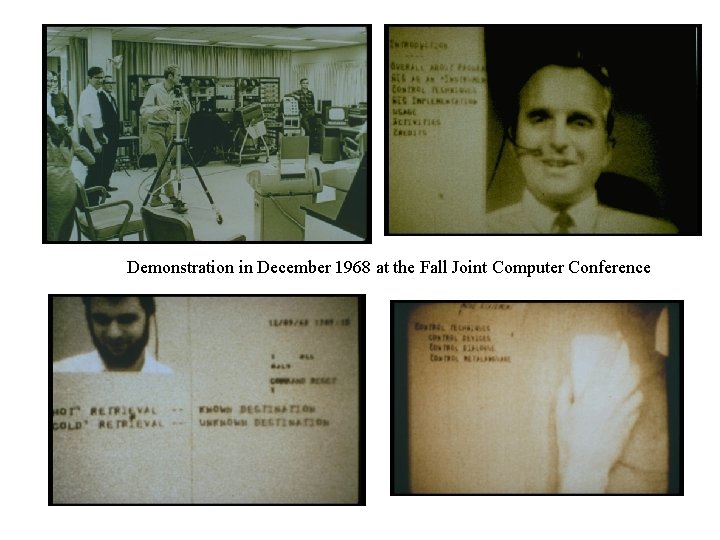
Demonstration in December 1968 at the Fall Joint Computer Conference
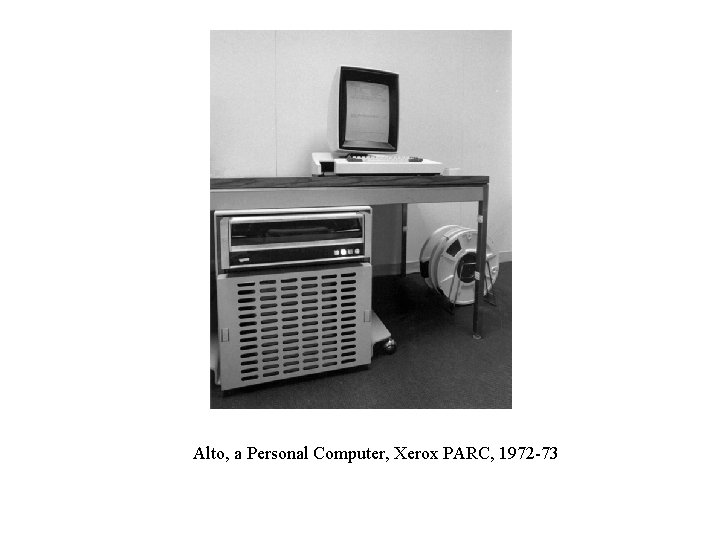
Alto, a Personal Computer, Xerox PARC, 1972 -73
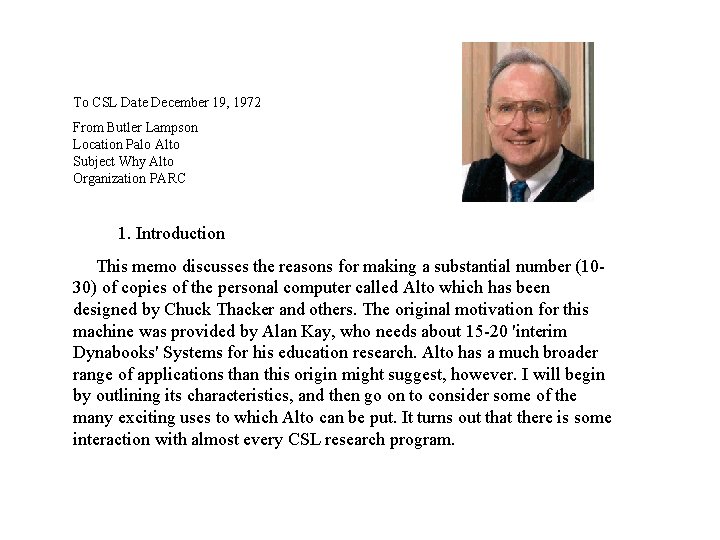
To CSL Date December 19, 1972 From Butler Lampson Location Palo Alto Subject Why Alto Organization PARC 1. Introduction This memo discusses the reasons for making a substantial number (1030) of copies of the personal computer called Alto which has been designed by Chuck Thacker and others. The original motivation for this machine was provided by Alan Kay, who needs about 15 -20 'interim Dynabooks' Systems for his education research. Alto has a much broader range of applications than this origin might suggest, however. I will begin by outlining its characteristics, and then go on to consider some of the many exciting uses to which Alto can be put. It turns out that there is some interaction with almost every CSL research program.
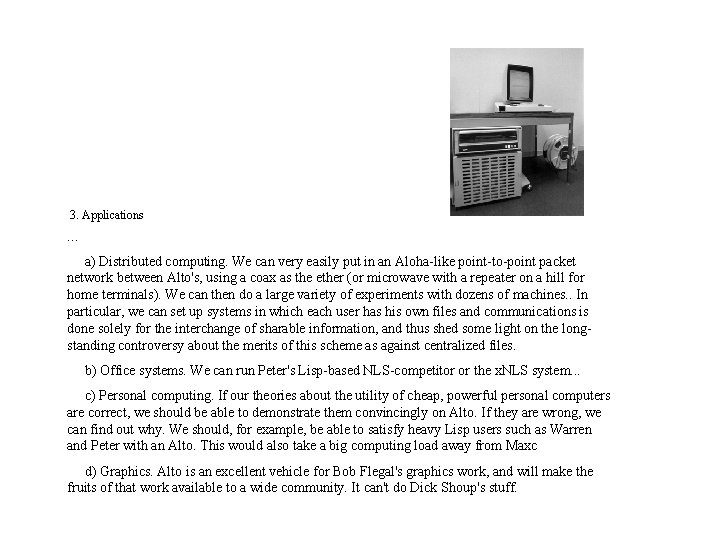
3. Applications … a) Distributed computing. We can very easily put in an Aloha-like point-to-point packet network between Alto's, using a coax as the ether (or microwave with a repeater on a hill for home terminals). We can then do a large variety of experiments with dozens of machines. . In particular, we can set up systems in which each user has his own files and communications is done solely for the interchange of sharable information, and thus shed some light on the longstanding controversy about the merits of this scheme as against centralized files. b) Office systems. We can run Peter's Lisp-based NLS-competitor or the x. NLS system. . . c) Personal computing. If our theories about the utility of cheap, powerful personal computers are correct, we should be able to demonstrate them convincingly on Alto. If they are wrong, we can find out why. We should, for example, be able to satisfy heavy Lisp users such as Warren and Peter with an Alto. This would also take a big computing load away from Maxc d) Graphics. Alto is an excellent vehicle for Bob Flegal's graphics work, and will make the fruits of that work available to a wide community. It can't do Dick Shoup's stuff.
• 48 -64 K 16 -bit words of memory (plus parity and perhaps error correction). • A 10 megabyte Diablo disk which transfers one word every 7 us, rotates in 25 ms, and has a track-to-track seek of 8 ms, and worst-case seek of 70 ms. • A 901 line TV monitor whose display surface is almost exactly the size of this page. It is oriented vertically, and is designed to be driven from a bit map in the memory. It takes 32 K of memory to fill the display area with a square (825 x 620) raster. These dots are about 1. 4 mils square. It is possible to reduce their width to about 1 mil, which gives an 825 x 860 raster and 44. 3 K of memory. The square raster can display 8000 5 x 7 characters with descenders or 2500 beautiful proportionally-spaced characters. • An undecoded keyboard which allows the processor to determine exactly when each key is depressed or released, and a mouse or other pointing device. • A processor which executes Nova instructions at about 1. 5 us/instruction, and can be extended with extra instructions suitable for interpreting Lisp, Bcpl, MPS, or whatever. • A high-bandwidth (10 MHz) communication interface whose details are not yet specified. • Optionally, a fixed-font character generator similar to the one designed and built by Doug Clark. This would save a lot of memory and would permit higher quality characters than can be done with a square raster, but adds no basically new capability. It should cost about $500. • Optionally, a Diablo printer, XGP, or other hardcopy device. • A table about 45" wide and 25" deep to house the machine and mount the display and keyboard. • Most important, a cost of about $l. O. 5 K, which can be reduced to $9. 7 K by the use of a 2. 5 megabyte disk. The cost is about equally split among disk, memory, and everything else. We have spent about twice as much on Maxc per 1974 CSL member.
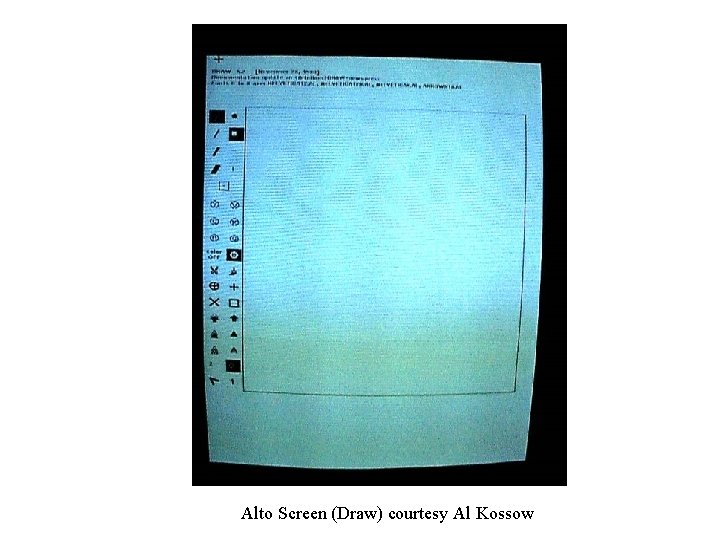
Alto Screen (Draw) courtesy Al Kossow
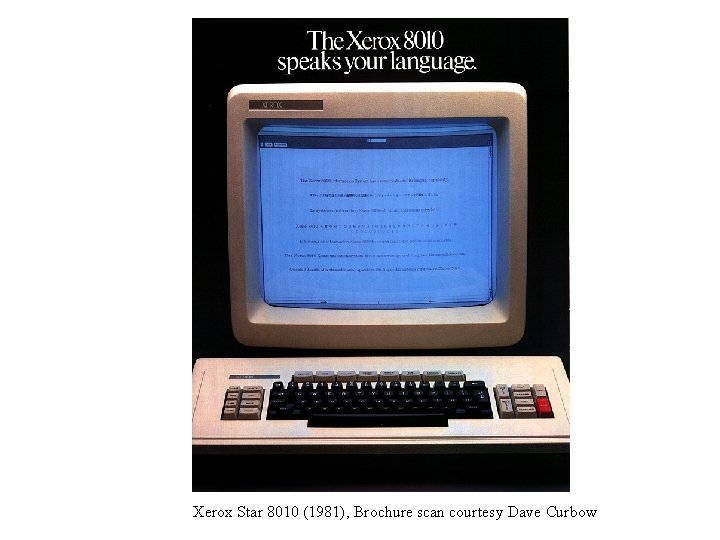
Xerox Star 8010 (1981), Brochure scan courtesy Dave Curbow
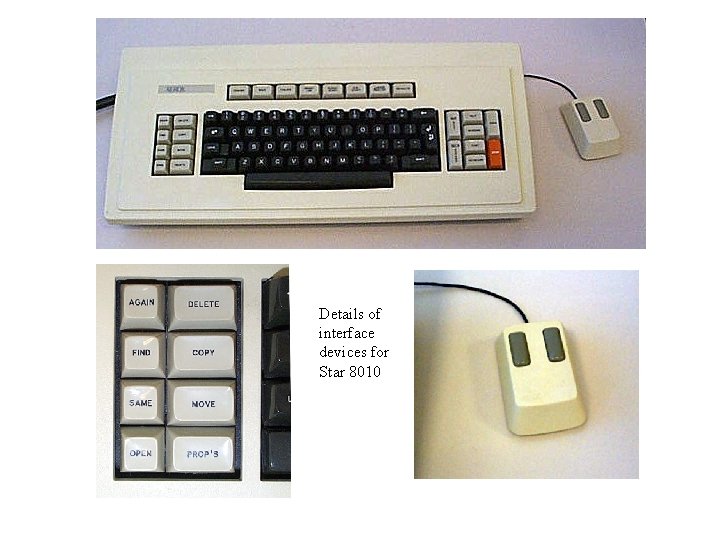
Details of interface devices for Star 8010
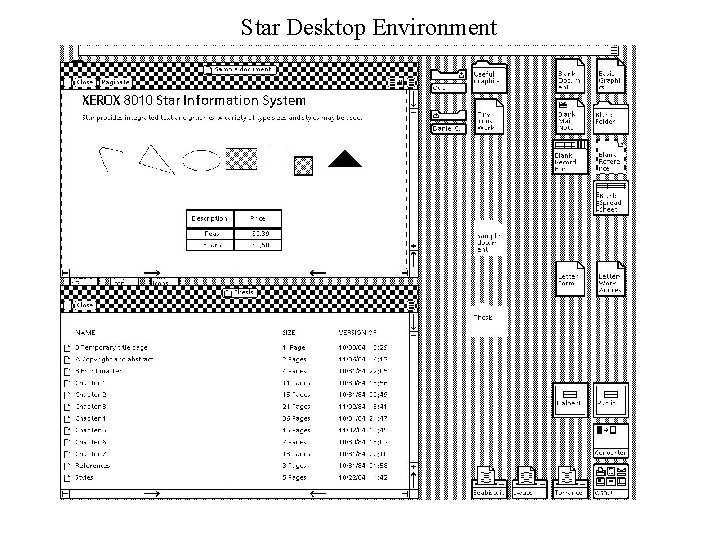
Star Desktop Environment
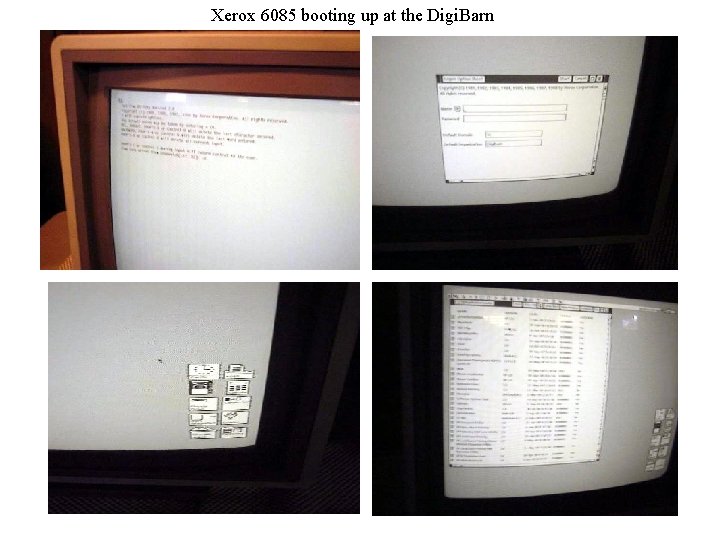
Xerox 6085 booting up at the Digi. Barn
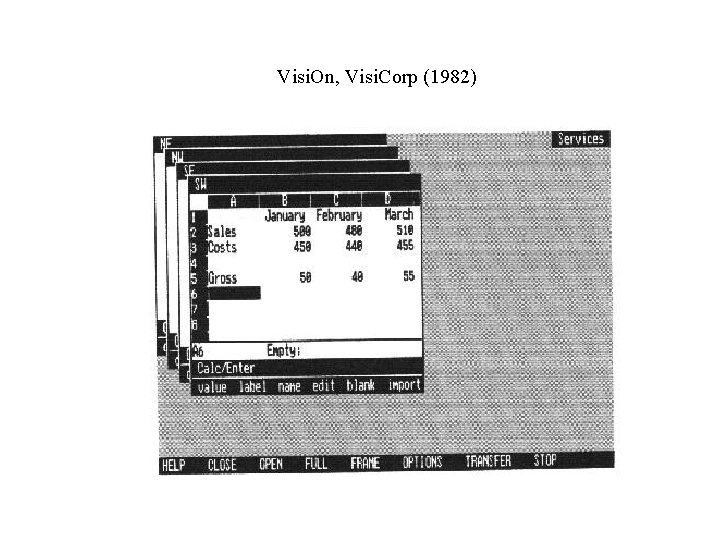
Visi. On, Visi. Corp (1982)
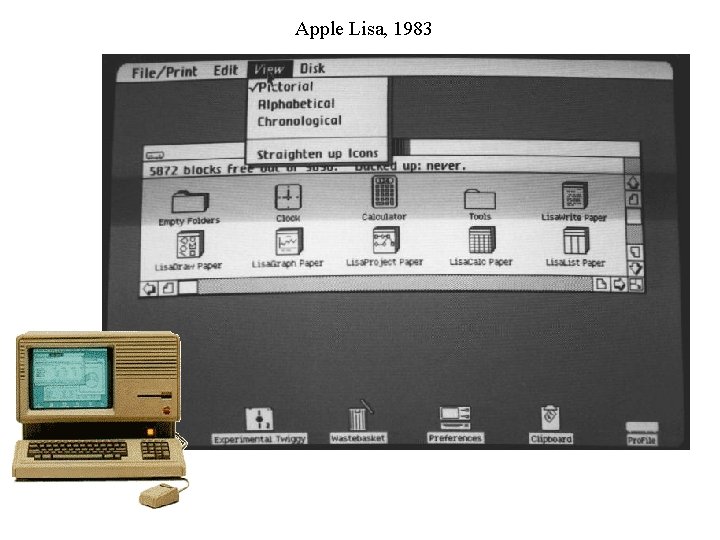
Apple Lisa, 1983
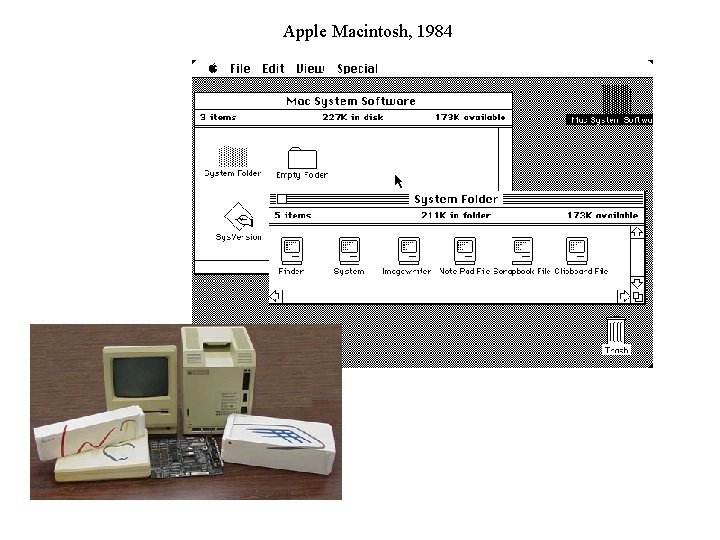
Apple Macintosh, 1984
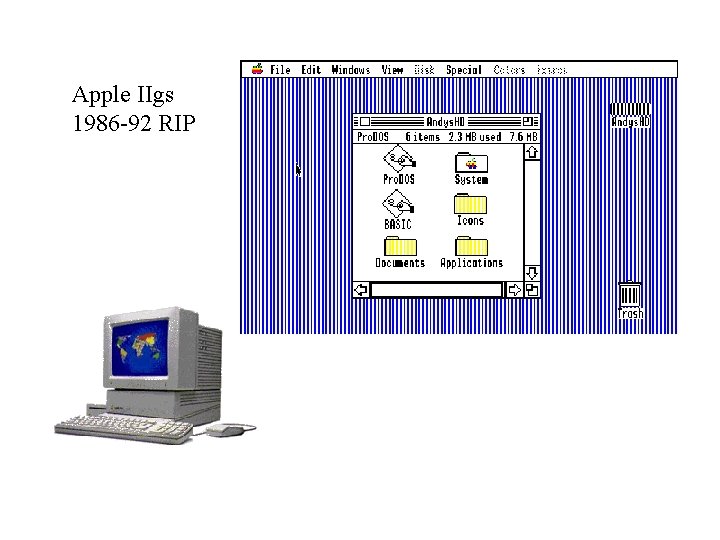
Apple IIgs 1986 -92 RIP
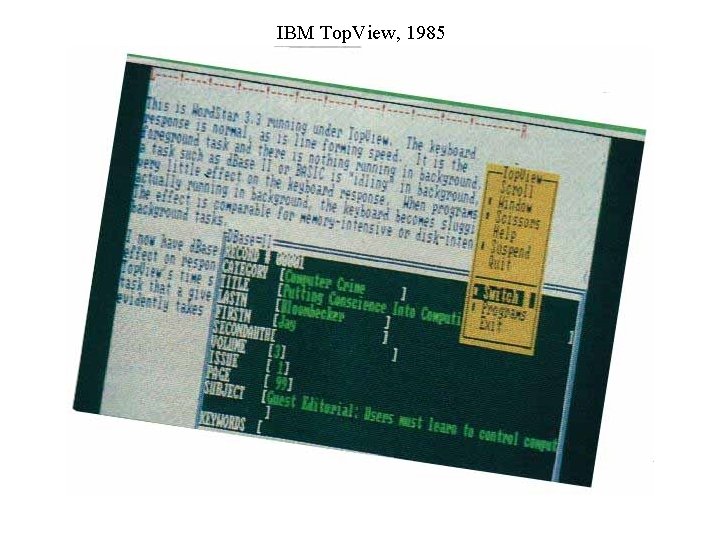
IBM Top. View, 1985
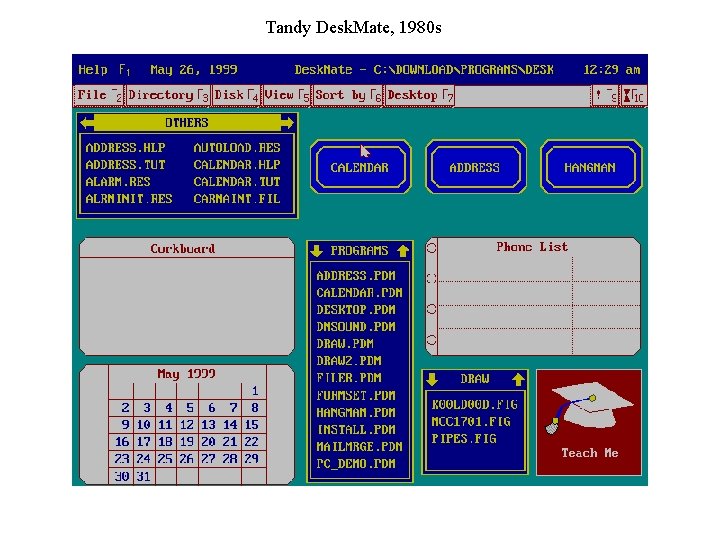
Tandy Desk. Mate, 1980 s
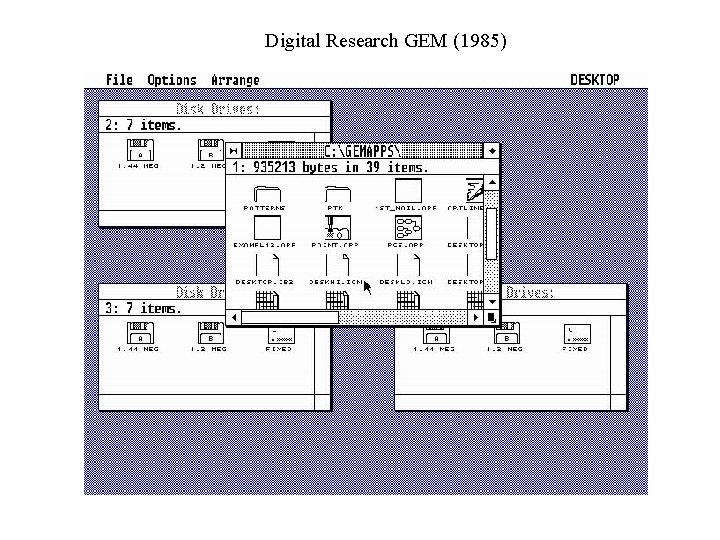
Digital Research GEM (1985)
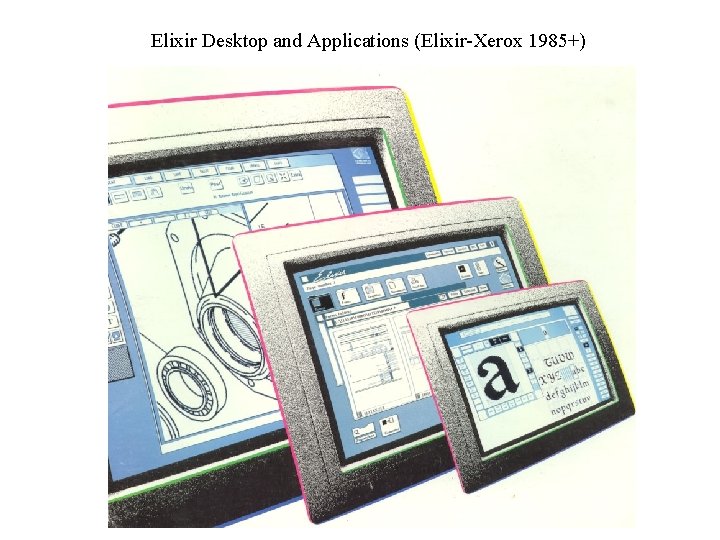
Elixir Desktop and Applications (Elixir-Xerox 1985+)
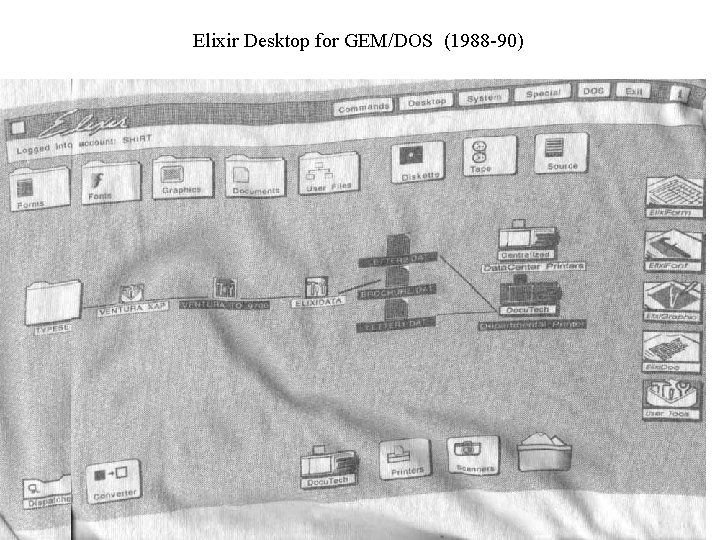
Elixir Desktop for GEM/DOS (1988 -90)
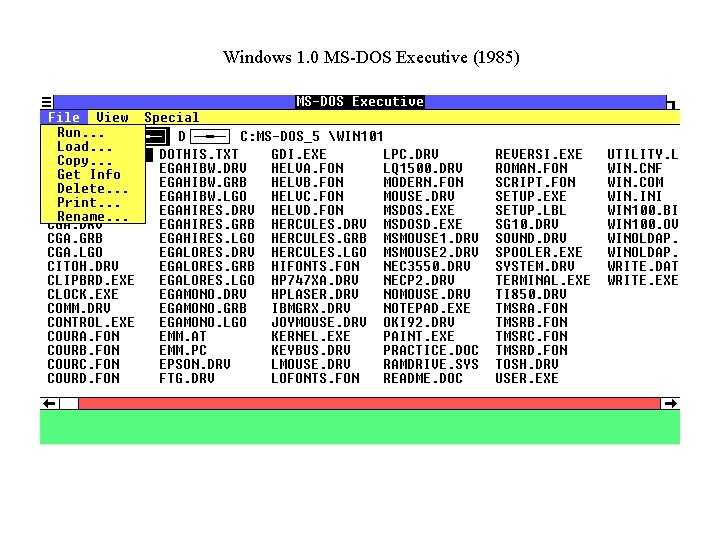
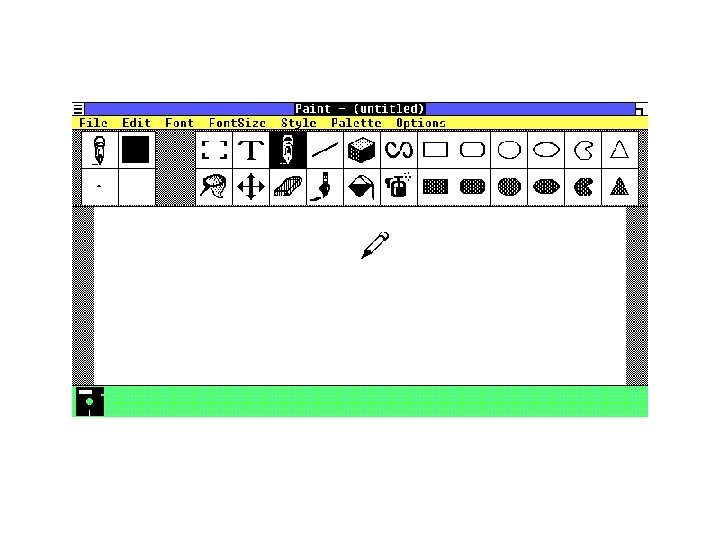
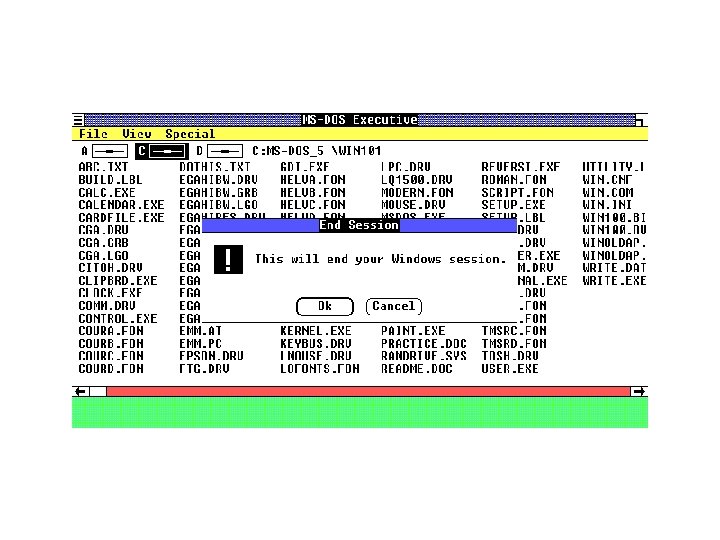
Windows 1. 0 MS-DOS Executive (1985)
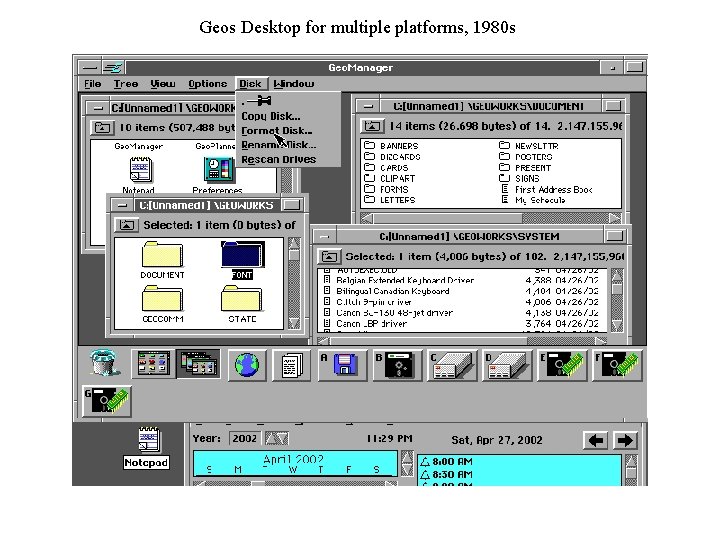
Geos Desktop for multiple platforms, 1980 s
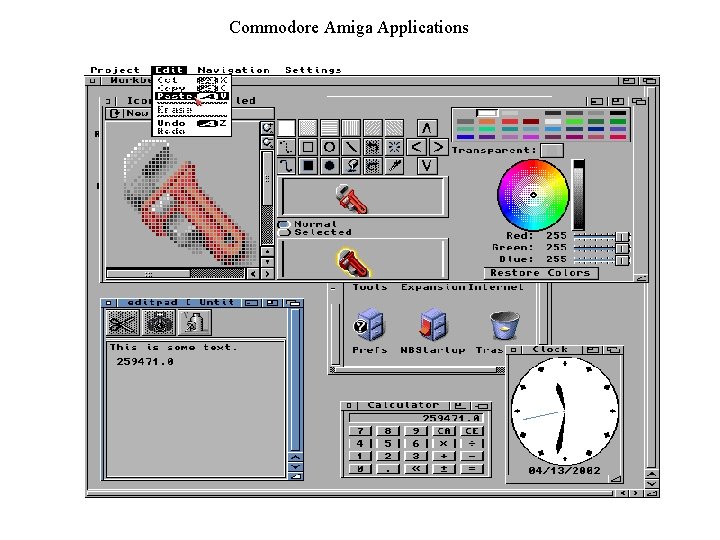
Commodore Amiga Applications
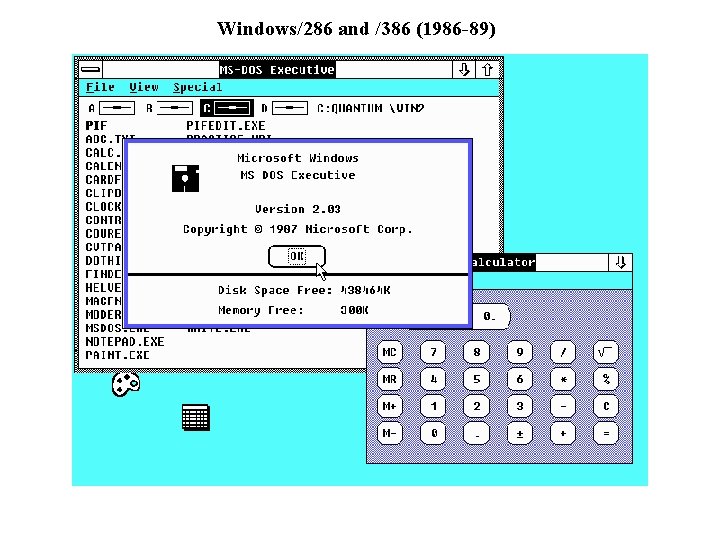
Windows/286 and /386 (1986 -89)
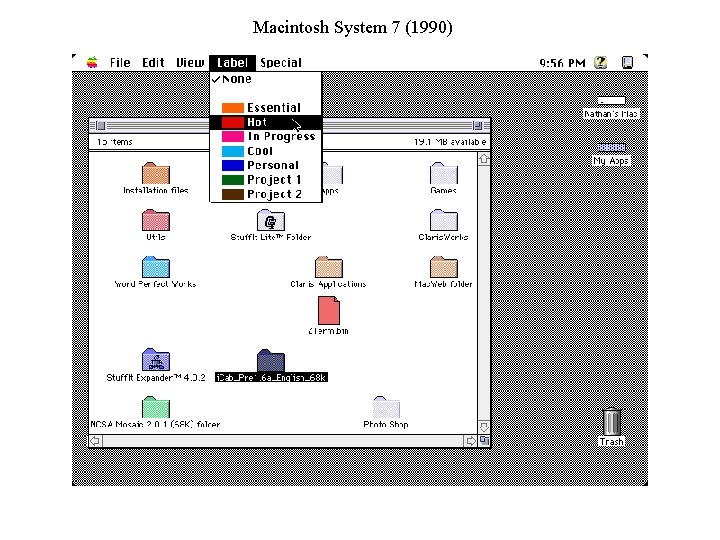
Macintosh System 7 (1990)
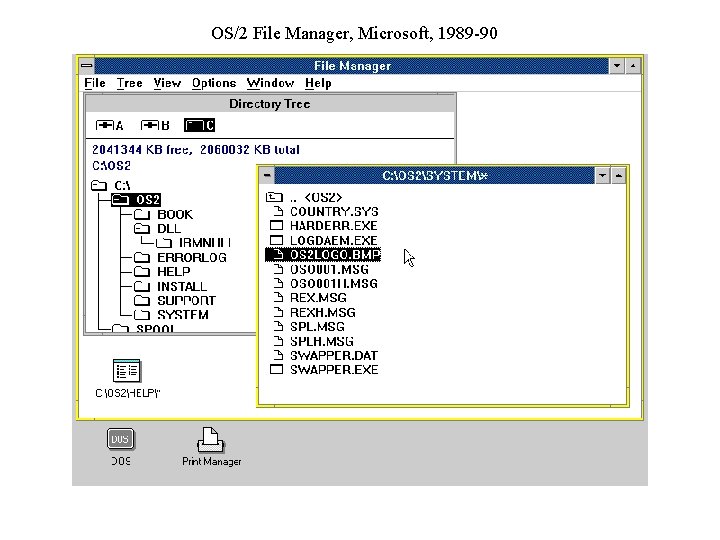
OS/2 File Manager, Microsoft, 1989 -90
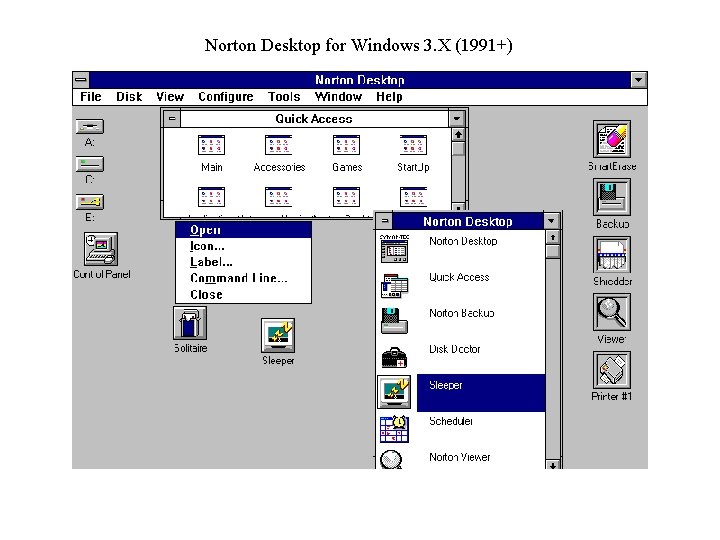
Norton Desktop for Windows 3. X (1991+)
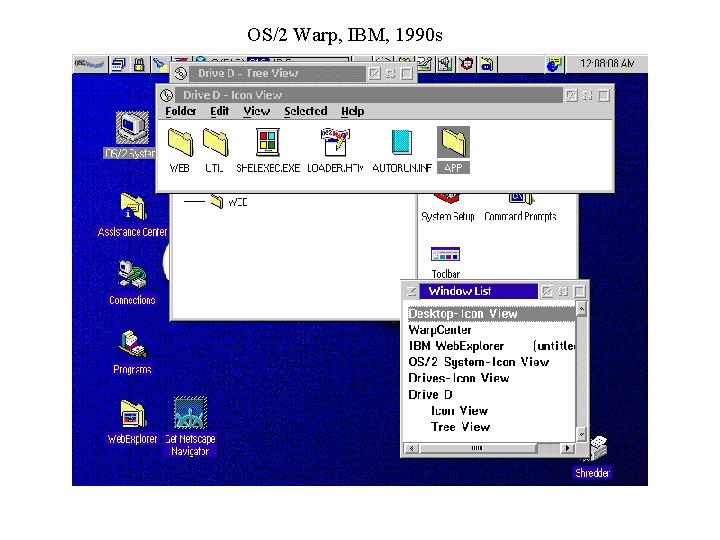
OS/2 Warp, IBM, 1990 s
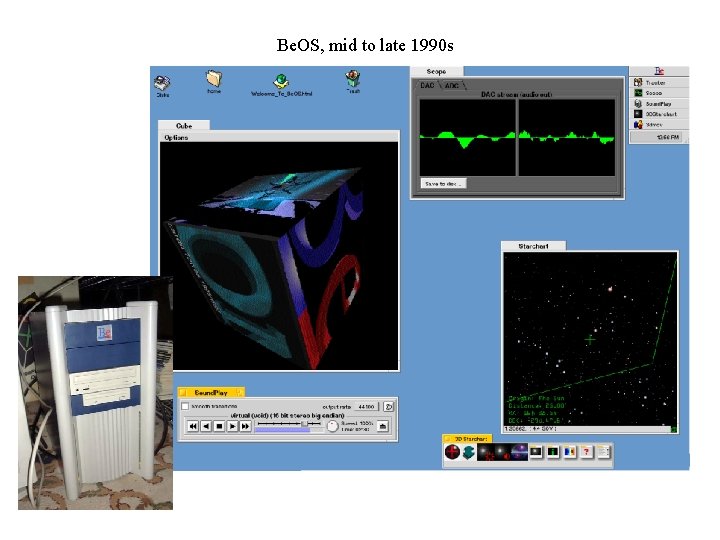
Be. OS, mid to late 1990 s
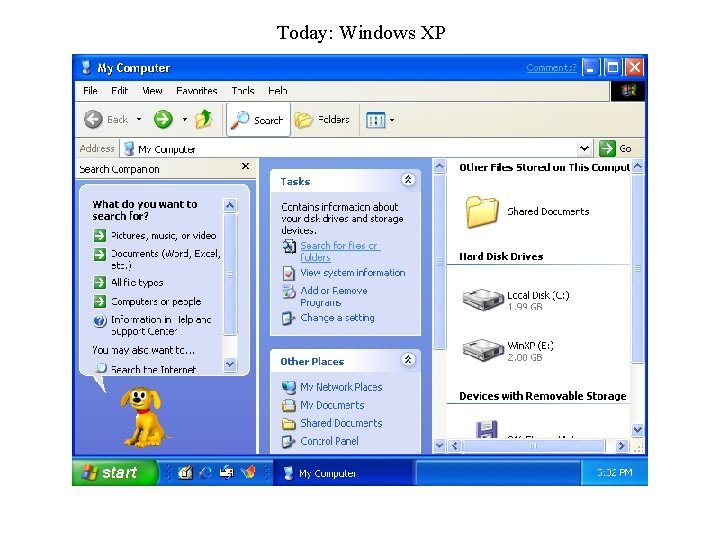
Today: Windows XP
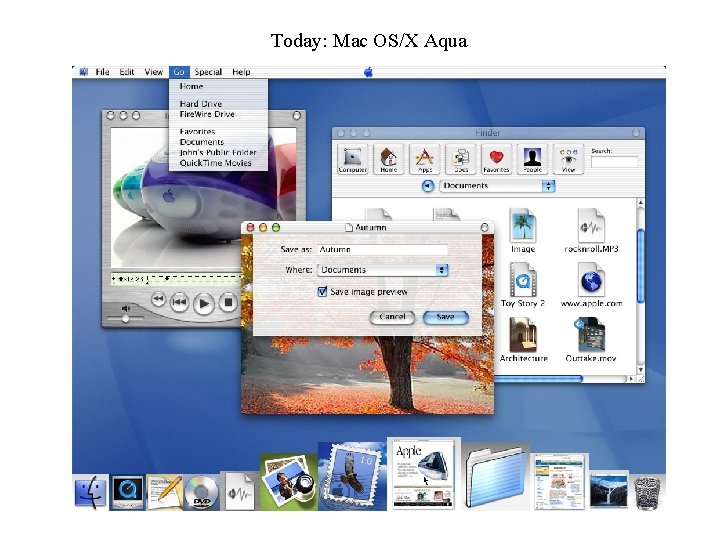
Today: Mac OS/X Aqua
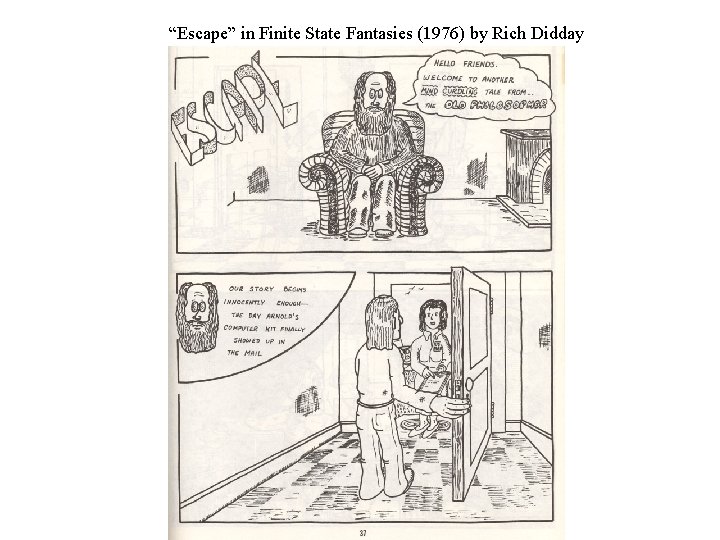
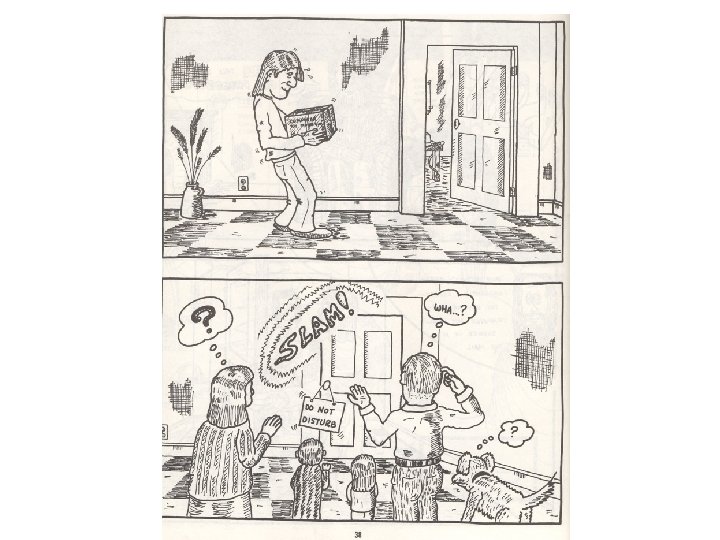
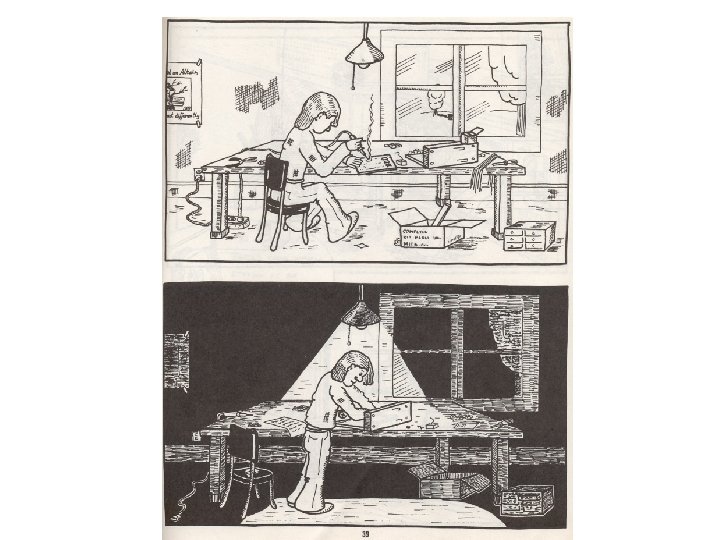
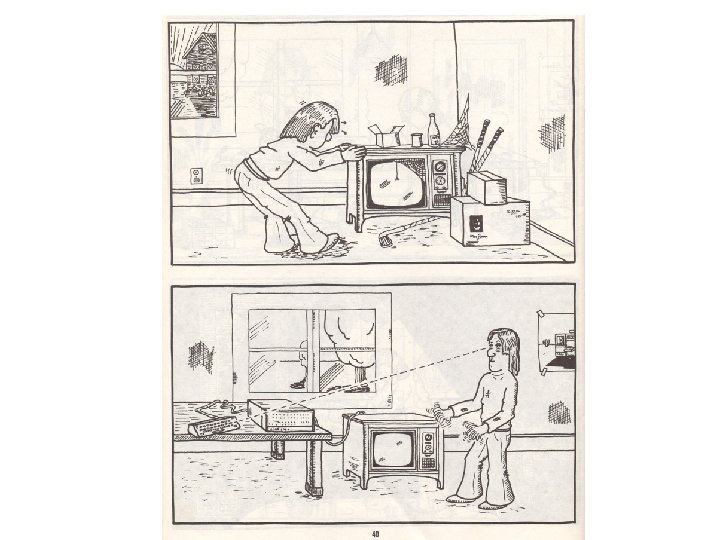
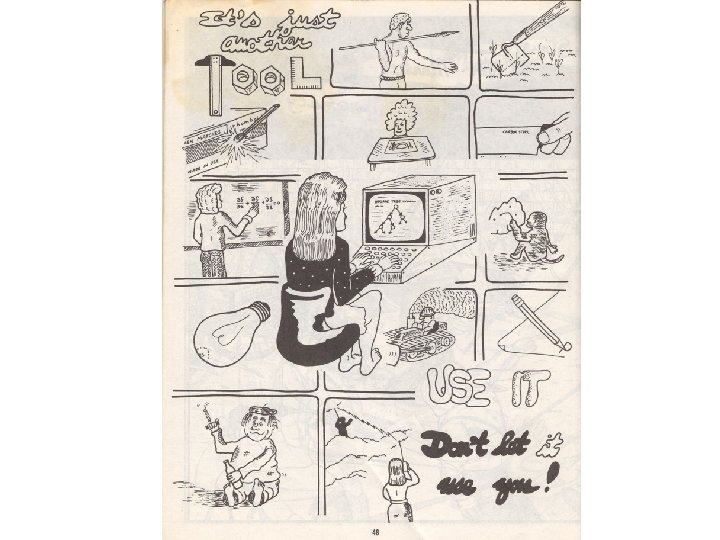
“Escape” in Finite State Fantasies (1976) by Rich Didday
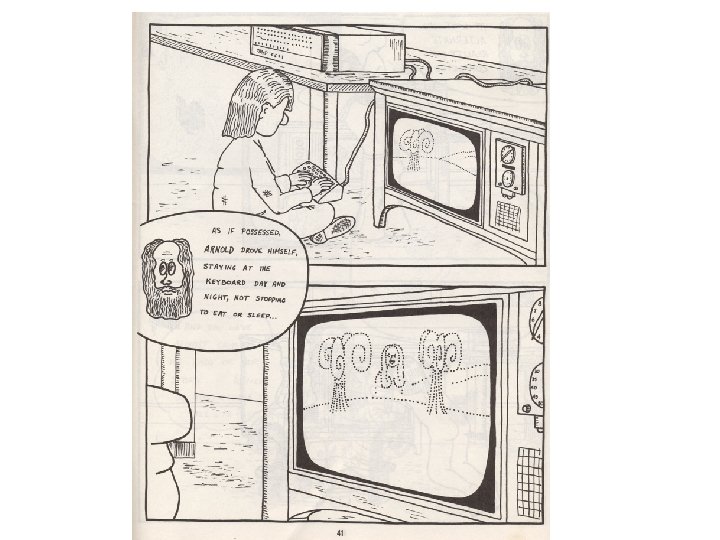
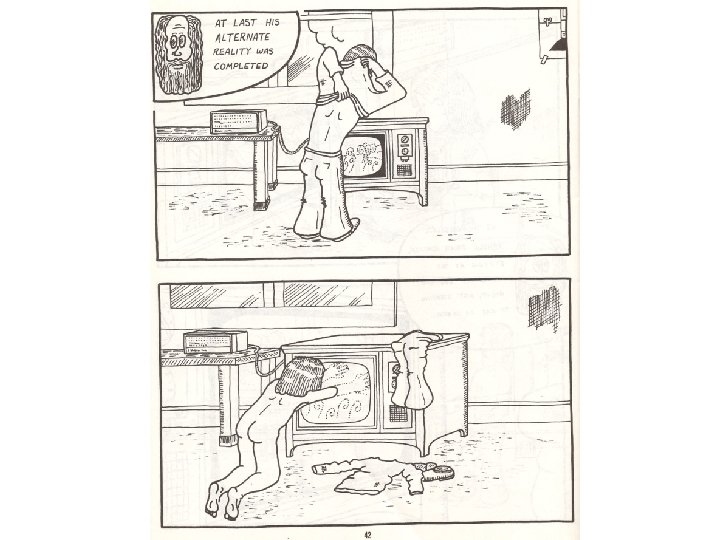
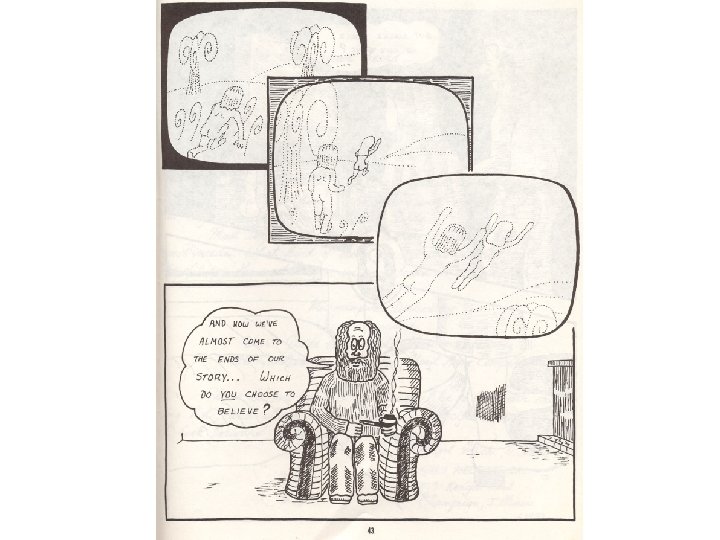
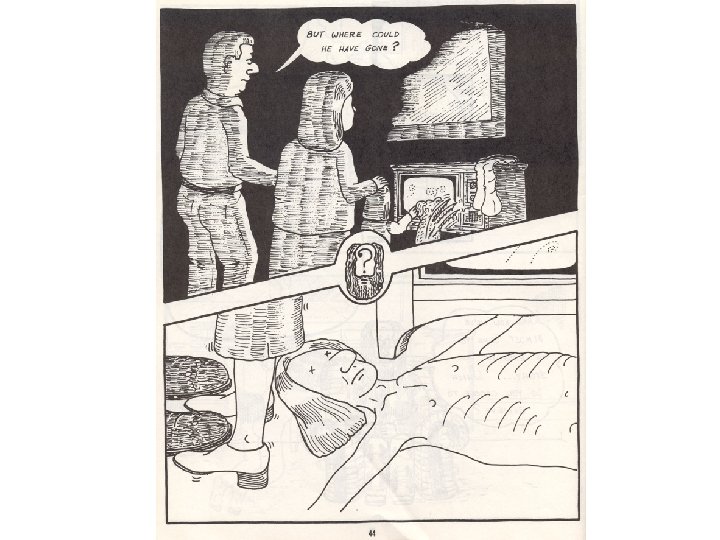
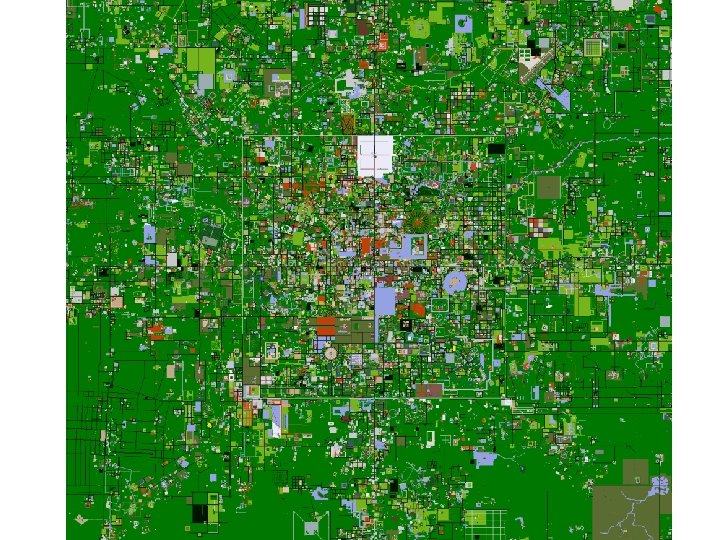
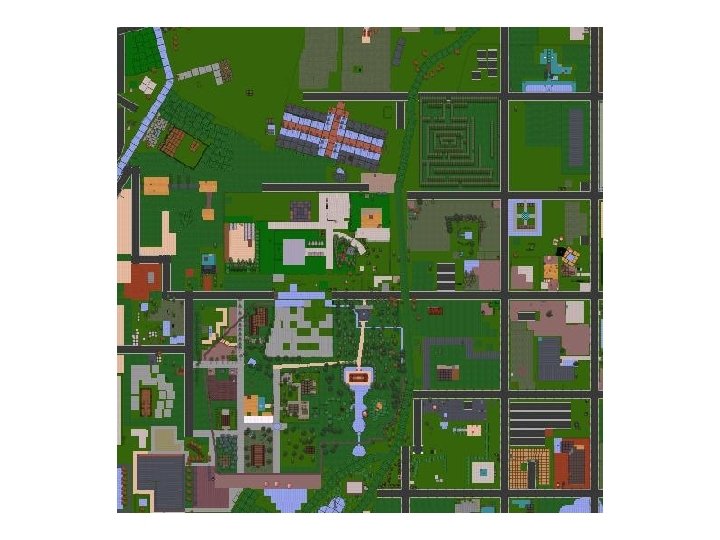
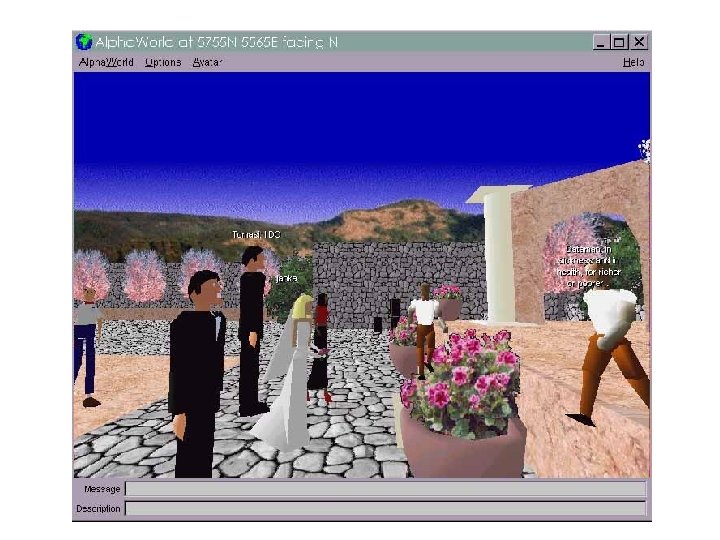
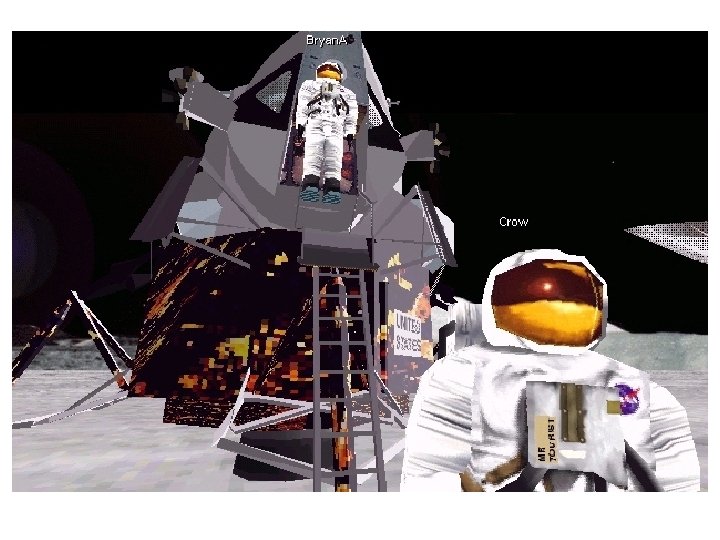
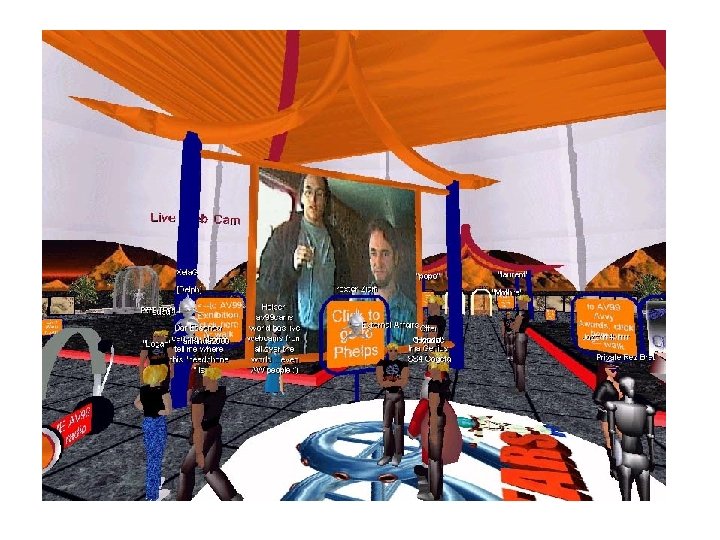
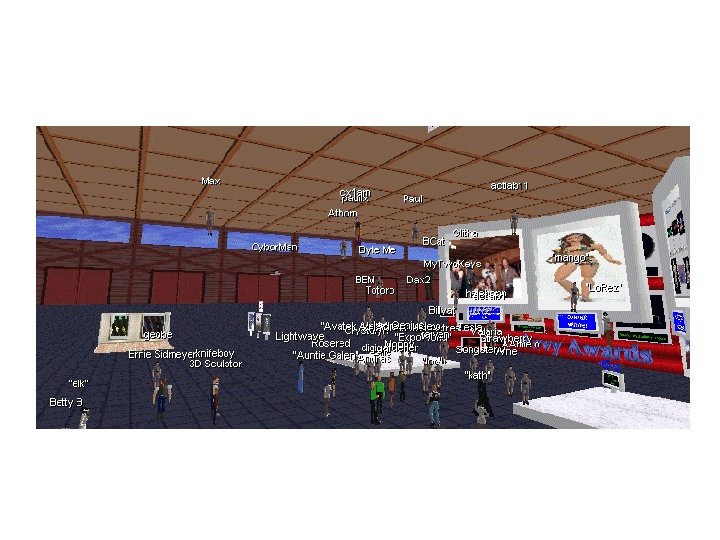
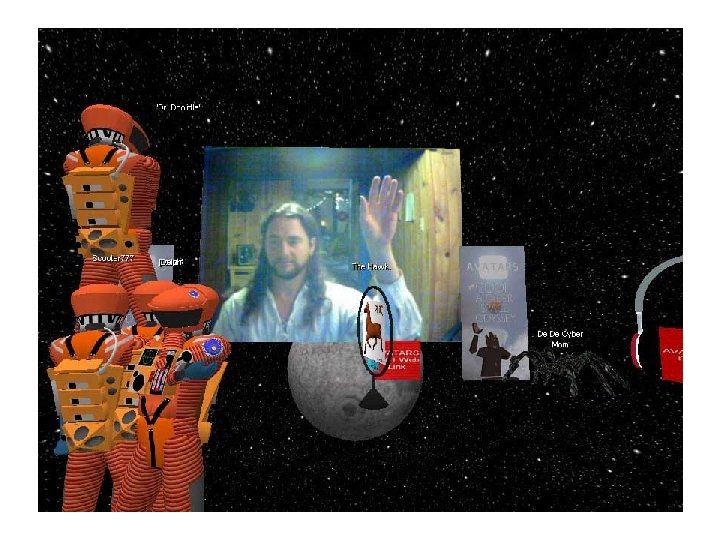
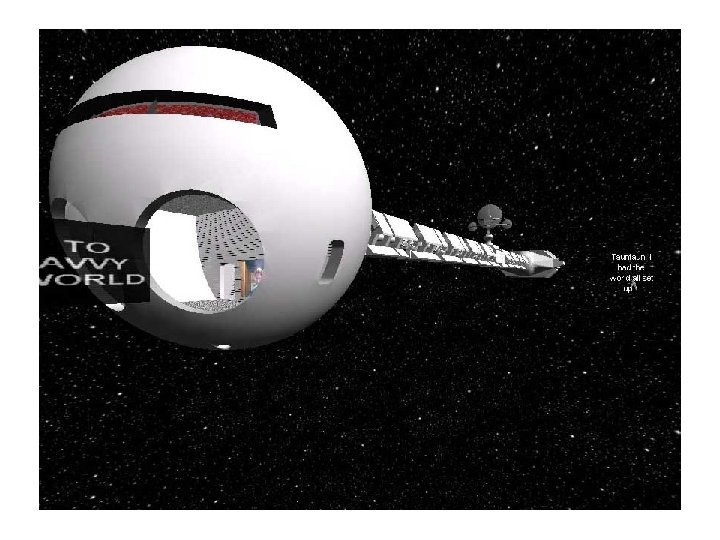
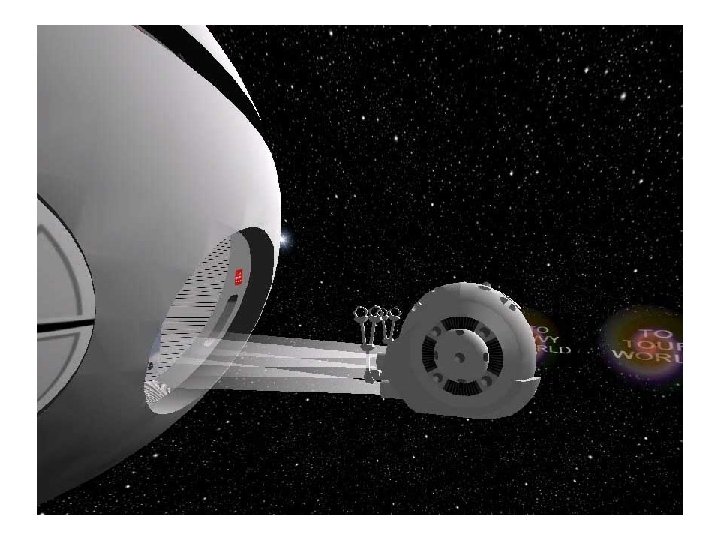
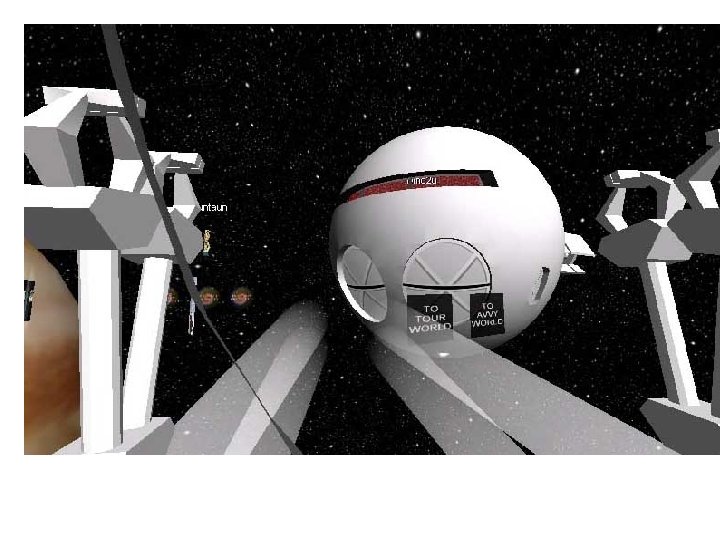
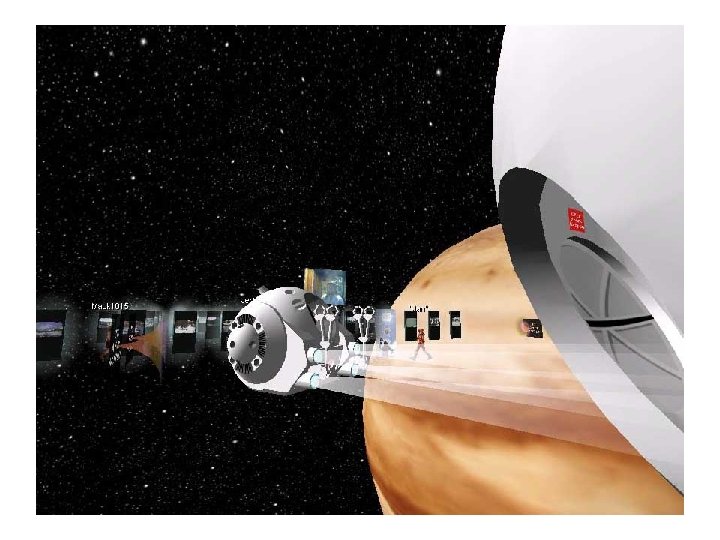
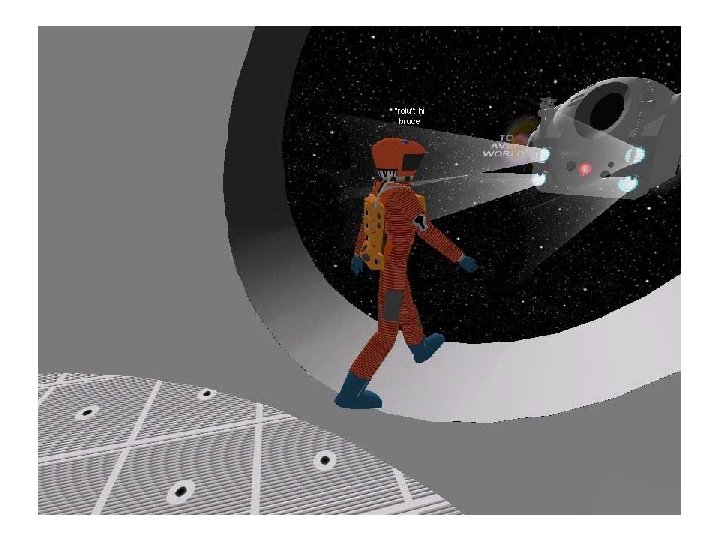
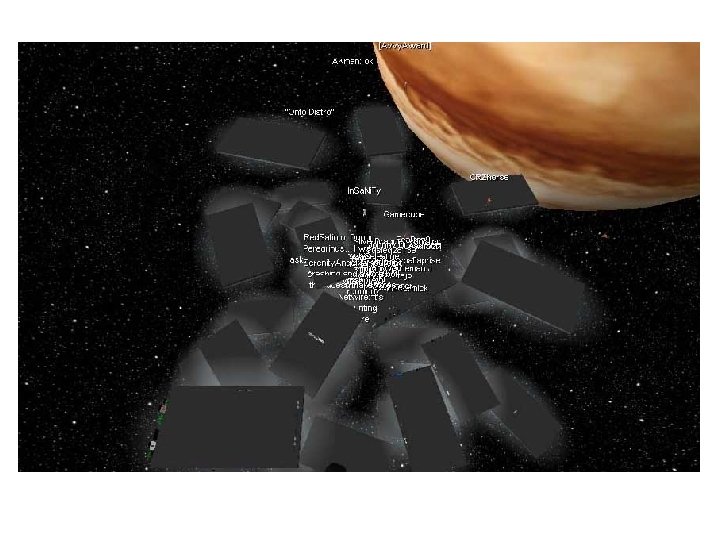
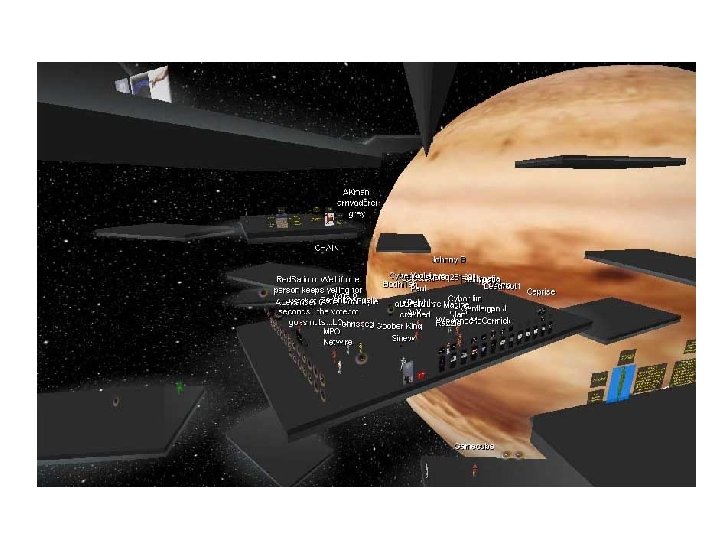
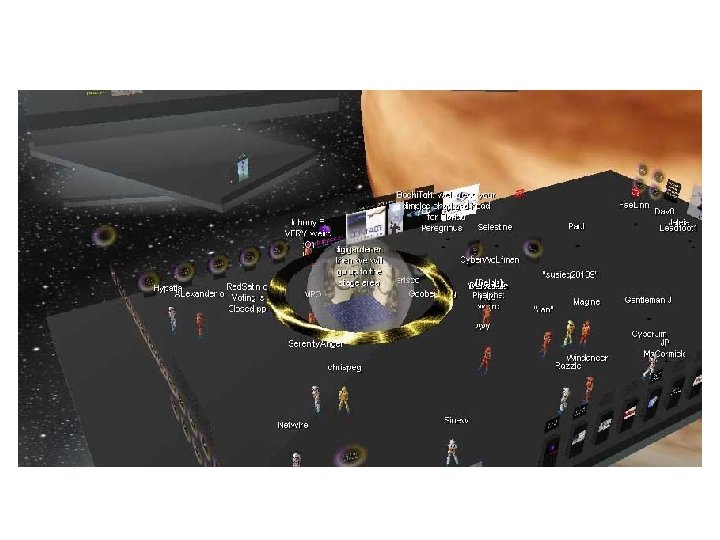
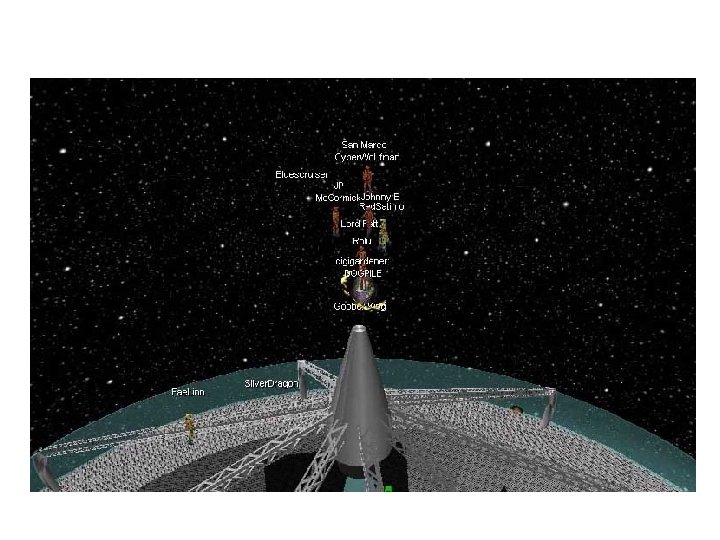
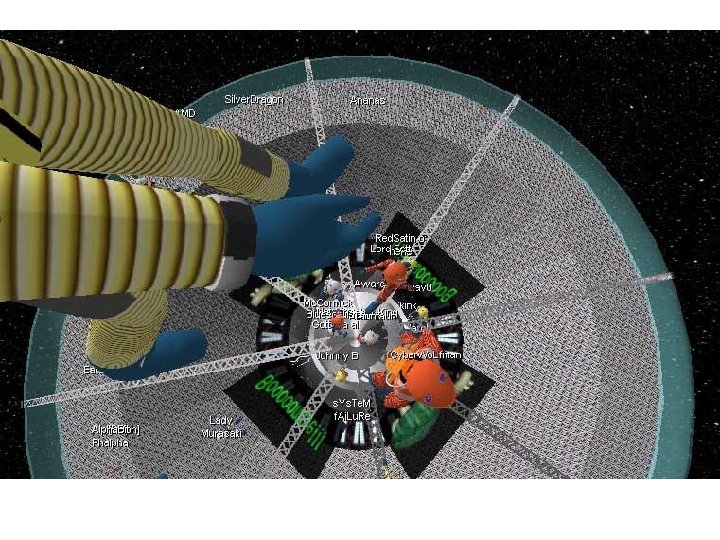
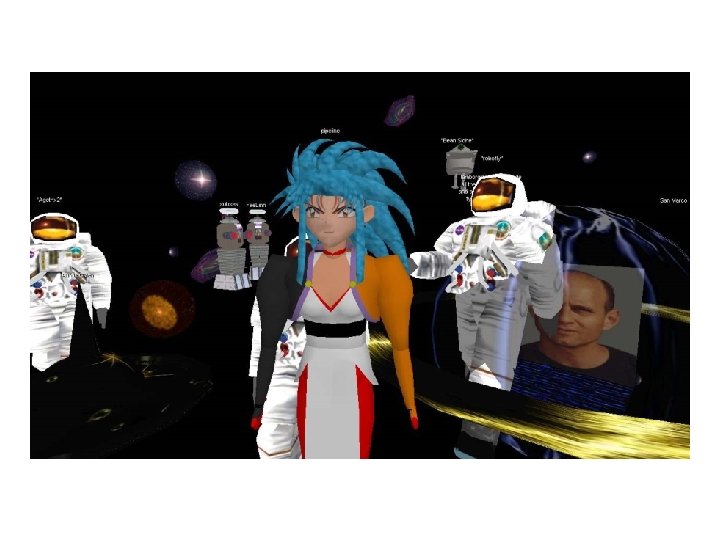
GUI The Next Generation? Virtual Worlds
Acknowledgements • Doug Engelbart and the Bootstrap Institute • Nathan Lineback and his GUI Gallery • Al Kossow • Dave Curbow • Don Woodward • Butler Lampson • John Redant • Xerox PARC • Elixir Technologies Corporation • Computer History Museum • Vintage Computer Festival • Rich Didday • Activeworlds Inc.
Digi. Barn Computer Museum www. digibarn. com Damer@digitalspace. com
- Slides: 68