
A Simple Formula for Calculating Carbon Budgets Presented
A Simple Formula for Calculating Carbon Budgets (Presented at the AGU Fall 2019 Meeting) Bruce Parker (BS/MS EE MIT ‘ 70) Chesapeake Data Systems January 24, 2020 1
“X is Happening Faster Than Previously Expected” 2
“X is Happening Faster Than Previously Expected” • Models used in IPCC AR 5 – did not include emissions from permafrost thawing (>100 GTC) 3
“X is Happening Faster Than Previously Expected” • Models used in IPCC AR 5 – did not include emissions from permafrost thawing (>100 GTC) – Underestimated reduction in Arctic sea ice 4
“X is Happening Faster Than Previously Expected” • Models used in IPCC AR 5 – did not include emissions from permafrost thawing (>100 GTC) – Underestimated reduction in Arctic sea ice • No mechanism to adjust the model results as more information became available 5
“X is Happening Faster Than Previously Expected” • Models used in IPCC AR 5 – did not include emissions from permafrost thawing (>100 GTC) – Underestimated reduction in Arctic sea ice • No mechanism to adjust the model results as more information became available • Prior to COP 21 (Dec 2015) – no “fair” way to allocate the remaining carbon budget for INDCs 6
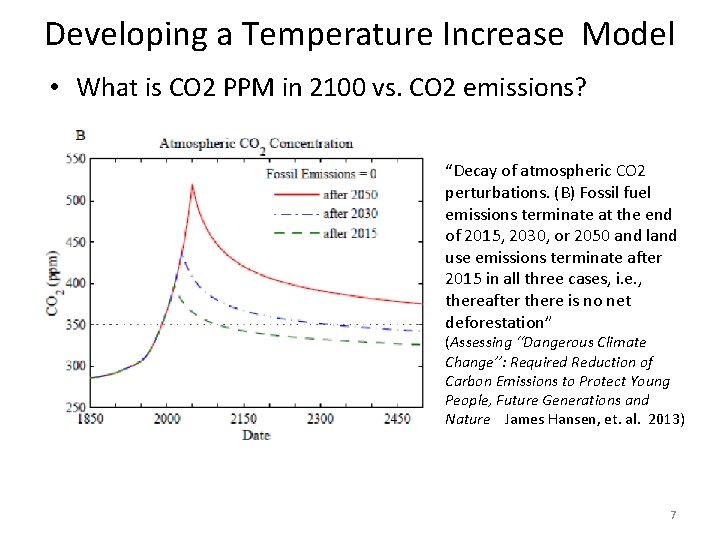
Developing a Temperature Increase Model • What is CO 2 PPM in 2100 vs. CO 2 emissions? “Decay of atmospheric CO 2 perturbations. (B) Fossil fuel emissions terminate at the end of 2015, 2030, or 2050 and land use emissions terminate after 2015 in all three cases, i. e. , thereafter there is no net deforestation” (Assessing ‘‘Dangerous Climate Change’’: Required Reduction of Carbon Emissions to Protect Young People, Future Generations and Nature James Hansen, et. al. 2013) 7
Is There An Alternative Approach to Developing My Own Climate Model? 8
Is There An Alternative Approach to Developing My Own Climate Model? • Could I use the output of sophisticated climate models to develop simple formula based on cumulative CO 2 emissions? 9
Is There An Alternative Approach to Developing My Own Climate Model? • Could I use the output of sophisticated climate models to develop simple formula based on cumulative CO 2 emissions? • Downloaded PC versions of MAGICC and CROADS 10
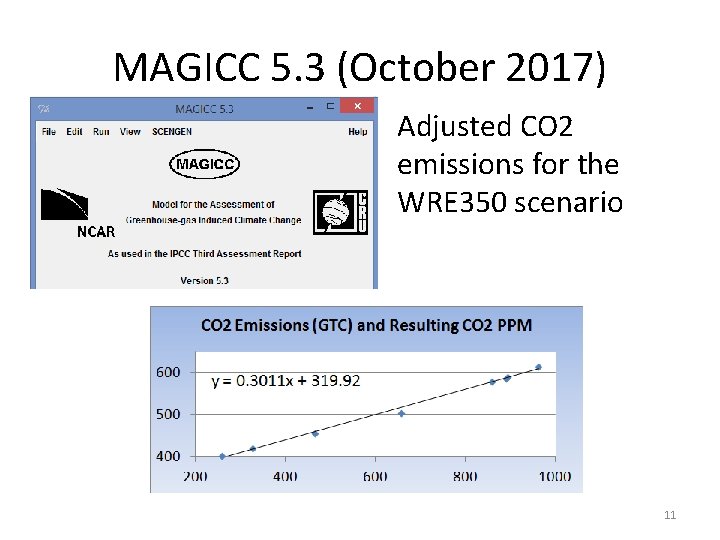
MAGICC 5. 3 (October 2017) Adjusted CO 2 emissions for the WRE 350 scenario 11
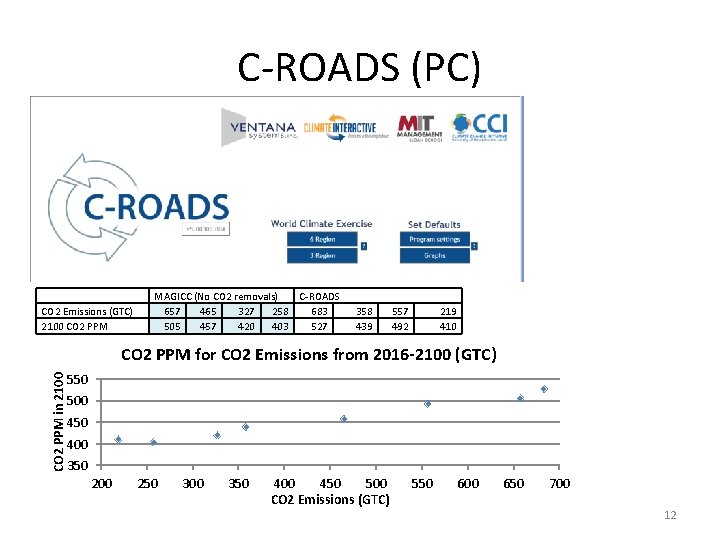
C-ROADS (PC) CO 2 Emissions (GTC) 2100 CO 2 PPM MAGICC (No CO 2 removals) C-ROADS 657 465 327 258 683 505 457 420 403 527 358 439 557 492 219 410 CO 2 PPM in 2100 CO 2 PPM for CO 2 Emissions from 2016 -2100 (GTC) 550 500 450 400 350 200 250 300 350 400 450 500 CO 2 Emissions (GTC) 550 600 650 700 12
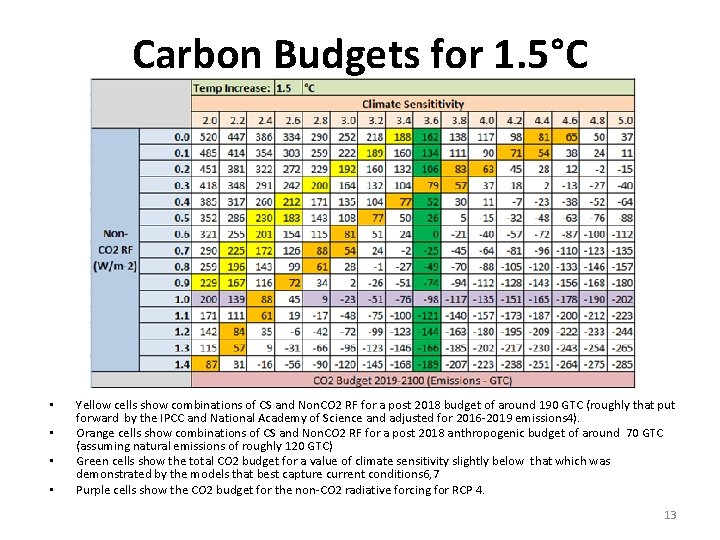
Carbon Budgets for 1. 5°C • • Yellow cells show combinations of CS and Non. CO 2 RF for a post 2018 budget of around 190 GTC (roughly that put forward by the IPCC and National Academy of Science and adjusted for 2016 -2019 emissions 4). Orange cells show combinations of CS and Non. CO 2 RF for a post 2018 anthropogenic budget of around 70 GTC (assuming natural emissions of roughly 120 GTC) Green cells show the total CO 2 budget for a value of climate sensitivity slightly below that which was demonstrated by the models that best capture current conditions 6, 7 Purple cells show the CO 2 budget for the non-CO 2 radiative forcing for RCP 4. 13
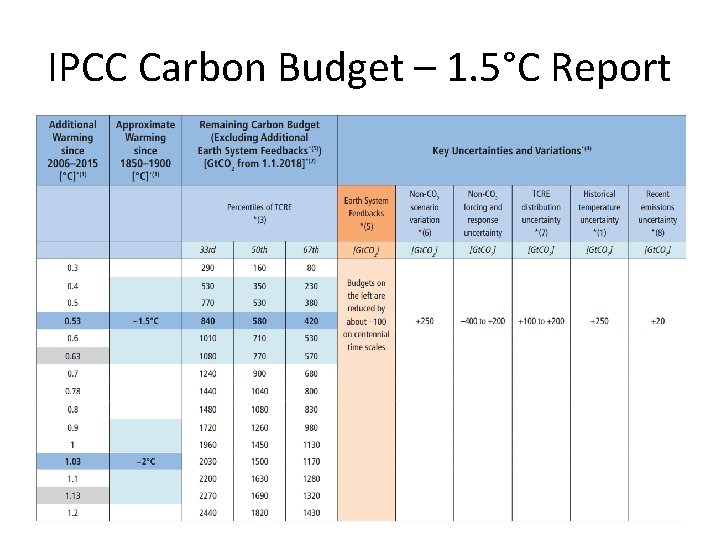
IPCC Carbon Budget – 1. 5°C Report 14
15
IAMC 1. 5°C Scenario Explorer and Data 1. The data for 410 climate scenarios was provided in an Excel spreadsheet. 2. The data include results for both the FAIR and MAGICC computer models. This analysis uses just the results from the FAIR models. 3. The models use "transient climate response" (TCR): the amount of warming that might occur at the time when CO 2 doubles, having increased gradually by 1% each year. 4. The calculated average value of the TCR was 2. 46 for 45 scenarios where the temperature increase was between 1. 45°C and 1. 55°C. 5. The estimated temperature increase at the "P 66" level ranges from 0. 95°C to 4. 68°C 6. The average year when the models predict that 1. 5°C will be exceeded is 2033. A recent analysis shows this happening 2. 5 years earlier. 16
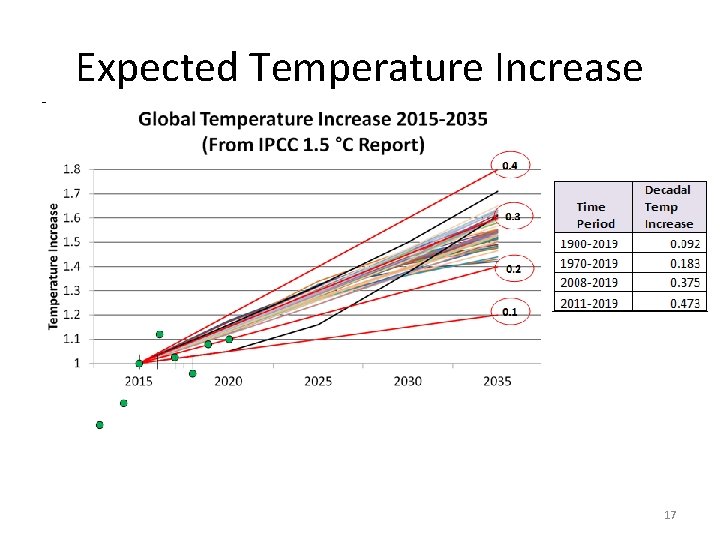
Expected Temperature Increase 17

Climate Model Output Relate CO 2 Atmospheric PPM to CO 2 Emissions > 60 GTC, and CO 2 PPM < 500 and P 66 Temp Increase >= 1. 4 (The computed PPM differs from the scenario PPM by 1. 2% to 2. 0%) 18
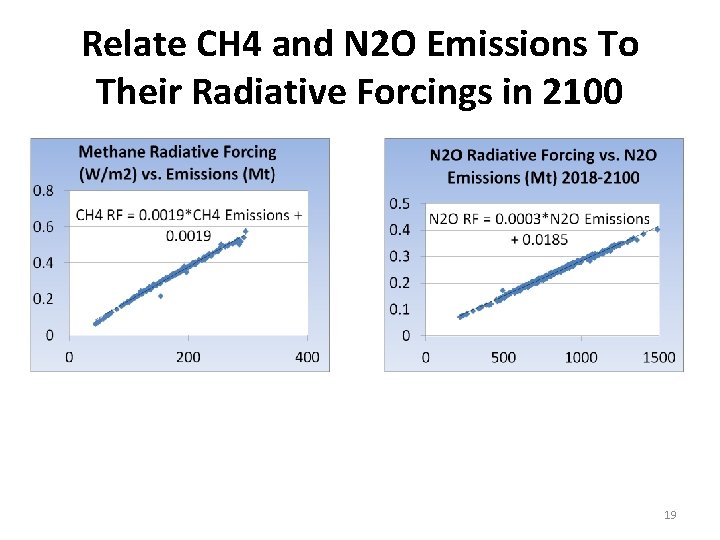
Relate CH 4 and N 2 O Emissions To Their Radiative Forcings in 2100 19
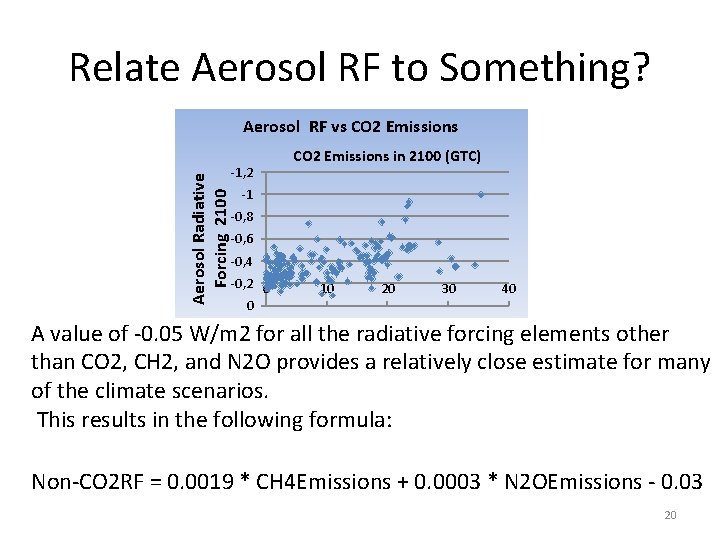
Relate Aerosol RF to Something? Aerosol Radiative Forcing 2100 Aerosol RF vs CO 2 Emissions -1, 2 CO 2 Emissions in 2100 (GTC) -1 -0, 8 -0, 6 -0, 4 -0, 2 0 0 10 20 30 40 A value of -0. 05 W/m 2 for all the radiative forcing elements other than CO 2, CH 2, and N 2 O provides a relatively close estimate for many of the climate scenarios. This results in the following formula: Non-CO 2 RF = 0. 0019 * CH 4 Emissions + 0. 0003 * N 2 OEmissions - 0. 03 20
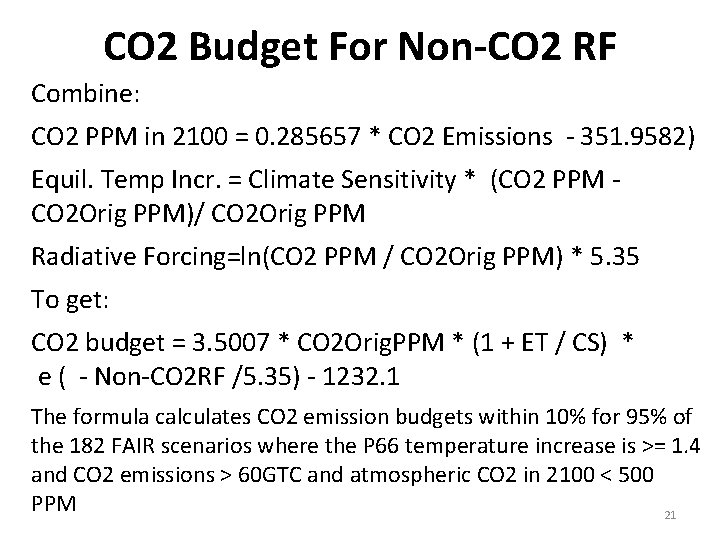
CO 2 Budget For Non-CO 2 RF Combine: CO 2 PPM in 2100 = 0. 285657 * CO 2 Emissions - 351. 9582) Equil. Temp Incr. = Climate Sensitivity * (CO 2 PPM CO 2 Orig PPM)/ CO 2 Orig PPM Radiative Forcing=ln(CO 2 PPM / CO 2 Orig PPM) * 5. 35 To get: CO 2 budget = 3. 5007 * CO 2 Orig. PPM * (1 + ET / CS) * e ( - Non-CO 2 RF /5. 35) - 1232. 1 The formula calculates CO 2 emission budgets within 10% for 95% of the 182 FAIR scenarios where the P 66 temperature increase is >= 1. 4 and CO 2 emissions > 60 GTC and atmospheric CO 2 in 2100 < 500 PPM 21
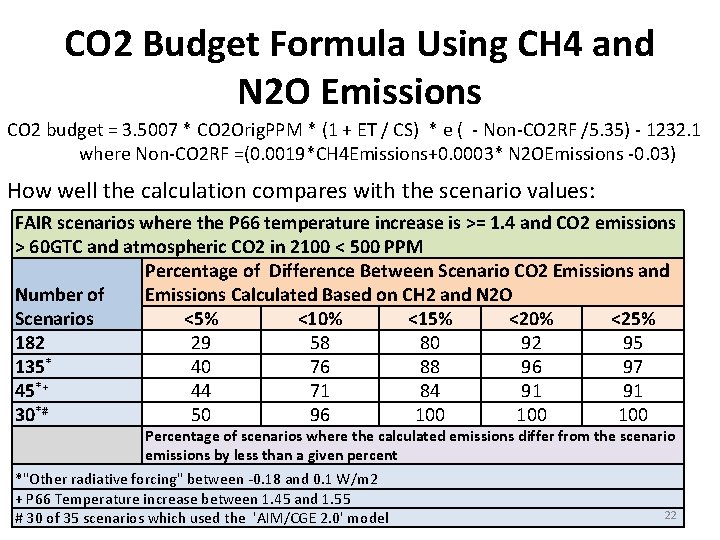
CO 2 Budget Formula Using CH 4 and N 2 O Emissions CO 2 budget = 3. 5007 * CO 2 Orig. PPM * (1 + ET / CS) * e ( - Non-CO 2 RF /5. 35) - 1232. 1 where Non-CO 2 RF =(0. 0019*CH 4 Emissions+0. 0003* N 2 OEmissions -0. 03) How well the calculation compares with the scenario values: FAIR scenarios where the P 66 temperature increase is >= 1. 4 and CO 2 emissions > 60 GTC and atmospheric CO 2 in 2100 < 500 PPM Percentage of Difference Between Scenario CO 2 Emissions and Number of Emissions Calculated Based on CH 2 and N 2 O <5% <10% <15% <20% <25% Scenarios 182 29 58 80 92 95 135* 40 76 88 96 97 45*+ 44 71 84 91 91 30*# 50 96 100 100 Percentage of scenarios where the calculated emissions differ from the scenario emissions by less than a given percent *"Other radiative forcing" between -0. 18 and 0. 1 W/m 2 + P 66 Temperature increase between 1. 45 and 1. 55 # 30 of 35 scenarios which used the 'AIM/CGE 2. 0' model 22
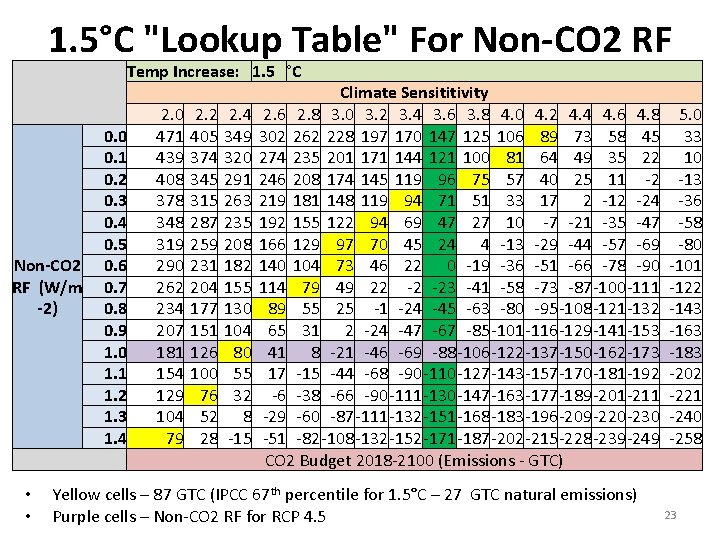
1. 5°C "Lookup Table" For Non-CO 2 RF Temp Increase: 1. 5 °C Non-CO 2 RF (W/m -2) • • 0. 0 0. 1 0. 2 0. 3 0. 4 0. 5 0. 6 0. 7 0. 8 0. 9 1. 0 1. 1 1. 2 1. 3 1. 4 2. 0 471 439 408 378 348 319 290 262 234 207 181 154 129 104 79 2. 2 405 374 345 315 287 259 231 204 177 151 126 100 76 52 28 2. 4 349 320 291 263 235 208 182 155 130 104 80 55 32 8 -15 Climate Sensititivity 2. 6 2. 8 3. 0 3. 2 3. 4 3. 6 3. 8 4. 0 4. 2 4. 4 4. 6 4. 8 302 262 228 197 170 147 125 106 89 73 58 45 274 235 201 171 144 121 100 81 64 49 35 22 246 208 174 145 119 96 75 57 40 25 11 -2 219 181 148 119 94 71 51 33 17 2 -12 -24 192 155 122 94 69 47 27 10 -7 -21 -35 -47 166 129 97 70 45 24 4 -13 -29 -44 -57 -69 140 104 73 46 22 0 -19 -36 -51 -66 -78 -90 114 79 49 22 -2 -23 -41 -58 -73 -87 -100 -111 89 55 25 -1 -24 -45 -63 -80 -95 -108 -121 -132 65 31 2 -24 -47 -67 -85 -101 -116 -129 -141 -153 41 8 -21 -46 -69 -88 -106 -122 -137 -150 -162 -173 17 -15 -44 -68 -90 -110 -127 -143 -157 -170 -181 -192 -6 -38 -66 -90 -111 -130 -147 -163 -177 -189 -201 -211 -29 -60 -87 -111 -132 -151 -168 -183 -196 -209 -220 -230 -51 -82 -108 -132 -152 -171 -187 -202 -215 -228 -239 -249 CO 2 Budget 2018 -2100 (Emissions - GTC) Yellow cells – 87 GTC (IPCC 67 th percentile for 1. 5°C – 27 GTC natural emissions) Purple cells – Non-CO 2 RF for RCP 4. 5 5. 0 33 10 -13 -36 -58 -80 -101 -122 -143 -163 -183 -202 -221 -240 -258 23
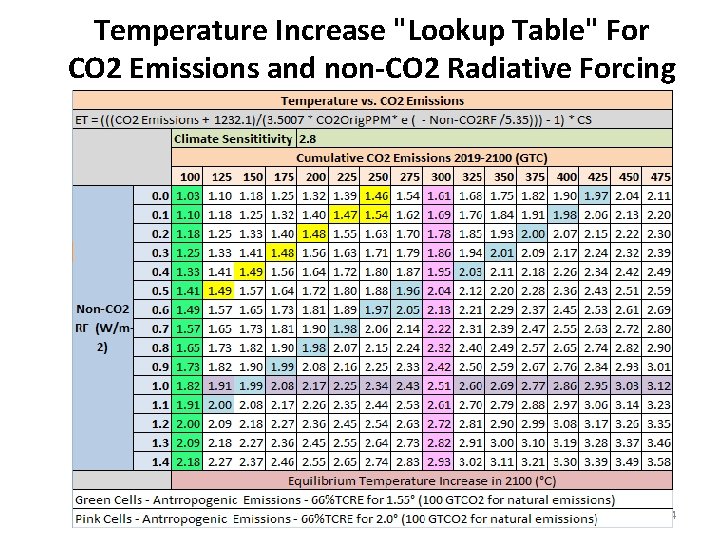
Temperature Increase "Lookup Table" For CO 2 Emissions and non-CO 2 Radiative Forcing 24
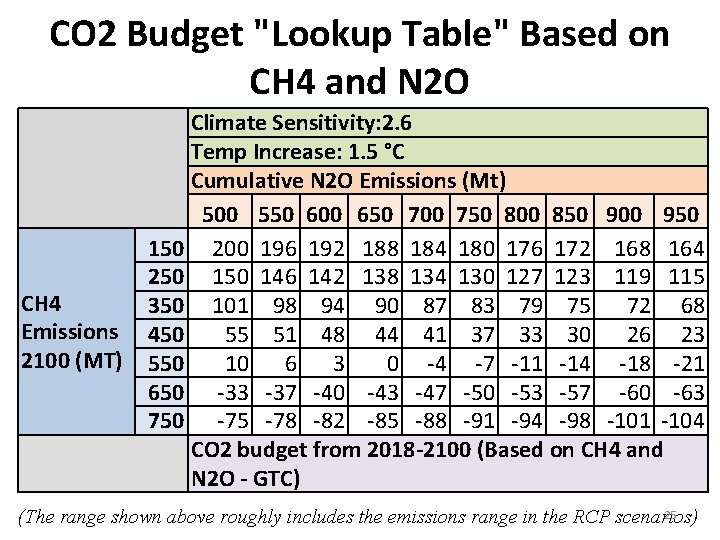
CO 2 Budget "Lookup Table" Based on CH 4 and N 2 O CH 4 Emissions 2100 (MT) Climate Sensitivity: 2. 6 Temp Increase: 1. 5 °C Cumulative N 2 O Emissions (Mt) 500 550 600 650 700 750 800 850 900 950 150 200 196 192 188 184 180 176 172 168 164 250 146 142 138 134 130 127 123 119 115 350 101 98 94 90 87 83 79 75 72 68 450 55 51 48 44 41 37 33 30 26 23 550 10 6 3 0 -4 -7 -11 -14 -18 -21 650 -33 -37 -40 -43 -47 -50 -53 -57 -60 -63 750 -75 -78 -82 -85 -88 -91 -94 -98 -101 -104 CO 2 budget from 2018 -2100 (Based on CH 4 and N 2 O - GTC) 25 (The range shown above roughly includes the emissions range in the RCP scenarios)
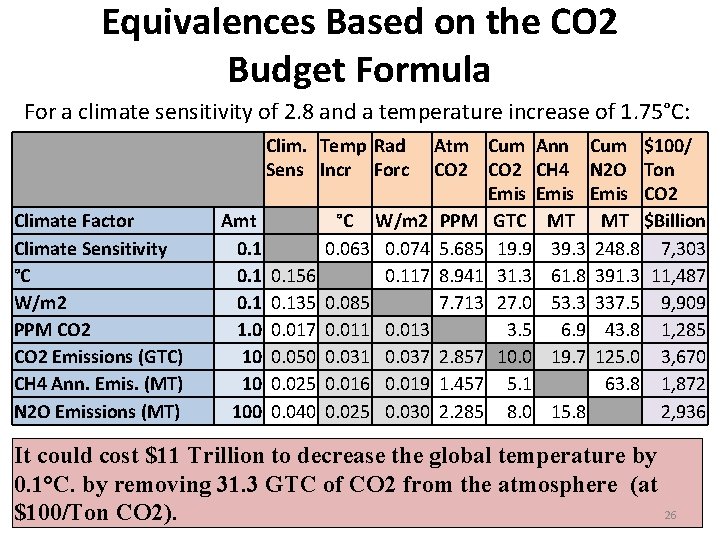
Equivalences Based on the CO 2 Budget Formula For a climate sensitivity of 2. 8 and a temperature increase of 1. 75°C: Clim. Temp Rad Sens Incr Forc Climate Factor Climate Sensitivity °C W/m 2 PPM CO 2 Emissions (GTC) CH 4 Ann. Emis. (MT) N 2 O Emissions (MT) Amt 0. 1 1. 0 10 10 100 0. 156 0. 135 0. 017 0. 050 0. 025 0. 040 Atm Cum Ann Cum $100/ CO 2 CH 4 N 2 O Ton Emis CO 2 °C W/m 2 PPM GTC MT MT $Billion 0. 063 0. 074 5. 685 19. 9 39. 3 248. 8 7, 303 0. 117 8. 941 31. 3 61. 8 391. 3 11, 487 0. 085 7. 713 27. 0 53. 3 337. 5 9, 909 0. 011 0. 013 3. 5 6. 9 43. 8 1, 285 0. 031 0. 037 2. 857 10. 0 19. 7 125. 0 3, 670 0. 016 0. 019 1. 457 5. 1 63. 8 1, 872 0. 025 0. 030 2. 285 8. 0 15. 8 2, 936 It could cost $11 Trillion to decrease the global temperature by 0. 1°C. by removing 31. 3 GTC of CO 2 from the atmosphere (at 26 $100/Ton CO 2).
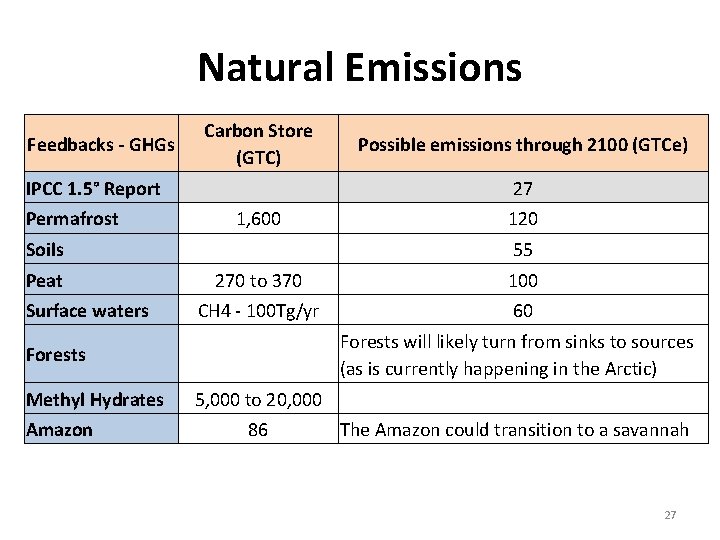
Natural Emissions Feedbacks - GHGs Carbon Store (GTC) IPCC 1. 5° Report Permafrost 27 1, 600 Soils Peat Surface waters Amazon 120 55 270 to 370 100 CH 4 - 100 Tg/yr 60 Forests will likely turn from sinks to sources (as is currently happening in the Arctic) Forests Methyl Hydrates Possible emissions through 2100 (GTCe) 5, 000 to 20, 000 86 The Amazon could transition to a savannah 27
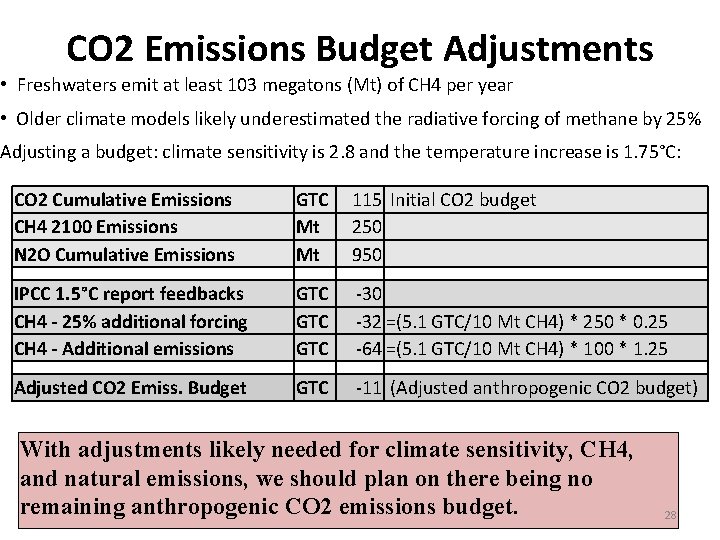
CO 2 Emissions Budget Adjustments • Freshwaters emit at least 103 megatons (Mt) of CH 4 per year • Older climate models likely underestimated the radiative forcing of methane by 25% Adjusting a budget: climate sensitivity is 2. 8 and the temperature increase is 1. 75°C: CO 2 Cumulative Emissions CH 4 2100 Emissions N 2 O Cumulative Emissions GTC Mt Mt 115 Initial CO 2 budget 250 950 IPCC 1. 5°C report feedbacks CH 4 - 25% additional forcing CH 4 - Additional emissions GTC GTC -30 -32 =(5. 1 GTC/10 Mt CH 4) * 250 * 0. 25 -64 =(5. 1 GTC/10 Mt CH 4) * 100 * 1. 25 Adjusted CO 2 Emiss. Budget GTC -11 (Adjusted anthropogenic CO 2 budget) With adjustments likely needed for climate sensitivity, CH 4, and natural emissions, we should plan on there being no remaining anthropogenic CO 2 emissions budget. 28
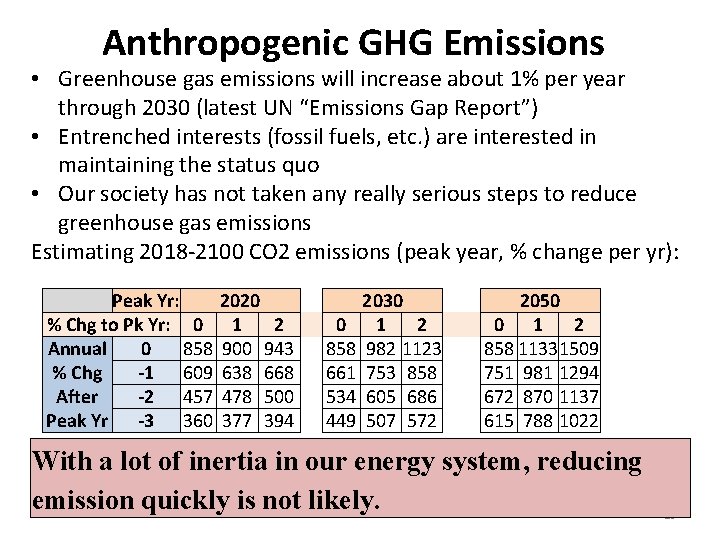
Anthropogenic GHG Emissions • Greenhouse gas emissions will increase about 1% per year through 2030 (latest UN “Emissions Gap Report”) • Entrenched interests (fossil fuels, etc. ) are interested in maintaining the status quo • Our society has not taken any really serious steps to reduce greenhouse gas emissions Estimating 2018 -2100 CO 2 emissions (peak year, % change per yr): Peak Yr: % Chg to Pk Yr: 0 Annual 0 858 -1 609 % Chg -2 457 After Peak Yr -3 360 2020 1 2 900 943 638 668 478 500 377 394 2030 0 1 2 858 982 1123 661 753 858 534 605 686 449 507 572 2050 0 1 2 858 11331509 751 981 1294 672 870 1137 615 788 1022 With a lot of inertia in our energy system, reducing emission quickly is not likely. 29
CH 4 and N 2 O Emissions For CH 4, the difference between RCP 2. 6 and RCP 8. 5 is equivalent to about 290 GTC of CO 2, so our emphasis also needs to be on ways to reduce CH 4 emissions. It would be very helpful to have some detailed scenarios on possible emission pathways for CH 4 and N 2 O in order to help understand what the tradeoffs are. 30
Carbon Capture and Sequestration (and Costs) • • • Significant carbon capture and sequestration will likely be required to meet even a 2° C budget There are many way to capture and sequester carbon: carbon capture and storage (CCS), direct air capture (DAC), iron ocean fertilization, reforestation, rebuilding soils, etc. Average carbon capture and sequestration costs are hard to come by. An average cost of $100/ton CO 2 seems like a good estimate for the period 2018 -2050. If our global society is not willing to fund very significant carbon sequestration (due to high costs at the scale needed) there is a good chance that we could end up with a "hot house Earth" that is incompatible with life as we know it. 31
What is a “Fair” Carbon Budget for the US? • • • The global carbon budget for 1800 to 2100 is approximately 3, 270 GTCO 2 e (for the 50 th percentile of model runs for a 1. 75° temperature increase: 1940 + 290 + 1040) Historical US CO 2 emissions have been about 17% of this budget (and 25% of historical CO 2 emissions) The US has about 4% of the world's population; as seen by other countries, what is the US’s "fair share" of the 3, 270 GTCO 2 e global carbon budget? If (1) all future US need to be captured (2) if CO 2 emissions are 100 GTCCO 2 and (3) average capture and sequestration costs are $100/Ton CO 2, then the US would need to spend at least $10 Trillion (about 1/2 of the total US debt) in the next 40 years to capture future CO 2 emissions. 32
Additional Analysis 1. Examine results from other climate models and scenarios 2. Develop list of “climate factors” that should be reported for each scenario (natural emissions, albedo changes in the Arctic, costs, CO 2 uptake by oceans and biosphere, clouds, etc. ) 3. Scenarios for CH 4 and N 2 O emissions 4. Realistic Projections for 2050 5. What will it take to avoid a “hot house Earth”? 33
A Simple Formula for Calculating Carbon Budgets Bruce Parker bruce@chesdata. com https: //www. chesdata. com/Co 2 budget / 34
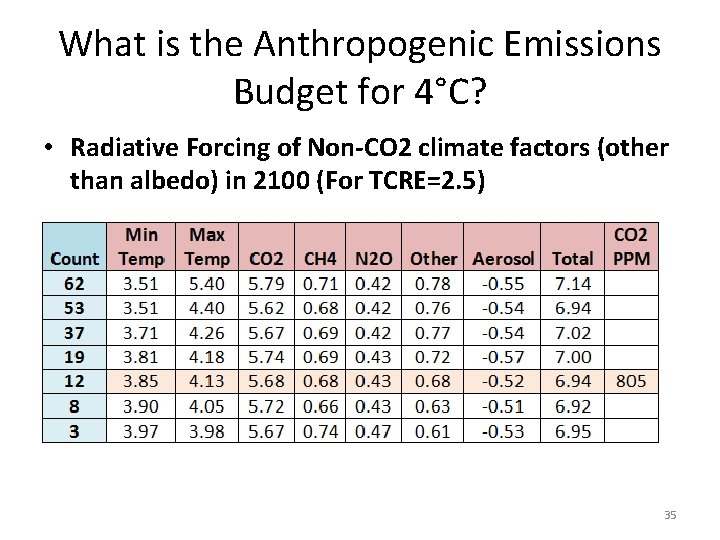
What is the Anthropogenic Emissions Budget for 4°C? • Radiative Forcing of Non-CO 2 climate factors (other than albedo) in 2100 (For TCRE=2. 5) 35
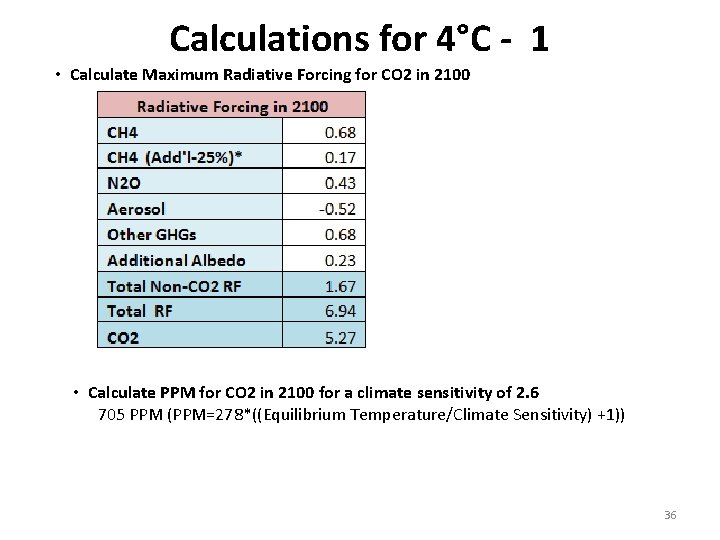
Calculations for 4°C - 1 • Calculate Maximum Radiative Forcing for CO 2 in 2100 • Calculate PPM for CO 2 in 2100 for a climate sensitivity of 2. 6 705 PPM (PPM=278*((Equilibrium Temperature/Climate Sensitivity) +1)) 36
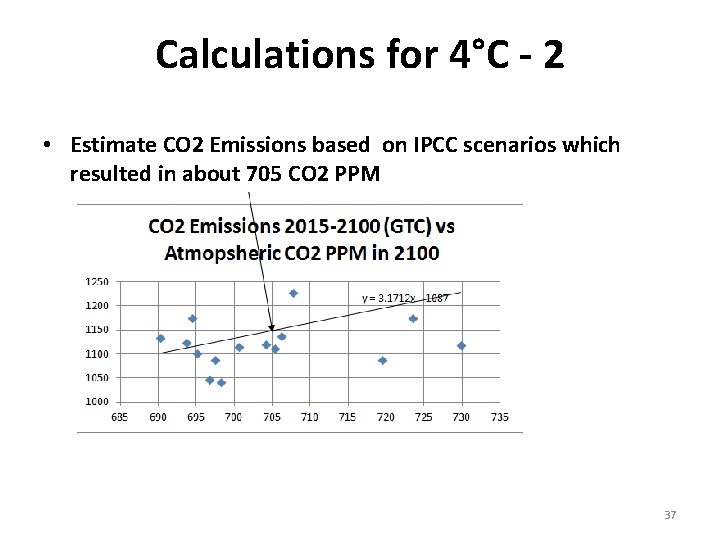
Calculations for 4°C - 2 • Estimate CO 2 Emissions based on IPCC scenarios which resulted in about 705 CO 2 PPM 37
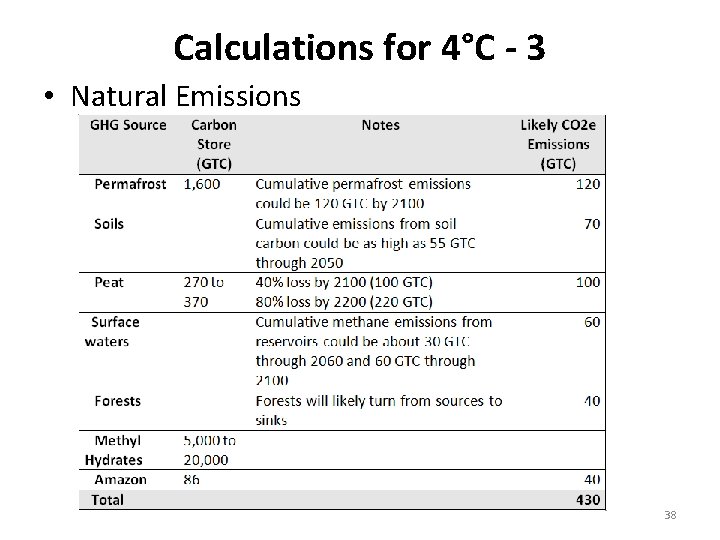
Calculations for 4°C - 3 • Natural Emissions 38
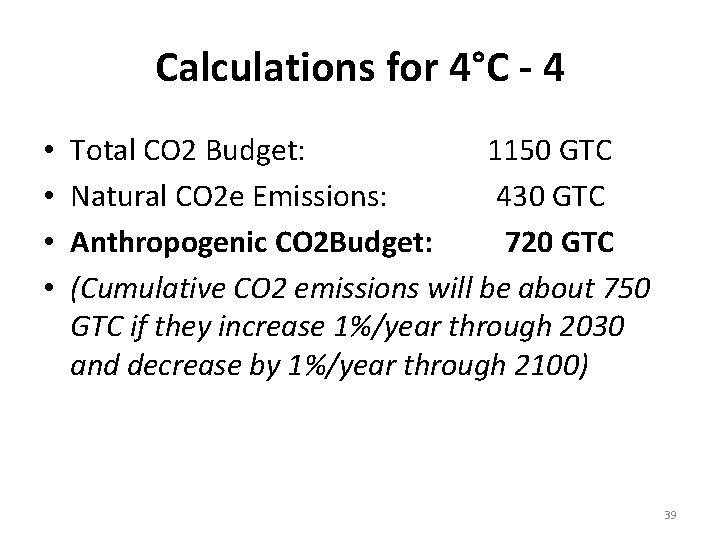
Calculations for 4°C - 4 • • Total CO 2 Budget: 1150 GTC Natural CO 2 e Emissions: 430 GTC Anthropogenic CO 2 Budget: 720 GTC (Cumulative CO 2 emissions will be about 750 GTC if they increase 1%/year through 2030 and decrease by 1%/year through 2100) 39
- Slides: 39