
A SEMINAR ON SELF COMPACTING FIBER REINFORCED CONCRETE
A SEMINAR ON SELF COMPACTING FIBER REINFORCED CONCRETE - MOHAK N NAGRANI SD 0810 CEPT
CONTENTS Ø Introduction Ø Types Of Fibers Ø Production Of SCFRC Ø Fresh Concrete Tests Ø Concrete Mixing And Casting Of Beams Ø Influence Of Concrete Type And Coarse Aggregate Characteristics On Shear Ø Influence Of Shear Span To Depth Ratio On Shear Ø Influence Of Beam Size On Shear Ø Advantages Ø Conclusions Ø References
Ø Self Compacting Fiber Reinforced Concrete (SCFRC) is the one where fibres are added to the self compacting concrete, which is able to flow under its own weight, and completely fill the formwork and encapsulate the reinforcement, while maintaining homogeneity and can consolidate without the need for vibration compaction. Ø Self-compacting concrete is a new generation high performance concrete known for its excellent deformability and high resistance to segregation and Ø bleeding. SCFRC is an engineered material consisting of cement, aggregates, water and admixtures with or without several new constituents like colloidal silica, pozzolanic materials, Portland -flyash (PFA), ground granulated blast furnace slag (GGBS), microsilica, metakaolin and chemical admixtures.
Ø By the inclusion of uniformly distributed, randomly oriented, short discrete fibres in concrete shear resistance is improved owing to an increase in tensile strength, which delays the formation and growth of cracks. Ø Also when smaller distance exists between fibres compared with that between stirrups, greater effectiveness in the crack-arresting mechanism and better distribution of tensile cracks is enabled. Ø Fibers also have the ability to bridge shear cracks, improving the post-cracking behavior. Therefore, the addition of fibers in adequate quantities may be effective at supplementing or even replacing the conventional shear reinforcement such as stirrups in
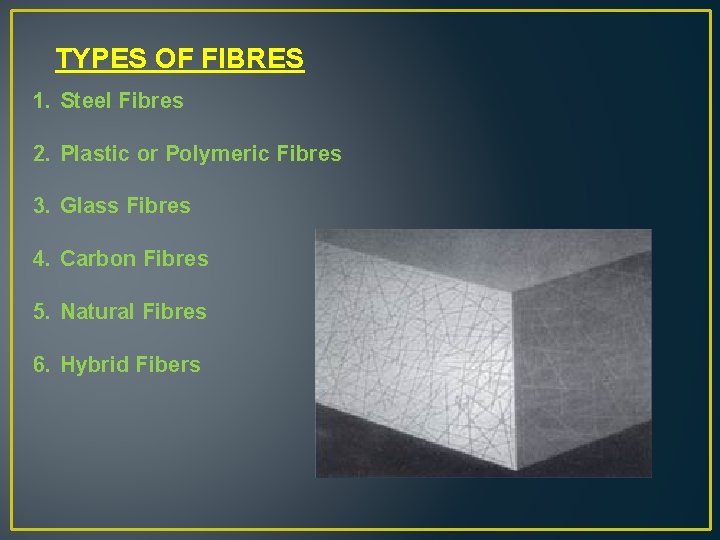
TYPES OF FIBRES 1. Steel Fibres 2. Plastic or Polymeric Fibres 3. Glass Fibres 4. Carbon Fibres 5. Natural Fibres 6. Hybrid Fibers
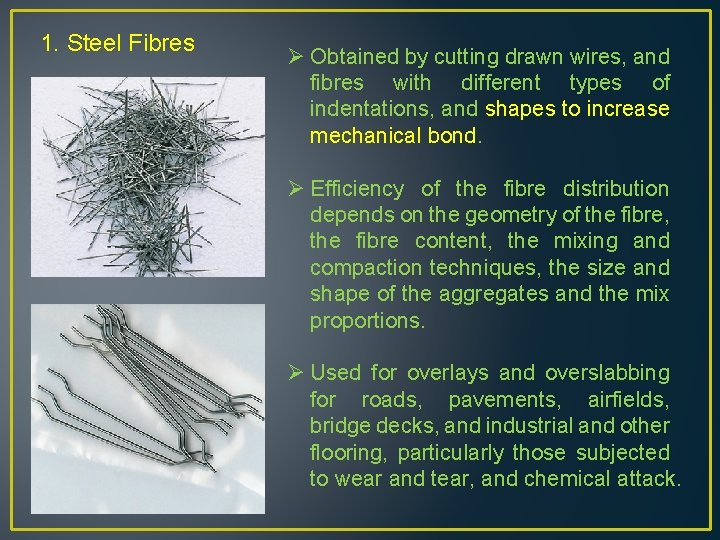
1. Steel Fibres Ø Obtained by cutting drawn wires, and fibres with different types of indentations, and shapes to increase mechanical bond. Ø Efficiency of the fibre distribution depends on the geometry of the fibre, the fibre content, the mixing and compaction techniques, the size and shape of the aggregates and the mix proportions. Ø Used for overlays and overslabbing for roads, pavements, airfields, bridge decks, and industrial and other flooring, particularly those subjected to wear and tear, and chemical attack.

2. Plastic fibres Ø Plastic fibres such as nylon and polypropylene have high tensile strength, 561 – 867 N/mm 2, but their low modulus prevent any reinforcing effect. Ø Polypropylene is a polymer which softens when heated, does not possess a high temperature resistance. Ø Has the advantage of chemical stability in the cement paste and is not attacked by acids and alkalis. Ø Extensive use of polypropylene fibres is in concrete piles.
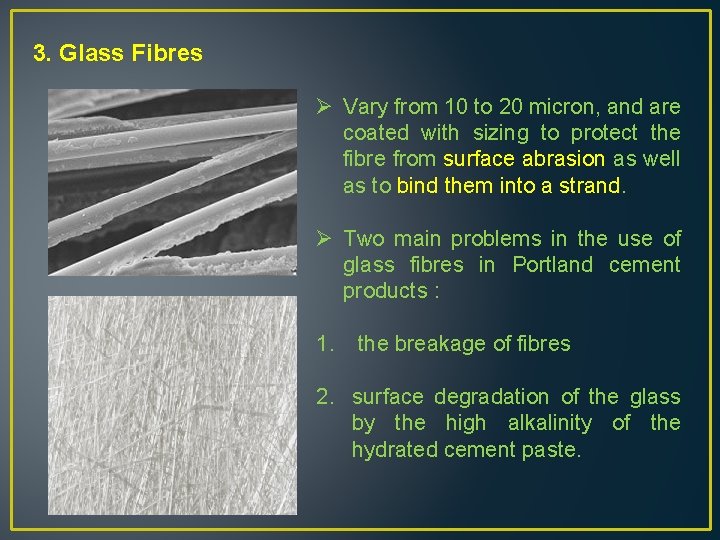
3. Glass Fibres Ø Vary from 10 to 20 micron, and are coated with sizing to protect the fibre from surface abrasion as well as to bind them into a strand. Ø Two main problems in the use of glass fibres in Portland cement products : 1. the breakage of fibres 2. surface degradation of the glass by the high alkalinity of the hydrated cement paste.
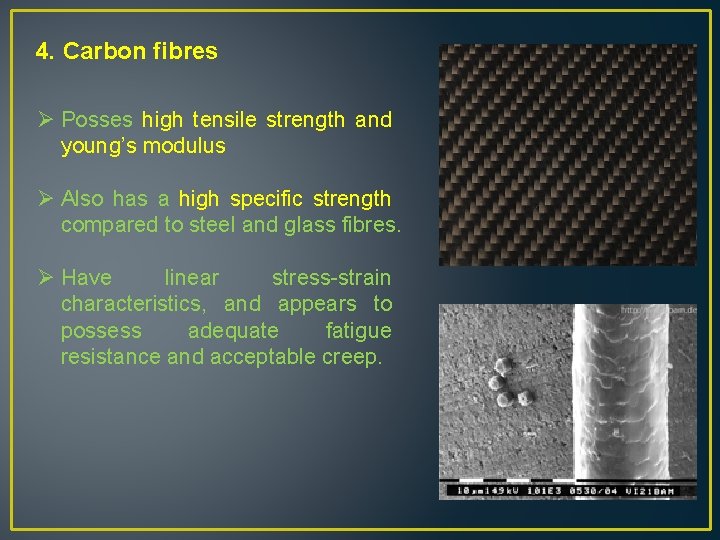
4. Carbon fibres Ø Posses high tensile strength and young’s modulus Ø Also has a high specific strength compared to steel and glass fibres. Ø Have linear stress-strain characteristics, and appears to possess adequate fatigue resistance and acceptable creep.

5. Natural fibres Ø Produced almost in all countries. Ø Relative cheapness of natural fibres points the direction of their development in large scale as a building material in conjunction with cement concrete for housing. Ø Used as reinforcing medium not only in cement matrices but also in soil cement construction, provides a wide flexibility. Ø This makes natural fibres a very attractive material for improving and reducing the cost of cement concrete.
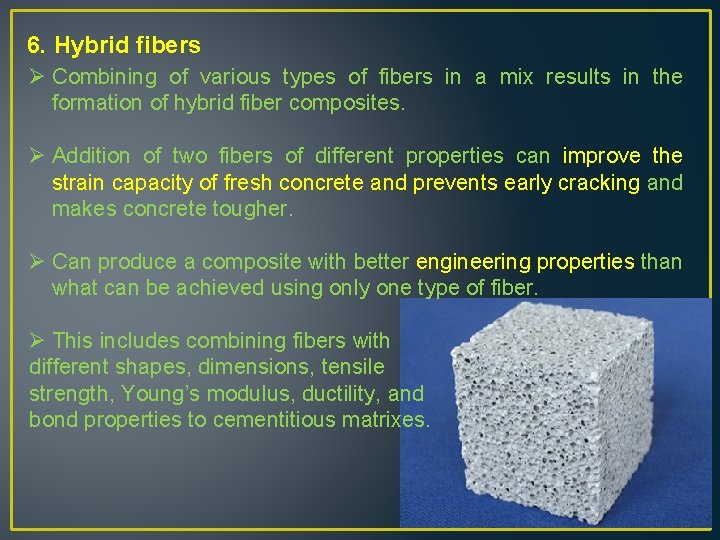
6. Hybrid fibers Ø Combining of various types of fibers in a mix results in the formation of hybrid fiber composites. Ø Addition of two fibers of different properties can improve the strain capacity of fresh concrete and prevents early cracking and makes concrete tougher. Ø Can produce a composite with better engineering properties than what can be achieved using only one type of fiber. Ø This includes combining fibers with different shapes, dimensions, tensile strength, Young’s modulus, ductility, and bond properties to cementitious matrixes.
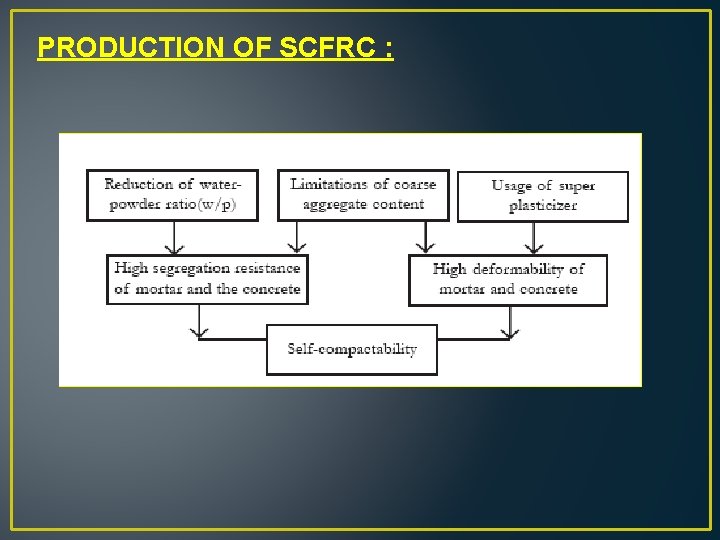
PRODUCTION OF SCFRC :
Materials Used • Powder : Portland cement Fly ash Undensified microsilica • Fine aggregate (FA) : sieves with modulus 2. 48) River sand (passing 4. 75 mm specific gravity 2. 62 and fine • Coarse aggregate (CA): Crushed stone aggregate (16 mm) • High –range water reducing admixture (HRWR) : Polycarboxylic – acid • Viscosity modifying admixture (VMA) : 1. 0 to 4. 0 litre / m 3 of cementitious material • High Performance water reducing admixture for microsilica concrete (HPWR) : SP 500
TYPES OF TEST : 1. Slump Test 2. V-Funnel Test 3. L-Box Test 4. Flexure Test

1. Slump Test Ø Slump flow test is conducted to determine the flowability of concrete mixture. Ø To measure the slump flow, an ordinary slump test cone was filled with SCC without compaction and leveled. Ø The cone was lifted and the average diameter of the resulting concrete spread was measured. Ø For SCC, the average diameter of the spread should be approximately 550 to 650 mm.
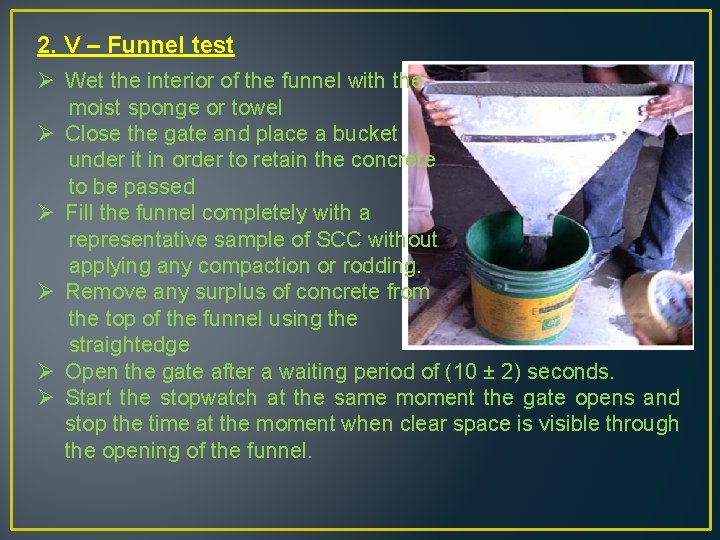
2. V – Funnel test Ø Wet the interior of the funnel with the moist sponge or towel Ø Close the gate and place a bucket under it in order to retain the concrete to be passed Ø Fill the funnel completely with a representative sample of SCC without applying any compaction or rodding. Ø Remove any surplus of concrete from the top of the funnel using the straightedge Ø Open the gate after a waiting period of (10 ± 2) seconds. Ø Start the stopwatch at the same moment the gate opens and stop the time at the moment when clear space is visible through the opening of the funnel.

3. L-box test : Ø In this test the vertical portion of the L-Box was filled with concrete and leveled. Ø The gate between the two sections of the L-Box was lifted and the concrete flowed between three 12 mm diameter steel reinforcing bar spaced at 50 mm c/c. Ø The height of concrete at the end of the horizontal and vertical legs of the L-Box was measured and recorded as H 1 and H 2, respectively. Ø The ratio between these two heights (H 2/H 1), which is usually 0. 7 to 0. 9 for SCC with fibers Ø It was used to evaluate the ability
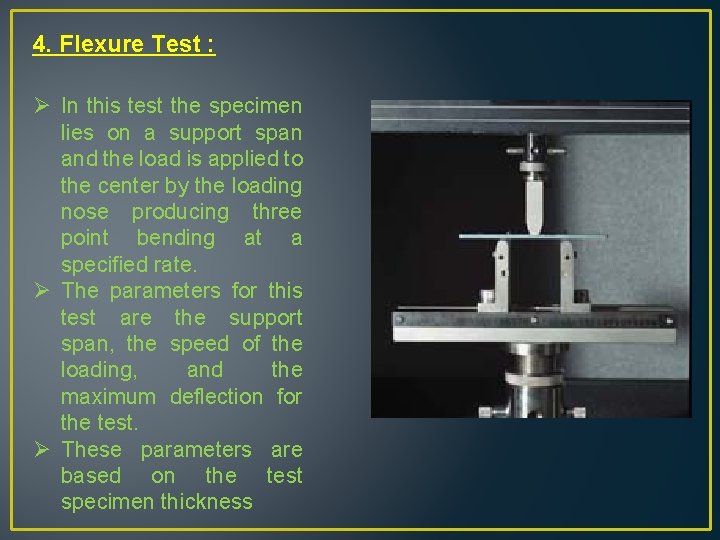
4. Flexure Test : Ø In this test the specimen lies on a support span and the load is applied to the center by the loading nose producing three point bending at a specified rate. Ø The parameters for this test are the support span, the speed of the loading, and the maximum deflection for the test. Ø These parameters are based on the test specimen thickness
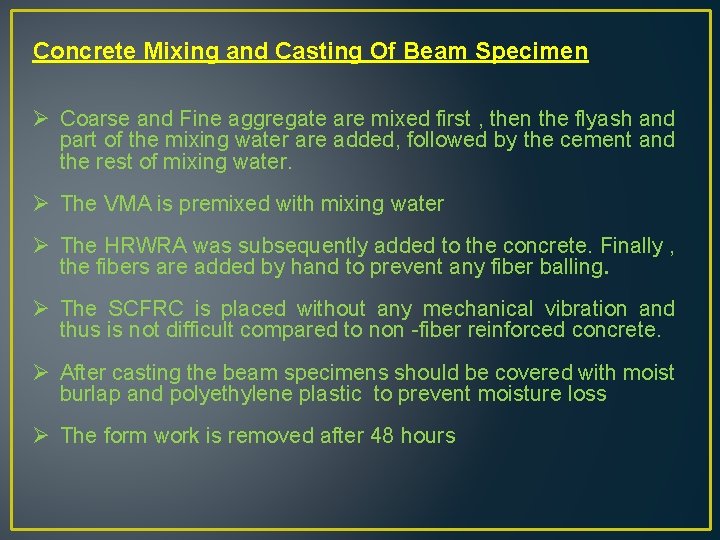
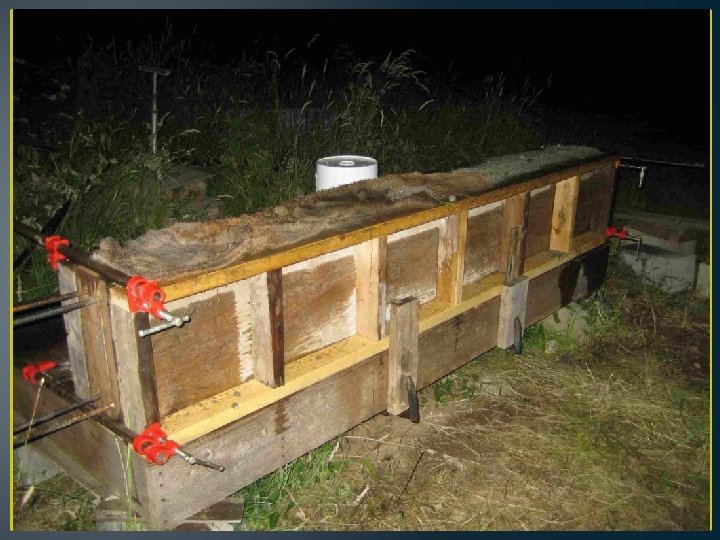
Concrete Mixing and Casting Of Beam Specimen Ø Coarse and Fine aggregate are mixed first , then the flyash and part of the mixing water are added, followed by the cement and the rest of mixing water. Ø The VMA is premixed with mixing water Ø The HRWRA was subsequently added to the concrete. Finally , the fibers are added by hand to prevent any fiber balling. Ø The SCFRC is placed without any mechanical vibration and thus is not difficult compared to non -fiber reinforced concrete. Ø After casting the beam specimens should be covered with moist burlap and polyethylene plastic to prevent moisture loss Ø The form work is removed after 48 hours
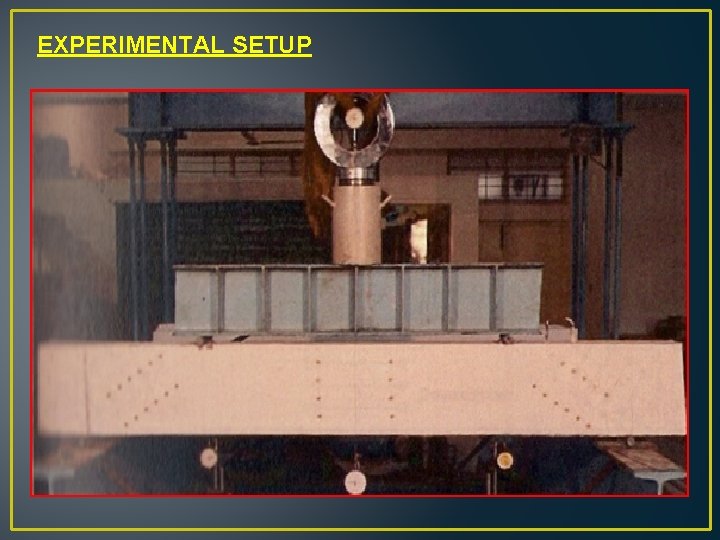
EXPERIMENTAL SETUP
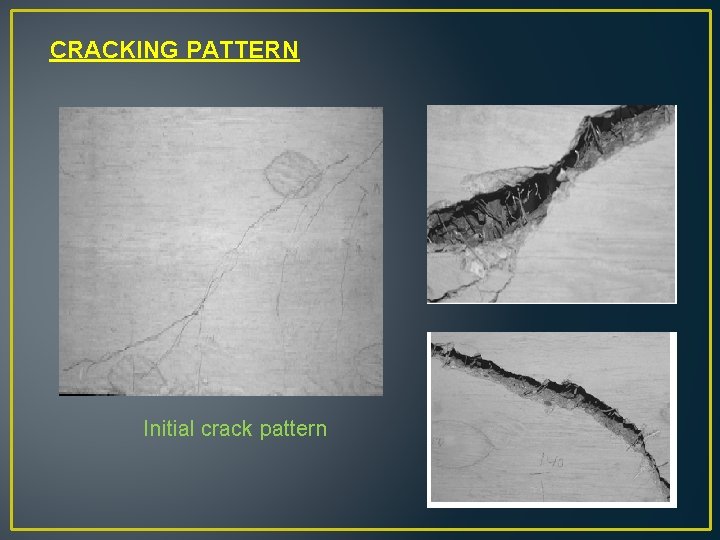
CRACKING PATTERN Initial crack pattern
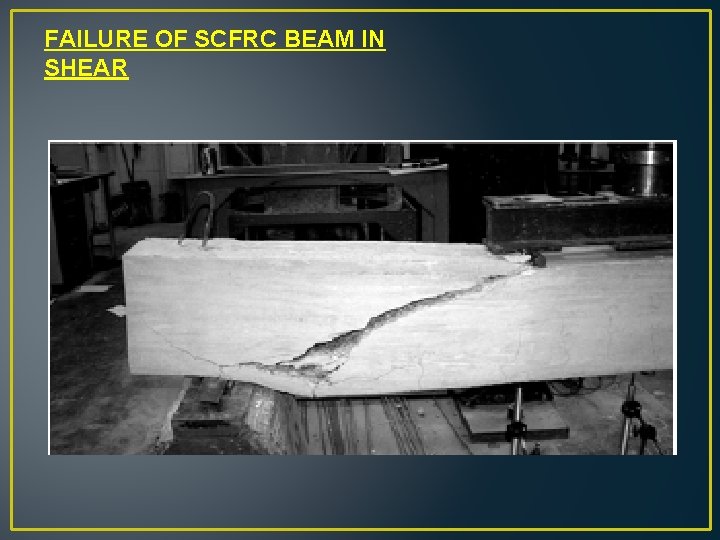
FAILURE OF SCFRC BEAM IN SHEAR
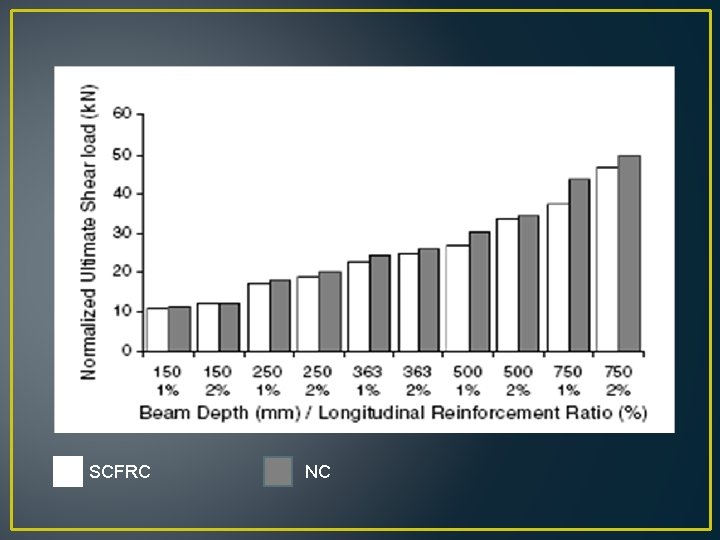
INFLUENCE OF CONCRETE TYPE AND COARSE AGGREGATES CHARACTERISTICS ON SHEAR Ø The performance of beams is analyzed based on normalized shear at the first flexure crack , the first shear crack, and influence of type of concrete and parameters related to coarse aggregate. Ø General trend shows an increase in the ultimate shear with maximum size of coarse aggregate from 12 mm to 19 mm. Ø The ultimate shear resistances of SCFRC beams are comparable to those of NC beams made with same size of Coarse aggregate, though SCFRC have lower coarse aggregate content than NC and had similar compressive strength. Ø Increase of aggregate size seemed to decrease the shear load
INFLUENCE OF CLEAR SPAN TO DEPTH RATIO ON SHEAR Ø Shear resistance of beams decreases with the increase of clear span to depth ratio Ø For a/d > 6, failure usually occurs in bending; Ø For 6 > a/d >2. 5. the development of a flexural crack into an inclined flexure-shear crack results in diagonal tension failure, Ø For 2. 5 > a/d > 1, a diagonal crack forms independently but the compression failure occurs; Ø In addition to the shear-span to depth ratio. the contribution of the concrete to the shear strength, Vc, is dependent on a number of other factors including the concrete strength (fi) the main tension reinforcement ratio (p) and the beam size (b*d).
Ø The shear strength of reinforced concrete beams may be substantially increased by the provision of suitable shear reinforcement, usually in the form of stirrups or links, which serve to intercept the diagonal shear crack. Ø Thus, the external shear force, V, is resisted partly by the concrete, Vc, and partly by the shear reinforcement, V. such that V=Vc +Vs
INFLUENCE OF BEAM SIZE ON SHEAR Ø It has been shown by Kani (1967) and Taylor(1972) that larger beams are proportionally weaker in shear than smaller beams. Ø That is , the ultimate shear stress reduces with beam depth. Ø It is believed that this is because the aggregate interlock contribution to shear strength Vc, does not increase in the same proportion as the beam size, .
SCFRC NC
WEB REINFORCEMENT CONTRIBUTION TO SHEAR STRENGTH Ø Stirrups provide a contribution to shear strength if crossed by a diagonal crack. Ø Therefore , the contribution of steel shear reinforcement can be estimated on the basis of the cracking pattern , depending on the number of stirrups intercepted by the primary shear crack. Ø It is known that the opening of the critical shear crack is not same along its length. In particular , the opening of the shear crack has the maximum value at the initiation of the critical crack, where the stirrups yield , and a low value at the end of the crack near the compressed zone, where the stirrups could not reach the yield stress.
SHEAR TRANSFER ACTION AND MECHANISMS Ø Shear transfer actions and mechanisms in concrete beams are complex and difficult to clearly identify. Complex stress redistributions occur after cracking , and those redistributions is influenced by many factors. Ø The important shear transfer actions for beams with shear reinforcement are: Ø Shear resistance in the uncracked concrete zone Ø Interface shear transfer Ø Dowel action Ø Residual Tensile Stresses Ø Shear reinforcement
ADVANTAGES OF SCFRC : Ø High-flowability Ø Higher compressive strength Ø High workability Ø Enhanced resistances to chemical or mechanical stresses Ø Lower permeability Ø Durability Ø Resistance against segregation
CONCLUSIONS Ø General trend show that an increase in the size of coarse aggregate from 12 mm to 19 mm in SCC decreases the shear capacity of concrete. The use of large coarse aggregate is found to be more beneficial for beams with low shear span to depth ratio. Ø A reduction in the shear span –depth ratio increases both the diagonal cracking and ultimate shear strengths of the reinforced fiber concrete beams ØThe shear strength of reinforced concrete beams may be substantially increased by the provision of suitable shear reinforcement
REFERENCES q. Shear Strengthening of RC Beams by G C Mays and R A Barnes q. Shear behaviour of Steel fiber reinforced concrete beams ( Materials and Structures April 2005) q. Arabian Journal of Science and Engineering (Vol 34 April 2009) q. Self-compacting fiber-reinforced concrete- a paper from S. Grunewald, J. C. Walraven, Delft University of Technology q. Mechanical characteristics of fiber reinforced self compacting mortars – Asian journal of civil engineering. ü http: //google. co. in/images

- Slides: 35