
A SEMINAR ON PROCESS VALIDATION OF OINTMENT CREAM



- Slides: 41
A SEMINAR ON PROCESS VALIDATION OF OINTMENT, CREAM AND LIQUID ORALS www. parasshah. weebly. com 1
WHAT IS PROCESS VALIDATION ? It is the process of establishing, through documented evidence, a high degree of assurance that a specific process will consistently produce a product that meets its predetermined specifications and quality characteristics. 2
WHY VALIDATE? v. To conform Manufacturing to c. GMP regulations. v. To avoid the possibility of rejected or recalled batches. v. To ensure the product uniformity and quality. 3
PROCESS VALIDATION PROTOCOL Following protocol is suggested: v Purpose and prerequisites for validation v Presentation of whole process and sub processes v Validation protocol approval v Installation and operational qualifications v Qualification reports including methods, procedures, release criteria, etc. v Product qualification test data from prevalidation batches 4
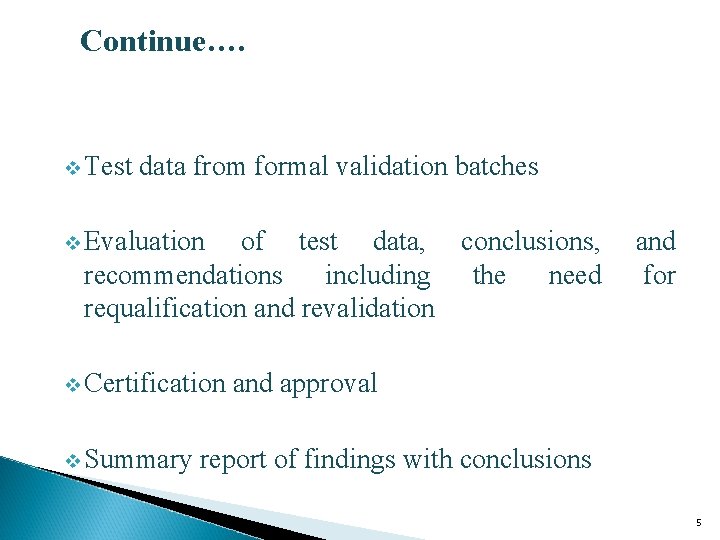
Continue…. v Test data from formal validation batches v Evaluation of test data, conclusions, recommendations including the need requalification and revalidation v Certification v Summary and for and approval report of findings with conclusions 5
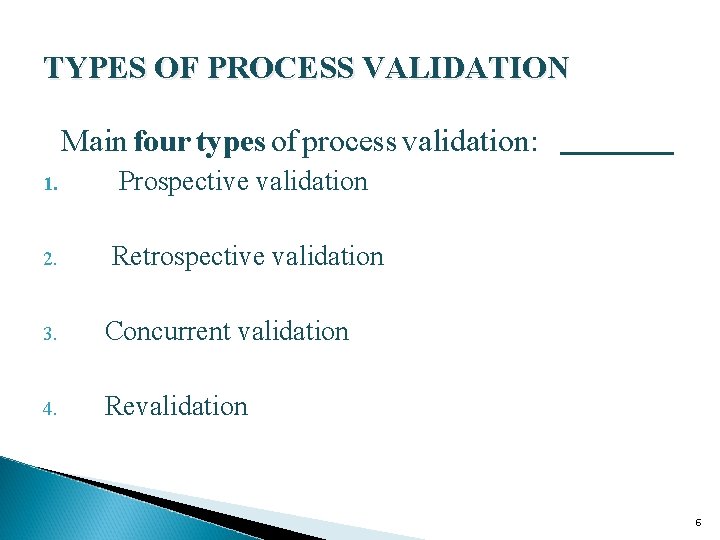
TYPES OF PROCESS VALIDATION Main four types of process validation: 1. Prospective validation 2. Retrospective validation 3. Concurrent validation 4. Revalidation 6
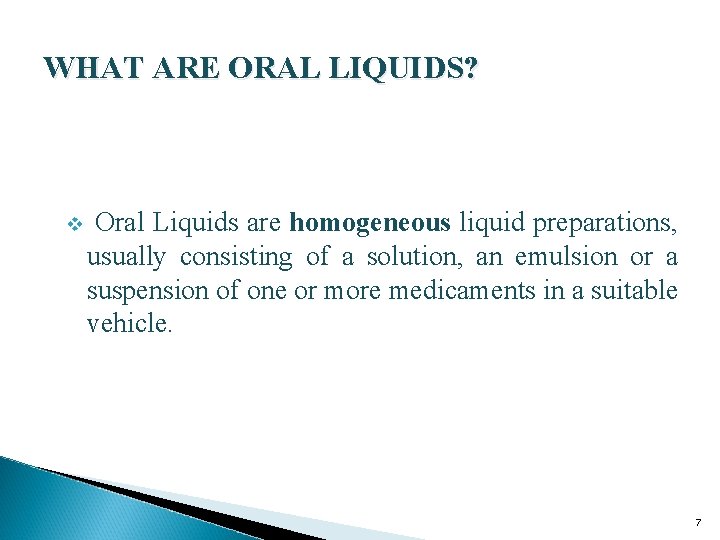
WHAT ARE ORAL LIQUIDS? v Oral Liquids are homogeneous liquid preparations, usually consisting of a solution, an emulsion or a suspension of one or more medicaments in a suitable vehicle. 7
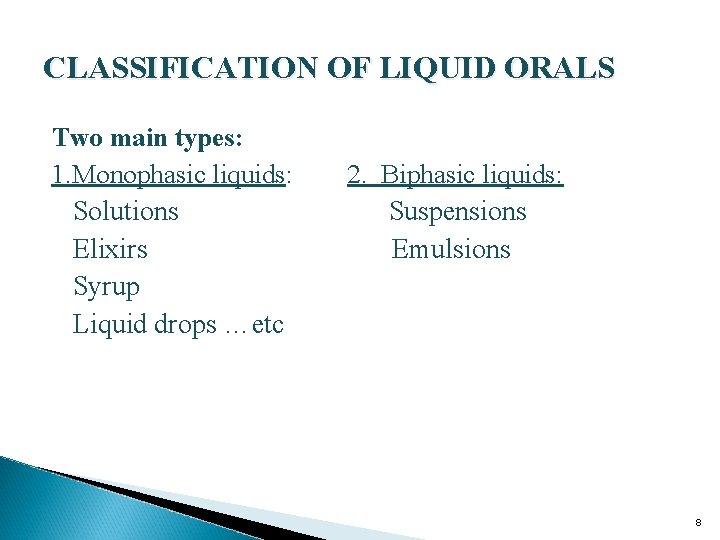
CLASSIFICATION OF LIQUID ORALS Two main types: 1. Monophasic liquids: Solutions Elixirs Syrup Liquid drops …etc 2. Biphasic liquids: Suspensions Emulsions 8
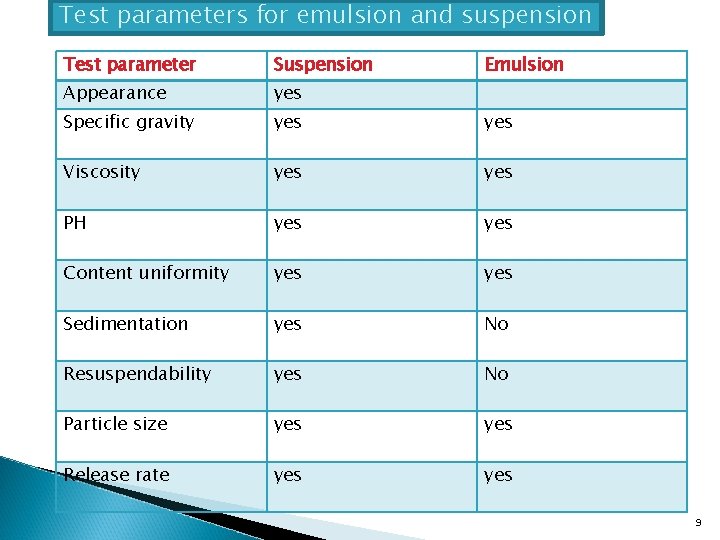
Test parameters for emulsion and suspension Test parameter Suspension Emulsion Appearance yes Specific gravity yes Viscosity yes PH yes Content uniformity yes Sedimentation yes No Resuspendability yes No Particle size yes Release rate yes 9
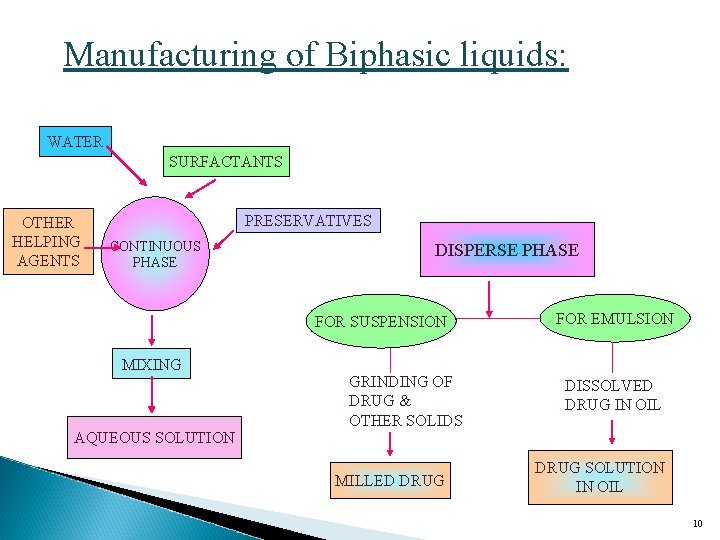
Manufacturing of Biphasic liquids: WATER SURFACTANTS OTHER HELPING AGENTS PRESERVATIVES CONTINUOUS PHASE DISPERSE PHASE FOR SUSPENSION MIXING AQUEOUS SOLUTION GRINDING OF DRUG & OTHER SOLIDS MILLED DRUG FOR EMULSION DISSOLVED DRUG IN OIL DRUG SOLUTION IN OIL 10
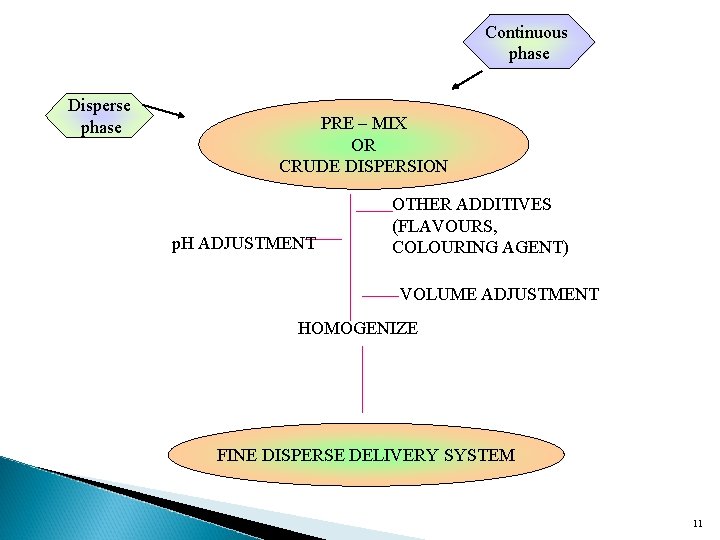
Continuous phase Disperse phase PRE – MIX OR CRUDE DISPERSION p. H ADJUSTMENT OTHER ADDITIVES (FLAVOURS, COLOURING AGENT) VOLUME ADJUSTMENT HOMOGENIZE FINE DISPERSE DELIVERY SYSTEM 11
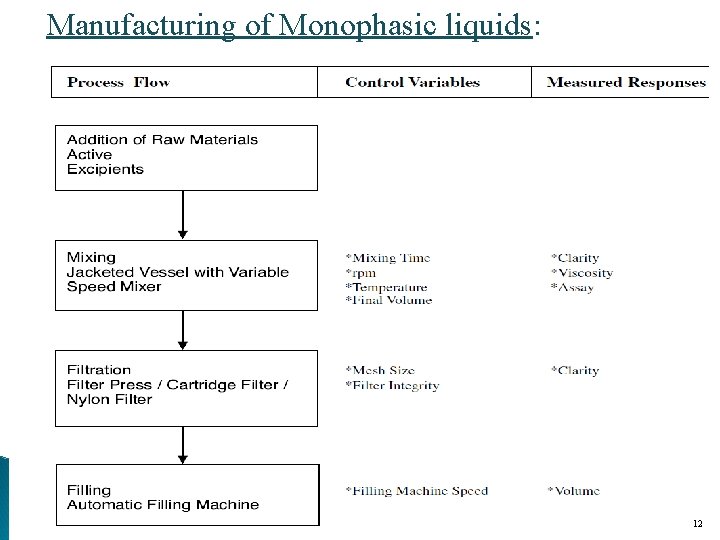
Manufacturing of Monophasic liquids: 12
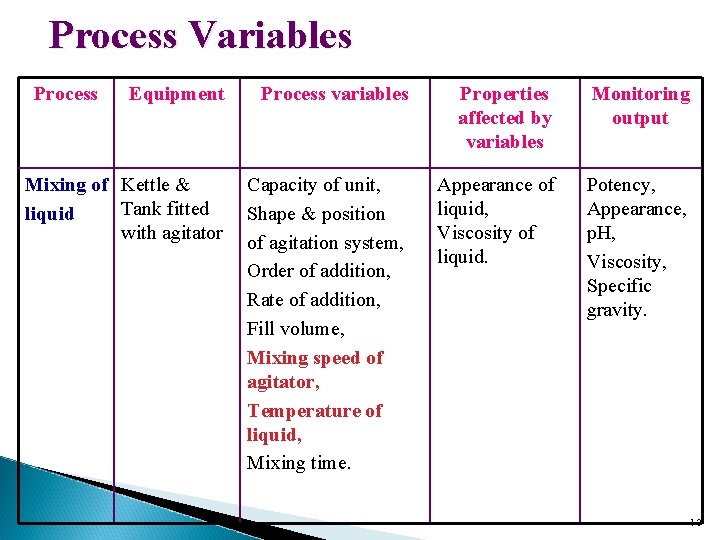
Process Variables Process Equipment Process variables Properties affected by variables Monitoring output Mixing of Kettle & Tank fitted liquid with agitator Capacity of unit, Shape & position of agitation system, Order of addition, Rate of addition, Fill volume, Mixing speed of agitator, Temperature of liquid, Mixing time. Appearance of liquid, Viscosity of liquid. Potency, Appearance, p. H, Viscosity, Specific gravity. 13
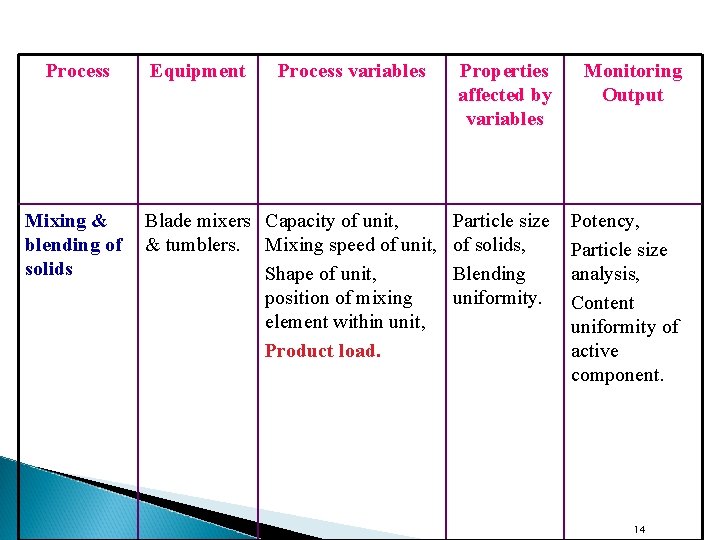
Process Mixing & blending of solids Equipment Process variables Blade mixers Capacity of unit, & tumblers. Mixing speed of unit, Shape of unit, position of mixing element within unit, Product load. Properties affected by variables Monitoring Output Particle size of solids, Blending uniformity. Potency, Particle size analysis, Content uniformity of active component. 14
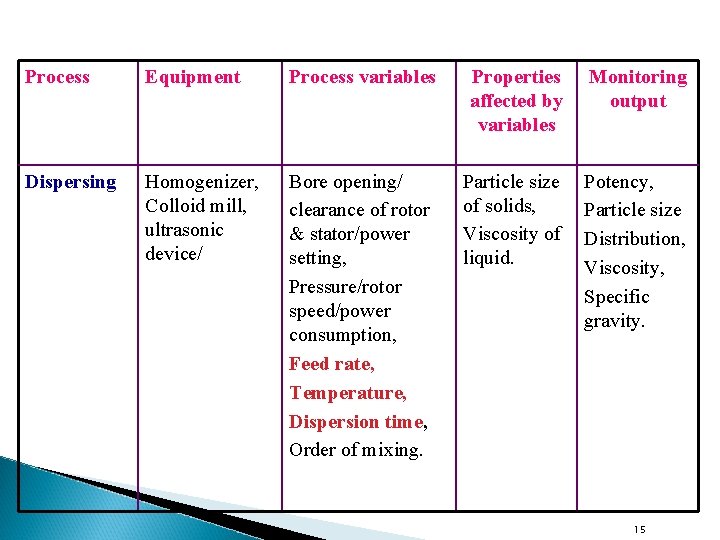
Process Equipment Process variables Properties affected by variables Monitoring output Dispersing Homogenizer, Colloid mill, ultrasonic device/ Bore opening/ clearance of rotor & stator/power setting, Pressure/rotor speed/power consumption, Feed rate, Temperature, Dispersion time, Order of mixing. Particle size of solids, Viscosity of liquid. Potency, Particle size Distribution, Viscosity, Specific gravity. 15
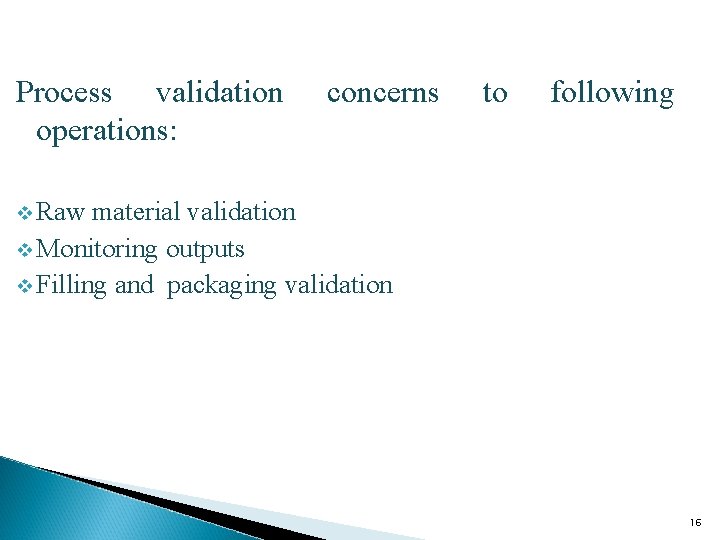
Process validation operations: concerns to following v Raw material validation v Monitoring outputs v Filling and packaging validation 16
Raw material validation: It includes mainly following tests Ø Particle size and size distribution Ø Particle shape or morphology Ø Microbial count Ø Rheology of solvent or vehicle Ø PH of the solvent or vehicle 17
Continue… Raw materials are checked and validated for, � Particle size and size distribution- Particle size distribution range is 0. 2 -2 microns for suspensions. � Particle shape(Morphology)-It is also important to consider because it affects the product appearance, solubility, settling rates and drug stability. � Microbial content-To prevent microbial growth on the final product. 18
Continue…. � § § § Rheology of solvent- It will determine how well liquid will suspend the insoluble particles. Viscosity of the External phase is generated by one or more of following components: Suspended solids Blend of oils and waxes presence of polyols and polyoxyethylene derivatives High concentration of dispersed solids in water Dispersed clays, gums, cellulosic, and/or polymers 19
Continue…. �PH of the solvent-Solubility of the drug in the solvent or vehicle can be markedly influenced by the PH of the solvent is important because large number of chemotherapeutic agents are either weak acids or weak bases so their solubility markedly affected by the PH of the solvent. 20
Monitoring outputs Some outputs to be monitored are as under, : Appearance p. H Viscosity Specific gravity Microbial count Content uniformity Dissolution testing 21
Appearance: Appearance of the final product is checked and validated because it indicates the signs of instability and degradation. For e. g. settling of solid particles in case of suspension and turbidity in case of emulsion. � Time for mixing or agitation and temperature of process can effect the appearance greatly. � 22
PH value Ø PH of aqueous oral formulations should be taken at a given temperature and only after equilibrium has been reached in order to minimize the PH drift. Ø Electrolytes , such as potassium chloride , may be added to the aqueous external phase to stabilize their PH drift. 23
Viscosity: Viscosity is defined as the study of fluid flow. or It is a measurement of the applied stress per unit area to maintain a certain flow rate. � � The viscometer used for the measurement of viscosity should be properly calibrated at equilibrium at a given temperature to establish system reproducibility. 24
Continue…. Viscosity of the liquid oral dosage form is important because it affects the settling rate of suspended particles in suspension and of globules of internal phase in emulsions and also in case of oral solutions it affects the overall appearance of the final product so it must be measured and validated properly. � 25
Specific gravity: � Specific gravity is the weight of the product per unit volume. � For most of the liquid oral products it is 1 gm/cube centimeter. � A decrease in specific gravity of the product like suspensions indicates the presence of air within the structure of the formulation. � Hydrometer is used to measure the specific gravity of liquid orals at a given temperature using well mixed uniform solution. 26
Microbial count � Microbial count for the final product is essential to validate because by performing microbial count we can select the preservative for the final product storage. � There are specifications for each liquid oral product for the bioburden content. 27
Continue…. �Preservative system used in the formulation. The use of small amounts of propylene glycol(515%) or disodium edetate(about 0. 1%) or decrease in the PH of the disperse system have often been use to increase the efficiency of the preservative system. 28
Continue…. � Criteria for selection of preservatives: v Must be effective against a broad spectrum of microorganisms. v Must be chemically, physically, and microbiologically stable. v It must be nontoxic, nonsensitizing, soluble and compatible with other formulation components. 29
Content uniformity: � In solution, suspensions and emulsions determination of content uniformity affects the dose uniformity in case of multidose formulations and also affects the homogeneity of the drug within solvent system. 30
Continue… � Content uniformity of suspension is affected by settling rate which is governed by following factors, v Particle size of the internal phase v Particle density of the internal phase v Density of the external phase v Viscosity and structure of the external phase 31
Dissolution testing: � There is not any official method for dissolution testing of dispersed system , but the best way to perform dissolution of suspension like system is to place a small amount of formulation inside a secure Durapore (polyvinylidene fluoride) membrane pouch of suitable viscosity and suspend it in a suitable dissolution medium using a USP method 1 paddle apparatus. 32
Test parameters specific for suspension v Sedimentation rate v Resuspendibility v Particle size & particle size distribution v Zeta potential measurement Test parameters specific for solution v Clarity of solution v Color of solution 33
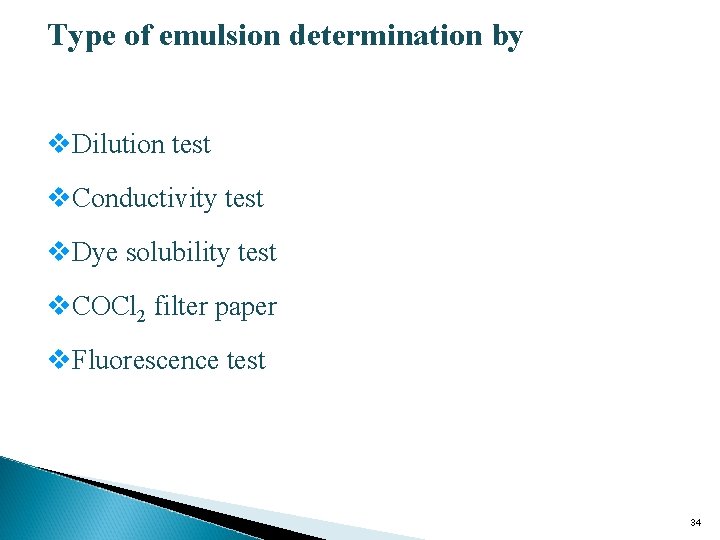
Type of emulsion determination by v. Dilution test v. Conductivity test v. Dye solubility test v. COCl 2 filter paper v. Fluorescence test 34
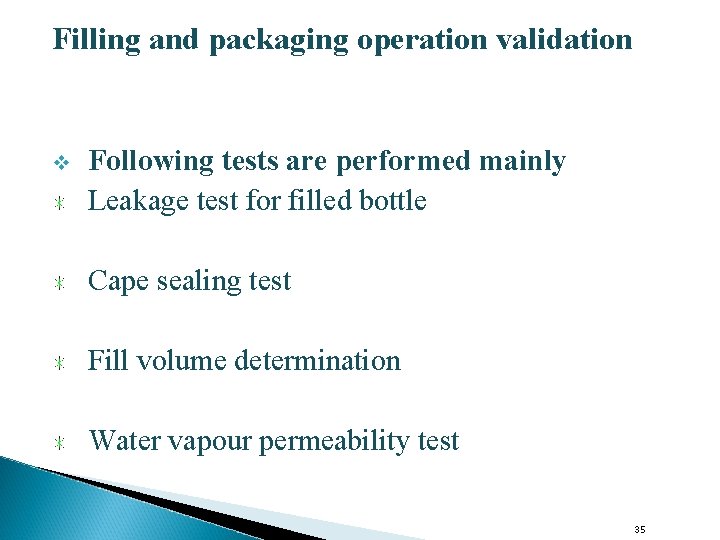
Filling and packaging operation validation v Following tests are performed mainly Leakage test for filled bottle Cape sealing test Fill volume determination Water vapour permeability test 35
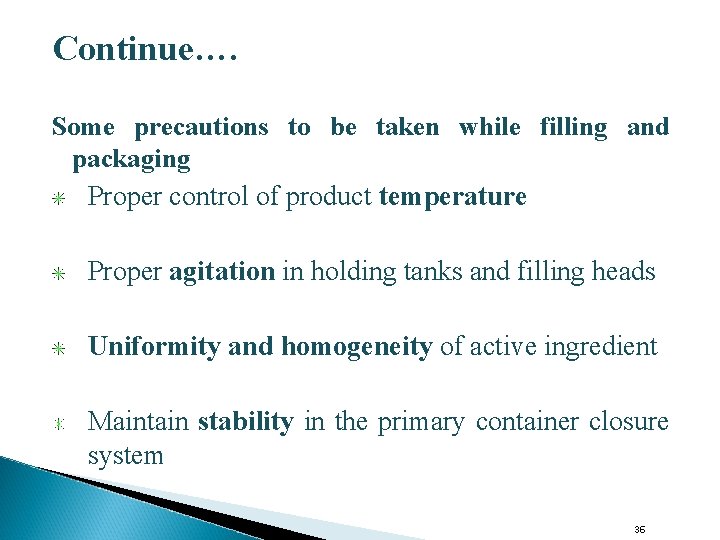
Continue…. Some precautions to be taken while filling and packaging Proper control of product temperature Proper agitation in holding tanks and filling heads Uniformity and homogeneity of active ingredient Maintain stability in the primary container closure system 36
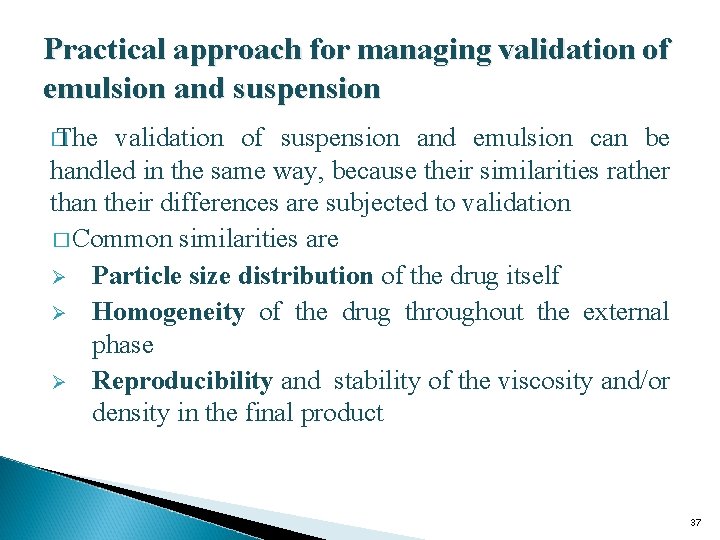
Practical approach for managing validation of emulsion and suspension � The validation of suspension and emulsion can be handled in the same way, because their similarities rather than their differences are subjected to validation � Common similarities are Ø Particle size distribution of the drug itself Ø Homogeneity of the drug throughout the external phase Ø Reproducibility and stability of the viscosity and/or density in the final product 37
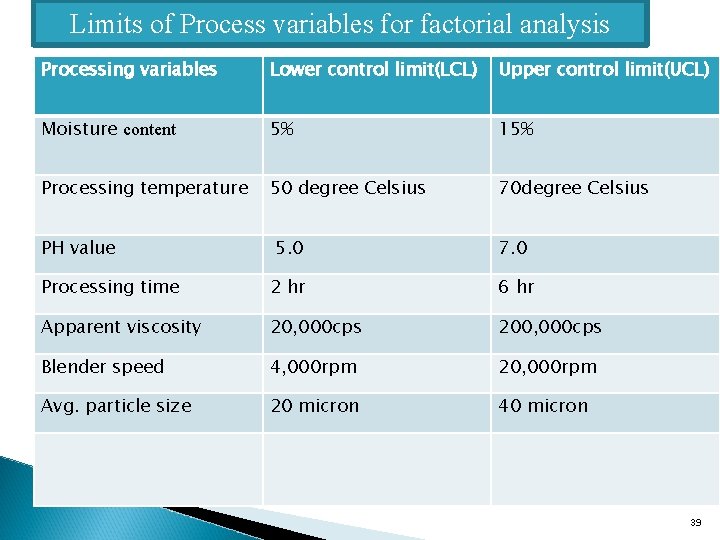
Continue… � The primary focus of prospective validation is to identify the critical unit operations, critical process variables, and control limits for these variables in order to establish in process control of the manufacturing process. In this connection, fractional, factorial designed experiments are used to determine the critical process variables. � In retrospective validation the objective is to establish and maintain process control by demonstration of reproducibility of the various manufactured batches primarily meeting their final product specifications. This can be shown effectively by the use of quality control charts. 38
Limits of Process variables for factorial analysis Processing variables Lower control limit(LCL) Upper control limit(UCL) Moisture content 5% 15% Processing temperature 50 degree Celsius 70 degree Celsius PH value 5. 0 7. 0 Processing time 2 hr 6 hr Apparent viscosity 20, 000 cps 200, 000 cps Blender speed 4, 000 rpm 20, 000 rpm Avg. particle size 20 micron 40 micron 39
References: Lieberman H. A. , Rieger M. M. and Banker G. S. “Pharmaceutical Dosage Forms: Disperse System” , vol. 3; Second Edition, 473 -511 Ø R. A. Nash and A. H. Wachter “Pharmaceutical process validation”; Third edition Ø Agalloco James, Carleton J. Fredric “Validation of Pharmaceutical Processes”; Third edition, 417 -428 Ø The theory and practice of industrial pharmacy by Leon Lachman, Herbert A. Liberman, Joseph L. Kanig; Third edition Ø 40
THANK YOU 41