
A SemiClosed Critical Care Unit from the Nurse


- Slides: 47
A Semi-Closed Critical Care Unit from the Nurse Manager’s Perspective Melisa Mc. Leod-Blohm, RN, BSN, MSA
Previous State of the CCU Multiple critical care physicians rounding in the unit Unpredictable rounding times Weekly interdisciplinary rounds Ineffective collaboration & communication Delays due to locating/paging physicians Physicians not readily available Limited “real time” observation of patient behaviors and clinical issues
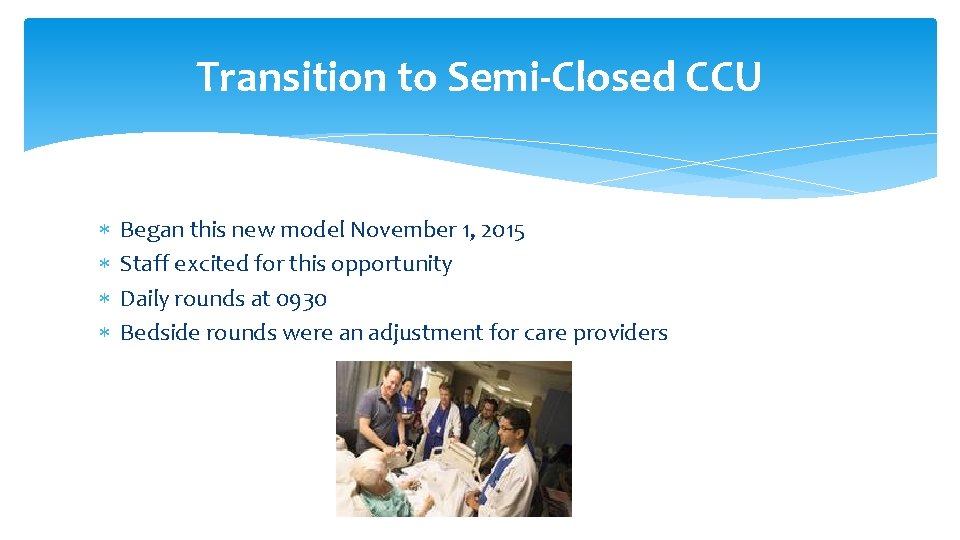
Transition to Semi-Closed CCU Began this new model November 1, 2015 Staff excited for this opportunity Daily rounds at 0930 Bedside rounds were an adjustment for care providers
Impact on Staff Significant improvement in morale Improved staff engagement Increased learning opportunities Improved collaboration between RNs & RTs----SAT & SBT Increased awareness of medication utilization and antibiotic usage Improved consistency----aware of physician practices & preferences Streamlined patient care orders
Staff Comments “I really like having a physician on the unit who can address concerns right away. Daily rounds keeps everyone on top of patient needs. As an RN, I love discussing the plan of care at the beginning of every day. This is so great for the patients. ” “This is great for us! There a lot less phone calls and there is much better continuity of care for the patients. I feel like there is someone looking at the whole picture. ” “A physician on the unit really decreases phone calls, which decreases noise in the unit. Issues are addressed in a more timely manner. ” “This program makes nurses happy! Happy nurses=Happy patients = high HCAHPS scores ”
Patient & Family Satisfaction Consistent availability of the physician has made a significant, positive impact on patient and family satisfaction Families no longer worried about “missing the doctor” Often see the physician multiple times a day Appreciate knowing they’ll see the same physician every day Plan of care discussed daily and questions answered quickly “Feel safe knowing there is always a physician on the unit”
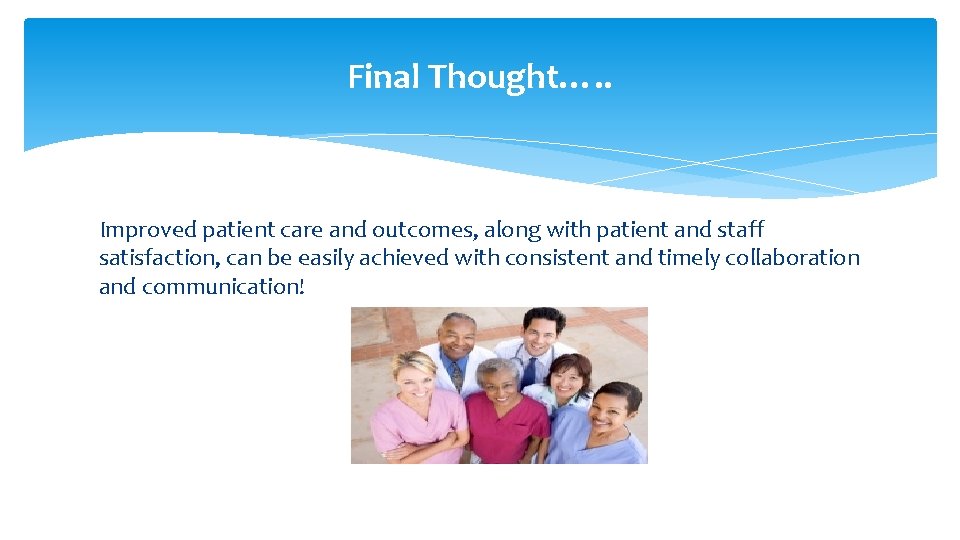
Final Thought…. . Improved patient care and outcomes, along with patient and staff satisfaction, can be easily achieved with consistent and timely collaboration and communication!
The Role of the RT in these Collaborative Efforts in the ICU Scott Alleshunas RRT
I start at 6: 30 The doctor is rounding at 9: 00 I’d better have some information for him when he arrives… • • Recent ABG Current vent. settings, recent weaning efforts. ml/Kg IBW tidal volumes, plateau pressures. SBT
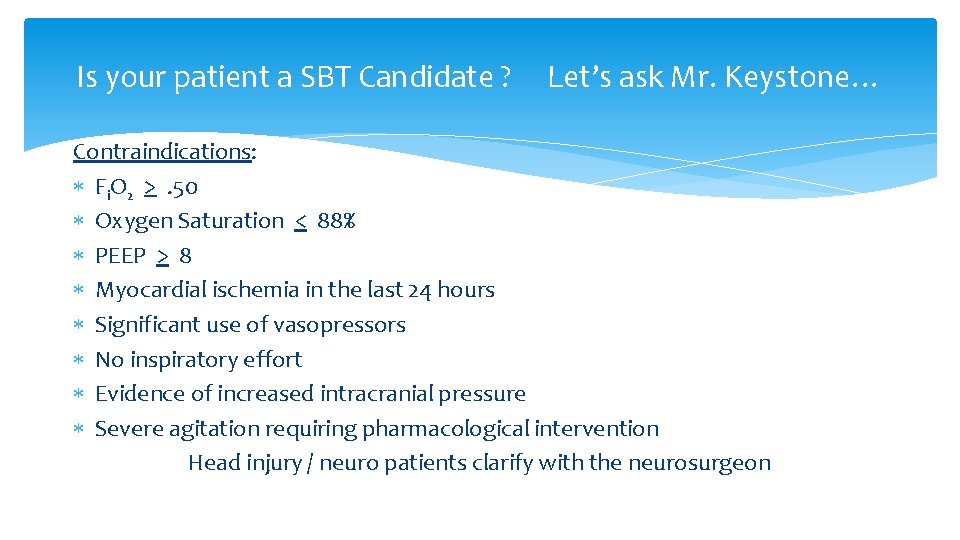
Is your patient a SBT Candidate ? Let’s ask Mr. Keystone… Contraindications: Fi. O 2 >. 50 Oxygen Saturation < 88% PEEP > 8 Myocardial ischemia in the last 24 hours Significant use of vasopressors No inspiratory effort Evidence of increased intracranial pressure Severe agitation requiring pharmacological intervention Head injury / neuro patients clarify with the neurosurgeon
Good to go ? Not yet… Verbal communication with the RN must occur prior to the RT initiating a SBT. The Spontaneous Awakening Trial ( SAT ) should be initiated first, followed by the SBT when the patient is less sedate.
OK, let’s try it… CPAP +5 with pressure support < 7 cm. H 2 O The patient must reach 120 minutes without failure criteria present or was extubated. Begin trending the P 0. 1 at one minute intervals After 120 minutes on CPAP get some parameters…
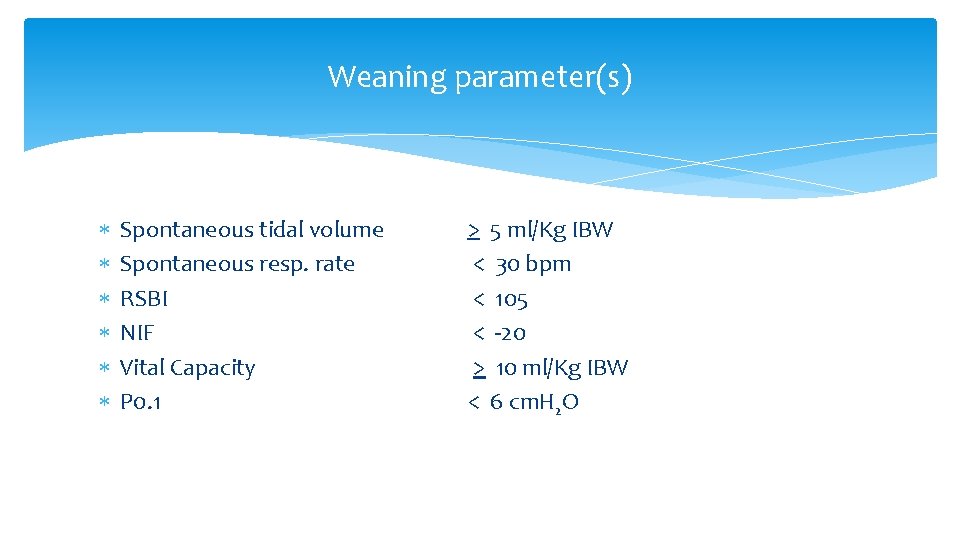
Weaning parameter(s) Spontaneous tidal volume Spontaneous resp. rate RSBI NIF Vital Capacity P 0. 1 > 5 ml/Kg IBW < 30 bpm < 105 < -20 > 10 ml/Kg IBW < 6 cm. H 2 O
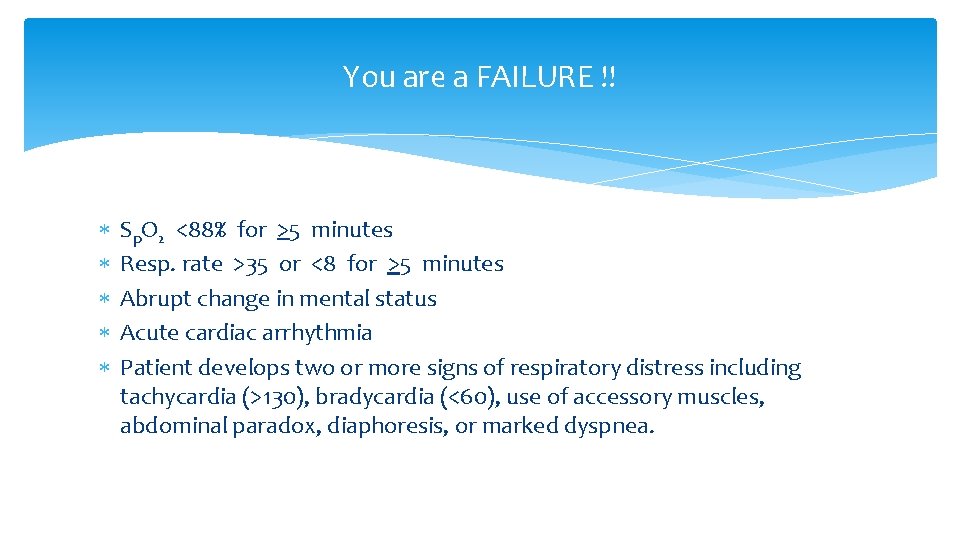
You are a FAILURE !! Sp. O 2 <88% for >5 minutes Resp. rate >35 or <8 for >5 minutes Abrupt change in mental status Acute cardiac arrhythmia Patient develops two or more signs of respiratory distress including tachycardia (>130), bradycardia (<60), use of accessory muscles, abdominal paradox, diaphoresis, or marked dyspnea.
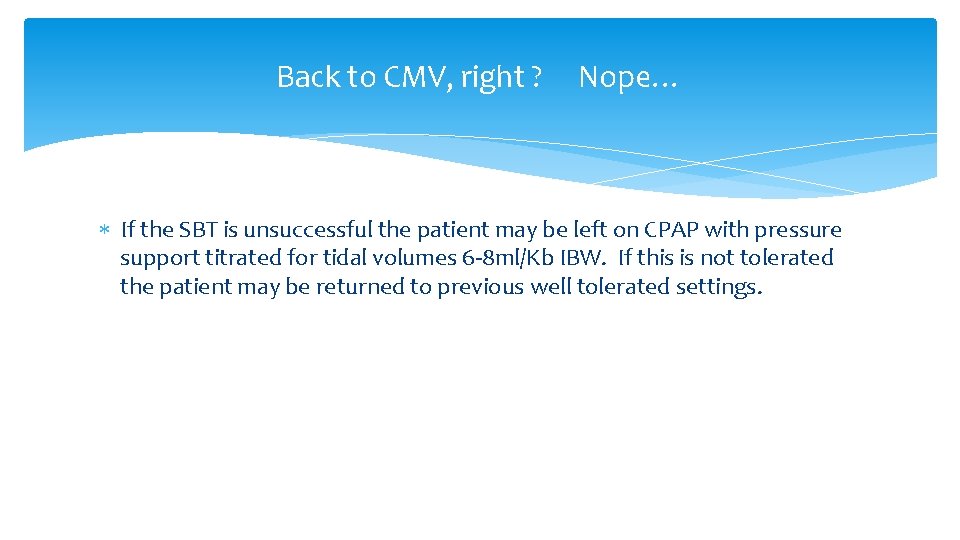
Back to CMV, right ? Nope… If the SBT is unsuccessful the patient may be left on CPAP with pressure support titrated for tidal volumes 6 -8 ml/Kb IBW. If this is not tolerated the patient may be returned to previous well tolerated settings.
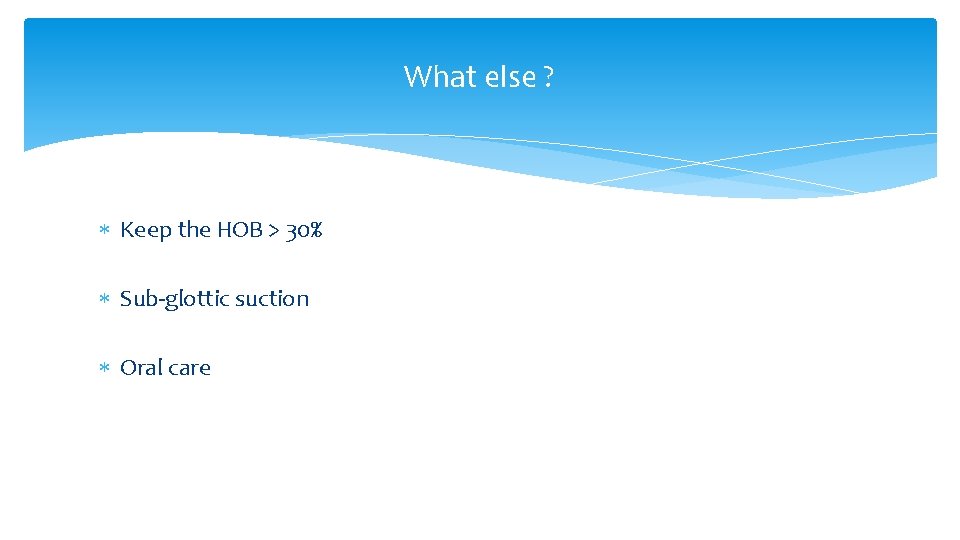
What else ? Keep the HOB > 30% Sub-glottic suction Oral care
Questions ?
Early Mobility in the ICU Lycia Atkins, OTRL, CSRS Covenant Healthcare Saginaw, MI
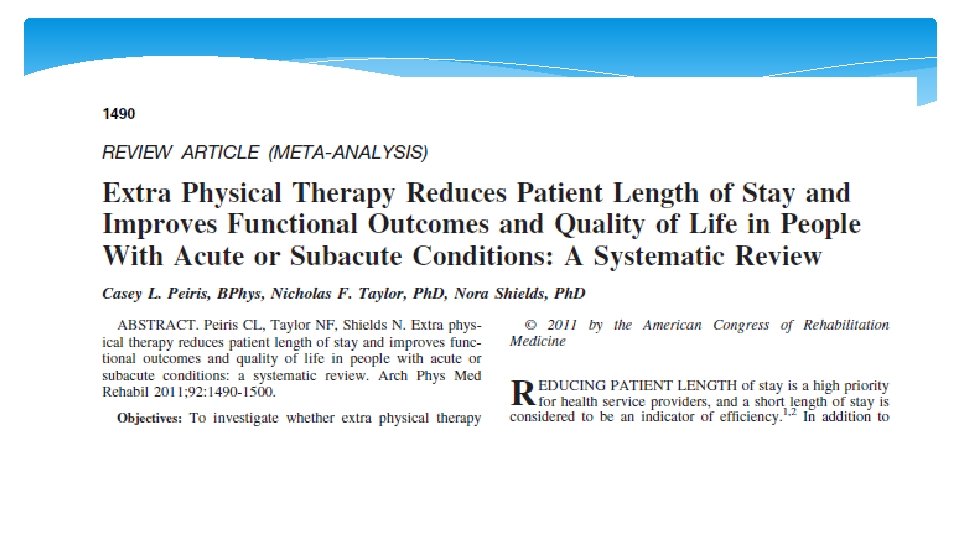
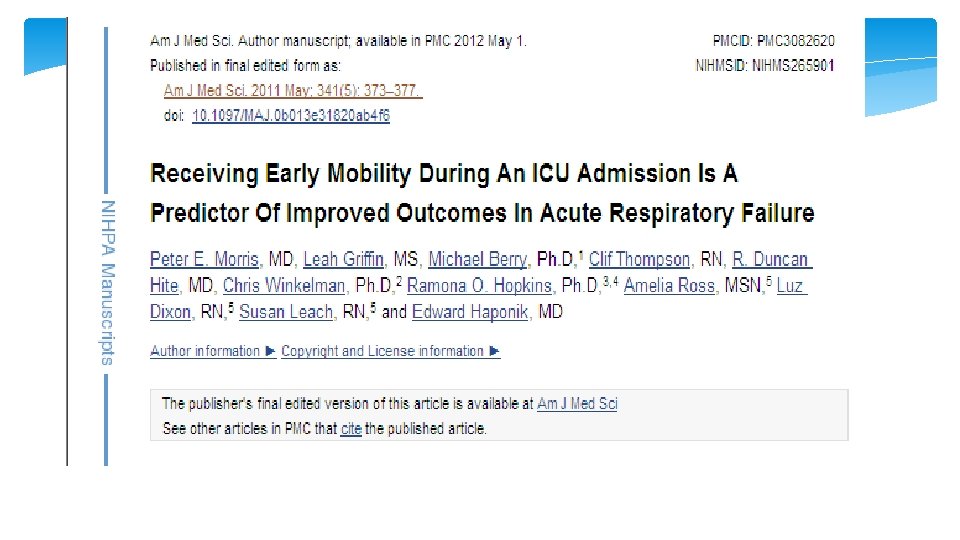
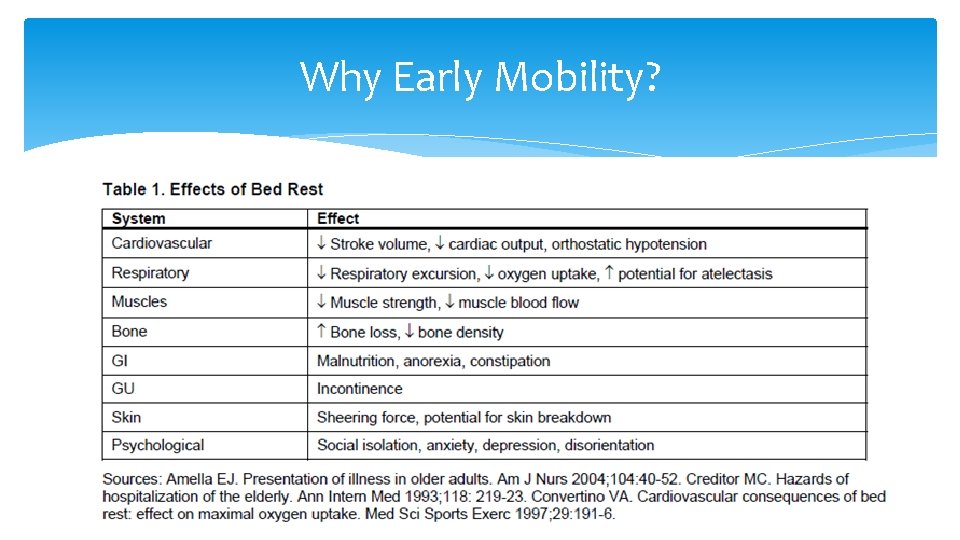
Why Early Mobility? Reduce medical complications Decrease length of stay Decrease readmission rates Decrease falls Financial Impact (LOS) Improves quality and safety Patient satisfaction
Why Early Mobility? Medical complications increase with prolonged bed-rest for hospitalized patients. – JAMA 2008, 300: 1685 -1690 Intensity (lower) of physical fitness is directly associated with mortality and cardiovascular disease. – JAMA, 1989, 262 (17): 2395 -2403 Most hospitalized patients currently spend most of their time in bed. – J Am Geriatr Soc. 2009; 59(9): 1660 -5
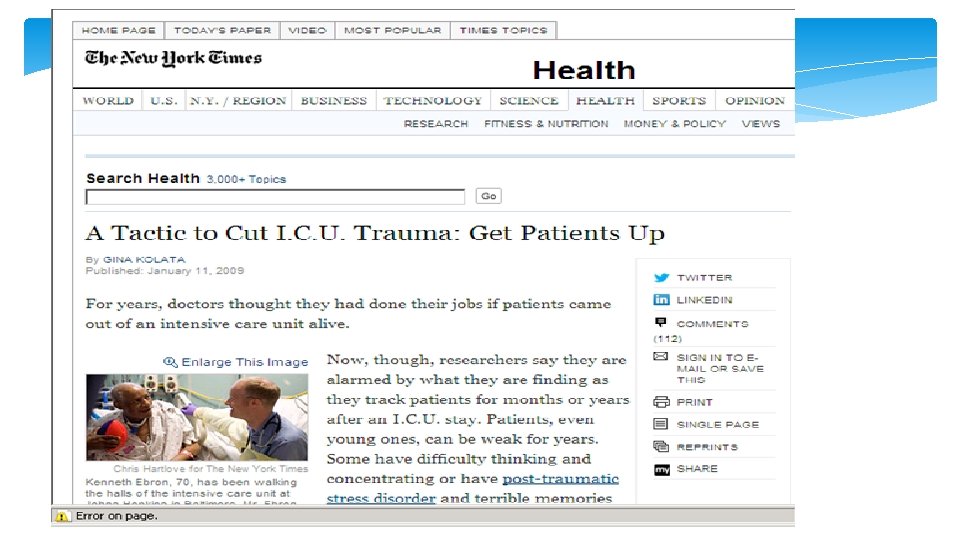
Why Early Mobility?
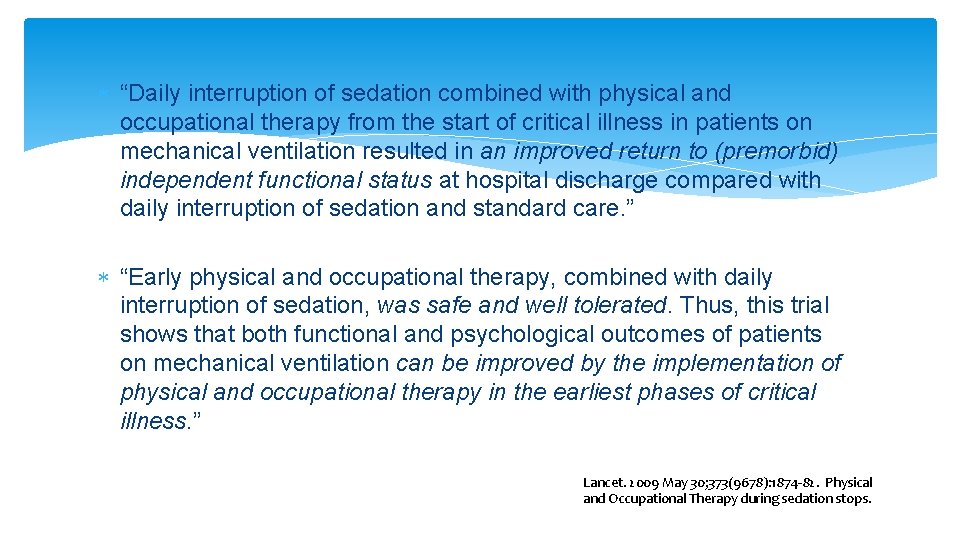
“Daily interruption of sedation combined with physical and occupational therapy from the start of critical illness in patients on mechanical ventilation resulted in an improved return to (premorbid) independent functional status at hospital discharge compared with daily interruption of sedation and standard care. ” “Early physical and occupational therapy, combined with daily interruption of sedation, was safe and well tolerated. Thus, this trial shows that both functional and psychological outcomes of patients on mechanical ventilation can be improved by the implementation of physical and occupational therapy in the earliest phases of critical illness. ” Lancet. 2009 May 30; 373(9678): 1874 -82. Physical and Occupational Therapy during sedation stops.
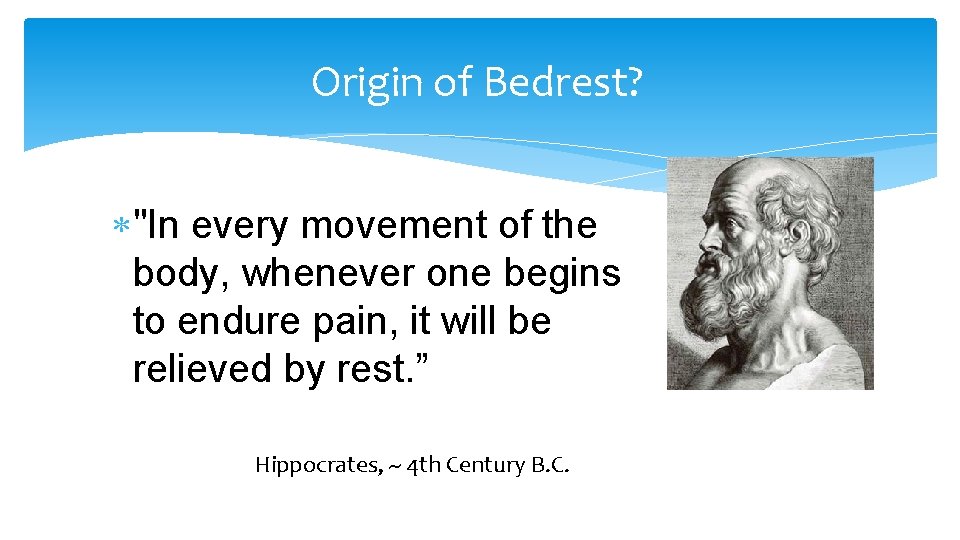
Origin of Bedrest? "In every movement of the body, whenever one begins to endure pain, it will be relieved by rest. ” Hippocrates, ~ 4 th Century B. C.
ICU Outcomes Better oxygenation Delirium rate Amount of sedation required Days on mechanical ventilation Days in the ICU Survival in the ICU Cost of hospitalization Long term outcomes
Pulmonary Effects of Immobility Alterations in ventilation and perfusion Increased risk for atelectasis Increased risk for aspiration Risk for VAP / HAP Hypoxia Delayed extubation
Goals Increase lung expansion Mobilize secretions Increase circulation Increase awareness / attention
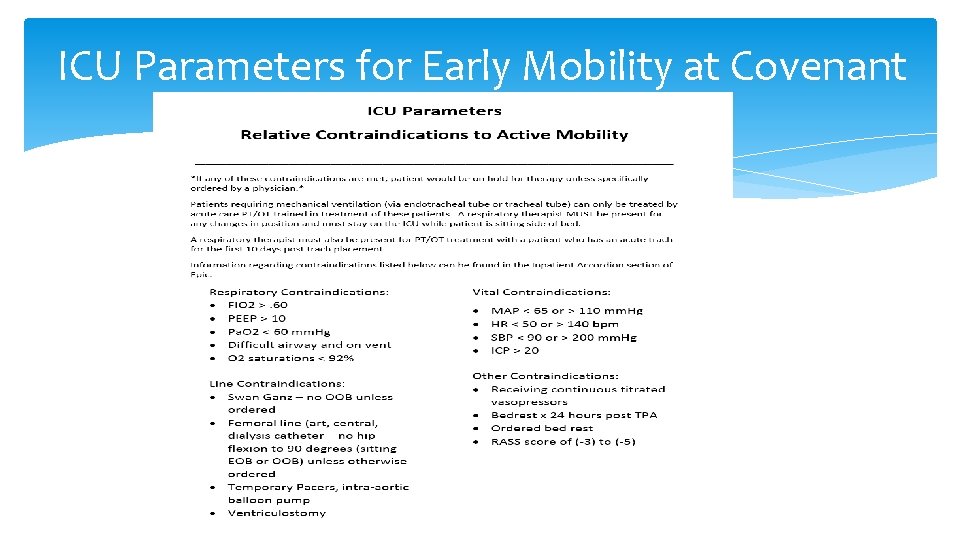
ICU Parameters for Early Mobility at Covenant
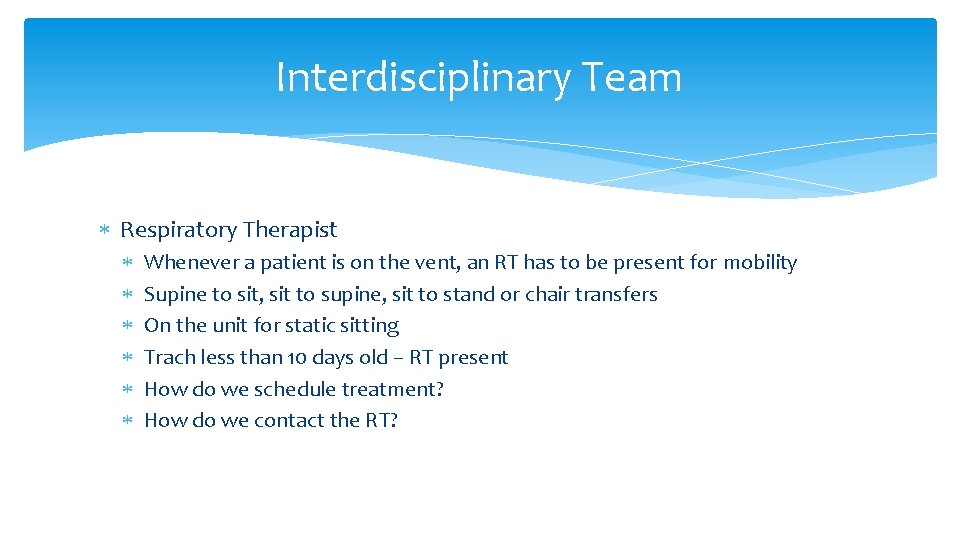
Interdisciplinary Team Respiratory Therapist Whenever a patient is on the vent, an RT has to be present for mobility Supine to sit, sit to supine, sit to stand or chair transfers On the unit for static sitting Trach less than 10 days old – RT present How do we schedule treatment? How do we contact the RT?
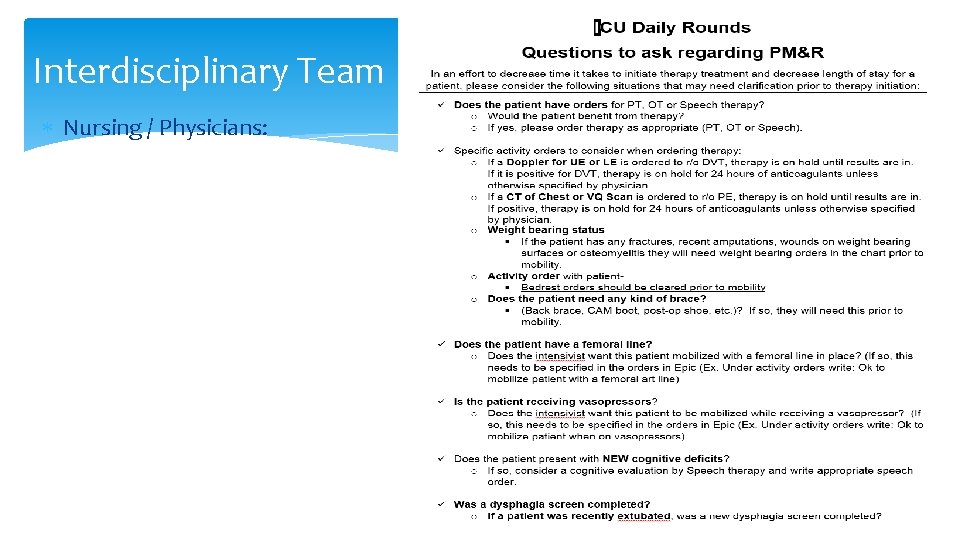
Interdisciplinary Team Nursing / Physicians:
The Typical Therapy Session in the ICU ~12 years ago, all we would complete was ROM / strength training in bed with patients in ICU Starting around 2010, more research and push for early mobility in ICUs Background information of patient, what could they do PTA? Quick assessment of strength in bed Determine what equipment is needed Make sure all staff necessary is present Treatment focus: exercise, mobility, transfers, balance, coordination, family education, d/c recommendations Slow progression of movement assessing patient’s condition as we go Try for small gains with each therapy session
Covenant’s Current Mobility Projects Growing our therapy staff Added PT/OT orders to the vent bundle Tracking bedrest orders Education for all staff regarding our ICU parameters – order for therapy if appropriate, clear bedrest orders! Working on getting more transfer aids / equipment to aid in safe mobility Moto. Med – upper or lower extremity bicycle
Barriers Improved efficiency in obtaining therapy orders – Feel free to make a referral!! More staff comfortable and competent mobilizing critically ill patients BEDREST orders Equipment needs
In Conclusion Early mobility provides better quality care, improves outcomes, improves patient satisfaction Early mobility requires a team approach between PT/OT, nursing, physicians and respiratory therapist Get a move on! THANK YOU!!!!
Transition to Semi-Closed Intensive Care Unit Amjad Nader, MD Critical Care Covenant Medical Center
Objectives: Does it improve practice? Is it safer? Does it Change outcome? Staff satisfaction? Semi-Closed VS Closed Unit ?
ICU comprise 10% of acute care hospital beds 4 million admissions yearly Mortality 12 -17% More than half of USA hospitals do not have dedicated Intensivist coverage
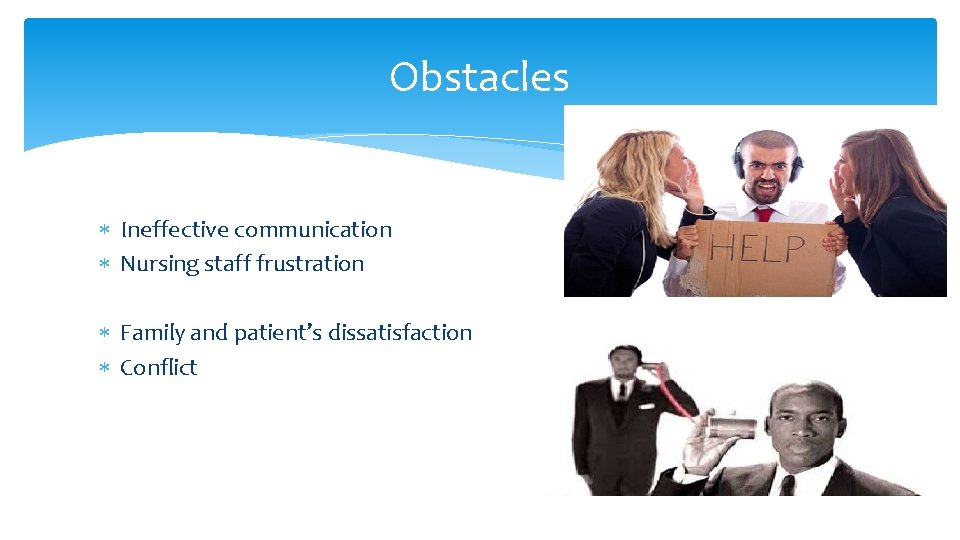
Obstacles Ineffective communication Nursing staff frustration Family and patient’s dissatisfaction Conflict
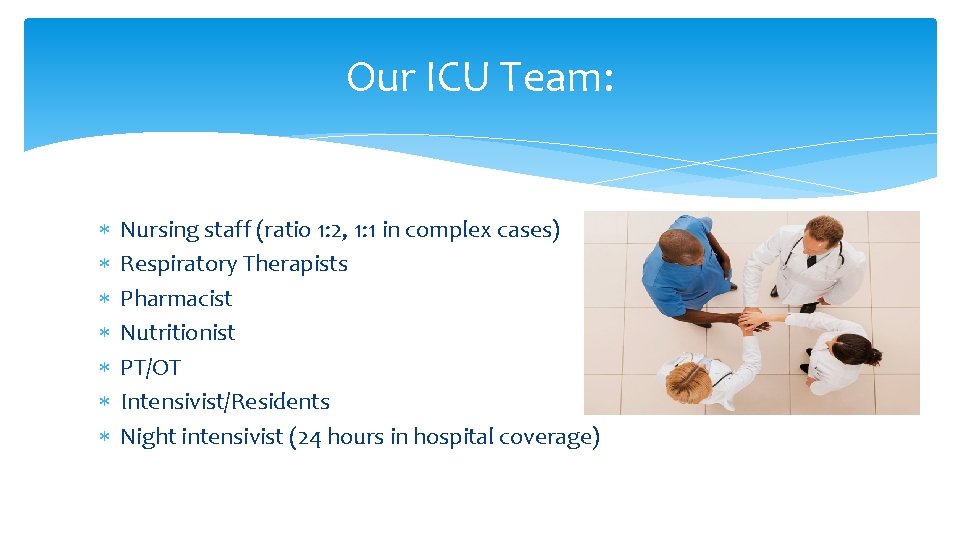
Our ICU Team: Nursing staff (ratio 1: 2, 1: 1 in complex cases) Respiratory Therapists Pharmacist Nutritionist PT/OT Intensivist/Residents Night intensivist (24 hours in hospital coverage)
How does it work? Semi-Closed Unit system: All patients are being cared for by one team of intensivists in collaboration with primary care team Mandatory consult for Hospitalists group patients Elective consult for other specialty The intensivist handles the majority of the orders Discharge orders per intensivist
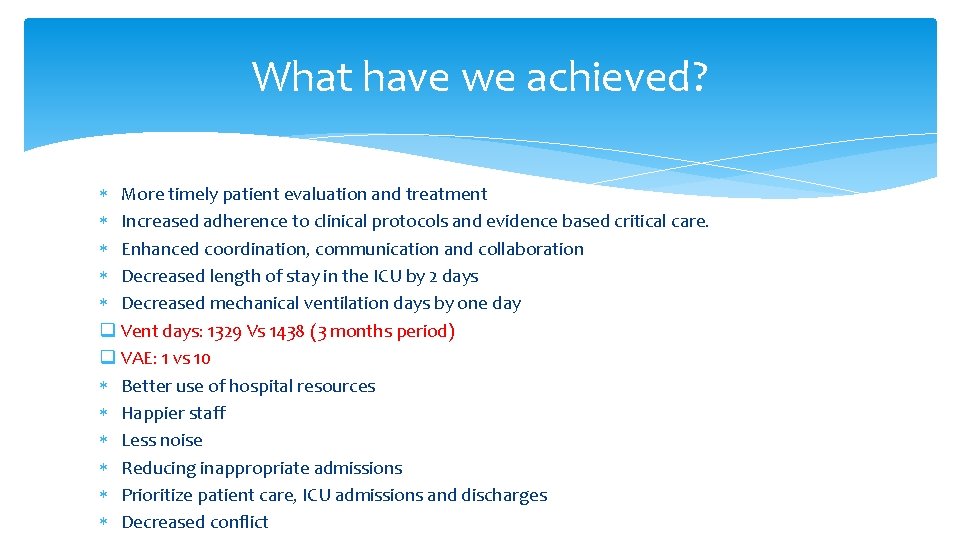
What have we achieved? More timely patient evaluation and treatment Increased adherence to clinical protocols and evidence based critical care. Enhanced coordination, communication and collaboration Decreased length of stay in the ICU by 2 days Decreased mechanical ventilation days by one day q Vent days: 1329 Vs 1438 (3 months period) q VAE: 1 vs 10 Better use of hospital resources Happier staff Less noise Reducing inappropriate admissions Prioritize patient care, ICU admissions and discharges Decreased conflict
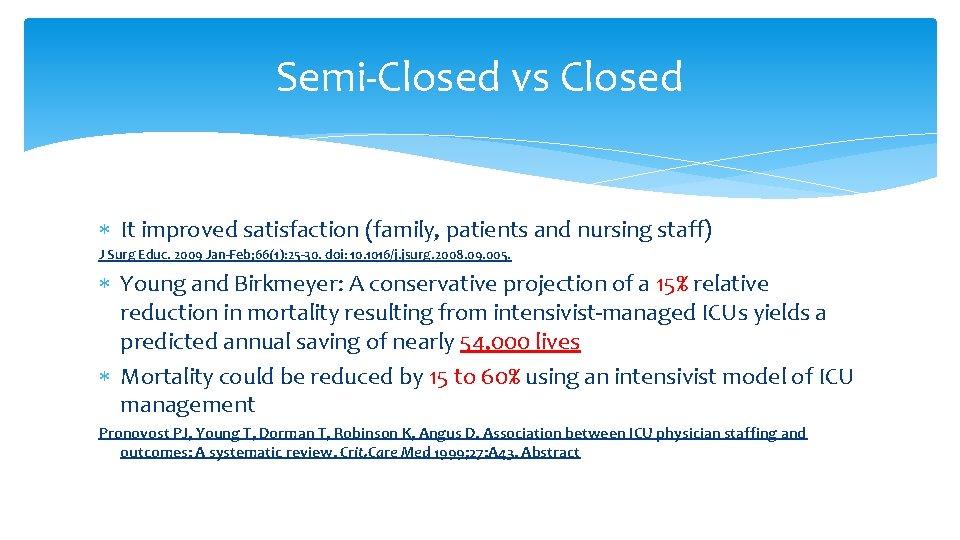
Semi-Closed vs Closed It improved satisfaction (family, patients and nursing staff) J Surg Educ. 2009 Jan-Feb; 66(1): 25 -30. doi: 10. 1016/j. jsurg. 2008. 09. 005. Young and Birkmeyer: A conservative projection of a 15% relative reduction in mortality resulting from intensivist-managed ICUs yields a predicted annual saving of nearly 54, 000 lives Mortality could be reduced by 15 to 60% using an intensivist model of ICU management Pronovost PJ, Young T, Dorman T, Robinson K, Angus D. Association between ICU physician staffing and outcomes: A systematic review. Crit. Care Med 1999; 27: A 43. Abstract
Open or Closed ? Mortality reduction: from 25. 7% to 15. 8% between the cohorts (Thomas D 2012)
Conclusion: The potential impact of intensivist model is far reaching The experience has been very positive More studies are needed to be conducted Need to measure outcomes and impact Plan to expand involve other units in the hospital
Thank you