
A Sandwich DNA Model for Rapid and Sensitive
![Limitations of fluorescent biosensing Fluorescent marker Target (analyte) Unbound fluorescent marker [1] A. Danielli](https://slidetodoc.com/presentation_image/36c14a0808fef91fd047c4a643354855/image-3.jpg "Limitations of fluorescent biosensing Fluorescent marker Target (analyte) Unbound fluorescent marker [1] A. Danielli")
![Magnetic Modulation Biosensing (MMB) Magnetic bead Magnetic poles Unbound fluorescent marker [1] A. Danielli](https://slidetodoc.com/presentation_image/36c14a0808fef91fd047c4a643354855/image-4.jpg "Magnetic Modulation Biosensing (MMB) Magnetic bead Magnetic poles Unbound fluorescent marker [1] A. Danielli")
![Magnetic Modulation Biosensing (MMB) Magnetic bead Magnetic poles Unbound fluorescent marker [1] A. Danielli](https://slidetodoc.com/presentation_image/36c14a0808fef91fd047c4a643354855/image-5.jpg "Magnetic Modulation Biosensing (MMB) Magnetic bead Magnetic poles Unbound fluorescent marker [1] A. Danielli")
![Magnetic Modulation Biosensing (MMB) Magnetic poles [1] Background noise A. Danielli et al. ,](https://slidetodoc.com/presentation_image/36c14a0808fef91fd047c4a643354855/image-6.jpg "Magnetic Modulation Biosensing (MMB) Magnetic poles [1] Background noise A. Danielli et al. ,")
![Full assay – sandwich DNA Streptavidin [1] A. Danielli et al. , Curr. Pharm.](https://slidetodoc.com/presentation_image/36c14a0808fef91fd047c4a643354855/image-12.jpg "Full assay – sandwich DNA Streptavidin [1] A. Danielli et al. , Curr. Pharm.")
- Slides: 17
A Sandwich DNA Model for Rapid and Sensitive Detection of NSCLC Utilizing the Magnetic Modulation Biosensing System Saar Ashri The Open University Optical Imaging and Biosensing Laboratory Bar-Ilan University Under the Supervision of Dr. Amos Danielli December 2016 כסלו תשע"ז
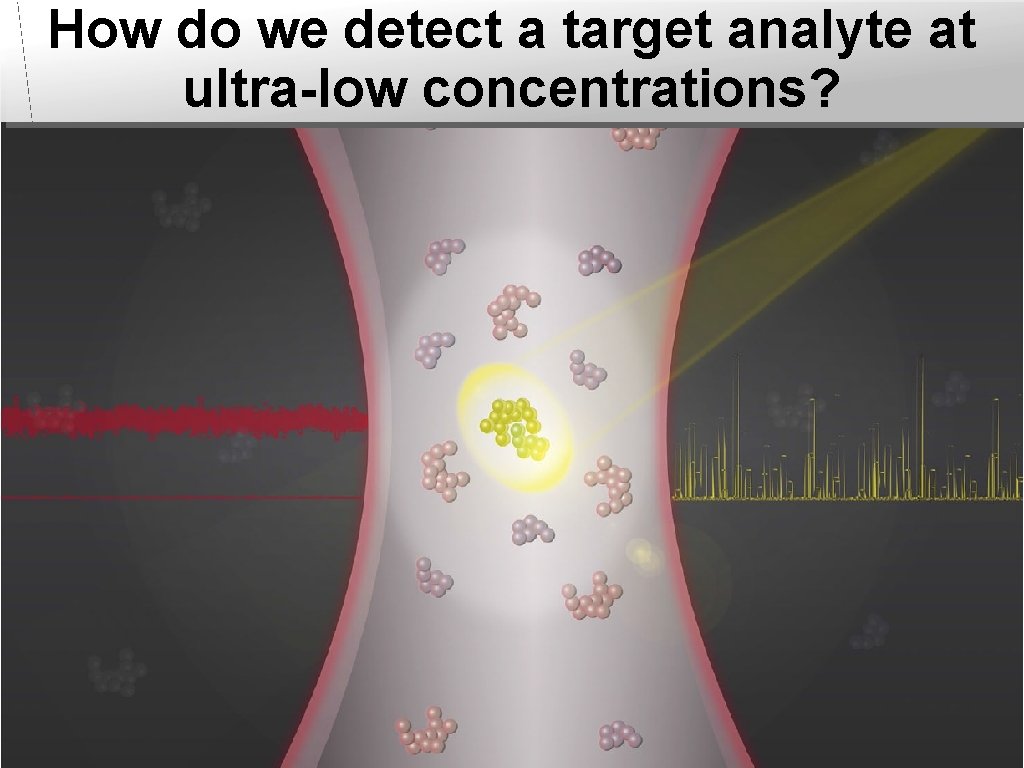
How do we detect a target analyte at ultra-low concentrations?
Limitations of fluorescent biosensing Fluorescent marker Target (analyte) Unbound fluorescent marker [1] A. Danielli et al. , Optics Express, 16, 19253 -19259 (2008) Solution (blood) Laser beam
Magnetic Modulation Biosensing (MMB) Magnetic bead Magnetic poles Unbound fluorescent marker [1] A. Danielli et al. , Optics Express, 16, 19253 -19259 (2008)
Magnetic Modulation Biosensing (MMB) Magnetic bead Magnetic poles Unbound fluorescent marker [1] A. Danielli et al. , Optics Express, 16, 19253 -19259 (2008)
Magnetic Modulation Biosensing (MMB) Magnetic poles [1] Background noise A. Danielli et al. , Optics Express, 16, 19253 -19259 (2008)
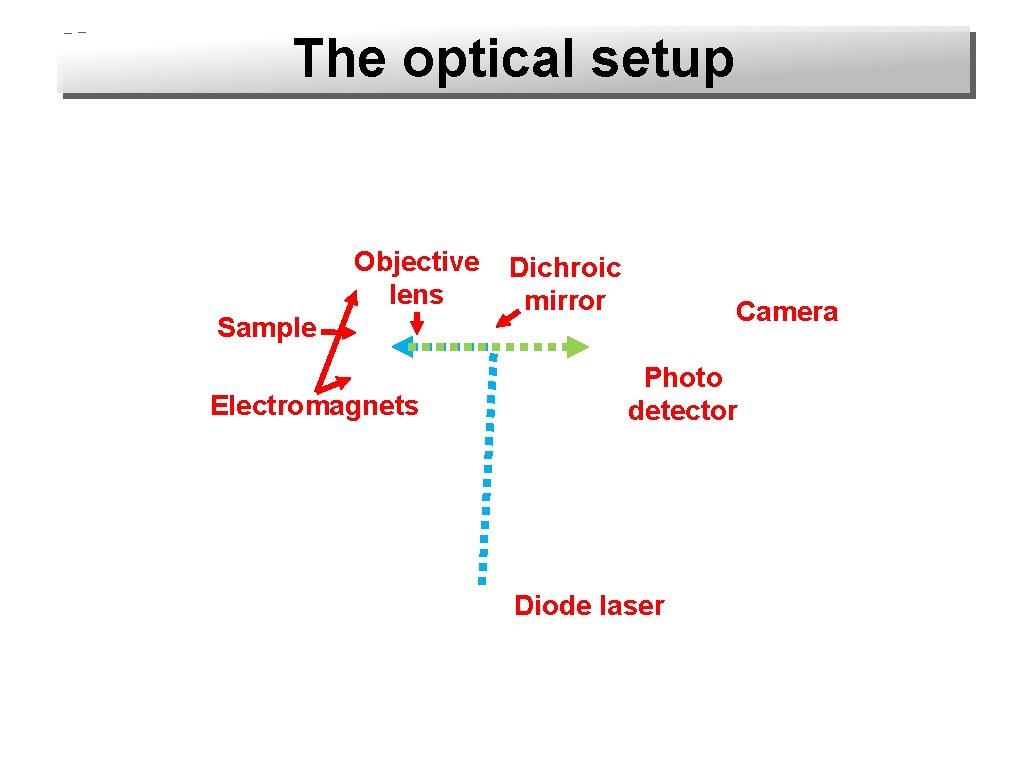
The optical setup Objective lens Sample Electromagnets Dichroic mirror Camera Photo detector Diode laser
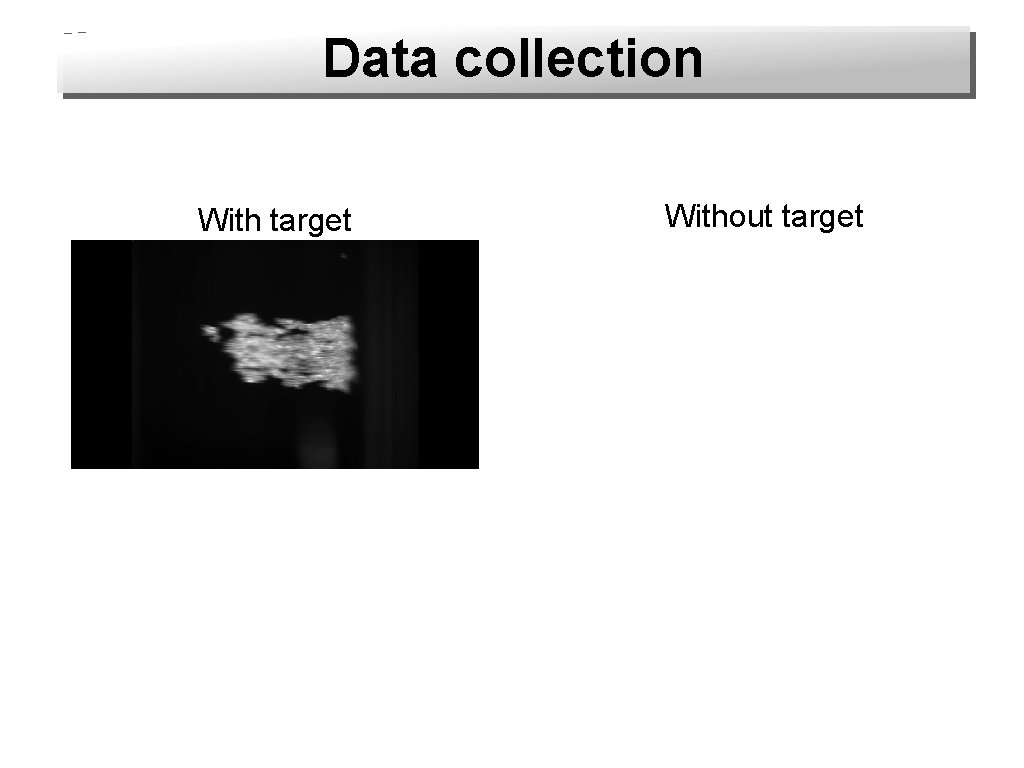
Data collection With target Without target
The Research Question • Is there a correlation between the ct. DNA in the liquid biopsy to the excitation level? • Are we able to quantify the ct. DNA levels using calibration curve?
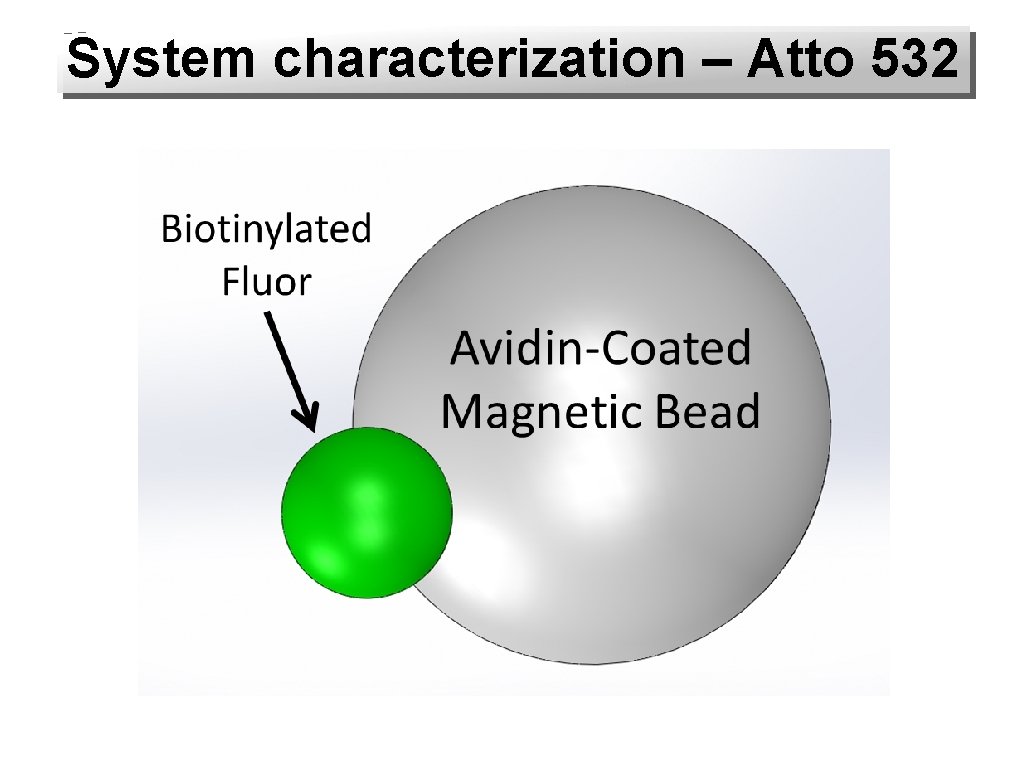
System characterization – Atto 532 Streptavidin
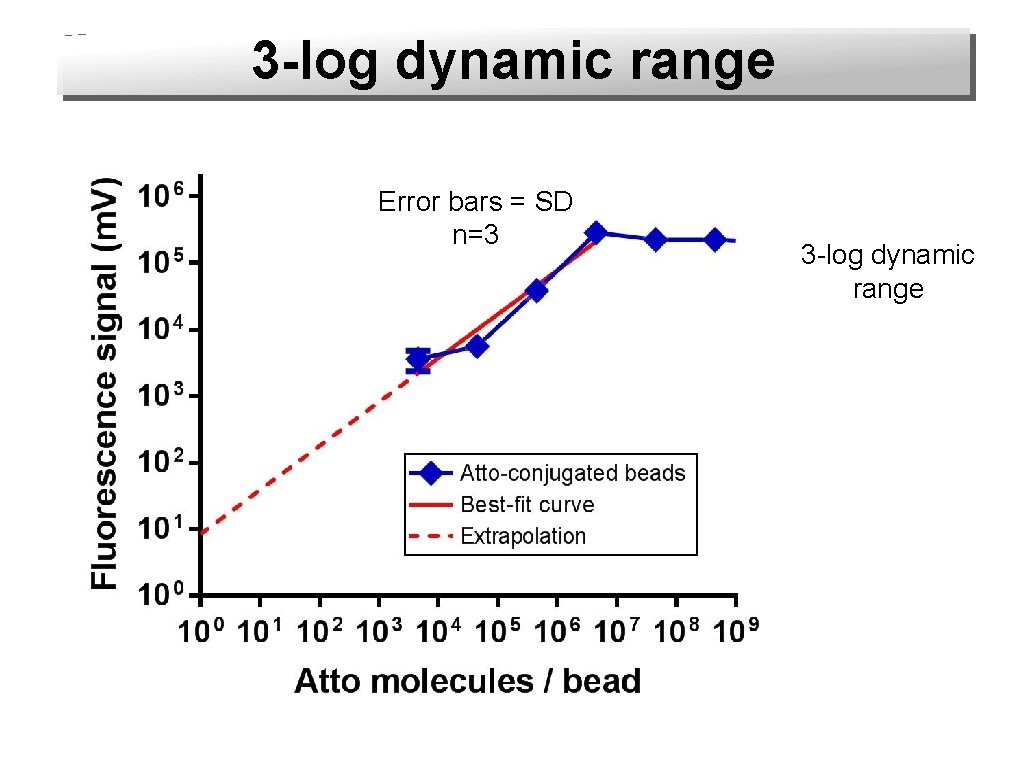
3 -log dynamic range Error bars = SD n=3 3 -log dynamic range
Full assay – sandwich DNA Streptavidin [1] A. Danielli et al. , Curr. Pharm. Biotechnol. , 11 (2010)
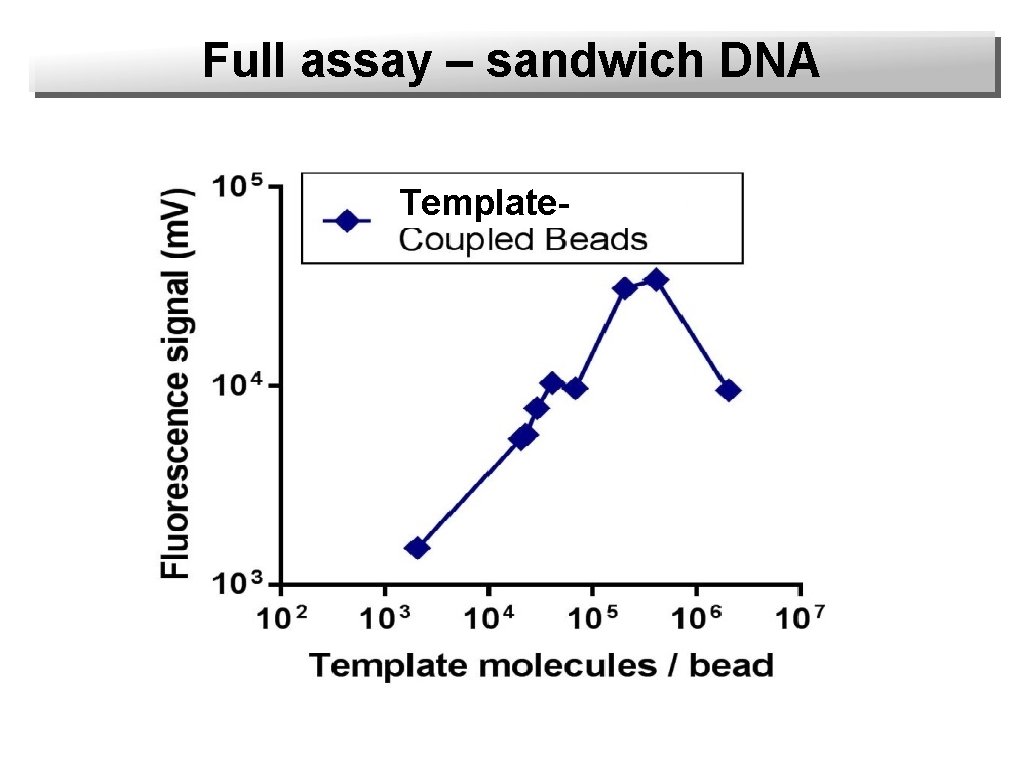
Full assay – sandwich DNA Template-
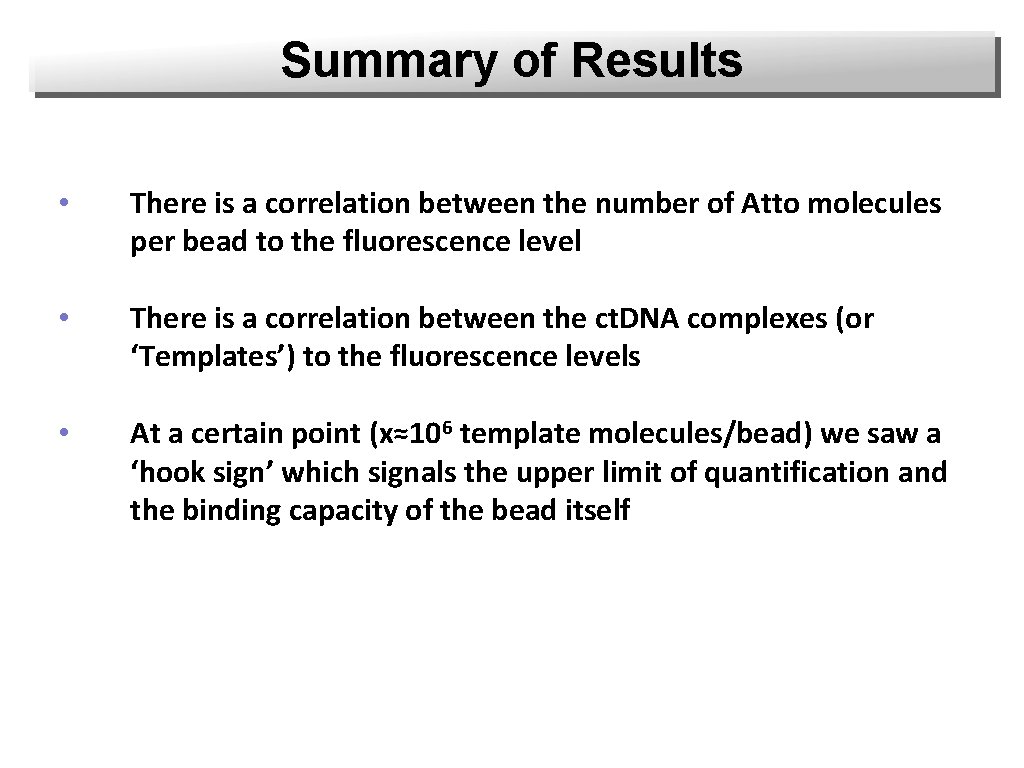
Summary of Results • There is a correlation between the number of Atto molecules per bead to the fluorescence level • There is a correlation between the ct. DNA complexes (or ‘Templates’) to the fluorescence levels • At a certain point (x≈106 template molecules/bead) we saw a ‘hook sign’ which signals the upper limit of quantification and the binding capacity of the bead itself
Conclusions • MMB’s unique properties are aggregation and modulation. • MMB’s advantages are: fast reaction time, sensitivity, and simplicity (no washing steps) • MMB is particularly suitable for point-of-care applications and resourcelimited settings
Future Perspectives • The field of liquid biopsy encloses methods that may simplify and ease the lives of many patients • Further researches are required for the field to develop • ct. DNA is a great, potent target for analysis • A well-developed protocol for bleaching the beads is desirable
A Sandwich DNA Model for Rapid and Sensitive Detection of NSCLC Utilizing the Magnetic Modulation Biosensing System Saar Ashri The Open University Optical Imaging and Biosensing Laboratory Bar-Ilan University Under the Supervision of Dr. Amos Danielli December 2016 כסלו תשע"ז