
A Rock Cycle Investigation THREE TYPES OF ROCKS



- Slides: 14
A Rock Cycle Investigation
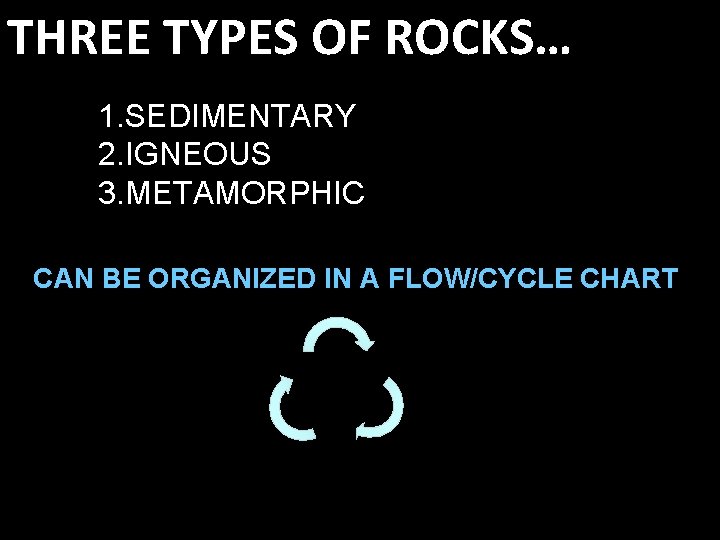
THREE TYPES OF ROCKS… 1. SEDIMENTARY 2. IGNEOUS 3. METAMORPHIC CAN BE ORGANIZED IN A FLOW/CYCLE CHART
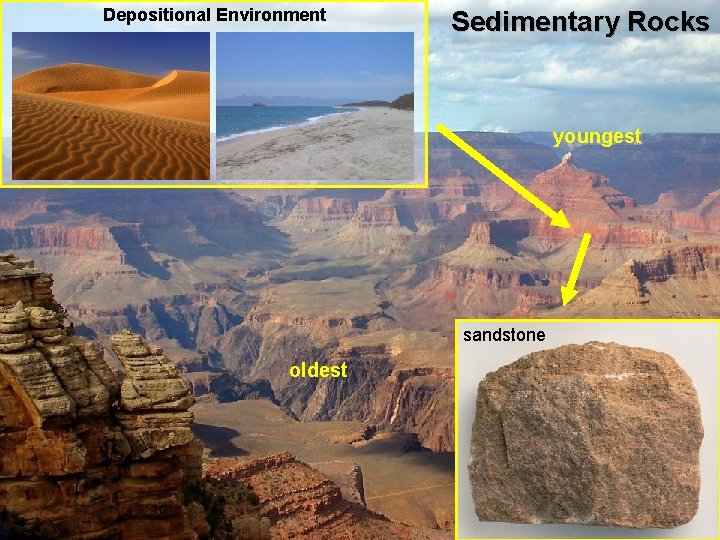
Depositional Environment Sedimentary Rocks youngest sandstone oldest
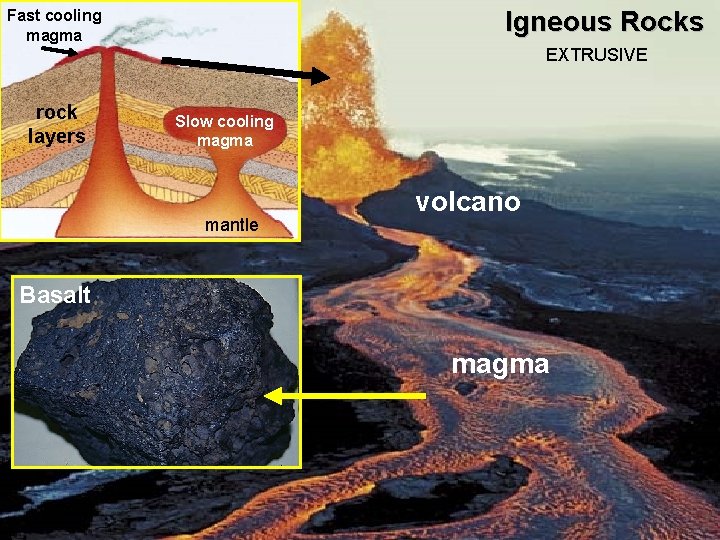
Igneous Rocks Fast cooling magma EXTRUSIVE rock layers Slow cooling magma mantle volcano Basalt magma
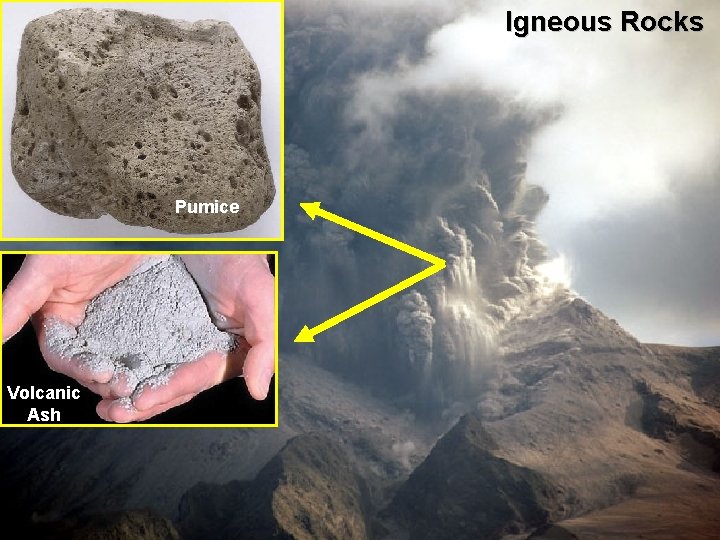
Igneous Rocks Pumice Volcanic Ash
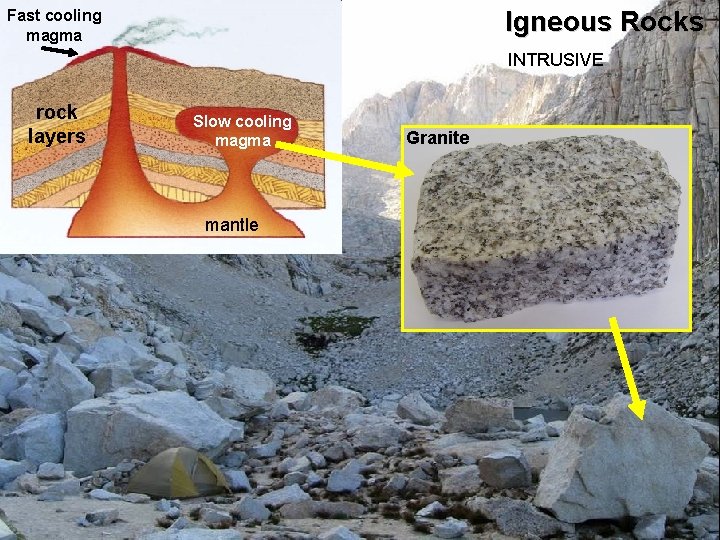
Igneous Rocks Fast cooling magma INTRUSIVE rock layers Slow cooling magma mantle Granite
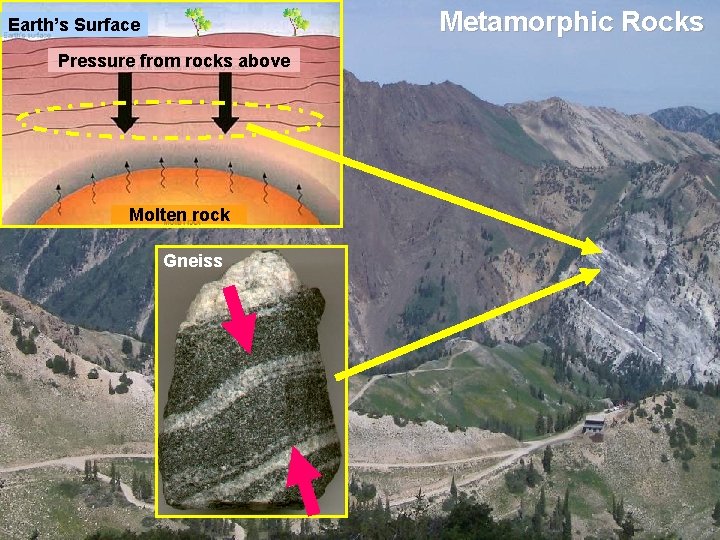
Metamorphic Rocks Earth’s Surface Pressure from rocks above Molten rock Gneiss
Instructions
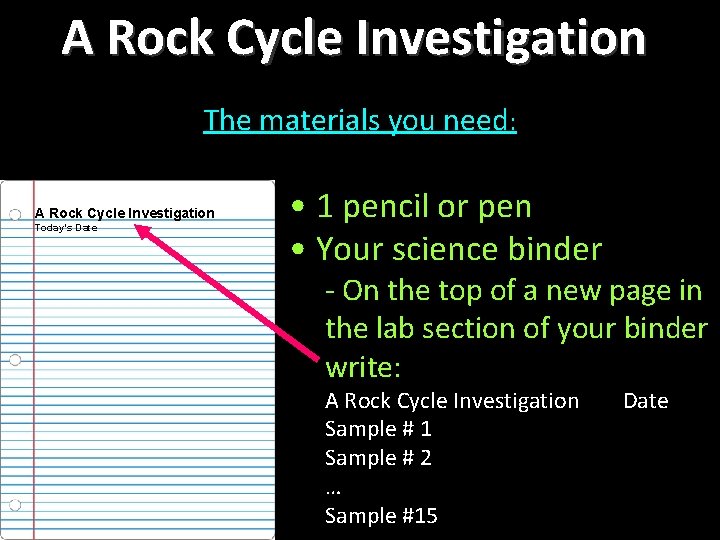
A Rock Cycle Investigation The materials you need: A Rock Cycle Investigation Today’s Date • 1 pencil or pen • Your science binder - On the top of a new page in the lab section of your binder write: A Rock Cycle Investigation Sample # 1 Sample # 2 … Sample #15 Date
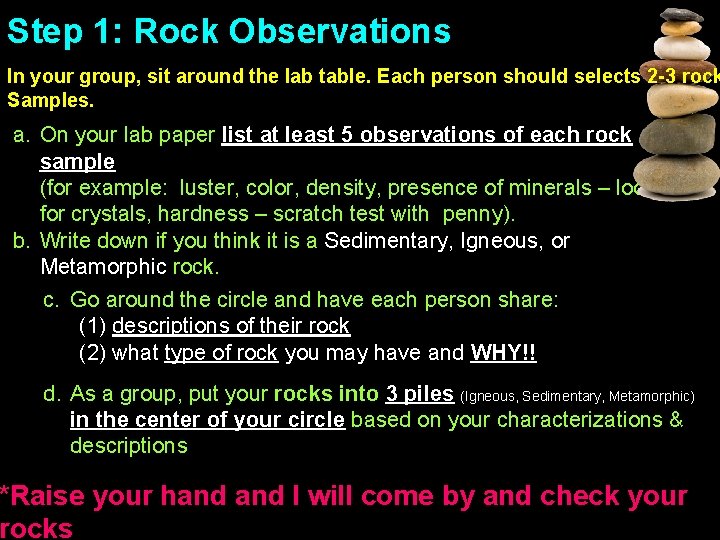
Step 1: Rock Observations In your group, sit around the lab table. Each person should selects 2 -3 rock Samples. a. On your lab paper list at least 5 observations of each rock sample (for example: luster, color, density, presence of minerals – look for crystals, hardness – scratch test with penny). b. Write down if you think it is a Sedimentary, Igneous, or Metamorphic rock. c. Go around the circle and have each person share: (1) descriptions of their rock (2) what type of rock you may have and WHY!! d. As a group, put your rocks into 3 piles (Igneous, Sedimentary, Metamorphic) in the center of your circle based on your characterizations & descriptions *Raise your hand I will come by and check your rocks
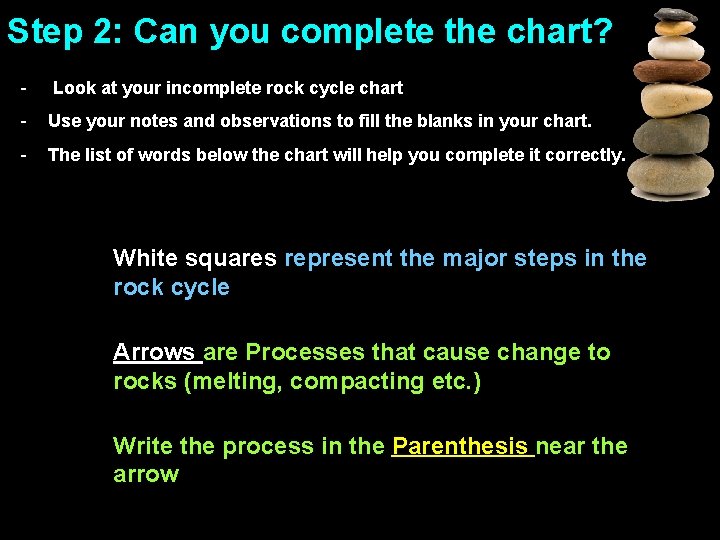
Step 2: Can you complete the chart? - Look at your incomplete rock cycle chart - Use your notes and observations to fill the blanks in your chart. - The list of words below the chart will help you complete it correctly. s sq re a u White squares represent the major steps in the rock cycle sq u s e r a Arrows are Processes that cause change to rocks (melting, compacting etc. ) Write the process in the Parenthesis near the arrow
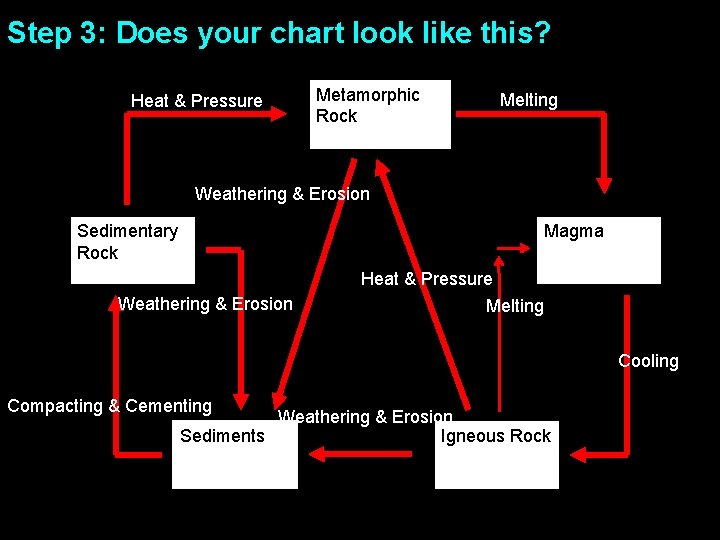
Step 3: Does your chart look like this? Heat & Pressure Metamorphic Rock Melting Weathering & Erosion Sedimentary Rock Magma Heat & Pressure Weathering & Erosion Melting Cooling Compacting & Cementing Weathering & Erosion Sediments Igneous Rock
Post-Lesson Discussion
Discussion Questions 1. What was the easiest part of constructing your rock cycle? What difficulties did you have? 2. Did the other group’s Rock Cycle look like yours? What was the same or different? 3. There is no rock cycle on the Moon. Why might rocks be ‘recycled’ on Earth and not on the Moon? 4. How might you tell apart an Igneous extrusive rock from an Igneous intrusive rock? 5. What type of rock forms deep in the Earth due to intense heat and pressure (but does not melt)