
A Revolution in Transportation A Revolution in Transportation



- Slides: 44
A Revolution in Transportation
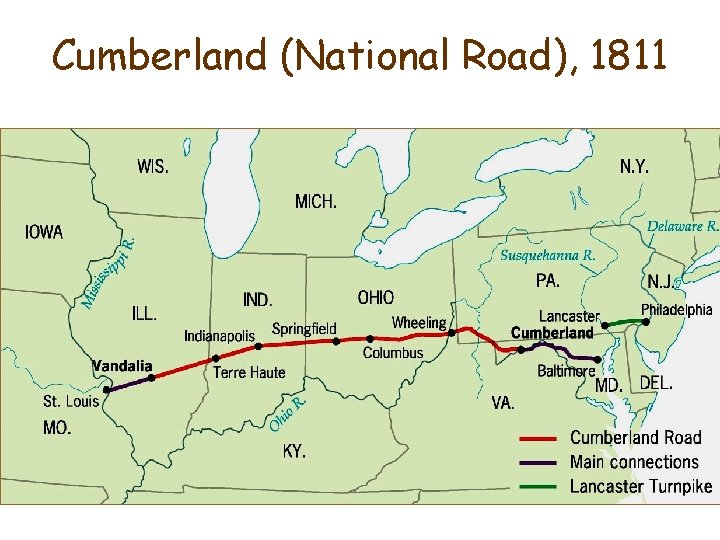
A Revolution in Transportation n In 1816, Henry Clay’s American System initiated federally funded “internal improvements” –The National Road became the 1 st federal transportation project –Thousands of private turnpikes were built by entrepreneurs –Roads were useful but they did not meet the demand for lowcost, over-land transportation
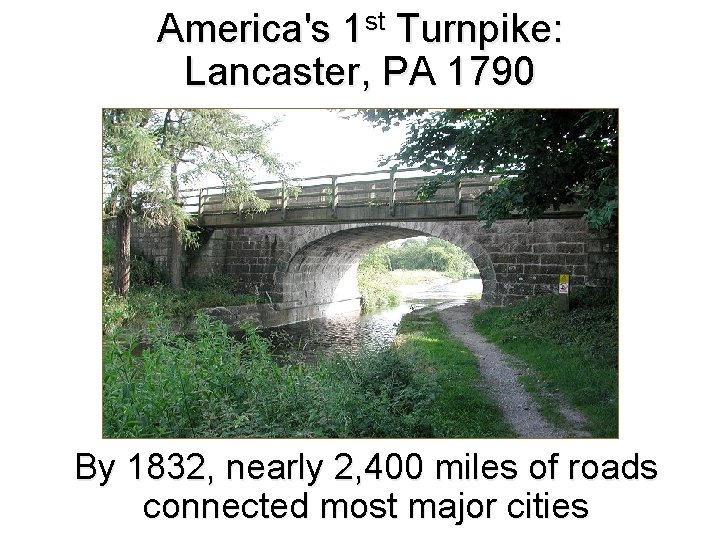
America's 1 st Turnpike: Lancaster, PA 1790 By 1832, nearly 2, 400 miles of roads connected most major cities
Cumberland (National Road), 1811
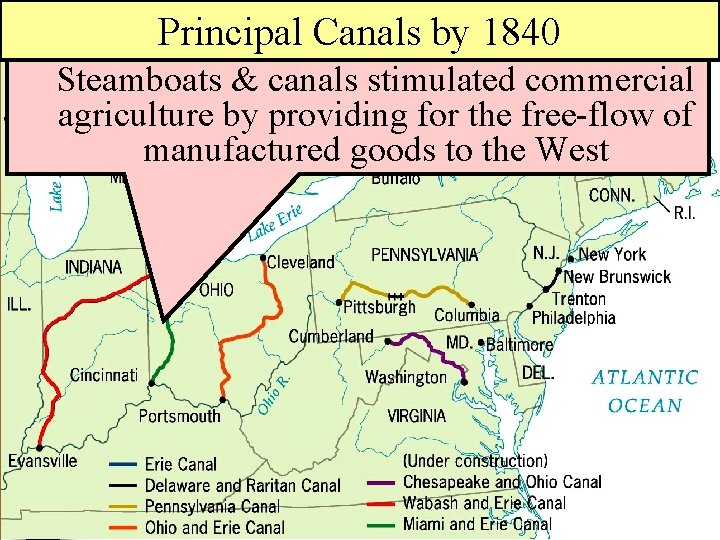
Principal Canals by 1840 Steamboats & canals stimulated commercial agriculture by providing for the free-flow of manufactured goods to the West
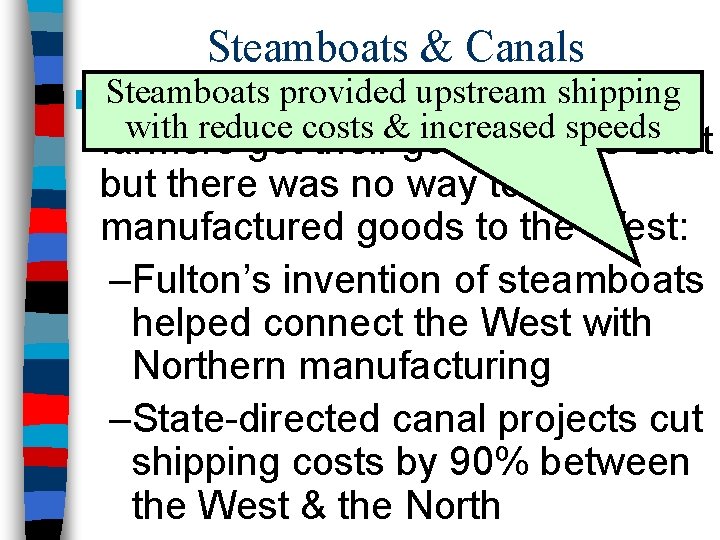
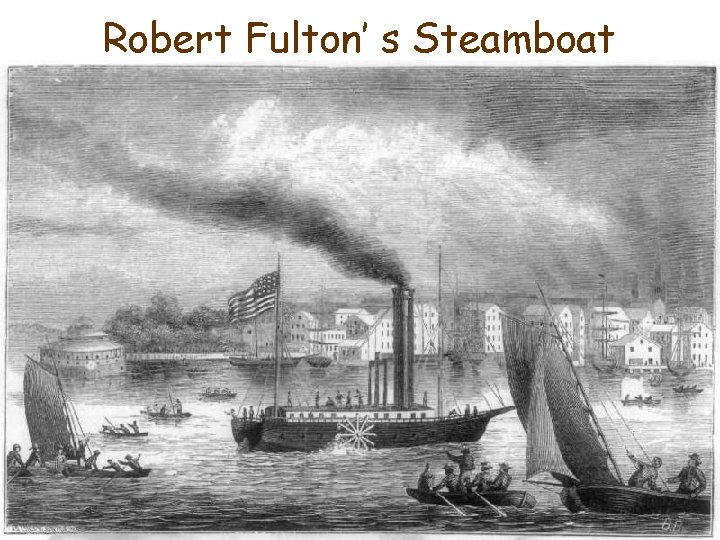
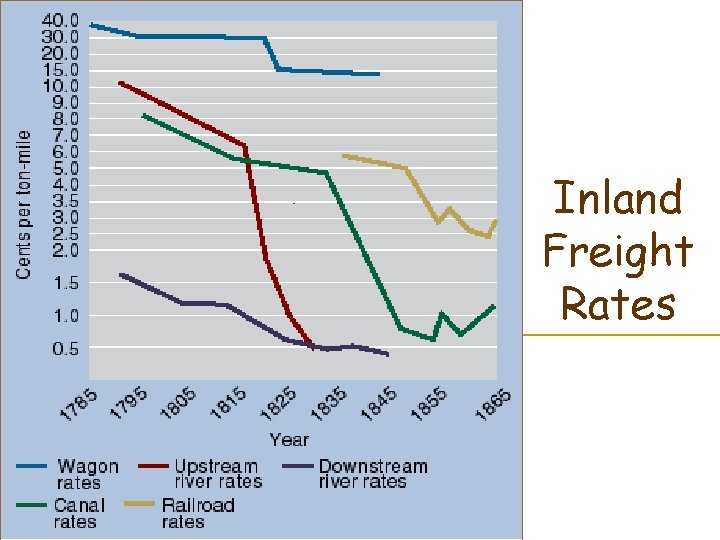
Steamboats & Canals Steamboats provided n Mississippi & Ohioupstream Rivers shipping helped with reduce costs & increased speeds farmers get their goods to the East but there was no way to get manufactured goods to the West: –Fulton’s invention of steamboats helped connect the West with Northern manufacturing –State-directed canal projects cut shipping costs by 90% between the West & the North
Robert Fulton’ s Steamboat The Clermont
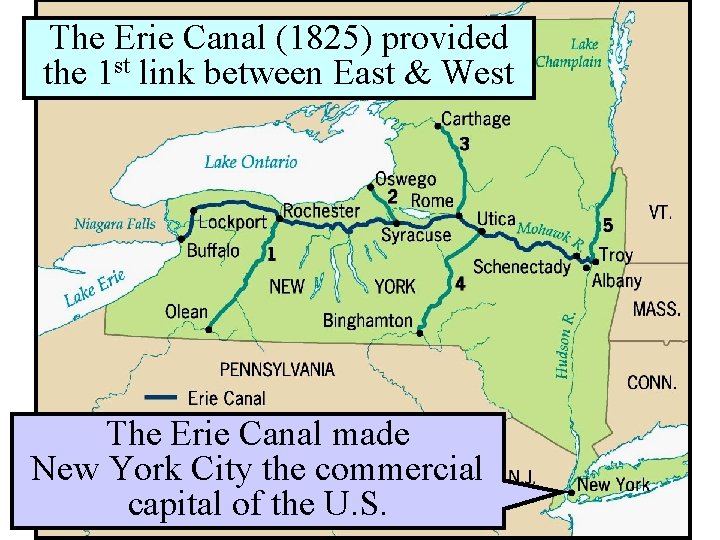
The Erie Canal (1825) provided the 1 st link between East & West The Erie Canal made New York City the commercial capital of the U. S.
Inland Freight Rates
n From The Railroad 1840 to 1860, the greatest new transportation advance was the expansion of railroads –In 1840 s, railroads began to challenge canals’ dominance –Stimulated industrial & commercial agricultural growth –Led to new forms of finance, such as “preferred stock” & state & local gov’t subsidies
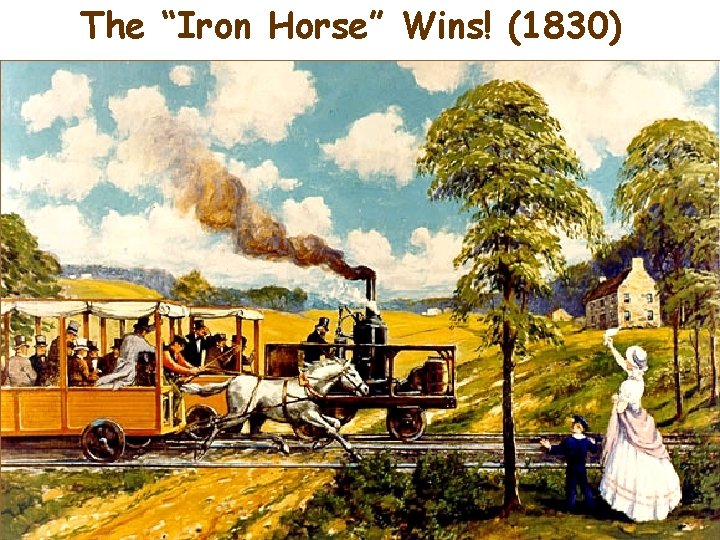
The “Iron Horse” Wins! (1830)
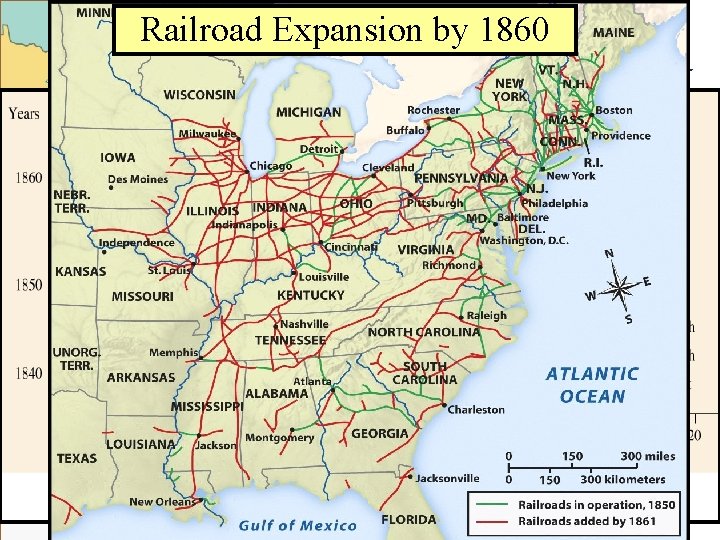
Railroad Expansion by 1860 The Expansion of Railroads by Railroad Region Revolution, 1850 s n Immigrant labor built railroads in the North n Slave labor built railroads in the South
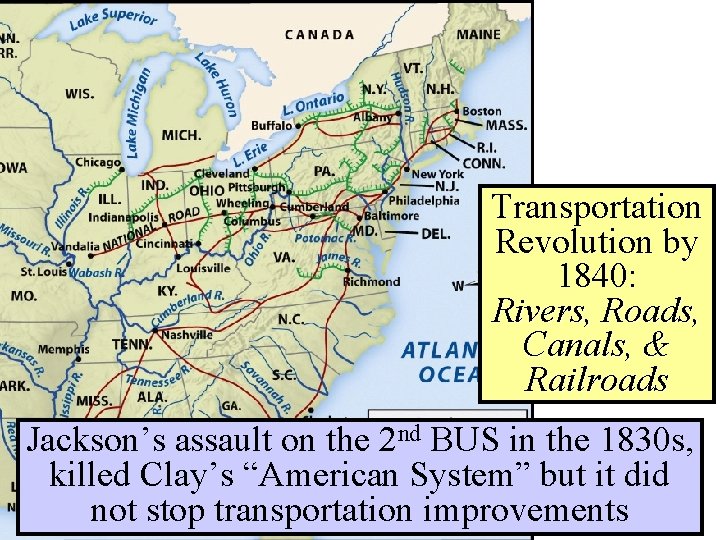
Transportation Revolution by 1840: Rivers, Roads, Canals, & Railroads Jackson’s assault on the 2 nd BUS in the 1830 s, killed Clay’s “American System” but it did not stop transportation improvements
The Market Revolution
The Industrial Revolution Booms n In the 1840 s, American industrial production became more efficient: –Due to numerous industrial innovations, growth of factories, & a demand for goods from farmers in West & South –Led to an increased division of labor & urbanization in the North & an increase in staple-crop commercial farming
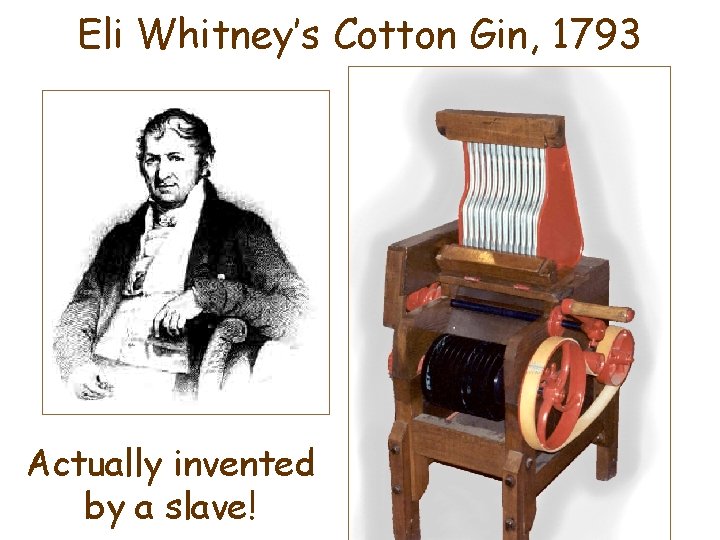
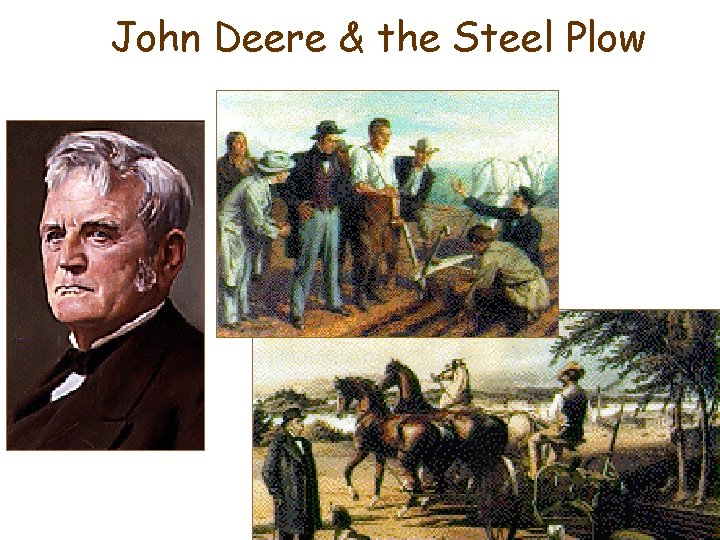
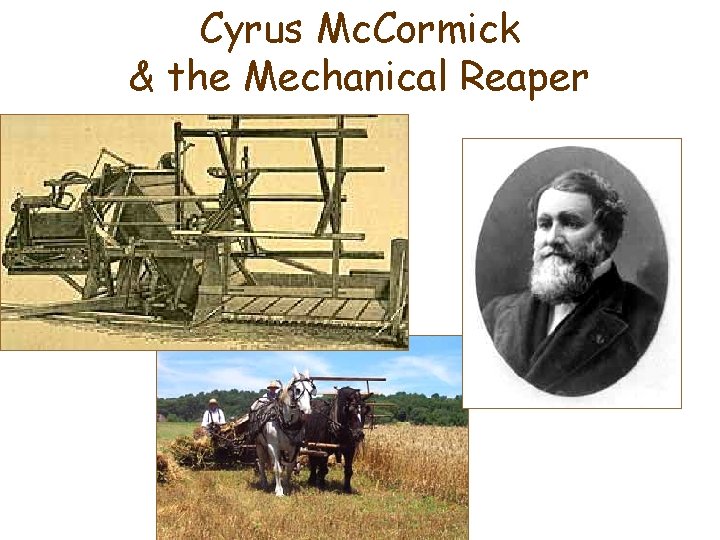
Rise of Commercial Agriculture Ohio, NY, antebellum & PA specialized in wheat while in n The era saw a boom the South grew tobacco, rice, & cotton specialized, staple-crop, “commercial” farming due to: –Lower transportation costs –New agricultural innovations like Mc. Cormick’s mechanical reaper, Eli Whitney’s cotton gin, the steel plow, thresher, & cultivator –The use of long-distance marketing & credit to sell crops
Eli Whitney’s Cotton Gin, 1793 Actually invented by a slave!
John Deere & the Steel Plow
Cyrus Mc. Cormick & the Mechanical Reaper
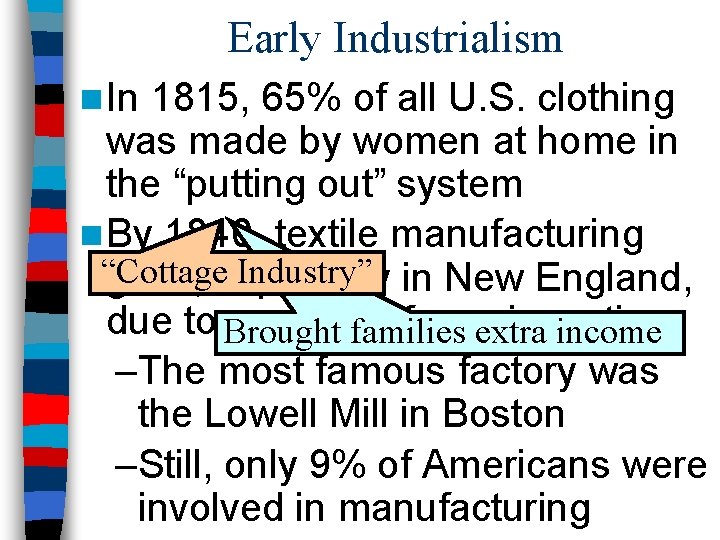
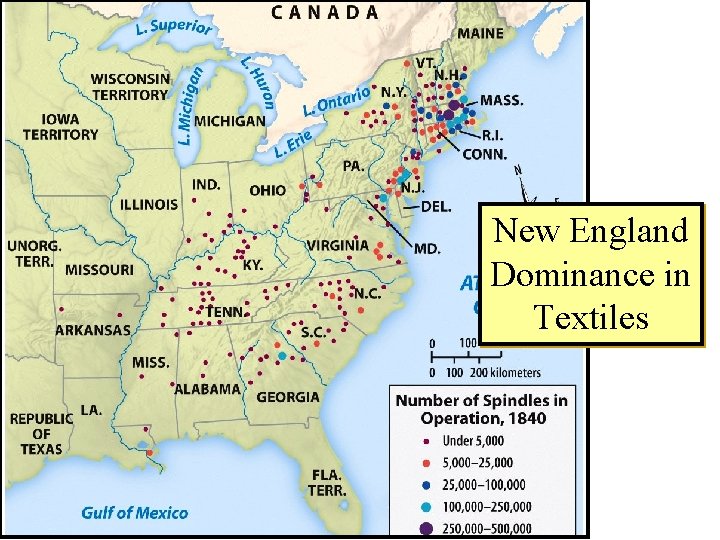
Early Industrialism n In 1815, 65% of all U. S. clothing was made by women at home in the “putting out” system n By 1840, textile manufacturing “Cottage Industry” in New England, grew, especially due to Brought a seriesfamilies of new inventions extra income –The most famous factory was the Lowell Mill in Boston –Still, only 9% of Americans were involved in manufacturing
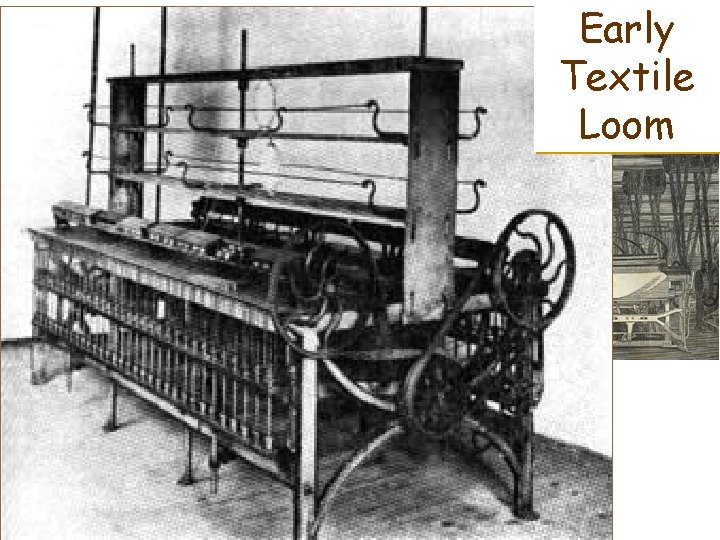
Early Samuel Slater Textile (“Father of the Factory System”) Loom
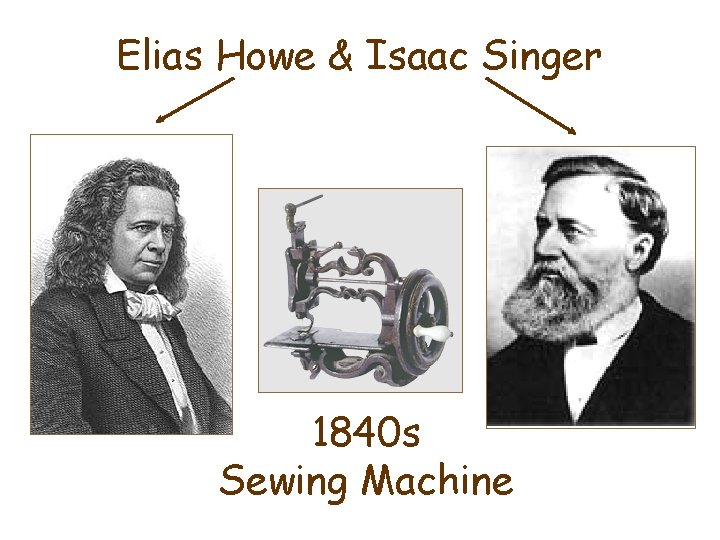
Elias Howe & Isaac Singer 1840 s Sewing Machine
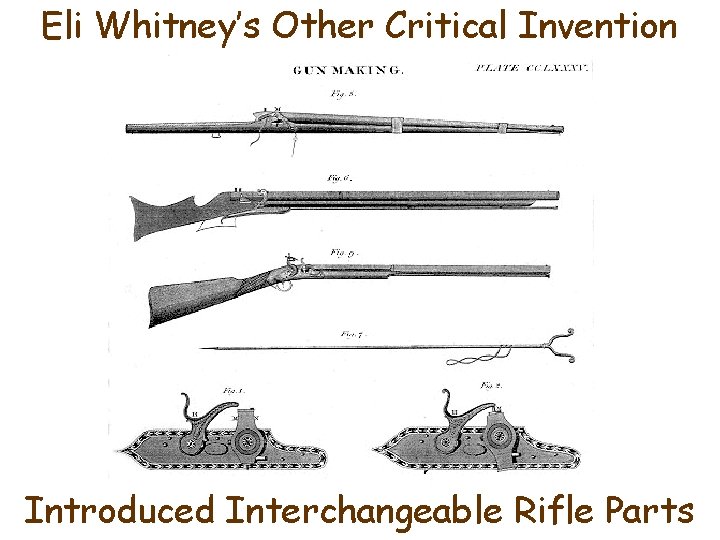
Eli Whitney’s Other Critical Invention Introduced Interchangeable Rifle Parts
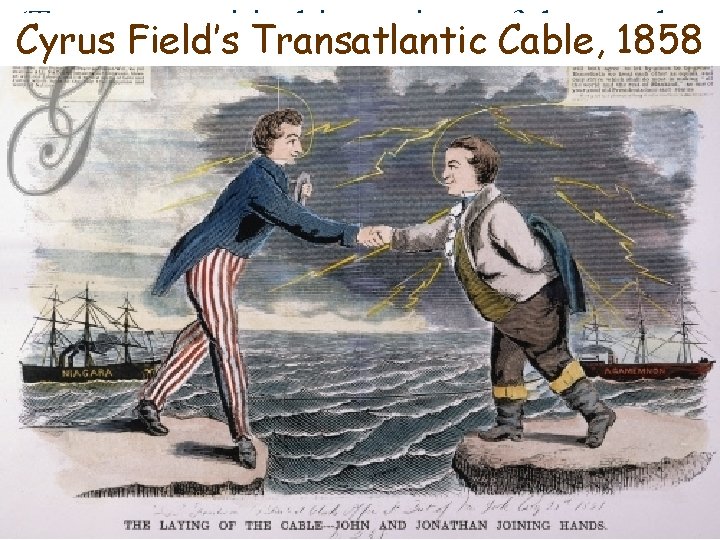
(Two more critical inventions of the era that Cyrus Field’s Transatlantic Cable, 1858 have little to do with the Market Revolution) Samuel Morse’s Telegraph in 1840
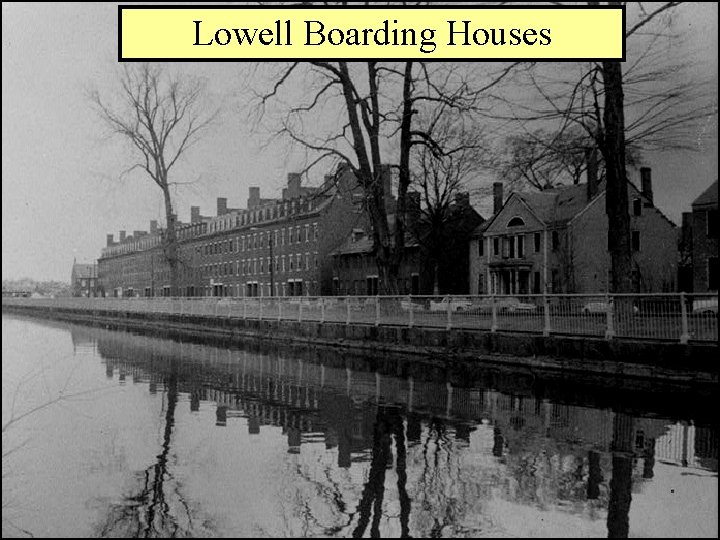
Lowell Boarding Houses The Lowell System: The 1 st Dual-Purpose Textile Plant Francis Cabot Lowell’s town - 1814
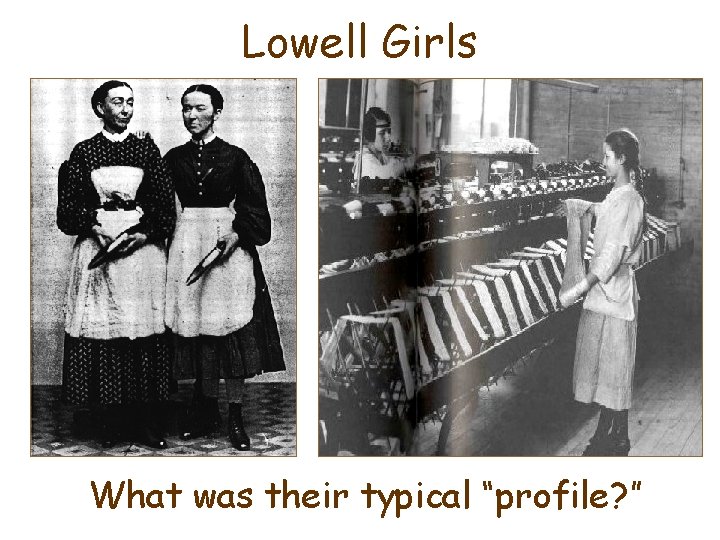
Lowell Girls What was their typical “profile? ”
New England Dominance in Textiles
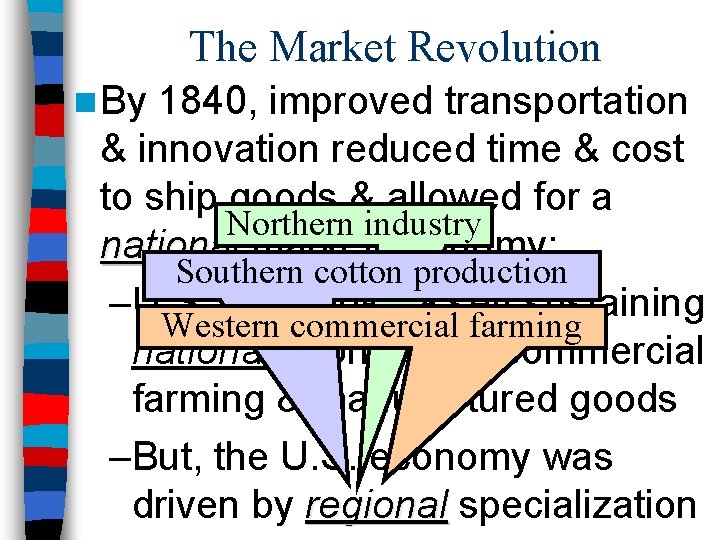
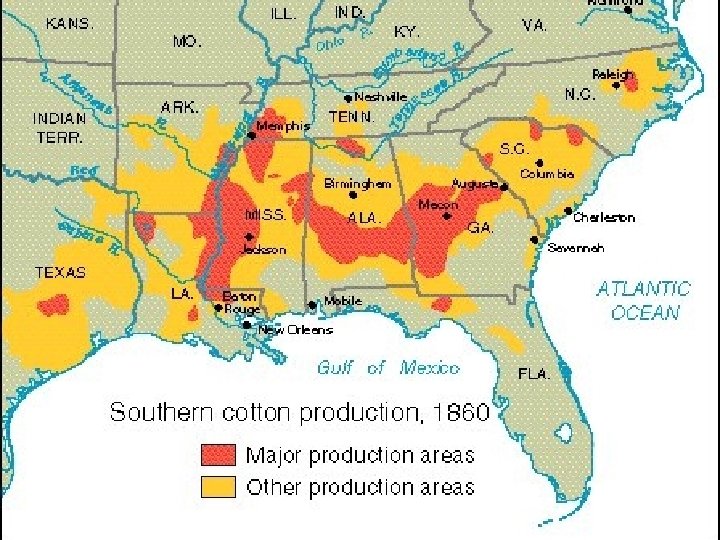
The Market Revolution n By 1840, improved transportation & innovation reduced time & cost to ship goods & allowed for a Northern industry national market economy: Southern cotton production –U. S. developed a self-sustaining Western commercial farming national economy of commercial farming & manufactured goods –But, the U. S. economy was driven by regional specialization
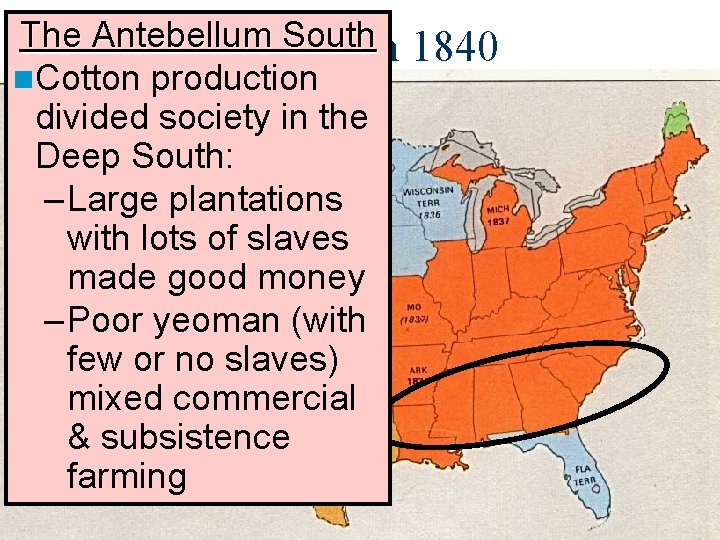
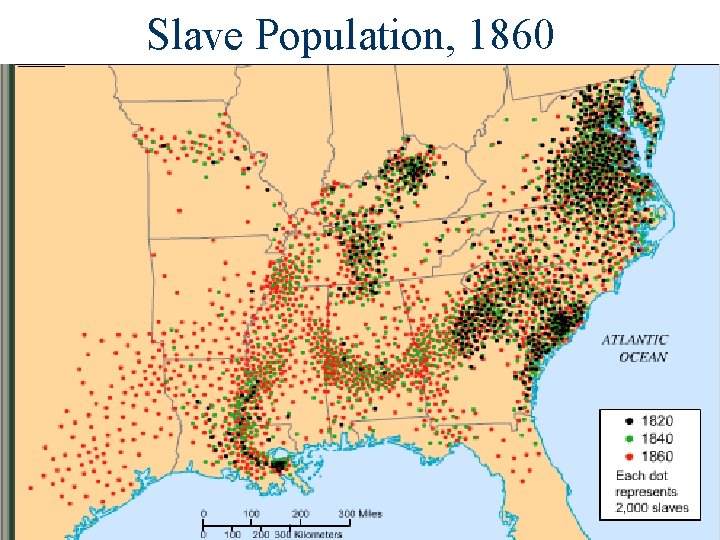
The Antebellum South America in n. Cotton production divided society in the Deep South: – Large plantations with lots of slaves made good money – Poor yeoman (with few or no slaves) mixed commercial & subsistence farming 1840
Slave Population, 1860 1820 1840
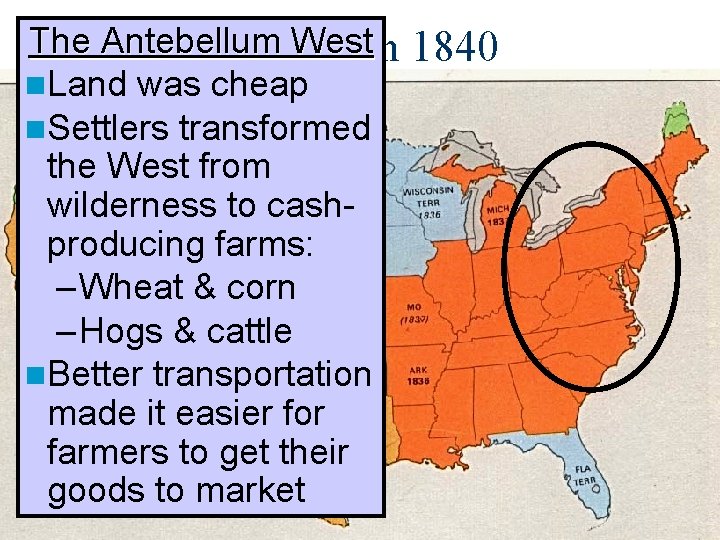
The Antebellum Westin America n. Land was cheap n. Settlers transformed the West from wilderness to cashproducing farms: – Wheat & corn – Hogs & cattle n. Better transportation made it easier for farmers to get their goods to market 1840
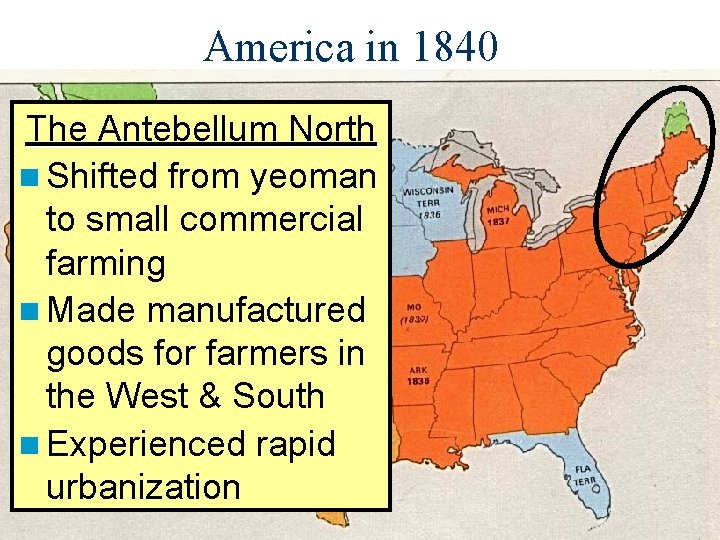
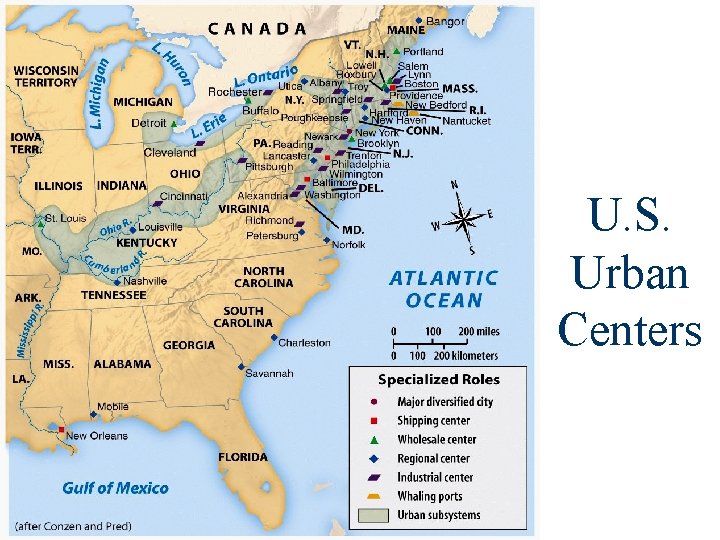
America in 1840 The Antebellum North n Shifted from yeoman to small commercial farming n Made manufactured goods for farmers in the West & South n Experienced rapid urbanization
U. S. Urban Centers
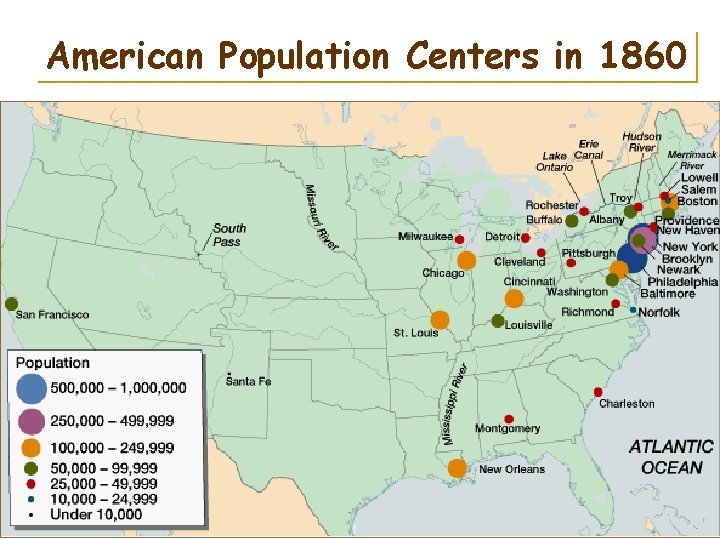
American Population Centers in in 1820 1860
The Market Revolution n New innovations made work easier & improved American industry & agriculture n However, the U. S. was not an “industrial society” in the 1840 s – 60% of the population were still involved in farming –Most production was still done traditionally in small workshops
Mass Immigration Begins
Mass Immigration Begins n From 1840 & 1860, 4 million Irish & Germans immigrated to America n Motivations for immigration: –Most came for higher wages in northern industrial jobs –The potato blight from 18451854 brought 1. 5 million Irish immigrants –Low fares on trans-Atlantic ships made access easier
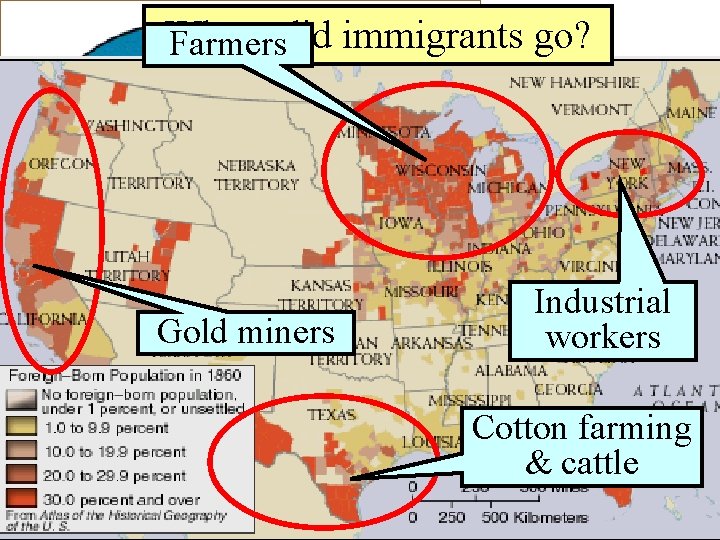
Where Farmersdid immigrants go? Immigration to the US 1820 -1860 Gold miners Industrial workers Cotton farming & cattle
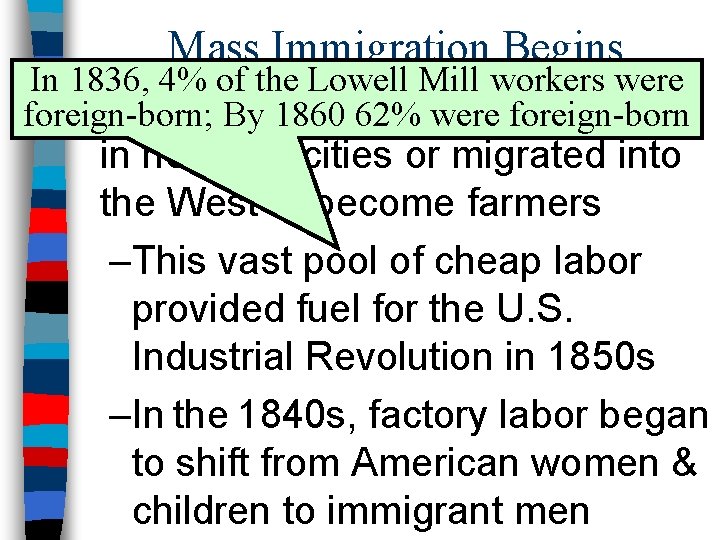
Mass Immigration Begins In 1836, 4% of the Lowell Mill workers were n Immigrants filled low-paying jobs foreign-born; By 1860 62% were foreign-born in northern cities or migrated into the West to become farmers –This vast pool of cheap labor provided fuel for the U. S. Industrial Revolution in 1850 s –In the 1840 s, factory labor began to shift from American women & children to immigrant men
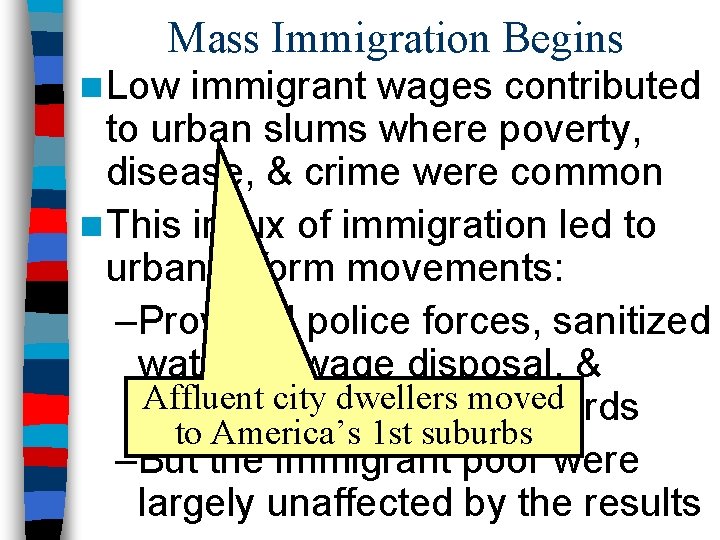
Mass Immigration Begins n Low immigrant wages contributed to urban slums where poverty, disease, & crime were common n This influx of immigration led to urban reform movements: –Provided police forces, sanitized water, sewage disposal, & Affluent cityhousing dwellers standards moved improved to America’s 1 st suburbs –But the immigrant poor were largely unaffected by the results
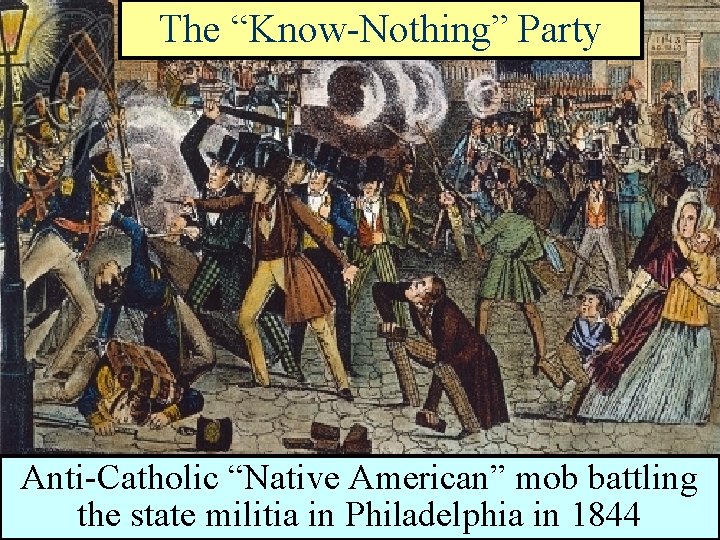
Anti-Immigrant Reaction n Immigrant groups were met with prejudice (esp the Irish Catholics) & tension in 1840 s & 1850 s n Nativism emerged among American-born citizens: –Suspicion of the new ethnic neighborhoods & alien cultures –Led to bloody anti-Catholic riots, charges of despotism, & anti. Irish propaganda
The “Know-Nothing” Party Nativist propaganda targeting Anti-Catholic “Native American” mob battling the state militia Philadelphia in 1844 German &in. Irish immigrants
Conclusions n In the 1830 s & 1840 s, the USA was growing more democratic & economically self-sufficient: –Innovation & transportation improvements connected regional specialization into a nation market economy –This economic growth will stimulate a sense of “manifest destiny” into the West & sectional divisions between North & South