
A review of levelset methods for twophase flows

- Slides: 22
A review of level-set methods for two-phase flows Arthur Kerst 1
Overview Introduction Goal of project Overview of methods Conclusion • • Introduction Goal of project Overview of methods Conclusion 2
Introduction Goal of project Overview of methods Conclusion • Two-phase flow • Fundamental tools in many industrial applications and natural processes • Far more challenging than single phase flow • Volume conservation and accurately modelling the interface 3
Goal of project Introduction Goal of project Overview of methods Goal: develop a method using a continuous Galerkin approach for solving the level-set equation on triangular control volumes Conclusion • • conserve volume exactly continuous description of the interface track interface accurately able to handle unstructured triangular grids 4
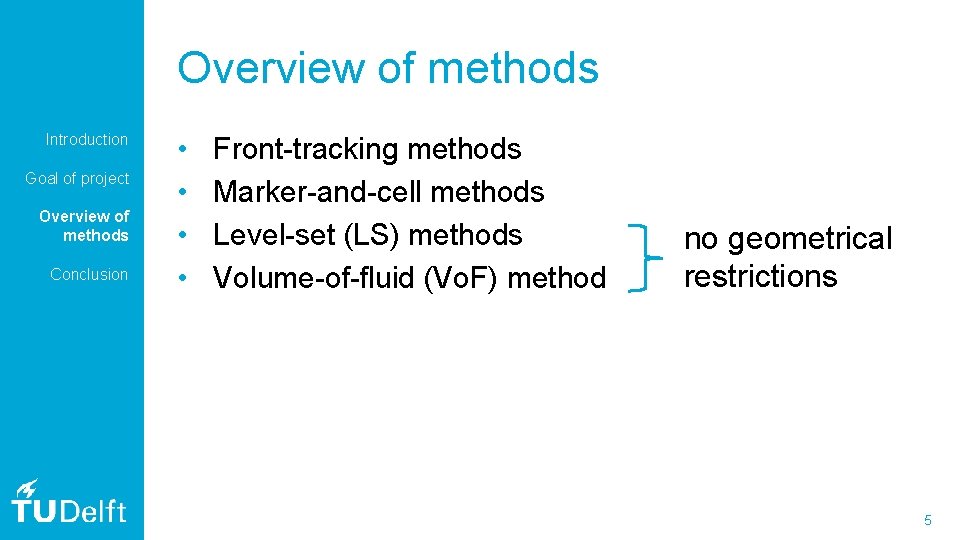
Overview of methods Introduction Goal of project Overview of methods Conclusion • • Front-tracking methods Marker-and-cell methods Level-set (LS) methods Volume-of-fluid (Vo. F) method no geometrical restrictions 5
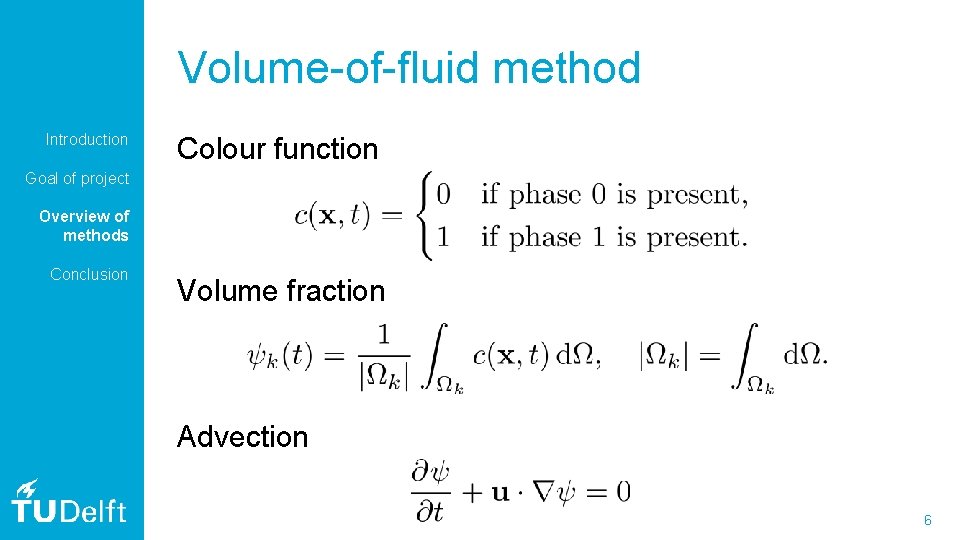
Volume-of-fluid method Introduction Colour function Goal of project Overview of methods Conclusion Volume fraction Advection 6
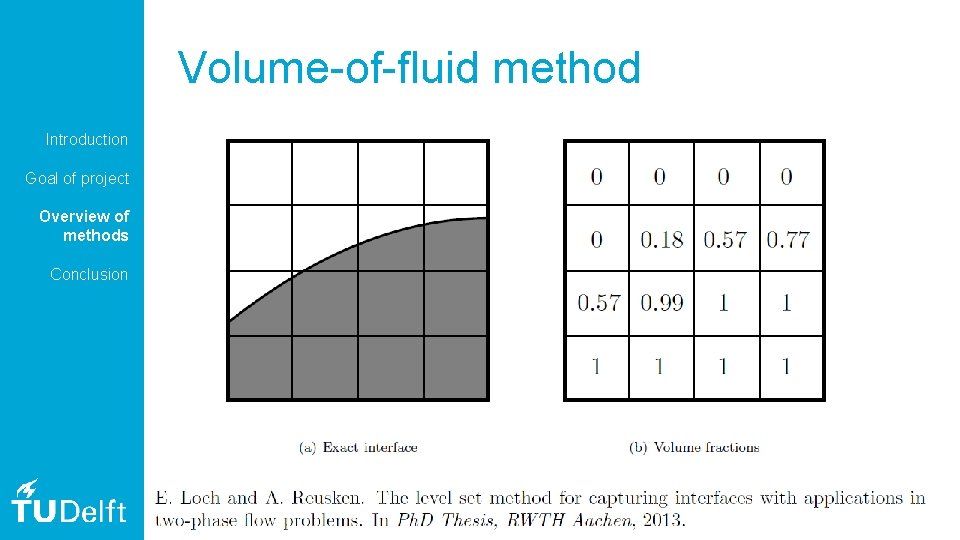
Volume-of-fluid method Introduction Goal of project Overview of methods Conclusion 7
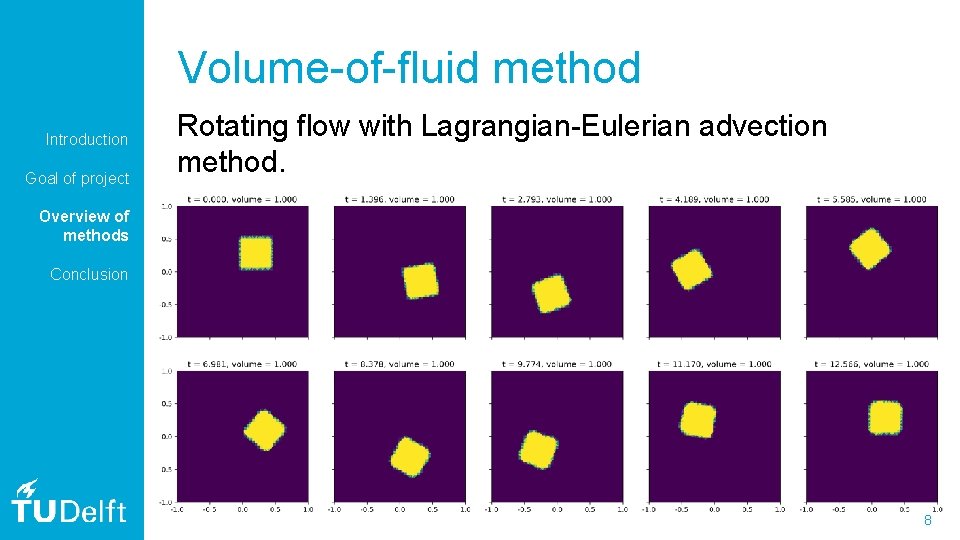
Volume-of-fluid method Introduction Goal of project Rotating flow with Lagrangian-Eulerian advection method. Overview of methods Conclusion 8
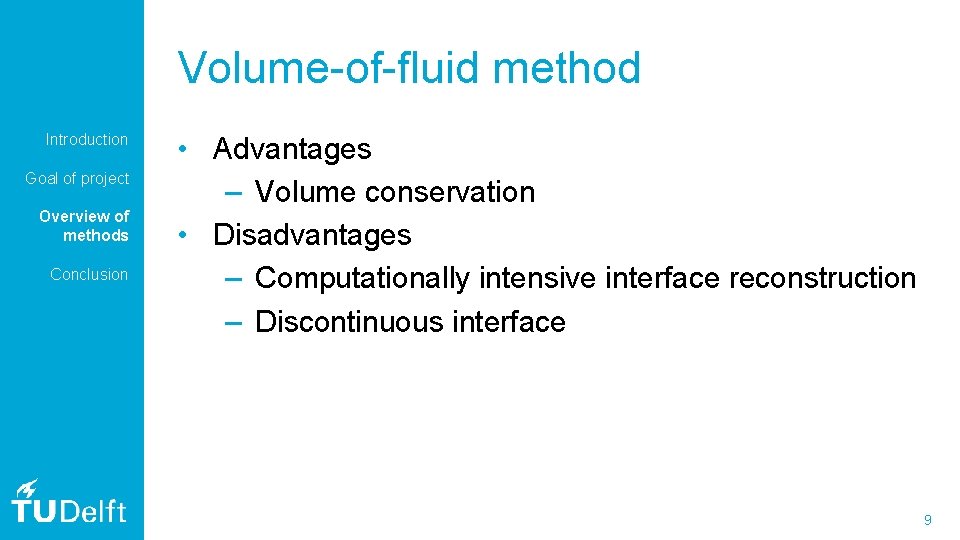
Volume-of-fluid method Introduction Goal of project Overview of methods Conclusion • Advantages – Volume conservation • Disadvantages – Computationally intensive interface reconstruction – Discontinuous interface 9
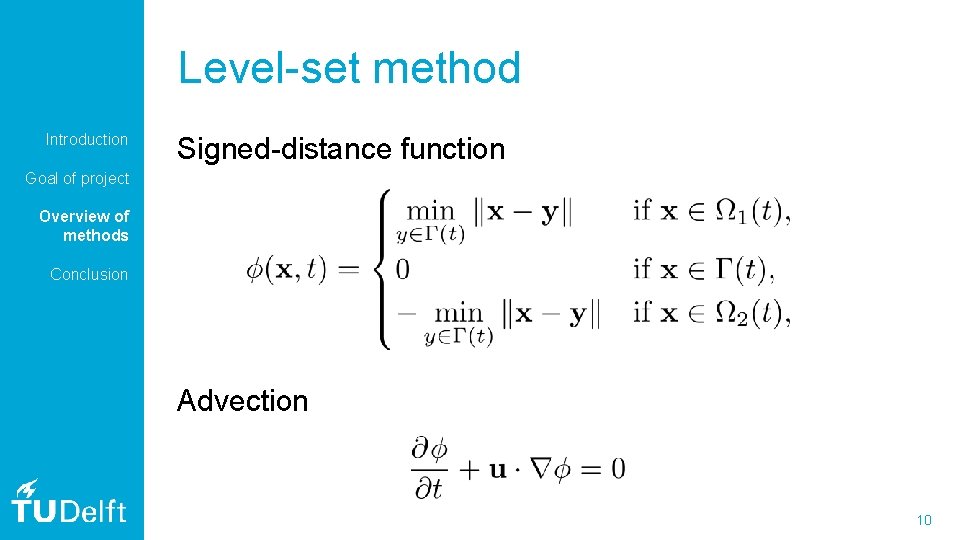
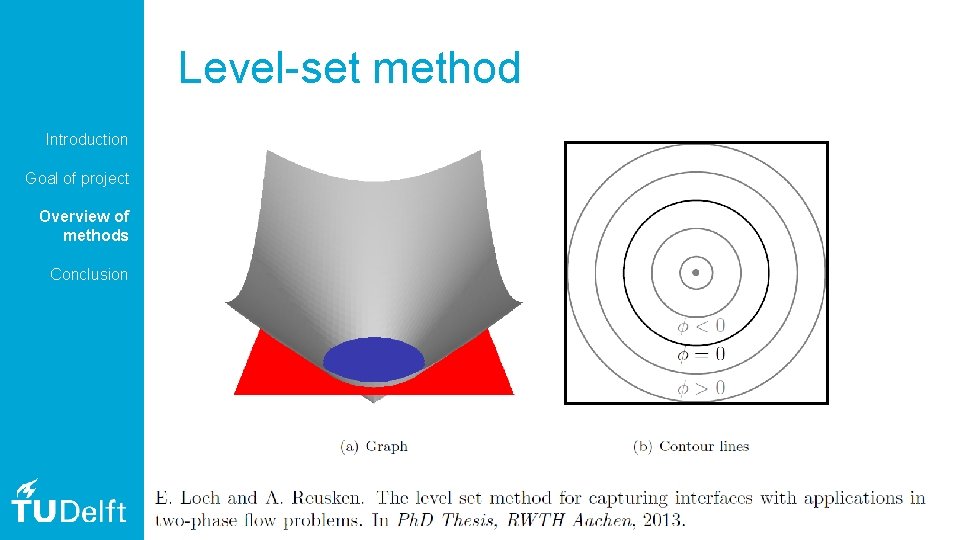
Level-set method Introduction Signed-distance function Goal of project Overview of methods Conclusion Advection 10
Level-set method Introduction Goal of project Overview of methods Conclusion 11
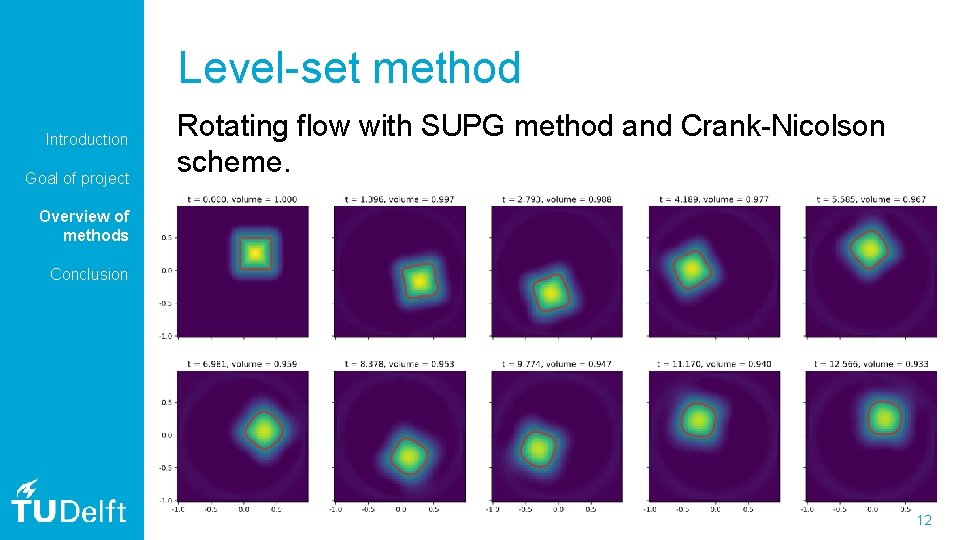
Level-set method Introduction Goal of project Rotating flow with SUPG method and Crank-Nicolson scheme. Overview of methods Conclusion 12
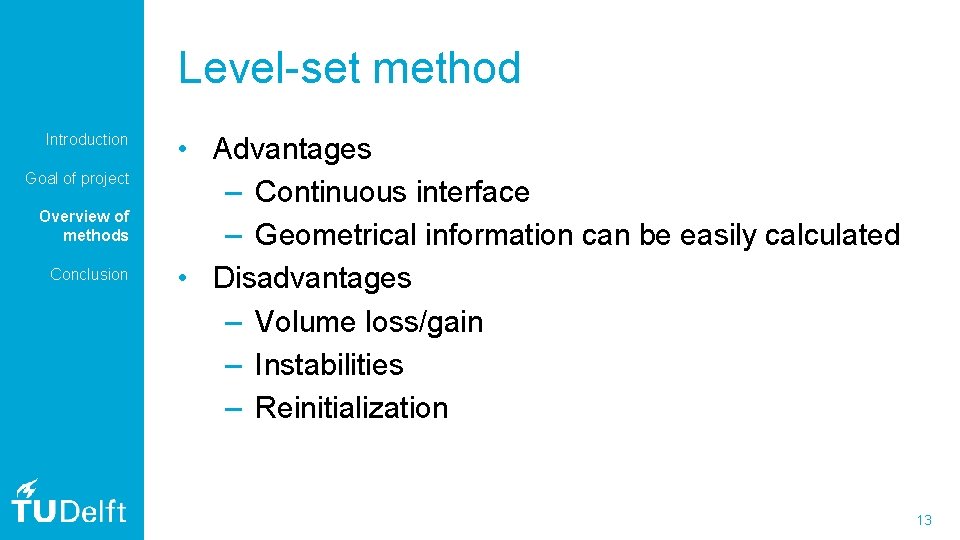
Level-set method Introduction Goal of project Overview of methods Conclusion • Advantages – Continuous interface – Geometrical information can be easily calculated • Disadvantages – Volume loss/gain – Instabilities – Reinitialization 13
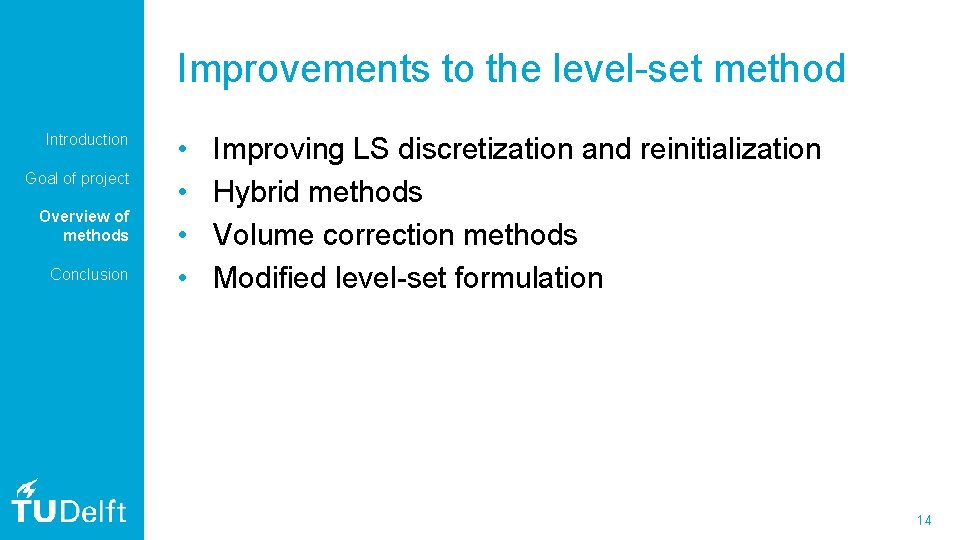
Improvements to the level-set method Introduction Goal of project Overview of methods Conclusion • • Improving LS discretization and reinitialization Hybrid methods Volume correction methods Modified level-set formulation 14
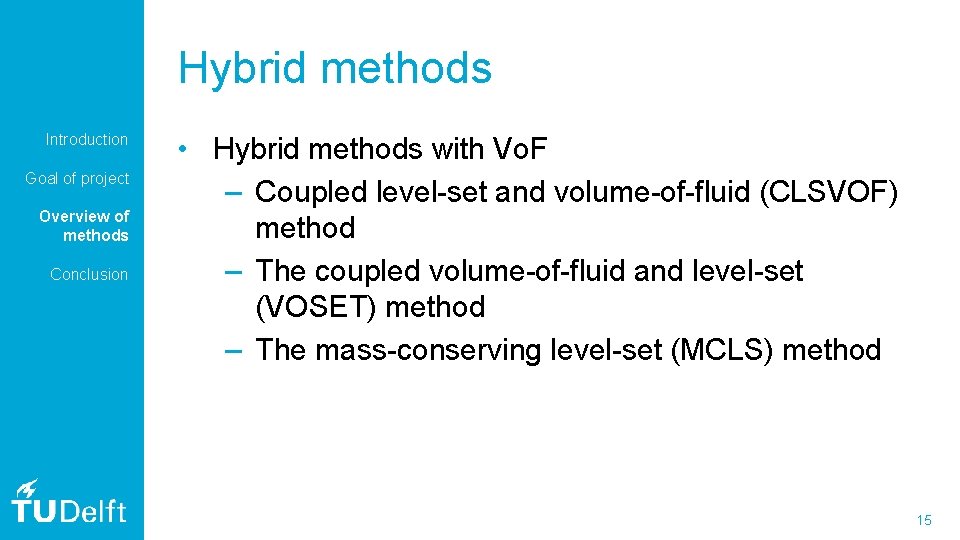
Hybrid methods Introduction Goal of project Overview of methods Conclusion • Hybrid methods with Vo. F – Coupled level-set and volume-of-fluid (CLSVOF) method – The coupled volume-of-fluid and level-set (VOSET) method – The mass-conserving level-set (MCLS) method 15
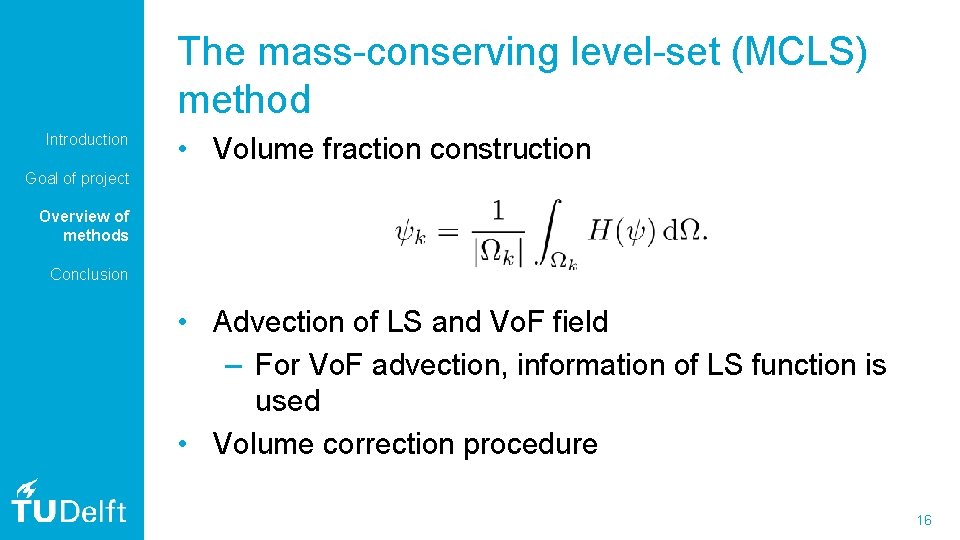
The mass-conserving level-set (MCLS) method Introduction • Volume fraction construction Goal of project Overview of methods Conclusion • Advection of LS and Vo. F field – For Vo. F advection, information of LS function is used • Volume correction procedure 16
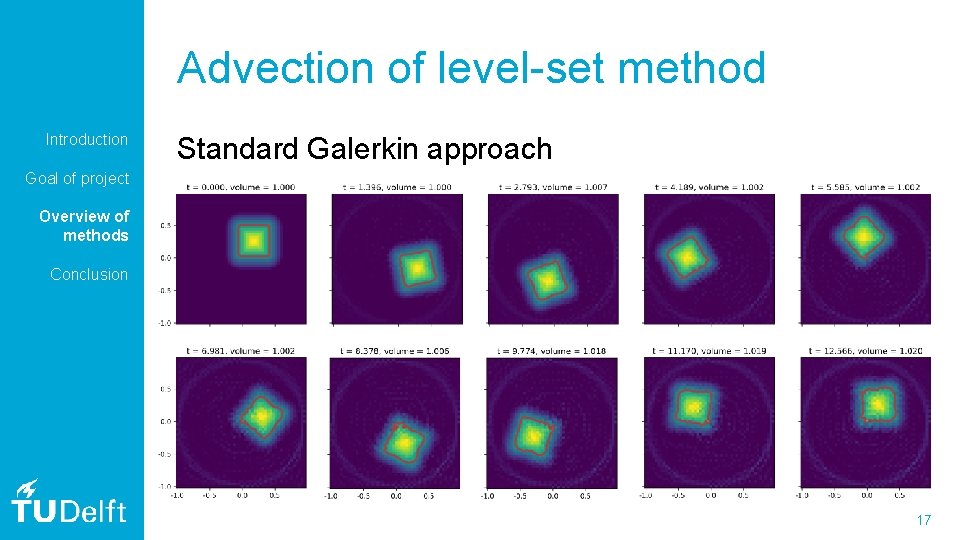
Advection of level-set method Introduction Standard Galerkin approach Goal of project Overview of methods Conclusion 17
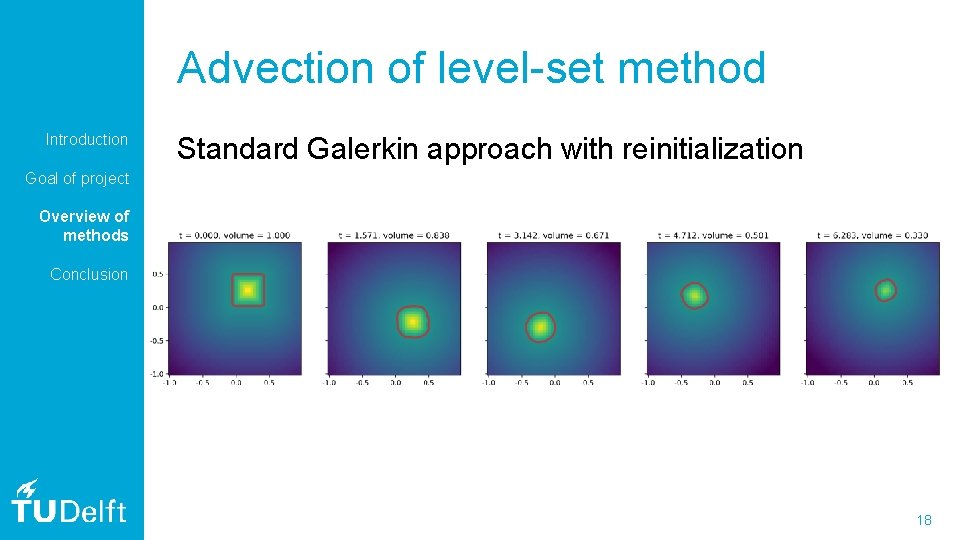
Advection of level-set method Introduction Standard Galerkin approach with reinitialization Goal of project Overview of methods Conclusion 18
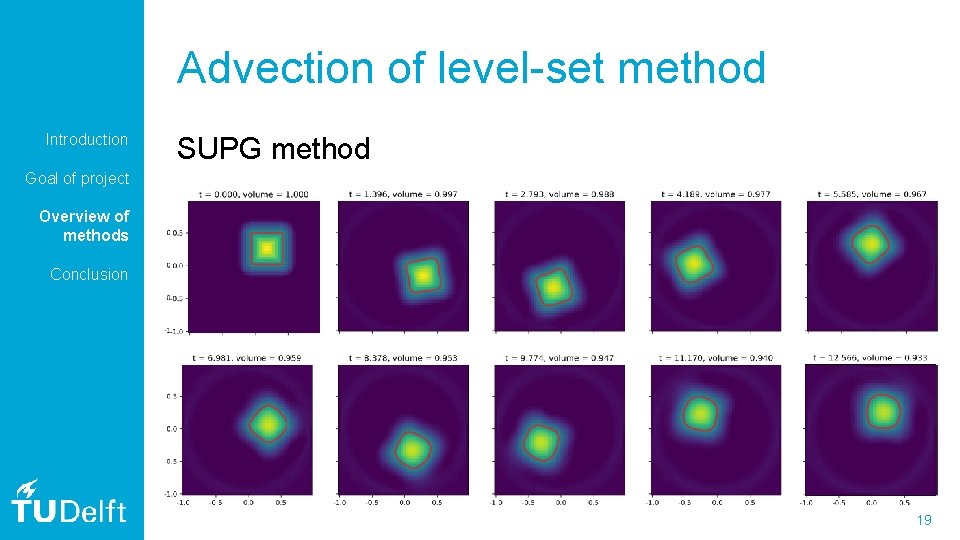
Advection of level-set method Introduction SUPG method Goal of project Overview of methods Conclusion 19
Conclusion Introduction Goal of project Overview of methods Conclusion • LS method gives continuous description of interface, but has no volume conservation • Vo. F is volume-conserving, but interface is discontinuous and interface reconstruction computationally intensive. • MCLS is a hybrid level-set method, which uses volume fractions for volume conservation, without the expensive interface reconstruction step. • A stabilization method is needed for LS advection. 20
Further research Introduction Goal of project Overview of methods Conclusion • Develop a hybrid method with LS and Vo. F similar to MCLS with a continuous FEM approach. – How well does SUPG combines with Vo. F? – Is SUPG sufficiently accurate (for maintaining shape)? – What is necessary to successfully and efficiently implement this? • An appropriate volume correction procedure must be chosen or developed. • Is reinitialization necessary? • Which temporal scheme is best suited for LS advection? 21
End of presentation 22