
A Review of HCI Usability Standards and Assessment
A Review of HCI Usability Standards and Assessment Tools CS 5760 – Spring, 2019 Anne Linja Topic Assignment 3 - Presentation 3/13/2019
"It's not what you know, but what you didn't know before you knew what you now know. Once you know, you'll never again know what it felt like not to know what you now know. "

What is HCI Usability? ISO 9241 definition: The effectiveness, efficiency and satisfaction with which specified users achieve specified goals in particular environments. effectiveness: the accuracy and completeness with which specified users can achieve specified goals in particular environments.

What is HCI Usability? The system should: be easy, efficient, useful, and productive have clear navigation and objective accomplishment focus on all types of users and social contexts the design should aid the human-computer interaction have reduced maintenance and upgrade/update costs

What is HCI Usability? The system should: (cont) have usefulness, HCI compatibility, reliability, performance, manageability, practical acceptability have few errors, and an easy, intuitive way to recover from any errors that are made Users should be able to know where they are in a process and be able to move forward or backward as necessary to fit their tasks and level of expertise be aesthetically pleasing

Why do we need to worry about HCI Usability? IMAGE SIZE EXAMPLE

Why do we need to worry about HCI Usability? How des the igne see r s t he sys tem :

Why do we need to worry about HCI Usability? d n e e h t e h s t e n i w g o : a e H b m i l l r i e w us em t s y s

Why do we need to worry about HCI Usability? s e e s r r e i s e u h t e h f i t m w e o t H s l y e s e d h o e th tal m tch t : a t n p e m e c m n’t n o c s e s o ’ r d e n g i s de
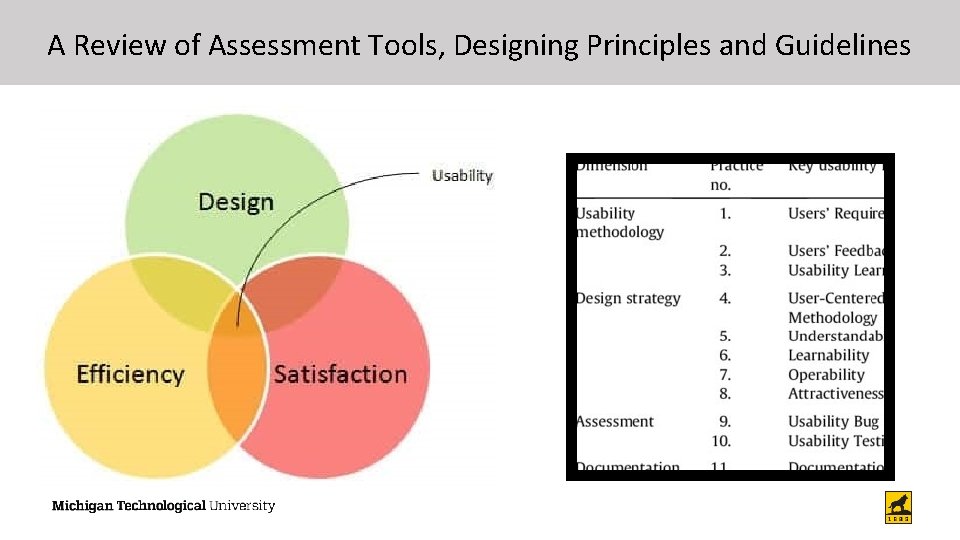
A Review of Assessment Tools, Designing Principles and Guidelines

System Usability Scale HALF PAGE IMAGE SIZE EXAMPLE • John Brooke • 1986 10 item questionnaire with five response options for respondents; from Strongly disagree to Strongly agree

Schneiderman’s Rules of Interface Design Reduce short-term memory load - 08 08 Support internal locus of control - 07 Permit easy reversal of actions - 06 Prevent errors - 05 01 01 - Strive for consistency 02 02 - Cater to universal usability 8 Golden Rules 07 06 05 03 04 03 - Offer informative feedback 04 - Design dialogs to yield
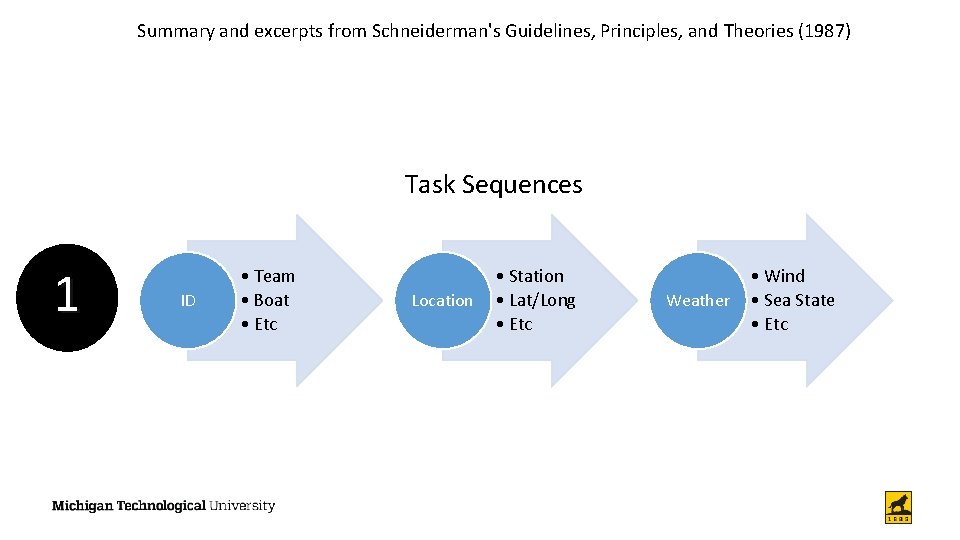
Summary and excerpts from Schneiderman's Guidelines, Principles, and Theories (1987) Task Sequences 1 ID • Team • Boat • Etc Location • Station • Lat/Long • Etc Weather • Wind • Sea State • Etc
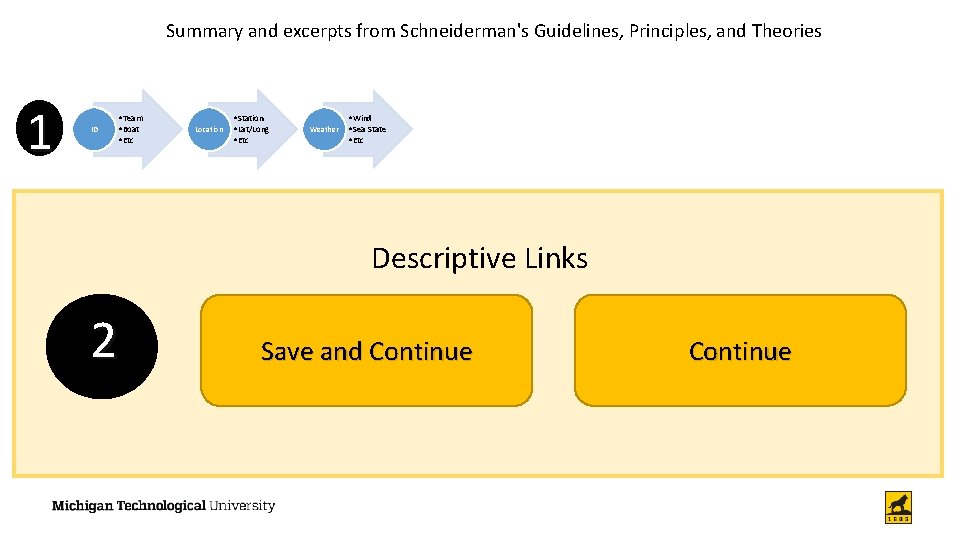
Summary and excerpts from Schneiderman's Guidelines, Principles, and Theories 1 ID • Team • Boat • Etc Location • Station • Lat/Long • Etc Weather • Wind • Sea State • Etc Descriptive Links 2 Save and Continue
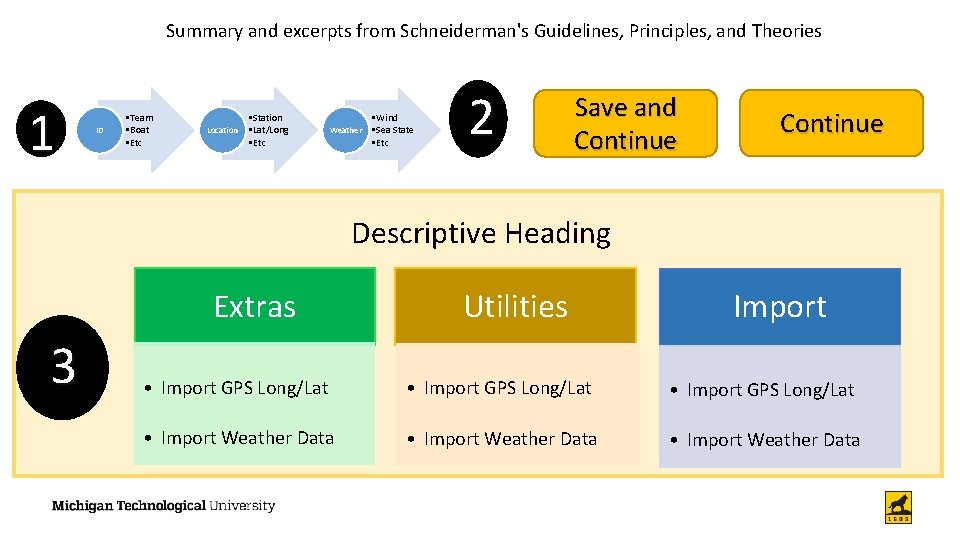
Summary and excerpts from Schneiderman's Guidelines, Principles, and Theories 1 ID • Team • Boat • Etc • Station Location • Lat/Long • Etc • Wind Weather • Sea State • Etc 2 Save and Continue Descriptive Heading Extras 3 Utilities Import • Import GPS Long/Lat • Import Weather Data
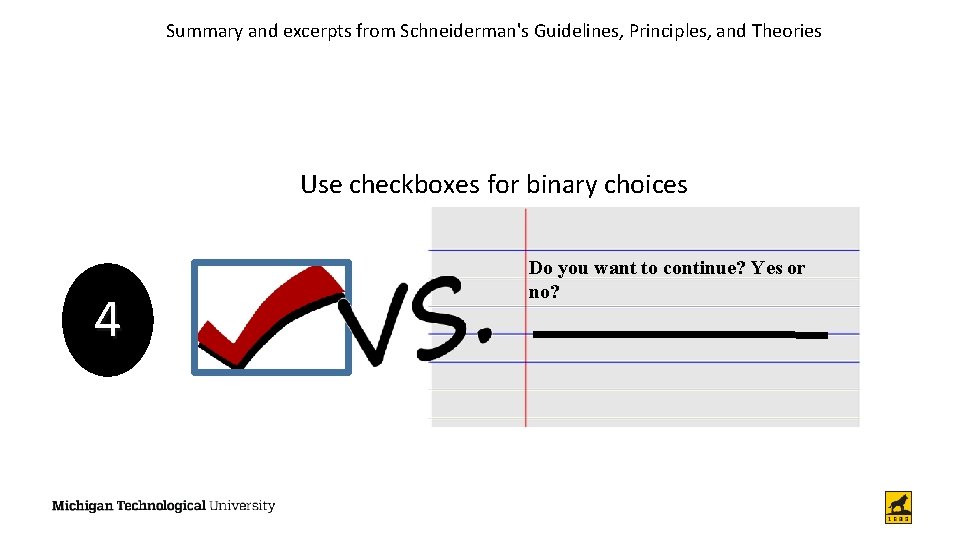
Summary and excerpts from Schneiderman's Guidelines, Principles, and Theories Use checkboxes for binary choices 4 Do you want to continue? Yes or no?
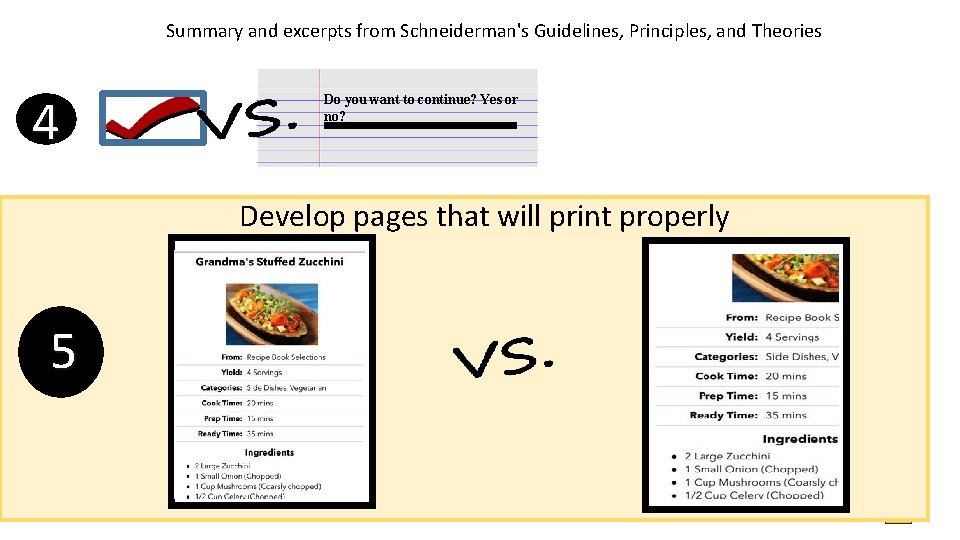
Summary and excerpts from Schneiderman's Guidelines, Principles, and Theories 4 Do you want to continue? Yes or no? Develop pages that will print properly 5
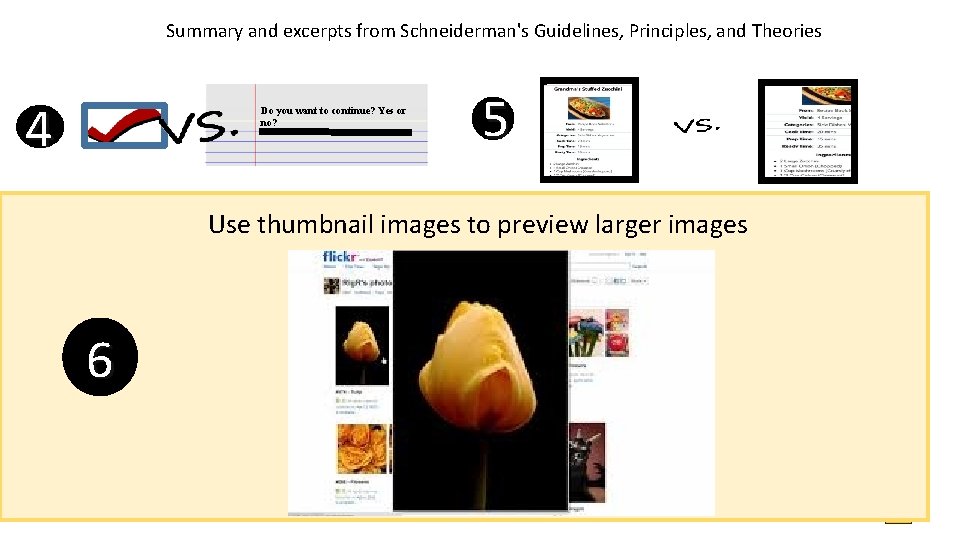
Summary and excerpts from Schneiderman's Guidelines, Principles, and Theories 4 Do you want to continue? Yes or no? 5 Use thumbnail images to preview larger images 6 3/13/2019 Title of document here
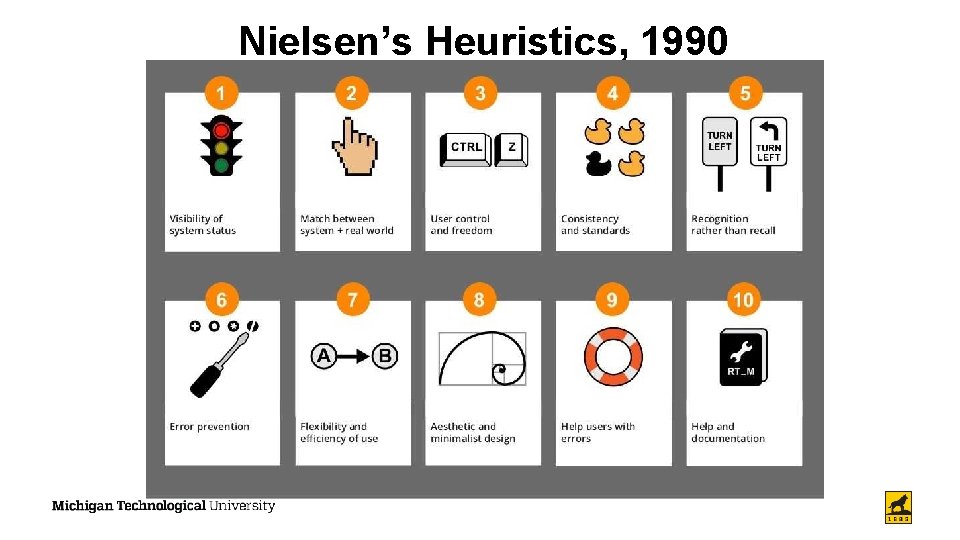
Nielsen’s Heuristics, 1990
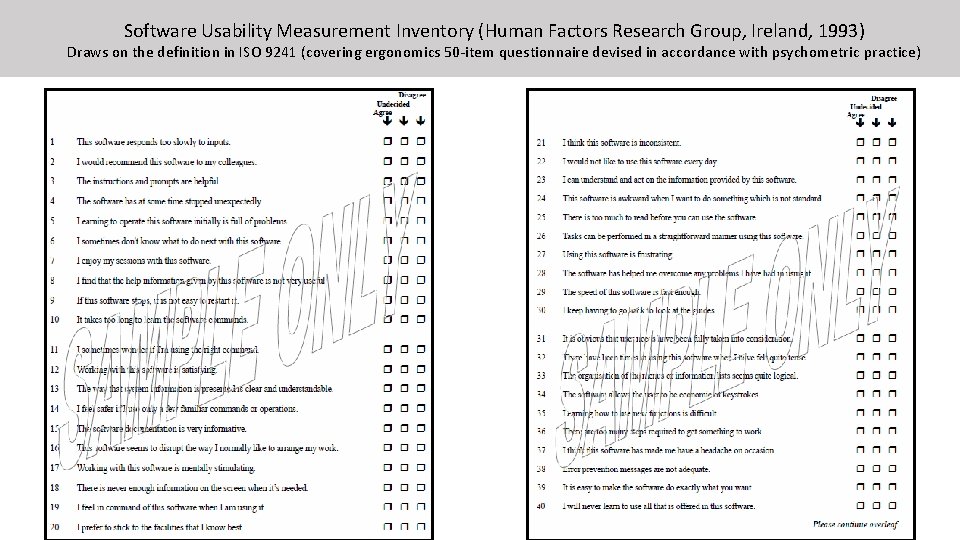
Software Usability Measurement Inventory (Human Factors Research Group, Ireland, 1993) Draws on the definition in ISO 9241 (covering ergonomics 50‐item questionnaire devised in accordance with psychometric practice)

Computer System Usability Questionnaire (Lewis, for IBM 1995) 19 item questionnaire with 7 response options from Strongly Disagree to Strongly Agree

Gerhardt’s 10 Cognitive Engineering principles for enhancing HCI, 1996
Gerhardt’s 10 Cognitive Engineering principles for enhancing HCI, 1996
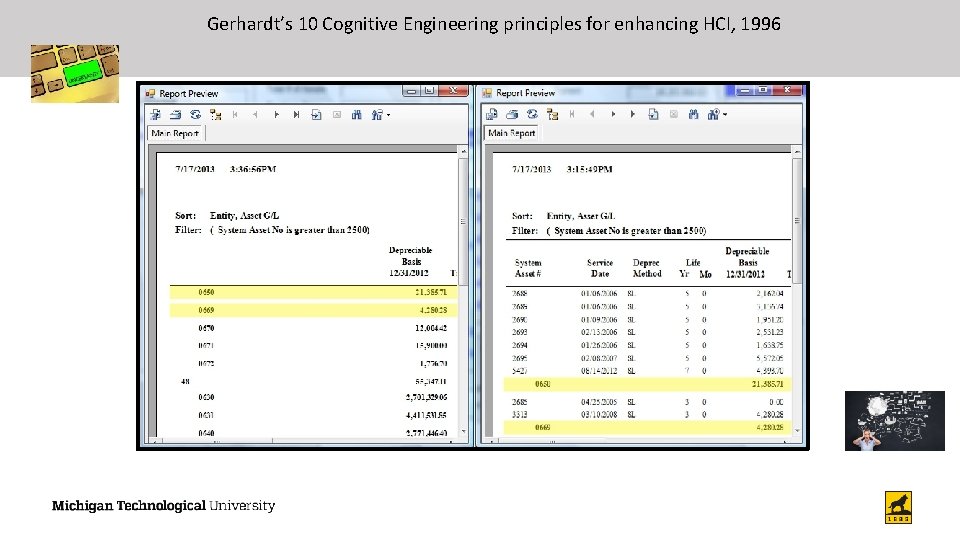
Gerhardt’s 10 Cognitive Engineering principles for enhancing HCI, 1996
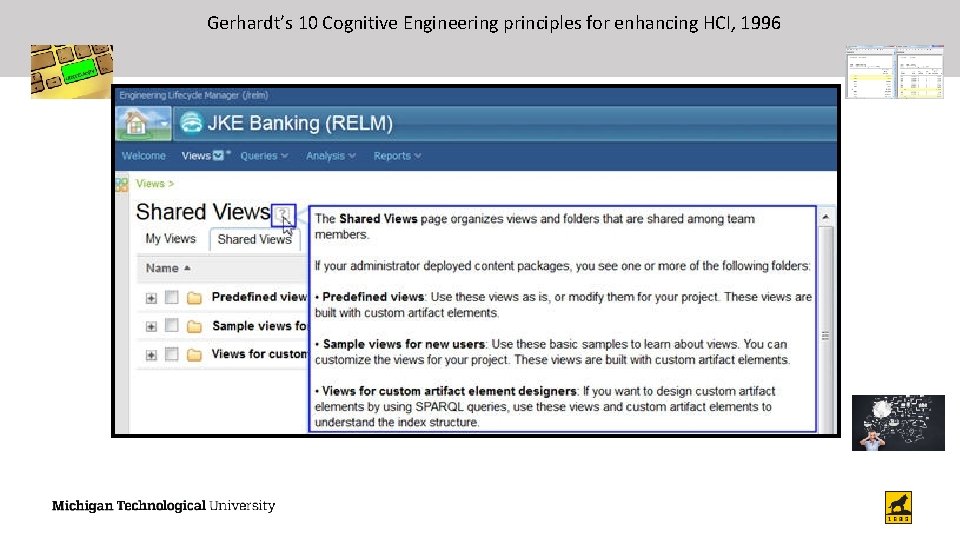
Gerhardt’s 10 Cognitive Engineering principles for enhancing HCI, 1996
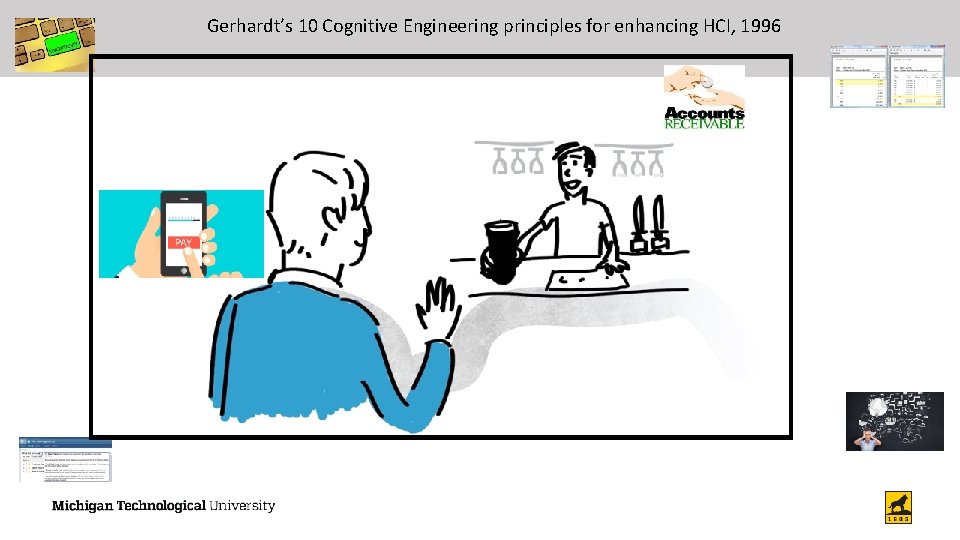
Gerhardt’s 10 Cognitive Engineering principles for enhancing HCI, 1996
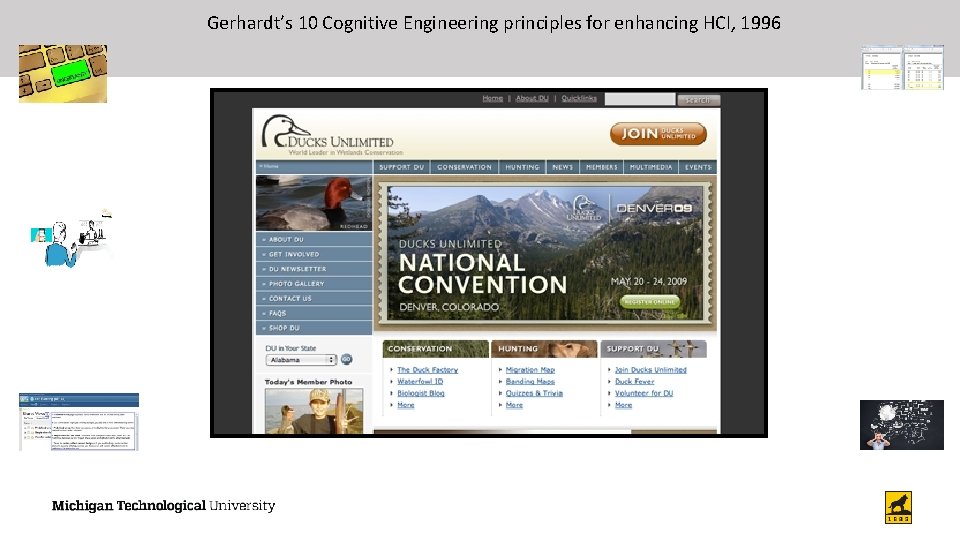
Gerhardt’s 10 Cognitive Engineering principles for enhancing HCI, 1996
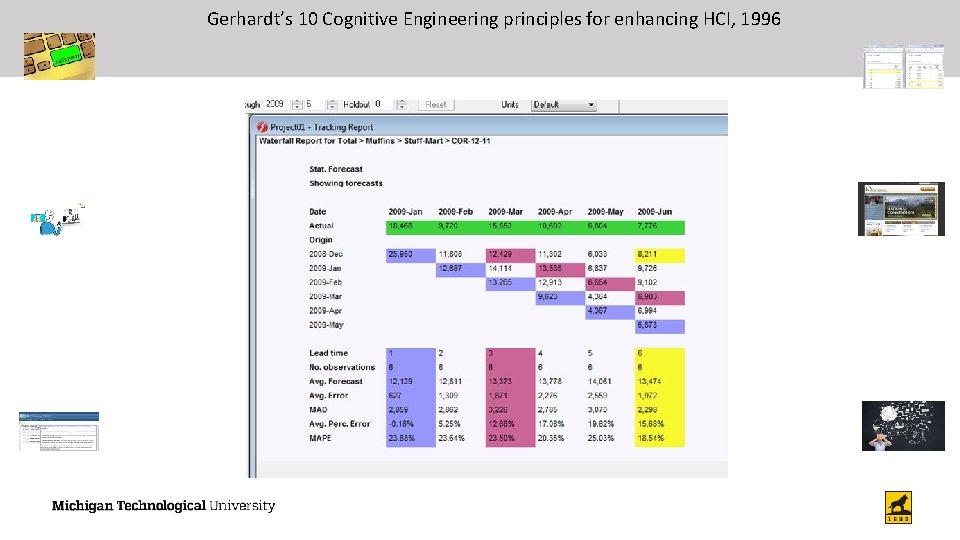
Gerhardt’s 10 Cognitive Engineering principles for enhancing HCI, 1996
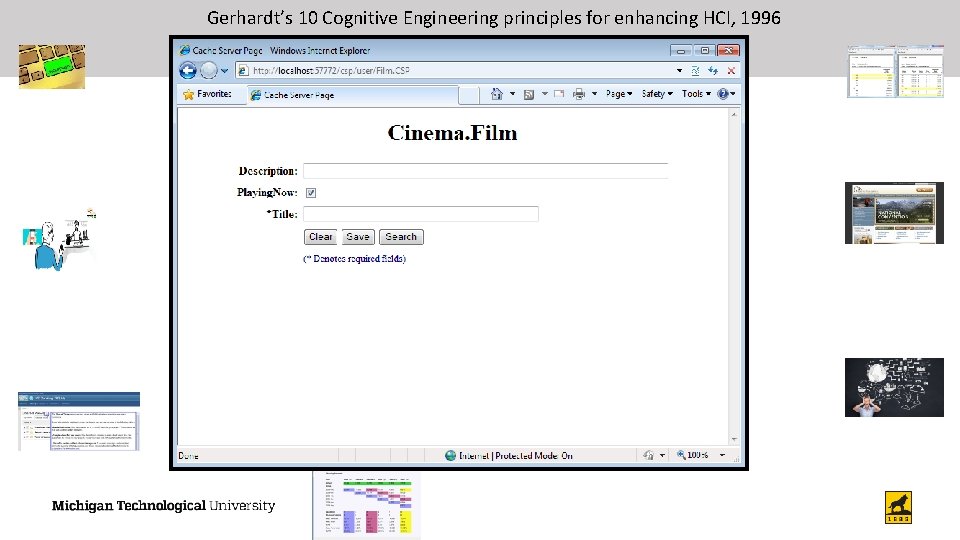
Gerhardt’s 10 Cognitive Engineering principles for enhancing HCI, 1996
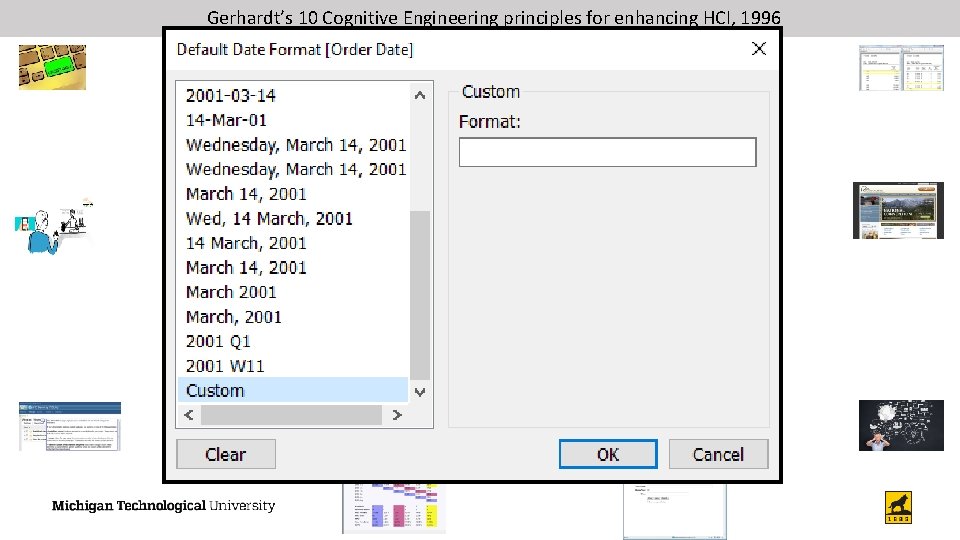
Gerhardt’s 10 Cognitive Engineering principles for enhancing HCI, 1996
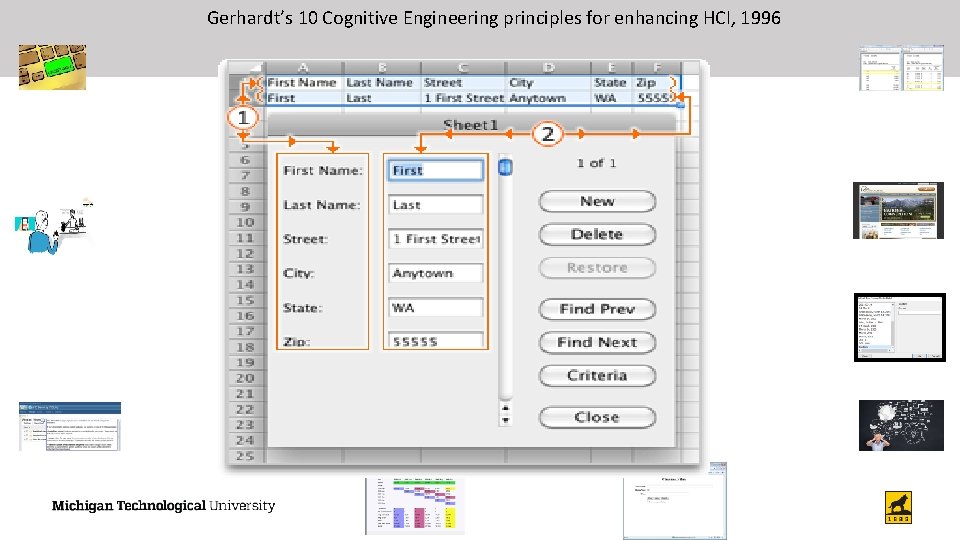
Gerhardt’s 10 Cognitive Engineering principles for enhancing HCI, 1996
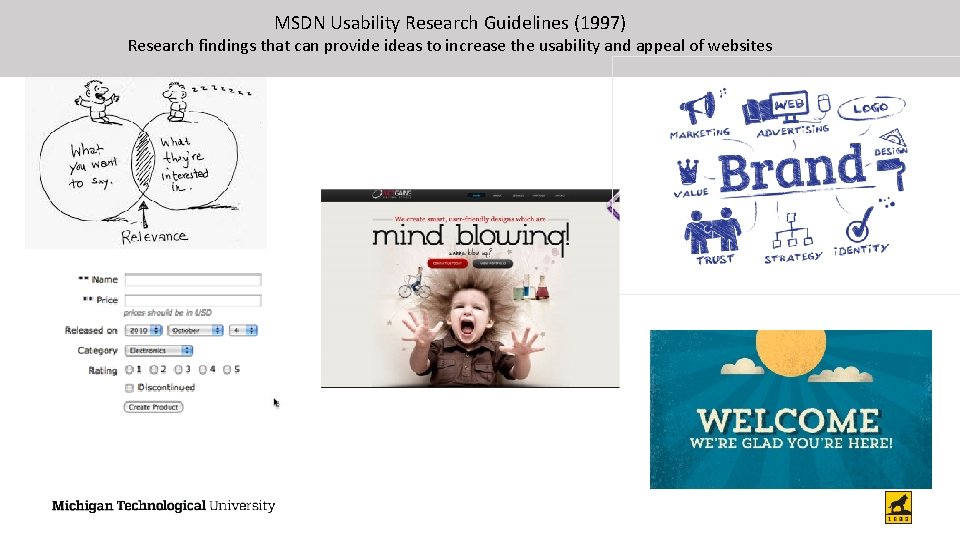
MSDN Usability Research Guidelines (1997) Research findings that can provide ideas to increase the usability and appeal of websites
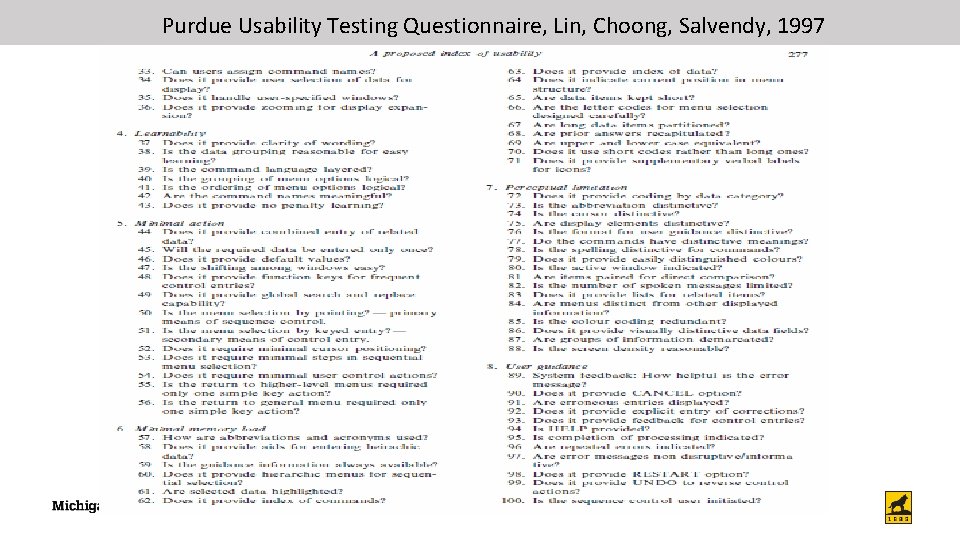
Purdue Usability Testing Questionnaire, Lin, Choong, Salvendy, 1997
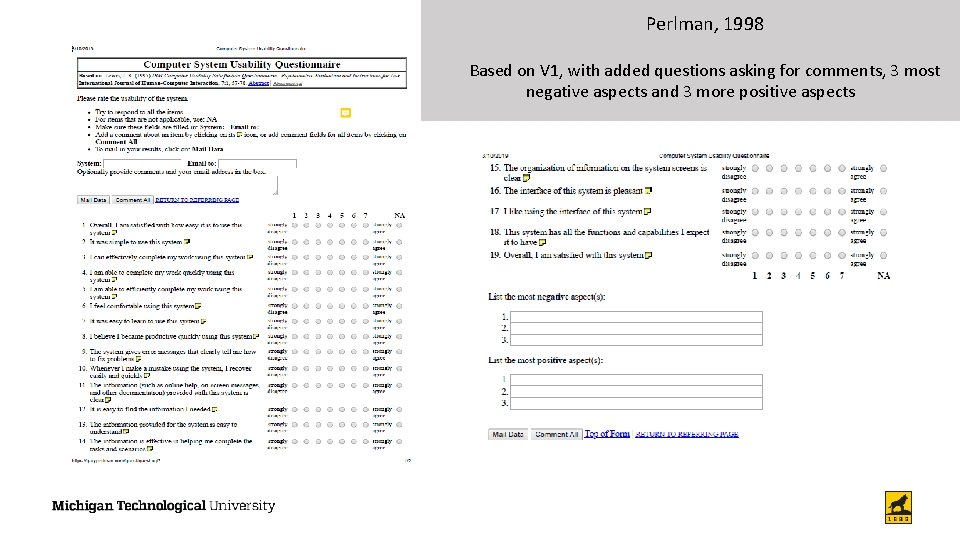
Perlman, 1998 Based on V 1, with added questions asking for comments, 3 most negative aspects and 3 more positive aspects
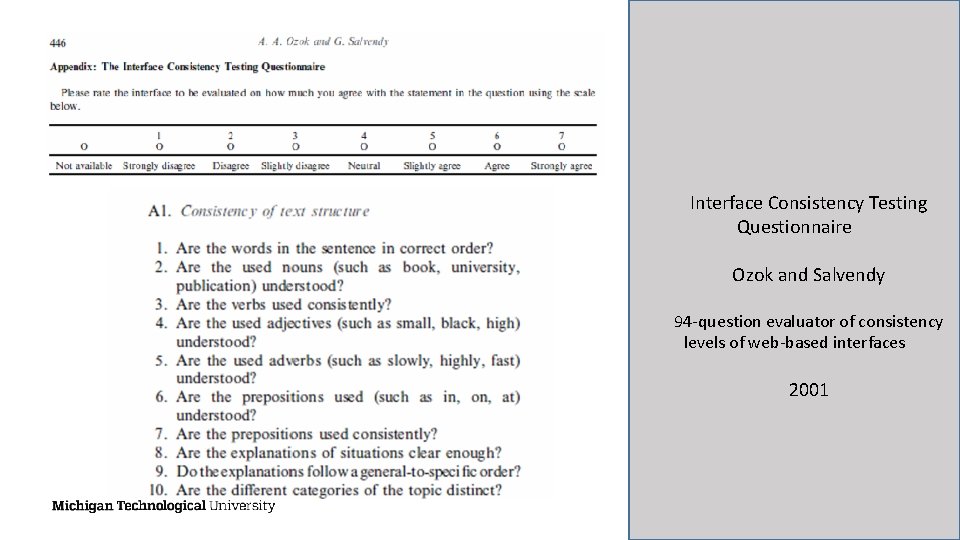
Interface Consistency Testing Questionnaire Ozok and Salvendy 94‐question evaluator of consistency levels of web‐based interfaces 2001
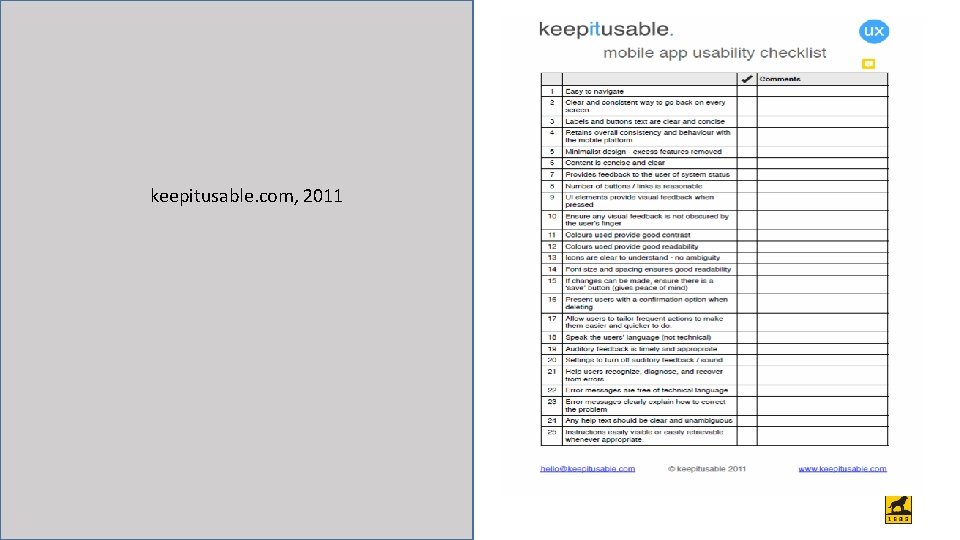
keepitusable. com, 2011
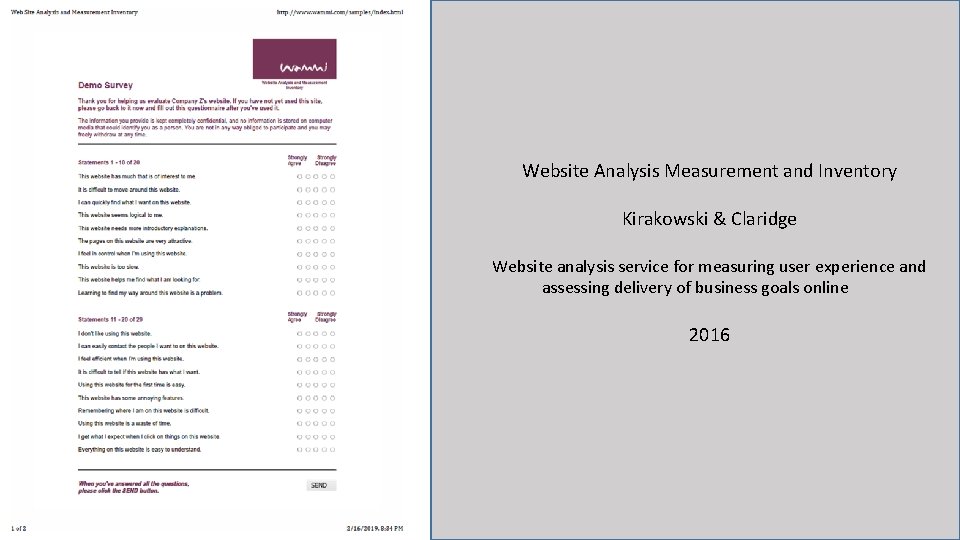
Website Analysis Measurement and Inventory Kirakowski & Claridge Website analysis service for measuring user experience and assessing delivery of business goals online 2016

Stay. In. Tech UX Chesklist 2018
REFERENCES Brooke, J. (1996). SUS‐A quick and dirty usability scale. Usability evaluation in industry, 189(194), 4‐ 7. Claridge, N. , & Kirakowski, J. (2011). WAMMI: website analysis and measurement inventory questionnaire. Retrived May, 20, 2013. Desmet, P. M. , & Hekkert, P. (2007). Framework of product experience. International journal of design, 1(1), 57‐ 66. Galitz, Wilbert O. User‐Interface Screen Design. Boston: QED Publishing Group, 1993 Gerhardt‐Powals, J. (1996). Cognitive engineering principles for enhancing human‐computer performance. International Journal of Human‐Computer Interaction, 8(2), 189‐ 211. Keeker, K. (1997). Improving web site usability and appeal. Retrieved July 24, 1997. Kirakowski, J. , & Corbett, M. (1993). SUMI: The software usability measurement inventory. British journal of educational technology, 24(3), 210‐ 212. Lewis, J. R. (1995). IBM computer usability satisfaction questionnaires: psychometric evaluation and instructions for use. International Journal of Human‐Computer Interaction, 7(1), 57‐ 78. Lin, H. X. , Choong, Y. Y. , & Salvendy, G. (1997). A proposed index of usability: a method for comparing the relative usability of different software systems. Behaviour & information technology, 16(4‐ 5), 267‐ 277.

REFERENCES (CONT) Moser, J. S. , Schroder, H. S. , Heeter, C. , Moran, T. P. , & Lee, Y. H. (2011). Mind your errors: Evidence for a neural mechanism linking growth mind‐set to adaptive posterror adjustments. Psychological Science, 22(12), 1484‐ 1489. Nielsen, J. (1995). 10 usability heuristics for user interface design. Nielsen Norman Group, 1(1). Nielson (https: //www. nngroup. com/articles/ten‐usability‐heuristics/) Ozok, A. A. , & Salvendy, G. (2001). How consistent is your web design? . Behaviour & Information Technology, 20(6), 433‐ 447. Perlman, G. (1998). Web‐based user interface evaluation with questionnaires. Retrieved on, 3(22), 06. Shneiderman, B. , & Plaisant, C. Designing the User Interface: Strategies for Effective Human‐Computer Interaction. Smith, S. L. , & Mosier, J. N. (1986). Guidelines for designing user interface software (No. MTR‐ 10090). Bedford, MA: Mitre Corporation. Tullis, T. S. , & Stetson, J. N. (2004, June). A comparison of questionnaires for assessing website usability. In Usability professional association conference (Vol. 1). Wickens, C. D. , Hollands, J. G. , Banbury, S. , & Parasuraman, R. (2000). Engineering psychology & human performance. Prentice‐ Hall, Englewood Cliffs, NJ.
- Slides: 41