
A Review of Grape Diseases and Their Management


- Slides: 38
A Review of Grape Diseases and Their Management Mengjun Hu Department of Plant Science and Landscape Architecture University of Maryland
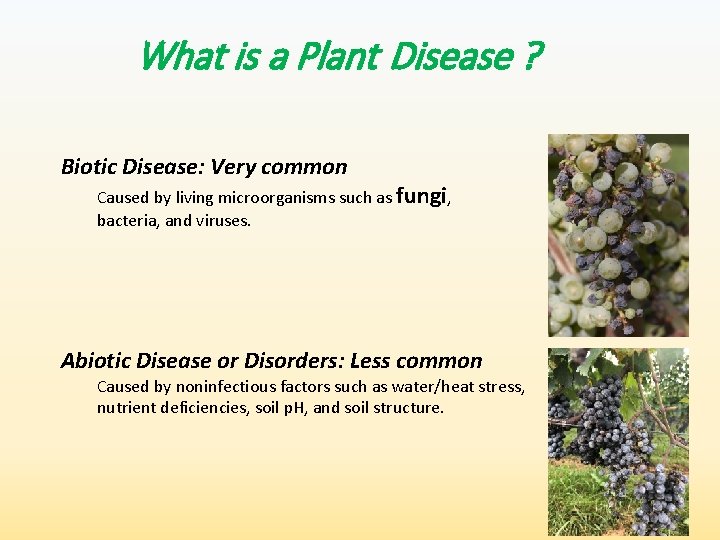
What is a Plant Disease ? Biotic Disease: Very common Caused by living microorganisms such as fungi, bacteria, and viruses. Abiotic Disease or Disorders: Less common Caused by noninfectious factors such as water/heat stress, nutrient deficiencies, soil p. H, and soil structure.
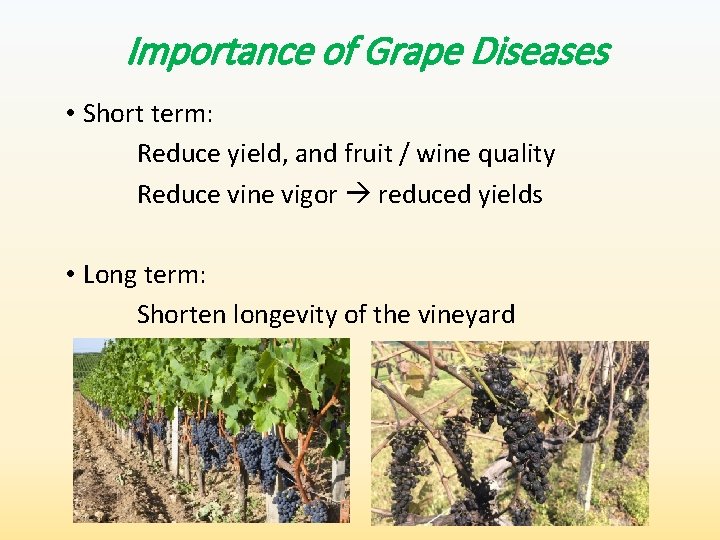
Importance of Grape Diseases • Short term: Reduce yield, and fruit / wine quality Reduce vine vigor reduced yields • Long term: Shorten longevity of the vineyard
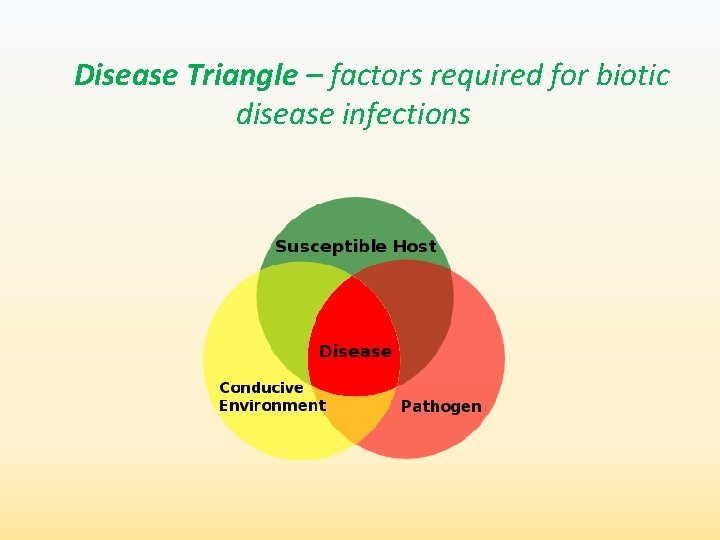
Disease Triangle – factors required for biotic disease infections
Major Grapevine Diseases in the Mid-Atlantic • Downy Mildew (oomycete) • Late Season Bunch Rots * (mainly caused by fungi) • Black Rot (fungal disease) • Phomopsis (fungal disease) • Powdery Mildew (fungal disease) * A variety of bunch rots caused by multiple pathogens
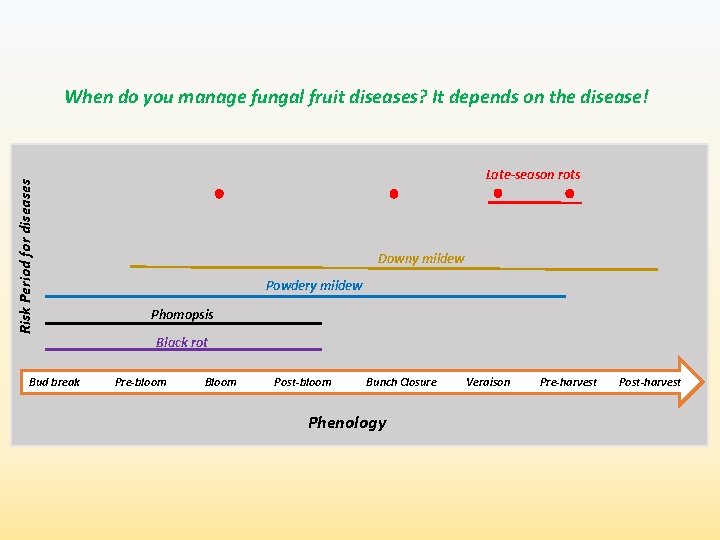
Risk Period for diseases When do you manage fungal fruit diseases? It depends on the disease! Bud break Late-season rots Downy mildew Powdery mildew Phomopsis Black rot Pre-bloom Bloom Post-bloom Bunch Closure Phenology Veraison Pre-harvest Post-harvest
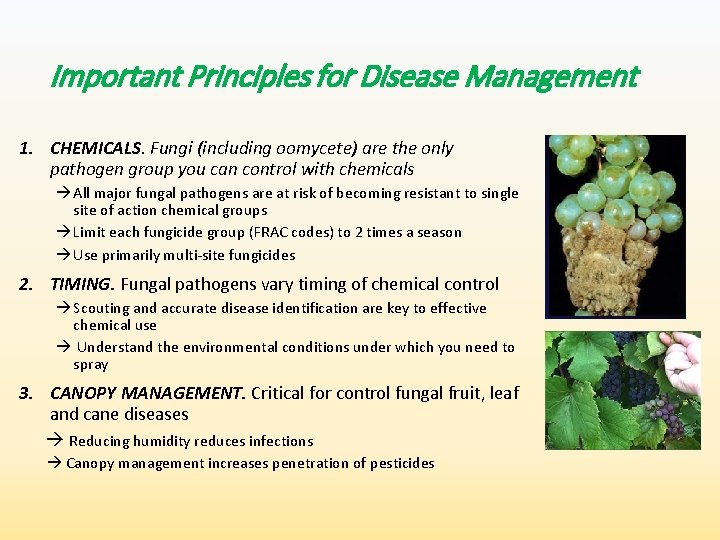
Important Principles for Disease Management 1. CHEMICALS. Fungi (including oomycete) are the only pathogen group you can control with chemicals All major fungal pathogens are at risk of becoming resistant to single site of action chemical groups Limit each fungicide group (FRAC codes) to 2 times a season Use primarily multi-site fungicides 2. TIMING. Fungal pathogens vary timing of chemical control Scouting and accurate disease identification are key to effective chemical use Understand the environmental conditions under which you need to spray 3. CANOPY MANAGEMENT. Critical for control fungal fruit, leaf and cane diseases Reducing humidity reduces infections Canopy management increases penetration of pesticides
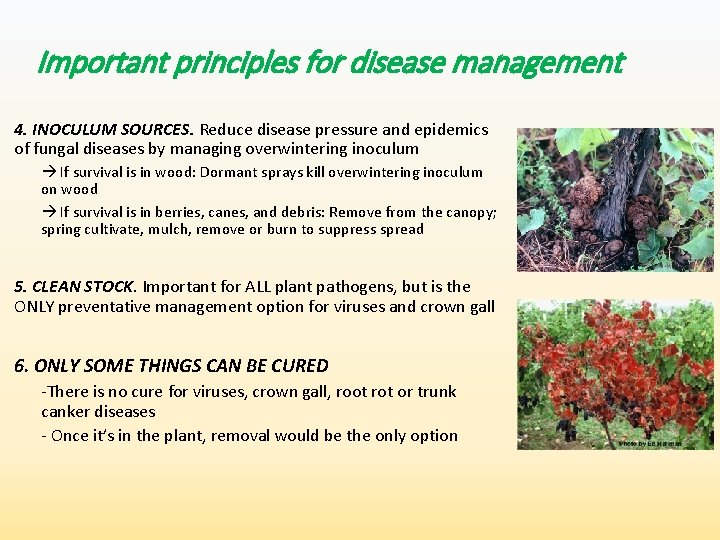
Important principles for disease management 4. INOCULUM SOURCES. Reduce disease pressure and epidemics of fungal diseases by managing overwintering inoculum If survival is in wood: Dormant sprays kill overwintering inoculum on wood If survival is in berries, canes, and debris: Remove from the canopy; spring cultivate, mulch, remove or burn to suppress spread 5. CLEAN STOCK. Important for ALL plant pathogens, but is the ONLY preventative management option for viruses and crown gall 6. ONLY SOME THINGS CAN BE CURED -There is no cure for viruses, crown gall, root rot or trunk canker diseases - Once it’s in the plant, removal would be the only option
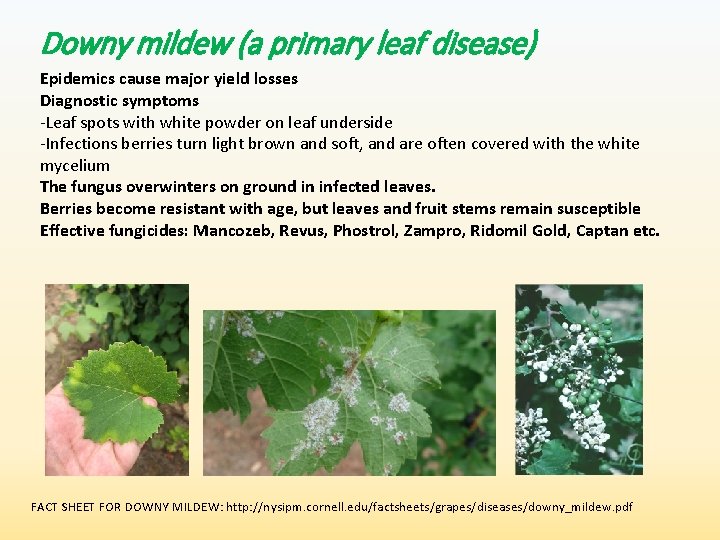
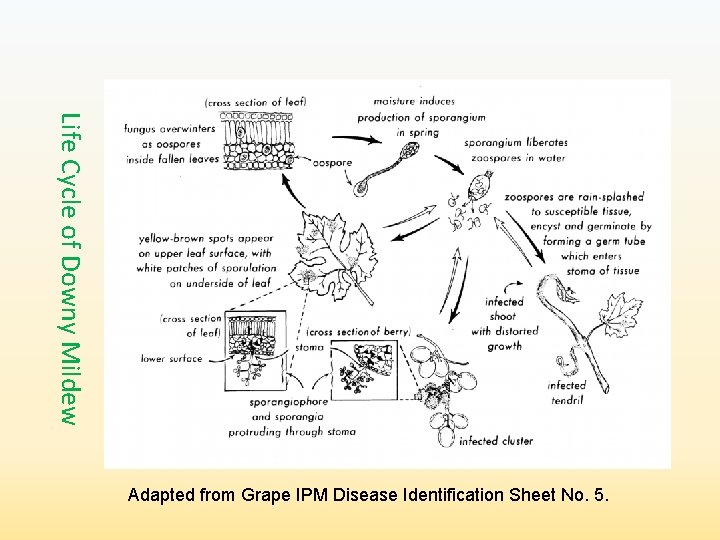
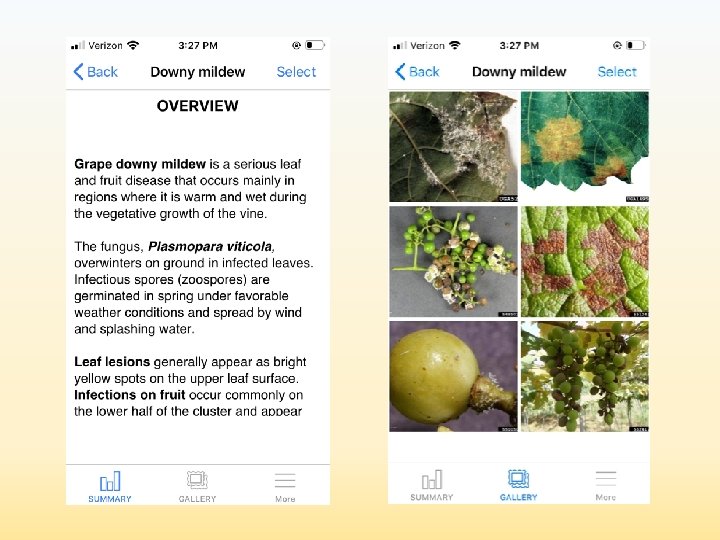
Downy mildew (a primary leaf disease) Epidemics cause major yield losses Diagnostic symptoms -Leaf spots with white powder on leaf underside -Infections berries turn light brown and soft, and are often covered with the white mycelium The fungus overwinters on ground in infected leaves. Berries become resistant with age, but leaves and fruit stems remain susceptible Effective fungicides: Mancozeb, Revus, Phostrol, Zampro, Ridomil Gold, Captan etc. FACT SHEET FOR DOWNY MILDEW: http: //nysipm. cornell. edu/factsheets/grapes/diseases/downy_mildew. pdf
Life Cycle of Downy Mildew Adapted from Grape IPM Disease Identification Sheet No. 5.
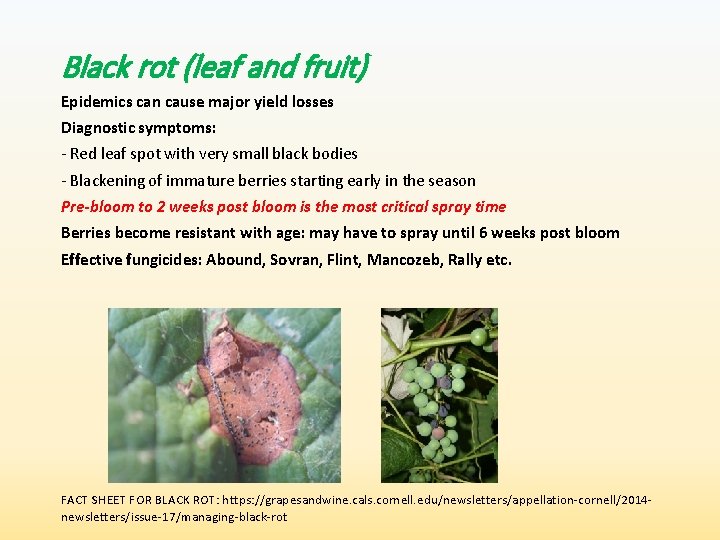
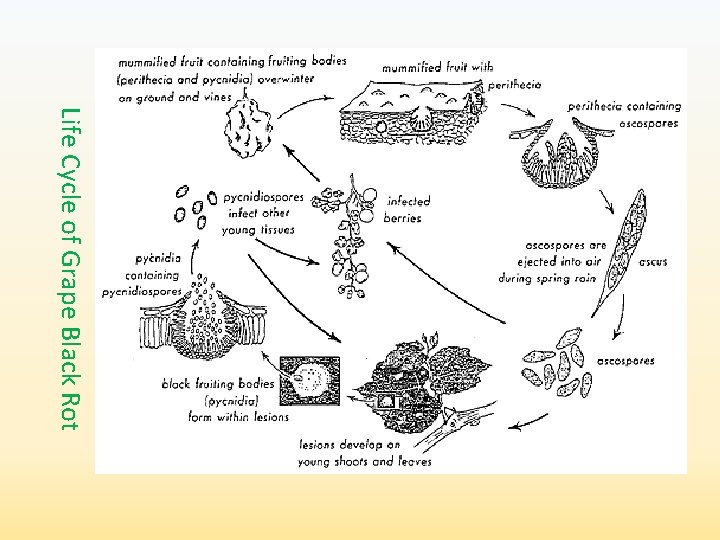
Black rot (leaf and fruit) Epidemics can cause major yield losses Diagnostic symptoms: - Red leaf spot with very small black bodies - Blackening of immature berries starting early in the season Pre-bloom to 2 weeks post bloom is the most critical spray time Berries become resistant with age: may have to spray until 6 weeks post bloom Effective fungicides: Abound, Sovran, Flint, Mancozeb, Rally etc. FACT SHEET FOR BLACK ROT: https: //grapesandwine. cals. cornell. edu/newsletters/appellation-cornell/2014 newsletters/issue-17/managing-black-rot
Life Cycle of Grape Black Rot
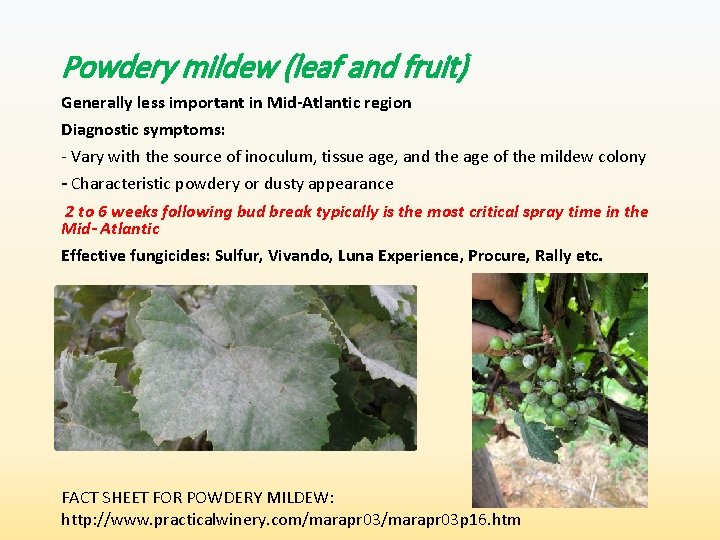
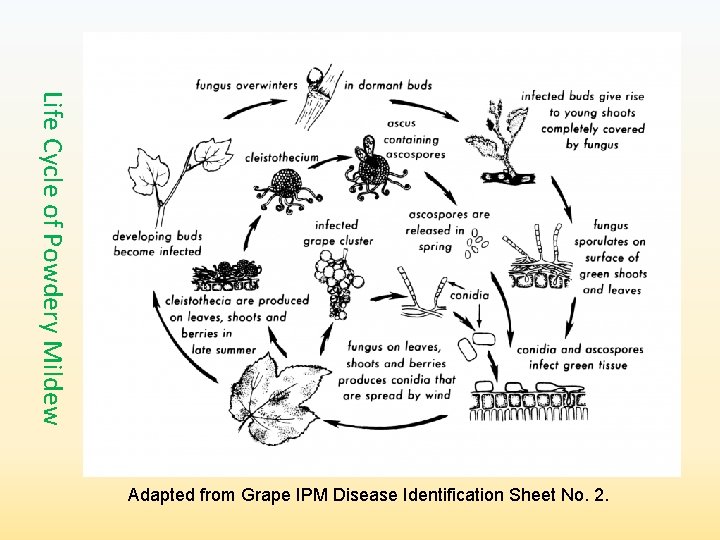
Powdery mildew (leaf and fruit) Generally less important in Mid-Atlantic region Diagnostic symptoms: - Vary with the source of inoculum, tissue age, and the age of the mildew colony - Characteristic powdery or dusty appearance 2 to 6 weeks following bud break typically is the most critical spray time in the Mid- Atlantic Effective fungicides: Sulfur, Vivando, Luna Experience, Procure, Rally etc. FACT SHEET FOR POWDERY MILDEW: http: //www. practicalwinery. com/marapr 03 p 16. htm
Life Cycle of Powdery Mildew Adapted from Grape IPM Disease Identification Sheet No. 2.
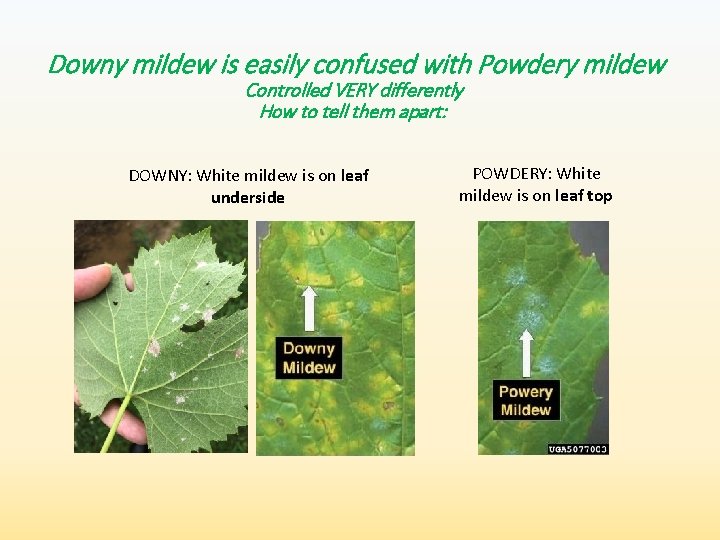
Downy mildew is easily confused with Powdery mildew Controlled VERY differently How to tell them apart: DOWNY: White mildew is on leaf underside POWDERY: White mildew is on leaf top
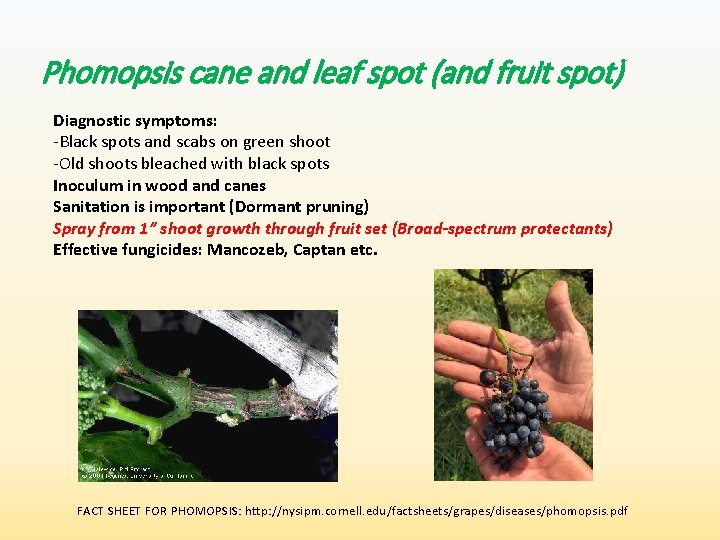
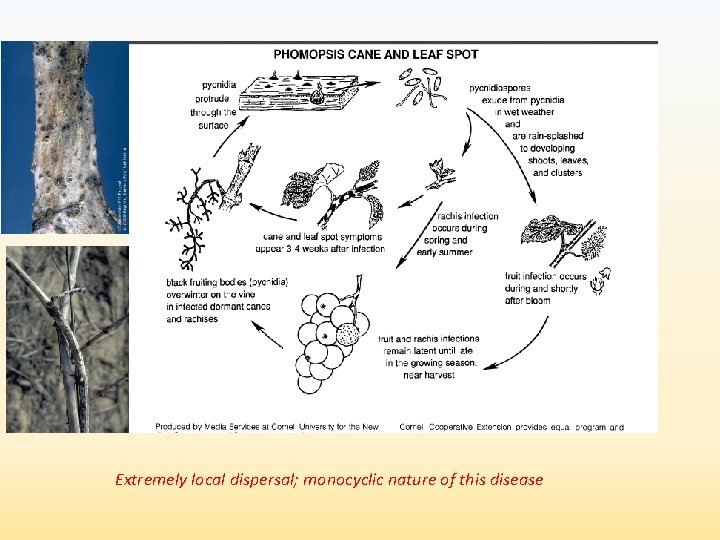
Phomopsis cane and leaf spot (and fruit spot) Diagnostic symptoms: -Black spots and scabs on green shoot -Old shoots bleached with black spots Inoculum in wood and canes Sanitation is important (Dormant pruning) Spray from 1” shoot growth through fruit set (Broad-spectrum protectants) Effective fungicides: Mancozeb, Captan etc. FACT SHEET FOR PHOMOPSIS: http: //nysipm. cornell. edu/factsheets/grapes/diseases/phomopsis. pdf
Extremely local dispersal; monocyclic nature of this disease
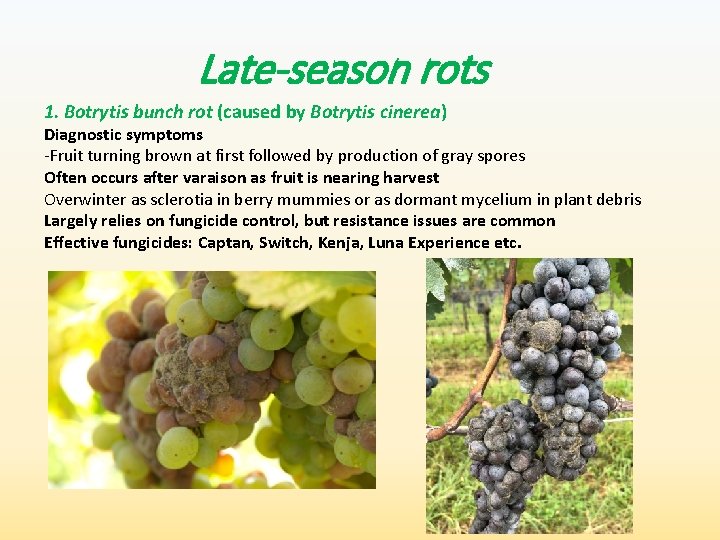
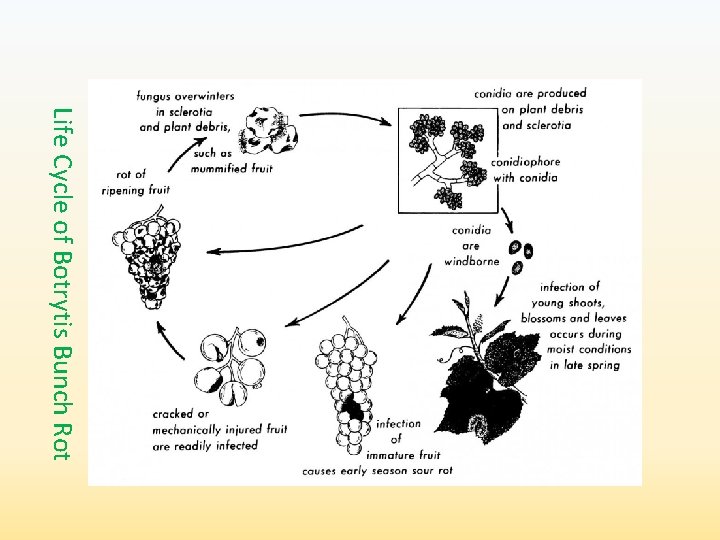
Late-season rots 1. Botrytis bunch rot (caused by Botrytis cinerea) Diagnostic symptoms -Fruit turning brown at first followed by production of gray spores Often occurs after varaison as fruit is nearing harvest Overwinter as sclerotia in berry mummies or as dormant mycelium in plant debris Largely relies on fungicide control, but resistance issues are common Effective fungicides: Captan, Switch, Kenja, Luna Experience etc.
Life Cycle of Botrytis Bunch Rot
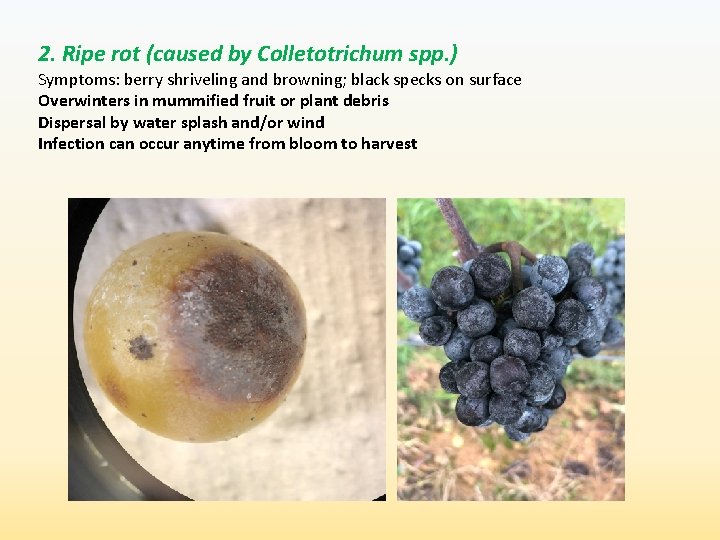
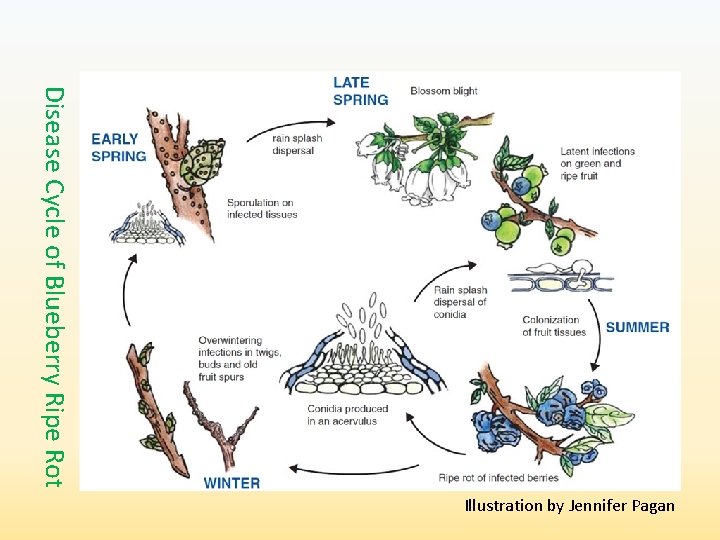
2. Ripe rot (caused by Colletotrichum spp. ) Symptoms: berry shriveling and browning; black specks on surface Overwinters in mummified fruit or plant debris Dispersal by water splash and/or wind Infection can occur anytime from bloom to harvest
Disease Cycle of Blueberry Ripe Rot Illustration by Jennifer Pagan
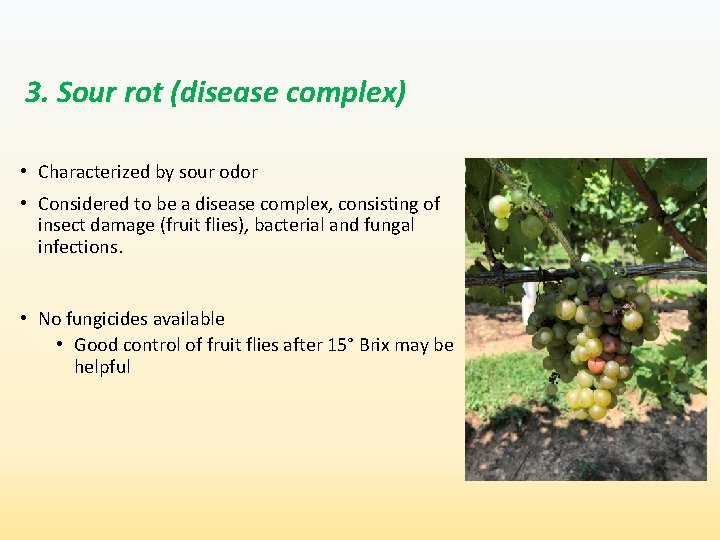
3. Sour rot (disease complex) • Characterized by sour odor • Considered to be a disease complex, consisting of insect damage (fruit flies), bacterial and fungal infections. • No fungicides available • Good control of fruit flies after 15° Brix may be helpful
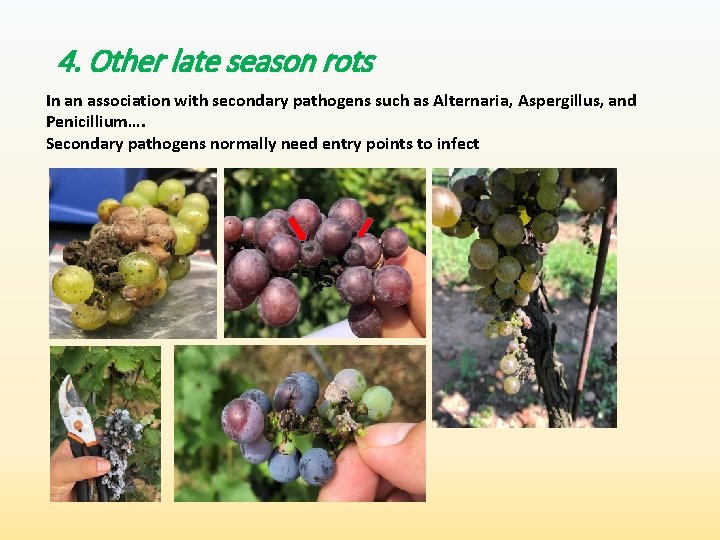
4. Other late season rots In an association with secondary pathogens such as Alternaria, Aspergillus, and Penicillium…. Secondary pathogens normally need entry points to infect
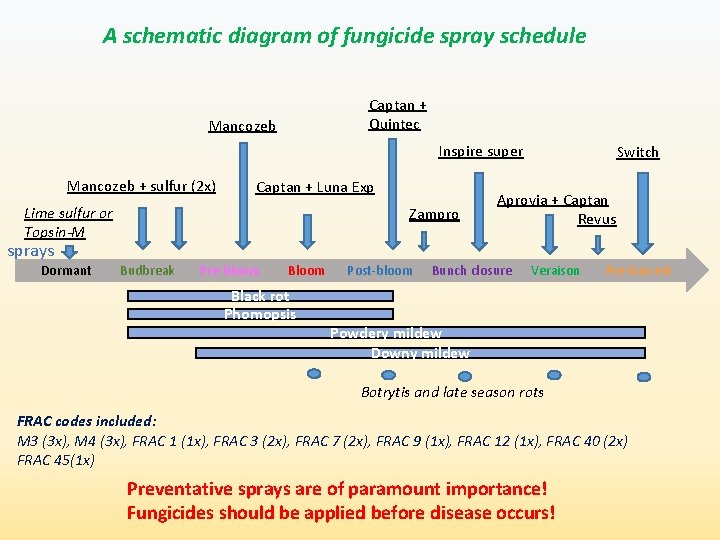
A schematic diagram of fungicide spray schedule Mancozeb Captan + Quintec Inspire super Mancozeb + sulfur (2 x) Captan + Luna Exp Lime sulfur or Topsin-M Zampro Switch Aprovia + Captan Revus sprays Dormant Budbreak Pre-bloom Bloom Post-bloom Bunch closure Veraison Pre-harvest Black rot Phomopsis Powdery mildew Downy mildew Botrytis and late season rots FRAC codes included: M 3 (3 x), M 4 (3 x), FRAC 1 (1 x), FRAC 3 (2 x), FRAC 7 (2 x), FRAC 9 (1 x), FRAC 12 (1 x), FRAC 40 (2 x) FRAC 45(1 x) Preventative sprays are of paramount importance! Fungicides should be applied before disease occurs!
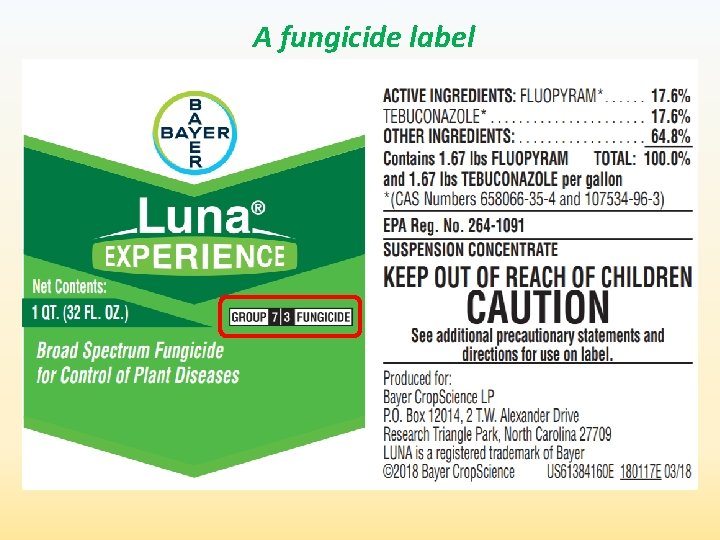
A fungicide label
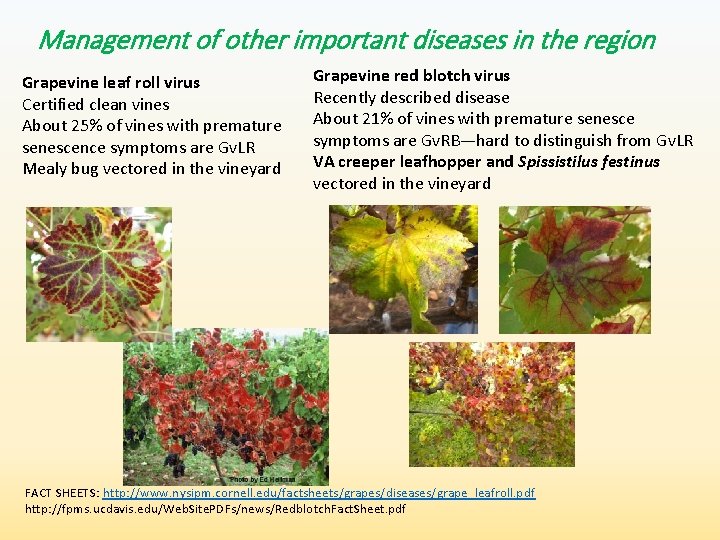
Management of other important diseases in the region Grapevine leaf roll virus Certified clean vines About 25% of vines with premature senescence symptoms are Gv. LR Mealy bug vectored in the vineyard Grapevine red blotch virus Recently described disease About 21% of vines with premature senesce symptoms are Gv. RB—hard to distinguish from Gv. LR VA creeper leafhopper and Spissistilus festinus vectored in the vineyard FACT SHEETS: http: //www. nysipm. cornell. edu/factsheets/grapes/diseases/grape_leafroll. pdf http: //fpms. ucdavis. edu/Web. Site. PDFs/news/Redblotch. Fact. Sheet. pdf
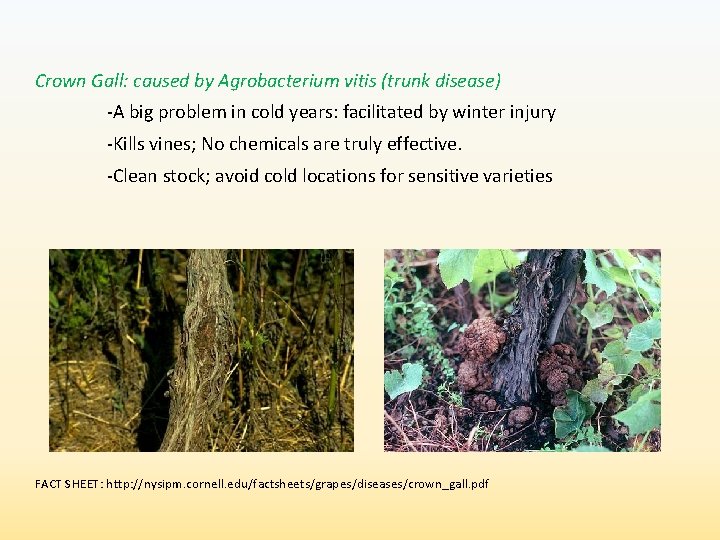
Crown Gall: caused by Agrobacterium vitis (trunk disease) -A big problem in cold years: facilitated by winter injury -Kills vines; No chemicals are truly effective. -Clean stock; avoid cold locations for sensitive varieties FACT SHEET: http: //nysipm. cornell. edu/factsheets/grapes/diseases/crown_gall. pdf
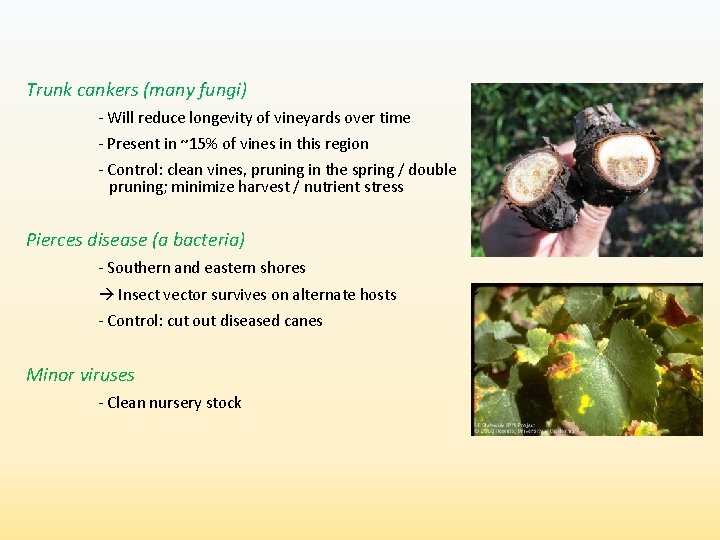
Trunk cankers (many fungi) - Will reduce longevity of vineyards over time - Present in ~15% of vines in this region - Control: clean vines, pruning in the spring / double pruning; minimize harvest / nutrient stress Pierces disease (a bacteria) - Southern and eastern shores Insect vector survives on alternate hosts - Control: cut out diseased canes Minor viruses - Clean nursery stock
Putting It All Together • Use an integrated approach: Proper canopy management, biological controls, good variety selection, sanitation, and fungicides. • Target fungicide applications on current and near term weather, growth stage, disease pressure and environment. • Use spray guides to develop an initial plan and modify as the season develops • Limit each mode of actions to 2 times per season. Pay attention to reports of fungicide resistance in your area.
Putting It All Together • Expect 5 -8 fungicide applications the first and second year • Expect 12 -16 fungicide applications for years 3 + • Accurate disease diagnosis is impotant • Organic grape production is challenging due to the high disease pressure in our area. Organic producers will still need to apply multiple sprays using OMRI approved products
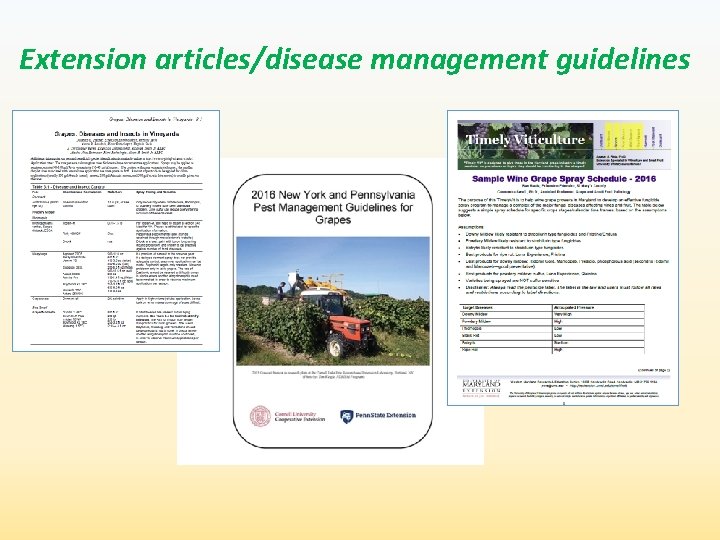
Extension articles/disease management guidelines
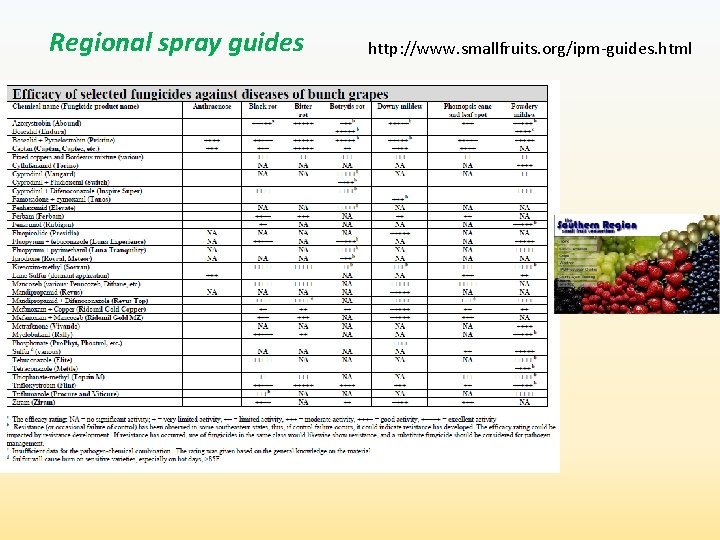
Regional spray guides http: //www. smallfruits. org/ipm-guides. html
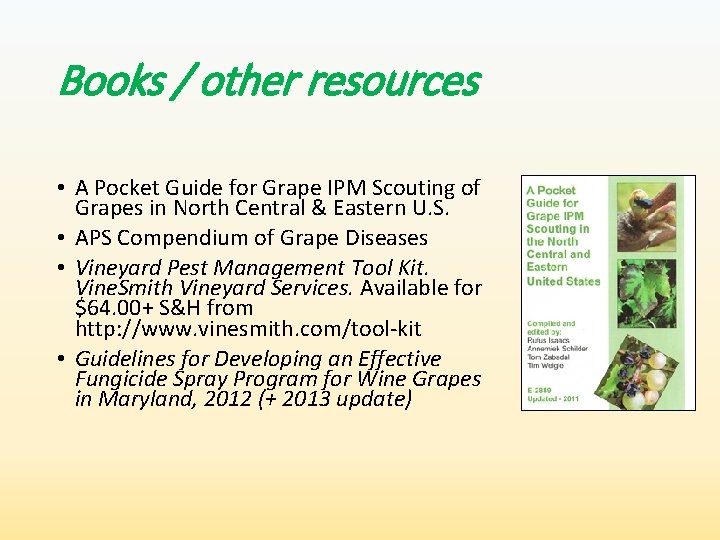
Books / other resources • A Pocket Guide for Grape IPM Scouting of Grapes in North Central & Eastern U. S. • APS Compendium of Grape Diseases • Vineyard Pest Management Tool Kit. Vine. Smith Vineyard Services. Available for $64. 00+ S&H from http: //www. vinesmith. com/tool-kit • Guidelines for Developing an Effective Fungicide Spray Program for Wine Grapes in Maryland, 2012 (+ 2013 update)
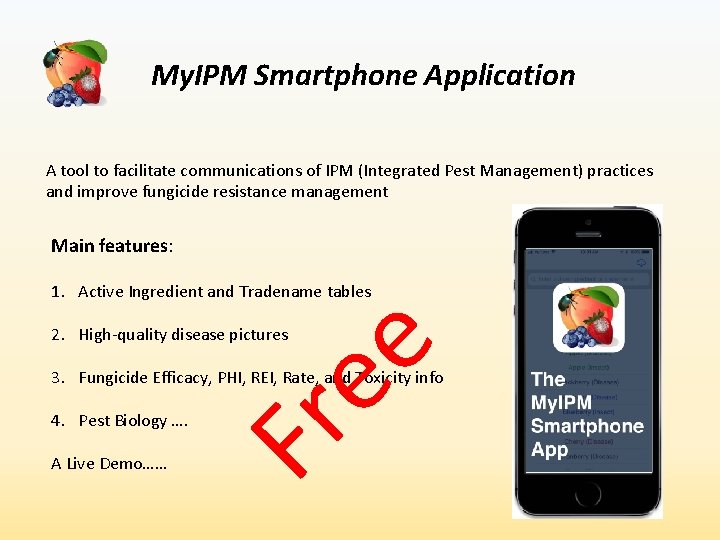
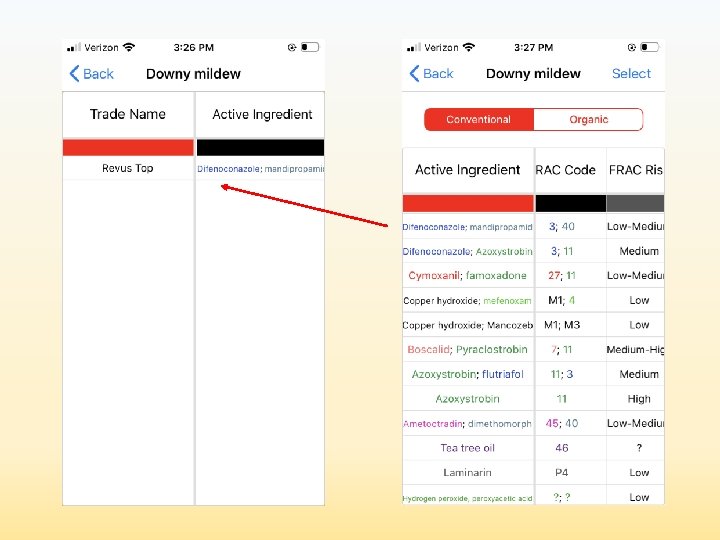
My. IPM Smartphone Application A tool to facilitate communications of IPM (Integrated Pest Management) practices and improve fungicide resistance management Main features: 1. Active Ingredient and Tradename tables ee 2. High-quality disease pictures 3. Fungicide Efficacy, PHI, REI, Rate, and Toxicity info A Live Demo…… Fr 4. Pest Biology ….
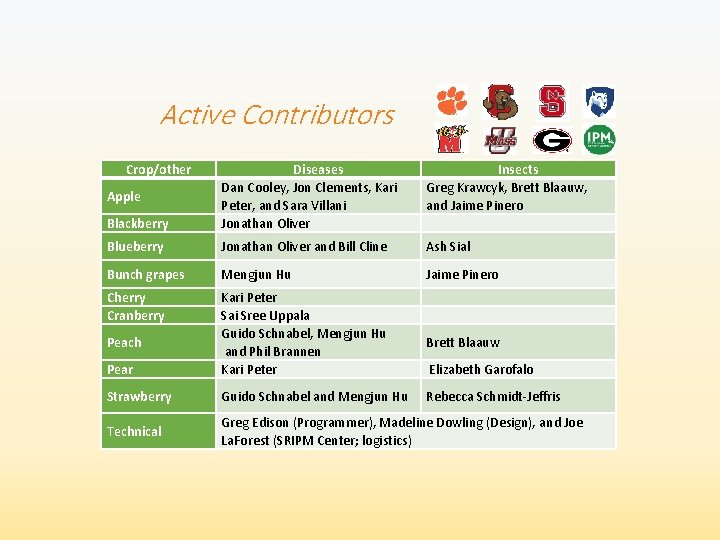
Active Contributors Crop/other Blackberry Diseases Dan Cooley, Jon Clements, Kari Peter, and Sara Villani Jonathan Oliver Insects Greg Krawcyk, Brett Blaauw, and Jaime Pinero Blueberry Jonathan Oliver and Bill Cline Ash Sial Bunch grapes Mengjun Hu Jaime Pinero Cherry Cranberry Pear Kari Peter Sai Sree Uppala Guido Schnabel, Mengjun Hu and Phil Brannen Kari Peter Strawberry Guido Schnabel and Mengjun Hu Rebecca Schmidt-Jeffris Technical Greg Edison (Programmer), Madeline Dowling (Design), and Joe La. Forest (SRIPM Center; logistics) Apple Peach Brett Blaauw Elizabeth Garofalo
Any questions? Mengjun Hu Grape and Small fruit Pathologist; Extension Specialist, 2106 Plant Sciences Building, University of Maryland, College Park, MD 20742 Email: mjhu@umd. edu Cell: 301 -892 -0213 Office: 301 -405 -5586