
A Reticulum Tough honeycomb like structure puncture resistant
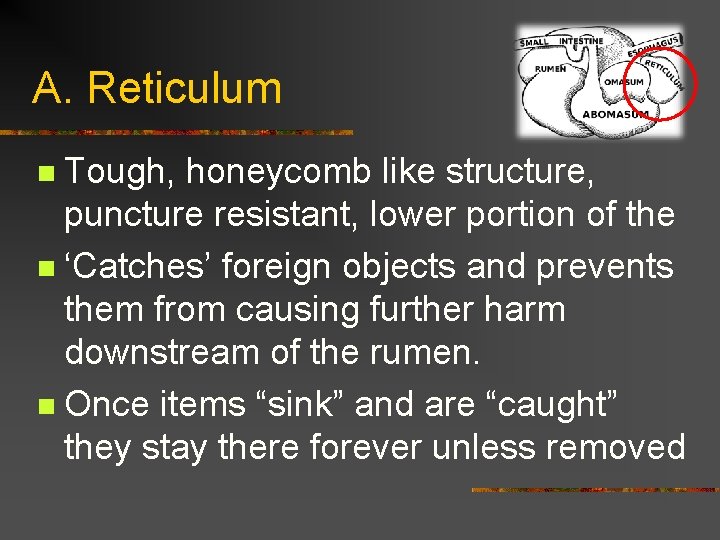
A. Reticulum Tough, honeycomb like structure, puncture resistant, lower portion of the n ‘Catches’ foreign objects and prevents them from causing further harm downstream of the rumen. n Once items “sink” and are “caught” they stay there forever unless removed n

Reticulum – full – left Reticulum – enlarged – bottom left Reticulum – cleaned - lower
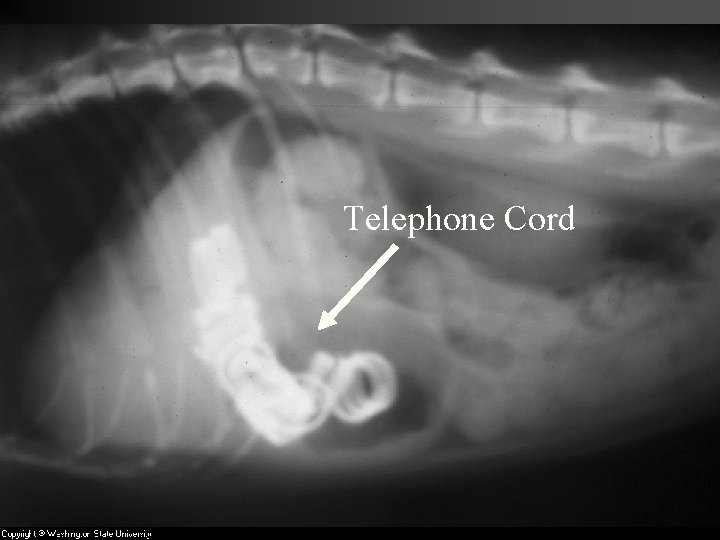
Telephone Cord
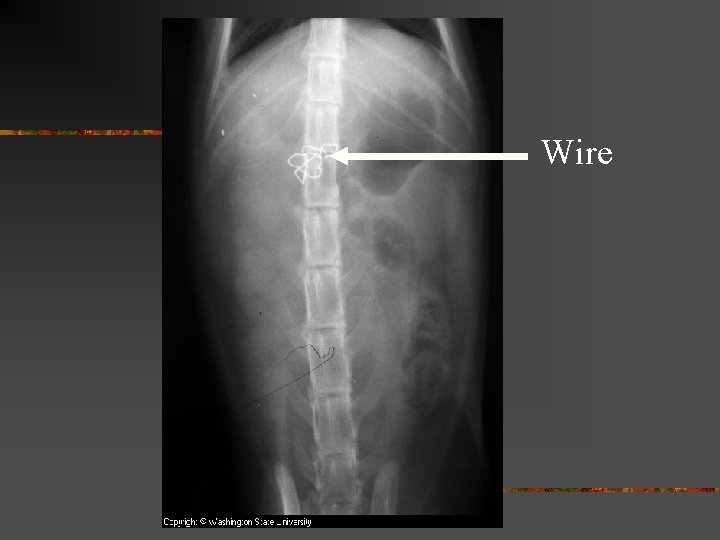
Wire
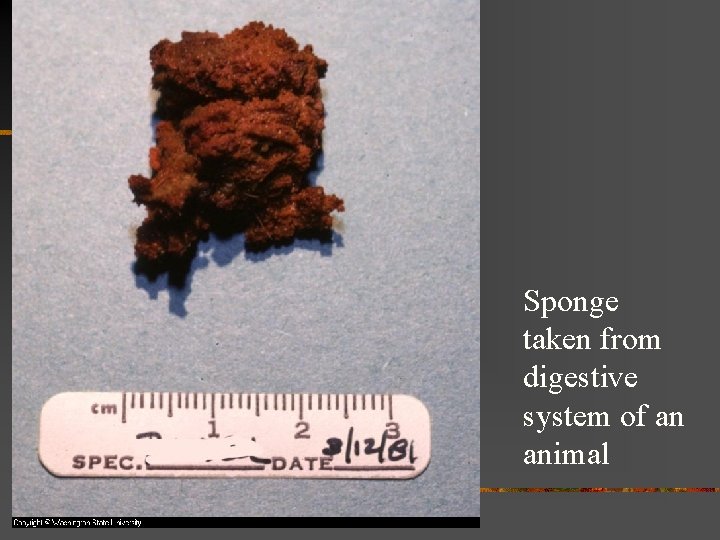
Sponge taken from digestive system of an animal
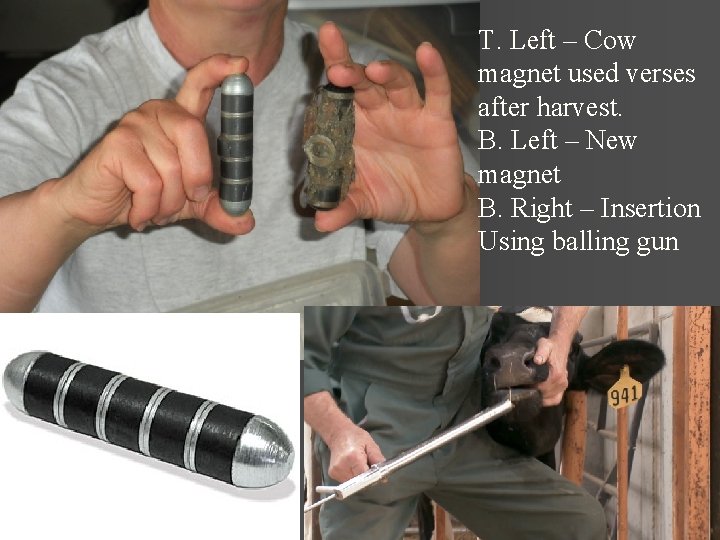
T. Left – Cow magnet used verses after harvest. B. Left – New magnet B. Right – Insertion Using balling gun
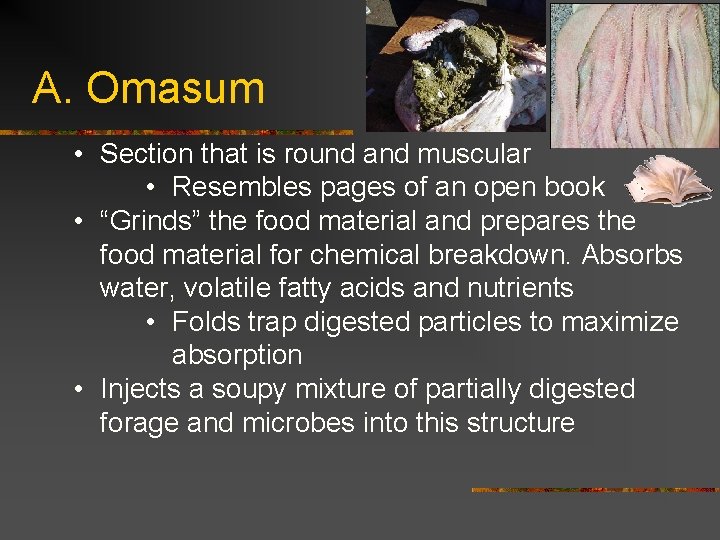
A. Omasum • Section that is round and muscular • Resembles pages of an open book • “Grinds” the food material and prepares the food material for chemical breakdown. Absorbs water, volatile fatty acids and nutrients • Folds trap digested particles to maximize absorption • Injects a soupy mixture of partially digested forage and microbes into this structure
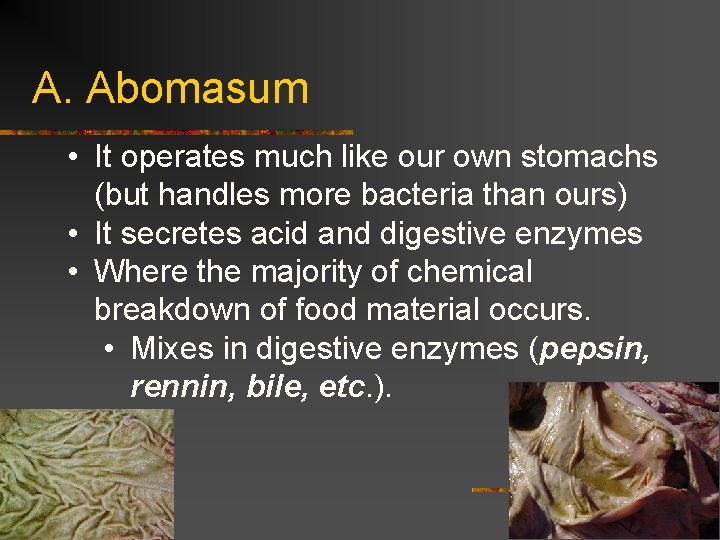
A. Abomasum • It operates much like our own stomachs (but handles more bacteria than ours) • It secretes acid and digestive enzymes • Where the majority of chemical breakdown of food material occurs. • Mixes in digestive enzymes (pepsin, rennin, bile, etc. ).
Let’s Review: With a partner, digest the snack in front of you and describe what is happening to the food as it moves through your GI.
9. Small Intestine - where most of the food material is absorbed into the bloodstream n Contains three sections: n duodenum n jejunum n ileum
A. Duodenum: first section (active digestion) -Receives secretions from: Pancreas: acts on proteins, carbohydrates and lipids Liver: bile (stored in the gallbladder) breaks down fat. *Horses do not have gallbladders B. Jejunum: middle section; active in nutrient absorption C. Ileum: last section; active in nutrient absorption
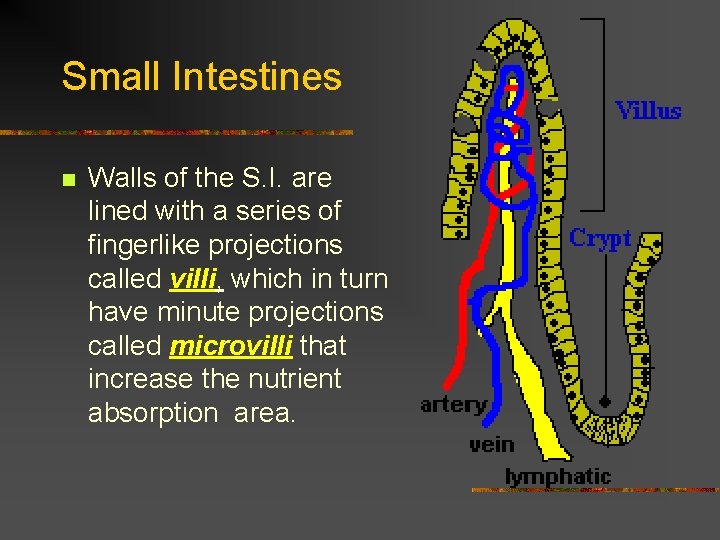
Small Intestines n Walls of the S. I. are lined with a series of fingerlike projections called villi, which in turn have minute projections called microvilli that increase the nutrient absorption area.
n 10. Large Intestines n n Site of water restoration Secretion of some mineral elements n Storage reservoir calcium of undigested GIT contents. Bacterial fermentation: n Synthesis of some water-soluble vitamins and vitamin K. n Some bacterial breakdown of fibrous ingredients. n Synthesis of some protein,

A. Cecum: n first section n size varies considerably in different species; n No significance in the pig or human (dead end) n IMPORTANT in horse and rabbit n Bacterial breakdown of cellulose and other carbohydrate material to produce VFAs thus, the horse can utilize fibrous feeds. n Site of bacterial synthesis of water-soluble vitamins and protein.
n n B. Colon: n middle section n largest part of the L. I. n Primary area of water restoration from intestinal contents. C. Rectum: last section of the L. I. and the end of the digestive tract before the unabsorbed material (feces) is excreted out the anus (preparation for excretion) (poop chute)
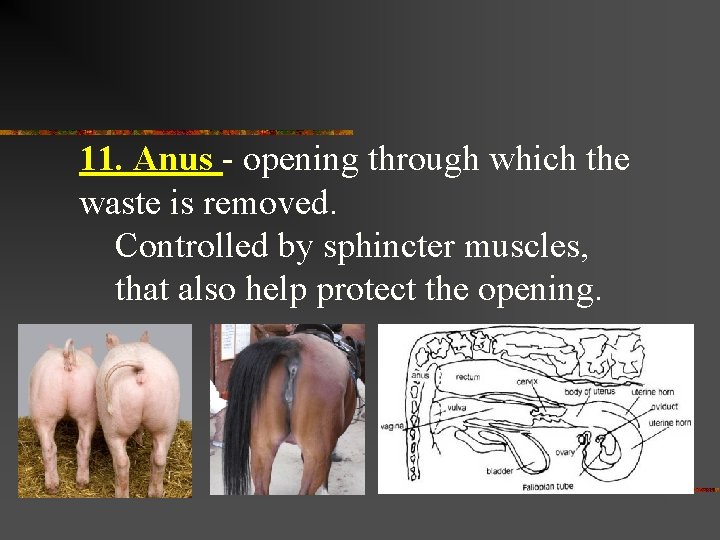
11. Anus - opening through which the waste is removed. Controlled by sphincter muscles, that also help protect the opening.
Let’s Review: Go to a review station and put terms of the digestive tract in order using only each other as resources (no notes – TALK it through!)
- Slides: 17