
A reflexive verb is an action that people

• A reflexive verb is an action that people do to or for themselves. • With a reflexive verb, the person carrying out the action also receives the action.
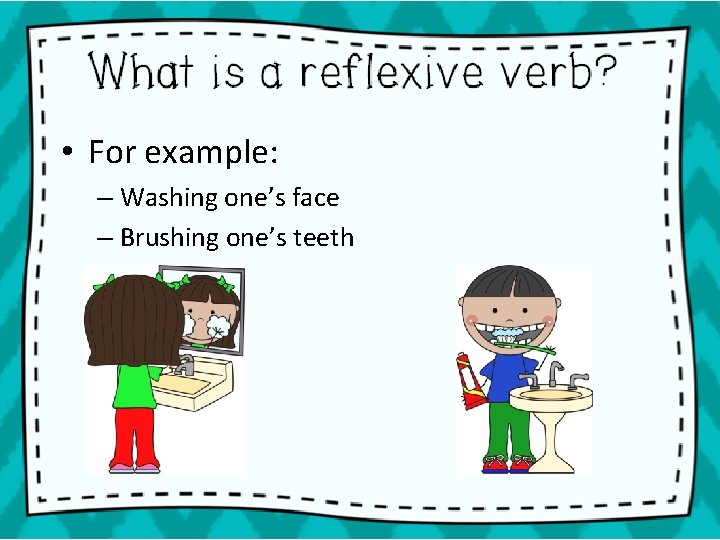
• For example: – Washing one’s face – Brushing one’s teeth
• In Spanish, reflexive verbs are easy to identify because their infinitive forms have se at the end. • This se at the end of the infinitive is called a reflexive pronoun.
• Let’s look at the breakdown of the verbs afeitarse, to shave, and bañarse, to bathe.
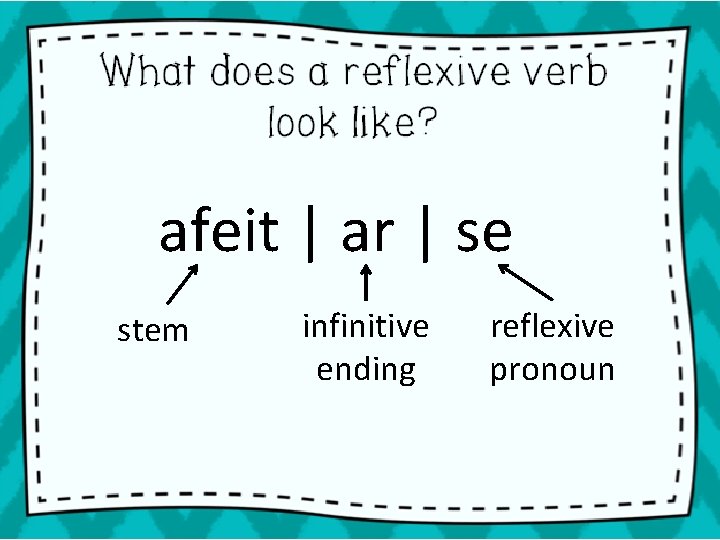
afeit | ar | se stem infinitive ending reflexive pronoun
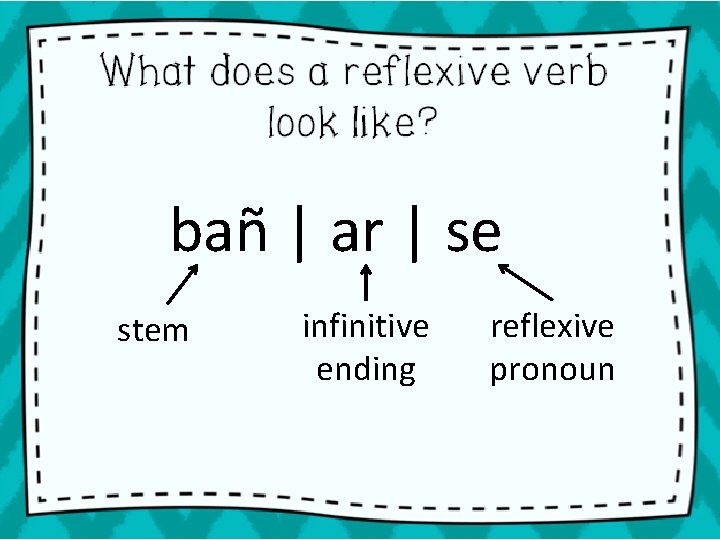
bañ | ar | se stem infinitive ending reflexive pronoun
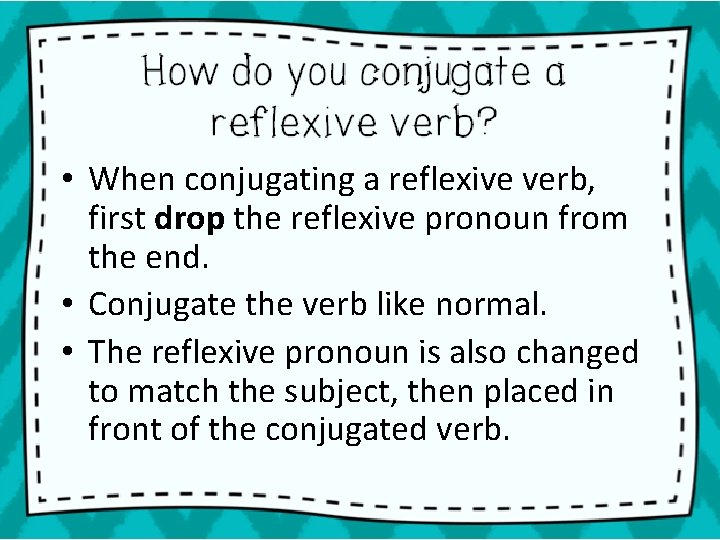
• When conjugating a reflexive verb, first drop the reflexive pronoun from the end. • Conjugate the verb like normal. • The reflexive pronoun is also changed to match the subject, then placed in front of the conjugated verb.
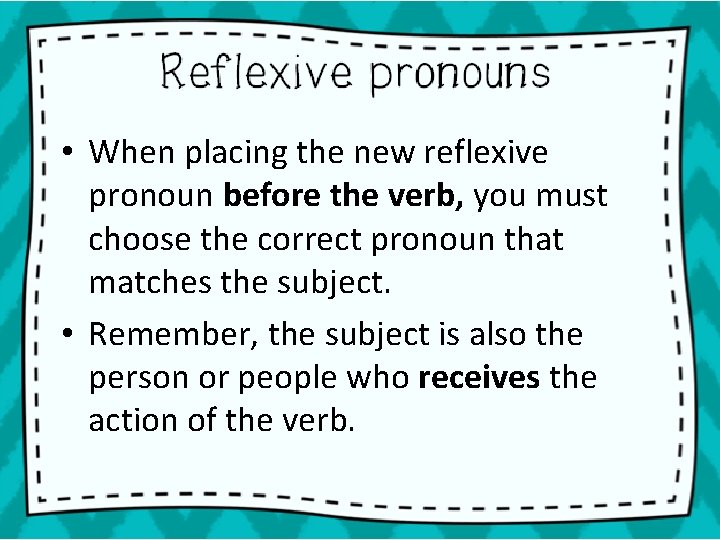
• When placing the new reflexive pronoun before the verb, you must choose the correct pronoun that matches the subject. • Remember, the subject is also the person or people who receives the action of the verb.
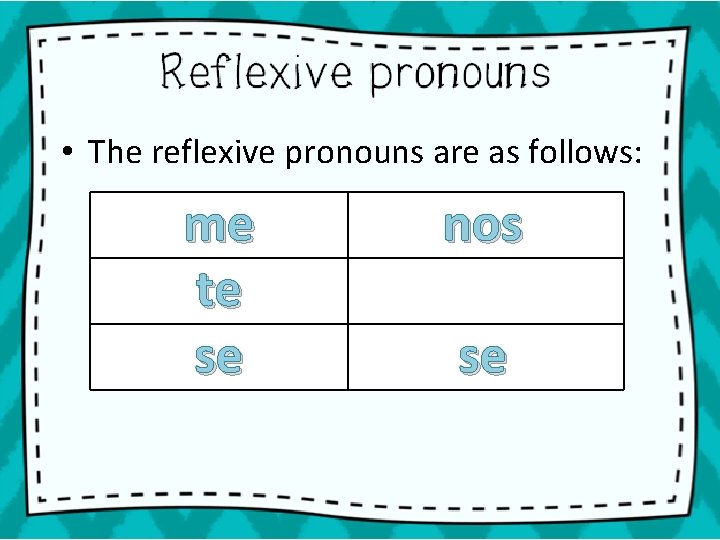
• The reflexive pronouns are as follows: me te se nos se
se levantan me visto Please take a few minutes nos pintamos to complete practice se problems 1 -6. te duchas se cepilla 1. Gregorio y Lorenzo ___________ muy tarde los fines de semana. 2. Yo _________ en ropa muy elegante para ir a la boda. 3. Emilia y yo ______________ las uñas para el baile. 4. Uds. ______ acuestan _______ muy temprano la noche antes del evento especial. 5. Tú _____________ rápidamente antes de la escuela. 6. Sancho no __________ los dientes todos los días. ¡Uf!
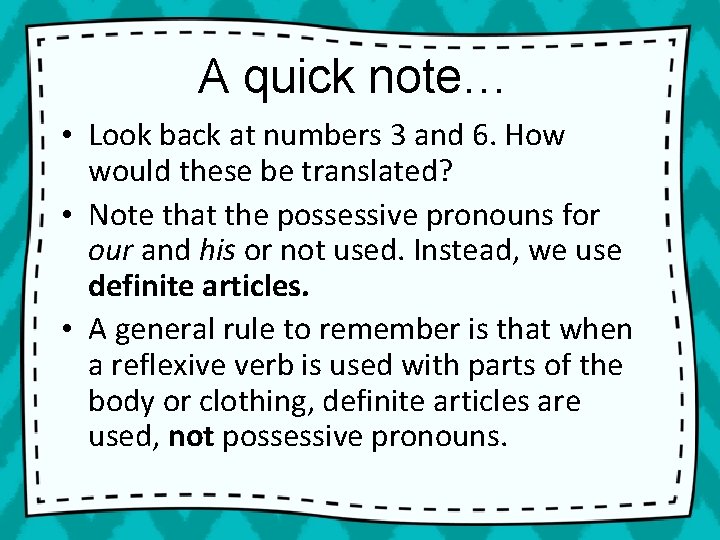
A quick note… • Look back at numbers 3 and 6. How would these be translated? • Note that the possessive pronouns for our and his or not used. Instead, we use definite articles. • A general rule to remember is that when a reflexive verb is used with parts of the body or clothing, definite articles are used, not possessive pronouns.
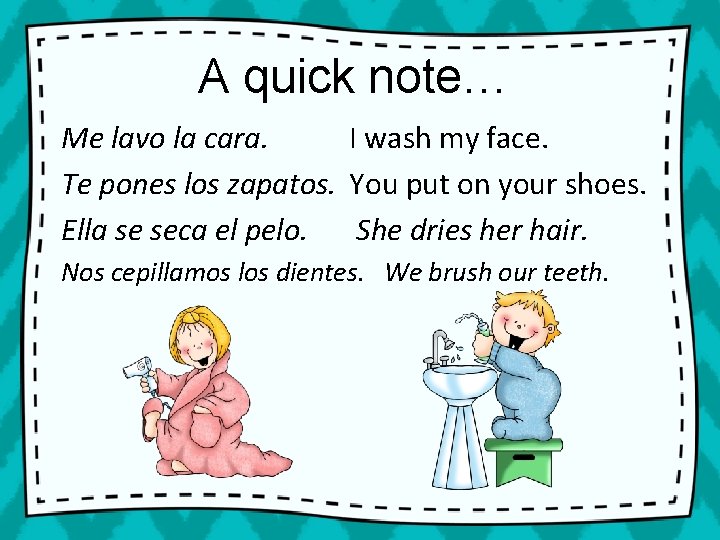
A quick note… Me lavo la cara. I wash my face. Te pones los zapatos. You put on your shoes. Ella se seca el pelo. She dries her hair. Nos cepillamos los dientes. We brush our teeth.
• So far, we have only discussed placing the reflexive pronoun before the conjugated verb. • However, when two verbs used together in a sentence, there is another option. • Recall that when two verbs are used in conjunction, the first one is conjugated and the second one is left in the infinitive form.
The two options we have for placement of the reflexive pronoun are: • 1. Before the conjugated verb • 2. Attached to the end of the verb infinitive
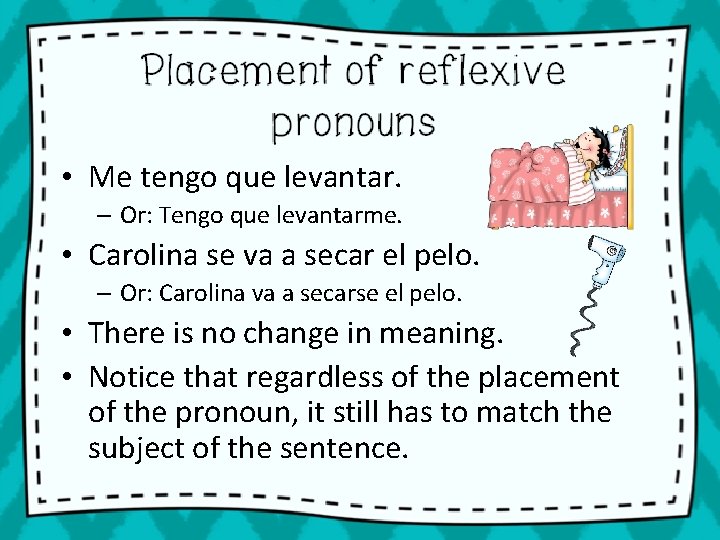
• Me tengo que levantar. – Or: Tengo que levantarme. • Carolina se va a secar el pelo. – Or: Carolina va a secarse el pelo. • There is no change in meaning. • Notice that regardless of the placement of the pronoun, it still has to match the subject of the sentence.
1. Rafael debe duchar. Please a few minutes • Rafael setake debe duchar. • Rafael debe ducharse. practice to complete problems 1 -5.
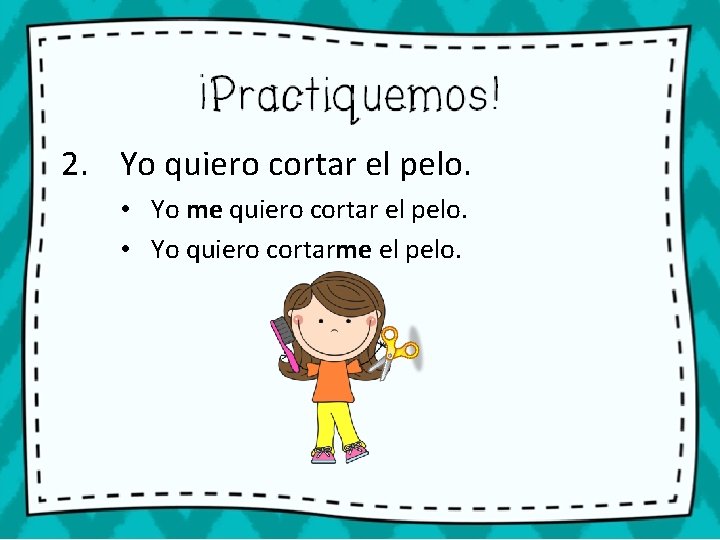
2. Yo quiero cortar el pelo. • Yo me quiero cortar el pelo. • Yo quiero cortarme el pelo.
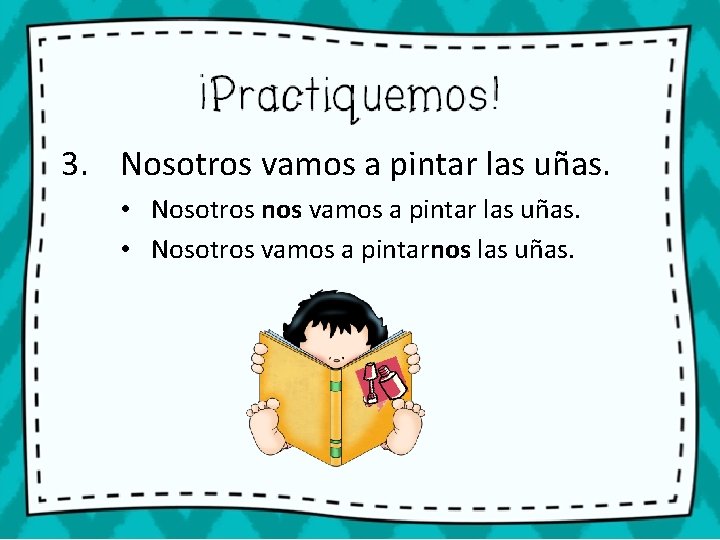
3. Nosotros vamos a pintar las uñas. • Nosotros nos vamos a pintar las uñas. • Nosotros vamos a pintarnos las uñas.
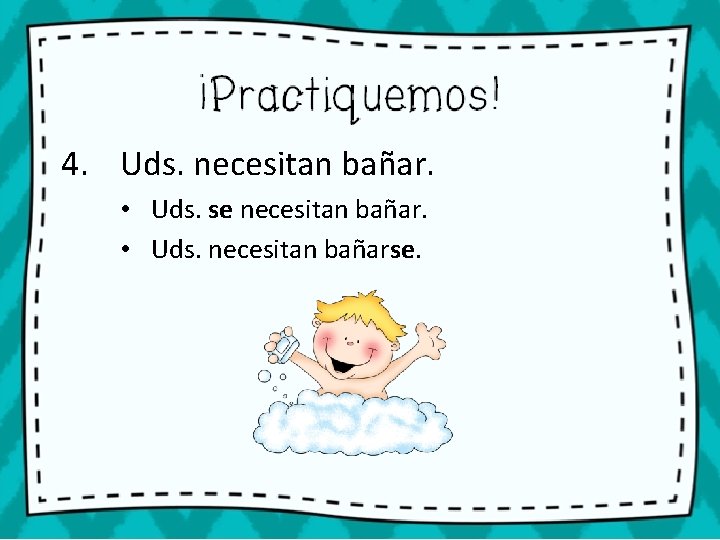
4. Uds. necesitan bañar. • Uds. se necesitan bañar. • Uds. necesitan bañarse.
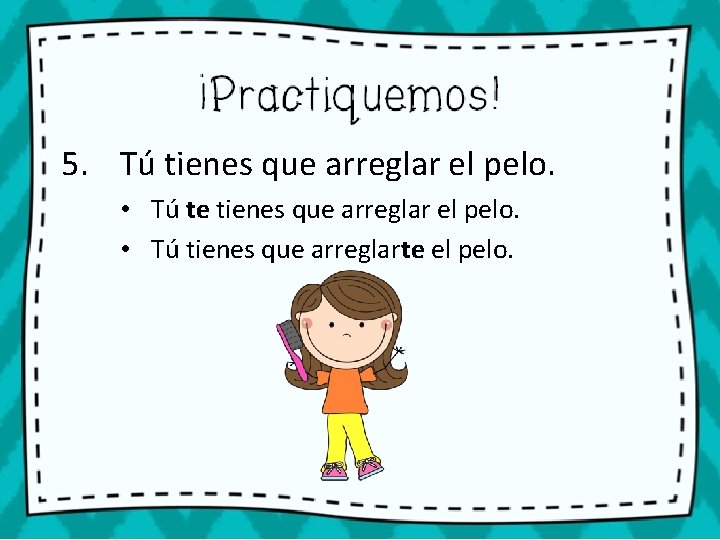
5. Tú tienes que arreglar el pelo. • Tú te tienes que arreglar el pelo. • Tú tienes que arreglarte el pelo.
me despierto a las ocho de la 1. Yo despertarme Please take a few minutes mañana. complete practice 2. Ellasto se pintan sus cada semana. las uñas nos 3. Nosotrosproblems se acostamos 1 -5. muy tarde durante el verano. 4. Ud. va a afeitar mañana. afeitarse 5. Tú tienes que cortarse te el pelo pronto.

Background, frame, and font by: Lovin Lit: www. teacherspayteachers. com/store/Lovin-Lit Bedtime Kids graphics: Copyright © Annie Lang www. anniethingspossible. com Daily routines clip art by: ©Scrappin Doodles: http: //www. teacherspayteachers. com/Store/Scrappin. Doodles
- Slides: 23