
A quick introduction India As we have already
- Slides: 6
A quick introduction: India • As we have already seen in your previous work, India is one of the world’s oldest civilizations • Traditions and cultures have sustained its peoples through many invasions and foreign occupations • Religion: Both Hinduism and Buddhism were founded (begun) in India • Buddhism has almost disappeared in recent times • India has had a long history rooted in various traditions and in its geography and climate • And this is where we will begin today…
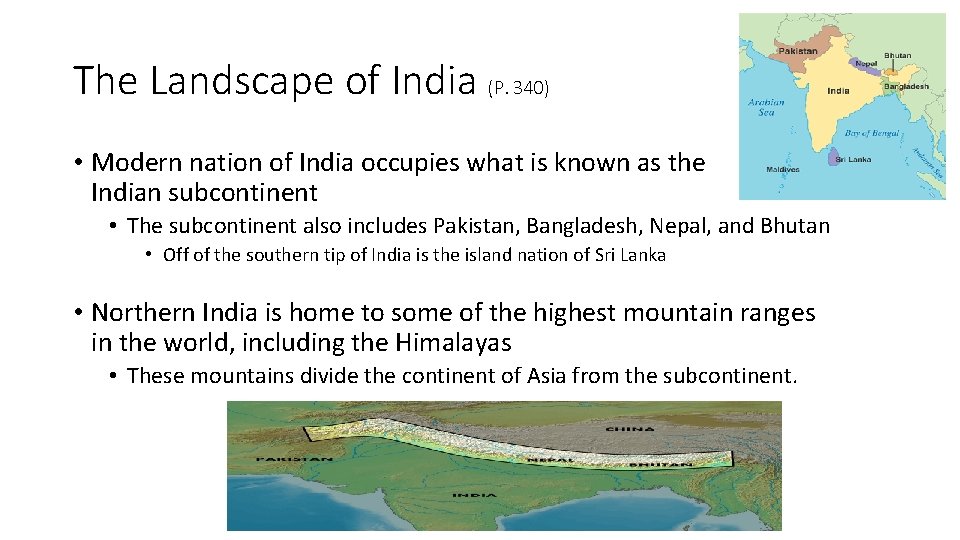
The Landscape of India (P. 340) • Modern nation of India occupies what is known as the Indian subcontinent • The subcontinent also includes Pakistan, Bangladesh, Nepal, and Bhutan • Off of the southern tip of India is the island nation of Sri Lanka • Northern India is home to some of the highest mountain ranges in the world, including the Himalayas • These mountains divide the continent of Asia from the subcontinent.
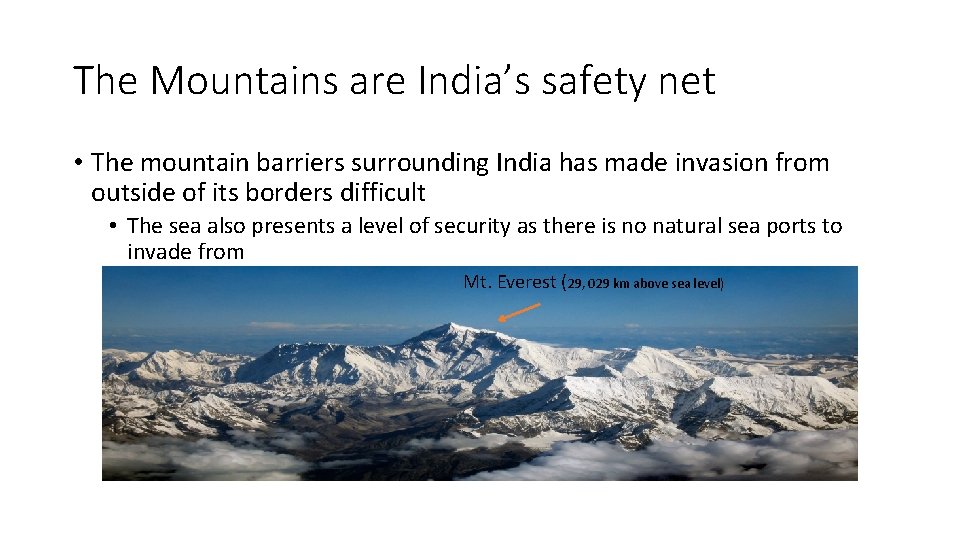
The Mountains are India’s safety net • The mountain barriers surrounding India has made invasion from outside of its borders difficult • The sea also presents a level of security as there is no natural sea ports to invade from Mt. Everest (29, 029 km above sea level)
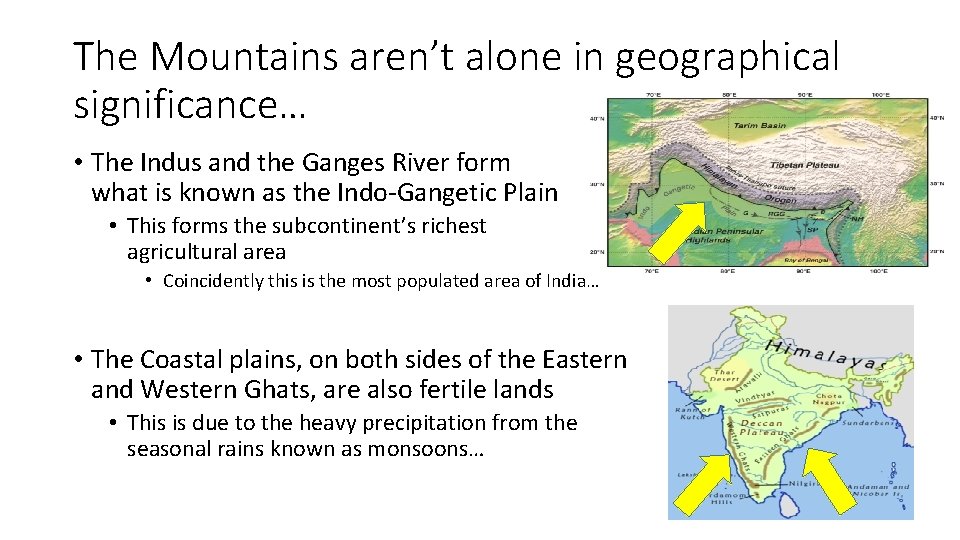
The Mountains aren’t alone in geographical significance… • The Indus and the Ganges River form what is known as the Indo-Gangetic Plain • This forms the subcontinent’s richest agricultural area • Coincidently this is the most populated area of India… • The Coastal plains, on both sides of the Eastern and Western Ghats, are also fertile lands • This is due to the heavy precipitation from the seasonal rains known as monsoons…
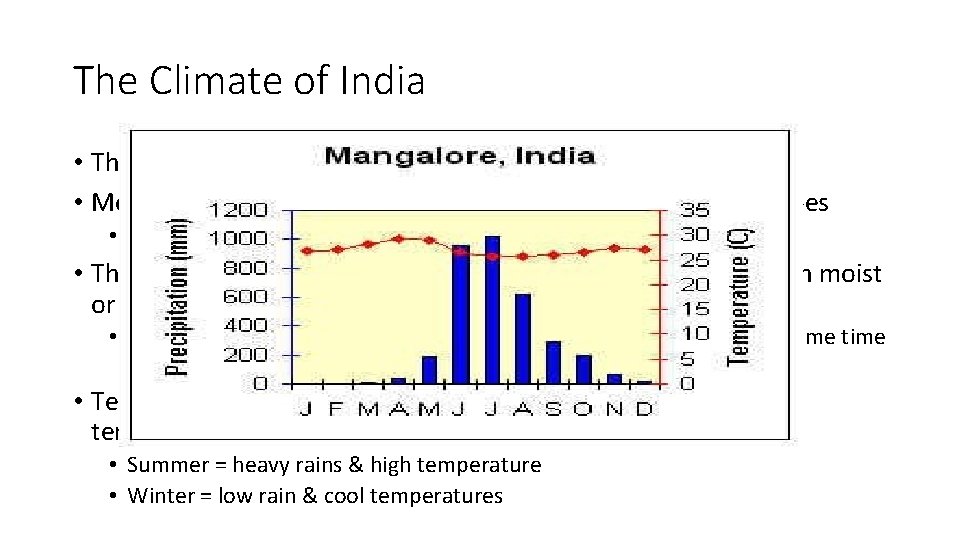
The Climate of India • The climate of India is both tropical and subtropical • Most of India does not have a Winter or Summer as Canada does • Season change comes as a result of the monsoons • These are winds that flow on, or off of the continent bringing in moist or dry air • The monsoons in India occur on a very regular basis, that being the same time each year • Temperature shifts (climate) result from large differences in temperature among land, sea, and air, • Summer = heavy rains & high temperature • Winter = low rain & cool temperatures
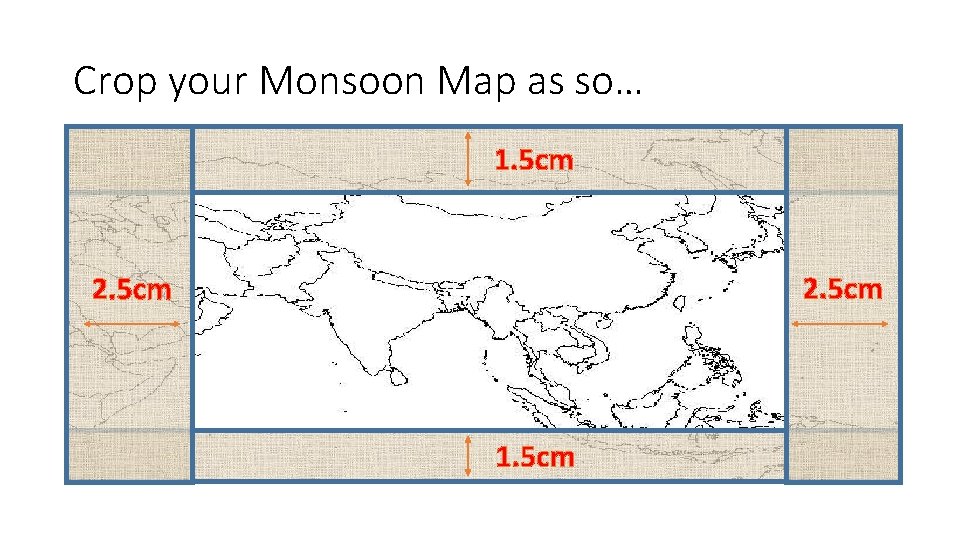
Crop your Monsoon Map as so… 1. 5 cm 2. 5 cm 1. 5 cm