
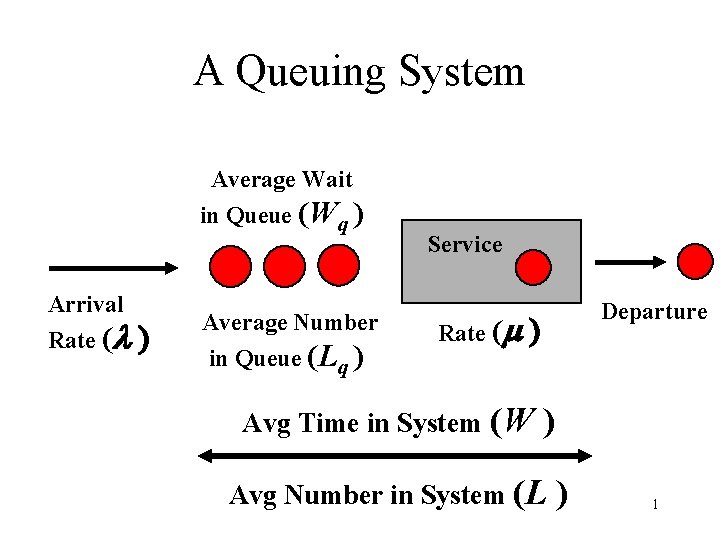
A Queuing System Average Wait in Queue Wq
- Slides: 12
A Queuing System Average Wait in Queue (Wq ) Arrival Rate ( Average Number in Queue (Lq ) Service Departure Rate ( Avg Time in System (W ) Avg Number in System (L ) 1
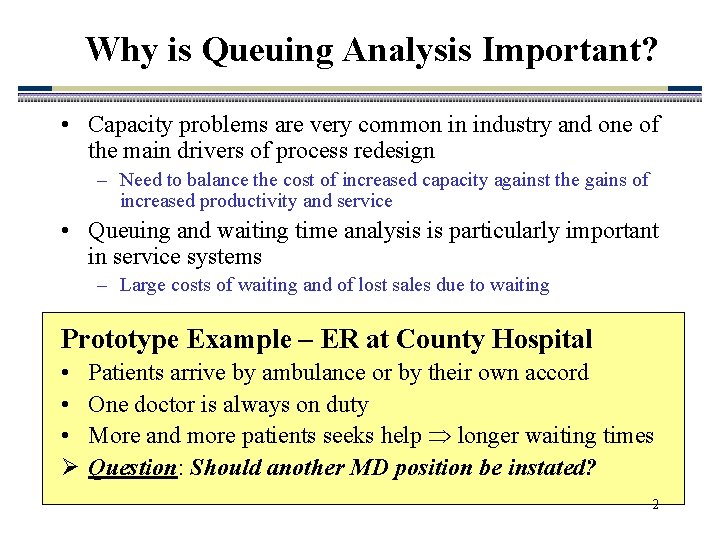
Why is Queuing Analysis Important? • Capacity problems are very common in industry and one of the main drivers of process redesign – Need to balance the cost of increased capacity against the gains of increased productivity and service • Queuing and waiting time analysis is particularly important in service systems – Large costs of waiting and of lost sales due to waiting Prototype Example – ER at County Hospital • • • Ø Patients arrive by ambulance or by their own accord One doctor is always on duty More and more patients seeks help longer waiting times Question: Should another MD position be instated? 2
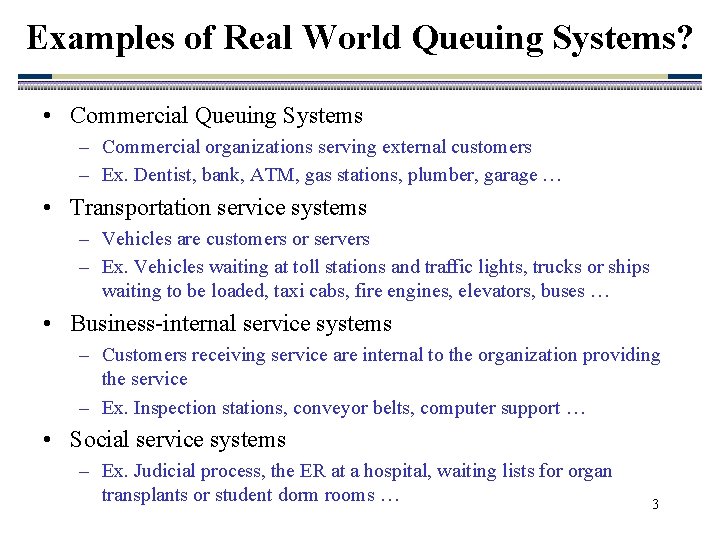
Examples of Real World Queuing Systems? • Commercial Queuing Systems – Commercial organizations serving external customers – Ex. Dentist, bank, ATM, gas stations, plumber, garage … • Transportation service systems – Vehicles are customers or servers – Ex. Vehicles waiting at toll stations and traffic lights, trucks or ships waiting to be loaded, taxi cabs, fire engines, elevators, buses … • Business-internal service systems – Customers receiving service are internal to the organization providing the service – Ex. Inspection stations, conveyor belts, computer support … • Social service systems – Ex. Judicial process, the ER at a hospital, waiting lists for organ transplants or student dorm rooms … 3
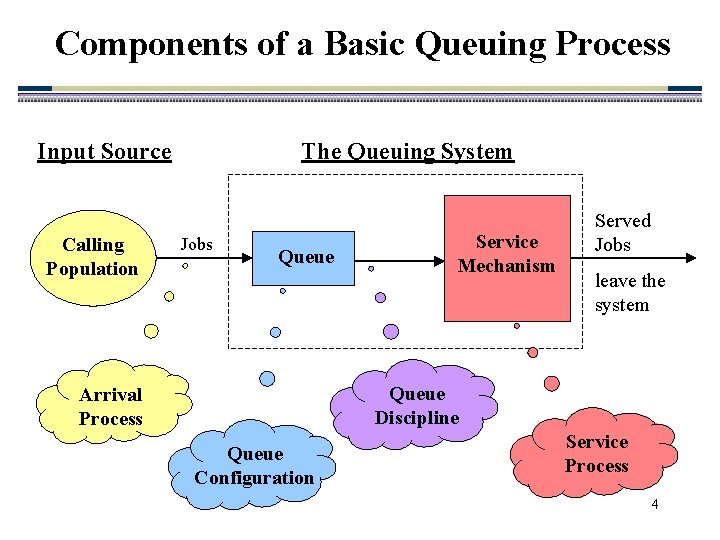
Components of a Basic Queuing Process Input Source Calling Population The Queuing System Jobs Queue Service Mechanism Served Jobs leave the system Queue Discipline Arrival Process Queue Configuration Service Process 4
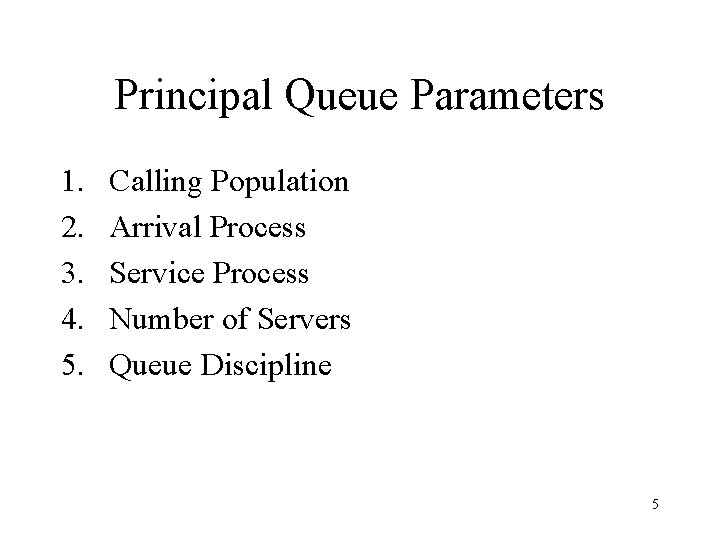
Principal Queue Parameters 1. 2. 3. 4. 5. Calling Population Arrival Process Service Process Number of Servers Queue Discipline 5
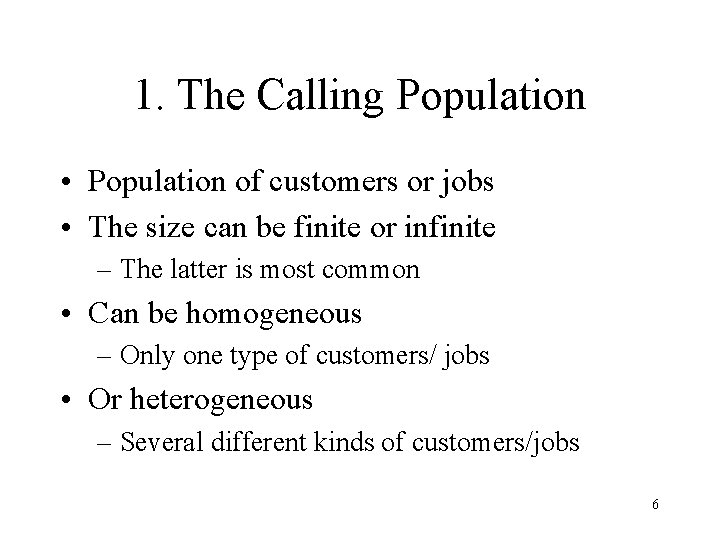
1. The Calling Population • Population of customers or jobs • The size can be finite or infinite – The latter is most common • Can be homogeneous – Only one type of customers/ jobs • Or heterogeneous – Several different kinds of customers/jobs 6
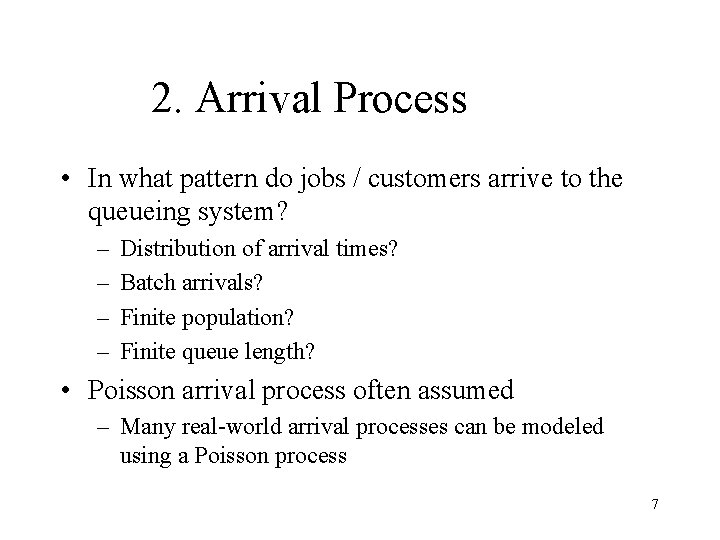
2. Arrival Process • In what pattern do jobs / customers arrive to the queueing system? – – Distribution of arrival times? Batch arrivals? Finite population? Finite queue length? • Poisson arrival process often assumed – Many real-world arrival processes can be modeled using a Poisson process 7
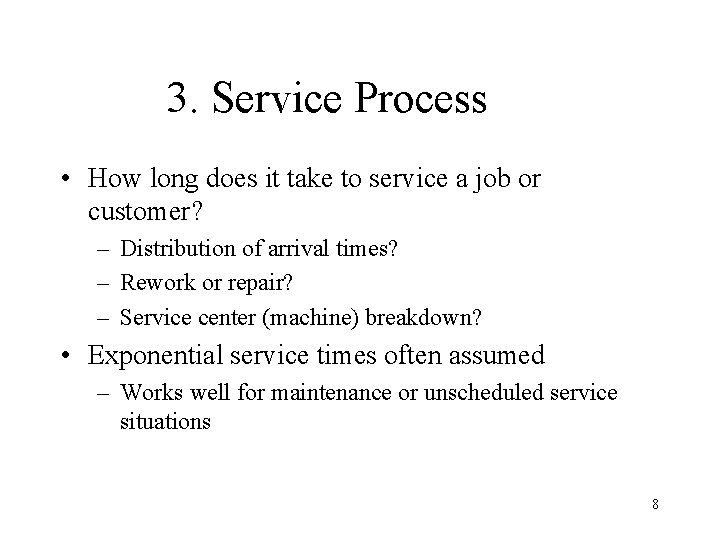
3. Service Process • How long does it take to service a job or customer? – Distribution of arrival times? – Rework or repair? – Service center (machine) breakdown? • Exponential service times often assumed – Works well for maintenance or unscheduled service situations 8
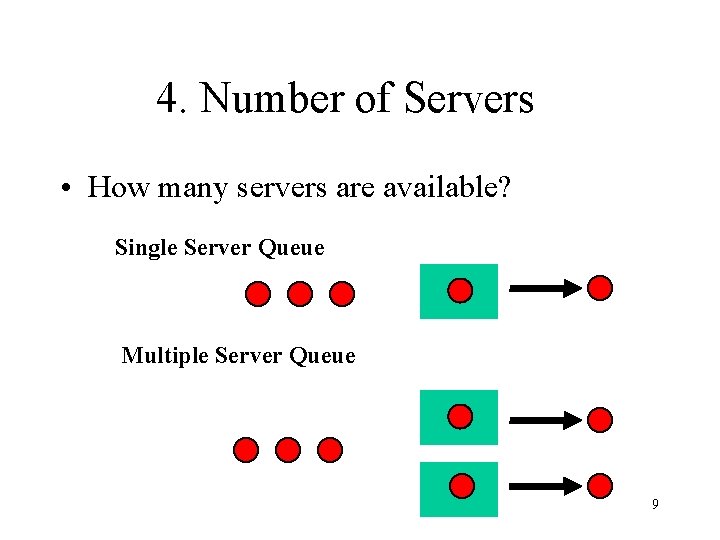
4. Number of Servers • How many servers are available? Single Server Queue Multiple Server Queue 9
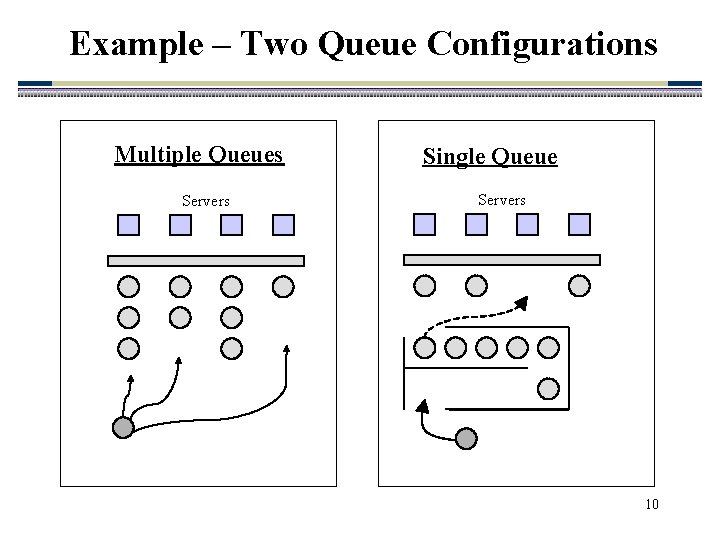
Example – Two Queue Configurations Multiple Queues Servers Single Queue Servers 10
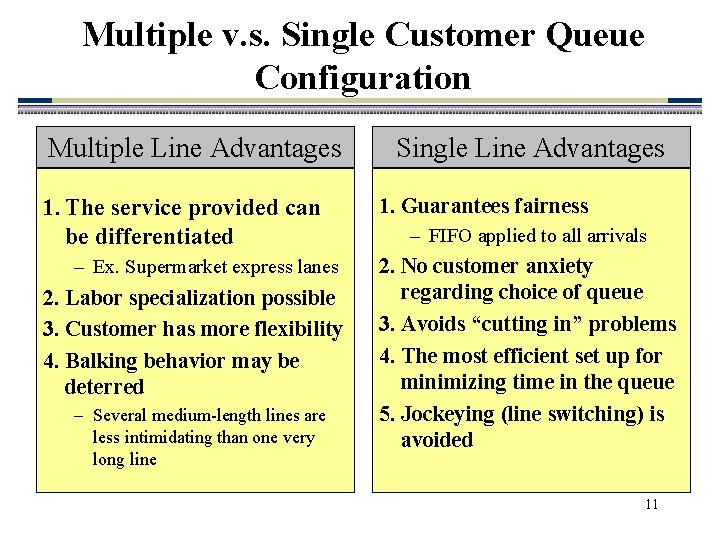
Multiple v. s. Single Customer Queue Configuration Multiple Line Advantages 1. The service provided can be differentiated – Ex. Supermarket express lanes 2. Labor specialization possible 3. Customer has more flexibility 4. Balking behavior may be deterred – Several medium-length lines are less intimidating than one very long line Single Line Advantages 1. Guarantees fairness – FIFO applied to all arrivals 2. No customer anxiety regarding choice of queue 3. Avoids “cutting in” problems 4. The most efficient set up for minimizing time in the queue 5. Jockeying (line switching) is avoided 11
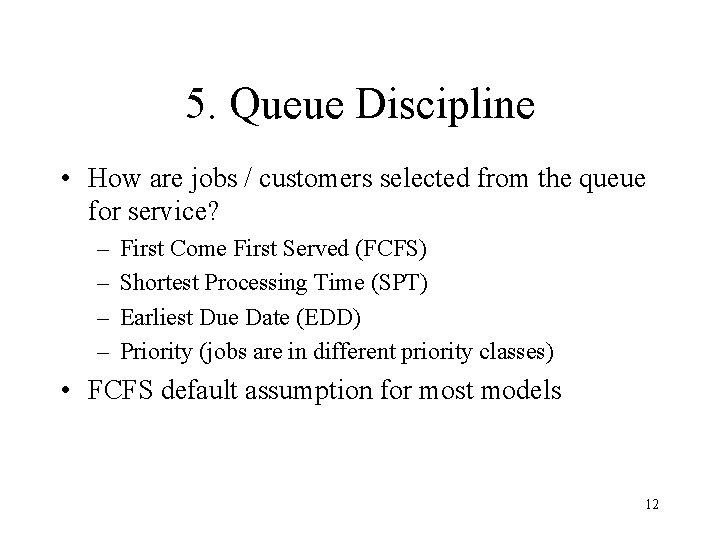
5. Queue Discipline • How are jobs / customers selected from the queue for service? – – First Come First Served (FCFS) Shortest Processing Time (SPT) Earliest Due Date (EDD) Priority (jobs are in different priority classes) • FCFS default assumption for most models 12