
A quest for knowledgebased urban development knowledge assets
A quest for knowledgebased (urban) development: knowledge assets and networks of Istanbul, Turkey Dr Koray Velibeyoglu & Dr Tan Yigitcanlar 3 rd International Symposium on Knowledge Cities 17 -19 November 2008 Istanbul – Turkey
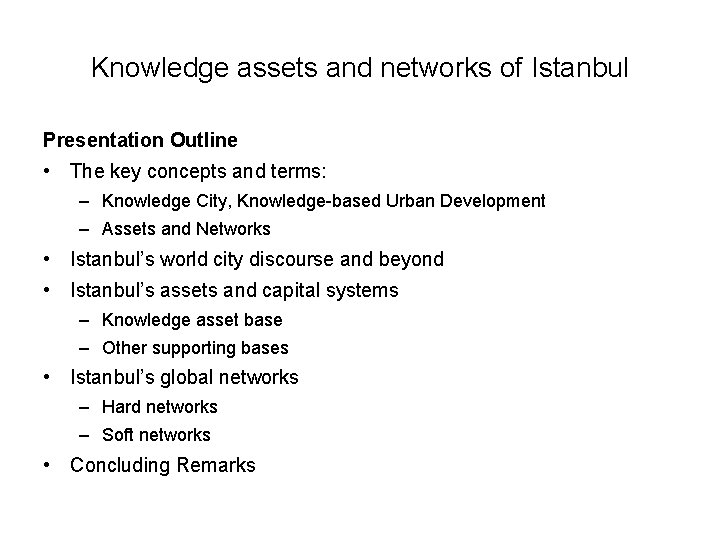
Knowledge assets and networks of Istanbul Presentation Outline • The key concepts and terms: – Knowledge City, Knowledge-based Urban Development – Assets and Networks • Istanbul’s world city discourse and beyond • Istanbul’s assets and capital systems – Knowledge asset base – Other supporting bases • Istanbul’s global networks – Hard networks – Soft networks • Concluding Remarks
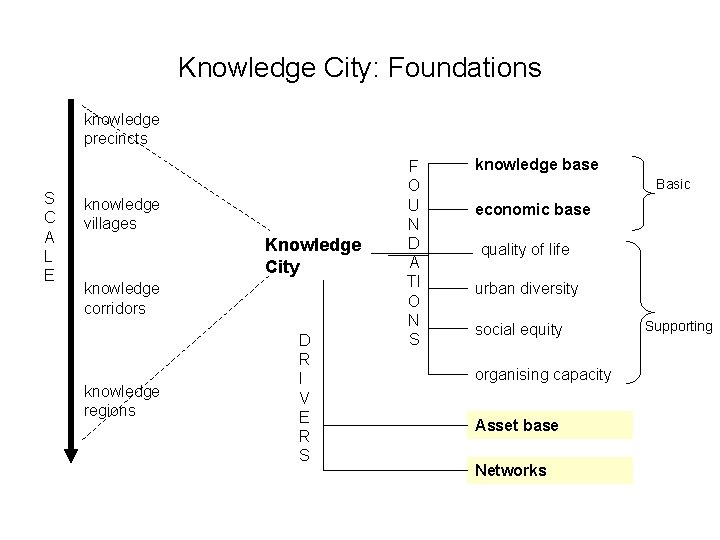
Knowledge City: Foundations knowledge precincts S C A L E knowledge villages Knowledge City knowledge corridors knowledge regions D R I V E R S F O U N D A TI O N S knowledge base Basic economic base quality of life urban diversity social equity organising capacity Asset base Networks Supporting
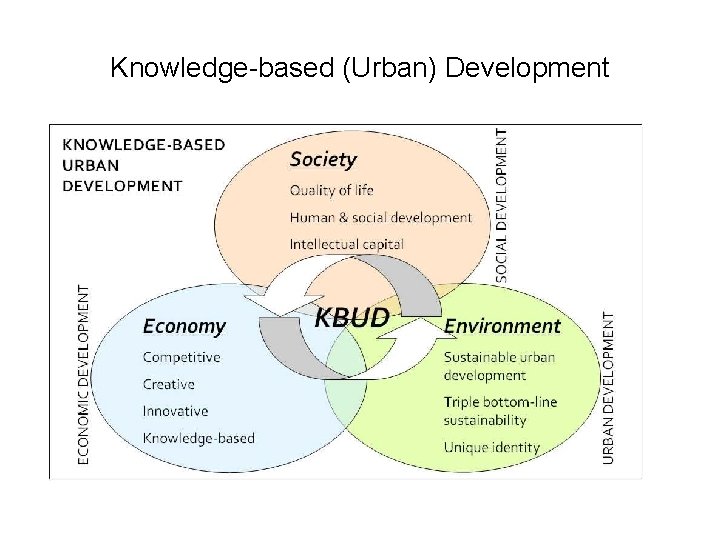
Knowledge-based (Urban) Development

Asset: Definitions and Categories • • • An asset literally means useful and desirable thing that is worth having or quality for personal, social, economic or cultural benefit. A resource with economic value that an individual, corporation or country owns or controls with the expectation that it will provide future benefit. A stock of financial, human, natural or social resources that can be acquired, developed, improved and transferred across generations. Intangible Assets Non. Financial Assets Tangible Assets Cultural and Historical Assets Natural and Environmental Assets Knowledge Assets Physical. Infrastructural Assets Social and Human Assets
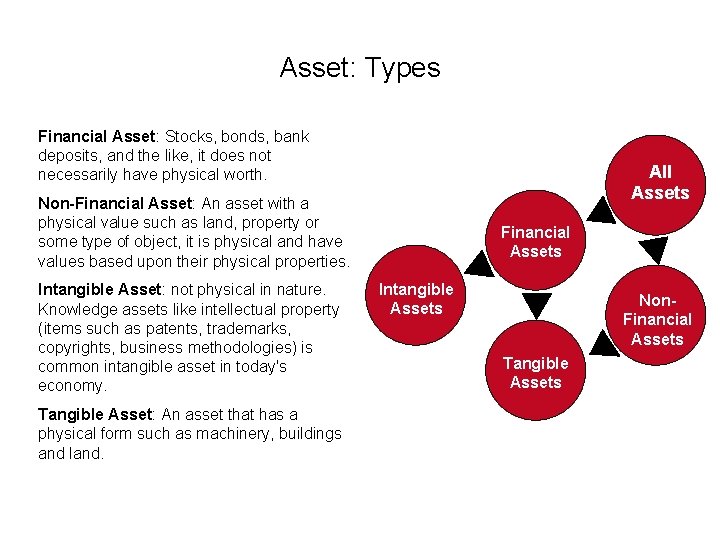
Asset: Types Financial Asset: Stocks, bonds, bank deposits, and the like, it does not necessarily have physical worth. All Assets Non-Financial Asset: An asset with a physical value such as land, property or some type of object, it is physical and have values based upon their physical properties. Intangible Asset: not physical in nature. Knowledge assets like intellectual property (items such as patents, trademarks, copyrights, business methodologies) is common intangible asset in today's economy. Tangible Asset: An asset that has a physical form such as machinery, buildings and land. Financial Assets Intangible Assets Non. Financial Assets Tangible Assets
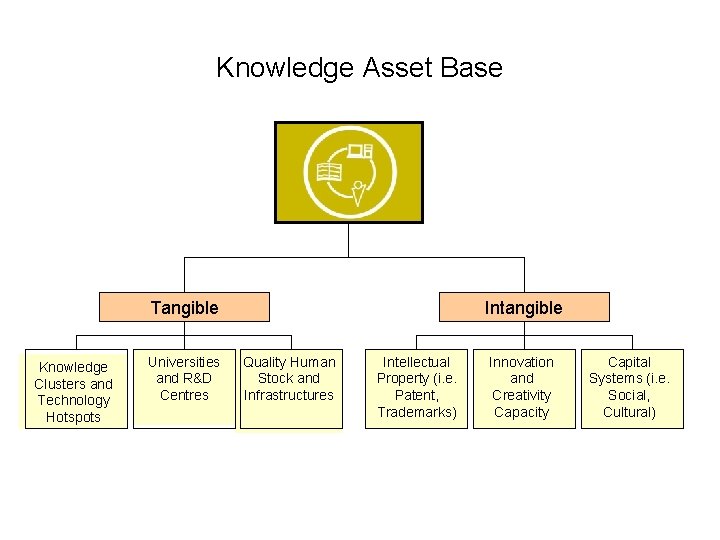
Knowledge Asset Base Tangible Knowledge Clusters and Technology Hotspots Universities and R&D Centres Intangible Quality Human Stock and Infrastructures Intellectual Property (i. e. Patent, Trademarks) Innovation and Creativity Capacity Capital Systems (i. e. Social, Cultural)
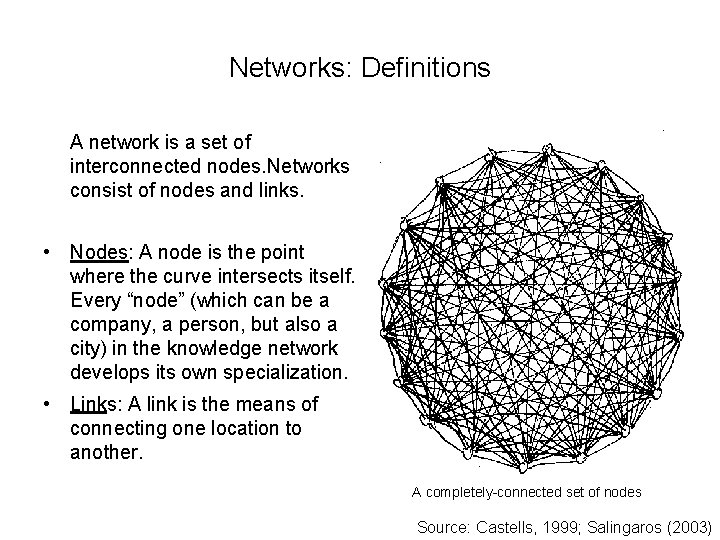
Networks: Definitions A network is a set of interconnected nodes. Networks consist of nodes and links. • Nodes: A node is the point where the curve intersects itself. Every “node” (which can be a company, a person, but also a city) in the knowledge network develops its own specialization. • Links: A link is the means of connecting one location to another. A completely-connected set of nodes Source: Castells, 1999; Salingaros (2003)
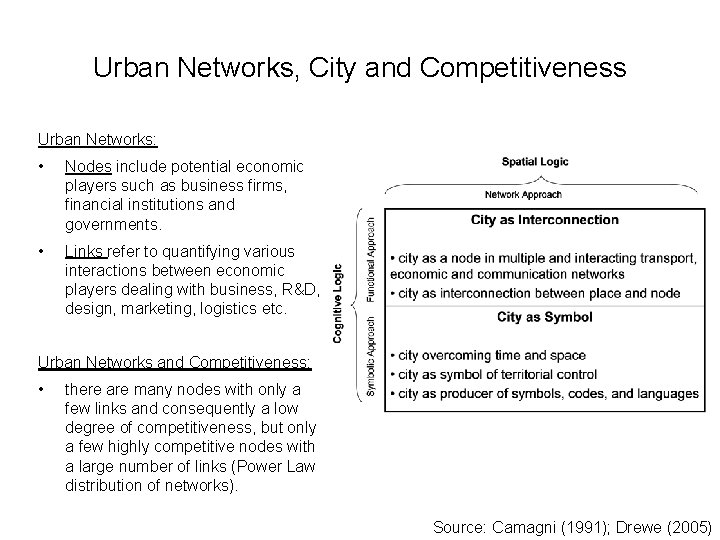
Urban Networks, City and Competitiveness Urban Networks: • Nodes include potential economic players such as business firms, financial institutions and governments. • Links refer to quantifying various interactions between economic players dealing with business, R&D, design, marketing, logistics etc. Urban Networks and Competitiveness: • there are many nodes with only a few links and consequently a low degree of competitiveness, but only a few highly competitive nodes with a large number of links (Power Law distribution of networks). Source: Camagni (1991); Drewe (2005)
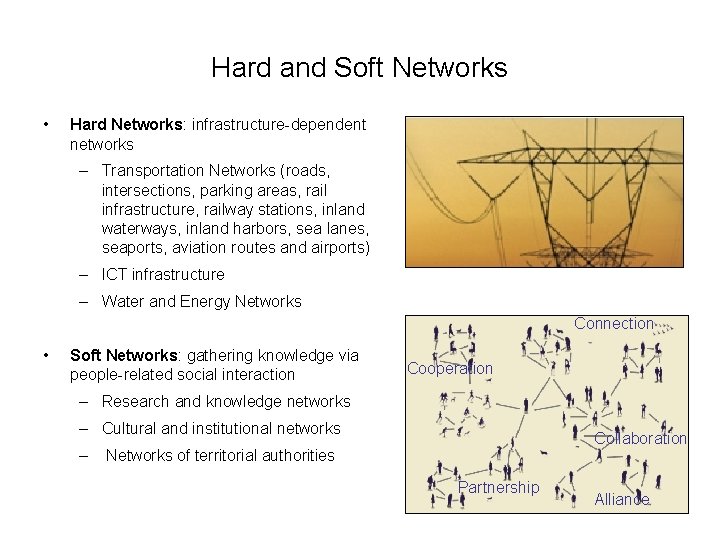
Hard and Soft Networks • Hard Networks: infrastructure-dependent networks – Transportation Networks (roads, intersections, parking areas, rail infrastructure, railway stations, inland waterways, inland harbors, sea lanes, seaports, aviation routes and airports) – ICT infrastructure – Water and Energy Networks Connection • Soft Networks: gathering knowledge via people-related social interaction Cooperation – Research and knowledge networks – Cultural and institutional networks – Collaboration Networks of territorial authorities Partnership Alliance
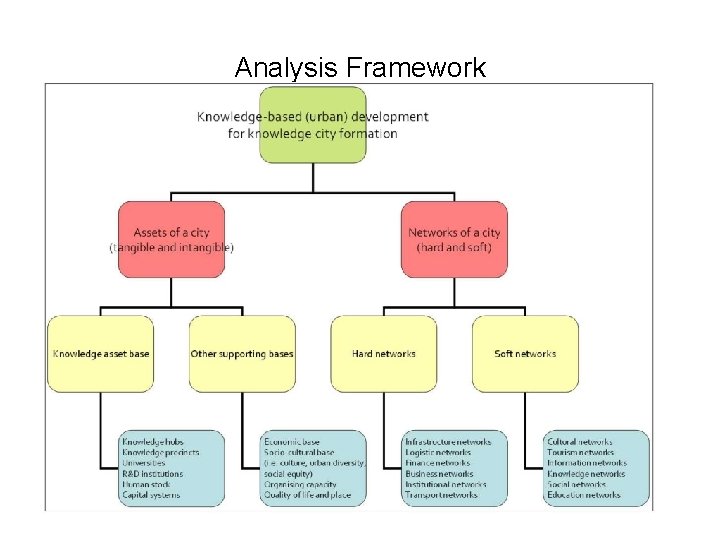
Analysis Framework
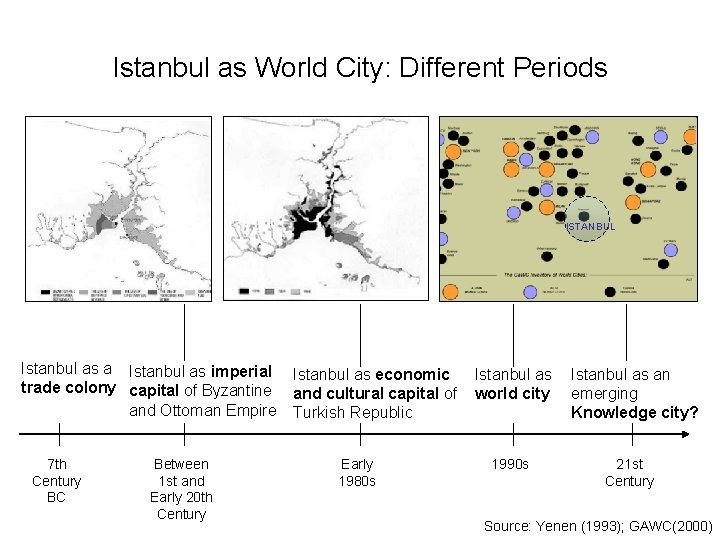
Istanbul as World City: Different Periods ISTANBUL Istanbul as a Istanbul as imperial trade colony capital of Byzantine and Ottoman Empire 7 th Century BC Between 1 st and Early 20 th Century Istanbul as economic and cultural capital of Turkish Republic Early 1980 s Istanbul as world city 1990 s Istanbul as an emerging Knowledge city? 21 st Century Source: Yenen (1993); GAWC(2000)
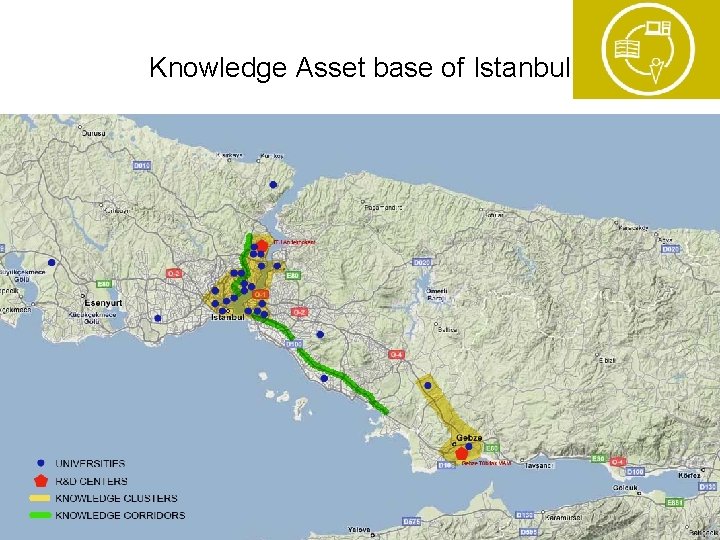
Knowledge Asset base of Istanbul
Universities and R&D Centers • Universities perform the role of ‘local knowledge hubs’ bringing global knowledge into the region. Those knowledge hubs can be considered as the core of the formation of new knowledge precinct developments where the learning value has the prime importance. University-centered developments have a special foci on research, experimentation, and testing that has created the triple-helix model of innovation (public-private-academia partnership)
Knowledge Clusters and Technology Hotspots • As a centre of national culture and media industries Istanbul can easily exploit specific niches for instance in design and fashion in line with a careful clustering policy and urban knowledge precincts for creative industries. • Two spontaneous knowledge clusters and technology hotspots in Istanbul: – Maslak-Taksim Axis: big media conglomerates and ICT firms in new business centre – Kadikoy-Pendik Axis: ICT-based services in the Asian side of Istanbul. • However, there is no sign of designed cluster policy and formation of new urban knowledge precincts in this regard, particularly no evidence of knowledge community precinct development.
Quality Human Stock: Talent, Innovation and Creativity • Quality of human stock and talent pool is vital for knowledge-based urban development of Istanbul. • The lack of appropriate secondary and tertiary education is a significant bottleneck for knowledge society strategies in Istanbul as well as rest of Turkey. This holds back the knowledge intensive sectors, like Istanbul’s software industry, as it does not produce the required skilled human stock for the market. • Istanbul is either underdeveloped or not significantly strong in terms of competitiveness and innovativeness. Nevertheless, as a result of its natural, historical and architectural assets, growing urban infrastructure investments and advanced service industries, Istanbul’s economic and resident skill base are still good enough to accommodate more qualified jobs and international talent in the foreseeable future.
Other Supporting Bases • Strong economic base: Istanbul produces 26 percent of the gross added values of the entire Turkish economy. Istanbul has registered one of the highest output growth rates since the mid-1990 s. Istanbul has also attracted most of the FDI in the country, particularly in producer services. • Socio-cultural base Istanbul has many strong assets to attract knowledge workers seeking to live and work in an ‘authentic’ and ‘historical’ place: – – – its very location, its unique architectural heritage, vibrant urban districts, the legacy of its historical heritage, and its wide range of other attractions
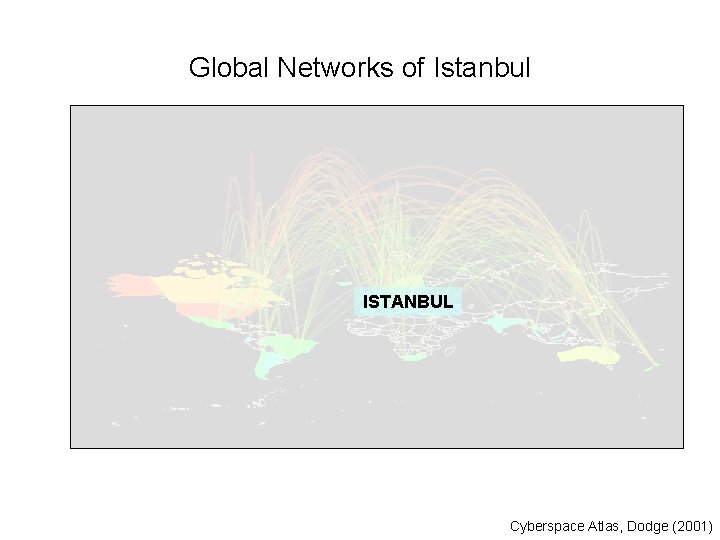
Global Networks of Istanbul ISTANBUL Cyberspace Atlas, Dodge (2001)
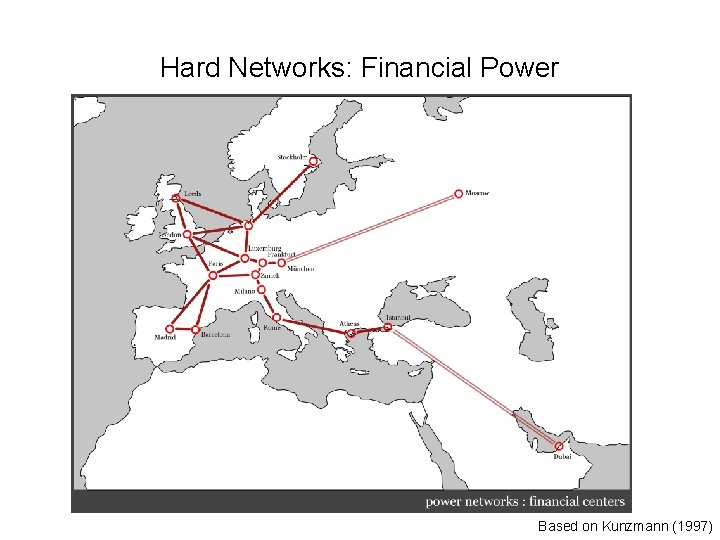
Hard Networks: Financial Power Based on Kunzmann (1997)
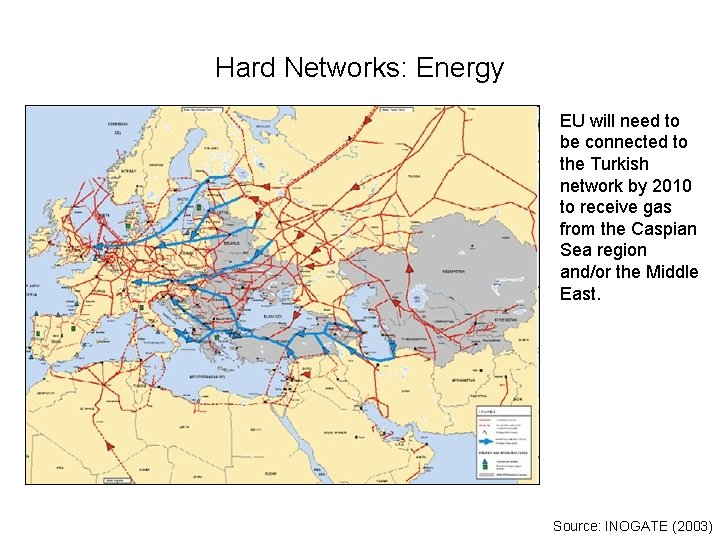
Hard Networks: Energy EU will need to be connected to the Turkish network by 2010 to receive gas from the Caspian Sea region and/or the Middle East. Source: INOGATE (2003)
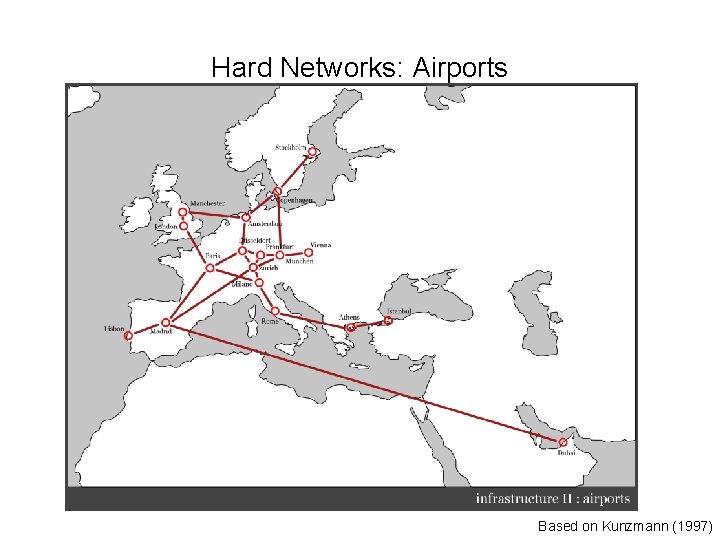
Hard Networks: Airports Based on Kunzmann (1997)
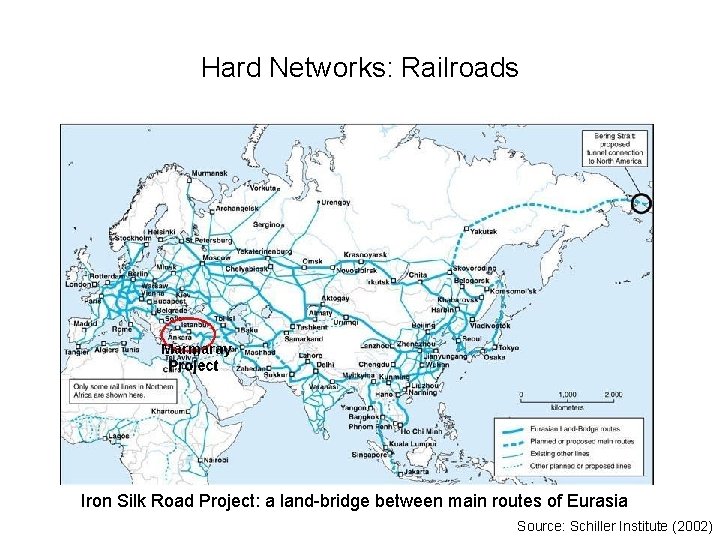
Hard Networks: Railroads Iron Silk Road Project: a land-bridge between main routes of Eurasia Source: Schiller Institute (2002)
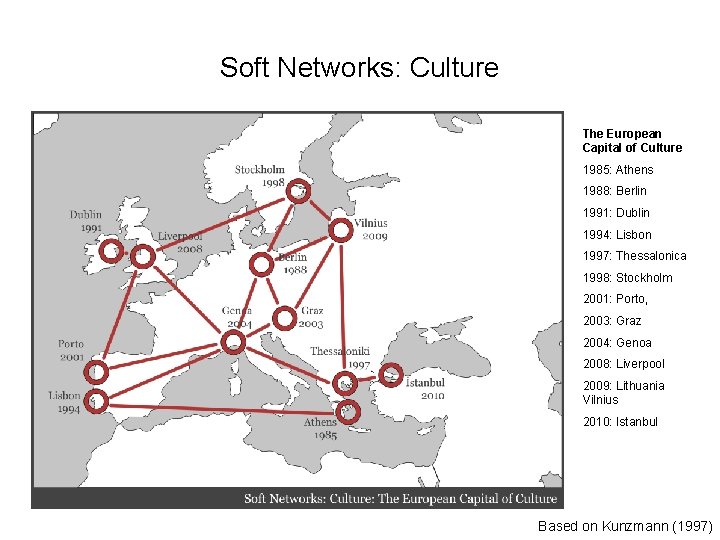
Soft Networks: Culture The European Capital of Culture 1985: Athens 1988: Berlin 1991: Dublin 1994: Lisbon 1997: Thessalonica 1998: Stockholm 2001: Porto, 2003: Graz 2004: Genoa 2008: Liverpool 2009: Lithuania Vilnius 2010: Istanbul Based on Kunzmann (1997)
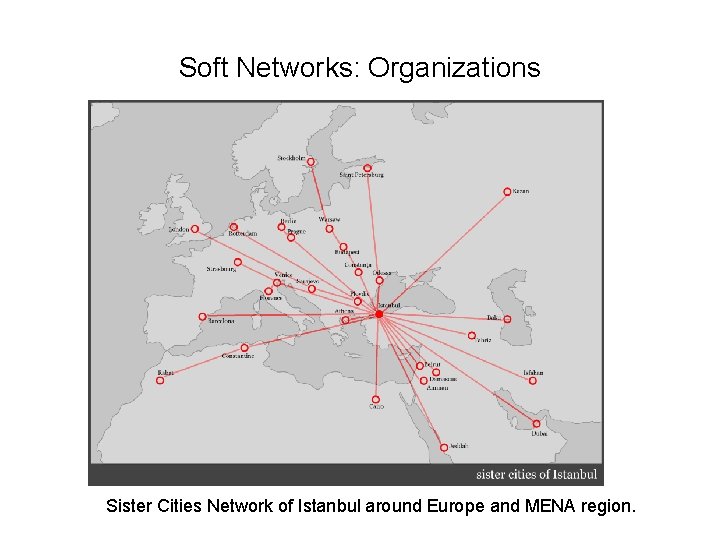
Soft Networks: Organizations Sister Cities Network of Istanbul around Europe and MENA region.
Opportunities and Constraints Opportunities: • quality of supporting bases to promote knowledge asset base (cultural, historical, logistical and financial assets) • increasing economic linkages with (inter)national hinterland • Rising investment and awareness on biotechnology (i. e. pharmaceutical) and software industry (i. e. Valley of Informatics Project) Constraints: • massiveness of labor-intensive activities in the economic base and lack of skilled human stock for the advanced industries • constraints on human capital development, • large informal sector and increased income disparities, • over-migration decaying urban infrastructures, • lack of affordable housing, • high earthquake and quality of life risk
Further Actions for Developing Knowledge Asset Base 1. 2. 3. Istanbul does benefit from its important assets and international networks in the knowledge-based development of the city but reforms and new strategies are needed: Sectoral mix of technology zones should be seriously reconsidered. New creative industry sectors like design and fashion incubators should be initiated. Istanbul should use the knowledge as the most strategic element for the integration to the global system. Therefore, strategy and initiatives for leveraging knowledge assets should be based on city’s unique assets and opportunities. To enhance Istanbul’s knowledge base there is a crucial need to move towards a knowledge-based urban development and investment structure based on the triple-helix model. R&D activities should be thematically concentrated and industryuniversity relations should be enhanced to increase competitiveness and create high-skilled employment.
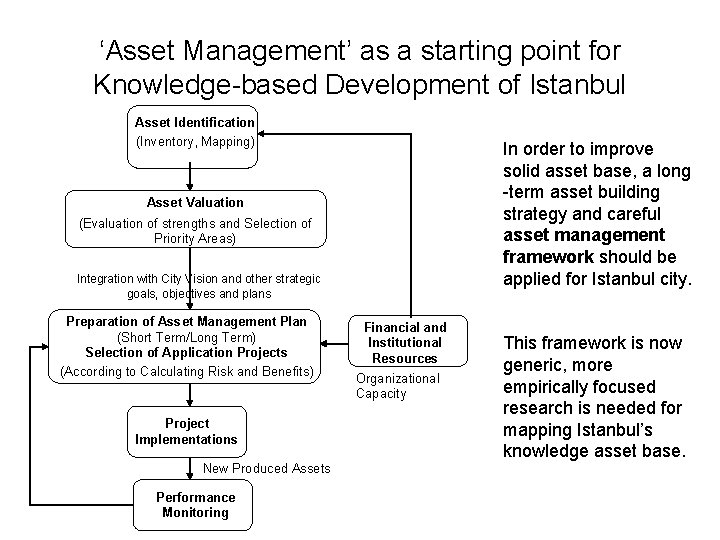
‘Asset Management’ as a starting point for Knowledge-based Development of Istanbul Asset Identification (Inventory, Mapping) In order to improve solid asset base, a long -term asset building strategy and careful asset management framework should be applied for Istanbul city. Asset Valuation (Evaluation of strengths and Selection of Priority Areas) Integration with City Vision and other strategic goals, objectives and plans Preparation of Asset Management Plan (Short Term/Long Term) Selection of Application Projects (According to Calculating Risk and Benefits) Project Implementations New Produced Assets Performance Monitoring Financial and Institutional Resources Organizational Capacity This framework is now generic, more empirically focused research is needed for mapping Istanbul’s knowledge asset base.
KEY REFERENCES ON KNOWLEDGE-BASED URBAN DEVELOPMENT PREMIER REFERENCE SOURCE KNOWLEDGE-BASED DEVELOPMENT OF CITIES AND SOCIETIES An Integrated Multi-level Approach YIGITCANLAR, VELIBEYOGLU & BAUM METAXIOTIS, CARRILLO & YIGITCANLAR Yigitcanlar, T. , Velibeyoglu, K. and Baum, S. , (Eds. ) (2008), ‘Knowledge-based urban development: planning and applications in the information era’, London: Information Science Reference. Yigitcanlar, T. , Velibeyoglu, K. and Baum, S. , (Eds. ) (2008), ‘Creative urban regions: harnessing urban technologies to support knowledge city initiatives’, London: Information Science Reference. Metaxiotis, K. , Carrillo, J. and Yigitcanlar, T. , (Eds. ) (2009), ‘Knowledge-based development of cities and societies: an integrated multi-level approach’, London: Information Science Reference.
- Slides: 28