
A Practical Guide to Effective Prescribing in Cardiology
A Practical Guide to Effective Prescribing in Cardiology For Current & Aspiring Non Medical Prescribers 14 th May 2021 Virtual Conference Jan Keenan Consultant Nurse Cardiology NMP Lead, Oxford University Hospitals NHS Foundation Trust
Objectives • Developing, demonstrating and maintaining competence in Prescribing in cardiology • Developing confidence in prescribing practice • Ensuring your practice is evidence based: guidelines and evidence • Keeping your prescribing knowledge up-to-date: accessing education, training and resources • Assessing and evaluating prescribing competence • Ensuring you have the history-taking, clinical assessment and diagnosis skills to prescribe appropriately and effectively • Measuring the impact of prescribing on practice: audit and evaluation • My experience of nurse prescribing within cardiology nurse led clinics • Involving patients to improve adherence and outcome
From Novice…. . • Developing, demonstrating and maintaining competence in Prescribing in cardiology • Developing confidence in prescribing practice • Ensuring your practice is evidence based: guidelines and evidence • Keeping your prescribing knowledge up-to-date: accessing education, training and resources • Assessing and evaluating prescribing competence • Ensuring you have the history-taking, clinical assessment and diagnosis skills to prescribe appropriately and effectively • Measuring the impact of prescribing on practice: audit and evaluation • My experience of nurse prescribing within cardiology nurse led clinics • Involving patients to improve adherence and outcome
To Advanced Beginner… • Developing, demonstrating and maintaining competence in Prescribing in cardiology • Developing confidence in prescribing practice • Ensuring your practice is evidence based: guidelines and evidence • Keeping your prescribing knowledge up-to-date: accessing education, training and resources • Assessing and evaluating prescribing competence • Ensuring you have the history-taking, clinical assessment and diagnosis skills to prescribe appropriately and effectively • Measuring the impact of prescribing on practice: audit and evaluation • My experience of nurse prescribing within cardiology nurse led clinics • Involving patients to improve adherence and outcome
To Proficient… • Developing, demonstrating and maintaining competence in Prescribing in cardiology • Developing confidence in prescribing practice • Ensuring your practice is evidence based: guidelines and evidence • Keeping your prescribing knowledge up-to-date: accessing education, training and resources • Assessing and evaluating prescribing competence • Ensuring you have the history-taking, clinical assessment and diagnosis skills to prescribe appropriately and effectively • Measuring the impact of prescribing on practice: audit and evaluation • My experience of nurse prescribing within cardiology nurse led clinics • Involving patients to improve adherence and outcome
Novice • Developing, demonstrating and maintaining competence in Prescribing in cardiology • Assessing and evaluating prescribing competence • Ensuring you have the history-taking, clinical assessment and diagnosis skills to prescribe appropriately and effectively
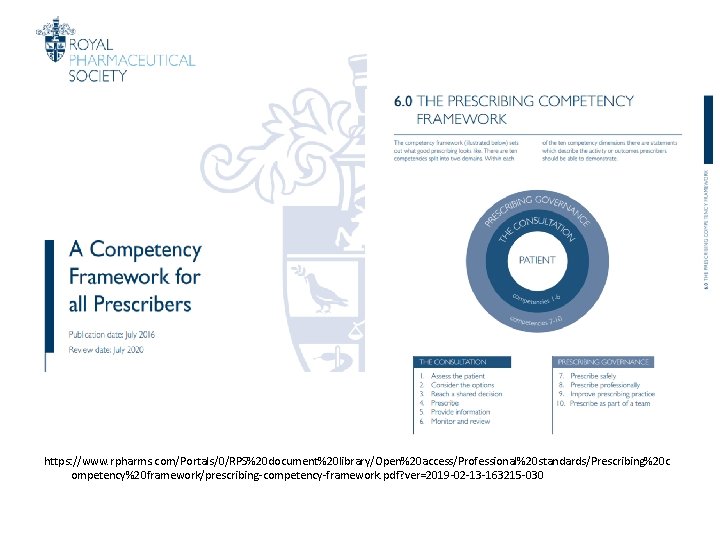
https: //www. rpharms. com/Portals/0/RPS%20 document%20 library/Open%20 access/Professional%20 standards/Prescribing%20 c ompetency%20 framework/prescribing-competency-framework. pdf? ver=2019 -02 -13 -163215 -030
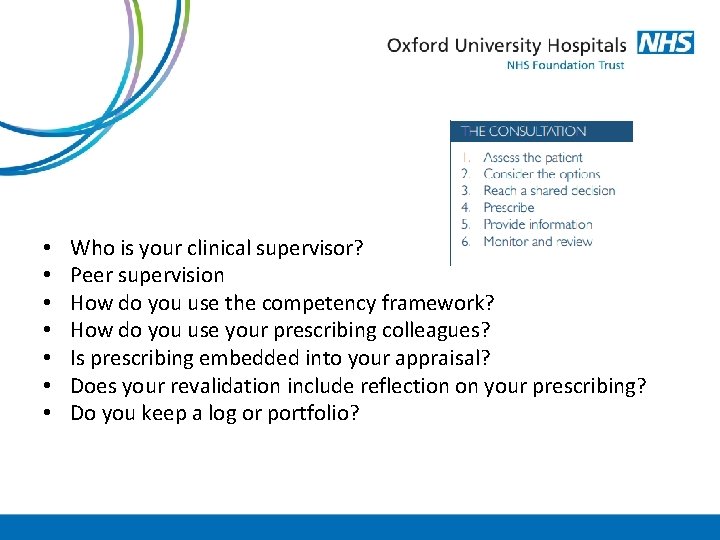
• • Who is your clinical supervisor? Peer supervision How do you use the competency framework? How do you use your prescribing colleagues? Is prescribing embedded into your appraisal? Does your revalidation include reflection on your prescribing? Do you keep a log or portfolio?
• What does your non-medical prescribing policy look like? – Safely – decision-making, consent, shared decision making, person centred care, access to information; monitoring, follow up, referral, sharing information • Professionally - Professional guidance • • • https: //www. nmc. org. uk/standards-for-post-registration/standards-for-prescribers/ https: //www. pharmacyregulation. org/news/gphc-launches-new-guidance-pharmacist-prescribers https: //www. hcpc-uk. org/standards-relevant-to-education-and-training/standards-for-prescribing/ • Clinical, national and local guidance • Improvement – What resources do you use or access? – What local resources do you have access to – https: //www. sps. nhs. uk/ • Teamwork – Consider Trust and National resources – Use your colleagues
Advanced Beginner • Developing confidence in prescribing practice • Ensuring your practice is evidence based: guidelines and evidence • Keeping your prescribing knowledge up-todate: accessing education, training and resources
‘Confidence means feeling sure of yourself and your abilities — not in an arrogant way, but in a realistic, secure way. . . It's a quiet inner knowledge that you're capable. . feel secure. . ’
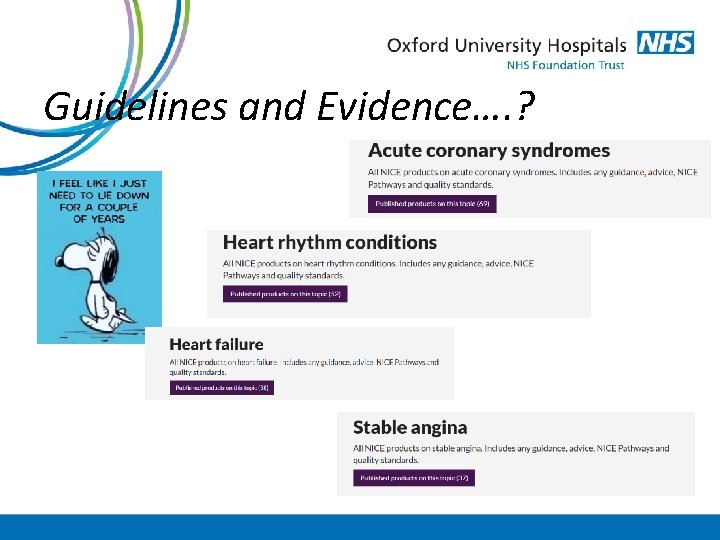
Guidelines and Evidence…. ?
Proficient • Measuring the impact of prescribing on practice: audit and evaluation • My experience of nurse prescribing within cardiology nurse led clinics • Involving patients to improve adherence and outcome
Audit and Evaluation • Define prescribing ‘to lay down, in writing or otherwise, as a rule or a course of action to be followed’ • Record keeping, log book • Consider all your medication decisions – that means not just initiating a medication – it can mean NOT using a medication; it can mean stopping a medication (de-prescribing); changing or titrating a medication
Involving patients to improve adherence and outcome • • Safe prescribing Shared decision making It’s OK to deviate Listen! ‘How do you feel you are getting on with the medication’ Is there anything that concerns you about your medication? Beliefs about Medication Measuring Medication Adherence Robert Horne, John Weinman & Matthew Hankins (1999) The beliefs about medicines questionnaire: The development and evaluation of a new method for assessing the cognitive representation of medication, Psychology & Health, 14: 1, 1 -24, DOI: 10. 1080/08870449908407311
Objectives • Developing, demonstrating and maintaining competence in Prescribing in cardiology • Developing confidence in prescribing practice • Ensuring your practice is evidence based: guidelines and evidence • Keeping your prescribing knowledge up-to-date: accessing education, training and resources • Assessing and evaluating prescribing competence • Ensuring you have the history-taking, clinical assessment and diagnosis skills to prescribe appropriately and effectively • Measuring the impact of prescribing on practice: audit and evaluation • My experience of nurse prescribing within cardiology nurse led clinics • Involving patients to improve adherence and outcome
- Slides: 16